Desert Jasper


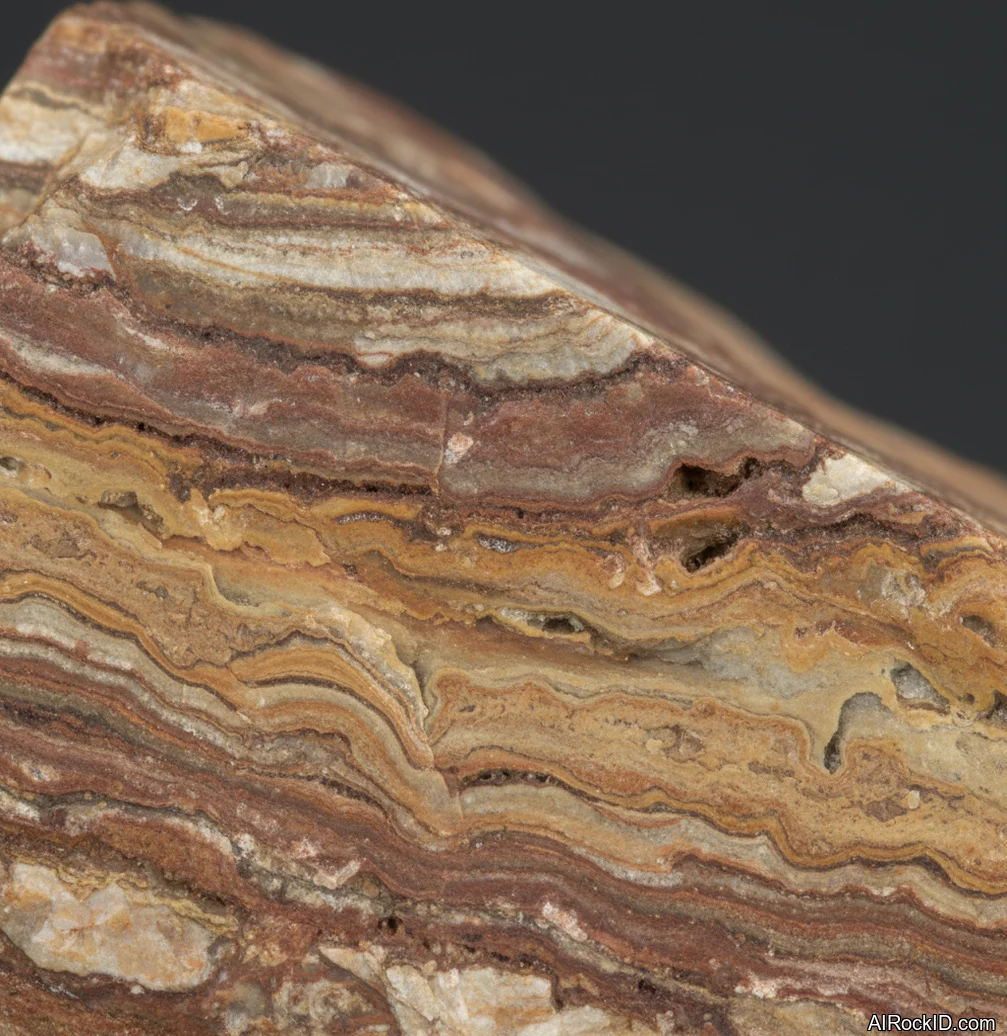
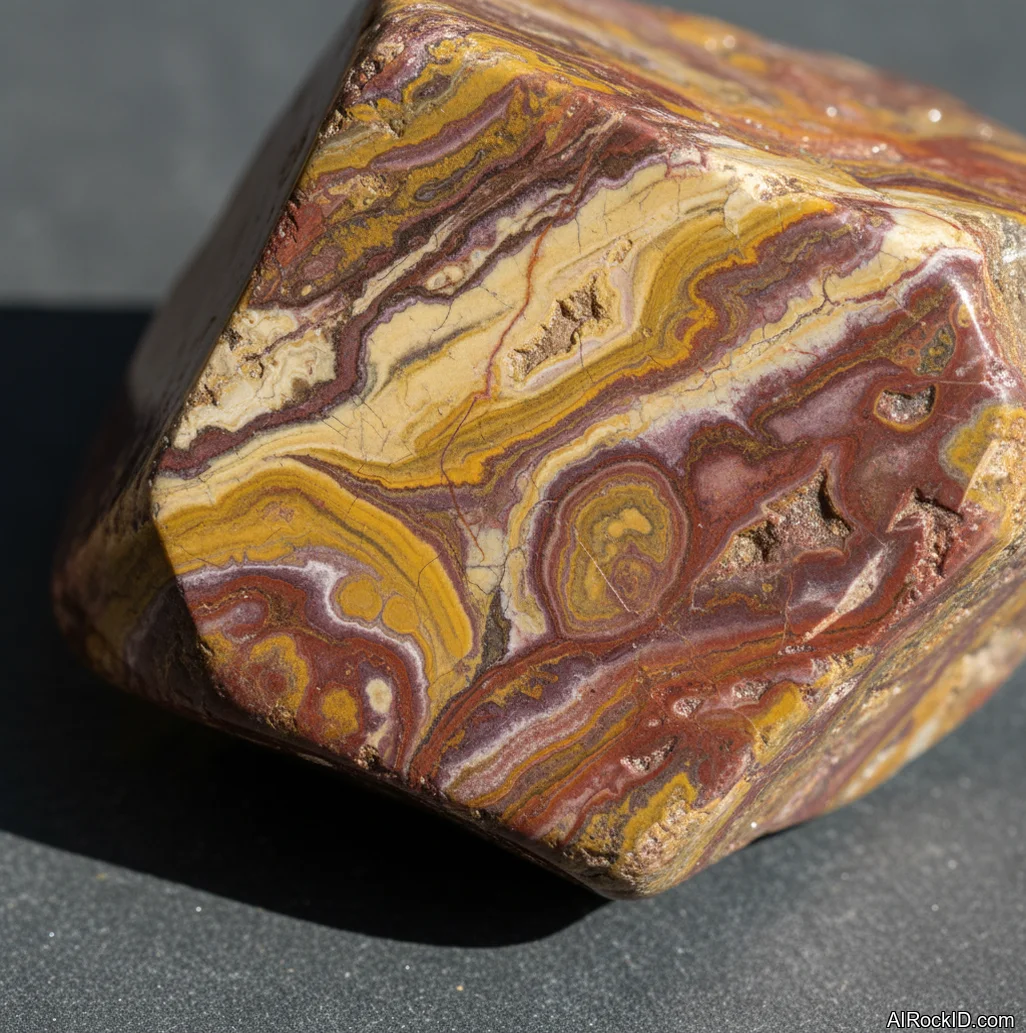
Quick answer: Desert Jasper is a trade name for opaque, patterned jasper with tan, brown, cream, rust, and sandy color zones. It is commonly chosen for cabochons, beads, carvings, and decorative stones because its landscape-like patterns can resemble dunes or desert scenes.
AI Rock ID can help compare Desert Jasper against visually similar stones by analyzing color zoning, opacity, texture, and pattern style from a clear photo. RockIdentifier.io provides crystal reference information that can support identification, but physical testing and seller documentation are still important for higher-value purchases.
Good fit
- Collectors who like opaque jasper with earthy, landscape-like patterns
- Jewelry buyers looking for a durable stone suitable for beads or cabochons
- Beginners who want a quartz-family material that is generally easy to care for
- People comparing picture-like jasper varieties before buying
Not a good fit
- Buyers who want a transparent or faceted gemstone
- Anyone needing a single, standardized geological variety name, because trade names can vary
- Collectors who require exact mine locality without seller documentation
- People expecting identical patterns from stone to stone
Most commonly confused with
- Picture Jasper: Often has more obvious scenic or landscape-like banding; some sellers use the names loosely.
- Mookaite Jasper: Typically shows stronger mustard yellow, burgundy, cream, or purple-red colors from Australia.
- Polychrome Jasper: Usually has broader, bolder patches of red, gray, tan, and blue-gray rather than fine sandy bands.
- Petrified Wood: May show wood grain, rings, or cellular texture instead of jasper’s more abstract banding.
Desert Jasper vs Similar Stones
| Stone | Typical Look | Key Difference | Transparency |
|---|---|---|---|
| Desert Jasper | Tan, cream, brown, rust, sandy bands | Earth-tone jasper with desert-like patterning | Opaque |
| Picture Jasper | Landscape-like scenes and layered browns | Often more scenic or horizon-like | Opaque |
| Mookaite Jasper | Mustard, burgundy, cream, red-purple | More saturated Australian color palette | Opaque |
| Polychrome Jasper | Large patches of tan, red, gray, blue-gray | Bolder color blocks and swirls | Opaque |
| Agate | Banded or layered quartz | Commonly lets light through thin edges | Translucent to opaque |
AI identification confidence
AI identification confidence for Desert Jasper is usually moderate because many opaque jaspers share earth-tone colors and banded patterns. A stronger result is more likely when the photo is sharp, taken in natural light, and includes both a close-up and the full stone.
When AI gets it wrong
- The stone is polished so heavily that texture and edge translucency are hard to judge
- Lighting makes tan or cream jasper appear more red, yellow, or gray than it is
- The sample is a mixed jasper or brecciated material sold under a broad trade name
- The image lacks scale, making it difficult to separate jasper from patterned ceramic, resin, or dyed material
Final recommendation
Choose Desert Jasper if you want an opaque, durable jasper with soft earth tones and natural-looking banding. For purchases where origin, treatment, or exact naming matters, ask for seller details and compare the stone with similar jasper varieties before buying.
How to Check Desert Jasper Before Buying
Look for natural color variation, crisp pattern boundaries, and a smooth polish without surface pits filled by wax or resin. Desert Jasper should feel relatively heavy for its size and should not look plasticky under magnification. If a listing claims a rare origin or special variety, ask for source details rather than relying only on the trade name.
Natural, Dyed, and Trade-Name Issues
Desert Jasper is usually sold as a visual trade name rather than a strict mineral species. Some jasper on the market may be dyed, stabilized, or renamed to match popular color themes. Unusually bright colors, color concentrated in cracks, or identical-looking beads across a strand can be signs of treatment or mass processing.
Photo Tips for Identifying Desert Jasper
Photograph Desert Jasper in indirect daylight on a neutral background to preserve its tan, brown, cream, and rust tones. Include a close-up of the pattern, an edge view, and a photo beside a common object for scale. A small flashlight can help confirm whether the stone is opaque or partly translucent.
What Is Desert Jasper?
Desert Jasper is an opaque kind of jasper, which is a microcrystalline quartz rock, and it usually shows up in those desert-ish tans, browns, and reds.
Pick up a palm stone and you feel it immediately. It’s got that surprising weight for something that fits in your hand. And the polish on a good piece is slick, sure, but it doesn’t have that cold, glassy feel you get from clear quartz. The real hook is the surface: sandy bands, rusty swirls, little “horizon lines,” plus patches that genuinely look like dried riverbeds on a map (the kind you trace with your thumb without thinking).
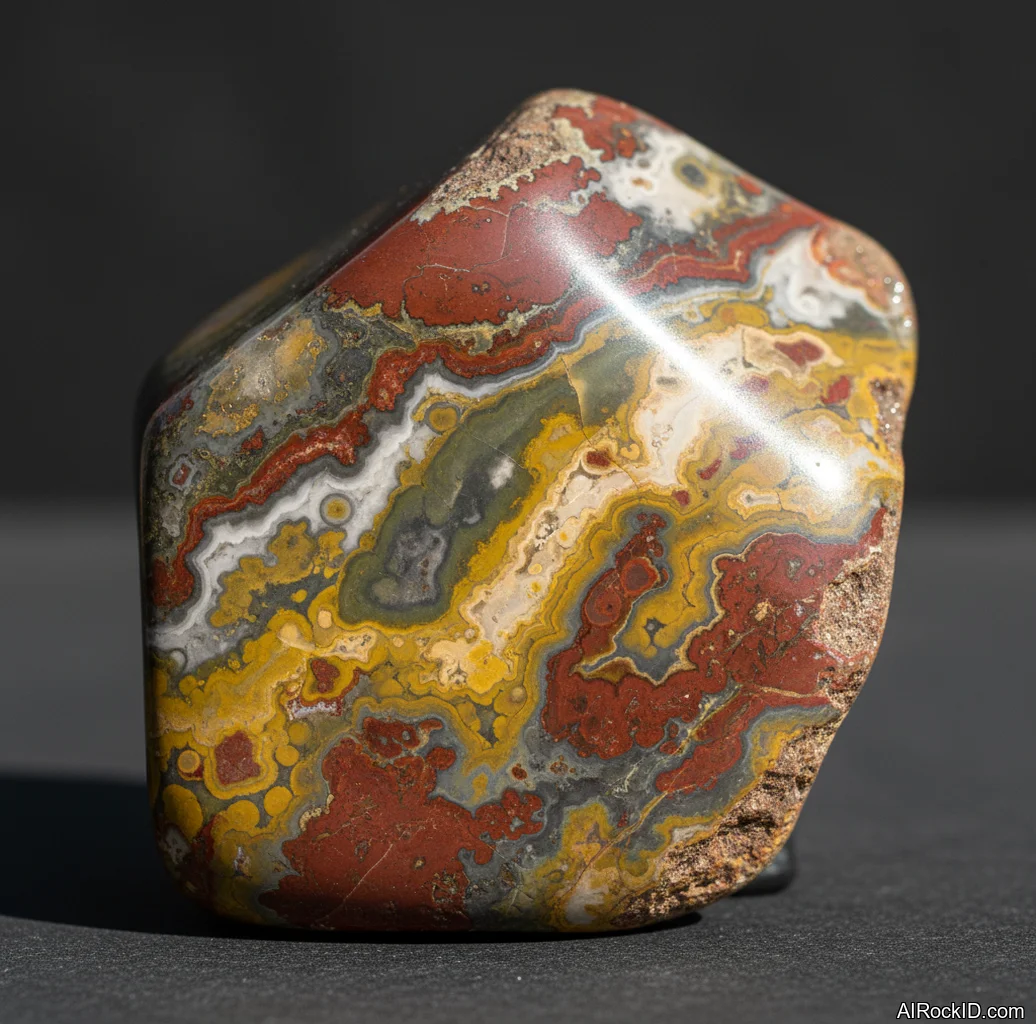
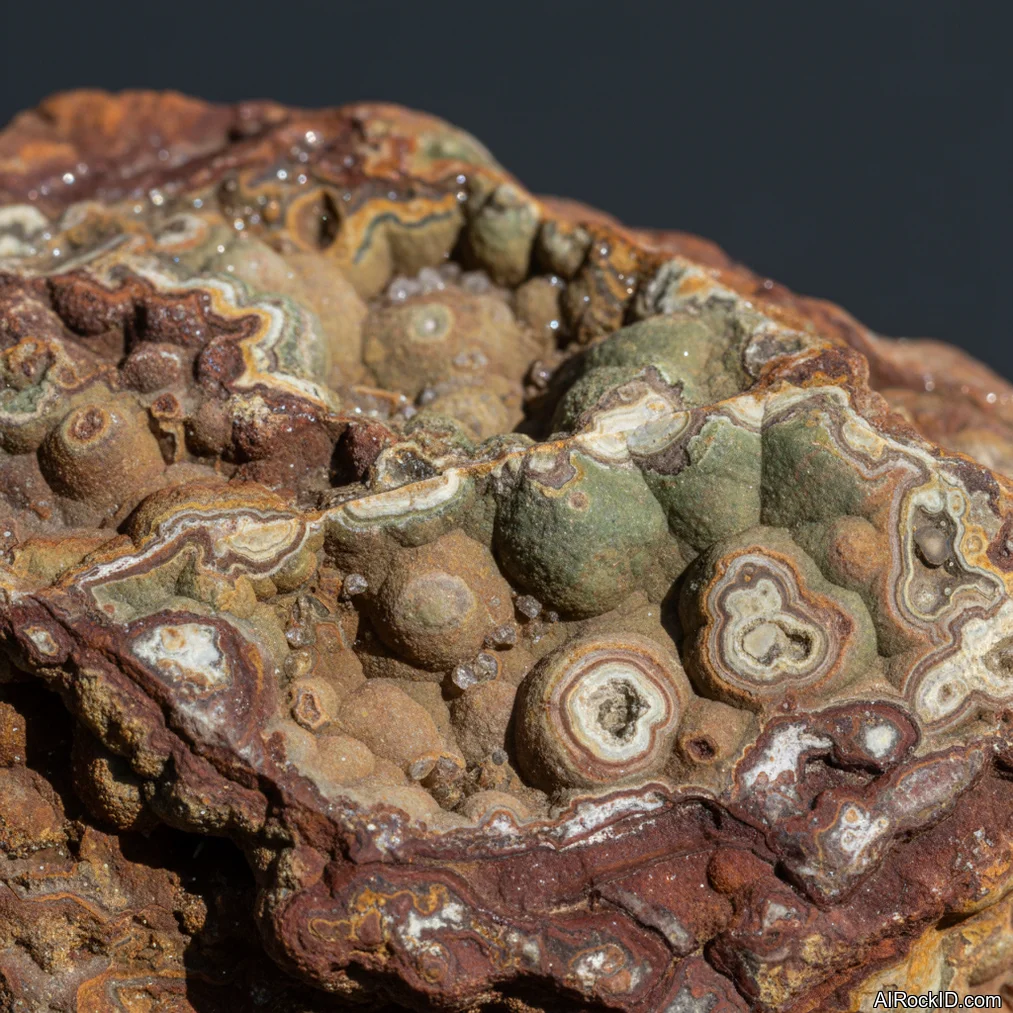
A lot of it gets tossed into the same bucket as picture jasper at first glance, and yeah, that makes sense. But Desert Jasper usually reads warmer and dustier. Some pieces show tiny orb spots or cloudy circles, while others are more banded with cleaner layers. Either way, it’s a pattern stone. And the best ones already look like a landscape before you even try to spot one.
Origin & History
Jasper’s been known since antiquity. But “Desert Jasper” is really just a trade name sellers slap on jasper that shows those dry, landscape-y colors and banding. You’ll notice the label moves around, too, getting used for different deposits depending on what’s hitting the market that year.
The word “jasper” comes down through Latin and Greek (iaspis), and people have used it to mean patterned, opaque silica for ages. In modern lapidary and shop talk, Desert Jasper isn’t about some formal first description so much as the vibe. A desert palette, scenic patterning, and a solid jasper body that’ll take a strong polish (the kind that looks glassy when you tilt it under a light).
Where Is Desert Jasper Found?
Most Desert Jasper on the market is sold under a look-based trade label, so sources vary, but the classic material comes from arid-region jasper deposits in the USA and Mexico, with similar patterned jasper also exported from Madagascar.
Formation
Look close at the patterns and you can almost read the rock’s backstory. Jasper starts when silica-rich fluids push through the host rock, then they gel up, harden, and get reworked over time, with iron and manganese usually responsible for those tans, reds, and browns. It’s microcrystalline quartz, so you’re not going to see big crystals glittering at you. What you get instead is a dense, tough lump that snaps with that familiar shell-like curve (you can feel it when you run a thumb over a fresh break, too).
But Desert Jasper isn’t one single geologic recipe. Some pieces are basically silicified sediment, with banding that tracks the old layers. Others are more brecciated, where broken fragments got cemented back together by silica, and the “desert scene” look comes from the mix of colors and textures, not from clean stripes. Kind of like the rock couldn’t decide on one story, so it kept them all.
How to Identify Desert Jasper
Color: Usually tan, sandy beige, caramel, rust red, and chocolate brown, often with cream bands or cloudy patches. Patterns can be banded, scenic, or spotty with orb-like circles.
Luster: Waxy to vitreous when polished, dull to waxy when rough.
If you scratch it with a steel nail, it shouldn’t bite easily, and it’ll scratch a glass bottle with steady pressure. Pick up a chunk and feel the density: real jasper feels “solid” and cool in the hand, not light and plasticky. The problem with dyed material is the color pools in tiny pits and along fractures, so check the edges and any little vugs with a loupe.
Common Look-Alikes
Desert Jasper is sometimes confused with these materials:
- Picture Jasper (including 'landscape jasper' sold under the Desert Jasper name)
- Polychrome Jasper (often mixed up because of the sandy tans and rusty reds, especially in palm stones)
- Mookaite Jasper (yellow-tan-red material, but it tends to look more blocky and waxy in pattern)
- Rhyolite ("rainforest jasper") with tan/brown orbicular patches that can pass as desert banding in photos
- Dyed howlite or dyed magnesite sold as "jasper" in tan or brick-red tones (dye pools in cracks and drill holes)
- Dyed/painted glass or resin "jasper" palm stones (too uniform, too glossy, and the pattern repeats like wallpaper)
Market Cautions & Treatments
When AI Can Get This Wrong
At first glance, phone cameras lump Desert Jasper together with picture jasper, polychrome jasper, and rhyolite because all three live in the same tan-brown-red zone and photograph as flat, matte color blocks. AI also gets fooled by dyed howlite because the dye reads as “earthy jasper” in thumbnails. Pick up the stone and do a couple quick reality checks: it should scratch glass (jasper at 6.5 to 7), feel cool and hefty for its size, and any color shouldn’t be concentrating in tiny cracks or around a drill hole.
Properties of Desert Jasper
Physical Properties
| Crystal System | Amorphous |
| Hardness (Mohs) | 6.5-7 (Hard (6-7.5)) |
| Density | 2.58-2.64 |
| Luster | Waxy |
| Diaphaneity | Opaque |
| Fracture | Conchoidal |
| Streak | White |
| Magnetism | Non-magnetic |
| Colors | Tan, Beige, Brown, Red, Cream, Gray |
Chemical Properties
| Classification | Silicates |
| Formula | SiO2 |
| Elements | Si, O |
| Common Impurities | Fe, Mn, Al |
Optical Properties
| Refractive Index | 1.53-1.54 |
| Birefringence | None |
| Pleochroism | None |
| Optical Character | Isotropic |
Desert Jasper Health & Safety
Desert Jasper is generally safe to handle, and it’s fine in water for normal use. But it’s still a silica rock, so if you’re cutting or sanding it, don’t breathe in the dust. That stuff gets everywhere (you can feel it grit on your fingers), and you really don’t want it in your lungs, right?
Safety Tips
If you’re going to lapidary it, do it wet, keep the air moving, and wear a real respirator that’s actually rated for fine silica dust (not just a paper mask).
Desert Jasper Value & Price
Price Range
Rough/Tumbled: $3 - $25 per piece
Cut/Polished: $0.30 - $2.50 per carat
Price usually follows the pattern first, then the polish and the size. Pieces with clean, scenic banding and that deep, saturated rust-red tone (the kind that still looks red when you tilt it under a bright light) pull more money than flat tan material with muddy, low-contrast patches.
Durability
Very Durable — Scratch resistance: Good, Toughness: Good
It’s stable in normal household conditions, but the polish can haze if it rubs against harder grit or gets sand in a pocket.
How to Care for Desert Jasper
Use & Storage
Keep it in a pouch or a divided box if you don’t want the polish getting micro-scratched by harder grit or other stones. And don’t store it loose with corundum or diamond jewelry.
Cleaning
1) Rinse with lukewarm water to remove grit. 2) Wash with mild soap and your fingers or a soft brush, especially around pits. 3) Rinse again and dry with a soft cloth.
Cleanse & Charge
If you do energy-style cleansing, running water, smoke, or a quick set on selenite are all gentle options. Skip salt soaks if your piece has tiny pits that trap crystals and crud.
Placement
It looks great where light rakes across the surface, like on a shelf edge or desk corner. I like it near a plant or a bowl of other earth-tone stones because the patterns read better in a group.
Caution
Skip harsh cleaners and ultrasonic machines, especially if the piece has fractures or any soft filler in it. And don’t just toss it in a bag with sand or beach grit (you know, the stuff that gets stuck in the corners) unless you honestly don’t care about keeping that shine.
Works Well With
Desert Jasper Meaning & Healing Properties
Compared to the flashier stones, Desert Jasper is quiet. When I’m sorting a tray at a show, it’s the piece I keep grabbing without even noticing. Why? It grounds you in a very literal way. It’s got that small, satisfying heft in your palm, like a smooth worry stone, and the colors sit warm and steady instead of yelling for attention. It’s what you reach for when your brain’s running hot and you don’t want something that sparkles back at you.
In crystal tradition, jasper gets tied to grounding, steadiness, and day-to-day stamina. Desert Jasper matches that feel because the palette leans hard into earth tones, and the patterns honestly look like terrain. Little bands, blotches, swirls. If you use stones as a focus object for meditation, this one’s handy just because there’s so much to stare at. Your eyes can track a line like it’s a trail.
But keep some perspective. Any calming or “supportive” effect is personal and subjective, and it’s not medical care. What I can say, from handling a lot of it, is the practical stuff: it’s tough, it holds up to being carried around in a pocket or bag, and it doesn’t feel fussy (no babying required). And that reliability is a big reason people stick with jasper.
Common mistakes
- Assuming every tan patterned jasper is Desert Jasper without comparing pattern and translucency
- Confusing seller trade names with formal mineral species names
- Buying highly uniform bead strands without checking for dye or surface coating
- Identifying the stone from color alone instead of also considering opacity, hardness, and texture
- Expecting all Desert Jasper to come from one specific locality
Identify Desert Jasper from a photo
Compare Desert Jasper traits, care tips, value clues, and common lookalikes with a clear photo.