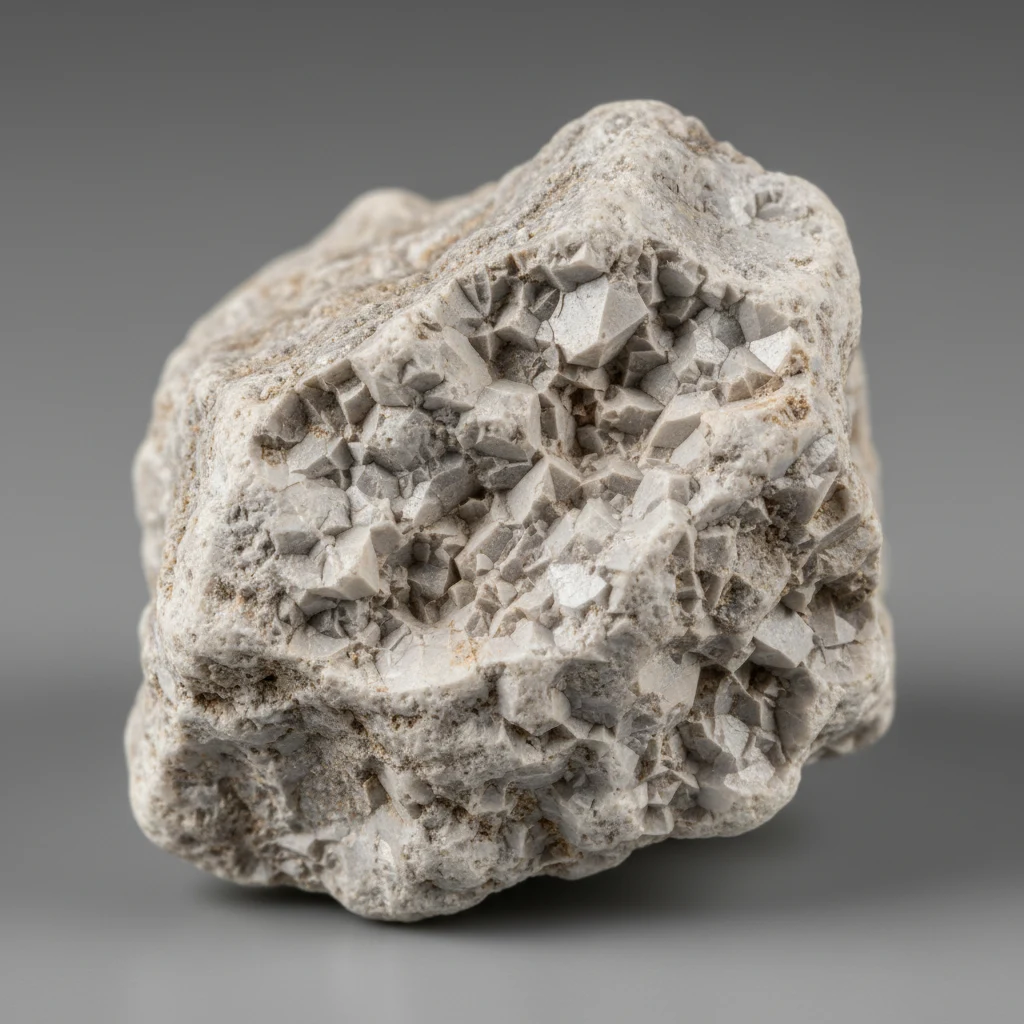
Chalk


Quick answer: Chalk is a soft, porous limestone made mostly of microscopic calcium carbonate shells from marine organisms. It is usually white to off-white, marks easily, and reacts with dilute acid because of its calcite content.
AI Rock ID can help screen chalk by checking visual traits such as color, texture, porosity, and whether the sample resembles other soft white rocks. RockIdentifier.io should be used alongside simple observations such as hardness, streak, and acid reaction for a more reliable identification.
Good fit
- Learning basic sedimentary rock identification
- Collections focused on limestone, calcite, or marine fossils
- Classroom demonstrations of softness, porosity, and acid reaction
- Collectors who prefer natural, unpolished rock specimens
Not a good fit
- Jewelry or pocket stones that need durability
- Wet displays or aquariums where calcium carbonate may dissolve or alter water chemistry
- Collectors seeking rare or high-value mineral specimens
- Situations where dust generation cannot be controlled
Why people search for this
People often search for chalk to confirm whether a soft white rock is natural limestone, school chalk, gypsum, or another lookalike. Identification usually depends on softness, powdery texture, porosity, and reaction with dilute acid.
Most commonly confused with
- Gypsum: Gypsum is also soft and white but is calcium sulfate, not calcium carbonate, and typically does not fizz strongly with dilute acid.
- Calcite: Calcite is the mineral that makes up chalk, but individual calcite crystals are usually denser and more crystalline than chalk.
- Limestone: Chalk is a type of limestone, but many limestones are harder, denser, and less powdery.
- Diatomite: Diatomite can look chalky and porous but is mainly silica from diatom shells rather than calcium carbonate.
Chalk vs. Common White Lookalikes
| Material | Main Composition | Key ID Clue | Typical Hardness |
|---|---|---|---|
| Chalk | Calcium carbonate | Soft, porous, powdery, fizzes with dilute acid | Mohs 1-2 |
| Gypsum | Calcium sulfate | Soft but usually little to no acid fizz | Mohs 2 |
| Calcite | Calcium carbonate | Crystalline pieces show cleavage and strong acid fizz | Mohs 3 |
| Diatomite | Silica-rich fossil material | Very light, porous, usually no carbonate fizz | Variable |
| Kaolinite | Aluminum silicate clay | Earthy clay feel, no carbonate fizz | Mohs 2-2.5 |
AI identification confidence
AI identification confidence for chalk is usually moderate when the sample is white, soft-looking, porous, and powdery. Confidence improves when the photo is paired with field notes such as acid reaction, hardness, location, and whether the rock leaves a white streak.
When AI gets it wrong
- A close-up photo lacks scale and makes gypsum, chalk, and kaolinite look similar.
- The specimen is dusty, weathered, or coated with soil, hiding its original texture.
- Manufactured chalk or plaster is photographed without context and mistaken for natural chalk.
- The app cannot verify acid reaction, hardness, or density from an image alone.
Final recommendation
For identification, treat chalk as a soft carbonate rock and confirm it with a hardness check and a dilute acid reaction when appropriate. For collecting, choose intact, dry pieces with clear natural texture and avoid specimens that crumble excessively during handling.
How to Tell Natural Chalk from Manufactured Chalk
Natural chalk usually has an irregular rock texture, fine pores, and may contain tiny fossil fragments or subtle layering. Manufactured chalk sticks are shaped, uniform, and may include binders, pigments, or gypsum rather than pure natural chalk. A natural chalk specimen is more likely to show uneven breakage and sedimentary texture under magnification.
Buying and Authenticity Tips for Chalk
Chalk is very common, so most specimens are inexpensive unless they come from a notable locality or include visible fossils. A seller should identify whether the piece is natural chalk, chalk limestone, school chalk, or a prepared teaching sample. Avoid paying premium prices for plain white chalk unless the locality, size, or fossil content is clearly documented.
Field Clues for Chalk Deposits
Chalk commonly forms in marine sedimentary settings and may appear as white cliffs, soft beds, nodules, or crumbly layers. Fresh surfaces are often pale and powdery, while weathered surfaces may look gray, tan, or stained by iron oxides. Fossil shells, flint nodules, or fine bedding can support a chalk identification.
What Is Chalk?
Chalk is a very common, soft, white to off-white sedimentary rock made mainly of calcium carbonate, CaCO3. In hand, it feels light, dry, and powdery rather than glassy; the surface has a fine, porous texture and a dull, earthy luster. Mineralogically, this rock is tied to calcite, and its listed hardness is only 1-2 on the Mohs scale.
For collectors, chalk is valued less for sparkle and more for locality, purity, and the story it carries from marine deposits. It is opaque, non-magnetic, and typically shows a white streak. Because it is fragile, scratches easily, and can crumble with rough handling, a good chalk specimen is best displayed in a stable place rather than passed around like a durable gemstone.
Origin & History
The name chalk comes from the Old English word “cealc,” a term recorded in use since the 14th century. As a geological material, chalk entered formal geological literature in the late 18th century, where its soft white character and sedimentary origin made it easy to distinguish from harder carbonate rocks.
In a collection tray, chalk often reads as humble at first glance: pale, matte, and easily marked by a fingernail. Its cultural and scientific value comes from that simplicity. It represents long-lived marine sedimentation in a form that can be held in the hand. For external comparison of chalk as a carbonate rock and calcite-related material, mindat.org is a useful reference.
Where Is Chalk Found?
Chalk is commonly found in marine sedimentary deposits. Notable sources include the United Kingdom, France, and Germany, with well-known localities such as the White Cliffs of Dover in England, the Champagne region of France, and areas of Northern Germany.
Formation
Chalk forms over millions of years from the accumulation of microscopic marine organisms’ remains, especially coccolithophores. Those tiny remains build up as calcium-carbonate-rich sediment, eventually producing the soft, porous rock recognized as chalk.
That origin explains the feel of the specimen: chalk is not a dense, glossy crystal mass but a fine sedimentary rock with a dull surface and low durability. Its calcium carbonate composition, CaCO3, places it in the carbonate chemical classification, and common listed impurities include magnesium and iron.
How to Identify Chalk
Identify chalk first by touch and color: it is typically white or off-white, sometimes gray, and it feels noticeably soft. A fingernail can scratch it easily, which matches its very low Mohs hardness of 1-2. Its luster is dull to earthy, and it is opaque rather than transparent.
Other useful checks are its white streak, non-magnetic response, and light, porous feel. Chalk has a listed density of 1.5-2.0 g/cm3 and a conchoidal fracture, but in practical handling its fragility is the giveaway. Avoid confusing it with more durable white rocks; chalk’s surface marks and powders far more readily.
Properties of Chalk
Physical Properties
| Crystal System | Hexagonal |
| Hardness (Mohs) | 1-2 (Mohs) (Very Soft (1-2)) |
| Density | 1.5-2.0 g/cm3 |
| Luster | Dull |
| Diaphaneity | Opaque |
| Fracture | Conchoidal |
| Streak | White |
| Magnetism | Non-magnetic |
| Colors | White, Gray |
Chemical Properties
| Classification | Carbonate |
| Formula | CaCO3 |
| Elements | Ca, C, O |
| Common Impurities | Mg, Fe |
Optical Properties
| Refractive Index | 1.65 |
| Birefringence | None |
| Pleochroism | None |
| Optical Character | Isotropic |
Chalk Health & Safety
Chalk poses minimal health risks under normal conditions.
Chalk Value & Price
Price Range
Rough/Tumbled: $1 - $10 per specimen
Cut/Polished:
Price is influenced by purity and locality.
Durability
Fragile — Scratch resistance: Poor, Toughness: Poor
Chalk is easily damaged and should be handled with care.
How to Care for Chalk
Use & Storage
Store in a cool, dry place away from moisture.
Cleaning
Clean with a soft brush or cloth. Avoid using water.
Cleanse & Charge
Place in sunlight for a few hours to recharge.
Placement
Display in a stable location to avoid breakage.
Caution
Handle with care to prevent crumbling.
Works Well With
Chalk Meaning & Healing Properties
In crystal-healing use, chalk is believed to support clarity, communication, grounding, meditation, and emotional healing. Its soft, pale surface suits quiet work rather than flashy display; many practitioners use it as a gentle reminder to speak plainly and stay mentally clear.
Chalk is associated with the Throat chakra, Gemini, Mercury, and the Earth element. For care, keep it in a cool, dry place away from moisture, handle it gently to prevent crumbling, and clean it with a soft brush or cloth. Although it is listed as safe in water, routine cleaning with water is not recommended for this porous, fragile material.
Identify Chalk from a photo
Compare Chalk traits, care tips, value clues, and common lookalikes with a clear photo.
Common mistakes
- Assuming every soft white rock is chalk without checking whether it fizzes with dilute acid.
- Confusing school chalk with natural chalk; many modern chalk sticks are gypsum-based or mixed with binders.
- Using chalk in water-based displays without considering that calcium carbonate can affect water chemistry.
- Overcleaning chalk with water or scrubbing, which can cause crumbling and loss of surface detail.
- Paying high prices for ordinary chalk specimens without locality information or fossil features.
- Relying only on color, since gypsum, kaolinite, diatomite, and weathered limestone can also be white.