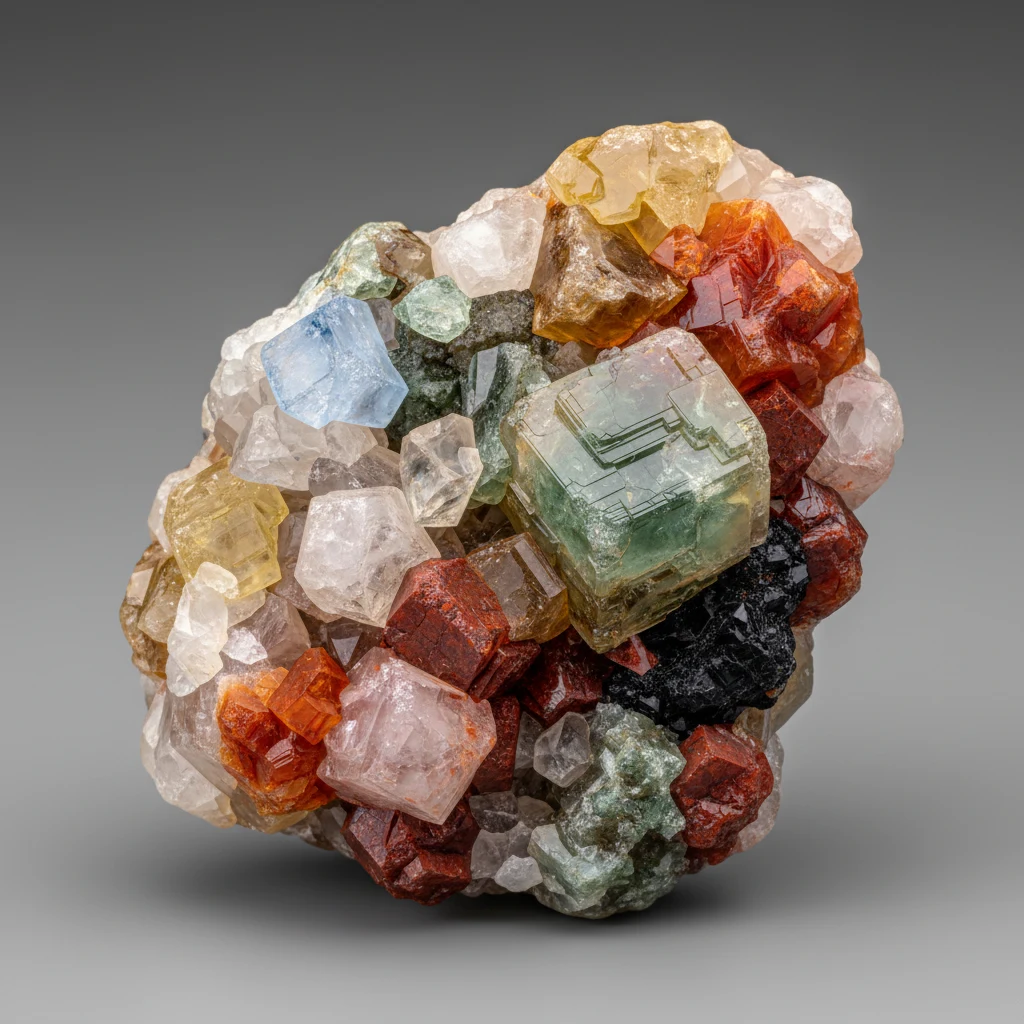
Calcite


Quick answer: Calcite is a calcium carbonate mineral best recognized by its Mohs hardness of 3, perfect rhombohedral cleavage, and strong fizzing reaction with dilute acid. It is often confused with quartz, gypsum, aragonite, fluorite, and halite, so hardness, cleavage shape, and acid reaction are useful checks.
AI Rock ID can help screen a calcite specimen by comparing visible traits such as cleavage, luster, color, and crystal habit from a photo. RockIdentifier.io should be used with physical checks such as a scratch test and acid reaction when a confident identification matters.
Good fit
- Collectors who want an easy-to-test mineral with clear diagnostic traits
- Students learning hardness, cleavage, and acid reaction in mineral identification
- Specimen collectors interested in rhombohedral crystals, optical calcite, or colorful massive forms
- People comparing common carbonate minerals in field or classroom settings
Not a good fit
- Jewelry that will be worn daily or exposed to knocks and abrasion
- Aquariums or water features where calcium carbonate may affect water chemistry
- Collectors who need a mineral that resists acids, cleaners, or outdoor weathering
- Situations where an acid test cannot be performed safely or responsibly
Most commonly confused with
- Quartz: Quartz is much harder at Mohs 7, lacks strong rhombohedral cleavage, and does not fizz in dilute acid.
- Aragonite: Aragonite has the same chemical formula as calcite but commonly forms different crystal habits and has different cleavage.
- Gypsum: Gypsum is softer at Mohs 2 and does not show calcite’s strong acid fizz.
- Fluorite: Fluorite has Mohs hardness 4 and octahedral cleavage rather than calcite’s rhombohedral cleavage.
Calcite Lookalike Identification
| Mineral | Hardness | Key Difference | Acid Reaction |
|---|---|---|---|
| Calcite | 3 | Rhombohedral cleavage; may show double refraction | Strong fizz |
| Quartz | 7 | No cleavage; scratches glass easily | No fizz |
| Gypsum | 2 | Can be scratched by a fingernail | No fizz |
| Fluorite | 4 | Octahedral cleavage; often cubic crystals | No fizz |
| Aragonite | 3.5–4 | Commonly forms needles, sprays, or pseudo-hexagonal twins | Fizzes |
AI identification confidence
AI identification is usually stronger for calcite when the photo clearly shows rhombohedral cleavage, transparent optical calcite, scalenohedral crystals, or a freshly broken surface. Confidence drops when the specimen is massive, polished, dyed, or photographed under colored lighting without scale or context.
When AI gets it wrong
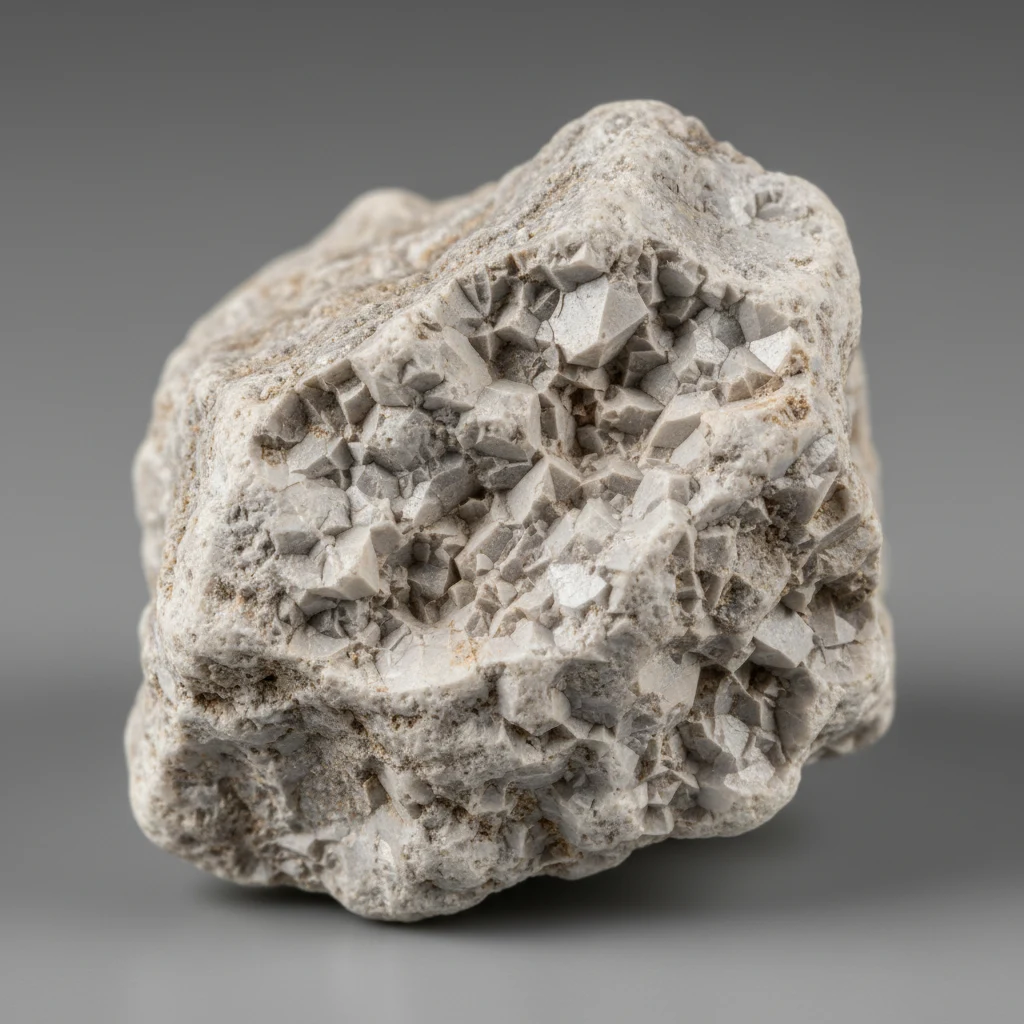
- White, gray, or clear massive pieces can be mistaken for quartz, gypsum, or halite in photos.
- Polished calcite may hide cleavage and surface texture, making it harder to separate from other decorative stones.
- Aragonite and calcite can look similar because both are calcium carbonate and both react with acid.
- Dyed calcite can be misread as a naturally vivid mineral if the photo does not show color concentration in cracks.
Final recommendation
Choose calcite when you want a mineral with straightforward identification tests and a wide range of crystal habits and colors. For daily-wear jewelry, outdoor display, or acid-prone environments, harder and less reactive minerals are usually more practical.
How to Check Calcite Before Buying
Ask the seller for the locality, whether the specimen is natural or dyed, and whether any coating or stabilizer has been applied. Look for rhombohedral cleavage faces, a glassy to pearly luster, and color that matches the stated variety. For transparent optical calcite, check whether printed text appears doubled through the specimen. Avoid using acid on a valuable display face unless the seller allows testing and the test can be done on an inconspicuous spot.
Natural, Dyed, and Treated Calcite
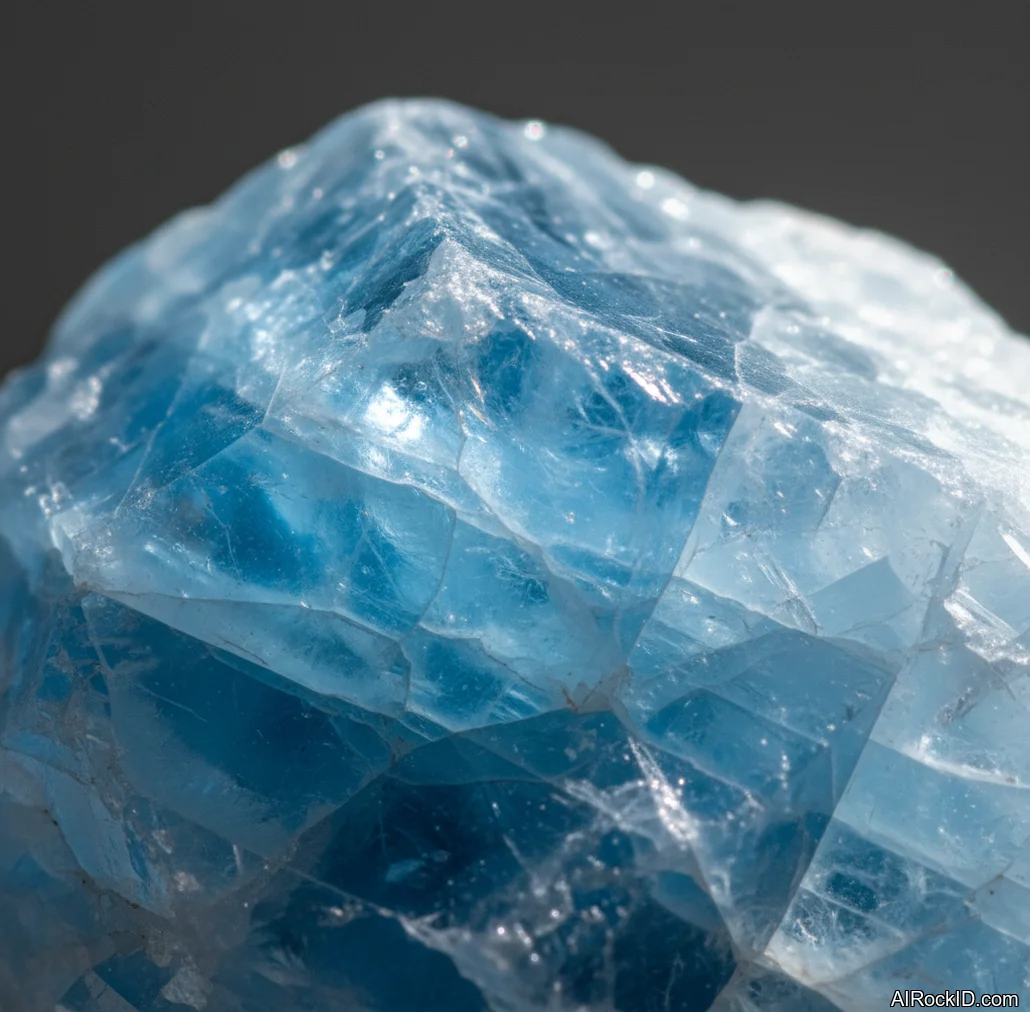
Calcite occurs naturally in many colors, including clear, white, yellow, orange, green, blue, pink, and gray. Some bright blue, green, red, or multicolored pieces sold as decorative stones may be dyed, especially if color is concentrated along cracks or pores. A treated specimen is not necessarily fake, but it should be disclosed because treatment affects collectibility and comparison with natural material.
Field Clues for Calcite
In the field, calcite commonly appears in limestone, marble, veins, caves, and hydrothermal deposits. A steel knife or copper coin can help check its low hardness, and a small drop of dilute hydrochloric acid or vinegar can help confirm carbonate reaction. Fresh surfaces usually react more clearly than weathered surfaces, especially on limestone or massive calcite.
What Is Calcite?
Calcite is calcium carbonate, CaCO3, and one of Earth’s most widespread rock-forming minerals. In hand, it can look glassy, pearly, chalky, transparent, or softly colored, but the collector’s clues stay consistent: Mohs hardness 3, perfect rhombohedral cleavage, white streak, and a strong fizz in cold dilute hydrochloric acid.
This is the main mineral in limestone, chalk, and marble, and it also turns up as veins, cave deposits, geodes, fossils, and sharp crystals. Clear pieces, especially optical calcite or Iceland spar, can double a line of text beneath them because calcite has very strong birefringence.
Origin & History
Calcite has been used and recognized since antiquity because people handled it as limestone, lime mortar, marble, chalk, and shell material long before mineral names were formalized. Its name comes from the Latin “calx,” meaning lime, a direct clue to its long connection with burned lime and building materials.
Clear Iceland spar from Iceland became especially important in optics because its strong double refraction helped scientists study polarized light. For checking classic specimen localities and historical labels, mindat.org is a useful reference to compare with mine names, old district names, and variety terms such as calcspar, lime spar, and Iceland spar.
Where Is Calcite Found?
Calcite is found worldwide in sedimentary, metamorphic, and hydrothermal settings. Collectors meet it in limestone quarries, caves, geodes, veins, fossils, marble, and carbonate-hosted ore deposits, where it may form rhombohedra, scalenohedra, massive pieces, or well-formed display crystals.
Formation
Calcite forms when calcium carbonate precipitates from seawater, freshwater, hydrothermal fluids, and cave waters. It is also a major biogenic mineral, produced by many marine organisms in shells and skeletons, so a piece of calcite may connect directly to limestone, chalk, fossils, or later recrystallized marble.
In veins and cavities, calcite commonly crystallizes from low- to moderate-temperature fluids. That is where collectors often see sharp rhombohedra, scalenohedra, dogtooth forms, nailhead crystals, or massive aggregates, sometimes associated with other minerals in carbonate-hosted ore deposits.
How to Identify Calcite
Calcite is identified by a practical combination of softness, cleavage, acid reaction, and optical behavior. It has Mohs hardness 3, so it can scratch a fingernail but is scratched by a copper coin or knife; fresh broken or cleaved surfaces tend to show perfect rhombohedral cleavage rather than cubic cleavage.
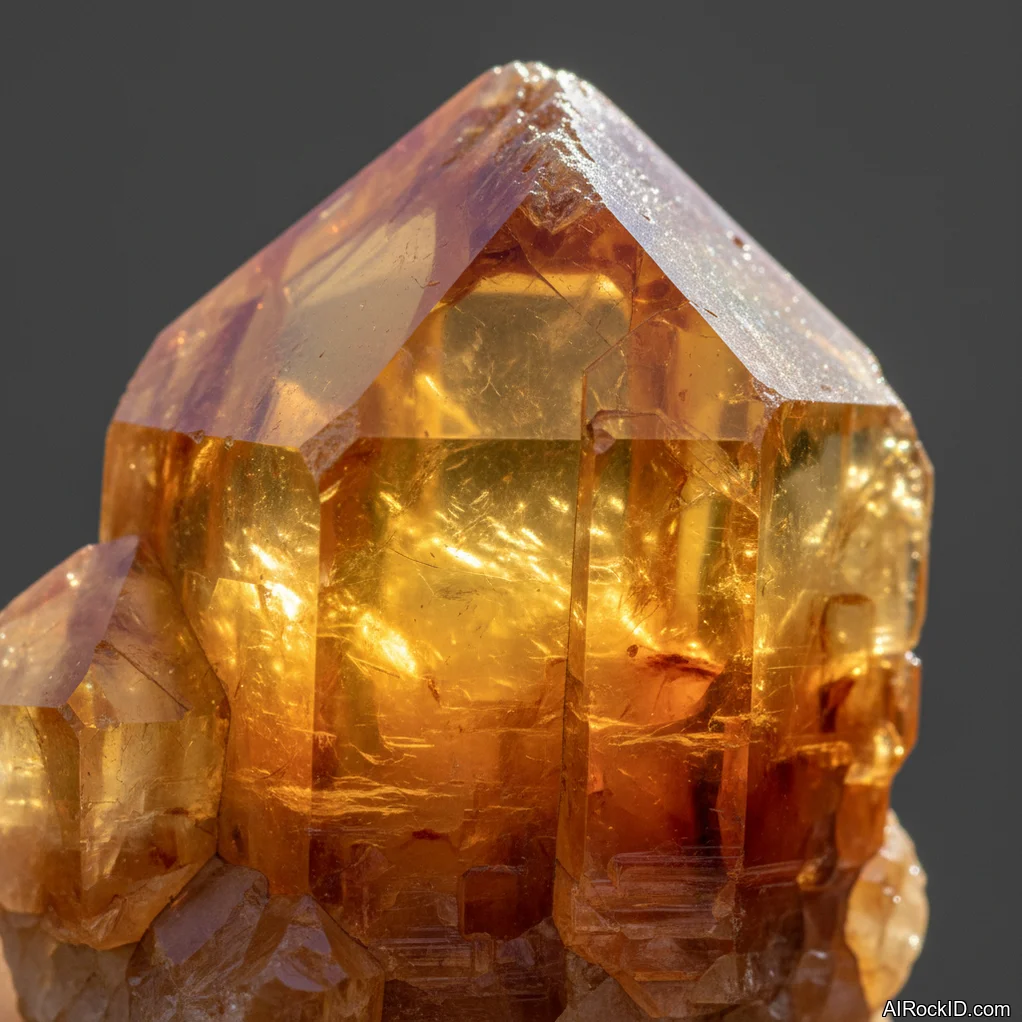
Pure calcite is colorless or white, but impurities and inclusions can make it yellow, orange, red, pink, blue, green, gray, brown, or black. Look for vitreous faces, pearly cleavage surfaces, white streak, non-magnetic behavior, and in clear pieces, strong double refraction that makes text or a line appear doubled through the crystal.
Properties of Calcite
Physical Properties
| Crystal System | Trigonal |
| Hardness (Mohs) | 3 on the Mohs scale (Soft) |
| Density | About 2.71 g/cm3 |
| Luster | Vitreous to pearly; earthy in chalky masses |
| Diaphaneity | Transparent to translucent, rarely opaque in impure massive material |
| Fracture | Conchoidal to uneven; brittle, with perfect rhombohedral cleavage |
| Streak | White |
| Magnetism | Non-magnetic |
| Colors | Colorless, White, Yellow, Orange, Red, Pink, Blue, Green, Gray, Brown, Black |
Chemical Properties
| Classification | Carbonate mineral |
| Formula | CaCO3 |
| Elements | Calcium, Carbon, Oxygen |
| Common Impurities | Magnesium, Iron, Manganese, Strontium, Zinc, Lead, Organic matter, Clay minerals |
Optical Properties
| Refractive Index | nω 1.658, nε 1.486 |
| Birefringence | Very strong, about 0.172 |
| Pleochroism | None in pure calcite; weak or absent in most colored specimens |
| Optical Character | Uniaxial negative |
Calcite Health & Safety
Calcite is not considered toxic and is safe to handle, but calcite dust is a nuisance particulate that should not be inhaled. Water is not a major toxicity issue, but soaking can dull, etch, or weaken specimens, especially in acidic water.
Calcite Value & Price
Price Range
Rough/Tumbled: Common rough or small crystals are often US$1-20; attractive cabinet specimens commonly range from US$20-300; exceptional, large, transparent, fluorescent, or classic-locality specimens can sell for hundreds to several thousand dollars.
Cut/Polished:
Value depends on crystal size, transparency, sharpness, damage, color, fluorescence, locality, association with other minerals, and whether the specimen shows special habits such as dogtooth spar, nailhead crystals, or optical Iceland spar.
Durability
Low durability — Scratch resistance: Poor; calcite is easily scratched by common household materials and by most jewelry stones., Toughness: Brittle with perfect cleavage, so crystals can chip or split if dropped or struck.
Stable in normal dry display conditions but reacts with acids, can be etched by acidic cleaners, and may be damaged by prolonged soaking or rough ultrasonic cleaning.
How to Care for Calcite
Use & Storage
Store calcite separately from harder minerals such as quartz, feldspar, and topaz to prevent scratches. Wrap delicate crystals or keep them in a padded display box.
Cleaning
Clean gently with a soft brush, lukewarm water if necessary, and mild soap for stable specimens. Avoid vinegar, lemon juice, hydrochloric acid, ultrasonic cleaners, steam cleaners, and abrasive scrubbing.
Cleanse & Charge
For metaphysical care, use smoke, sound, moonlight, or dry placement on selenite rather than saltwater or acidic water methods.
Placement
Best kept on shelves, in display cabinets, study collections, or low-contact decorative settings. Avoid high-wear jewelry use unless the stone is protected and worn carefully.
Caution
Calcite is soft and acid-sensitive. Do not test valuable specimens with acid on a visible surface, and do not soak brightly colored, included, or fragile pieces.
Works Well With
Calcite Meaning & Healing Properties
In modern crystal-healing traditions, calcite is associated with clarity, amplification, renewal, calm, focus, emotional release, and gentle energy clearing. These meanings are cultural and spiritual beliefs, not scientifically verified medical effects, but many collectors keep calcite where its color, brightness, and soft luster can be enjoyed without heavy handling.
Metaphysical correspondences for calcite include the Crown, Third Eye, Solar Plexus, Sacral, and Heart chakras, with Cancer, Leo, and Pisces listed among its zodiac associations. Because calcite is soft, brittle, and acid-sensitive, cleanse it with smoke, sound, moonlight, or dry placement on selenite rather than saltwater, vinegar, lemon juice, or long soaking.
Identify Calcite from a photo
Compare Calcite traits, care tips, value clues, and common lookalikes with a clear photo.
Common mistakes
- Identifying any clear crystal as quartz without checking hardness or cleavage
- Assuming all orange or honey-colored calcite is citrine
- Using a strong acid test on a display surface and leaving visible damage
- Buying dyed calcite as natural color without asking for treatment disclosure
- Confusing rhombohedral cleavage fragments with intentionally cut crystal shapes
- Using calcite in rings or bracelets without accounting for its low scratch resistance
Calcite FAQ
Related Crystals
Related pages: Stalactitic Calcite · Calcium Carbonate Calcite · Blue Apatite in Orange Calcite