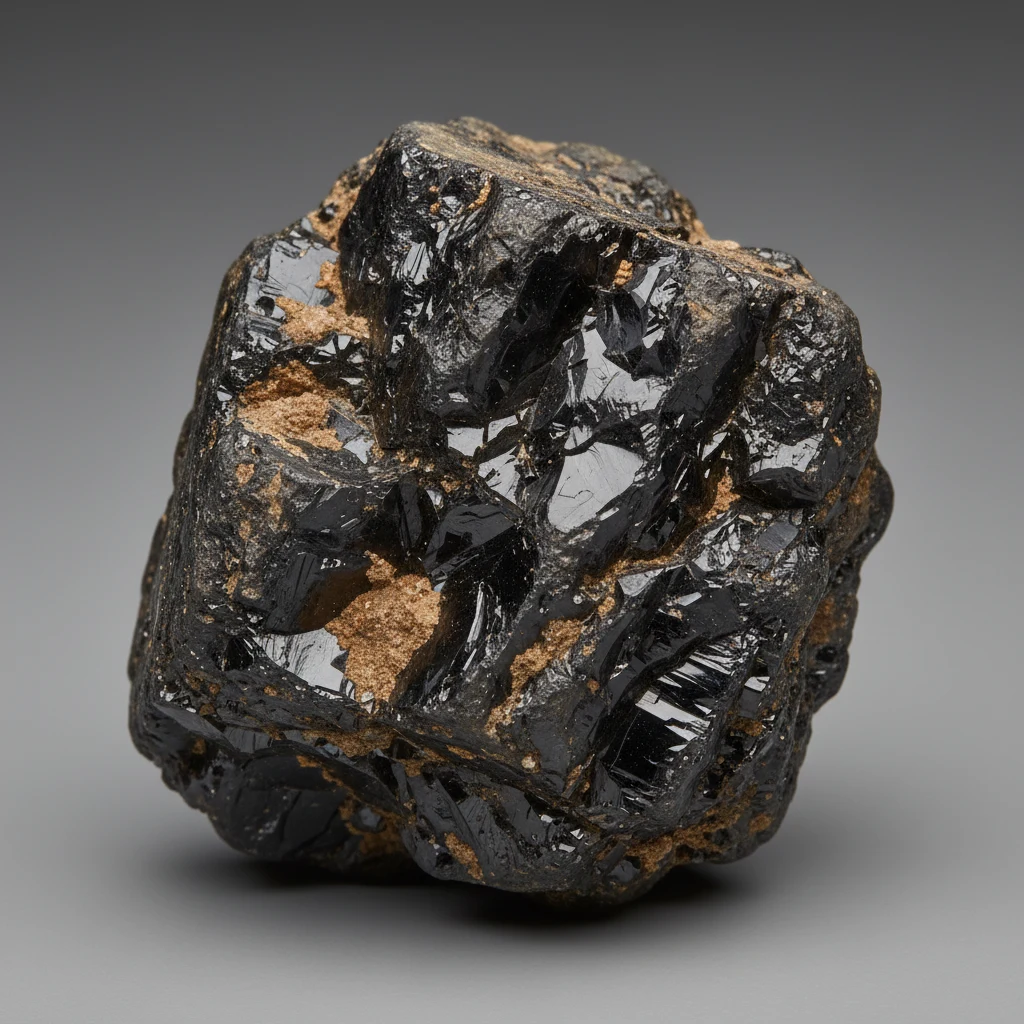
Coal


Quick answer: Coal is a soft, carbon-rich organic sedimentary rock that is usually black to brownish black and may look dull, silky, or shiny depending on type. It is commonly confused with jet, anthracite, bitumen, and dark minerals, so hardness, streak, weight, and texture are useful checks.
AI Rock ID can help compare a coal specimen against visually similar black materials using photo-based features such as luster, color, and surface texture. RockIdentifier.io provides educational identification support, but field tests and provenance are important when coal could be confused with jet, slag, or industrial carbon materials.
Good fit
- Collectors building an educational sedimentary rock or fossil fuel reference set
- Students comparing organic rocks with minerals and man-made black materials
- People who want a lightweight black specimen with visible layering or plant-derived texture
- Collectors interested in the difference between lignite, bituminous coal, and anthracite
Not a good fit
- Jewelry use, because most coal is soft, brittle, and dusty
- Children’s handling collections without supervision, due to dust and breakage
- Wet display environments, because some specimens can stain, crumble, or degrade
- Anyone expecting a crystal structure, since coal is a rock, not a mineral crystal
Most commonly confused with
- Jet: Jet is a compact, polishable organic gemstone from fossilized wood, while most coal is more crumbly and not suited for durable jewelry.
- Anthracite: Anthracite is a high-rank coal with a harder, brighter, more metallic-looking luster than lower-rank coal.
- Obsidian: Obsidian is volcanic glass with conchoidal fracture and greater hardness, while coal is softer and usually leaves a dark streak.
- Black Tourmaline: Black tourmaline is a much harder mineral with striated crystal faces, unlike soft, carbon-rich coal.
Coal vs Similar Black Materials
| Material | Typical hardness | Key clue | Common use |
|---|---|---|---|
| Coal | Mohs 1–2 | Soft, black streak, may be layered or dusty | Education, fuel history, collecting |
| Jet | Mohs 2.5–4 | Lightweight, takes a smooth polish | Jewelry, carving |
| Obsidian | Mohs 5–5.5 | Glassy fracture and sharper broken edges | Collecting, lapidary |
| Black tourmaline | Mohs 7–7.5 | Hard, striated crystal habit | Mineral collecting |
| Slag | Variable | Bubbles or glassy industrial texture | Industrial byproduct, curiosity specimens |
AI identification confidence
AI identification of coal is usually more confident when the photo shows matte-to-shiny black color, visible layering, crumbly edges, and a dark streak test result. Confidence drops when the sample is polished, wet, backlit, or shown without scale, because jet, obsidian, slag, and black minerals can appear similar in a single image.
When AI gets it wrong
- Polished jet can be labeled as coal because both are lightweight, black, and organic in origin.
- Wet coal can look glassy and may be confused with obsidian or slag in photos.
- Anthracite may be identified too broadly as coal without noting its higher rank and brighter luster.
- Dark man-made carbon products, coke, or asphalt-like materials can resemble natural coal without location context.
Final recommendation
Choose coal specimens with clear locality information, stable surfaces, and minimal loose dust if they are intended for display or teaching. For jewelry or polished black organic material, jet is usually the more appropriate material than ordinary coal.
How to Tell Natural Coal from Lookalikes
Natural coal is usually very soft, can leave a black or brownish black streak, and may show layers or plant-derived texture. Obsidian is harder and glassier, black tourmaline is much harder and crystalline, and slag may show bubbles or uneven industrial textures. A simple hardness check against a fingernail or copper coin can quickly separate coal from many mineral lookalikes.
Buying Coal Specimens
Coal specimens are usually inexpensive, but value can vary with rank, locality, display quality, and association with fossils or historic mining regions. A good educational specimen should have a labeled source, stable pieces, and enough surface detail to show luster, layering, or texture. Avoid pieces that shed excessive dust if the specimen will be handled often.
Coal, Jet, and Anthracite in Collections
Coal is a broad rock category, while jet is a compact organic gem material and anthracite is a high-rank coal with a more lustrous appearance. Collectors often keep them together to show how carbon-rich organic materials can differ in hardness, polish, and formation history. Labels should identify the specific material when possible rather than using only the word “coal.”
What Is Coal?
Coal is a very common organic sedimentary rock, not a crystal in the usual collector sense. In the hand it is black to dark brown, opaque, carbon-rich, and noticeably light for its size, with a surface that can look dull or shiny depending on the piece.
Its basic identity is practical and direct: coal is combustible rock formed from decayed plant matter. It is very soft at Mohs 1-2, has a black streak, and is best handled as a display or study specimen rather than a durable jewelry material.
Origin & History
The name coal comes from the Old English word cāle, and the material has been used since ancient times, with first known use around 3500 BC. That long history gives even an ordinary lump a strong cultural weight: it is a rock tied to heat, work, industry, and stored plant carbon.
For collectors, coal is usually valued more for scientific and cultural context than rarity or polish. Locality labels matter, especially when a piece comes from a known sedimentary basin; locality and naming information can be cross-checked through mindat.org when building a reference collection.
Where Is Coal Found?
Coal is most commonly found in sedimentary basins. The major countries listed for coal are China, India, and the USA, with notable localities including Shanxi in China, Jharkhand in India, and the Appalachian Region in the USA.
Formation
Coal forms when plant material accumulates in swampy environments and is compacted over millions of years. Heat and pressure transform that organic material into a carbon-rich sedimentary rock, producing the black or brownish-black material recognized as coal.
This formation history explains its feel: light in the hand, opaque, soft, and often dusty if abraded. Coal may contain listed impurities such as ash and sulfur, and its chemical classification is organic compound with formula C; for broader geologic resource context, see USGS.
How to Identify Coal
Identify coal by its black to dark brown color, opaque body, and shiny to dull luster. It is amorphous rather than crystalline, non-magnetic, very soft at Mohs 1-2, and relatively light, with a listed density of 1.1-1.5 g/cm3.
A simple collector test is the streak: coal leaves a black mark on unglazed porcelain. Its fracture is conchoidal, and it has no refractive index, birefringence, or pleochroism listed; avoid grinding or breathing dust, because coal dust can be harmful to the lungs.
Properties of Coal
Physical Properties
| Crystal System | Amorphous |
| Hardness (Mohs) | 1-2 (Mohs) (Very Soft (1-2)) |
| Density | 1.1-1.5 g/cm3 |
| Luster | Dull |
| Diaphaneity | Opaque |
| Fracture | Conchoidal |
| Streak | Black |
| Magnetism | Non-magnetic |
| Colors | Black, Brown |
Chemical Properties
| Classification | Organic compound |
| Formula | C |
| Elements | C, H, O, N, S |
| Common Impurities | Ash, Sulfur |
Optical Properties
| Refractive Index | None |
| Birefringence | None |
| Pleochroism | None |
| Optical Character | Isotropic |
Coal Health & Safety
Long-term exposure to coal dust can cause respiratory issues.
Coal Value & Price
Price Range
Rough/Tumbled: $30 - $150 per ton
Cut/Polished:
Price is affected by grade, location, and market demand.
Durability
Moderate — Scratch resistance: Fair, Toughness: Good
Coal is generally stable but can be prone to spontaneous combustion.
How to Care for Coal
Use & Storage
Store in a cool, dry place away from moisture.
Cleaning
Wipe with a damp cloth to remove dirt. Avoid using harsh chemicals.
Cleanse & Charge
Place under running water or in sunlight for a few hours.
Placement
Keep in areas associated with grounding and stability.
Caution
Avoid prolonged exposure to coal dust.
Works Well With
Coal Meaning & Healing Properties
In traditional crystal practice, coal is associated with grounding energy, stability, strength, protection, insight, stress relief, and courage. It is linked with the Root chakra, Capricorn, Saturn, and the Earth element, so practitioners usually place it where a steady, anchoring presence is desired.
Coal is not used for medical purposes, and its dust hazard should be respected. It is safe to handle as a solid specimen, but avoid prolonged dust exposure, use an appropriate mask if dust is present, and store it in a cool, dry place away from moisture.
Identify Coal from a photo
Compare Coal traits, care tips, value clues, and common lookalikes with a clear photo.
Common mistakes
- Calling all shiny black coal “jet” without checking polishability, texture, and source.
- Assuming coal is a mineral crystal; it is an organic sedimentary rock.
- Using water or oil to improve appearance, which can alter the surface and increase staining risk.
- Handling crumbly samples over light-colored fabric or paper, where black dust can stain.
- Identifying slag or coke as natural coal without considering industrial origin clues.