Conglomerate


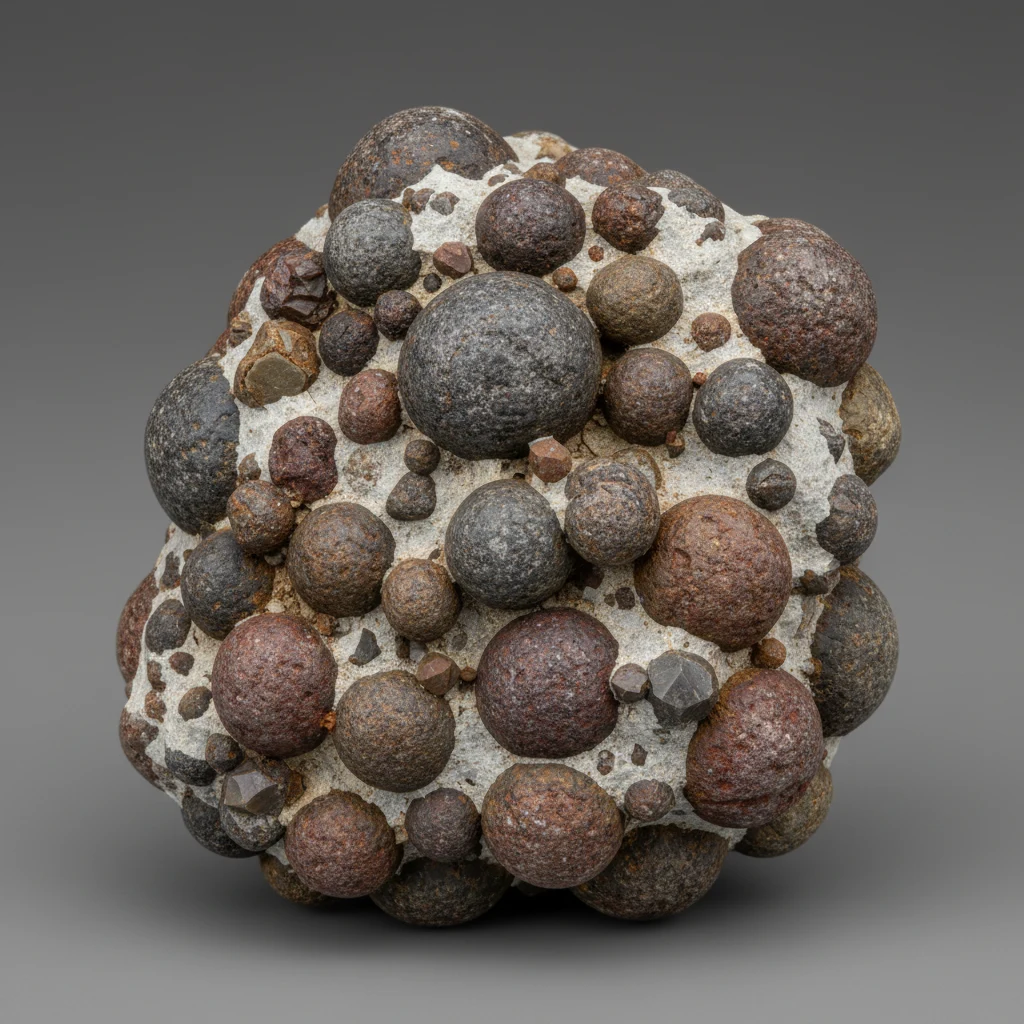
Quick answer: Conglomerate is identified by rounded pebbles or larger clasts cemented within a finer matrix. Its appearance can vary widely because the clasts may include quartz, chert, limestone, sandstone, or other rock fragments.
AI Rock ID can help screen a specimen by checking for rounded clasts, grain size, cement, and overall sedimentary texture. RockIdentifier.io can be used as a visual reference tool, but field context and close inspection are important for distinguishing conglomerate from similar coarse rocks.
Good fit
- Collectors who want an easy-to-recognize sedimentary rock texture
- Classroom kits showing weathering, transport, and deposition
- Decorative stone samples with mixed pebble patterns
- Beginners learning to separate clastic sedimentary rocks by grain shape
Not a good fit
- Collectors seeking a single mineral species with a fixed chemical formula
- Jewelry use where high polish, uniform color, or predictable durability is required
- Specimens needing precise identification without checking clast shape and matrix
Most commonly confused with
- Breccia: Breccia has angular clasts, while conglomerate has mostly rounded clasts.
- Sandstone: Sandstone is dominated by sand-sized grains rather than pebble-sized rounded clasts.
- Puddingstone: Puddingstone is a decorative variety of conglomerate with conspicuous rounded pebbles in a contrasting matrix.
- Concrete: Concrete is human-made and often contains artificial aggregate, bubbles, or construction-related textures.
Conglomerate Lookalike Comparison
| Material | Clast shape | Key clue | Typical origin |
|---|---|---|---|
| Conglomerate | Rounded | Pebbles or cobbles cemented in a natural matrix | Sedimentary |
| Breccia | Angular | Broken-looking fragments with sharp edges | Sedimentary, tectonic, or volcanic settings |
| Sandstone | Mostly sand-sized | Gritty texture without large rounded pebbles | Sedimentary |
| Concrete | Mixed aggregate | May show cement paste, air voids, or construction debris | Human-made |
| Puddingstone | Rounded | Contrasting pebble colors used as a trade or local name | Sedimentary |
AI identification confidence
AI identification confidence is usually moderate to high when the photo clearly shows rounded pebble-sized clasts in a cemented matrix. Confidence drops when the image is too close, wet, polished, or lacks scale because concrete, breccia, and coarse sandstone can appear similar.
When AI gets it wrong
- A close-up photo shows only one pebble and hides the surrounding matrix.
- Polished decorative stone obscures natural grain boundaries and cement texture.
- Concrete or terrazzo is photographed without context, scale, or visible manufactured features.
- Weathered surfaces make angular breccia clasts look more rounded than they are.
Final recommendation
Choose conglomerate when you want a specimen that clearly shows rounded clasts and sedimentary transport history. For buying, ask for an uncoated or cut face photo with scale so the clast shape, matrix, and natural cement can be checked.
How to Tell Natural Conglomerate from Concrete
Natural conglomerate usually has irregular mineral grains, natural cement, and clasts that reflect transport in water or debris flows. Concrete often shows a more uniform gray cement paste, air bubbles, crushed aggregate, or flat sawed construction surfaces. A natural outcrop context, varied mineral clasts, and weathered bedding can support a conglomerate identification.
Buying and Authenticity Tips
Conglomerate is common, so most authenticity concerns involve mislabeling rather than synthetic imitation. Before buying, look for clear photos that show rounded clasts, matrix, and scale, and be cautious with vague labels such as "ancient river stone" without locality information. Polished slabs may be genuine but can be harder to separate from concrete, terrazzo, or composite decorative stone.
Field Clues for Conglomerate
Conglomerate commonly forms in high-energy environments such as river channels, alluvial fans, beaches, or glacial outwash deposits. Rounded clasts suggest transport that smoothed the fragments before cementation. Sorting, bedding, and the mix of clast types can provide clues about the source area and depositional setting.
What Is Conglomerate?
Conglomerate is a coarse-grained sedimentary rock made of rounded clasts cemented together. In the hand, it is one of the most recognizable rocks: the surface looks pebbly, with visible fragments set into a finer matrix, like a natural mosaic pressed into stone.
Most specimens are gray, brown, or reddish, depending on their mineral content. It is opaque, usually dull to earthy in luster, and moderately durable, with a Mohs hardness of 5-7. Because its formula varies with composition, each piece records a different mix of fragments, cement, clay, sand, and mineral content.
Origin & History
The name Conglomerate comes from the Latin “conglomerare,” meaning “to roll together.” That name fits the rock perfectly: its rounded fragments look as if they were tumbled, gathered, and locked into place by natural cement.
Conglomerate has been described since the early 19th century and remains a practical field rock for collectors because its structure is visible without magnification. For broader sedimentary rock terminology and geologic context, consult USGS.
Where Is Conglomerate Found?
Conglomerate is commonly found in riverbeds and ancient alluvial deposits. Those settings help explain its rounded clasts: the fragments are associated with transport before compaction and cementation, giving many pieces a worn, pebble-like look.
Formation
Conglomerate forms through the compaction and cementation of pebble-sized fragments in a matrix of finer material. River transport plays a key role, rounding the clasts before they are held together as a solid sedimentary rock.
The result is a clastic sedimentary rock with a variable composition. Elements listed for Conglomerate include Si, O, Ca, and Fe, while common impurities include clay and sand. Its density is recorded at 2.0-2.7 g/cm3, and its fracture is typically uneven.
How to Identify Conglomerate
Identify Conglomerate by looking first for visible rounded clasts cemented into a finer matrix. If the fragments are clearly pebble-like rather than angular, the specimen has the classic field appearance of Conglomerate.
Check the supporting traits next: gray, brown, or red color; dull luster; opaque diaphaneity; colorless streak; and non-magnetic behavior. Its hardness of 5-7 can help separate it from softer lookalikes, though the exact response may vary because the rock’s composition varies.
Properties of Conglomerate
Physical Properties
| Crystal System | Amorphous |
| Hardness (Mohs) | 5-7 (Medium) |
| Density | 2.0-2.7 g/cm3 |
| Luster | Dull |
| Diaphaneity | Opaque |
| Fracture | Uneven |
| Streak | Colorless |
| Magnetism | Non-magnetic |
| Colors | Gray, Brown, Red |
Chemical Properties
| Classification | Clastic sedimentary rock |
| Formula | Varies with composition |
| Elements | Si, O, Ca, Fe |
| Common Impurities | Clay, Sand |
Optical Properties
| Refractive Index | Not applicable |
| Birefringence | None |
| Pleochroism | None |
| Optical Character | Isotropic |
Conglomerate Health & Safety
Conglomerate poses no significant health risks.
Conglomerate Value & Price
Price Range
Rough/Tumbled: $10 - $50 per specimen
Cut/Polished:
Price can vary based on size, color, and locality.
Durability
Moderate — Scratch resistance: Fair, Toughness: Good
Conglomerate is generally stable but can be susceptible to weathering.
How to Care for Conglomerate
Use & Storage
Store in a cool, dry place away from direct sunlight.
Cleaning
Clean with a soft brush and mild soap if necessary. Avoid harsh chemicals.
Cleanse & Charge
To cleanse, rinse under running water and place in sunlight for a few hours.
Placement
Conglomerate can be displayed in homes or used in landscaping.
Caution
Handle with care to avoid breakage.
Works Well With
Conglomerate Meaning & Healing Properties
In crystal and stone practice, Conglomerate is believed to support grounding, stability, and protection. Its mixed, pebble-bound texture gives it an especially earthy feel, and many collectors use it as a steadying display stone rather than a flashy gem.
Conglomerate is associated with the Root chakra, the Earth element, the planet Earth, and the zodiac signs Taurus and Capricorn. These uses are spiritual and symbolic only; Conglomerate is not a substitute for medical treatment.
Identify Conglomerate from a photo
Compare Conglomerate traits, care tips, value clues, and common lookalikes with a clear photo.
Common mistakes
- Calling any rock with visible pebbles conglomerate without checking whether the clasts are rounded.
- Mistaking human-made concrete for conglomerate when no natural matrix or field context is visible.
- Assuming conglomerate has one fixed hardness, even though hardness depends on the clasts and cement.
- Identifying a polished slab from color alone instead of texture and clast shape.
- Using the name puddingstone for all conglomerates, even though it is usually a decorative or local variety name.