advanced

Crystals Formed From Meteorites
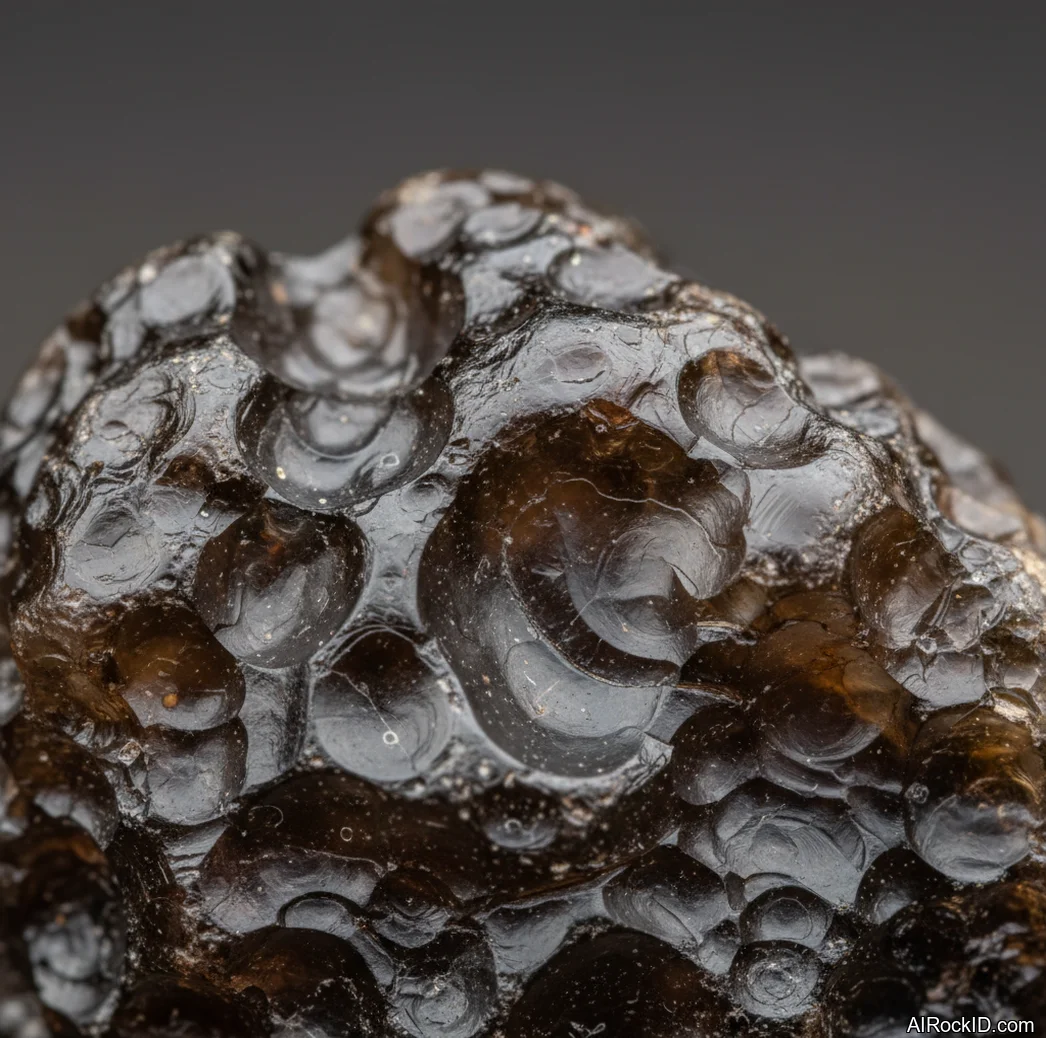
Hand holding a dark impact-glass pebble with pitted surface next to a metallic meteorite slice showing etched pattern

Yes, meteorites can make crystals. But most stuff sold as “meteorite crystals” is really impact-made minerals, impact glass, or plain old Earth minerals that got shock-altered when something hit.

Pick up a real piece of impact glass and you feel it right away. Heavy. Slightly grabby in the hand. It’s not that smooth, slick bottle-glass feel at all. Most chunks have tiny pits you can catch with a fingernail, stretched-out bubbles frozen mid-flow, or that wind-scoured outer skin that looks like it got blasted with gritty sand. That’s what insane heat and pressure, then a snap-cool, actually leaves behind. The crystal angle isn’t mystical. It’s a brawl of physics (and yeah, that’s exactly what hooks collectors).

So here’s the practical angle: impacts create short-lived conditions you just don’t get in the normal rock cycle. Ultra-high pressure. Sudden melting. Rapid quenching. Shock waves that literally rearrange crystal lattices. From that, you can end up with shock quartz, high-pressure silica phases, impact-derived glasses, plus weird assemblages trapped inside breccias. And the market? It’s noisy. Plenty of sellers slap “meteorite” on anything dark and shiny, so you’ll want a few field tests, some skepticism, and a gut check on what’s even plausible for that specific impact site.

Recommended Crystals
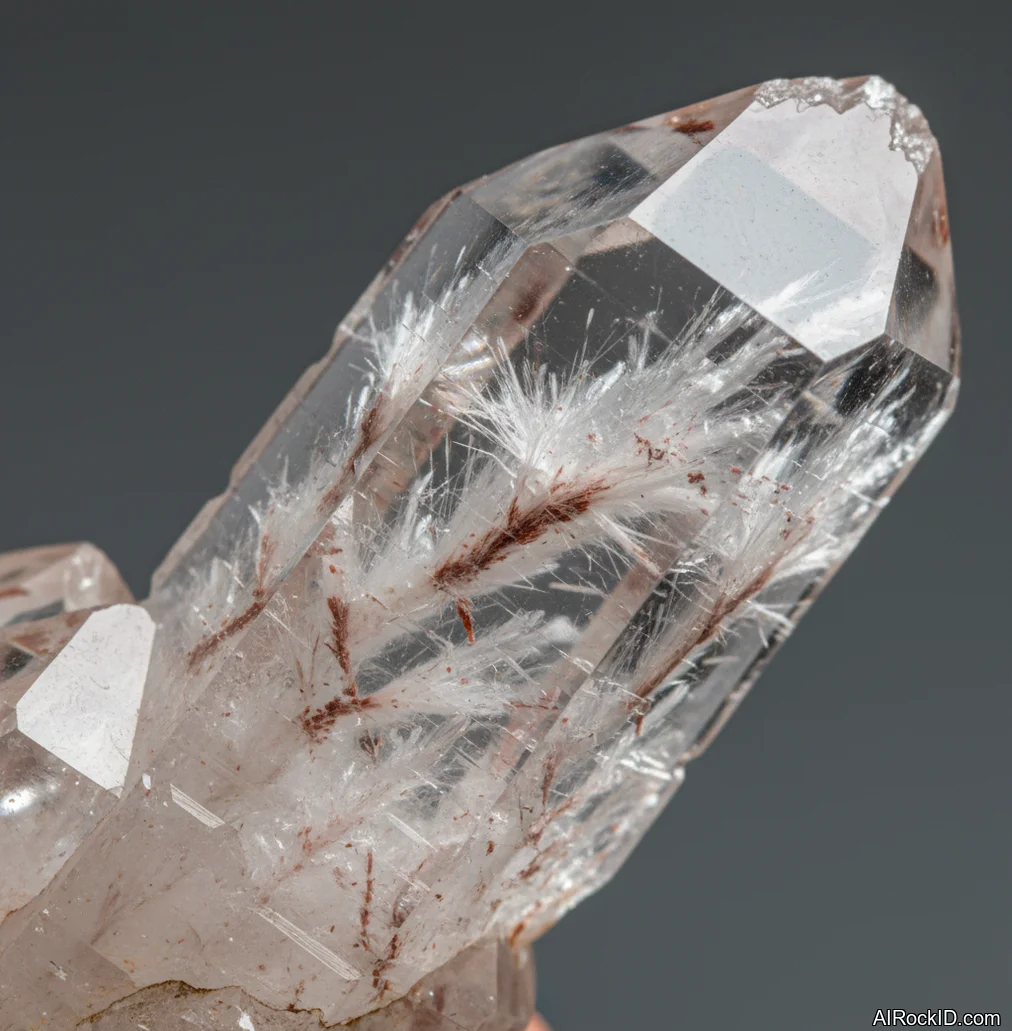
Amphibole Quartz
Amphibole Quartz

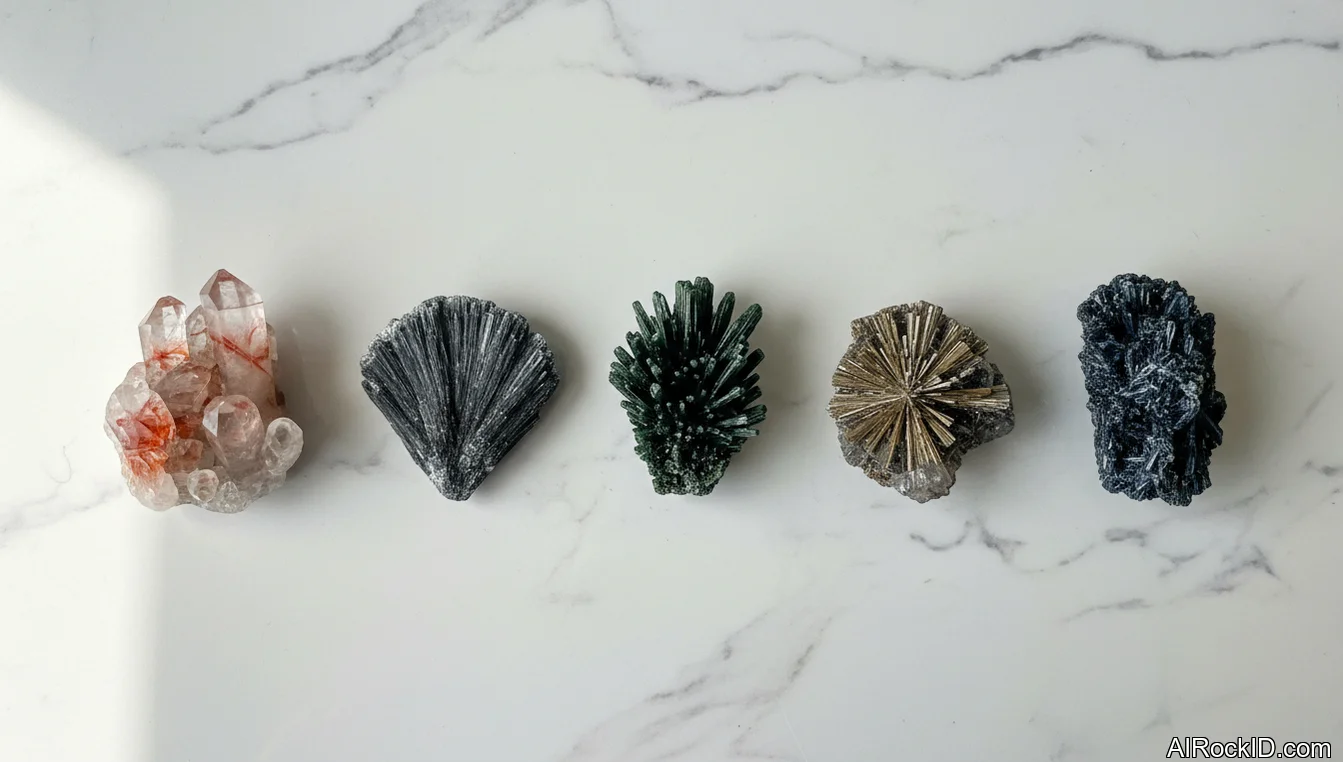
Look closely at a good piece of amphibole quartz and the inclusions don’t come off like random dirt at all. They show up as fine needles or little “feathers” locked inside the quartz, and if you swing it under a bright desk lamp you’ll catch those layers where growth paused, then kicked back in again (you can almost see the stop and start). In impact settings, quartz doesn’t always stay polite. It can get shattered, re-cemented, then overprinted by fluids pushing through fresh fracture networks, the kind you only notice once you tilt the stone and the light hits just right. I’ve handled pieces where the quartz faces are clean and glassy, but the inside looks like a storm trapped in ice, which is exactly what you’d expect after a big shock event and messy post-impact alteration. And that’s the collector win: you can read a lot from a single stone if you slow down and really look.
How to use: Use a loupe and strong side lighting to map where the inclusions thicken, because those zones often line up with healed fractures. If you’re pairing it with a meteorite or impact glass in a working set, keep this one as your “structure” piece and don’t tumble it. Wash with mild soap only; ultrasonic cleaners can open micro-fractures and cloud the quartz.
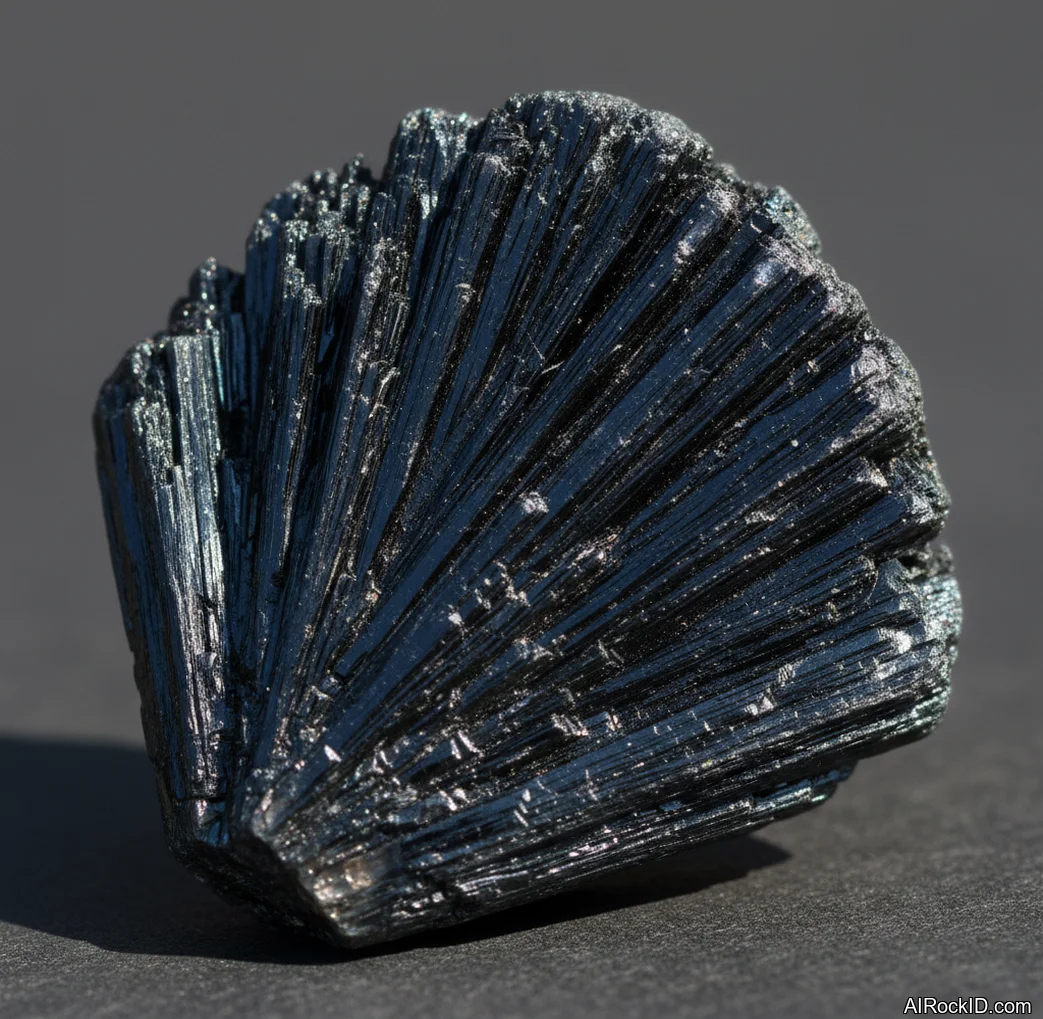
Black Kyanite

Black Kyanite

Raw black kyanite feels like a brush someone left out, and then it somehow petrified. The blades line up with a clear grain, and if you drag a fingernail across it, you don’t glide, you snag on those little fibrous ridges. Around impact structures, kyanite can turn up as a high-pressure metamorphic overprint, especially in shocked terrains where aluminum-rich rocks get shoved hard. And that’s why I’m into it. It’s an honest “stress mineral.” You can read the pressure history with your eyes and your fingertips, which is kind of rare. But it’s also touchy. Fragile, in that annoying way. I’ve snapped thin fans just from tossing them in a pocket with my keys (heard that tiny crunch and immediately regretted it). So yeah, treat it like a specimen, not a worry stone. Why risk it?
How to use: Set it down where it won’t be bumped and use it as a handling piece when you’re sorting intense material, because it forces slower, gentler movements. If you want to carry it, wrap it in cloth and keep it in a separate pouch. Don’t soak it for long; grit gets trapped between blades and is annoying to remove.
Aegirine

Aegirine

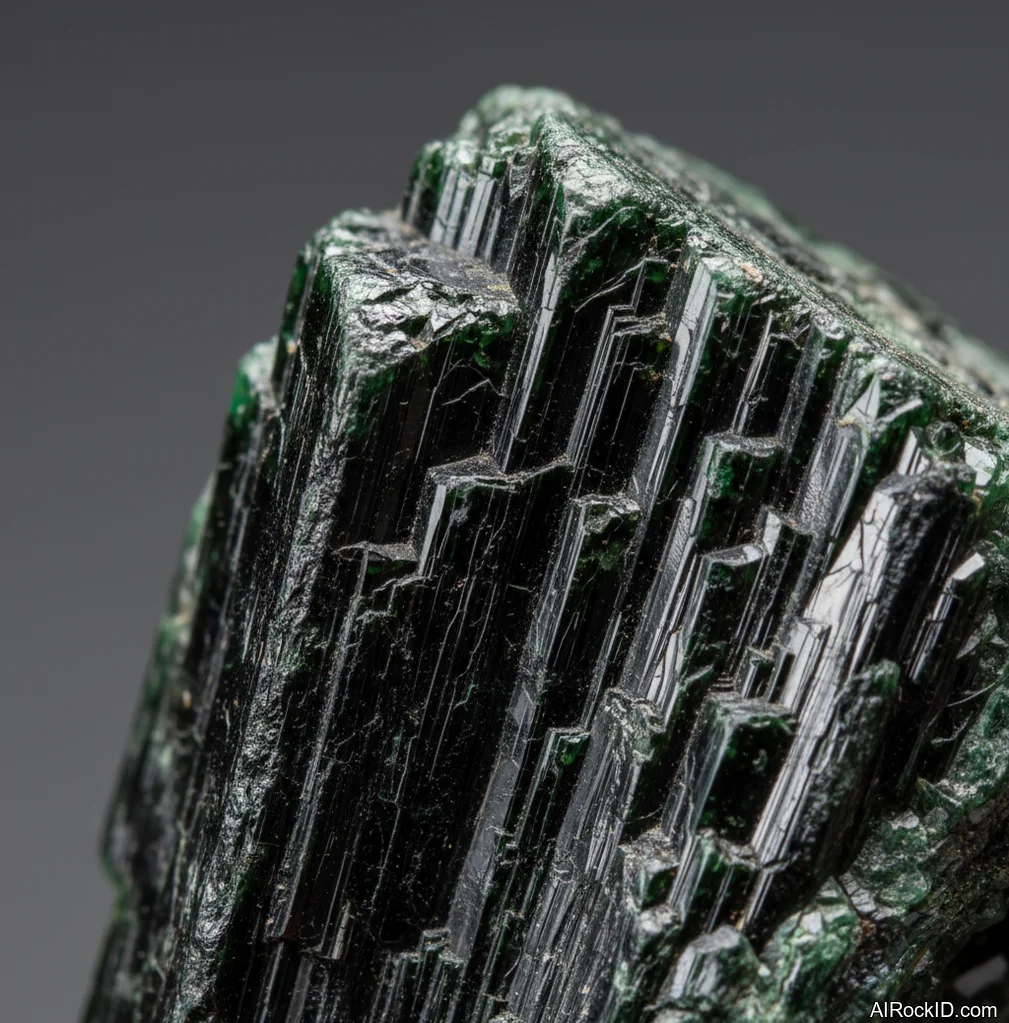
Aegirine usually shows up as skinny black-green needles, and when you tilt one under a lamp it throws off this sharp, almost metallic shine. Look, the luster is what gives it away. A good crystal catches the light like polished pencil lead, not like a chunk of dull basalt that just sits there and eats the glare. In some impact-adjacent alkaline complexes and melt-rock systems, pyroxenes like aegirine show up because the crystallization history gets chemically extreme in a way that feels a little weird when you first read about it. And yeah, I’ve watched dealers slap an “aegirine” tag on plain black tourmaline more times than I can count. But tourmaline doesn’t break the same way, it won’t give you that blade-like brittle snap when you tap it, and at the thin edges it usually doesn’t do that green-black shift either (you know the little color change that pops right at the tips?).
How to use: Keep aegirine as a “focus and boundary” tool in practice, but be practical: it’s also a dust trap, so rinse quickly and dry well. Display it on a stable base because long needles tip over and chip at the ends. If you’re doing comparative study, photograph it against a white card to catch the green undertone.
Astrophyllite

Astrophyllite

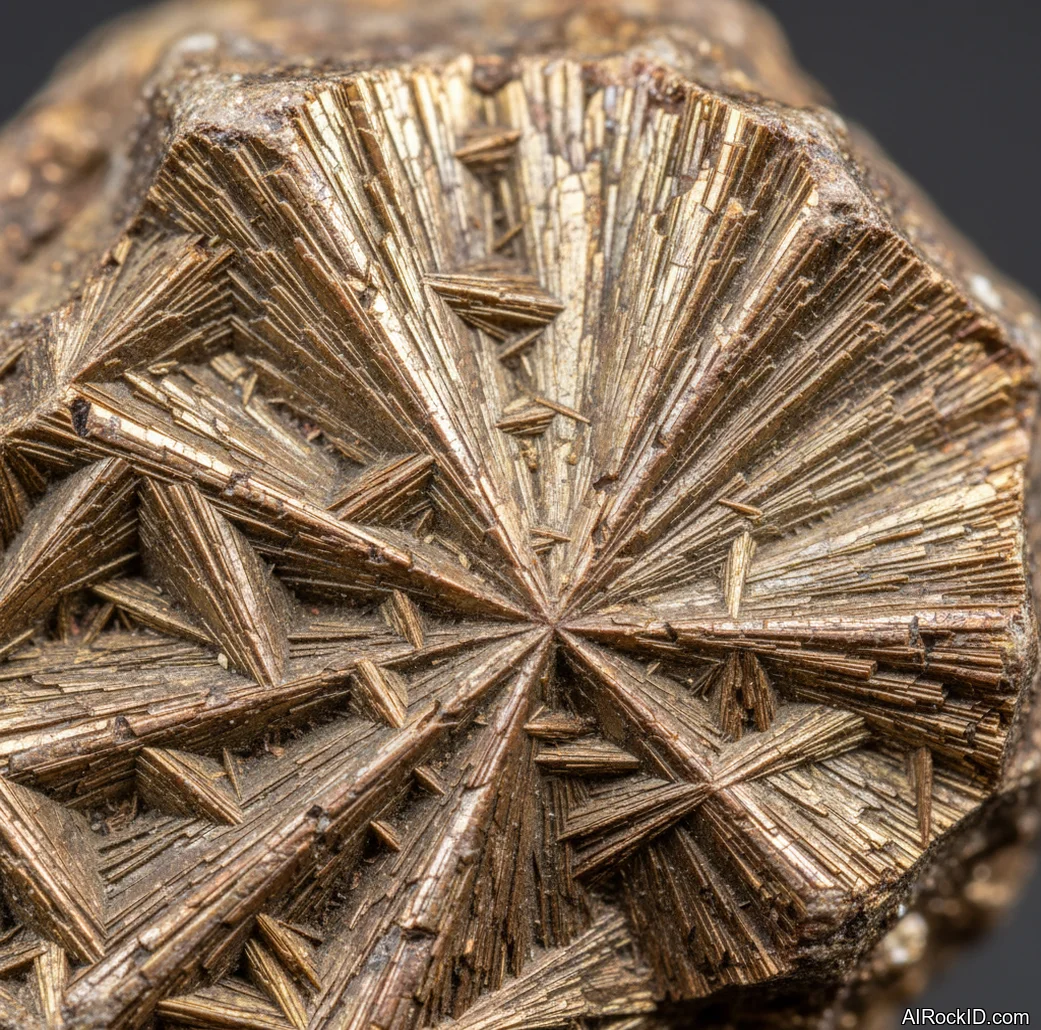
At first glance, astrophyllite looks like somebody sprinkled bronze confetti into a chunk of dark rock. Then you tip it a little and, suddenly, those starburst patterns pop. The cleavage faces grab the overhead light hard, then they go flat and dead when you shift it just a few degrees, which is honestly perfect for training your eye. Thing is, it’s not “born from space” in any literal way. But you do see it show up in the same kind of weird alkaline settings that can also turn up around some impact-related melt systems and ring complexes. I keep it on my list because it acts like a little roadmap for crystallization direction. And that’s basically the same story impact rocks tell: pressure, melt, fast change.
How to use: Don’t tumble astrophyllite. The flaky plates undercut and you end up with a sad, pitted pebble. Use it on a desk as a visual anchor when you’re journaling observations from impact materials, and handle it over a towel because chips happen fast.
Arfvedsonite

Arfvedsonite

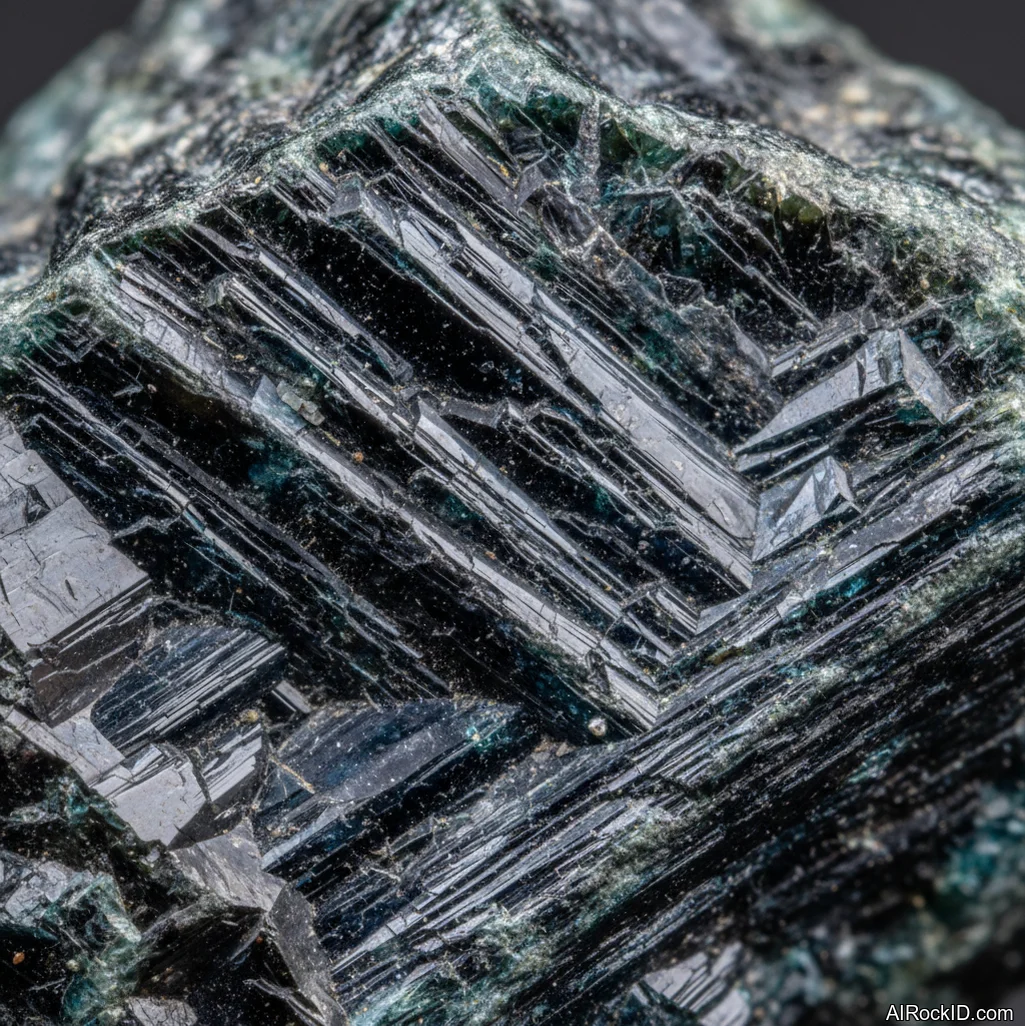
Arfvedsonite is one of those minerals that looks kind of plain right up until the light catches it, and then, out of nowhere, you see these blue-silver sheen streaks sliding across the surface. Pick up a polished piece and it feels oddly heavy in your hand, like there’s more iron in it than you expected, and that little weight is a pretty good hint you’re holding the real thing. It turns up in alkaline igneous settings. And it can tag along in complex breccias and melt-related assemblages near impact-modified terrains. The annoying part, market-wise, is how often sellers mix it up with black labradorite or slap on some generic “mystic” name. But arfvedsonite’s sheen is fibrous and directional, like fine threads running a certain way, not the broad color flash you get from labradorite. How many times have you seen that mix-up online? Way too many.
How to use: Use a single polished slice as a light-check tool: rotate it under a lamp and train your eye to follow the sheen direction. Keep it away from harsh acids and salt soaks, since iron-rich material can stain or dull. If you’re building an impact-themed grid, put it at the edge as a “boundary marker” and keep your fragile specimens inside that perimeter.
Anorthosite

Anorthosite

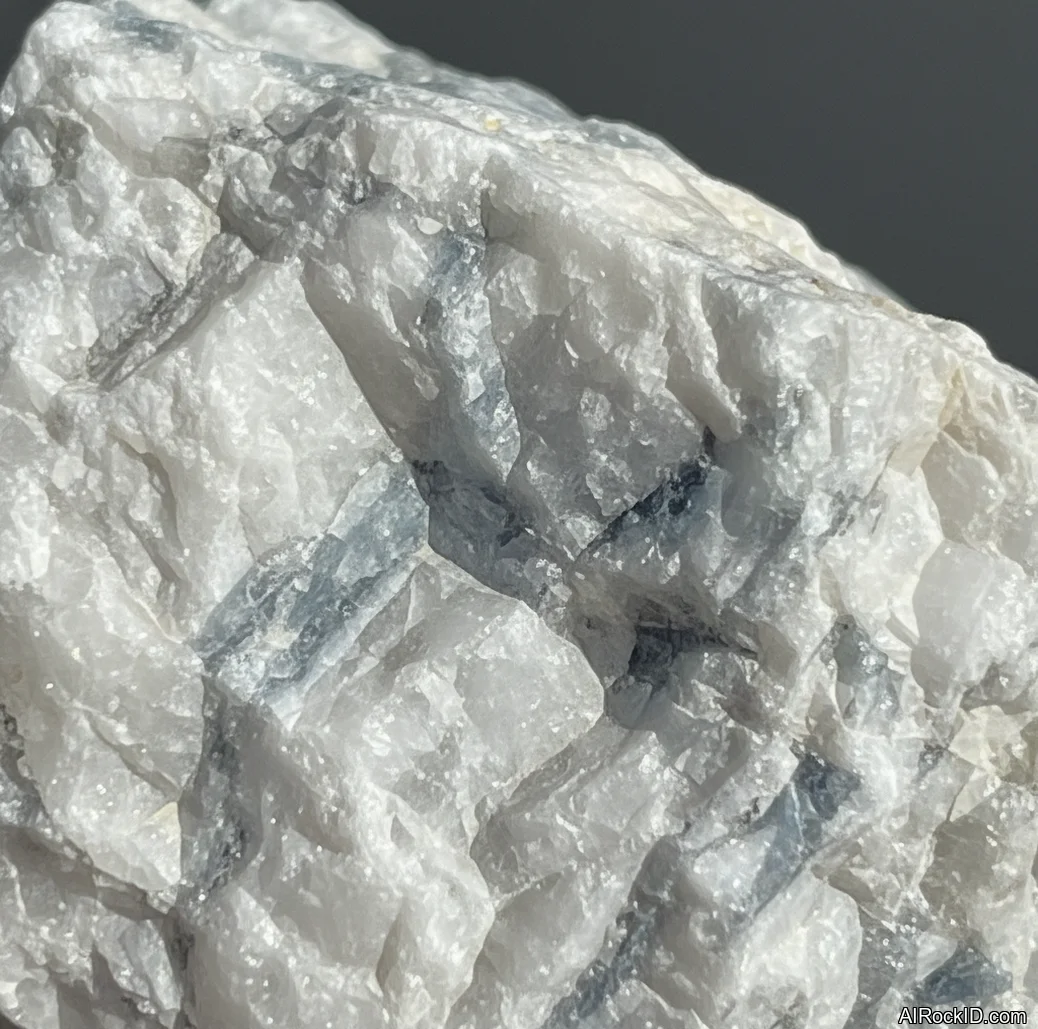
Anorthosite’s the sleeper pick. At first glance it’s just this plain, pale rock, the kind you’d walk past without thinking. But then you catch a piece with that blue flash and, suddenly, you’re staring at big feldspar crystals jammed together like a mosaic you can feel with your thumb (those blocky faces aren’t subtle once you notice them). Impact structures can dig up deep crustal rocks. So anorthosite bodies can wind up in the ejecta mix or get exposed along ring faults, which means it’s a realistic “impact neighborhood” stone. I like it because it’s ridiculously easy to write off as boring granite. But the texture gives it away: fewer dark minerals, bigger feldspar domains, and that occasional labradorescence that winks on and off when you tilt it. How can you not stop and look twice?
How to use: Use anorthosite as your “base rock” when you’re comparing shock effects, because it gives you a stable, common reference texture. A quick wipe is enough; don’t oil it to fake a shine because that hides surface features. If you’re labeling specimens, note whether the flash is present and from which angle, since that’s useful for later ID.
Auralite 23

Auralite 23

Most dealers sell auralite 23 like it’s some mystical cocktail stone. But here’s the grounded take: most of the time you’re looking at amethyst with a mix of inclusions and accessory minerals, sometimes linked to old shield geology that also hosts known impact structures. Under a loupe, the real stuff shows zoning and those internal fractures that look healed, not dyed. I’ve handled auralite that felt like plain amethyst in the hand, cool and glassy, the kind that leaves that slick, hard feel on your fingertips after you set it down. And then you catch the inside. Smoky threads, reddish specks, little bits that make it worth keeping as a “complex quartz” example. Thing is, the friction is price. Branding adds cost even when the specimen quality doesn’t match.
How to use: Treat it like amethyst: avoid long sun exposure if the purple is pale, because it can fade on a windowsill over months. Use it when you want a single stone to represent “mixed history” in an impact set, but keep your expectations realistic. If you meditate with it, do it after you’ve actually studied the inclusions, so you’re working with what’s there instead of the label.
Amethyst

Amethyst

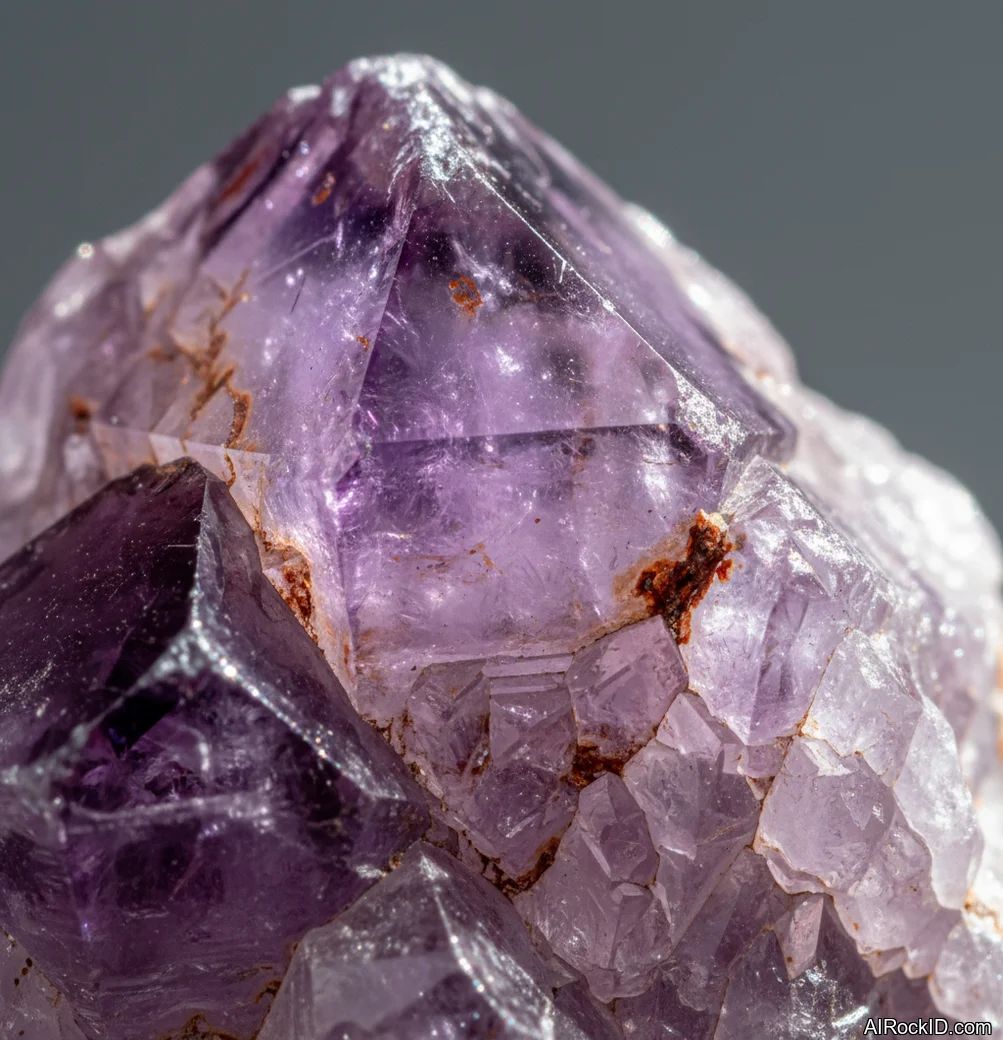
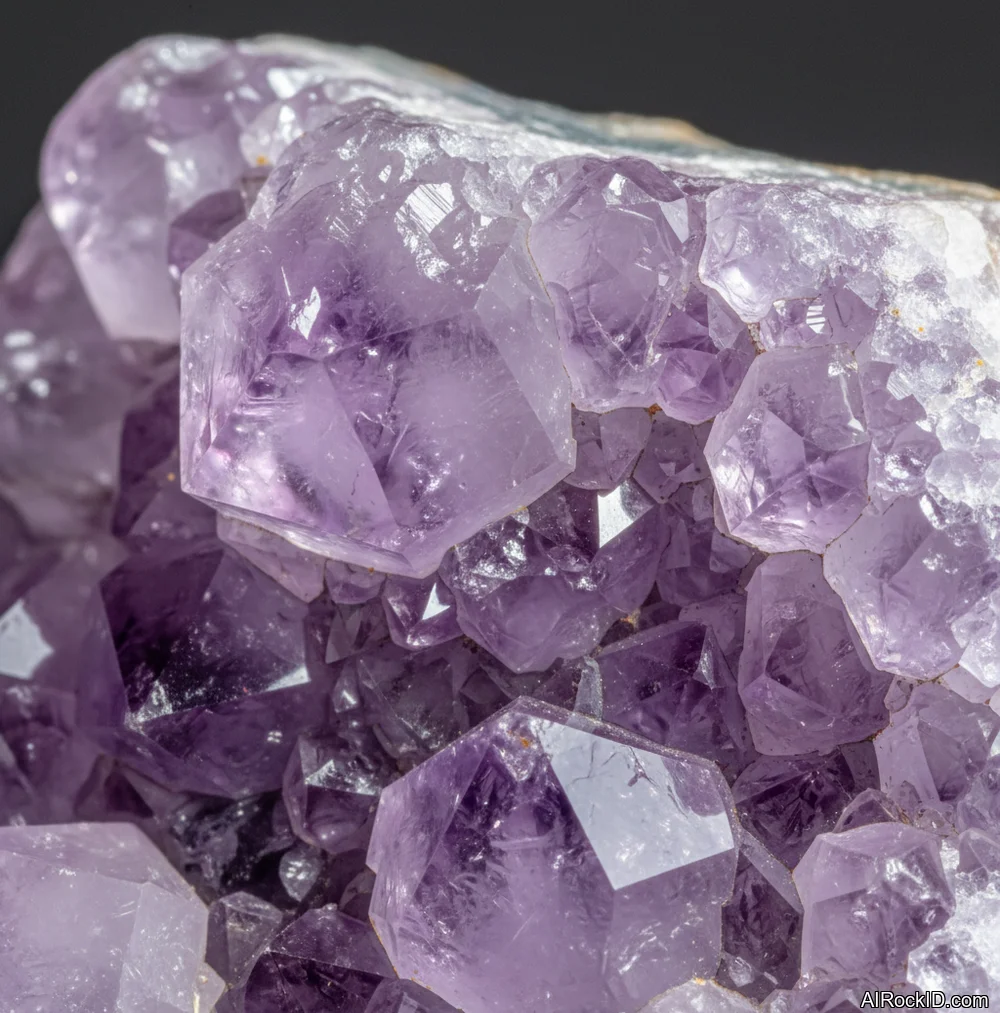
Amethyst isn’t an impact mineral. But you do run into it in and around impact structures, mainly where fractures opened up and, later on, fluids moved through and dropped silica into those cracks. So why bother including it? Simple. It’s a solid control sample for how quartz behaves. Put it next to shocked quartz or quartz that’s packed with inclusions and you’ve got a baseline for what “normal” quartz is supposed to look like. Raw points from Uruguay are usually deep purple and kind of stubby, the ones that feel squat in your fingers with thick terminations. Brazilian pieces, on the other hand, are often lighter in color and more open in habit, and if you hit them with side light you can pick out the growth lines really clearly (that faint striping that pops when you tilt the crystal just right). And I’ve seen amethyst sitting near impact areas with strange internal veils, the sort that look like frozen smoke trapped inside the crystal. Does it prove anything on its own? Not really. But it can hint at a messier, more chaotic formation history than the standard geode material.
How to use: Use a single point as a reference when you’re doing scratch tests, luster checks, and fracture inspection across your collection. Keep it out of harsh heat, and don’t leave it in direct sun if you care about color stability. When pairing with true impact glass, store them separately so the harder quartz doesn’t scuff the softer material.
Agni Manitite (Pearl of the Divine Fire)

Agni Manitite (Pearl of the Divine Fire)

Agni manitite gets sold as a “meteorite” stone, but most of the time you’re actually getting natural glass tied to volcanic or impact-like melting, not some guaranteed chunk of an actual meteorite. Thing is, the quickest gut-check is how it feels in your hand: real natural glass stays cool for a while, and the surface usually shows those tiny flow lines or little wrinkles, like taffy that got pulled and then froze mid-stretch. A lot of the cheap stuff feels weirdly warm and kind of plastic-y, and the pits look like somebody drilled them in instead of that random, naturally pocked look you see on the real thing. And yeah, I keep it in an advanced guide on purpose. It makes you practice skepticism (do you really want to trust the label?), and that’s half the battle with meteorite-adjacent material.
How to use: Treat it like glass: avoid dropping it and don’t bang it against harder stones. Use a bright flashlight at a low angle to spot flow texture and natural pitting, then write down what you saw before you forget. If you’re using it in a ritual set, keep it as the “heat event” marker and pair it with a crystalline piece to balance the story.

What “formed from meteorites” actually means in the real world

People keep stuffing three different ideas into one phrase, and it makes a mess. First: minerals that actually crystallized inside the meteorite, stuff like metal phases and sulfides. Second: minerals that formed here on Earth because of the impact, where the target rock gets shocked, melted, then quenched so fast you end up with new phases or those odd, frozen-in textures. Third: regular Earth minerals that got shock-modified, which can look pretty wild even when the chemistry stays the same.

Most dealers lean hard on the romance and smear those categories together. But you don’t have to go along with it. If a seller can’t tell you whether the piece is tied to a known strewn field, a documented crater, or it’s just some “found in the desert” tale, treat that label like marketing copy. I’ve literally seen people pay crater-glass money for plain slag because they wanted the space story. So slow down. Ask for the locality. Ask what testing (if any) backs up the claim. Simple questions, but they change everything.

One habit that actually works: put two labels on the box. One says “what it is” (glass, quartz, pyroxene). The other says “why it’s in the meteorite drawer” (impact melt, shocked host rock, claimed meteoritic origin). Tiny change. Big payoff. Keeps you honest (and keeps your wallet from doing something dumb).

Impact conditions: shock, melt, and the fast-cooling problem

Meteorite impacts don’t give crystals a nice, lazy window to grow the way a pegmatite does. It’s a nasty spike in pressure, then a blast of heat, then everything drops fast as the material explodes outward and cools. So you end up with impact glass all over the place, and you don’t usually get big, clean, well-formed crystals.

When crystals do show up, they’re often tiny. Kind of tangled together. Or they’re trapped inside breccia like raisins baked into a loaf (good luck pulling one out without breaking it).

Grab a chunk of breccia in your hand and you can literally feel the change between clasts and matrix with your fingertip. The clasts feel chunkier, more “pebbly,” while the matrix is finer, sometimes almost slick because it’s glassy, and it can hide microcrystals you won’t notice until you magnify it. And under a cheap USB microscope, you’ll sometimes spot spherulitic textures or little needle sprays, which is basically the rock telling you, “Yep, that melt cooled fast.”

That fast-cooling issue matters for “crystal work,” too. If you’re using these stones as symbols of transformation, you’re holding a frozen moment of rapid change. But don’t dress it up as gentle energy. The geology says otherwise.

ID and authenticity: what I check before I trust a space claim

Start with the boring questions. What’s the locality, and is it a known impact site or strewn field? A real answer sounds like a place you can point to on a map, not some floaty “energy” description.

Then check the physical tells and see if they actually match the claim. A “meteorite crystal” that’s perfectly glossy, perfectly black, and perfectly uniform is usually industrial glass or slag. Real stuff almost never looks that clean.

Thing is, the real test is whether all the features agree with each other. Natural glass often comes with mixed textures: a matte skin, glossy chips, stretched bubbles, and edges that look conchoidal but not machine-sharp (you can feel it with a fingernail). Meteorite metal should feel dense for its size, and if you file a tiny spot, you should see metal, not paint. Quartz with shock features tends to show weird planar bits under polarized light, but even without that setup, you can often spot intense internal fracture networks when you tilt it near a window.

And if you can, buy from people who actually document the basics: weight, magnet response, photos in natural light, plus a clear locality. I keep a small magnet, a loupe, and a pocket scale near my specimen shelf. It saves money. Honestly, it’s saved me more than once.

Care and storage for impact-adjacent specimens (they chip, rust, and scuff)

Impact glass scratches way easier than most people expect. Toss it in a bag with quartz and, yeah, you’ll get those dull rub marks fast. I keep my glass in its own little compartment with a bit of tissue (the kind that crinkles and sticks to your fingers), and I don’t stack pieces on top of each other. If you’ve ever heard that nasty little tick when glass kisses glass, you already get it.

Iron-bearing material is a whole other headache. If there’s anything metallic in your set, humidity is the enemy. And even if there isn’t an obvious meteorite in this particular list, people still tend to store these things together, so it’s worth saying out loud: silica gel packs work, and a sealed box is cheap insurance. Pop it open every couple months and check. If you spot orange dust, don’t shrug it off.

Cleaning’s easy. Water, mild soap, a soft brush, then dry it quickly. Don’t do salt soaks. They’re messy, they can stain iron-rich minerals, and they don’t make anything “more real.”

How to Use These Crystals for Crystals Formed From Meteorites

Keep your “meteorite-formed” work tied to what you can actually see and feel. Pick up each piece and pay attention to the way it hits your skin: does it feel cool right away or does it warm up fast, does it sit heavy in your palm, is the surface slick or a little grabby? Then write one plain sentence about what your eyes can prove. I do it under the same desk lamp, with the same loupe, in the same exact patch of my desk every time. And I’m stubborn about that, because shifting light will hide tiny stuff, and suddenly you’re convinced the stone changed when it really didn’t.

For a practical setup, I stick to a three-part set: one glassy piece (your heat and quench), one crystalline piece where you can see internal structure (your growth and order), and one “host rock” type (your baseline). In this guide, that can mean agni manitite for the glass, amphibole quartz or amethyst for the crystalline structure, and anorthosite for the baseline texture. Handle the glass last. Thing is, your hands pick up a little oil as you work, and dark glass shows fingerprints almost immediately (annoyingly fast, honestly).

If you’re using these stones for personal work, line up the intention with the geology. Impact material is about sudden change, pressure, collision, and aftermath. That can be exactly what you need when you’re trying to snap a stuck pattern. But soothing bedtime energy? Not really. When I want calm, I reach for something else. So when I want honesty and momentum, the impact drawer gets opened. Why fight what the material is telling you?

Common Mistakes to Avoid

The biggest trap is buying the story instead of the specimen. “Meteorite crystal” is basically catnip for fuzzy listings, and fuzzy listings are where dyed glass, slag, and random dark pebbles end up. Ask for the locality and crisp, close photos you can actually zoom in on. If the seller gets annoyed or starts dodging, well, there’s your answer.

Second mess-up: assuming anything black and shiny must be impact glass. Real impact glass usually has mixed texture, tiny pits, and flow features, and it won’t look like it rolled off some factory line with a perfect, even sheen. And I’ve watched people tumble impact glass to “polish it up,” then act surprised when it comes out looking bruised and kind of dull. Glass doesn’t behave like quartz. It just doesn’t.

Last thing is storage. People toss hard and soft material together in one pouch, then blame the stone when it gets scuffed up (how could it not?). Use separate compartments, a soft wrap, and keep it dry, and you’ll avoid most of the heartbreak.

Important: Crystals linked to meteorites or impact sites can’t “confirm” a meteorite story just because they feel right in meditation or you get a strong gut hit holding them. That’s not how it works. The only real way to back up a claim is boring stuff like where it was found, paperwork that tracks it, and lab results that actually match the material in your hand. And no, they’re not a stand-in for medical care, trauma therapy, or legal and financial advice. If you’re leaning on “impact energy” as motivation to change things, that’s fine, but tie it to real steps and real support too. Otherwise what are you doing, hoping the stone does the hard part for you?

Identify Any Crystal Instantly

Snap a photo and get properties, value, care instructions, and healing meanings in seconds.

Frequently Asked Questions

What counts as a crystal formed from a meteorite impact?
A crystal formed from a meteorite impact is a mineral that crystallized from impact melt or formed/changed under shock pressure in target rock.
Are most “meteorite crystals” sold online actually from meteorites?
Most items marketed as meteorite crystals are not confirmed meteoritic minerals and are often impact glass, terrestrial minerals, or mislabeled industrial glass.
Does impact glass have a crystal structure?
Impact glass is primarily amorphous and does not have a repeating crystal lattice, though it can contain microcrystals or inclusions.
What simple tools help authenticate impact-related specimens at home?
A loupe, small magnet, pocket scale, and strong angled flashlight help check texture, density cues, magnetic response, and surface features.
Can amethyst be related to an impact structure?
Amethyst can occur in and around impact structures when fractures and hydrothermal fluids deposit quartz after the impact event.
Is agni manitite confirmed meteorite material?
Agni manitite is generally classified as natural glass and is not universally confirmed as meteoritic material without locality-specific documentation.
What is the biggest red flag for fake “meteorite glass”?
Perfectly uniform color and a smooth, factory-like surface with drilled-looking pits is a common red flag for artificial glass or slag.
Do meteorite-related specimens require special storage?
Yes, impact glass scratches easily and iron-bearing meteorite materials can rust, so dry storage and separated compartments are recommended.
Are shock features in quartz visible without lab equipment?
Some fracture networks and internal veils can be seen with a loupe, but definitive shock features often require polarized light microscopy.
Can crystals formed from impacts guarantee spiritual or health outcomes?
No, crystals do not guarantee spiritual, medical, psychological, or financial outcomes.
The information provided is for educational and spiritual exploration purposes. Crystals are not a substitute for professional medical, psychological, or financial advice.