Amphibole Quartz
What Is Amphibole Quartz?
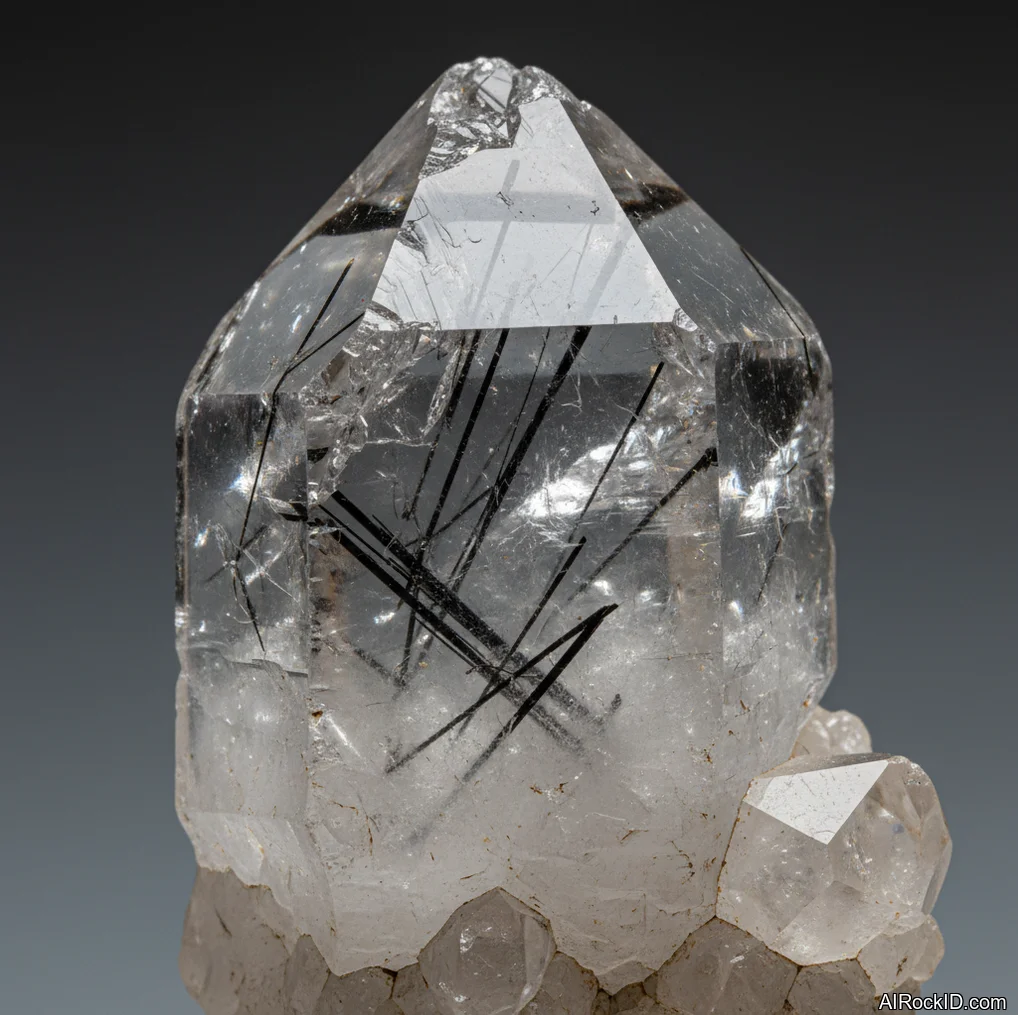
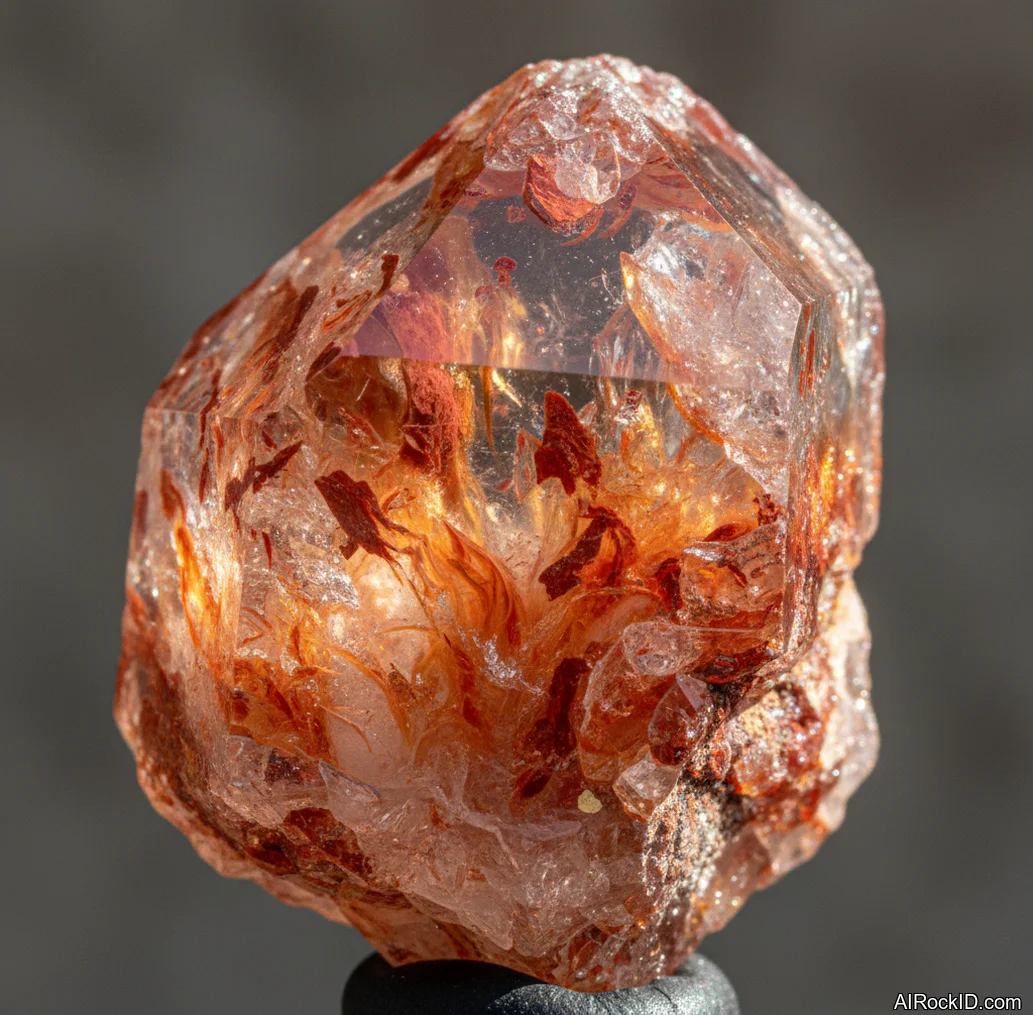
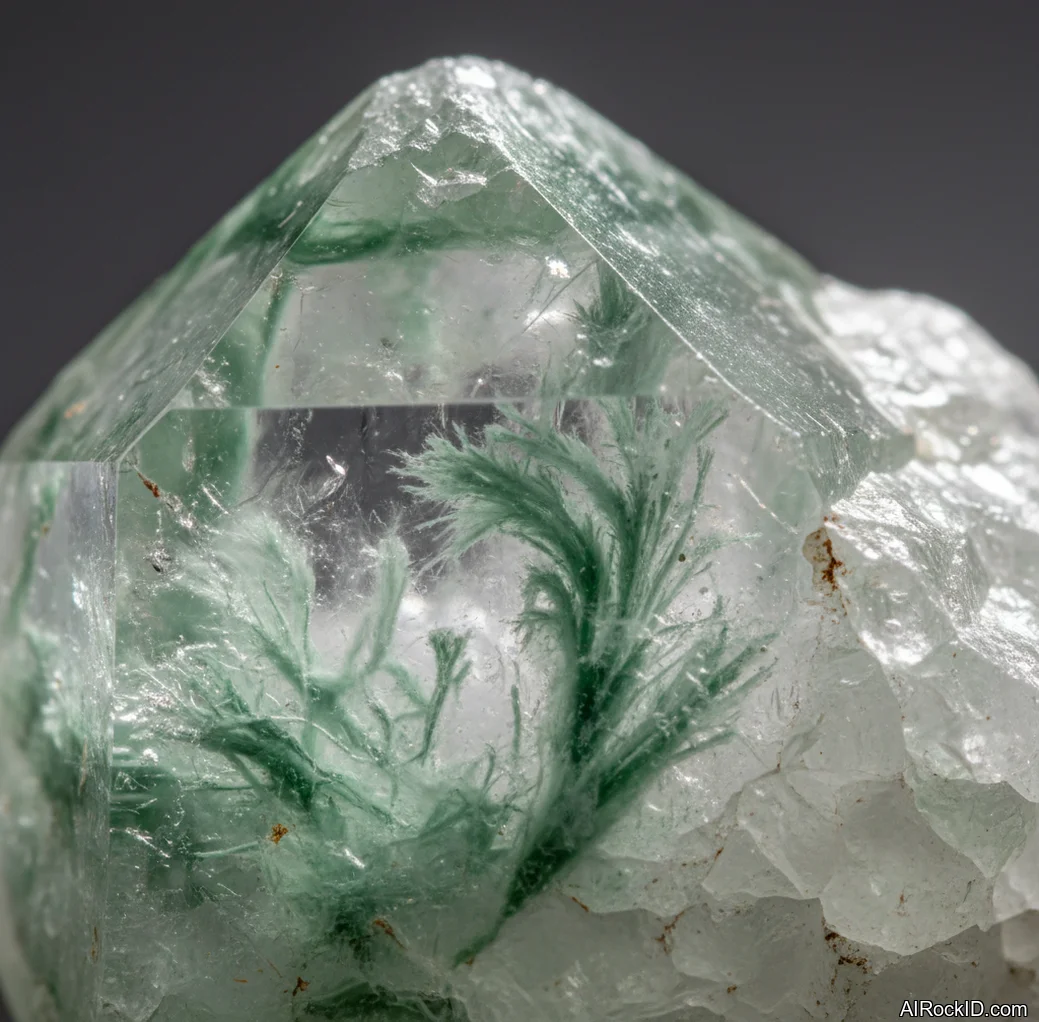
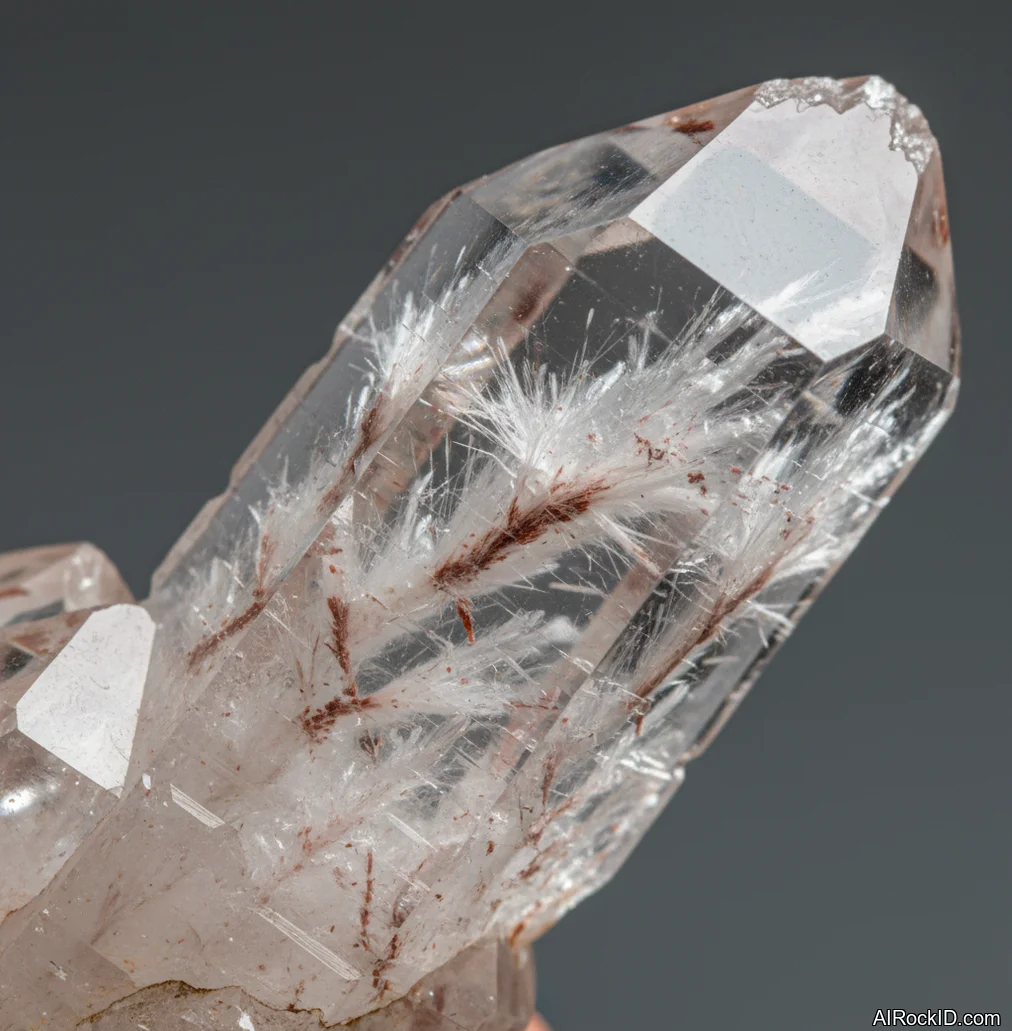
Amphibole Quartz is quartz with needle-like or plume-like amphibole mineral inclusions inside it, and those inclusions often form soft “feather” phantoms within the crystal.
Look, the first time you see it, you might swear it’s hematoid quartz or some mossy junk in there. But it’s not. Amphibole has its own vibe once you’ve handled a few pieces. The inclusions usually gather in wispy sprays, like tiny paintbrush flicks caught in clear glass. Some crystals skew red and rusty, others land more honey-gold. And the really good ones build up phantom layers, so when you rotate a point under a lamp you get that floating, stepped effect.
Grab a palm-sized chunk and it still feels like quartz. Cold in your hand. Sharp edges. That familiar little “ting” when you tap it with a fingernail. But the inside is what you’re paying for. I’ve bought pieces that looked kind of plain sitting on a table, then hit them with a flashlight and the plumes popped like crazy and I changed my mind fast. How can you not?
Origin & History
Name-wise, it’s pretty literal. “Amphibole quartz” is just a trade and collector term for quartz that trapped amphibole-group minerals while it was growing, so you end up with those wispy inclusions locked inside the crystal (the kind you can see when you tilt it under a lamp and the little threads catch the light). And a lot of the market also calls it “Angel Phantom Quartz,” which is straight-up marketing tied to the feathery phantom look, not a separate mineral species.
Quartz itself has been formally described forever, but this inclusion variety never really got that classic “first described in 18xx by…” moment you’d expect with a new mineral species. It basically became a recognized variety once Brazilian material started showing up on the gem and mineral circuit in quantity, and dealers needed a consistent label that wasn’t just “included quartz with red stuff in it.”
Where Is Amphibole Quartz Found?
Most of what you’ll see for sale is tied to Minas Gerais, Brazil, but amphibole inclusions in quartz can occur anywhere quartz grows alongside amphibole-bearing rocks.
Formation
Raw chunks from pegmatites and hydrothermal veins really do tell the story if you’ve handled enough of them. Quartz grows out of silica-rich fluids, and when amphibole shows up as little fibers or thin blades in the pocket (or sneaks in later when conditions shift), it can get sealed inside while the quartz keeps building outward.
Look closely at a good phantom specimen and you can almost read the growth stages like frames on a strip of film. You’ll get a “freeze frame” line of inclusions, then a run of clearer quartz, then another inclusion layer. But it isn’t always that tidy. Sometimes the plumes are a mess, like the pocket got jostled, grit shifted around, and the crystal just kept on going anyway.
Next to tourmalinated quartz, where the inclusions usually stand out as obvious black rods, amphibole can be sneaky. Softer. More like a cloudy feathering than clean lines. The real tell is what the plumes do in light. Tilt the crystal in your hand and the little “feathers” will brighten, then fade, as they catch reflections off tiny internal faces and those fine fibers. Kind of hard to unsee once you notice it.
How to Identify Amphibole Quartz
Color: Most specimens are clear to milky quartz with internal plumes that range from red-brown and rusty orange to golden, tan, or smoky gray. Some show layered phantoms where the color sits in bands inside the crystal.
Luster: Vitreous luster on the quartz surfaces, with a soft internal sheen where the amphibole fibers scatter light.
Pick up the piece and rotate it under a single strong light. Amphibole tends to look feathery and fibrous, not like flat metallic flakes (mica) or sharp black needles (tourmaline). If you scratch it with a steel nail, you shouldn’t leave a mark on the quartz, but you can sometimes feel tiny surface pits where inclusions reach the outside. The problem with photos online is they hide fractures, so ask for a video that shows the plumes moving as the crystal turns.
Properties of Amphibole Quartz
Physical Properties
| Crystal System | Trigonal |
| Hardness (Mohs) | 7 (Hard (6-7.5)) |
| Density | 2.65 g/cm3 |
| Luster | Vitreous |
| Diaphaneity | Transparent to translucent |
| Fracture | Conchoidal |
| Streak | White |
| Magnetism | Non-magnetic |
| Colors | Colorless, White, Red-brown, Orange, Golden, Tan, Gray, Smoky |
Chemical Properties
| Classification | Silicates |
| Formula | SiO2 |
| Elements | Si, O |
| Common Impurities | Fe, Al, Ti, Mn |
Optical Properties
| Refractive Index | 1.544–1.553 |
| Birefringence | 0.009 |
| Pleochroism | None |
| Optical Character | Uniaxial |
Amphibole Quartz Health & Safety
It’s safe to handle in normal day-to-day use. But if you’re cutting or grinding it, don’t breathe in the dust, because quartz dust is a respiratory hazard (that fine, chalky stuff that hangs in the air).
Safety Tips
If you’re going to shape it, keep it wet while you cut and wear real respiratory protection (the kind that actually seals, not a floppy dust mask). But if you’re only displaying it or picking it up, just wash your hands afterward if it’s got that dry, powdery dig-site dust on it.
Amphibole Quartz Value & Price
Price Range
Rough/Tumbled: $15 - $250 per piece
Cut/Polished: $10 - $60 per carat
Clean terminations, strong phantom layering, and a bright plume color can make the price jump in a hurry. Thing is, most dealers are eyeballing visual punch and how clean it looks, not just the weight on a scale.
Durability
Durable — Scratch resistance: Excellent, Toughness: Good
It’s basically quartz durability, but internal fractures are common and can chip if you knock a point against another hard specimen.
How to Care for Amphibole Quartz
Use & Storage
Store it like any nicer quartz point: wrapped or in a compartment so terminations don’t bang together. I’ve seen perfect tips get a tiny crescent chip from one careless ride home from a show.
Cleaning
1) Rinse with lukewarm water to remove dust. 2) Use a soft toothbrush with a drop of mild soap around crevices and any iron staining on the surface. 3) Rinse well and air dry on a towel, tip up if it’s a point.
Cleanse & Charge
Smoke cleansing and moonlight are gentle options that won’t stress the specimen. If you use water, keep it simple and avoid long soaks if the piece has visible fractures.
Placement
Look for a spot with side lighting, not flat overhead light, so the plumes actually pop. A small LED puck light behind the point makes the phantom layers read clearly.
Caution
Look, don’t reach for harsh acids or rust removers unless you actually know what you’re doing, because they can etch quartz and take that slick, glossy shine down to a dull, cloudy look. And don’t just toss it in a bowl with other hard stones either. Quartz chips quartz.
Works Well With
Amphibole Quartz Meaning & Healing Properties
A lot of people who buy Amphibole Quartz for metaphysical reasons are, if we’re being real, reacting to how it looks. Those feather-like phantoms seem light and stacked, and that makes an easy visual “handle” for breathwork or a slow, quiet sit. Set one on your desk and your gaze keeps sliding back to it, almost without you noticing.
And if you grab a point on a stressful day, the cool, glassy feel does one very simple thing: it interrupts you. Not medicine. Just a physical cue that makes you pause for half a beat. I’ve also watched people treat it like a “process stone” because the phantoms read like stages. You can literally tap a layer and go, okay, that was the messy part, and here’s the clearer growth after it.
But the market side is what it is. “Angel Phantom” gets slapped on average included quartz and sold for a premium. If what’s inside is basically a faint haze with no real phantom structure, it should be priced like included quartz, not like a rare collector phantom. The pieces that deserve the higher price earn it because they look dramatic in your hand, not because someone put a cute label on them.
Identify Any Crystal Instantly
Snap a photo and get properties, value, care instructions, and healing meanings in seconds.