Auralite 23
What Is Auralite 23?
Auralite 23 is a trade name for amethyst-bearing quartz from the Thunder Bay area of Ontario, Canada, and it commonly shows hematite plus other iron-oxide inclusions.
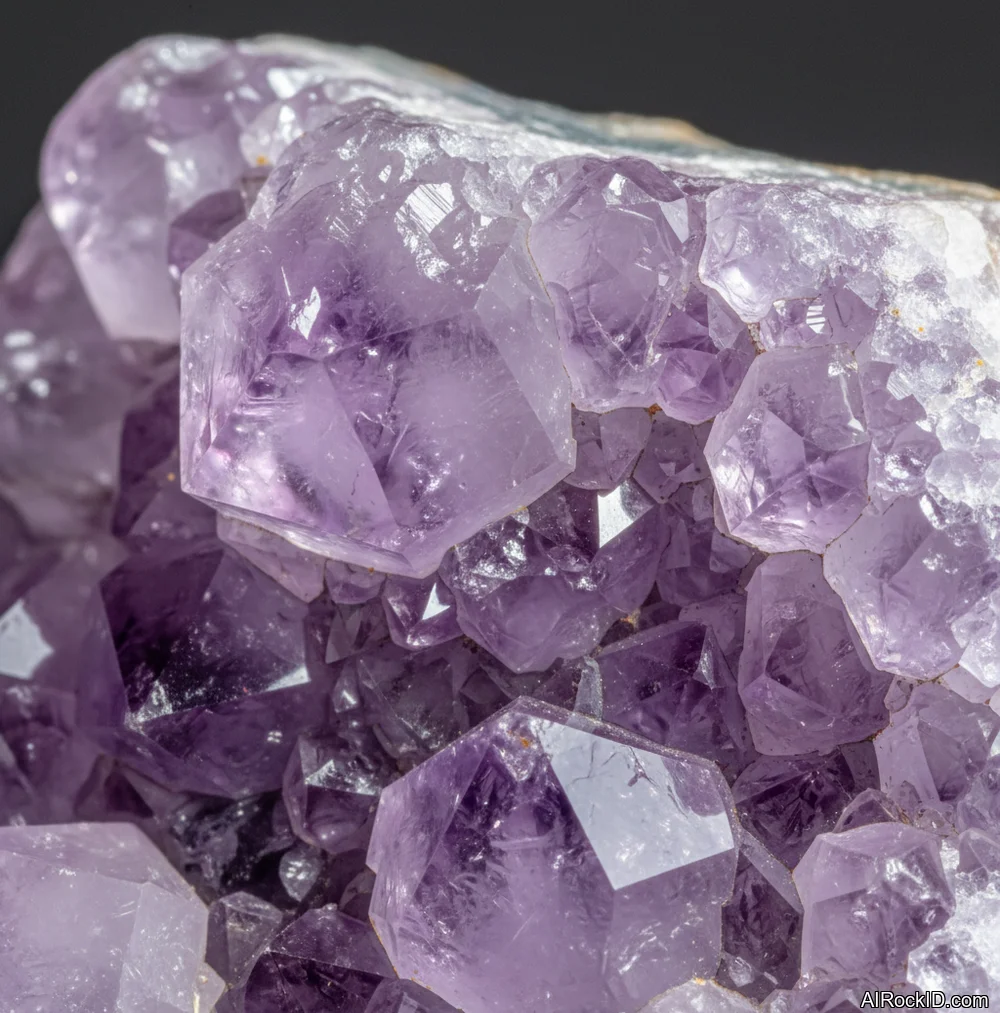
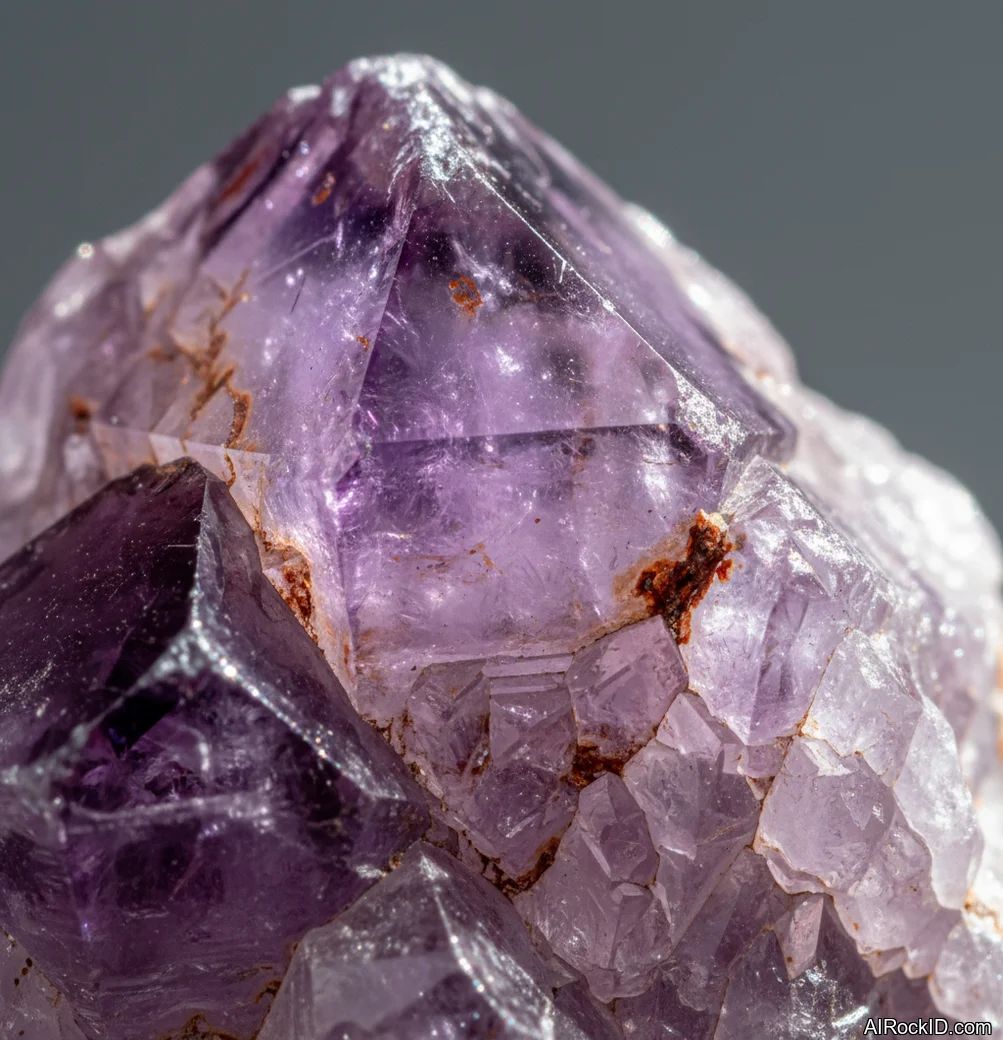
Grab a palm stone and, yeah, it feels like quartz: cool on the skin, smooth if it’s been tumbled, and a touch heavier than people guess when they first drop it in their hand. The look is the whole point. You’ll see purple bands like amethyst, milky or cloudy quartz areas, and rusty red to brown streaks from iron minerals. And if you tilt some pieces under a case light, tiny sparkly plates will flash back at you. On rough chunks, you can sometimes spot a few drusy points tucked along a seam (those little sugar-crystal bumps).
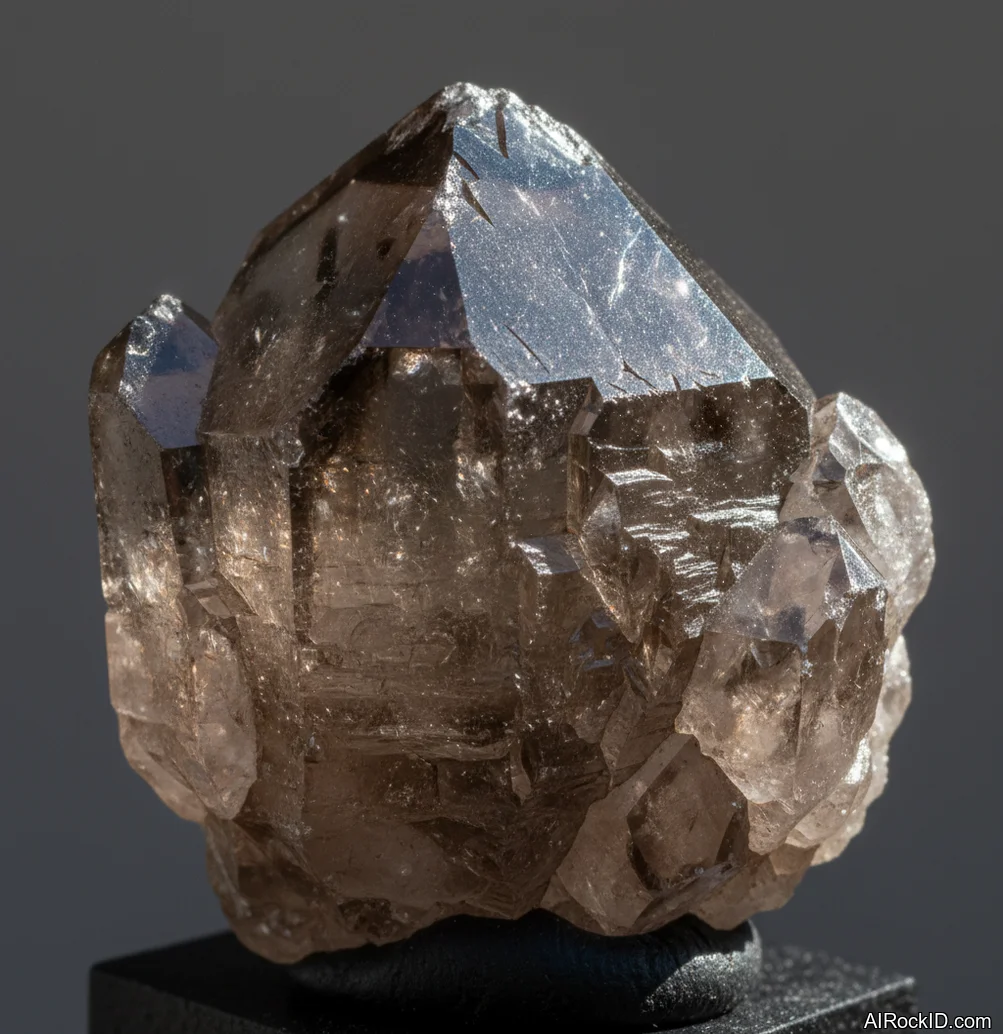
Thing is, the “23” makes it sound like a clean mineral formula. Sellers will run through these long “ingredient” lists, but what you’ve actually got is quartz with a mix of inclusions and accessory minerals, and it can change from piece to piece. I’ve gone through trays of it at shows where one lot looked like straight amethyst with hematite freckles, then the next lot was mostly milky quartz with just a faint hint of purple. Same label. Totally different vibe.
Origin & History
Most dealers will tell you the name “Auralite 23” really traces back to a marketing push that got traction in the early 2000s, tied to material coming out of the Thunder Bay district. It wasn’t “described” the way a brand-new mineral species gets described in a journal. It’s quartz. And quartz has been quartz forever.
“Auralite” is basically a brand-style name, meant to sound airy and metaphysical, and the “23” is usually pitched as the number of included minerals. In real life, the label stuck because it’s easy to remember, and it helps separate this Canadian, inclusion-heavy amethyst-quartz from the cleaner, more standard amethyst points people already recognize.
Where Is Auralite 23 Found?
Authentic Auralite 23 on the market is associated with the Thunder Bay area of Ontario, Canada, in and around old hydrothermal vein and breccia zones in Precambrian host rocks.
Formation
Think old-school quartz veins, just baked into really ancient rock. Silica-rich fluids sneak through cracks, cool down, and drop quartz as they go. And once in a while the chemistry shifts far enough that you get those amethyst-colored bands, caused by trace iron sitting in the quartz lattice.
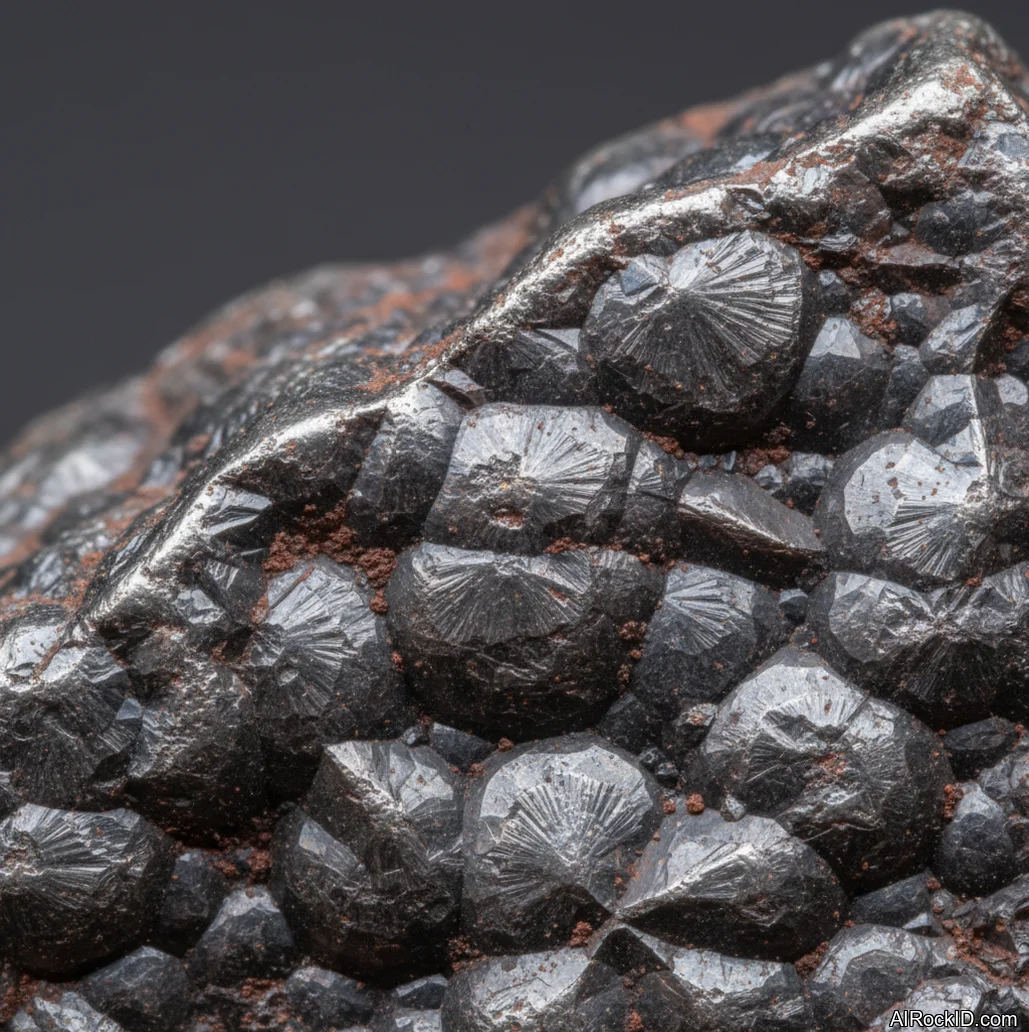
The red and brown stuff people chase is usually iron oxides and hydroxides, like hematite and goethite. Those either rode in with the fluid or showed up later when everything started oxidizing. If you stare at a fresh cut face under decent light, you’ll often catch the iron minerals hugging tiny micro-fractures or hanging there like smoky, wispy clouds, not popping out as tidy, separate crystals.
And yeah, if you’ve ever actually cracked open a rough chunk (dust everywhere, that sharp mineral smell), it can be a shock. The outside’s kind of dead and chalky. Then the inside hits you with purple seams and those iron “paint” lines that look like someone dragged a rusty brush across the stone. How does that even happen?
How to Identify Auralite 23
Color: Most pieces show a mix of lavender to medium purple amethyst zoning with milky to clear quartz, plus reddish-brown to rusty iron-oxide staining or inclusions. Color is usually patchy or banded rather than perfectly even.
Luster: Vitreous when polished or on fresh fracture surfaces.
If you scratch it with a steel blade, it won’t bite easily, and it’ll scratch ordinary window glass without drama. The real test is the feel and the look together: quartz stays cool in your hand and the polish takes a bright glassy shine, while dyed lookalikes often have color sitting in cracks and drill holes. And watch for seller photos that are cranked to neon purple; in person, most Auralite material is more muted, like a worn-in amethyst with iron freckles.
Properties of Auralite 23
Physical Properties
| Crystal System | Trigonal |
| Hardness (Mohs) | 7 (Hard (6-7.5)) |
| Density | 2.65 g/cm3 |
| Luster | Vitreous |
| Diaphaneity | Transparent to translucent |
| Fracture | Conchoidal |
| Streak | White |
| Magnetism | Non-magnetic |
| Colors | Purple, Lavender, White, Clear, Reddish-brown, Rust |
Chemical Properties
| Classification | Silicates |
| Formula | SiO2 |
| Elements | Si, O |
| Common Impurities | Fe, Al, Ti, Mn |
Optical Properties
| Refractive Index | 1.544-1.553 |
| Birefringence | 0.009 |
| Pleochroism | None |
| Optical Character | Uniaxial |
Auralite 23 Health & Safety
Solid quartz is fine to pick up and handle, and it’s also fine if it gets splashed or sits in water for a short time. Just treat it like any other hard silicate. And if you’re cutting or grinding it, don’t breathe the dust (that gritty, glassy powder gets everywhere).
Safety Tips
If you’re going to cut, shape, or drill it, keep it wet, crack a window or run a fan for airflow, and wear a proper respirator that’s actually rated for silica dust. Don’t skip the water.
Auralite 23 Value & Price
Price Range
Rough/Tumbled: $8 - $60 per piece
Cut/Polished: $2 - $15 per carat
Price goes up fast when the purple banding is cleaner, the iron patterns look good, and the polish comes out smooth with no pits you can feel when you run a fingertip over it. And yeah, rough chunks that still show drusy sparkle or a natural crystal face (the kind that catches light at an angle) usually cost more than plain tumbled stones.
Durability
Durable — Scratch resistance: Excellent, Toughness: Good
Quartz is stable in normal household conditions, but it can chip on sharp edges and the polish can dull if it rattles around with harder grit.
How to Care for Auralite 23
Use & Storage
Store it so it doesn’t clack against other quartz or agate, because edge chips happen fast on points and corners. I keep my nicer pieces in small boxes or wrapped in a soft cloth.
Cleaning
1) Rinse with lukewarm water to remove grit. 2) Wash with a drop of mild soap and a soft brush, especially around pits and vugs. 3) Rinse well and pat dry; skip harsh cleaners that can haze the polish over time.
Cleanse & Charge
For a simple reset, rinse and dry it, or set it on a dry bed of plain quartz or selenite overnight. Avoid long sunbaths if your piece has strong amethyst color, since purple quartz can fade with prolonged UV.
Placement
It looks best under angled light where the iron streaks and purple zoning show up, like on a shelf near a lamp rather than a flat overhead light. Keep it out of a window if you want to baby the color.
Caution
Don’t use saltwater if the piece has little pits or fractures where it can sneak in and leave residue behind. It’s a pain to get back out. And skip ultrasonic cleaners too if there are internal fractures or drusy pockets, since those spots can hold onto gunk (and it doesn’t rinse out easily).
Works Well With
Auralite 23 Meaning & Healing Properties
People don’t usually buy Auralite 23 because they want “just amethyst.” They’re buying a mood. You get that amethyst calm, sure, but then there’s the iron-oxide stuff, that red-brown, earthy streakiness that makes it feel a little gritty in a good way.
In my own stash, it comes off as a busy quartz, both to look at and to sit with, especially next to a clean Brazilian amethyst point that’s basically all purple and clarity. This is the one I grab when I want something grounding, but I still want that purple headspace. Does that make sense?
If you’re someone who uses crystals in meditation, Auralite 23 usually gets filed under third eye and crown since it’s amethyst-based. But the red-brown inclusions tug it back toward root and body awareness. That push-pull is the whole hook for a lot of people.
But keep it honest. This is personal practice and tradition, not medical care, and it won’t replace sleep, therapy, or a real plan. It’s a stone, not a fix.
One practical thing I’ve noticed after handling a lot of it: pieces with heavier iron staining look visually louder on a desk, especially under bright LEDs. Like, you set it down and your eye keeps snapping back to the rusty seams. So if you’re trying to keep a calm space, you might like the softer, more lavender material with less red (it reads quieter). And if you want something that feels more anchored, pick the pieces where the iron makes bands and seams you can actually follow across the stone with your fingertip.
Identify Any Crystal Instantly
Snap a photo and get properties, value, care instructions, and healing meanings in seconds.