Anorthosite
What Is Anorthosite?
Anorthosite is a coarse-grained igneous rock that’s mostly plagioclase feldspar, usually the calcium-rich endmember anorthite.
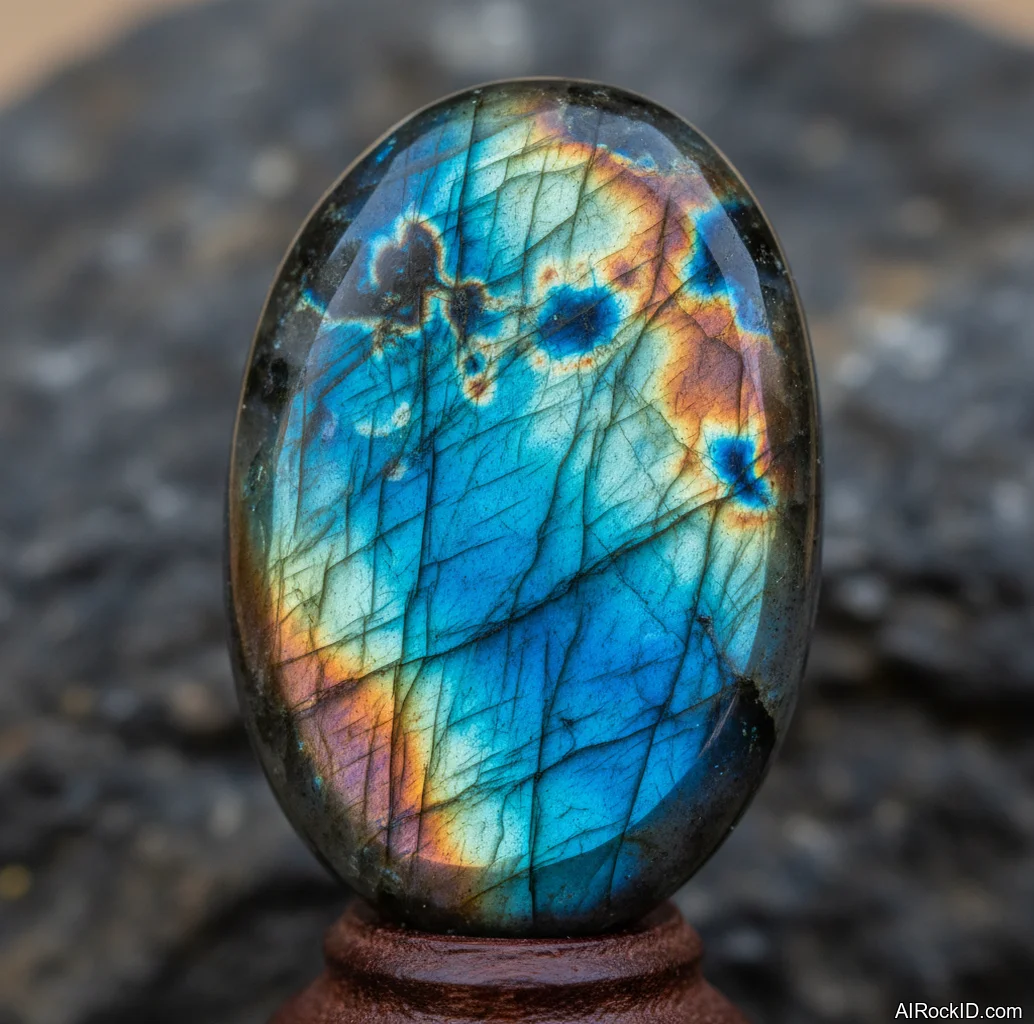
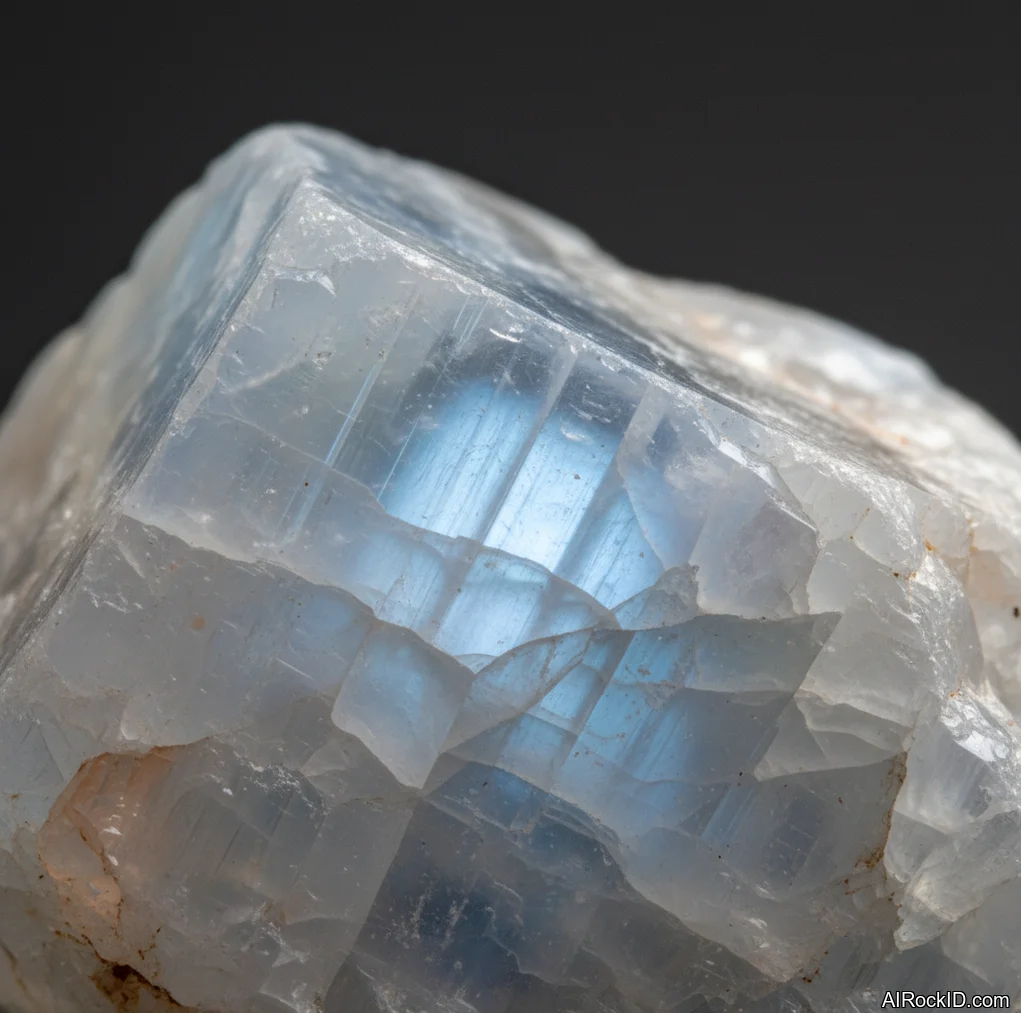
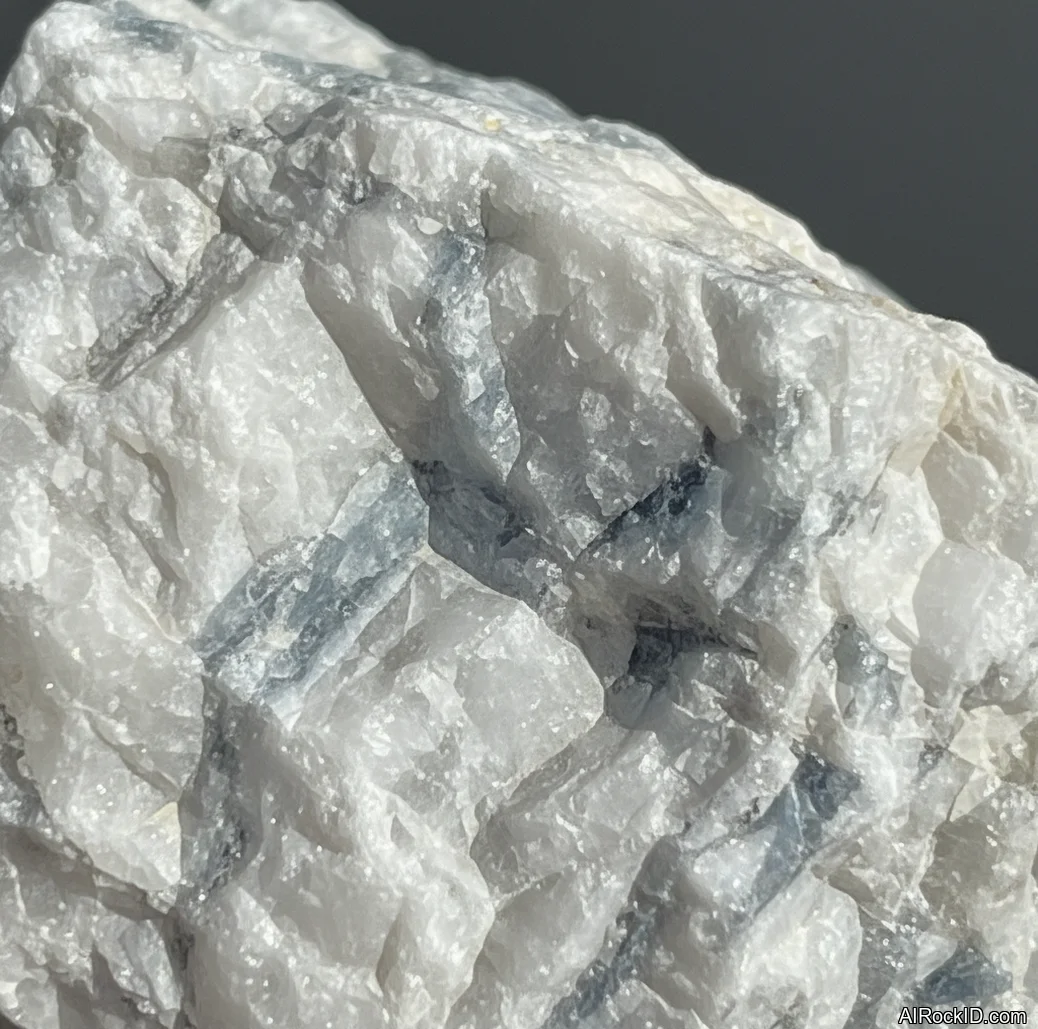
Pick up a hand sample and you’ll see why collectors get weirdly passionate about calling it “just a rock.” It has that feldspar heft, a cool, glassy feel against your fingertips, and fresh breaks can kick back a silvery flash when they hit a shop light at the right angle. Most chunks read like pale gray concrete from across the table. But rotate it in your hand and the blocky feldspar grains show up, the little cleavage planes start catching light, and sometimes you’ll spot a faint bluish sheen (that’s when there’s labradorite mixed in).
Thing is, a lot of anorthosite in the market gets sold under friendlier names, especially if it shimmers at all. If it’s loaded with labradorite, dealers push the name “labradorite.” And if it’s clean and bright, you’ll hear “white granite,” even though it isn’t granite. Handle enough of it and it gets easy to spot. Anorthosite has this specific feel, like a big feldspar mosaic that wants to pop along flat faces instead of splintering like quartzite.
Origin & History
“Anorthosite” is a name that showed up in the 1800s for rocks that are mostly plagioclase feldspar, specifically anorthite. The word comes straight from “anorthite,” and that term traces back to Greek roots meaning “oblique,” which makes sense once you’ve actually looked at a fresh break and noticed the cleavage and crystal angles don’t meet in the neat, tidy way you’d expect.
Collectors bump into it pretty early, honestly, because it’s a major crustal rock, not some tiny-pocket oddball you only see once in a blue moon. And it’s not just an Earth thing. In planetary geology it matters a lot: the light-colored lunar highlands are largely anorthositic. Thing is, once you’ve held a good terrestrial anorthosite slab in your hands (cold, pale, kind of sugary-looking where it’s been cut), it’s easy to imagine how that washed-out feldspar color would read from far away.
Where Is Anorthosite Found?
Anorthosite shows up in big intrusive complexes and old crustal terrains, especially in Canada, the northeastern USA, Norway, and parts of Russia and Brazil.
Formation
Most anorthosite forms way down deep, in those huge magma systems where plagioclase feldspar starts separating out and just… stacks up as a cumulate. Picture it like a slow, lazy snowstorm, except it’s feldspar crystals drifting down and settling on the floor of a magma chamber. Give it enough time and you get a rock that’s basically plagioclase, with only small amounts of the darker minerals like pyroxene, olivine, or amphibole (sometimes just a few scattered grains).
Compared to a typical gabbro, it looks kind of “too light” because a lot of the dark stuff just isn’t there. But compared to granite, it’s missing quartz and potassium feldspar, so it doesn’t have that look either. The grain size is a dead giveaway it cooled slowly. When I’m sorting rough at a show, those coarse grains jump out first, especially under those harsh vendor lights. You can literally trace individual feldspar crystals with your fingertip. Seriously, try it.
How to Identify Anorthosite
Color: Usually white to light gray, sometimes with darker specks; pieces that contain labradorite can show faint blue-gray to greenish flashes on cleavage faces.
Luster: Vitreous to pearly on fresh cleavage surfaces, duller on weathered faces.
Look closely for blocky feldspar grains and flat cleavage flashes instead of a sugary quartz sparkle. If you scratch it with a steel nail, it usually won’t bite much, but it also won’t feel as glass-hard as quartz. The real test is a fresh break: you’ll often see smooth, planar feldspar cleavage faces that reflect light like tiny mirrors when you tilt the piece.
Properties of Anorthosite
Physical Properties
| Crystal System | Triclinic |
| Hardness (Mohs) | 6.0-6.5 (Hard (6-7.5)) |
| Density | 2.62-2.76 g/cm3 |
| Luster | Vitreous |
| Diaphaneity | Opaque |
| Fracture | Uneven |
| Streak | White |
| Magnetism | Non-magnetic |
| Colors | White, Light gray, Bluish gray, Black-speckled gray |
Chemical Properties
| Classification | Silicates |
| Formula | CaAl2Si2O8 |
| Elements | Ca, Al, Si, O |
| Common Impurities | Fe, Mg, Na, Ti |
Optical Properties
| Refractive Index | 1.563-1.575 |
| Birefringence | 0.011 |
| Pleochroism | None |
| Optical Character | Biaxial |
Anorthosite Health & Safety
Anorthosite is safe to handle and it isn’t toxic. Just use the usual rock-handling common sense if you’re cutting or grinding it, because the dust gets everywhere and it’s the kind that sticks to your fingers and leaves that chalky grit on your palms.
Safety Tips
If you’re cutting, sanding, or polishing it, keep a little water running on it and put on a real dust mask or respirator, because you don’t want to breathe in that super-fine silicate dust.
Anorthosite Value & Price
Price Range
Rough/Tumbled: $3 - $25 per piece
Price is mostly about how it looks in your hand. Clean, coarse feldspar grain that catches the light with a nice sheen, or that labradorite-style flash that pops when you tilt it, moves way faster than the plain gray chunks. And big slabs from known localities cost more, partly because lugging a heavy piece of rock around (and paying to ship it) just isn’t cheap.
Durability
Moderate — Scratch resistance: Good, Toughness: Fair
It’s generally stable, but feldspar cleavage means it can chip along flat planes if you knock an edge on a hard floor.
How to Care for Anorthosite
Use & Storage
Store it like you’d store feldspar or labradorite: separated from harder stuff so it doesn’t get edge-chipped. Wrap nicer pieces because the cleavage corners love to bruise.
Cleaning
1) Rinse with lukewarm water to remove grit. 2) Wash with mild soap and a soft brush, especially in grain boundaries. 3) Rinse well and dry completely so water spots don’t dull the sheen.
Cleanse & Charge
If you do energetic cleansing, smoke, sound, or a quick rinse works fine. I avoid salt bowls for long periods just because it’s messy and doesn’t do the surface any favors.
Placement
A shelf with side lighting is best, because raking light makes the feldspar cleavage flash. Keep it out of the line of fire if you’ve got pets that like to knock rocks off tables.
Caution
Don’t run ultrasonic cleaning on pieces that are already fracturey or cleaved. And don’t toss it in a tumbler unless you’re fine with the edges coming out bruised and the surface looking more matte.
Works Well With
Anorthosite Meaning & Healing Properties
At first glance, anorthosite doesn’t look like a “healing stone.” It’s pale, blocky, and pretty upfront about being plain old crust material. And that’s exactly why some people reach for it when they’re doing grounding work. It feels direct. No drama.
Hold a cold chunk in your palm for a minute and you’ll get what people mean. The thing has that quiet, steady feel, like you’re gripping a bit of bedrock instead of some sparkly point. I treat it as a focus tool, not medicine. If you’re using crystals alongside therapy, sleep work, or meditation, anorthosite works well as the steadying object in your hand, mostly because it’s heavy enough to really register and the surface texture gives your fingers something to “read” (those slightly gritty faces and sharpish edges don’t let you forget it’s there).
But look, if you want big flashy energy, anorthosite can feel like nothing’s happening. That’s the whole appeal for some people, and a dealbreaker for others. I’ve sold it to folks chasing a lunar connection because the Moon has an anorthositic crust, and they were happiest when the piece had even a faint feldspar sheen when you tilt it under a lamp. The plain gray chunks? Those tend to sit there and get ignored unless you explain what they’re actually looking at.
Identify Any Crystal Instantly
Snap a photo and get properties, value, care instructions, and healing meanings in seconds.