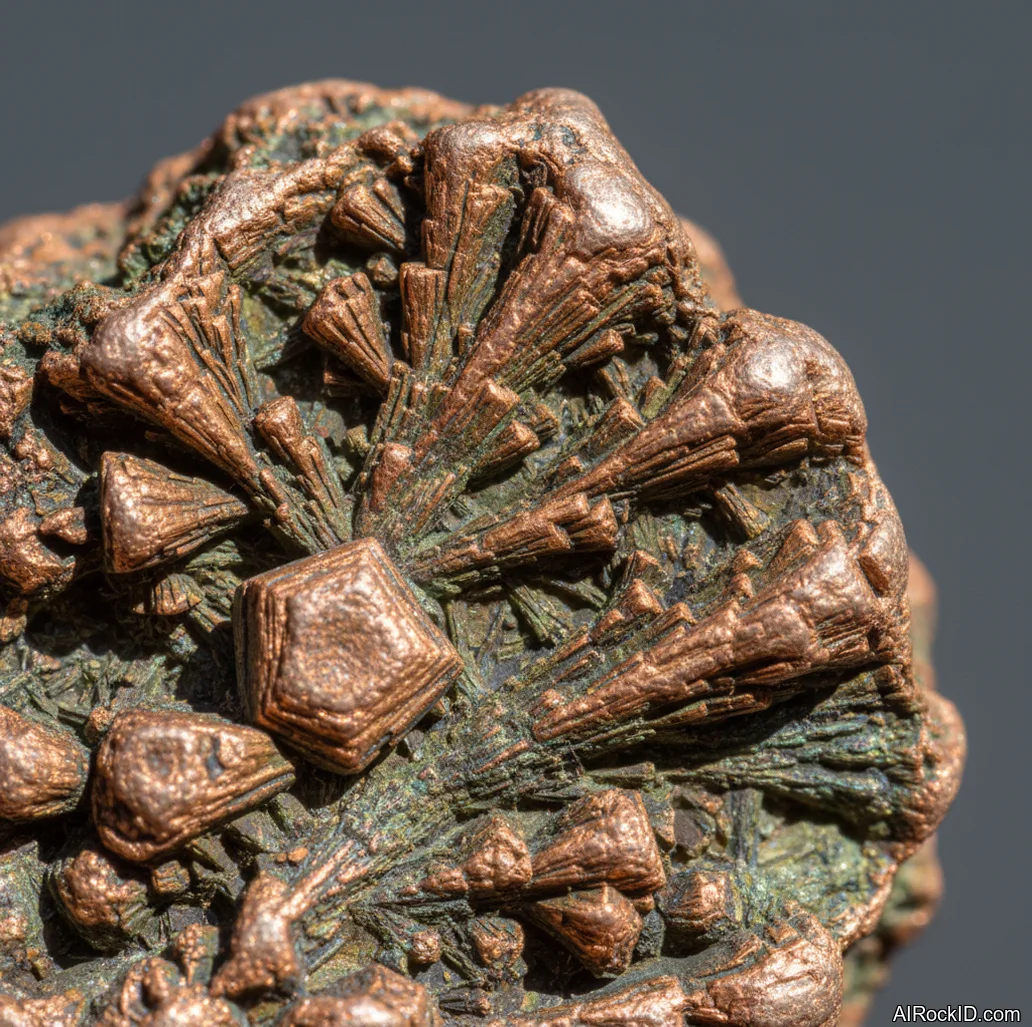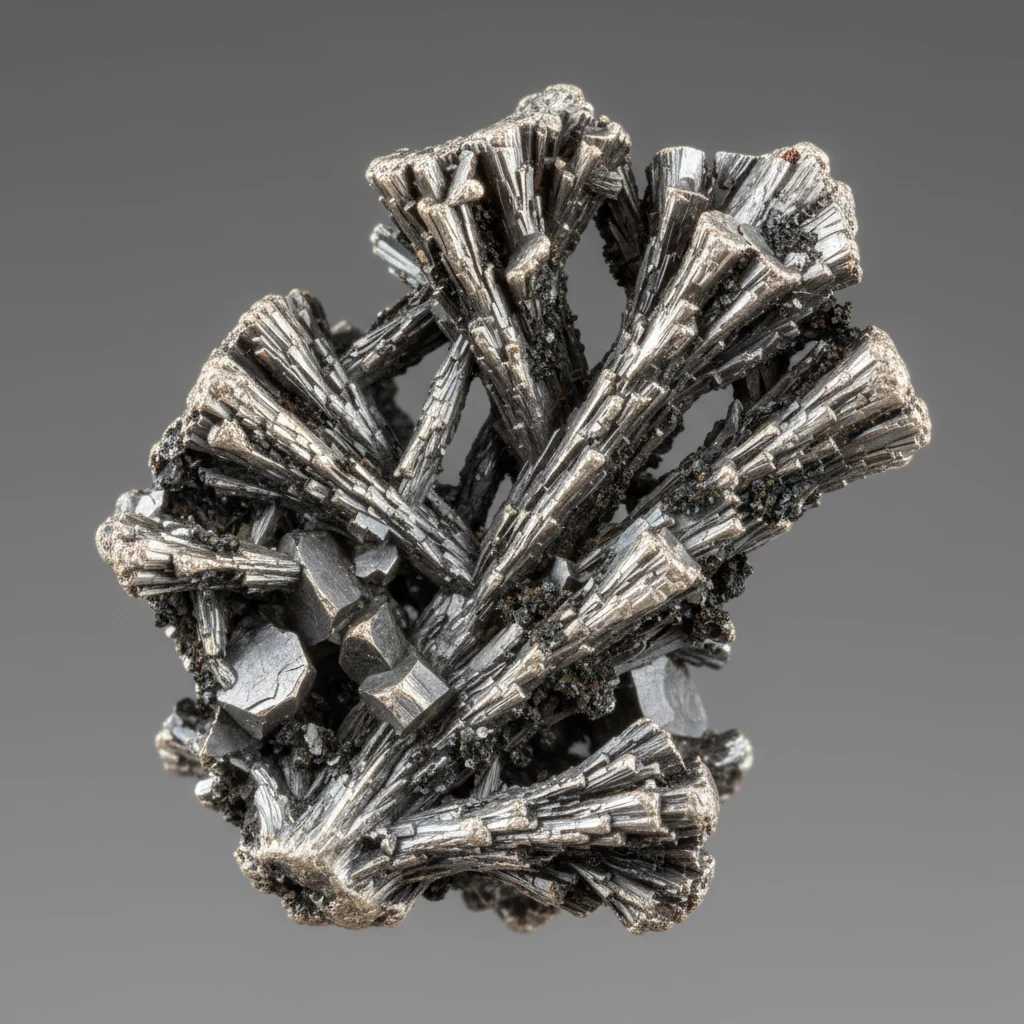
Native Silver


Quick answer: Native Silver is a naturally occurring form of elemental silver, usually recognized by its metallic luster, silver-white to gray color, and distinctive wires, plates, grains, or dendritic growths. It is soft, heavy for its size, and commonly tarnishes to gray, brown, or black on the surface.
AI Rock ID can help compare a Native Silver specimen against lookalikes by checking visible clues such as metallic luster, tarnish, crystal habit, and host rock. RockIdentifier.io provides educational crystal information to support identification, but physical tests and expert review are recommended for valuable metallic specimens.
Good fit
- Collectors interested in metallic native elements and classic mining-district specimens
- Specimens showing wire-like, branching, or dendritic silver forms
- Educational collections focused on ore minerals and native metals
- People who want a historically important mineral tied to silver mining
Not a good fit
- Jewelry wearers who need a hard, scratch-resistant stone
- Collectors who want bright, untarnished specimens with no maintenance
- Situations where authenticity cannot be verified for a high-priced piece
- Children’s handling collections, because small metallic fragments may bend or detach
Why people search for this
People often search for Native Silver to confirm whether a silvery metallic specimen is natural silver or a lookalike such as galena, arsenopyrite, or a silver-colored alloy. Search interest also comes from pricing, mine provenance, and the difference between natural specimens and refined silver.
Most commonly confused with
- Galena: Galena is lead-gray, very dense, and commonly breaks into cubic cleavage fragments rather than forming malleable wires.
- Arsenopyrite: Arsenopyrite is harder, more brittle, and often has a steel-gray to silver-white color with striated crystal faces.
- Pyrite: Pyrite is brassy yellow, harder, and brittle, while Native Silver is softer and can be bent or flattened.
- Electrum: Electrum is a natural gold-silver alloy and may look paler yellow to silvery depending on its gold content.
Native Silver vs. Common Lookalikes
| Specimen | Key Appearance | Simple Difference |
|---|---|---|
| Native Silver | Silver-white to gray metal; wires, dendrites, grains, or plates | Soft, malleable, and commonly tarnishes dark |
| Galena | Lead-gray metallic cubes or cleavages | Brittle with cubic cleavage; not wire-like |
| Arsenopyrite | Steel-gray to silver-white prismatic crystals | Harder and brittle; often striated |
| Pyrite | Brassy metallic crystals or masses | Yellow tone and much harder |
| Refined silver | Polished, cast, stamped, or shaped metal | Manufactured form rather than a natural mineral habit |
AI identification confidence
AI identification can be moderately helpful for Native Silver when the photo clearly shows wires, dendrites, metallic luster, tarnish, and surrounding matrix. Confidence is lower for polished pieces, close-up fragments with no scale, or specimens that have been cleaned, plated, or artificially assembled.
When AI gets it wrong
- A photo shows only a shiny silver surface without crystal habit or host rock
- The specimen is a metal alloy, solder, slag, or refined silver rather than a natural mineral
- Dark tarnish hides the original color and texture
- Galena, arsenopyrite, or other metallic minerals are photographed under bright glare
Final recommendation
For identification, prioritize specimens with natural wire, dendritic, or plate-like forms, visible matrix, reliable locality data, and realistic tarnish. For purchases, ask for provenance and avoid high-priced pieces that rely only on a silver color without diagnostic structure or documentation.
How to Verify a Native Silver Specimen
A credible Native Silver specimen should show natural metallic form, appropriate tarnish, and consistency with its reported locality. Useful verification clues include high density, softness, malleability, and the absence of cubic cleavage typical of galena. For valuable pieces, confirmation by a mineral dealer, museum professional, or nondestructive elemental test such as XRF is preferable to destructive home testing.
Buying Native Silver: Provenance and Red Flags
Native Silver value is strongly affected by form, size, condition, and locality, so labels from known mining districts can matter. Red flags include unusually bright wire clusters with no tarnish, vague locality claims, glued-looking attachments, or specimens described only as “solid silver” without mineral context. Natural silver may be delicate, so intact branching forms should be handled and shipped carefully.
Photographing Native Silver for Identification
Photograph Native Silver in indirect light to reduce glare and show the shape of wires, plates, or dendrites. Include a scale, multiple angles, and at least one image of the host rock or attachment point. Avoid filters or strong flash because they can make galena, arsenopyrite, and other metallic minerals appear more silver-like.
What Is Native Silver?
Native Silver is a naturally occurring metallic mineral composed of pure silver, with the formula Ag. In the hand, a good specimen feels dense for its size, shows a silver-white to gray metallic surface, and may appear as wires, branching dendrites, or compact masses. It belongs to the Native Elements group and has a cubic crystal system.
Collectors value Native Silver for its directness: it is the metal itself, not a silver ore mineral pretending to be something else. Its Mohs hardness is 2.5-3, so it is very easy to scratch compared with many display minerals. The surface can tarnish in air, shifting its appearance toward gray or black, so storage and gentle handling matter.
Origin & History
Native Silver has been known and used since prehistoric times. The name “silver” comes from the Old English “seolfor,” a fittingly old word for a metal that people recognized, worked, and prized long before modern mineral classification. As a specimen, it carries both mineralogical and cultural weight.
In a collection tray, Native Silver reads as both a scientific specimen and a historical material. Its metallic luster, malleability, and density make it feel unlike most silicates or carbonates. For locality research and label checking, collectors commonly compare district information with references such as mindat.org, especially for classic silver-mining areas.
Where Is Native Silver Found?
Native Silver is most commonly found in silver mining districts. Reported countries include Mexico, the USA, and Canada, with notable localities including Kongsberg, Norway; Freiberg, Germany; and Guanajuato, Mexico. These names matter to collectors because form, size, and preservation can strongly affect a specimen’s appeal.
Formation
Native Silver forms through hydrothermal processes in veins and also as a result of oxidation of silver-bearing minerals. In practical specimen terms, that origin explains why it is often associated with mining districts rather than broad surface exposures. Vein material can preserve the metal in wires, branches, or dense metallic patches.
The best pieces show the mineral’s metallic character clearly: opaque, silver to gray, and reflective when fresh. Tarnish in air can dull that surface, so formation and later exposure both affect what the collector sees. USGS resources on mineral commodities are useful background for understanding silver as a mined material.
How to Identify Native Silver
Identify Native Silver by its silver-white to gray color, metallic luster, density, and malleability. It is opaque, non-magnetic, and has a silver streak. Fresh surfaces can look bright and metallic, while older exposed areas may appear gray or black from tarnish. Its fracture is hackly.
A careful field check starts with appearance and feel: the specimen should look like metal and feel heavy for its size, with a Mohs hardness of 2.5-3. Native Silver can also be tested for conductivity. Avoid aggressive testing on delicate wire-like or dendritic pieces, because the mineral is soft and display forms can be physically vulnerable.
Properties of Native Silver
Physical Properties
| Crystal System | Cubic |
| Hardness (Mohs) | 2.5-3 (Very Soft (1-2)) |
| Density | 10.49 g/cm3 |
| Luster | Metallic |
| Diaphaneity | Opaque |
| Fracture | Hackly |
| Streak | silver |
| Magnetism | Non-magnetic |
| Colors | silver, gray, black |
Chemical Properties
| Classification | Native Element |
| Formula | Ag |
| Elements | Ag |
| Common Impurities |
Optical Properties
| Refractive Index | Not applicable |
| Birefringence | None |
| Pleochroism | None |
| Optical Character | Isotropic |
Native Silver Health & Safety
There are no significant health risks when handling native silver.
Native Silver Value & Price
Price Range
Rough/Tumbled: $10 - $50 per specimen
Cut/Polished:
Price depends on purity, size, and form.
Durability
Moderate — Scratch resistance: Fair, Toughness: Fair
Native silver tarnishes in air, affecting its appearance.
How to Care for Native Silver
Use & Storage
Store in a cool, dry place to prevent tarnishing.
Cleaning
Clean with a soft cloth and mild soap solution. Avoid harsh chemicals.
Cleanse & Charge
Can be cleansed with water or by using sound.
Placement
Place in a well-lit area to enhance its metallic luster.
Caution
Avoid exposure to moisture for prolonged periods.
Works Well With
Native Silver Meaning & Healing Properties
In crystal healing traditions, Native Silver is associated with mental clarity, communication, and protection. It is linked with the throat chakra, the Moon, the Earth element, and the zodiac signs Aquarius and Libra. These meanings are cultural and spiritual associations, not a substitute for medical treatment.
For practice, many people place Native Silver where light can catch its metallic luster, or pair it with quartz, amethyst, or lapis-lazuli. It can be cleansed with water or sound, but care is still important: store it in a cool, dry place, avoid prolonged moisture, and clean gently with a soft cloth and mild soap solution.
Identify Native Silver from a photo
Compare Native Silver traits, care tips, value clues, and common lookalikes with a clear photo.
Common mistakes
- Assuming every silver-colored metallic mineral is Native Silver
- Ignoring crystal habit and relying only on color
- Cleaning tarnish aggressively and damaging delicate wire forms
- Mistaking refined silver scraps, solder, or plated material for natural specimens
- Buying expensive specimens without locality information or authenticity support
- Testing with harsh chemicals or deep scratches on collectible pieces