Talc


Quick answer: Talc is best known as the Mohs hardness 1 reference mineral, making it the softest standard mineral used in field identification. It often appears white, gray, pale green, or cream and may feel greasy or soapy because of its sheet-like crystal structure.
AI Rock ID can help compare a talc specimen against visually similar soft minerals using color, luster, texture, and surface features. RockIdentifier.io is useful for narrowing an identification, but a scratch test and context from the specimen’s source are important for talc because several soft minerals can look alike.
Good fit
- Collectors who want a reference specimen for Mohs hardness testing
- Students learning basic mineral identification by touch, luster, and scratch behavior
- Collectors interested in soapstone, massive talc, or metamorphic mineral examples
- People who prefer display specimens that are handled gently rather than worn daily
Not a good fit
- Jewelry that needs durability or scratch resistance
- Pocket stones or keychain pieces that will be rubbed often
- Specimens intended for water exposure, tumbling, or abrasive cleaning
- Buyers who need a mineral that can be confidently identified by color alone
Most commonly confused with
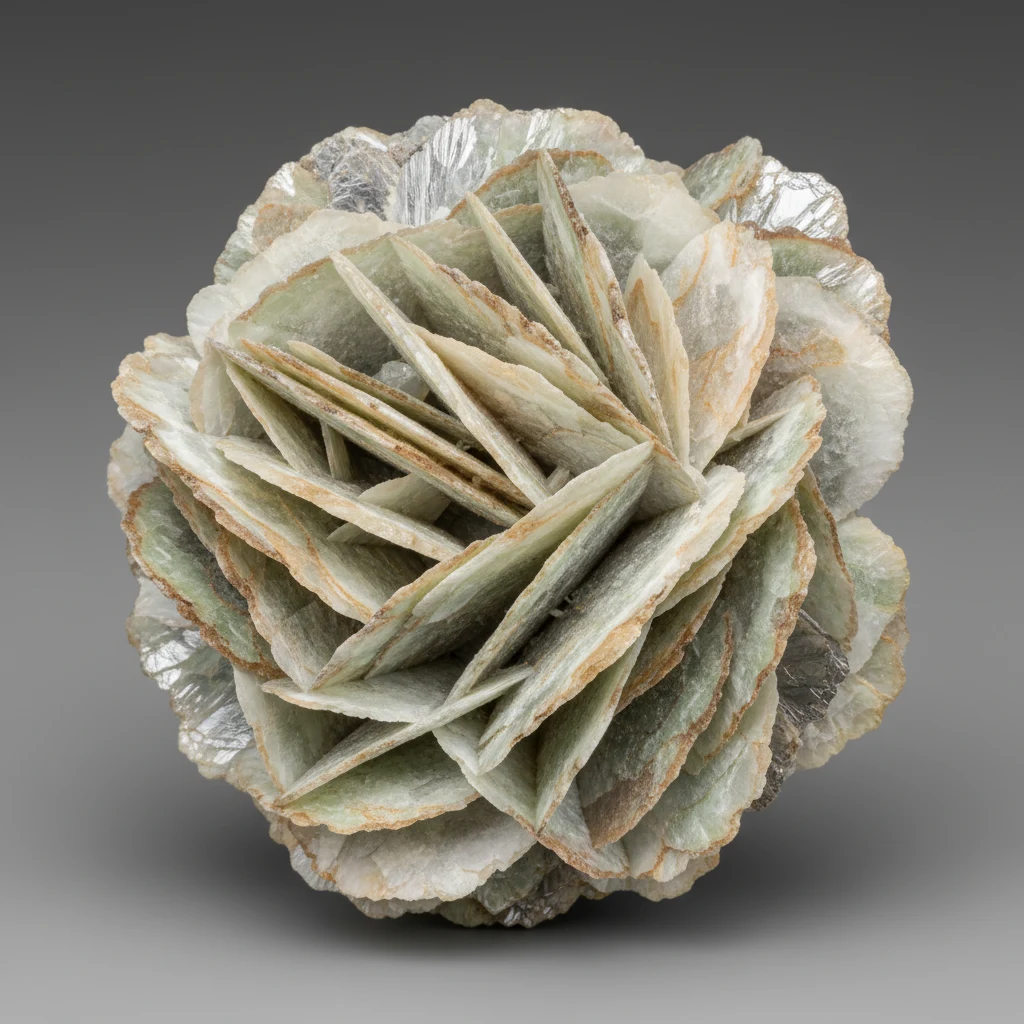
- Gypsum: Gypsum is also soft, but it is harder than talc at Mohs 2 and commonly forms satin spar, selenite, or desert rose habits.
- Serpentine: Serpentine can share pale green color and waxy luster, but it is usually harder and lacks talc’s very soapy feel.
- Chlorite: Chlorite may appear green and platy, but it is typically darker, more micaceous, and not the Mohs 1 reference mineral.
- Calcite: Calcite can be pale and massive, but it is harder at Mohs 3 and reacts with dilute acid.
Talc Lookalike Comparison
| Material | Typical Hardness | Practical Difference |
|---|---|---|
| Talc | 1 | Scratched easily by a fingernail and often feels distinctly soapy or greasy |
| Gypsum | 2 | Still soft, but not as easily scratched as talc and often shows fibrous or bladed forms |
| Calcite | 3 | Harder than talc and fizzes with dilute acid |
| Serpentine | 2.5–5.5 | Commonly waxy green but usually resists scratching more than talc |
| Soapstone | Variable | A talc-rich rock, not a pure mineral; properties vary with included minerals |
AI identification confidence
AI identification confidence for talc is usually moderate when the image shows a pale, massive, soft-looking specimen with a dull to pearly luster. Confidence improves when the user includes scratch-test results, a close-up of surface texture, and any source or locality information.
When AI gets it wrong
- A photo cannot measure hardness, so gypsum, serpentine, and other pale soft minerals may be suggested instead of talc.
- Polished soapstone carvings may be labeled as talc even when the material is a mixed rock rather than a pure mineral specimen.
- Bright lighting can make waxy, pearly, and dull lusters difficult to separate in an image.
- White or gray massive minerals with no visible crystals often need a simple scratch or acid test for reliable separation.
Final recommendation
Choose talc as a reference or teaching specimen when softness, touch, and metamorphic origin are the main points of interest. For handling, carving, or decor, verify whether the item is pure talc, talc-rich soapstone, or another soft mineral sold under a broad trade name.
How to Check Talc Authenticity
A genuine talc specimen should be very easy to scratch with a fingernail and should not scratch a copper coin or steel knife. Many talc-rich pieces feel smooth, greasy, or soapy, but touch alone is not definitive because polished serpentinite and soapstone can feel similar. If the material is sold as a carving or countertop sample, ask whether it is pure talc, soapstone, or a talc-bearing rock.
Buying Talc Specimens
Talc is usually purchased as a mineral specimen, educational reference, or soapstone-related material rather than as a faceted gem. Look for clear labeling, locality information, and honest descriptions of whether the piece is massive talc, crystalline talc, or talc-rich rock. Avoid paying premium mineral-specimen prices for ordinary soapstone unless the seller provides specific mineralogical or locality details.
Field Identification Tips for Talc
A simple fingernail scratch test is one of the most useful checks because talc is the standard for Mohs hardness 1. Talc commonly occurs in metamorphic settings and may be associated with serpentine, magnesite, dolomite, chlorite, or amphiboles. Handle suspected talc gently during testing because fresh scratches and powdery marks can appear quickly.
What Is Talc?
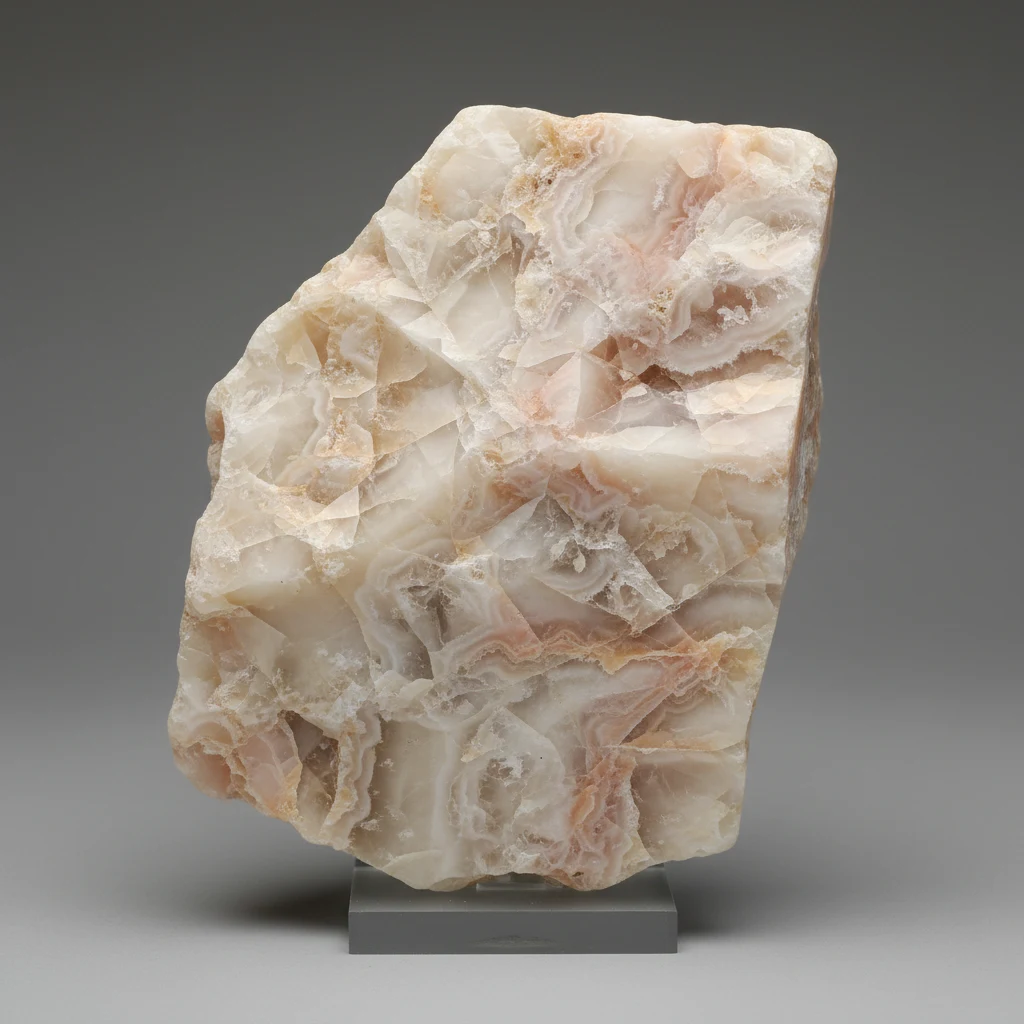
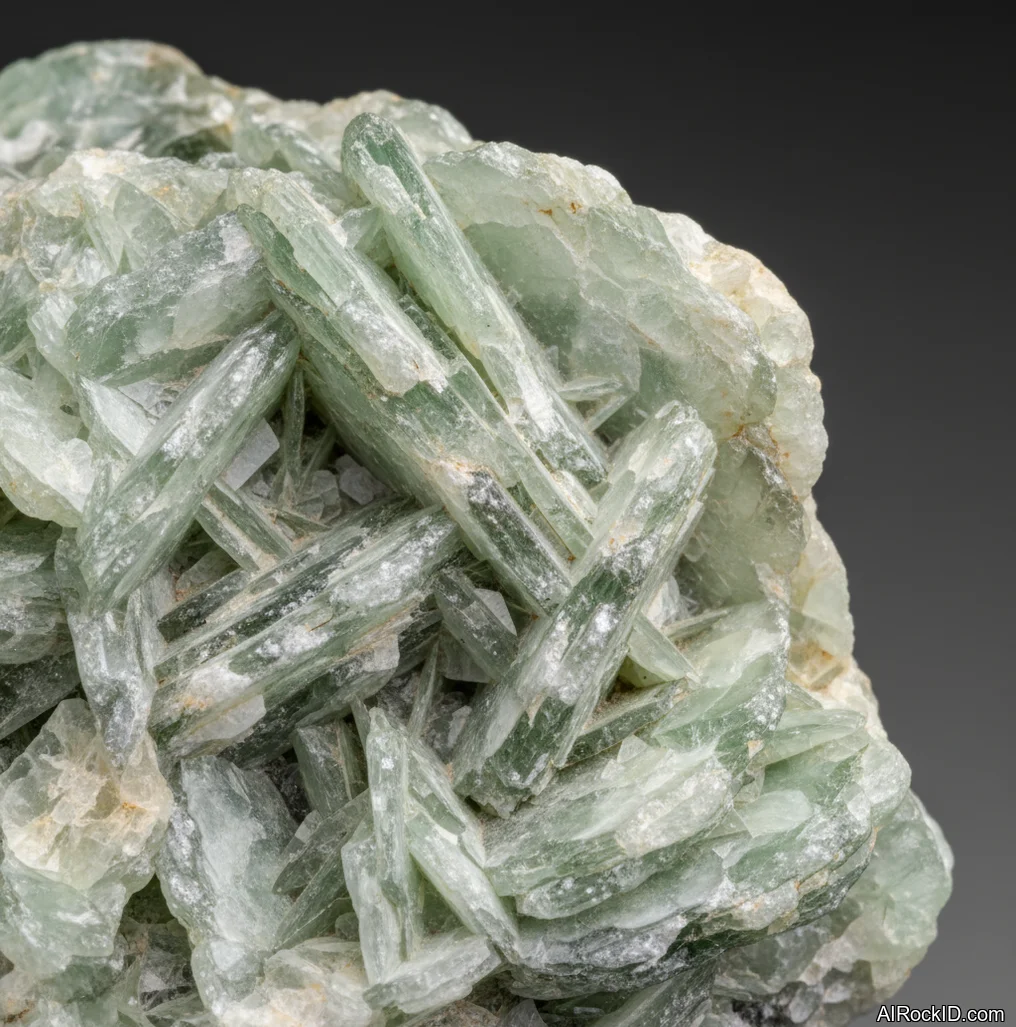
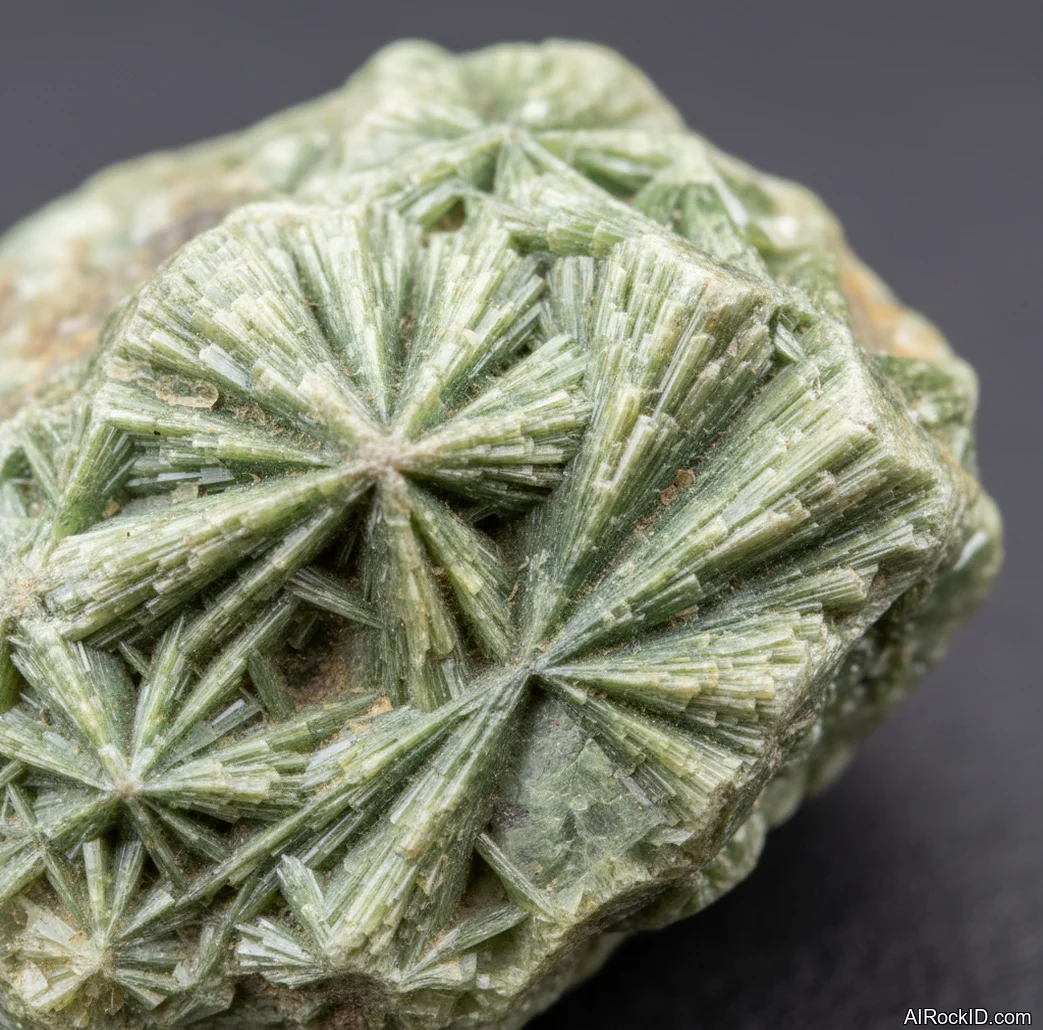
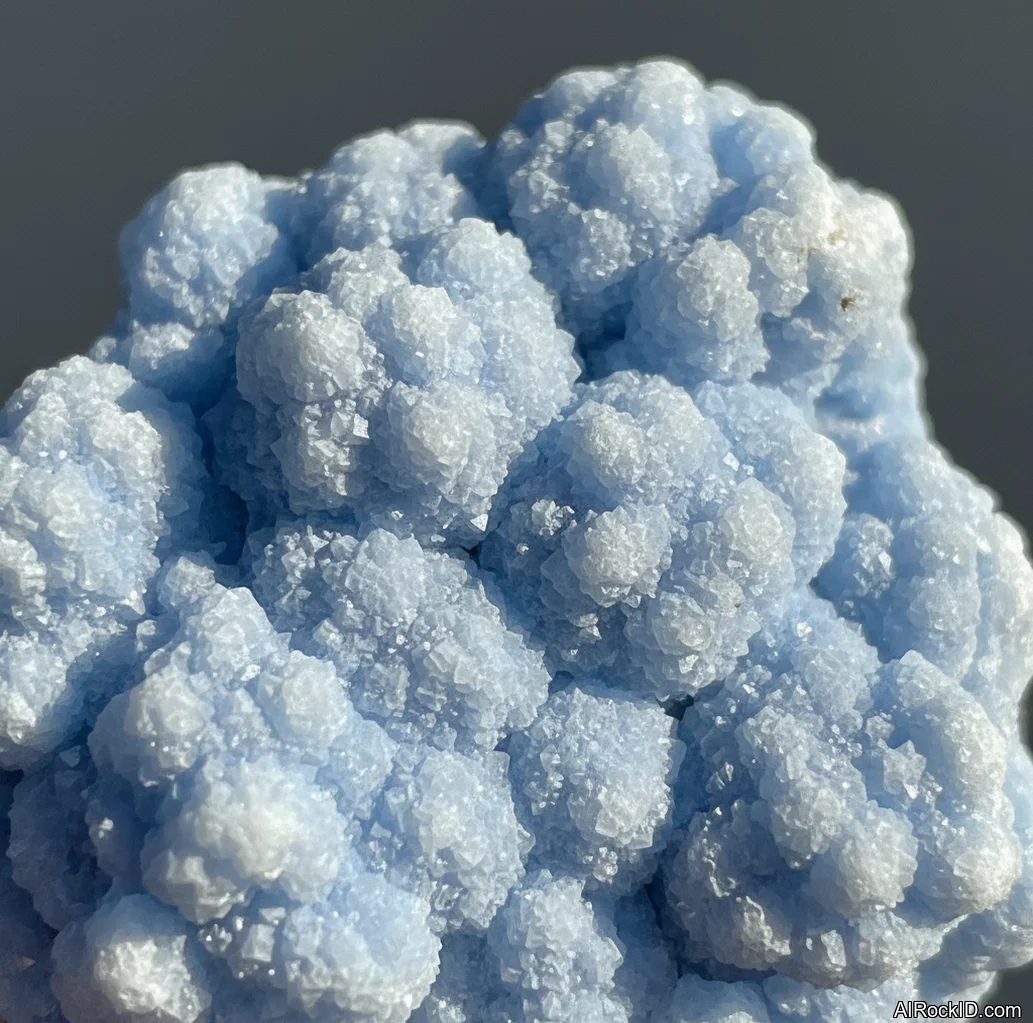
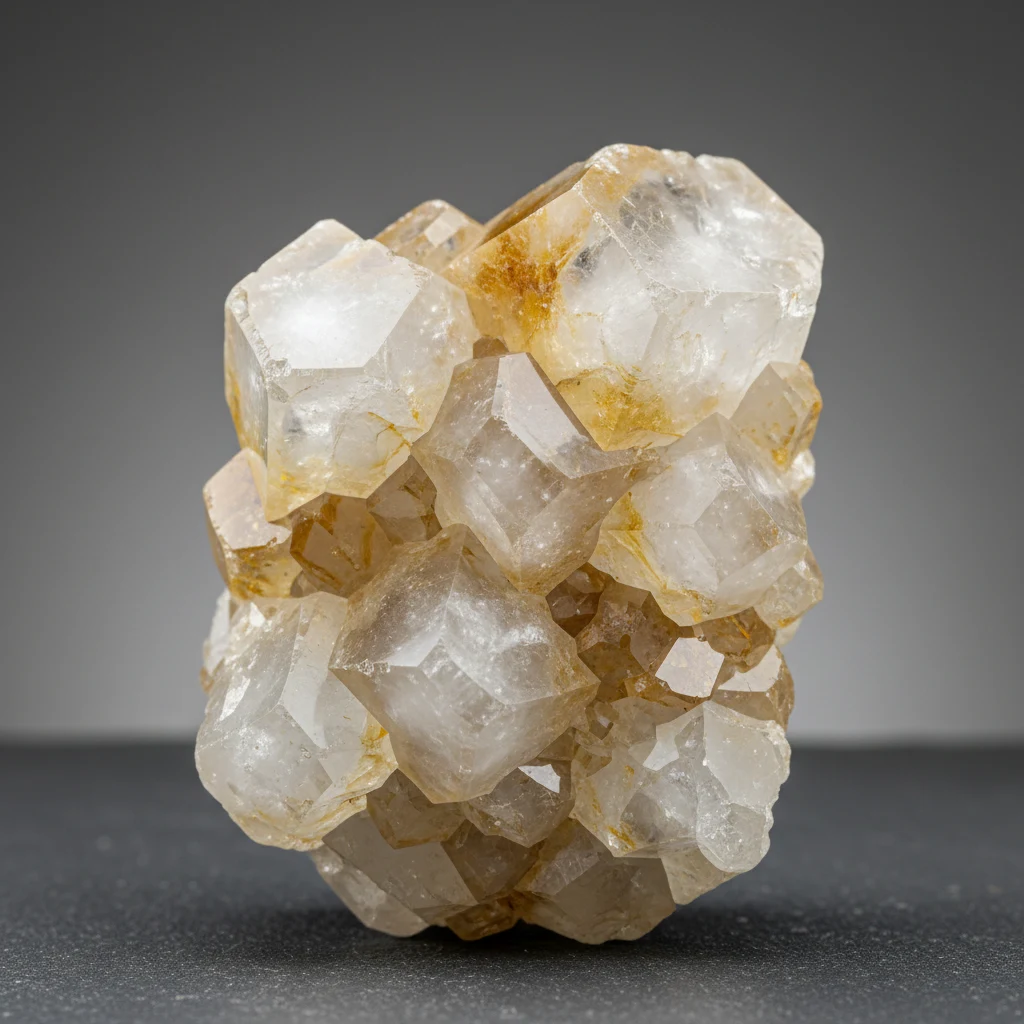
Talc is the softest reference mineral on the Mohs scale, with a hardness of 1. In the hand, it feels unmistakably slick, greasy, or soapy, and it is often pale green, white, gray, cream, tan, or silvery. It is a magnesium silicate hydroxide mineral with the formula Mg3Si4O10(OH)2, and it commonly appears as platy, foliated, or compact massive material.
Collectors often meet talc as a teaching specimen rather than a jewelry stone, because nearly any common object can scratch it. Fine-grained, massive talc-rich rock is commonly called soapstone or steatite, while “French chalk” is another traditional name. Its collector appeal comes from feel, softness, locality, and clear educational value more than sparkle or durability.
Origin & History
The name talc comes through medieval Latin and Arabic usage, often traced to Arabic talq for a soft, pale, platy mineral. Talc-rich soapstone and steatite have been used since antiquity, especially where a soft, workable, heat-resistant material was useful for carving, ceramics, practical objects, cosmetics, lubricant uses, and industrial fillers.
A good talc specimen still tells that history by touch: it marks, powders, and slips under the fingers instead of resisting them. For locality cross-checking, collector labels for talc deposits such as Trimouns at Luzenac, Ariège, France, can be compared with entries on mindat.org. That is especially useful because common talc may look plain until its source and context are known.
Where Is Talc Found?
Talc is common and widespread, especially in metamorphic belts and hydrothermally altered magnesium-rich rocks. Important producing and collecting countries include China, the United States, France, Italy, Austria, India, Brazil, Canada, Russia, and Pakistan. Economic deposits are especially noted from France, China, the United States, India, and Alpine and Appalachian localities.
Formation
Talc forms mainly through low- to medium-grade metamorphism and hydrothermal alteration of magnesium-rich rocks. It commonly develops when ultramafic rocks such as peridotite and serpentinite are hydrated and carbonated, or when siliceous dolostone reacts with silica-bearing fluids. The result is a layered phyllosilicate mineral that cleaves and slides with a distinctive slippery feel.
In the field, talc is often a clue that magnesium-rich rocks have been chemically reworked rather than simply weathered. Its pale masses may sit with related alteration minerals, and compact talc-rich rock can grade into soapstone. Because talc is easily abraded, fresh broken or protected surfaces usually show its greasy, pearly, waxy, or dull luster better than exposed, handled surfaces.
How to Identify Talc
Talc is identified first by softness: it is easily scratched by a fingernail and can often be marked with a wooden pick. It has a white streak, low density compared with many ore minerals, and a greasy or soapy feel that is hard to mistake once you have handled a clean piece. Colors are usually white, pale green, gray, cream, tan, silvery, yellowish, or brownish green.
Look for platy, foliated, or compact massive aggregates, plus greasy, pearly, waxy, or dull luster. Foliated pieces may show a pearly sheen on cleavage surfaces, while compact soapstone-like material feels smoother and more coherent. Talc does not effervesce in dilute acid, so fizzing suggests carbonate minerals such as calcite, dolomite, or magnesite are present in the rock.
Properties of Talc
Physical Properties
| Crystal System | Monoclinic; triclinic polytypes also occur |
| Hardness (Mohs) | 1 on the Mohs scale (Extremely soft) |
| Density | 2.58–2.83 g/cm³ |
| Luster | Greasy, pearly, waxy, or dull |
| Diaphaneity | Translucent to opaque |
| Fracture | Uneven to splintery; perfect basal cleavage is more diagnostic than fracture |
| Streak | White |
| Magnetism | Nonmagnetic |
| Colors | white, pale green, gray, cream, tan, silvery, yellowish, brownish green |
Chemical Properties
| Classification | Phyllosilicate; magnesium silicate hydroxide |
| Formula | Mg3Si4O10(OH)2 |
| Elements | magnesium, silicon, oxygen, hydrogen |
| Common Impurities | iron, aluminum, nickel, calcium, chromium |
Optical Properties
| Refractive Index | nα 1.539–1.550, nβ 1.589–1.594, nγ 1.589–1.600 |
| Birefringence | About 0.050 |
| Pleochroism | None to weak; usually colorless in thin section, weakly tinted in colored material |
| Optical Character | Biaxial negative |
Talc Health & Safety
Solid talc specimens are generally safe to handle, but avoid grinding, sanding, or breathing dust. The main concern is respiratory exposure to fine particles or possible asbestos contamination in poorly characterized material.
Talc Value & Price
Price Range
Rough/Tumbled: Common rough talc specimens are usually inexpensive, often about $2–$20 USD for small hand samples; larger, clean, or well-labeled locality specimens may range from $20–$100+ USD.
Cut/Polished:
Value depends on locality, color, purity, size, unusual crystal habit, association with other minerals, and whether the specimen is a clean educational example. Talc is too soft for most jewelry, so collector value is usually based on specimen quality rather than gem cutting.
Durability
Very low durability — Scratch resistance: Extremely poor; talc is the Mohs hardness 1 standard and can be scratched by nearly any common object., Toughness: Generally poor to fair; compact soapstone is more coherent, but foliated talc can be fragile and flaky.
Talc is chemically stable and insoluble in water under normal conditions, but it is easily scratched, abraded, and powdered. Keep it away from harder minerals during storage.
How to Care for Talc
Use & Storage
Store talc separately from harder minerals in a padded box or labeled specimen tray. Even quartz, feldspar, calcite, or metal tools can scratch it easily.
Cleaning
Clean gently with a soft dry brush or a slightly damp cloth. Avoid scrubbing, ultrasonic cleaners, steam cleaners, acids, and abrasive powders.
Cleanse & Charge
If used in spiritual practices, cleanse with smoke, sound, moonlight, or brief gentle wiping rather than salt, abrasion, or rough water handling.
Placement
Best displayed as an educational mineral specimen where it will not be touched often. Keep away from high-traffic surfaces because it can powder or mark objects.
Caution
Do not sand, carve, or powder talc without proper dust control. Avoid storing it loose with harder stones because it will scratch and shed powder.
Works Well With
Talc Meaning & Healing Properties
In modern crystal-healing traditions, talc is associated with softness, calm, gentleness, patience, and grounding. These meanings are cultural and spiritual rather than scientifically proven, but they match the physical experience of the mineral: it is quiet, pale, and yielding in the hand, with a surface that feels more like a soft touchstone than a hard gem.
Talc is linked with the heart and root chakras, Taurus and Virgo, Venus and Earth, and the Earth element. If used for spiritual practice, treat it gently: cleanse with smoke, sound, moonlight, or a brief soft wipe rather than salt, abrasion, or rough water handling. Solid specimens are generally safe to handle, but avoid grinding, sanding, or breathing talc dust.
Identify Talc from a photo
Compare Talc traits, care tips, value clues, and common lookalikes with a clear photo.
Common mistakes
- Assuming every soft, pale, soapy-feeling rock is pure talc
- Calling soapstone a mineral instead of a talc-rich rock
- Using color as the main identification feature for talc
- Testing hardness with excessive pressure and damaging a display specimen
- Buying carved soapstone as a crystalline talc specimen without checking the seller’s description
- Ignoring locality and host-rock context when separating talc from serpentine or chlorite