Alabaster


Quick answer: Alabaster is a soft, translucent variety of gypsum commonly used for carving, lamps, small sculptures, and decorative objects. It can resemble marble or calcite, but it is much softer and more sensitive to water, scratches, and household chemicals.
AI Rock ID can help compare an alabaster photo against visually similar materials such as marble, calcite, and selenite. RockIdentifier.io provides visual identification support, but softness, streak, and context are still important for confirming alabaster.
Good fit
- Collectors who want a soft, translucent carving stone
- Decorative pieces kept indoors in dry, low-contact areas
- Beginners learning to compare gypsum, calcite, and marble
- People buying carved figurines, lamps, bowls, or vintage alabaster objects
Not a good fit
- Rings, bracelets, or other jewelry exposed to frequent wear
- Outdoor use or humid locations
- Kitchen, bathroom, or tabletop surfaces that need water resistance
- Collectors who prefer hard, scratch-resistant minerals
Most commonly confused with
- Marble: Marble is harder, heavier-feeling, and does not scratch as easily with a fingernail.
- Calcite: Calcite is harder than gypsum alabaster and reacts more noticeably with weak acid.
- Selenite: Selenite is also gypsum, but it usually forms clearer, fibrous, or bladed crystals rather than dense carving stone.
- Soapstone: Soapstone feels slick or soapy and is usually less translucent than fine alabaster.
Alabaster vs Similar White Stones
| Feature | Alabaster | Marble | Calcite |
|---|---|---|---|
| Typical mineral | Gypsum | Calcite or dolomite rock | Calcite |
| Mohs hardness | About 2 | About 3-4 | 3 |
| Scratch clue | Can be scratched by a fingernail | Usually not scratched by a fingernail | Usually not scratched by a fingernail |
| Translucency | Often softly translucent | Usually opaque to slightly translucent at thin edges | Can be transparent to translucent |
| Common use | Carvings, lamps, small decor | Sculpture, tile, counters, decor | Specimens, carvings, optical pieces |
AI identification confidence
AI identification confidence is usually moderate for alabaster when the photo shows translucency, carving texture, and scale. Confidence decreases when the object is polished white, heavily dyed, photographed under warm light, or sold under trade names such as 'onyx' or 'marble alabaster.'
When AI gets it wrong
- A polished white marble carving is labeled as alabaster because both appear creamy and carved.
- Banded calcite or aragonite sold as onyx is mistaken for gypsum alabaster.
- Selenite or satin spar gypsum is identified as alabaster because the mineral family is the same.
- Resin, plaster, or cast composite decor is mistaken for natural carved stone.
Final recommendation
Choose alabaster when you want a soft, translucent carving material for indoor display rather than a durable everyday stone. For buying, ask whether the piece is gypsum alabaster, marble, calcite onyx, or a cast imitation, because trade names are often used loosely.
How to Check Alabaster Authenticity
Authentic gypsum alabaster is soft enough to scratch with a fingernail in an inconspicuous spot, while marble and calcite usually resist that test. Natural alabaster may show subtle veining, cloudy translucency, and small variations in color rather than perfectly uniform plastic-like surfaces. Avoid acid tests on finished pieces, because acids and moisture can damage the surface.
Buying Alabaster Carvings
Descriptions can be confusing because sellers may use terms such as alabaster, marble, onyx, and alabaster stone interchangeably. For higher-value pieces, check weight, translucency, carving detail, repairs, surface scratches, and whether the seller identifies the material as gypsum alabaster. Lamps and thin carvings often show alabaster’s glow most clearly when backlit.
Natural Alabaster vs Cast Imitation
Cast plaster or resin pieces can imitate alabaster but often show mold lines, repeated patterns, air bubbles, or uniform color. Natural alabaster usually feels cool at first touch, has irregular internal veining, and transmits light unevenly. A cautious scratch test on an unseen area can help separate gypsum alabaster from harder stone or synthetic materials.
What Is Alabaster?
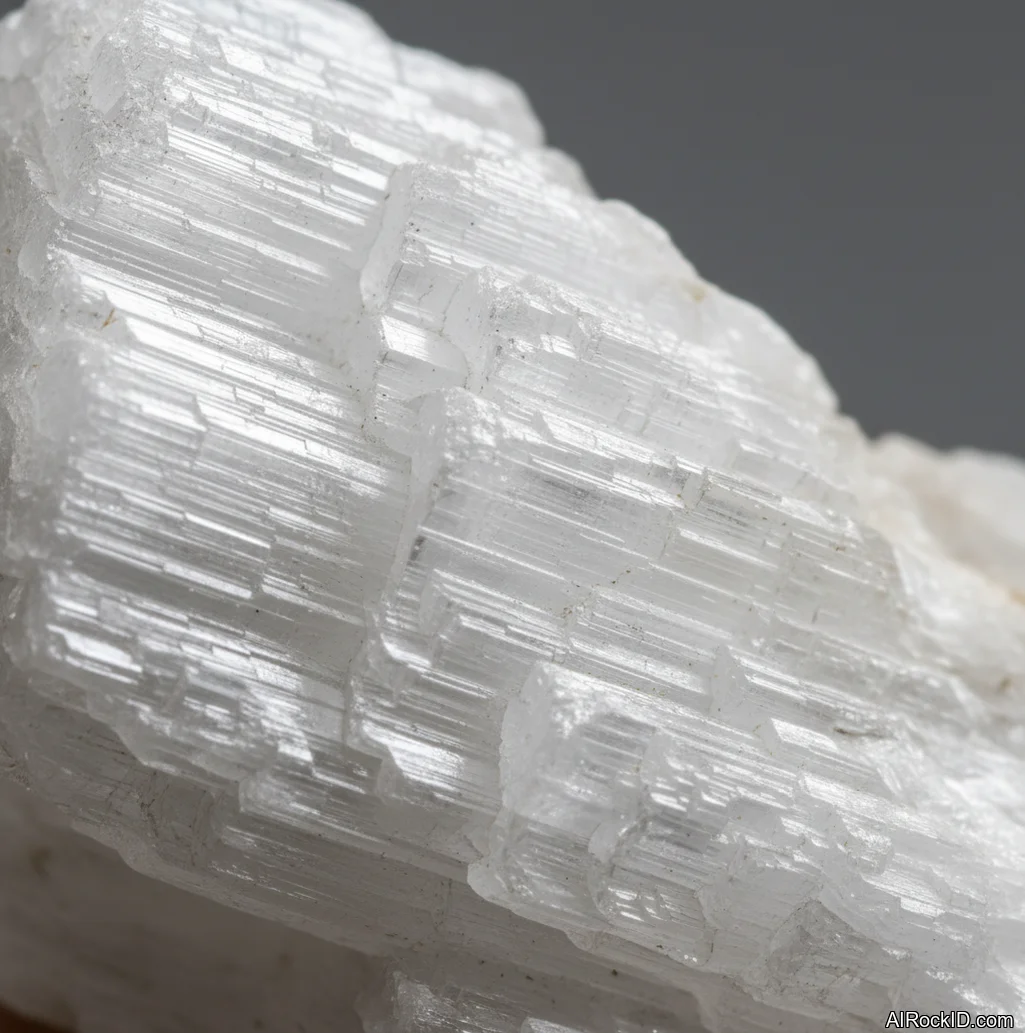
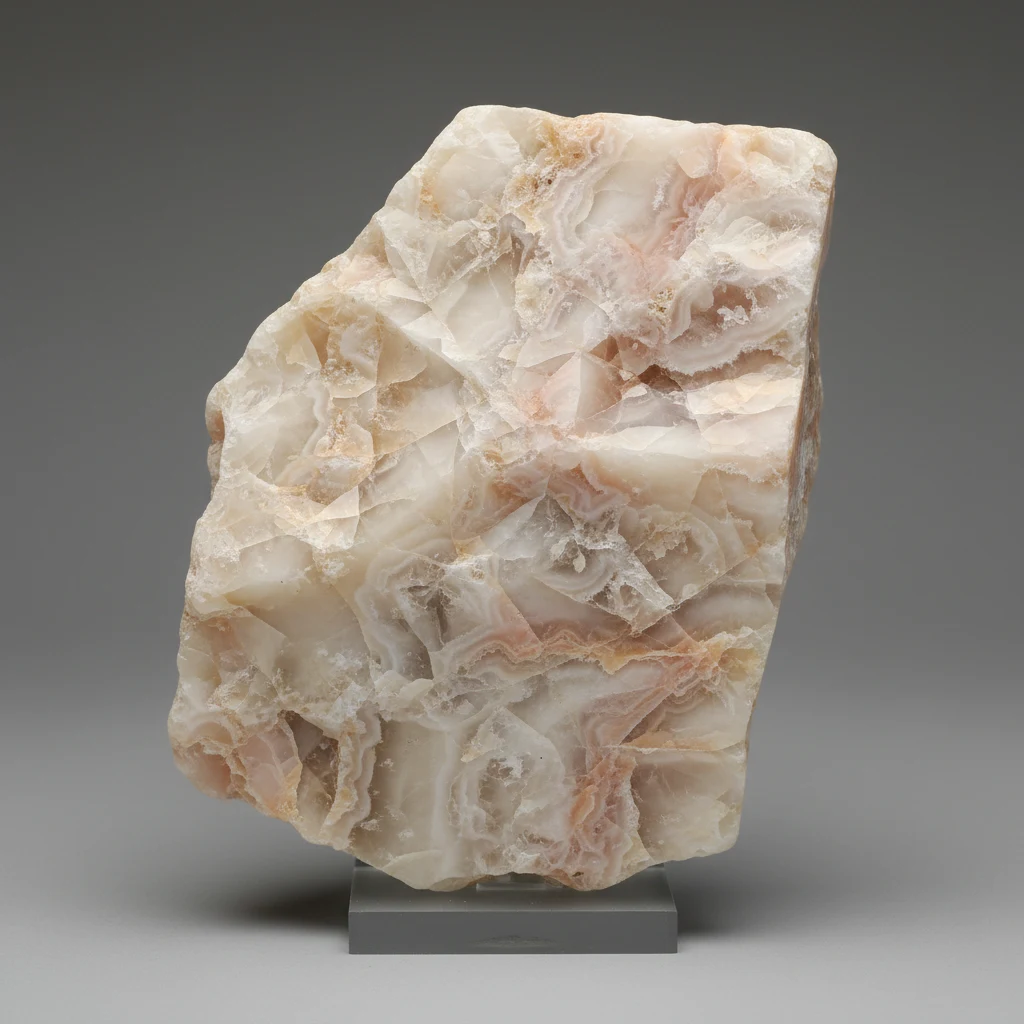
Alabaster is a fine-grained, translucent form of gypsum, valued as a soft carving rock with a smooth, almost waxy feel. In the hand, it often reads as white or cream, sometimes pink or otherwise colored, with a gentle glow rather than a glassy sparkle. Its mineral variety is gypsum, and its chemical formula is CaSO4·2H2O.
Collectors recognize alabaster by its softness first: at Mohs 2, it can be scratched with a fingernail, so it should be handled more like a fragile carving than a hard gemstone. It is common, non-magnetic, and translucent, with a white streak, waxy to dull luster, conchoidal fracture, and a density of about 2.3 g/cm3.
Origin & History
The name alabaster comes from the Greek word alabastros, a term connected with containers for perfumes. That history suits the material: it is smooth, workable, and naturally suited to small vessels, sculpture, and decorative objects where a soft surface and pale translucence are part of the appeal.
Alabaster has been used since ancient times, with historical references dating back to before 4000 BC. For mineral cross-checking and locality context, mindat.org is a useful reference for gypsum and alabaster entries; in practical collecting, the key is remembering that alabaster is gypsum, not a tough ornamental stone.
Where Is Alabaster Found?
Alabaster is most commonly found in sedimentary rock formations. Reported countries include Italy, Egypt, and the USA, with notable localities including Carrara, Tuscany, Italy; Alabaster, Egypt; and Oklahoma, USA.
Formation
Alabaster forms when water evaporates in mineral-rich environments and gypsum precipitates. That evaporative origin explains why the material is commonly tied to sedimentary settings, where dissolved mineral content can concentrate and leave behind fine-grained gypsum masses.
Its formula, CaSO4·2H2O, also explains its practical weakness around moisture: alabaster is sensitive to water and can dissolve if exposed too long. In use, this means keeping carvings, rough pieces, and polished specimens dry, away from harsh chemicals, and out of prolonged contact with water.
How to Identify Alabaster
Identify alabaster by its soft, fine-grained texture, pale color, and translucence. Most pieces are white or cream, though pink and other colored examples occur. The surface usually has a waxy to dull luster, not the bright glassy flash of harder transparent minerals.
A simple field clue is hardness: alabaster is Mohs 2 and can be scratched with a fingernail. It is non-magnetic, leaves a white streak, and belongs to the monoclinic crystal system as gypsum. Because it chips easily, test gently on an inconspicuous spot rather than dragging a point across a finished carving.
Properties of Alabaster
Physical Properties
| Crystal System | Monoclinic |
| Hardness (Mohs) | 2 (Very Soft (1-2)) |
| Density | 2.3 g/cm3 |
| Luster | Waxy |
| Diaphaneity | Translucent |
| Fracture | Conchoidal |
| Streak | White |
| Magnetism | Non-magnetic |
| Colors | White, Cream, Pink |
Chemical Properties
| Classification | Sulfate |
| Formula | CaSO4·2H2O |
| Elements | Ca, S, O |
| Common Impurities | Fe, Mn |
Optical Properties
| Refractive Index | 1.52 |
| Birefringence | None |
| Pleochroism | None |
| Optical Character | Isotropic |
Alabaster Health & Safety
Handling alabaster is generally safe, but avoid prolonged exposure to water.
Alabaster Value & Price
Price Range
Rough/Tumbled: $10 - $50 per specimen
Cut/Polished: $5 - $20 per carat
Price can vary based on color, quality, and carving intricacy.
Durability
Fragile — Scratch resistance: Poor, Toughness: Poor
Alabaster is sensitive to moisture and can dissolve in water.
How to Care for Alabaster
Use & Storage
Store in a cool, dry place to prevent damage.
Cleaning
Wipe with a soft, damp cloth; avoid harsh chemicals. For deeper cleaning, use mild soap and water.
Cleanse & Charge
Place under moonlight for cleansing.
Placement
Keep away from direct sunlight to avoid fading.
Caution
Handle with care as it can chip easily.
Works Well With
Alabaster Meaning & Healing Properties
In crystal healing traditions, alabaster is associated with calming energy, emotional balance, and a peaceful atmosphere. Its soft feel and muted translucence make it a natural meditation piece for people who prefer quiet, grounding stones rather than sharp, brilliant crystals.
Alabaster is linked with the Heart chakra, the Earth element, Venus, and the zodiac signs Taurus and Capricorn. Practitioners use it for themes of calm, compassion, relaxation, trust, growth, creativity, focus, and inner peace. It is safe to handle, but it should be kept dry and cleansed under moonlight rather than soaked.
Identify Alabaster from a photo
Compare Alabaster traits, care tips, value clues, and common lookalikes with a clear photo.
Common mistakes
- Assuming every white carved stone is alabaster.
- Using water, vinegar, or acidic cleaners to test or clean a finished alabaster object.
- Buying 'onyx alabaster' without asking whether it is gypsum, calcite, aragonite, or a composite.
- Expecting alabaster to perform like marble in countertops, bathrooms, or outdoor settings.
- Judging authenticity by color alone instead of checking hardness, translucency, and surface details.