Calcium Carbonate (Calcite)


Quick answer: Calcium Carbonate (Calcite) is a common carbonate mineral recognized by its Mohs hardness of 3, perfect cleavage, and frequent clear, white, yellow, orange, or gray appearance. It is often confused with quartz, gypsum, aragonite, and halite, so simple observations such as hardness, cleavage, and reaction to mild acid can help narrow identification.
AI Rock ID can help screen a suspected calcite specimen by comparing visible traits such as color, crystal habit, cleavage, and luster. RockIdentifier.io provides visual identification support, but uncertain results should be checked with basic physical tests or a qualified mineral reference.
Good fit
- Collectors who want a common mineral with many crystal habits and colors
- Students learning mineral hardness, cleavage, and carbonate identification
- People comparing clear minerals that may show double refraction
- Buyers looking for affordable display specimens rather than daily-wear jewelry
Not a good fit
- Rings or bracelets that will be exposed to frequent abrasion
- Acidic cleaning methods, vinegar soaks, or ultrasonic cleaning
- Situations where a water-soluble or acid-reactive mineral would be a concern
Most commonly confused with
- Quartz: Quartz is much harder at Mohs 7 and lacks calcite’s perfect rhombohedral cleavage.
- Gypsum: Gypsum is softer at Mohs 2 and can often be scratched with a fingernail.
- Aragonite: Aragonite has the same chemical formula as calcite but a different crystal structure and typically forms different habits.
- Halite: Halite has cubic cleavage and a salty taste, while calcite has rhombohedral cleavage and reacts with dilute acid.
Calcite vs. Common Lookalikes
| Mineral | Mohs Hardness | Key ID Clue | Acid Reaction |
|---|---|---|---|
| Calcite | 3 | Perfect rhombohedral cleavage; may show double refraction | Effervesces readily with dilute acid |
| Quartz | 7 | No cleavage; scratches glass | No reaction |
| Gypsum | 2 | Scratched by fingernail | No typical reaction |
| Aragonite | 3.5–4 | Often acicular, fibrous, or pseudohexagonal habits | Effervesces with dilute acid |
| Dolomite | 3.5–4 | Often saddle-shaped rhombs; stronger reaction when powdered | Weak unless powdered |
AI identification confidence
AI identification confidence for calcite is often higher when the photo shows cleavage faces, crystal shape, and any visible double refraction. Confidence is lower for tumbled stones, massive white pieces, or polished specimens because many pale minerals look similar in photos.
When AI gets it wrong
- A polished or tumbled piece hides cleavage and crystal habit.
- White or clear minerals are photographed without scale, hardness context, or surface detail.
- Aragonite, dolomite, quartz, or gypsum appears in a similar color and lighting.
- The specimen is dyed, coated, or part of a mixed rock rather than a single mineral.
Final recommendation
Choose calcite when you want an accessible mineral for display, study, or visual variety rather than a durable everyday jewelry stone. For authentication, prioritize visible cleavage, reliable locality information, and simple non-destructive tests such as hardness comparison before considering any acid test.
How to Check Calcite Authenticity Before Buying
Authentic calcite commonly shows rhombohedral cleavage, a vitreous to pearly luster, and moderate softness compared with quartz. Clear optical calcite may show double refraction when placed over printed text. Buyers should be cautious with unusually bright colors, perfectly uniform pieces, or listings that use vague names without mineral or locality information.
Calcite in Rocks and Fossils
Calcite is a major component of limestone and marble and is common in shells, fossils, veins, and cave deposits. A specimen labeled calcite may be a single crystal, a cleavage fragment, a fossil-bearing rock, or a carbonate-rich rock rather than a pure mineral crystal. This context can affect appearance, durability, and identification confidence.
Simple Field Clues for Calcite
Calcite can be scratched by a copper coin or steel knife more easily than quartz, but it is harder than gypsum. Fresh cleavage pieces often form slanted rhombohedral shapes instead of cubes. A dilute acid test can confirm carbonate behavior, but it should be used carefully because it can mark or damage the specimen.
What Is Calcium Carbonate (Calcite)?
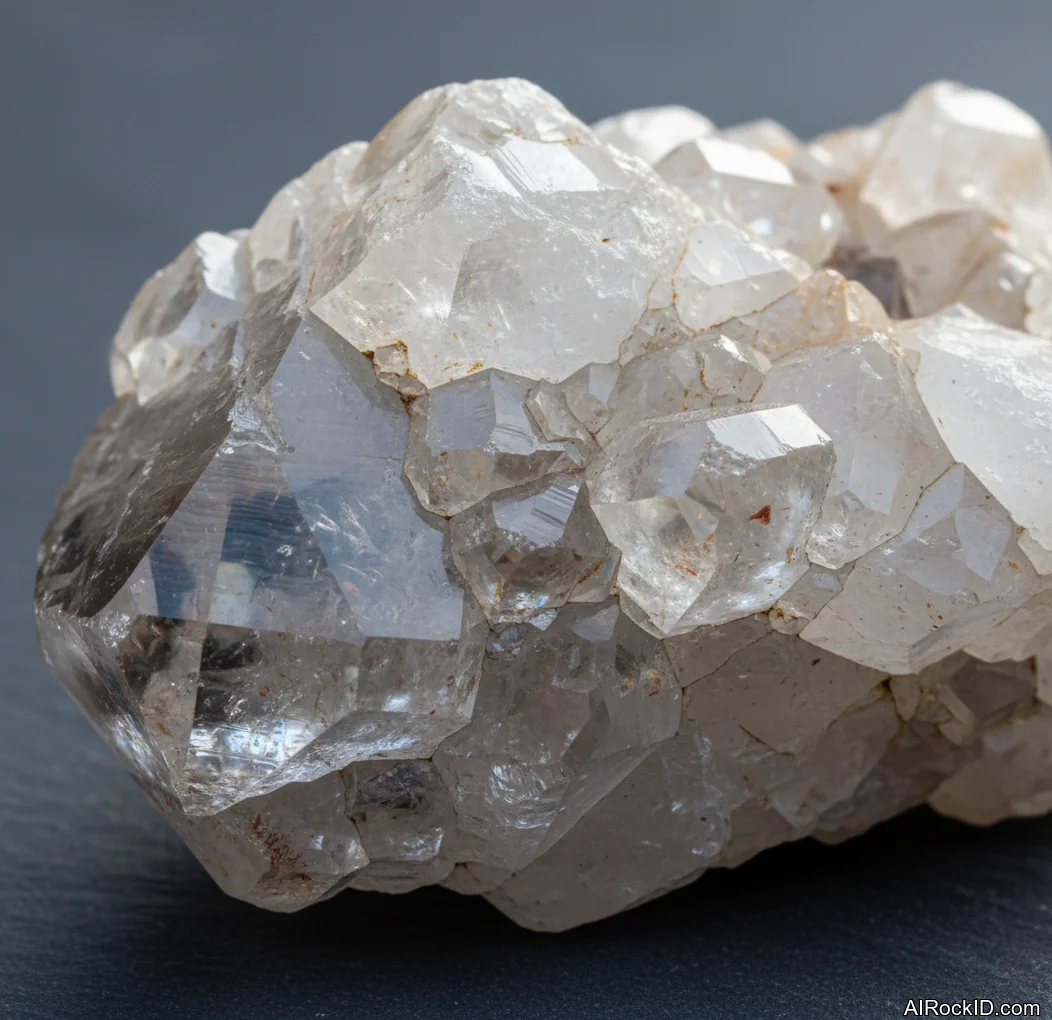
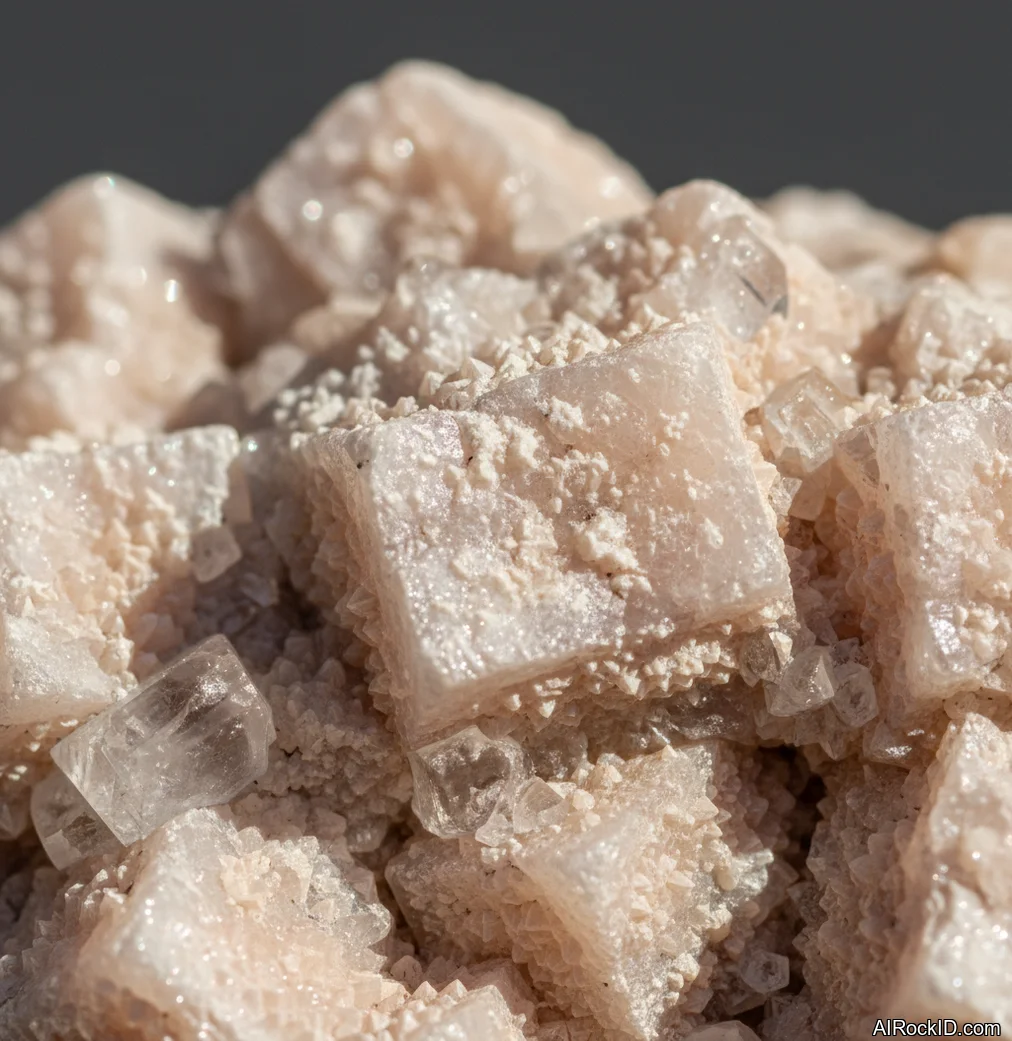
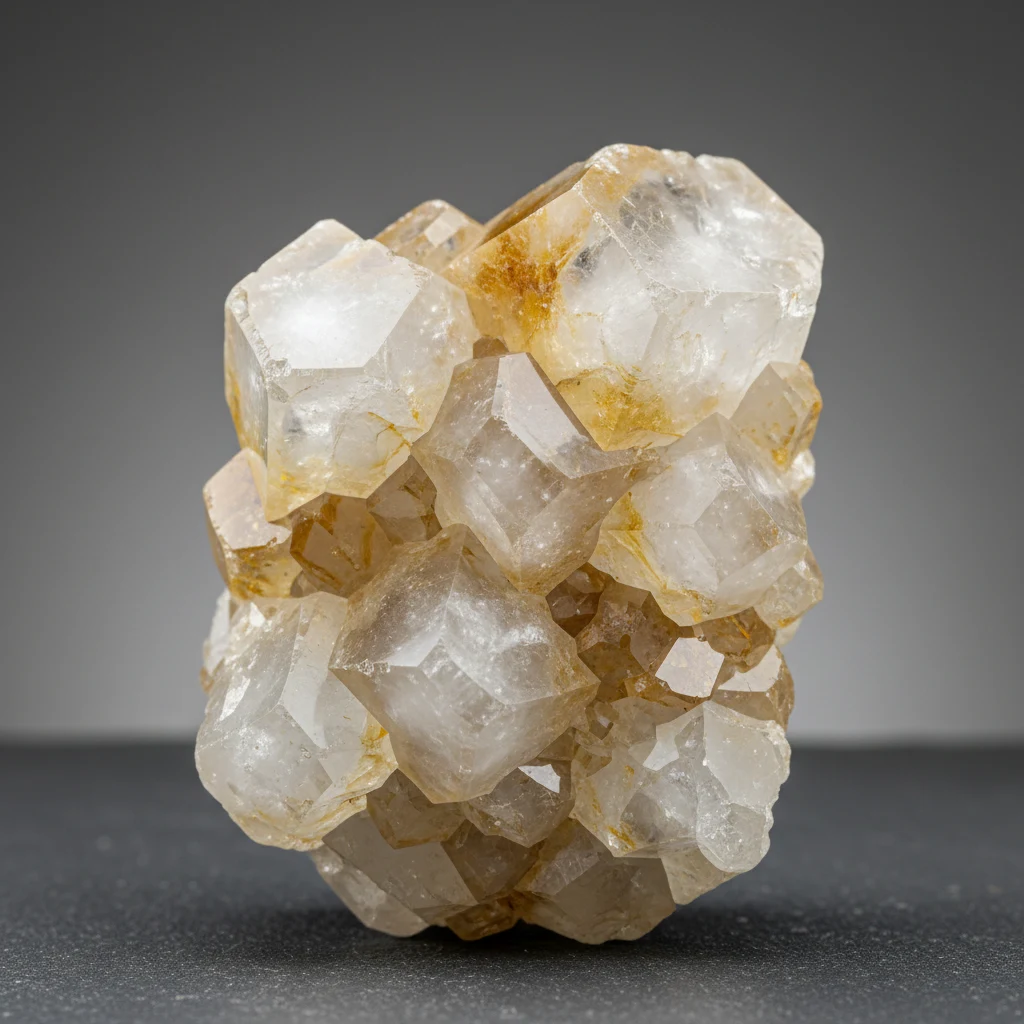
Calcium Carbonate (Calcite) is a very common carbonate mineral composed of CaCO3. In the hand, it is typically clear, white, or light yellow, with a glassy vitreous luster and transparent to translucent body. Collectors often recognize it by its clean, broken-looking cleavage faces and its relatively soft Mohs hardness of 3.
Calcite is also known simply as Calcite, and clear optical material is traditionally called Iceland Spar. It belongs to the trigonal crystal system, has a white streak, a density of 2.71 g/cm3, and is non-magnetic. As a specimen mineral, it is approachable, affordable, and easy to damage if treated like harder quartz.
Origin & History
The name calcite comes from the Latin word “calx,” meaning lime. It has been known since ancient times, which fits its practical feel: this is not an obscure cabinet mineral, but one tied closely to limestone, lime, and the long human familiarity with carbonate rock.
For collectors, that history shows up in the abundance of specimens and the many simple, study-friendly pieces on the market. Clear to white calcite is especially useful for learning cleavage and optical behavior. For locality and mineral-reference context, mindat.org is a standard place collectors consult when comparing calcite specimens and labels.
Where Is Calcium Carbonate (Calcite) Found?
Calcium Carbonate (Calcite) is commonly found in sedimentary rocks and limestone deposits. Noted sources in the supplied locality data include the USA, Mexico, and Germany, with collector localities such as Oklahoma, USA; Baja California, Mexico; and Bavaria, Germany.
Formation
Calcite forms when calcium carbonate precipitates from water, often in marine environments. It can also form through metamorphic processes, so collectors encounter it in settings connected to sedimentary carbonate deposits as well as altered carbonate-rich rocks.
This formation story helps explain the specimen’s character: calcite can look clean and glassy, but it remains a soft carbonate mineral. Its chemistry is CaCO3, with calcium, carbon, and oxygen as the listed elements, and magnesium or iron may occur as common impurities. Keep acidic substances away from calcite, because it is acid-sensitive.
How to Identify Calcium Carbonate (Calcite)
Identify Calcium Carbonate (Calcite) by its clear, white, or light yellow color, vitreous luster, white streak, and perfect cleavage. In the hand, good pieces often show crisp cleavage planes that catch light in flat flashes rather than the tougher, more resistant feel of harder minerals.
Its Mohs hardness is 3, so calcite scratches more easily than many common collector stones. It is transparent to translucent, has conchoidal fracture, and is non-magnetic. A key optical clue is double refraction when viewed through a polarizing filter; its refractive index is listed as 1.65–1.66, birefringence as 0.172, with uniaxial optical character and no pleochroism.
Properties of Calcium Carbonate (Calcite)
Physical Properties
| Crystal System | Trigonal |
| Hardness (Mohs) | 3 (Very Soft (1-2)) |
| Density | 2.71 g/cm3 |
| Luster | Vitreous |
| Diaphaneity | Transparent to translucent |
| Fracture | Conchoidal |
| Streak | White |
| Magnetism | Non-magnetic |
| Colors | Clear, White, Yellow |
Chemical Properties
| Classification | Carbonate |
| Formula | CaCO3 |
| Elements | Ca, C, O |
| Common Impurities | Mg, Fe |
Optical Properties
| Refractive Index | 1.65 - 1.66 |
| Birefringence | 0.172 |
| Pleochroism | None |
| Optical Character | Uniaxial |
Calcium Carbonate (Calcite) Health & Safety
Calcite poses no significant health risks.
Calcium Carbonate (Calcite) Value & Price
Price Range
Rough/Tumbled: $1 - $10 per specimen
Cut/Polished: $5 - $30 per carat
The price can vary based on color, clarity, and size.
Durability
Moderate — Scratch resistance: Fair, Toughness: Fair
Calcite is sensitive to acid and should be handled with care.
How to Care for Calcium Carbonate (Calcite)
Use & Storage
Store in a dry place away from direct sunlight.
Cleaning
Clean with a soft cloth and mild soap. Avoid harsh chemicals.
Cleanse & Charge
Place under moonlight or use sound cleansing.
Placement
It can be placed in living spaces for positive energy.
Caution
Avoid exposing calcite to acidic substances.
Works Well With
Calcium Carbonate (Calcite) Meaning & Healing Properties
In crystal-healing traditions, Calcite is used for mental clarity, emotional well-being, growth, and healing. Practitioners often choose it for meditation, focus, stress relief, grounding, inner peace, trust, nurturing, and transformation, especially when a gentle, clear-feeling stone is preferred.
Calcite is associated with the Crown and Solar Plexus chakras, the zodiac signs Cancer and Capricorn, the planets Moon and Venus, and the elements Earth and Water. It is safe to handle and poses no significant health risks, but crystal use is not a substitute for medical treatment. For care, clean with a soft cloth and mild soap, avoid harsh chemicals and acids, and cleanse with moonlight or sound.
Identify Calcium Carbonate (Calcite) from a photo
Compare Calcium Carbonate (Calcite) traits, care tips, value clues, and common lookalikes with a clear photo.
Common mistakes
- Assuming every clear or white crystal is quartz without checking hardness
- Cleaning calcite with vinegar, lemon juice, or other acidic products
- Expecting calcite jewelry to resist scratches like quartz or topaz
- Identifying polished calcite by color alone
- Confusing rhombohedral cleavage with broken glassy fracture
- Using an acid test on a valuable display face instead of a small inconspicuous area