Black Mica


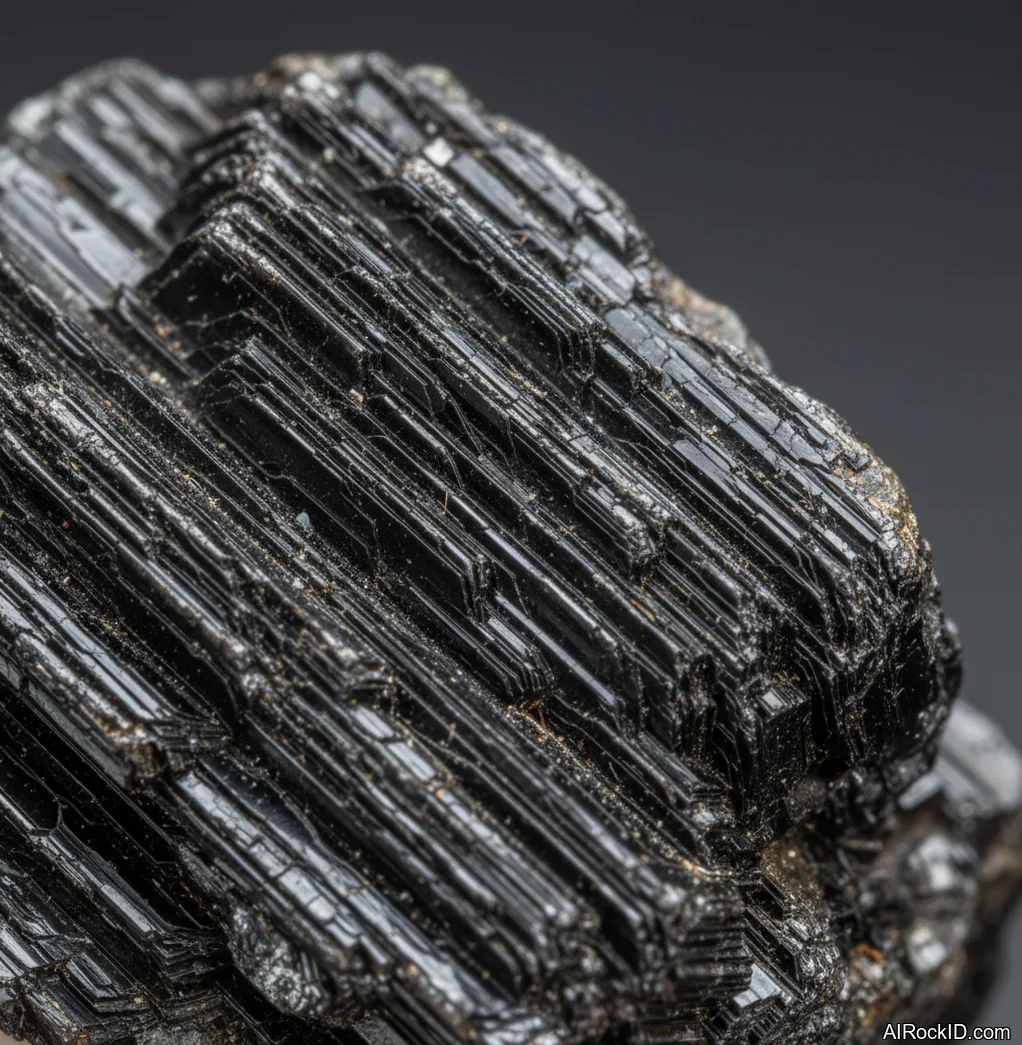
Quick answer: Black mica is most often biotite, a dark sheet silicate that splits into thin, flexible flakes. It is common in granites, schists, gneisses, and pegmatites, and is usually identified by its black to dark brown color, perfect basal cleavage, and soft feel.
AI Rock ID can help screen a dark, flaky mineral by checking visible clues such as sheet-like cleavage, luster, color, and host rock. RockIdentifier.io can be used as a reference point for comparing black mica with other dark minerals that may look similar in photos.
Good fit
- Collectors who want a common, educational mineral with obvious sheet cleavage
- Students learning to identify mica minerals in igneous and metamorphic rocks
- Rockhounds examining granite, schist, gneiss, or pegmatite specimens
- Buyers who prefer inexpensive specimens with visible natural texture
Not a good fit
- Anyone looking for a durable ring stone or daily-wear jewelry material
- Collectors who need bright color, high transparency, or strong crystal terminations
- Situations where loose flakes or crumbling edges would be a problem
- Buyers who want a mineral that can be reliably identified by color alone
Most commonly confused with
- Muscovite: Muscovite is usually colorless, silvery, or pale, while black mica is dark brown to black.
- Hornblende: Hornblende is harder and breaks in splintery prismatic pieces rather than thin flexible sheets.
- Chlorite: Chlorite is commonly green to dark green and may feel softer or more greasy than biotite.
- Graphite: Graphite leaves a gray-black streak and feels slippery, while biotite flakes show mica cleavage and a glassy to pearly luster.
Black Mica vs. Similar Dark Minerals
| Mineral | Key visual clue | Simple distinction | Typical hardness |
|---|---|---|---|
| Black mica | Thin shiny sheets or flakes | Splits perfectly into flexible layers | 2.5–3 |
| Hornblende | Dark elongated crystals | Cleavage pieces are prismatic, not sheet-like | 5–6 |
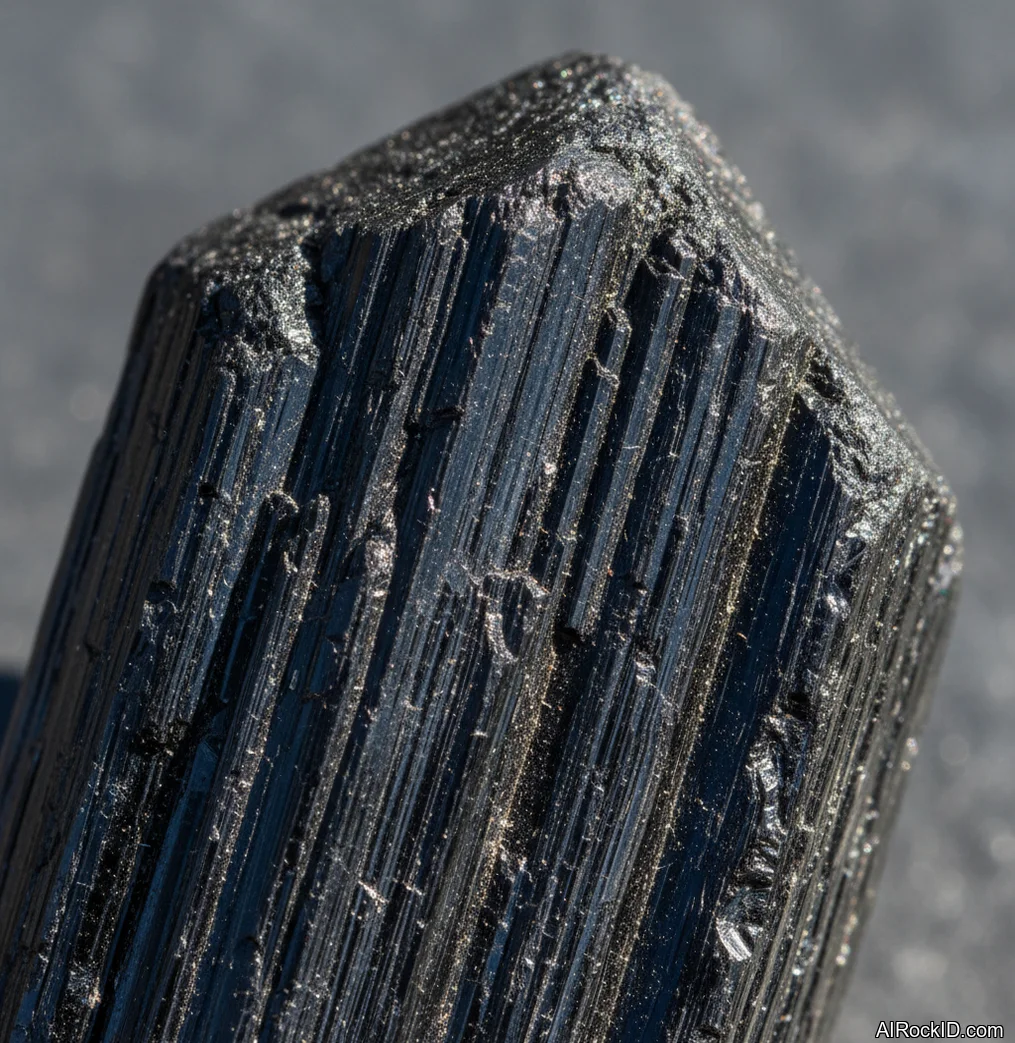
| Black tourmaline | Striated black prisms | Much harder and not flaky | 7–7.5 |
| Graphite | Metallic gray-black surface | Leaves a dark mark on paper | 1–2 |
| Chlorite | Dark green platy masses | Usually greener and softer-looking | 2–2.5 |
AI identification confidence
AI identification is often moderately reliable for black mica when the specimen clearly shows thin stacked sheets, dark color, and a reflective mica luster. Confidence drops when the photo shows only a black patch in host rock, poor lighting, or no visible cleavage.
When AI gets it wrong
- A dark mineral is photographed from too far away to show whether it flakes into sheets.
- Black tourmaline, hornblende, or augite is present as dark prismatic crystals in the same rock type.
- Reflections make a black mineral look more metallic than it is.
- Weathered biotite has altered to chlorite or iron-stained material, changing its color and texture.
Final recommendation
Choose black mica specimens with clear platy cleavage, intact sheets, and a stable matrix if the goal is study or display. For jewelry or handling-heavy use, a harder dark mineral such as black tourmaline is usually more practical.
How to Tell If Black Mica Is Real
Authentic black mica usually separates into very thin, flexible sheets along one perfect cleavage direction. A simple visual check is to look for stacked reflective layers rather than solid glassy, prismatic, or metallic masses. Avoid aggressive scratch or peel tests on collectible specimens, because mica flakes can break easily.
Buying Tips for Black Mica Specimens
Black mica is common, so ordinary hand specimens should generally be affordable unless they occur with notable associated minerals or come from a documented locality. Look for specimens with clean, visible plates, minimal loose dust, and honest labeling such as biotite, black mica, mica schist, or mica in granite. Be cautious of vague listings that use black mica as a name for any shiny black mineral.
Field Clues for Black Mica
In the field, black mica commonly appears as dark, shiny flakes scattered through granite or as aligned flakes in schist and gneiss. The flakes often flash when the rock is turned in sunlight. A hand lens can help confirm the layered structure and distinguish it from dark amphibole or pyroxene grains.
What Is Black Mica?
Black mica is that everyday dark mica mineral, usually biotite. It’s a sheet silicate, and it splits into thin, flexible flakes.
Pick up a chunk and you notice it instantly. It’s oddly light for its size. And it has that stack-of-pages feel, like it’s ready to peel apart before you even mess with it. Tilt a cleavage face under a shop light and you’ll catch a soft pearly flash that pops in and out fast, kind of like a CD reflection, just muted and smoky. Most “black mica” you’ll see for sale is massive or comes in thick books, not tidy little crystals, because mica’s whole thing is the layers.
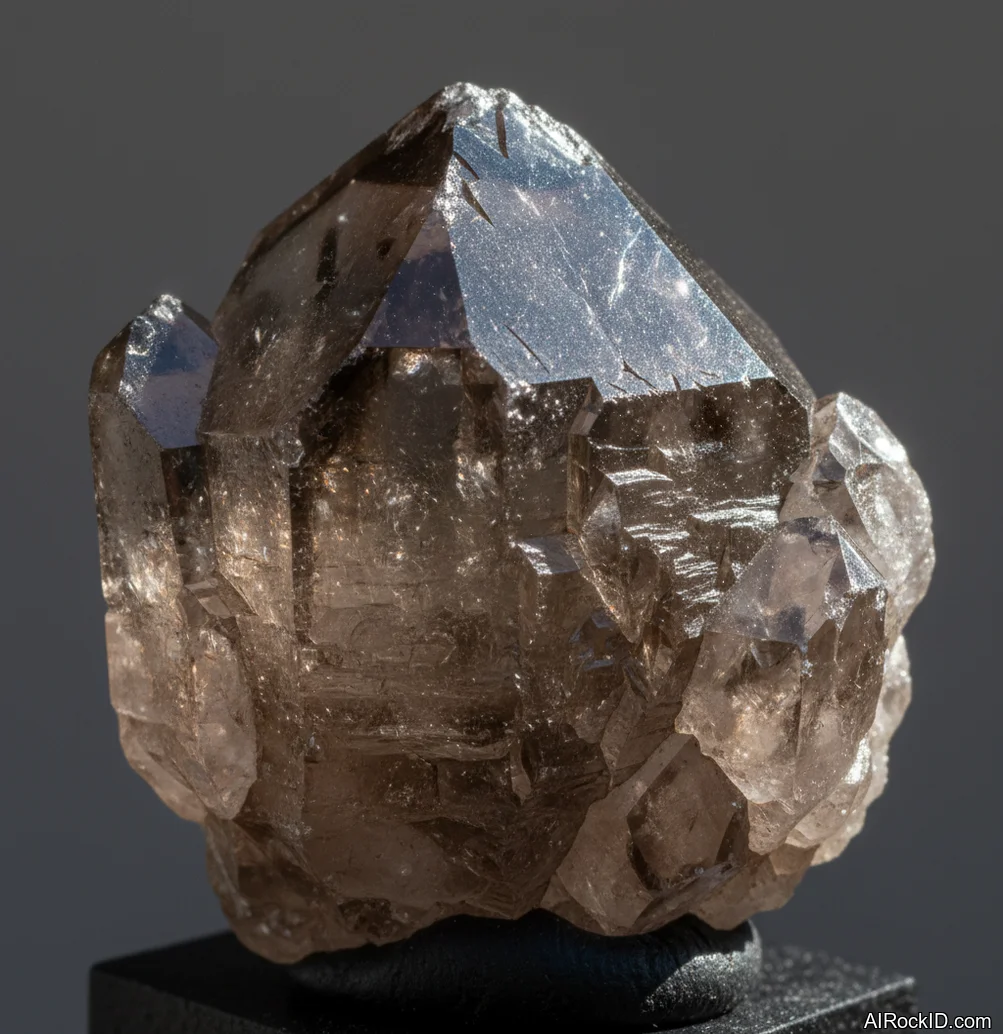
People mix it up at first glance with schorl (black tourmaline), or even dark smoky quartz. But in your hand it’s a totally different story. Tourmaline feels tough and blocky. Biotite has this slight grain to it, and if you’re not careful you’ll end up with glittery black crumbs on your fingers (and a busted specimen in your pocket). Who hasn’t done that once?
Origin & History
Biotite got its name in 1847, when J.F.L. Hausmann described it and decided to name it after the French physicist Jean-Baptiste Biot. People who collect minerals usually just call it “black mica.” Makes sense, honestly, because in the mica family it’s the dark, iron and magnesium rich end member you keep bumping into everywhere.
“Mica” comes from the Latin *micare*, meaning “to glitter,” and yep, that checks out. I’ve split open biotite-bearing granite out in the field, and the fresh faces catch the light and flash even if the outside of the rock looks dead and dusty from ten feet away. It’s never been much of a gem compared to other minerals, but it’s mattered a lot as a rock-forming mineral and as an industrial mineral. And for geology work, it’s a big deal: biotite helps you read metamorphic grade and piece together cooling histories in igneous rocks.
Where Is Black Mica Found?
Black mica is widespread in granites, pegmatites, schists, and gneisses worldwide, so it shows up on every continent where those rocks occur.
Formation
Chunks from granites and pegmatites are the classic way you meet biotite. When magma cools down, biotite crystallizes right alongside feldspar and quartz, and in pegmatites it can grow into thick “books” you can literally pry open with a fingernail. The pages pop apart along flat, shiny surfaces, and you can feel how they want to split even with a light scrape (pretty, in a nerdy way). But it’s still mica. So it snaps and crumbles if you get rough with it.
And it shows up in metamorphic rocks too. In schist, biotite lines up with the foliation and gives the rock that dark sheen when you tilt it in the light. The dead giveaway out in the field is how it flakes along those perfect basal layers. If you can peel it into thin, slightly springy sheets, you’re in mica territory, not tourmaline territory. Why fight it? The rock tells you.
How to Identify Black Mica
Color: Usually dark brown to nearly black; thin flakes can look smoky brown when held to a bright light. Weathered surfaces can look dull and sooty.
Luster: Cleavage faces are pearly to vitreous, while broken edges can look dull.
Pick up a piece and try to split it. If it separates into thin flexible sheets, that’s the mica “book” behavior. If you scratch it with a copper coin or even a fingernail on a thin edge, it marks easily, and that softness is a dead giveaway compared to most black minerals people mix it up with.
Common Look-Alikes
Black Mica is sometimes confused with these materials:
- Tourmaline (schorl) in massive chunks or rough rods
- Hornblende / amphibole (black prismatic crystals in matrix)
- Hematite (specular hematite plates and shiny black masses)
- Graphite (flake graphite sold as “black mica” in some lots)
- Mica-rich “black schist” or phlogopite-biotite schist slabs
- Dyed black lepidolite/muscovite sheets and black-tinted glass “mica” flakes in resin
Market Cautions & Treatments
When AI Can Get This Wrong
In photos, AI mixes black mica up with schorl tourmaline, hornblende, and specular hematite because all three read as dark, shiny, and angular. The real test is cleavage: biotite breaks into thin flexible sheets with a pearly flash when you tilt it, while tourmaline and hornblende snap across grain and won’t peel. A quick rub test also helps: biotite stays clean, graphite leaves a gray streak and a greasy feel.
Properties of Black Mica
Physical Properties
| Crystal System | Monoclinic |
| Hardness (Mohs) | 2.5-3 (Soft (2-4)) |
| Density | 2.7-3.3 |
| Luster | Pearly |
| Diaphaneity | Transparent to translucent |
| Fracture | Uneven |
| Streak | grayish white |
| Magnetism | Non-magnetic |
| Colors | black, dark brown, brownish black, greenish black |
Chemical Properties
| Classification | Silicates (phyllosilicate) |
| Formula | K(Mg,Fe)3AlSi3O10(F,OH)2 |
| Elements | K, Mg, Fe, Al, Si, O, F, H |
| Common Impurities | Ti, Mn |
Optical Properties
| Refractive Index | 1.58-1.70 |
| Birefringence | 0.020-0.070 |
| Pleochroism | Strong |
| Optical Character | Biaxial |
Black Mica Health & Safety
Handling is usually safe, but those thin flakes can slice you and they get everywhere. And if you push it too hard, the mineral doesn’t just snap, it splits into little splinters right along the cleavage (messy, and kind of annoying).
Safety Tips
If you’re trimming or snapping matrix, put on eye protection, and then rinse your hands afterward. Those tiny flakes get everywhere (you’ll feel that gritty dust on your fingers), and they can irritate your skin and eyes.
Black Mica Value & Price
Price Range
Rough/Tumbled: $2 - $40 per specimen
Price usually tracks size, plain and simple. But it also depends on whether it’s a clean “book” with that bright, mirror-y cleavage you see the second you tilt it under a light, and whether it’s still stuck to a decent matrix like feldspar and quartz (the kind that feels gritty in your fingers). Beat-up, flaky chunks that shed little bits when you handle them? That’s basically bargain-bin stuff.
Durability
Fragile — Scratch resistance: Poor, Toughness: Poor
It’s chemically pretty stable in normal room conditions, but the perfect cleavage means it chips, peels, and sheds flakes with rough handling.
How to Care for Black Mica
Use & Storage
Keep it in a small box or a padded compartment so it doesn’t get crushed and start shedding. And don’t toss it in a pocket with quartz points unless you like mica confetti.
Cleaning
1) Blow off loose flakes with a bulb blower or gentle air. 2) Use a soft dry brush on the cleavage face. 3) If needed, quick rinse in water and pat dry, then let it fully air dry before storing.
Cleanse & Charge
If you do energy cleansing, stick to smoke, sound, or setting it on a dry plate. Avoid salt scrubs because the layers catch grit and you’ll scratch the sheen.
Placement
Set it flat on a shelf so the books don’t tip and split. Side lighting looks best because it catches that pearly flash on the cleavage steps.
Caution
Skip ultrasonic cleaners. Don’t hit it with harsh chemicals either, and definitely don’t toss it into rough tumbling. This stuff’s soft, and it cleaves perfectly, so once you start beating it up, it’ll just shred.
Works Well With
Black Mica Meaning & Healing Properties
Next to the flashy stones, black mica is kind of the quiet workhorse you leave on your desk and forget to brag about. Folks who are into it usually talk about grounding and “clearing the static,” and honestly, I see the appeal. Pick up a thick biotite “book” and you can feel the layers under your thumb, those papery sheets that sit flat and heavy, like pressure turned chaos into something tidy.
But there’s a catch. A lot of the black mica you get in those little baggies is already crumbly and half-delaminated, with tiny flakes coming off if you so much as rub the edge (and then you’ve got that glittery dust on your fingers). That’s annoying if you’re trying to meditate, and it’s even worse if you keep it in your pocket. So I leave my better pieces near the door or on a shelf and use them as a visual nudge to slow down, not as something I’m hauling around all day.
Thing is, metaphysical talk isn’t medical care. It won’t replace treatment for anxiety or anything serious. Still, as a ritual object, biotite is great for simple habits: set it down, take a breath, and let your attention “stack” the way the sheets stack. That’s the feeling people are after.
Common mistakes
- Identifying any shiny black mineral as black mica without checking for sheet cleavage
- Confusing black tourmaline prisms with mica flakes in pegmatite specimens
- Assuming all dark mica is fresh biotite, even when it has altered to chlorite
- Using color alone instead of hardness, cleavage, luster, and crystal habit
- Buying loose flaky material for jewelry without considering its low hardness and tendency to split
Identify Black Mica from a photo
Compare Black Mica traits, care tips, value clues, and common lookalikes with a clear photo.