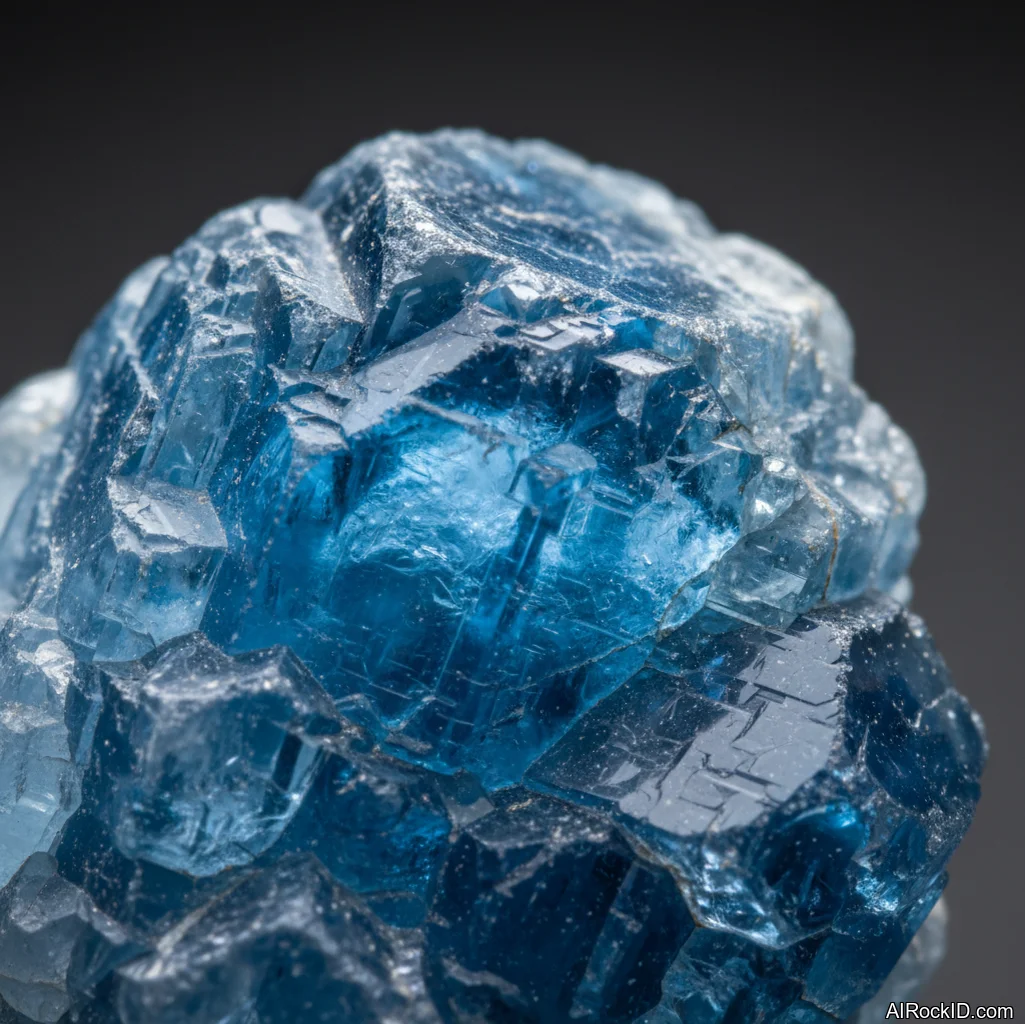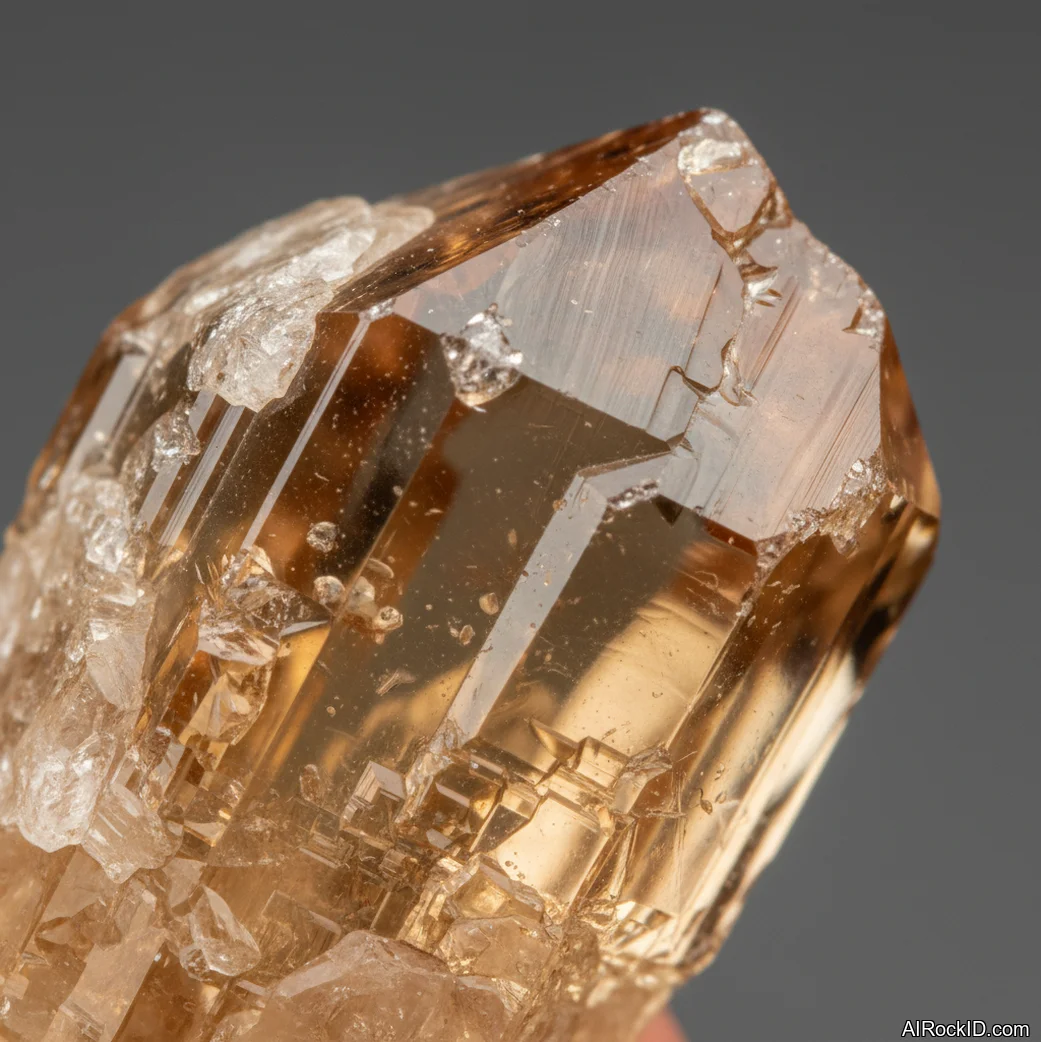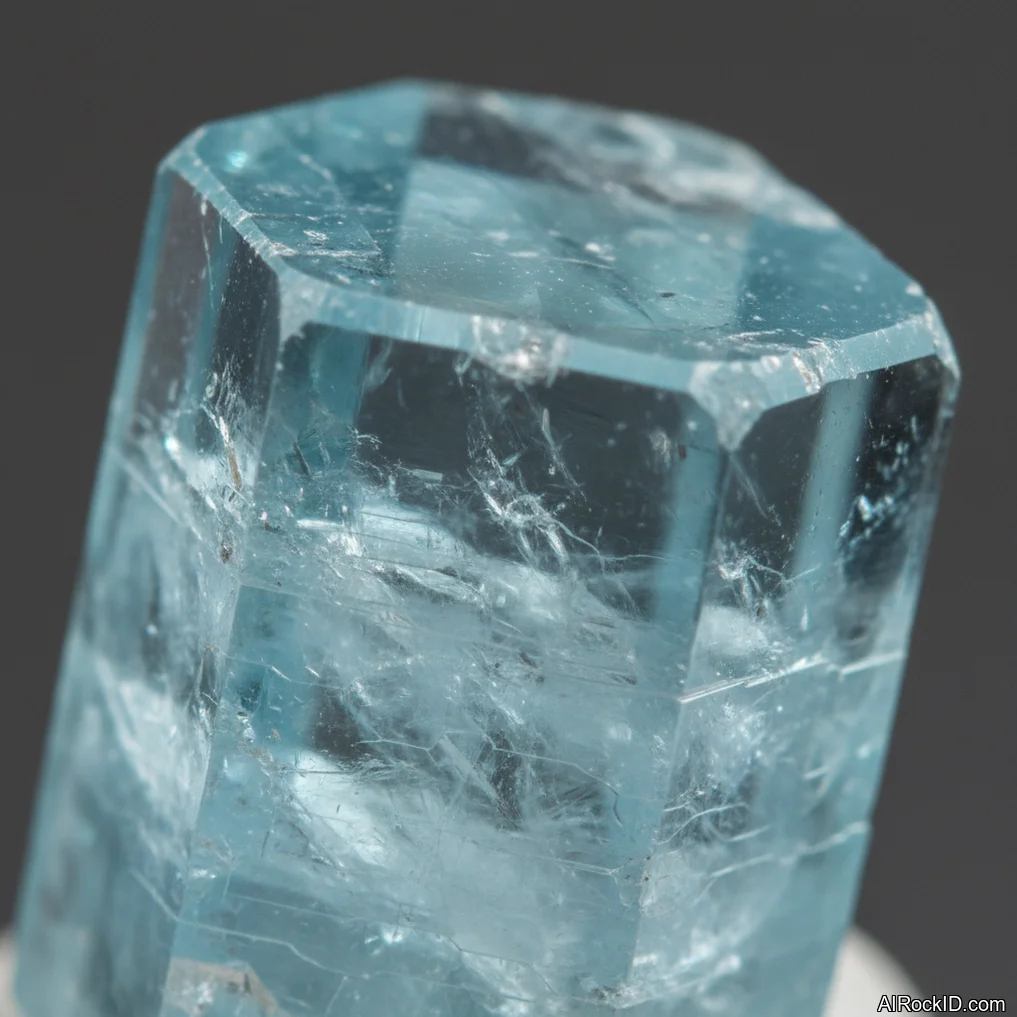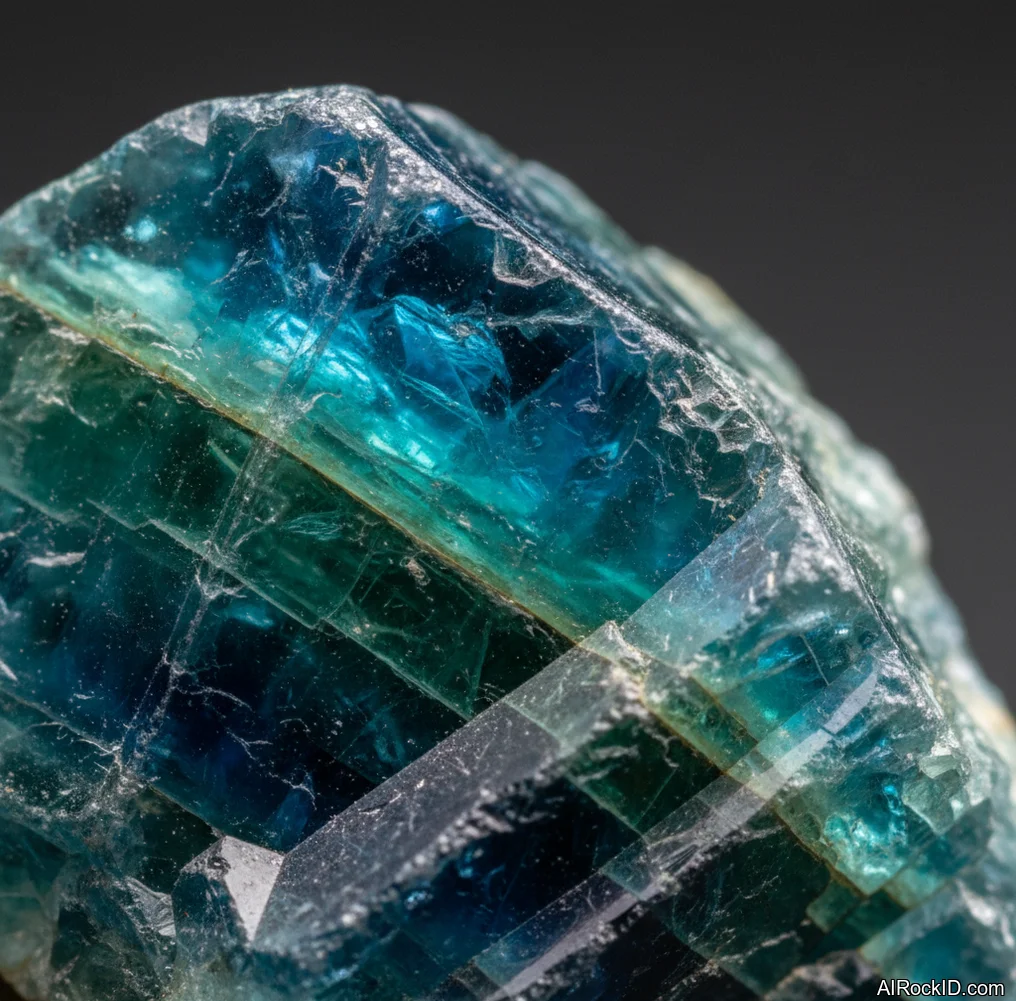
Topaz


Quick answer: Topaz is often chosen for jewelry because its Mohs hardness of 8 resists scratching better than many common gems. Identification can be tricky because color-treated topaz, quartz, glass, and some beryl varieties may look similar without checking cleavage, density, and optical behavior.
AI Rock ID can help screen a suspected topaz specimen by comparing visible traits such as color, transparency, crystal habit, and luster. RockIdentifier.io should be used as an identification aid, while high-value or treated stones are best confirmed by a qualified gemologist or gem lab.
Good fit
- People comparing a transparent, glassy crystal with quartz, beryl, or glass
- Jewelry buyers who want a hard gem but understand cleavage risks
- Collectors interested in natural, treated, or locality-specific topaz specimens
- Anyone checking whether a blue, yellow, pink, or colorless stone may be topaz
Not a good fit
- Situations requiring a lab-grade origin or treatment report
- Rough handling, ultrasonic cleaning, or designs exposed to hard knocks
- Assuming color alone proves a stone is natural topaz
Most commonly confused with
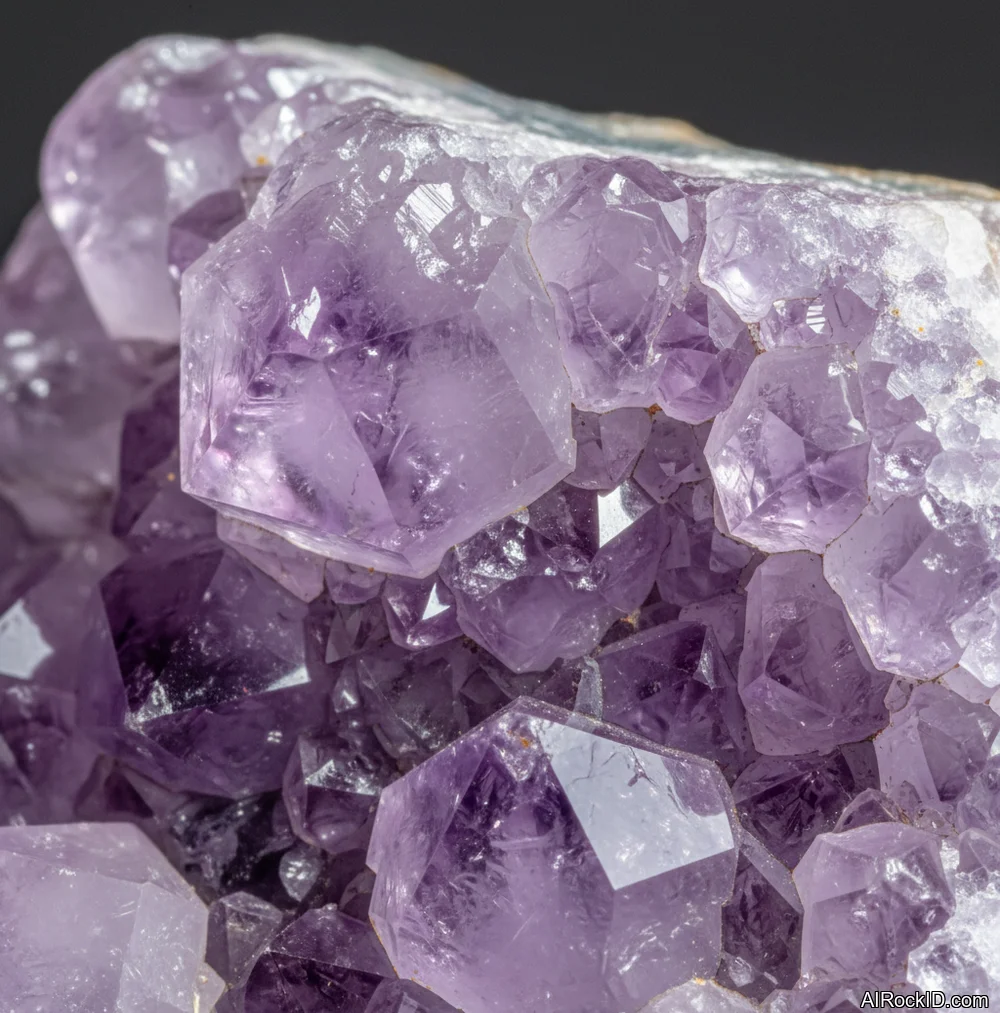
- Quartz: Quartz lacks topaz’s perfect basal cleavage and is slightly softer at Mohs 7.
- Aquamarine: Aquamarine is beryl with a different crystal system and typically less pronounced cleavage.
- Citrine: Citrine is yellow to orange quartz and does not show topaz’s higher density or perfect cleavage.
- Glass: Glass may show bubbles, swirl marks, or mold features and has lower hardness than topaz.
Topaz Lookalike Comparison
| Material | Typical Clue | Key Difference |
|---|---|---|
| Topaz | Glassy, transparent, often prismatic | Mohs 8 with perfect basal cleavage |
| Quartz / Citrine | Common glassy crystal, many colors | Mohs 7 and no cleavage |
| Aquamarine | Blue to blue-green beryl | Different crystal habit and lower density than topaz |
| Glass | May imitate many colors | Softer, often with bubbles or flow lines |
| Sapphire | Very durable blue or fancy-color gem | Mohs 9 corundum with different optical properties |
AI identification confidence
AI identification confidence for topaz is usually higher when the photo shows crystal shape, luster, transparency, and any cleavage surfaces. Confidence is lower for faceted stones, blue treated gems, or small tumbled pieces because many materials share the same color and shine.
When AI gets it wrong
- A faceted blue stone is photographed without scale, weight, or optical test results
- The specimen is colorless, yellow, or blue and resembles quartz, glass, or beryl
- Lighting makes the stone appear more saturated or a different hue than it is
- The surface is polished or mounted in jewelry, hiding cleavage and crystal habit
Final recommendation
For casual identification, compare topaz with quartz, beryl, glass, and sapphire rather than relying on color alone. For expensive jewelry, request disclosure of treatments and consider an independent gemological report.
Buying Topaz: Treatment and Authenticity Checks
Many blue topaz gems on the market are produced by irradiation and heat treatment, a standard trade practice that should be disclosed by reputable sellers. Natural pink, orange, and imperial-type colors can be more valuable, so documentation matters when price is high. Buyers can ask for the stone’s identity, treatment status, weight, and any lab report before purchasing.
Field Clues for Rough Topaz
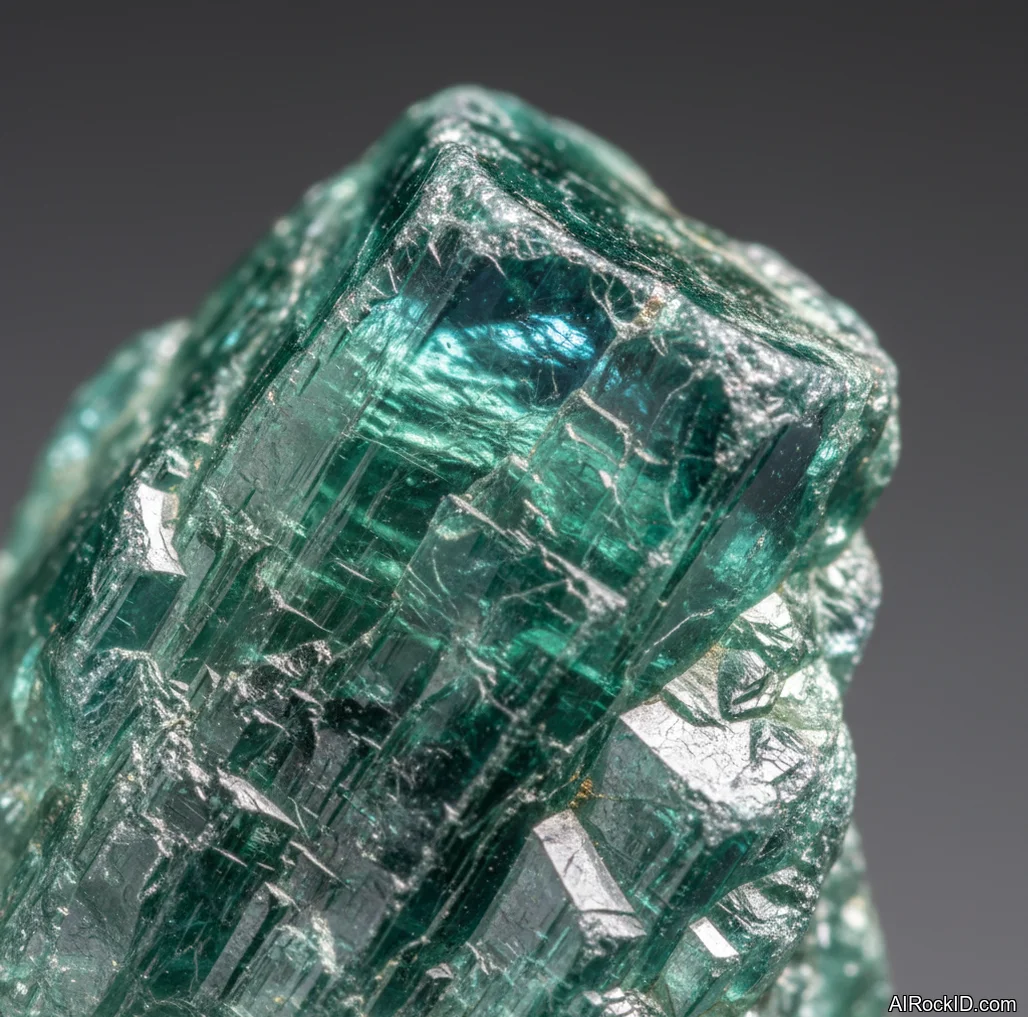
Rough topaz may form prismatic crystals with vertical striations and a glassy surface. Its perfect basal cleavage can create flat breakage surfaces, but using cleavage as a test can damage the specimen. A combination of hardness, crystal form, density, and locality information is more useful than a single visual clue.
Topaz in Jewelry Settings
Topaz is hard enough for rings, pendants, and earrings, but its perfect cleavage means it can split if struck in the right direction. Protective settings and careful wear are especially useful for rings and bracelets. Vintage or heavily included stones should be checked for chips along facet junctions and the girdle.
What Is Topaz?
Topaz is a hard aluminum fluorosilicate gemstone, Al2SiO4(F,OH)2, valued for its bright vitreous luster, high clarity, and wide color range. In the hand, a clean topaz crystal often looks glassy and crisp, but it feels surprisingly weighty for a pale transparent stone because its density is about 3.49-3.57 g/cm3.
Collectors should remember the practical contradiction of topaz: it is Mohs 8 and resists scratching by quartz and feldspar, yet it has perfect basal cleavage on {001}. A durable-looking crystal or ring stone can still split or chip if struck, dropped, heated rapidly, or clamped under pressure.
Origin & History
The name topaz has a long and tangled history. Ancient writers used names connected with Topazos, an island in the Red Sea now associated with peridot, and the word has also been linked to the Sanskrit “tapas,” meaning heat or fire.
Older gem trade language often used “topaz” loosely for yellow stones, including citrine quartz. Modern mineralogy reserves topaz for the distinct aluminum fluorosilicate species Al2SiO4(F,OH)2, a usage supported by mineral locality references such as mindat.org and by major gem-producing districts in Brazil, Russia, Pakistan, and the United States.
Where Is Topaz Found?
Topaz occurs worldwide, but gem-quality material is concentrated in fluorine-rich granitic pegmatites, rhyolite cavities, and related hydrothermal environments. Important source countries include Brazil, Pakistan, Russia, the United States, Mexico, Nigeria, Sri Lanka, Myanmar, Namibia, Germany, Japan, and Australia.
Formation
Topaz forms in fluorine-rich geological settings, especially granitic pegmatites, greisens, high-temperature hydrothermal veins, and cavities in rhyolite. It crystallizes during late-stage igneous or hydrothermal activity where aluminum, silica, fluorine, and hydroxyl-bearing fluids interact.
In the field, topaz is the kind of mineral that can survive after its host rock breaks down. Resistant crystals may weather out and appear as rolled grains in alluvial deposits, though fresh crystal faces and cleavage surfaces show the brightest glassy luster.
How to Identify Topaz
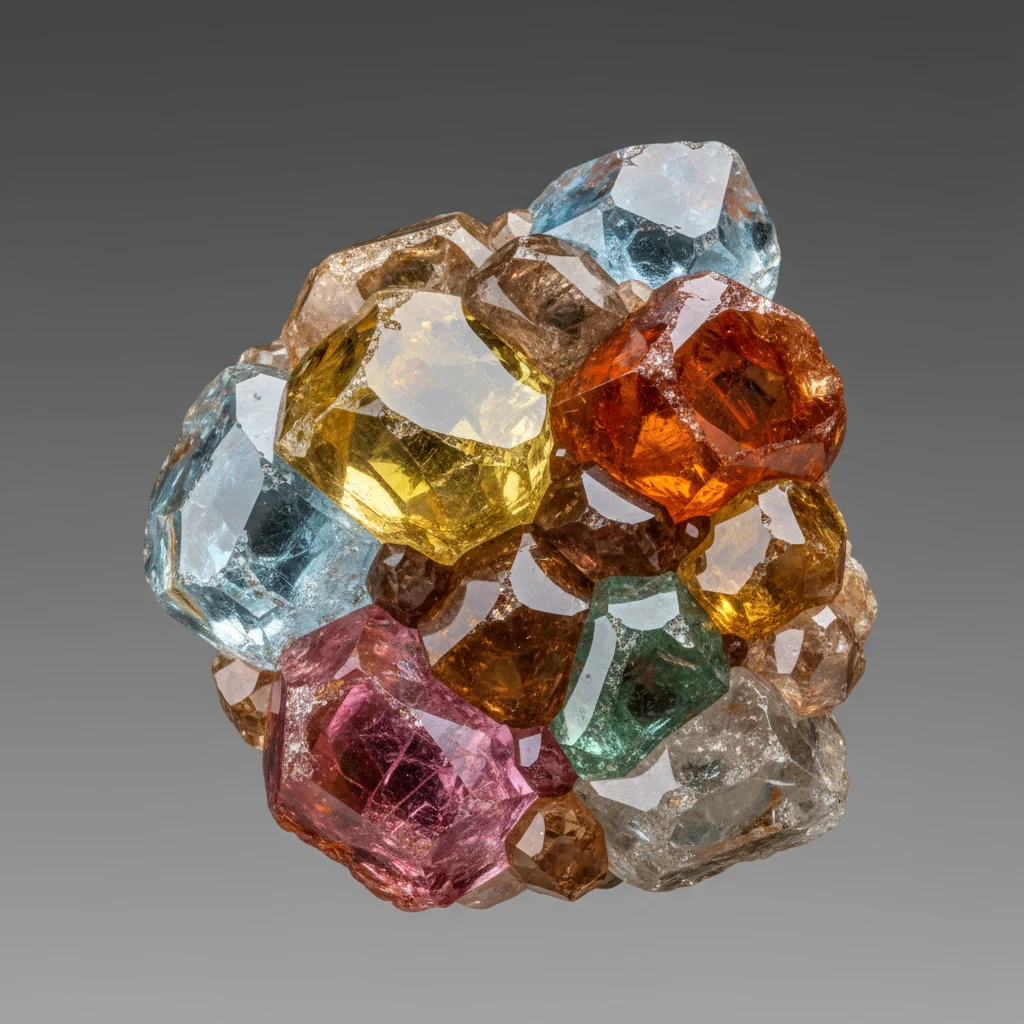
Identify topaz by combining hardness, heft, luster, crystal form, and cleavage rather than by color alone. It may be colorless, blue, yellow, brown, orange, pink, reddish orange, very rare red, greenish, gray, or multicolored; many bright blue jewelry stones are treated from colorless or pale material.
Useful tests and observations include Mohs hardness 8, white streak, vitreous luster, orthorhombic prismatic crystals with striations, density around 3.5, and perfect basal cleavage. Compared with quartz or citrine, topaz is harder, heavier, has stronger cleavage, and has a higher refractive index; compared with aquamarine, habit, cleavage, and density are important clues.
Properties of Topaz
Physical Properties
| Crystal System | Orthorhombic |
| Hardness (Mohs) | 8 (Hard) |
| Density | 3.49-3.57 g/cm3 |
| Luster | Vitreous |
| Diaphaneity | Transparent to translucent |
| Fracture | Subconchoidal to uneven; perfect basal cleavage on {001} |
| Streak | White |
| Magnetism | Non-magnetic to very weakly magnetic depending on iron content |
| Colors | Colorless, Blue, Yellow, Brown, Orange, Pink, Red, Green, Gray |
Chemical Properties
| Classification | Nesosilicate, aluminum fluorosilicate |
| Formula | Al2SiO4(F,OH)2 |
| Elements | Aluminum, Silicon, Oxygen, Fluorine, Hydrogen |
| Common Impurities | Iron, Chromium, Titanium, Vanadium |
Optical Properties
| Refractive Index | 1.606-1.638, commonly about 1.609-1.643 depending on composition and wavelength |
| Birefringence | 0.008-0.010 |
| Pleochroism | Weak to distinct in colored stones; pink, orange, and brown topaz may show different tones along different directions |
| Optical Character | Biaxial positive |
Topaz Health & Safety
Topaz is not considered toxic for normal handling or display. The main risk is physical: sharp broken edges and fine dust produced during cutting, grinding, or drilling can irritate the lungs and eyes.
Topaz Value & Price
Price Range
Rough/Tumbled: Common colorless, pale brown, or treated blue rough may be inexpensive, often a few dollars to tens of dollars per carat depending on size and clarity. Fine natural golden, pink, reddish orange, and imperial-type rough can be much more valuable and may range from tens to hundreds of dollars per carat or more for exceptional pieces.
Cut/Polished:
Value depends strongly on natural color, treatment status, saturation, clarity, size, origin, and cutting quality. Treated blue topaz is abundant and affordable, while fine natural imperial, pink, red, and vivid orange topaz are much rarer. Large clean crystals are collectible, but damage along cleavage planes can reduce value.
Durability
Good but cleavage-sensitive — Scratch resistance: Very good scratch resistance due to Mohs hardness 8; it resists scratching by quartz and feldspar., Toughness: Fair. Topaz has perfect basal cleavage, so it can split or chip if struck, dropped, or set under pressure.
Topaz is generally stable for normal wear, but some brown, sherry, or irradiated colors may fade with prolonged strong light or heat. Avoid sudden temperature changes, ultrasonic cleaning, steam cleaning, and hard impacts.
How to Care for Topaz
Use & Storage
Store topaz separately from softer gems to prevent scratching them, and away from harder gems such as sapphire or diamond that may scratch or chip it. Use padded boxes or soft pouches.
Cleaning
Clean with lukewarm water, mild soap, and a soft brush. Rinse well and dry with a soft cloth. Avoid ultrasonic and steam cleaners because cleavage and internal stress can cause damage.
Cleanse & Charge
For non-scientific spiritual use, topaz is commonly cleansed with gentle water wiping, smoke, sound, or moonlight. Avoid prolonged direct sunlight for stones with brown, sherry, or delicate treated colors.
Placement
Use in rings with protective settings, or in pendants, earrings, and brooches where impact risk is lower. Display crystals away from edges where they could fall.
Caution
Do not strike, heat rapidly, or clamp topaz tightly during jewelry repair. Perfect basal cleavage makes it vulnerable to splitting despite its high hardness.
Works Well With
Topaz Meaning & Healing Properties
In modern crystal-healing traditions, topaz is associated with clarity, confidence, truth, joy, focused intention, communication, and abundance. Blue topaz is commonly linked with communication, while golden and imperial-colored topaz are associated with vitality and abundance.
These meanings are cultural and spiritual beliefs, not medical claims. For practical use, keep the stone’s physical nature in mind: cleanse gently with water wiping, smoke, sound, or moonlight, avoid prolonged direct sunlight for brown, sherry, or delicate treated colors, and protect the gem from impact.
Identify Topaz from a photo
Compare Topaz traits, care tips, value clues, and common lookalikes with a clear photo.
Common mistakes
- Calling every yellow-orange transparent stone topaz when many are citrine or glass
- Assuming all blue topaz is naturally blue without asking about treatment
- Using a scratch test on finished jewelry, which can damage the stone or setting
- Ignoring cleavage and judging durability only by Mohs hardness
- Buying high-value imperial or pink topaz without documentation
- Confusing trade color names with mineral species identification