Aventurine


Quick answer: Aventurine is a quartz variety recognized by its fine, sparkly aventurescence, most often in green but also found in blue, red, orange, yellow, and brown. Its Mohs hardness of about 6.5–7 makes it suitable for many jewelry and decorative uses, though dyed quartzite and glass are common substitutes.
AI Rock ID can help compare aventurine against similar green, sparkly, or translucent stones using color, texture, luster, and visible inclusions. RockIdentifier.io provides visual identification support, but final confirmation may require hardness testing, magnification, or gemological evaluation.
Good fit
- People who want an affordable quartz gemstone with natural sparkle
- Jewelry buyers looking for a stone harder than calcite, fluorite, or malachite
- Collectors comparing green quartz varieties and inclusion-rich stones
- Beginners practicing visual identification of quartz and common lookalikes
Not a good fit
- Anyone needing a verified untreated stone without documentation
- Buyers who dislike stones that may be dyed, waxed, or mislabeled
- People expecting emerald-like transparency or high brilliance
- Rings or bracelets exposed to heavy impact without protective settings
Most commonly confused with
- Jade: Jade usually has a tougher, waxier appearance and lacks aventurine’s mica-like glitter.
- Amazonite: Amazonite is feldspar with blue-green color and gridlike cleavage patterns rather than quartz sparkle.
- Green Quartz: Green quartz may be uniformly colored and typically lacks the visible aventurescence that defines aventurine.
- Malachite: Malachite has banded green patterns, lower hardness, and no quartz-like granular sparkle.
Aventurine vs. Common Lookalikes
| Material | Key Visual Clue | Typical Hardness | Main Difference |
|---|---|---|---|
| Aventurine | Soft glitter from mica or iron-oxide inclusions | 6.5–7 | Quartz with aventurescence |
| Jade | Waxy to greasy luster, usually no sparkle | 6–7 | Tougher interlocking mineral structure |
| Amazonite | Blue-green color with cleavage lines | 6–6.5 | Feldspar, not quartz |
| Malachite | Curved or banded green patterns | 3.5–4 | Much softer copper carbonate |
| Goldstone | Very even metallic glitter in glass | 5.5–6 | Man-made glass, not natural quartz |
AI identification confidence
AI identification is usually moderate to good when aventurine shows clear granular quartz texture and visible sparkly inclusions. Confidence drops when the stone is polished, heavily dyed, photographed under strong glare, or shown without scale.
When AI gets it wrong
- Polished green stones can hide grain size, cleavage, and surface texture.
- Dyed quartzite may appear similar to green aventurine in photos.
- Goldstone or glitter glass can be mistaken for natural aventurescence under bright lighting.
- Jade, amazonite, and serpentine may overlap in green color when sparkle is weak or absent.
Final recommendation
Choose aventurine when you want a durable, affordable quartz with a subtle natural shimmer. For higher confidence, look for uneven natural inclusions, realistic color variation, and seller disclosure about dyeing or treatments.
How to Tell if Aventurine Is Real
Real aventurine usually shows fine, uneven sparkles caused by tiny mineral inclusions rather than perfectly uniform glitter. Natural pieces may have color variation, cloudy quartz areas, or small internal specks. Very bright neon color, perfectly even shimmer, or a glassy molded look can indicate dyeing, glass, or another imitation.
Aventurine Treatments and Trade Names
Aventurine may be sold natural, dyed, waxed, or stabilized, especially in beads and carvings. Green aventurine is the most common trade form, while red, orange, and brown material often gets color from iron-rich inclusions. Seller terms such as “Indian jade” or “aventurine jade” are trade names and do not mean the stone is true jade.
Buying Checklist for Aventurine
Look for visible aventurescence, consistent quartz-like hardness, and a finish free from obvious cracks or filled pits. Ask whether the color is natural or dyed, especially for vivid green, blue, or purple material. For jewelry, check the setting and bead drill holes because aventurine can still chip at edges despite being relatively hard.
What Is Aventurine?
Aventurine is a translucent to opaque variety of quartz known for aventurescence, the fine glittery flash produced by tiny platy mineral inclusions. In the hand, a good piece feels like quartz: hard, cool, and solid, with a waxy to vitreous polish and a subtle spangled light that moves under the surface rather than sitting on top like metallic paint.
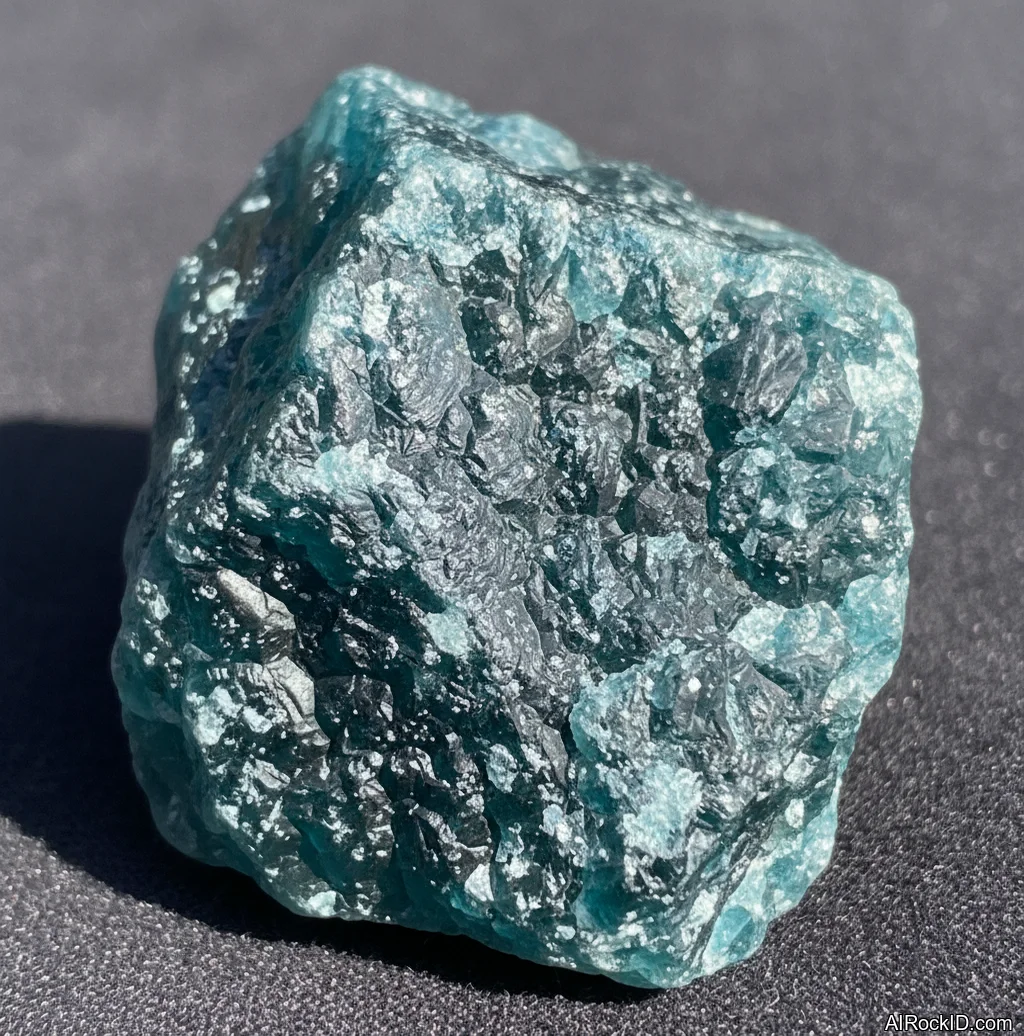
Green aventurine is the classic and most abundant form, but aventurine also occurs in blue, orange, red-brown, yellow, gray, white, and silvery material. Its formula is SiO2, and its Mohs hardness is 6.5–7, making it durable enough for beads, cabochons, carvings, pocket stones, and casual jewelry when protected from hard impacts.
Origin & History
The name aventurine comes from the Italian phrase “a ventura,” meaning “by chance.” It was first associated with sparkly aventurine glass made accidentally in Venice, and the natural quartz variety later took the name because it showed a similar glittering effect from mineral flakes enclosed inside the stone.
Aventurine has long been cut for beads, cabochons, small sculptures, and ornamental objects, especially from India, Brazil, and Russia. For label checking and locality research, collectors often compare specimen data with references such as mindat.org, while still judging the stone itself by quartz hardness, massive texture, polish, and internal aventurescence.
Where Is Aventurine Found?
Aventurine is found in many quartz-rich metamorphic and hydrothermal settings. Important source countries include India, Brazil, Russia, China, Tanzania, Spain, Chile, Austria, and the United States, with notable localities including Karnataka and Tamil Nadu in India, Minas Gerais in Brazil, the Ural Mountains in Russia, Tanzania, and Vermont in the USA.
Formation
Aventurine forms when quartz crystallizes or recrystallizes while trapping abundant tiny reflective mineral plates inside it. Those plates act like minute mirrors, creating aventurescence when light catches them through the translucent to opaque quartz body. The result is usually massive quartz rather than distinct crystal points.
Green color is commonly caused by chromium-bearing fuchsite mica. Red, orange, and brown aventurine commonly relate to hematite or goethite, while blue aventurine may contain dumortierite or other blue inclusions. In the field and in older collections, it is most often associated with massive quartz in metamorphic rocks, quartz veins, and quartzite-like bodies.
How to Identify Aventurine
Identify aventurine by combining quartz-like hardness with fine internal sparkle. It should scratch glass and resist a steel knife better than softer lookalikes. On polished pieces, look for a vitreous, waxy, or slightly greasy luster and a granular, massive texture, often mottled green but also possible in blue, orange, red-brown, yellow, gray, white, or silvery tones.
Aventurine is not usually banded like most agates, and it does not show the blocky feldspar cleavage flashes seen in amazonite. It is also different from jade: aventurine is quartz, while true jade is jadeite or nephrite. Under magnification, natural pieces often reveal tiny reflective mica or iron-oxide plates suspended in the stone rather than the uniform metallic glitter of man-made glass.
Properties of Aventurine
Physical Properties
| Crystal System | Trigonal |
| Hardness (Mohs) | 6.5–7 (Hard) |
| Density | 2.64–2.69 g/cm³ |
| Luster | Vitreous to waxy, commonly aventurescent |
| Diaphaneity | Translucent to opaque |
| Fracture | Conchoidal to uneven; massive material may break granularly |
| Streak | White |
| Magnetism | Non-magnetic to very weakly magnetic if iron-rich inclusions are abundant |
| Colors | Green, Blue, Orange, Red-brown, Yellow, Gray, White, Silver |
Chemical Properties
| Classification | Silicate, tectosilicate quartz variety |
| Formula | SiO2 |
| Elements | Silicon, Oxygen |
| Common Impurities | Fuchsite, Muscovite, Hematite, Goethite, Dumortierite, Lepidolite, Chlorite |
Optical Properties
| Refractive Index | 1.544–1.553 |
| Birefringence | 0.009 |
| Pleochroism | None in quartz; colored inclusions may create apparent uneven color |
| Optical Character | Uniaxial positive |
Aventurine Health & Safety
Finished aventurine is safe to handle. The main hazard is inhaling respirable crystalline silica dust when cutting, grinding, drilling, or polishing quartz.
Aventurine Value & Price
Price Range
Rough/Tumbled: $1–$20 for common tumbled stones or small rough pieces; higher for large, clean, strongly sparkling carving-grade material
Cut/Polished: $2–$50 for common cabochons or beads; fine large carvings and unusually attractive cabochons may cost more
Value depends on color saturation, evenness of sparkle, polish quality, size, translucency, absence of cracks, and whether the material has a desirable green or blue color. Aventurine is widely available, so most pieces are affordable.
Durability
Good — Scratch resistance: Good; quartz hardness makes it suitable for beads, cabochons, and casual jewelry, though it can still be scratched by harder gems such as corundum or diamond., Toughness: Fair to good; massive quartz is generally durable but may chip along fractures or granular zones.
Stable under normal handling and display. Avoid hard impacts, extreme heat shock, and harsh chemicals that could dull polish or affect included minerals.
How to Care for Aventurine
Use & Storage
Store separately from softer stones because aventurine can scratch them; keep away from diamonds, sapphires, and other harder materials that can scratch aventurine.
Cleaning
Clean with lukewarm water, mild soap, and a soft brush or cloth. Rinse well and dry completely. Avoid ultrasonic or steam cleaning for fractured, dyed, or assembled jewelry.
Cleanse & Charge
For non-scientific spiritual use, many people cleanse aventurine with running water, smoke, sound, or moonlight. Avoid prolonged harsh sunlight if color stability is uncertain.
Placement
Suitable for display, pocket stones, carvings, beads, and cabochon jewelry. Use protective settings for rings or bracelets that receive frequent impact.
Caution
Do not confuse aventurine with aventurine glass or goldstone, which are man-made glass materials with metallic glitter. Avoid breathing dust during cutting or drilling.
Works Well With
Aventurine Meaning & Healing Properties
In modern crystal healing traditions, aventurine is most often used as a stone of optimism, emotional balance, opportunity, and gentle heart-centered growth. These meanings are cultural and spiritual beliefs, not medical facts, but they fit the physical character of the stone well: calm green color, soft internal shimmer, and a sturdy quartz feel in the palm.
Aventurine is associated with the Heart and Throat chakras, the zodiac signs Taurus, Virgo, and Libra, the planets Venus and Mercury, and the elements Earth and Water. Many people pair it with amethyst, agate, carnelian, or amazonite for non-scientific spiritual practice, meditation layouts, pocket carry, or display.
Identify Aventurine from a photo
Compare Aventurine traits, care tips, value clues, and common lookalikes with a clear photo.
Common mistakes
- Assuming every green polished stone with a smooth surface is aventurine
- Calling aventurine a type of jade because of trade names such as “aventurine jade”
- Mistaking dense glitter glass or goldstone for natural aventurescence
- Using color alone for identification without checking sparkle, hardness, and texture
- Assuming vivid color is always natural rather than dyed or enhanced
- Expecting aventurine to resist all damage because it is a quartz variety