Blue Glass


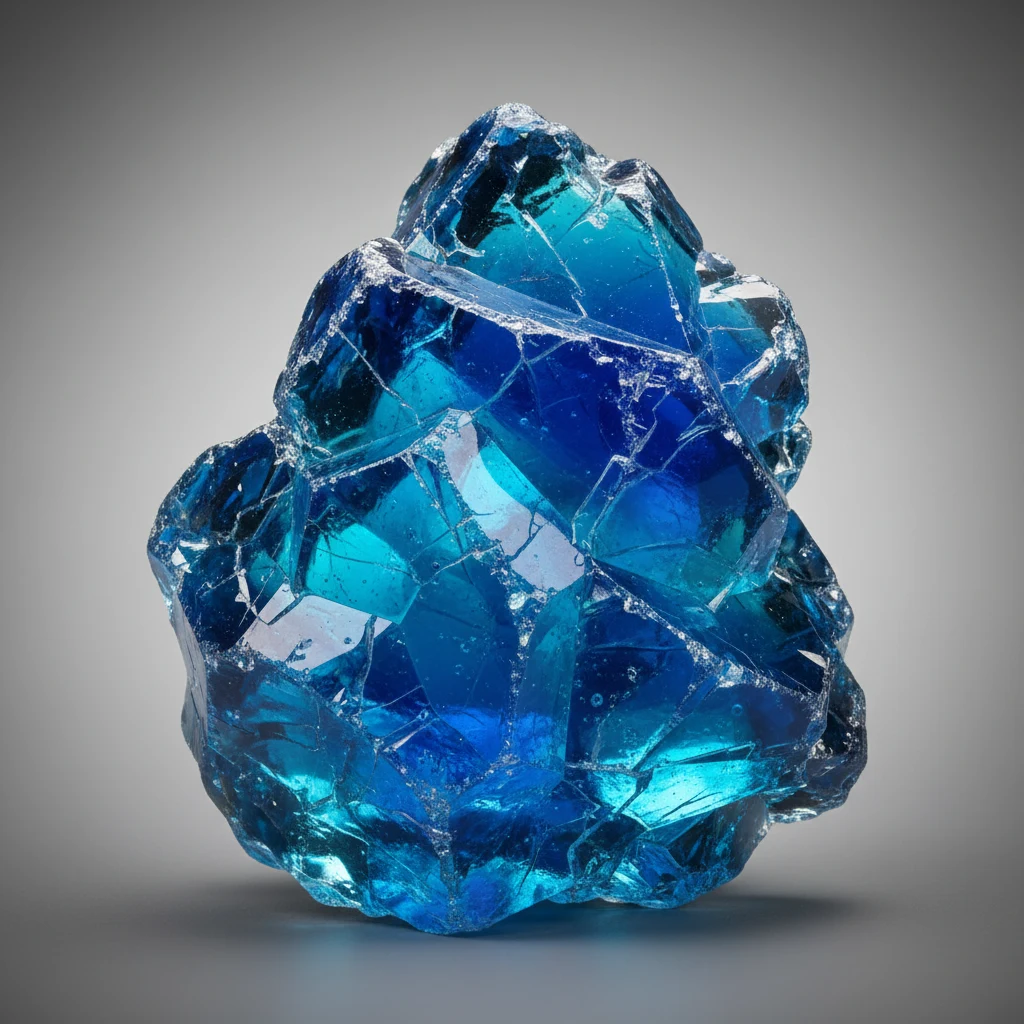
Quick answer: Blue glass is a man-made amorphous silica material colored blue by additives or coatings. It can resemble natural blue stones, but it lacks crystal structure and is typically identified by uniform color, bubbles, molded shapes, and glassy luster.
AI Rock ID can help screen blue glass against natural blue lookalikes by analyzing color, transparency, luster, and visible inclusions from a clear photo. RockIdentifier.io presents Blue Glass as a man-made material rather than a natural crystal species.
Good fit
- Collectors who want an affordable blue display material
- Jewelry buyers who like a bright vitreous blue appearance
- Beginners learning to separate glass from natural minerals
- Decor use where uniform color and polished surfaces are preferred
Not a good fit
- Buyers seeking a natural mineral specimen
- Collectors who require crystalline structure or verified geologic origin
- High-wear rings if the setting exposes the glass to impact
Most commonly confused with
- Blue Obsidian: Blue obsidian is also volcanic glass, but much material sold under this name is artificial or treated.
- Aquamarine: Aquamarine is a natural beryl with crystal structure, higher hardness, and different internal growth features.
- Blue Topaz: Blue topaz is a natural mineral, commonly treated for color, and is harder than glass.
- Lapis Lazuli: Lapis lazuli is opaque, usually shows mineral speckling, and does not have the transparent glassy look of blue glass.
Blue Glass vs. Common Blue Lookalikes
| Material | Typical clue | Hardness |
|---|---|---|
| Blue glass | Bubbles, molded edges, very uniform color | Mohs 5-6 |
| Aquamarine | Natural crystal growth features; pale blue to blue-green | Mohs 7.5-8 |
| Blue topaz | High clarity, strong faceting, harder than glass | Mohs 8 |
| Lapis lazuli | Opaque blue with pyrite or white calcite inclusions | Mohs 5-6 |
| Sodalite | Opaque to translucent blue with white veining | Mohs 5.5-6 |
AI identification confidence
AI identification of blue glass is often moderate to high when photos show bubbles, molded surfaces, chips with conchoidal fracture, or unusually even color. Confidence drops when the piece is faceted, heavily polished, photographed under colored light, or lacks visible diagnostic features.
When AI gets it wrong
- A faceted blue glass gem may be mistaken for blue topaz, aquamarine, or synthetic spinel from photos alone.
- Dyed or coated natural stones can appear as evenly colored as glass in low-resolution images.
- Small cabochons may not show bubbles, mold marks, or fracture features clearly.
- Backlighting and saturated filters can make pale minerals look like vivid blue glass.
Final recommendation
Treat blue glass listings as decorative or jewelry material unless the seller provides credible evidence for a natural mineral identity. For higher-value purchases, ask for hardness context, magnified photos, and disclosure of glass, synthetic, dyed, or treated status.
How to Check Blue Glass Before Buying
Look for round bubbles, flow lines, mold seams, or perfectly even color, all of which can support a glass identification. Ask whether the item is natural, synthetic, dyed, coated, or simply decorative glass. If a seller uses names such as “blue crystal,” “aqua stone,” or “obsidian glass” without specifics, request clarification before comparing prices.
Photo Tips for Identifying Blue Glass
Use sharp photos in daylight or neutral white light, and include close-ups of edges, chips, drill holes, and any internal bubbles. Place the piece on a white background and avoid blue-tinted lighting that can exaggerate color. Multiple angles help separate glass from natural minerals with zoning, cleavage, or mineral inclusions.
Authenticity Notes for Labeled Blue Glass
Blue glass is authentic when it is accurately sold as glass, art glass, slag glass, or man-made decorative material. Authenticity problems arise when ordinary glass is represented as aquamarine, blue topaz, lapis lazuli, or another natural gemstone. A low price alone does not prove glass, but very large flawless blue pieces at low cost should be checked carefully.
What Is Blue Glass?
Blue Glass is a man-made amorphous silica material valued for its bright blue color, not a naturally grown crystal. In the hand it feels smooth and glassy, with the cool, vitreous surface collectors expect from decorative glass. Its colors can range from blue to cyan and turquoise, often with a clean, even tone that makes it popular in jewelry and display pieces.
Practically, Blue Glass sits at Mohs 5-6, so it has fair scratch resistance but should not be treated like a tough stone. It is transparent to translucent, non-magnetic, and typically shows a white streak and conchoidal fracture. Because it can chip or break under impact, the best specimens are handled gently and stored away from rougher minerals.
Origin & History
Blue Glass has an ancient decorative history, with cultures using colored glass for adornment long before modern factory production. The word “glass” comes from the Old English “glæs,” and the blue variety remains familiar in beads, ornaments, small art objects, and jewelry. Its appeal is immediate: strong color, glossy light return, and a polished feel.
For cataloging, the key point is that Blue Glass is artificial amorphous silica rather than a natural mineral species. Mineral references such as mindat.org are useful for comparison because they help separate natural mineral identity from man-made lookalikes. A collector label should note “Blue Glass” or “man-made glass,” especially when the piece resembles blue gem material.
Where Is Blue Glass Found?
Blue Glass is not mined; it is produced globally in glass-manufacturing settings. The listed producing countries include the USA, Germany, and China, with noted localities such as New Jersey, Bavaria, and Beijing. In a collection, its “locality” is usually a maker, factory region, or sale source rather than a geologic deposit.
Formation
Blue Glass forms by melting silica with added coloring agents, then cooling the melt into an amorphous solid. Its listed formula is SiO2 with coloring agents, and common impurities include iron and cobalt. Because it lacks a crystal system, it is classified as amorphous rather than crystalline.
That formation history explains both the look and the breakage pattern. The material can be transparent to translucent, isotropic, and free of birefringence or pleochroism, with a refractive index around 1.5. When broken, it may show conchoidal fracture, so chipped edges can be sharp even though the polished surfaces feel smooth.
How to Identify Blue Glass
Identify Blue Glass by its distinct blue hue, vitreous luster, and often uniform body color. Under handling, it should look glassy rather than granular, with smooth edges on finished pieces and a transparent to translucent appearance. Blue, cyan, and turquoise are the expected color range.
Useful confirming traits include amorphous structure, non-magnetism, white streak, conchoidal fracture, Mohs hardness of 5-6, and density of 2.5-2.6 g/cm3. Scratches can indicate lower quality, and impact damage may show chips or breaks. Because it is man-made, identification should emphasize manufacture and appearance, not natural crystal habit.
Properties of Blue Glass
Physical Properties
| Crystal System | Amorphous |
| Hardness (Mohs) | 5-6 (Medium) |
| Density | 2.5-2.6 g/cm3 |
| Luster | Vitreous |
| Diaphaneity | Transparent to translucent |
| Fracture | Conchoidal |
| Streak | White |
| Magnetism | Non-magnetic |
| Colors | Blue, Cyan, Turquoise |
Chemical Properties
| Classification | Silicate |
| Formula | SiO2 (with coloring agents) |
| Elements | Si, O |
| Common Impurities | Fe, Co |
Optical Properties
| Refractive Index | 1.5 |
| Birefringence | None |
| Pleochroism | None |
| Optical Character | Isotropic |
Blue Glass Health & Safety
Blue glass poses no significant health risks when handled properly.
Blue Glass Value & Price
Price Range
Rough/Tumbled: $5 - $20 per specimen
Cut/Polished: $10 - $100 per carat
Price is influenced by color intensity and clarity.
Durability
Moderate — Scratch resistance: Fair, Toughness: Fair
It can chip or break under impact.
How to Care for Blue Glass
Use & Storage
Store in a cool, dry place away from direct sunlight.
Cleaning
Clean with mild soap and water. Avoid harsh chemicals and abrasive materials.
Cleanse & Charge
Place under moonlight or use a clear quartz to cleanse.
Placement
Display in a well-lit area to enhance its color.
Caution
Handle with care to avoid breaking.
Works Well With
Blue Glass Meaning & Healing Properties
In crystal-healing practice, Blue Glass is used as a calming, communication-focused material rather than a medical treatment. Its bright blue surface naturally draws attention to the throat and brow area, matching its associations with the Throat and Third Eye chakras. Practitioners often use it for calm, creativity, focus, inner peace, trust, and insight.
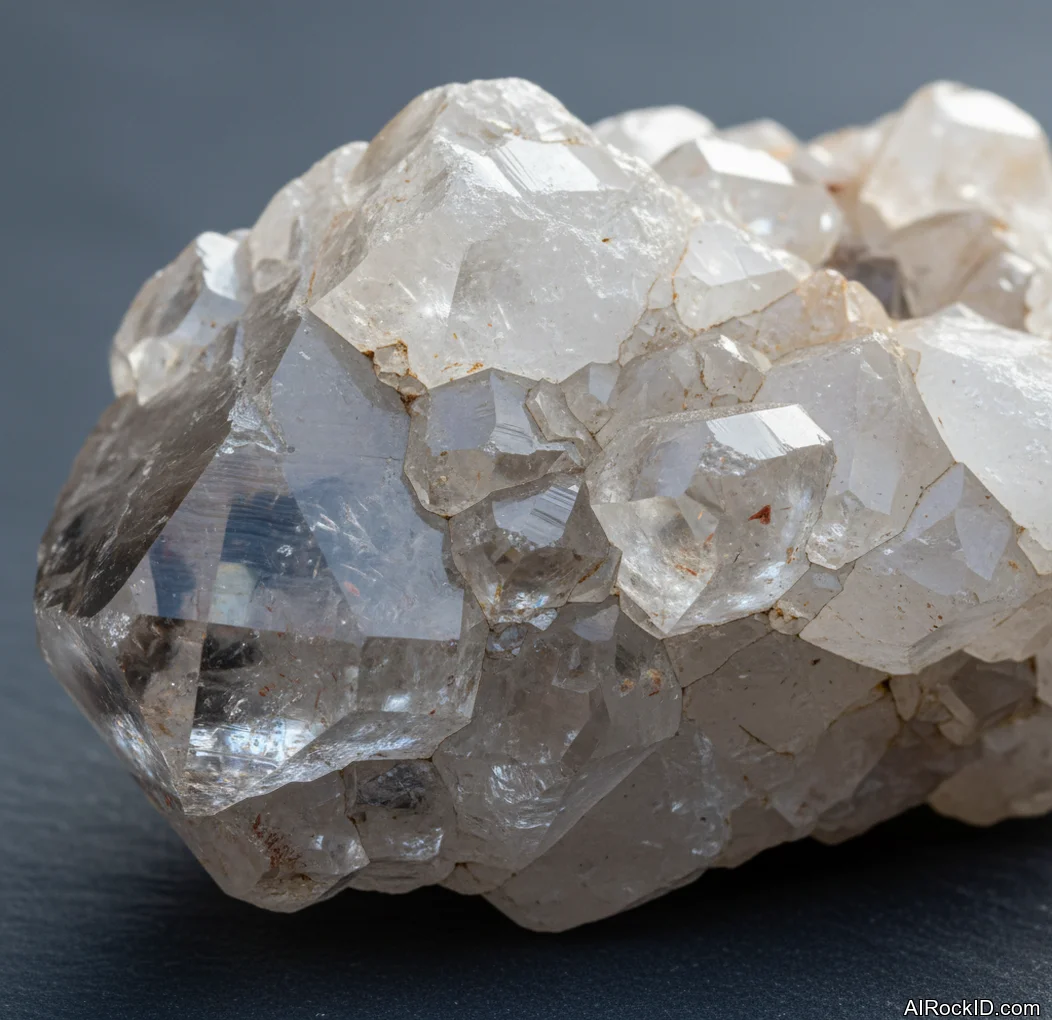
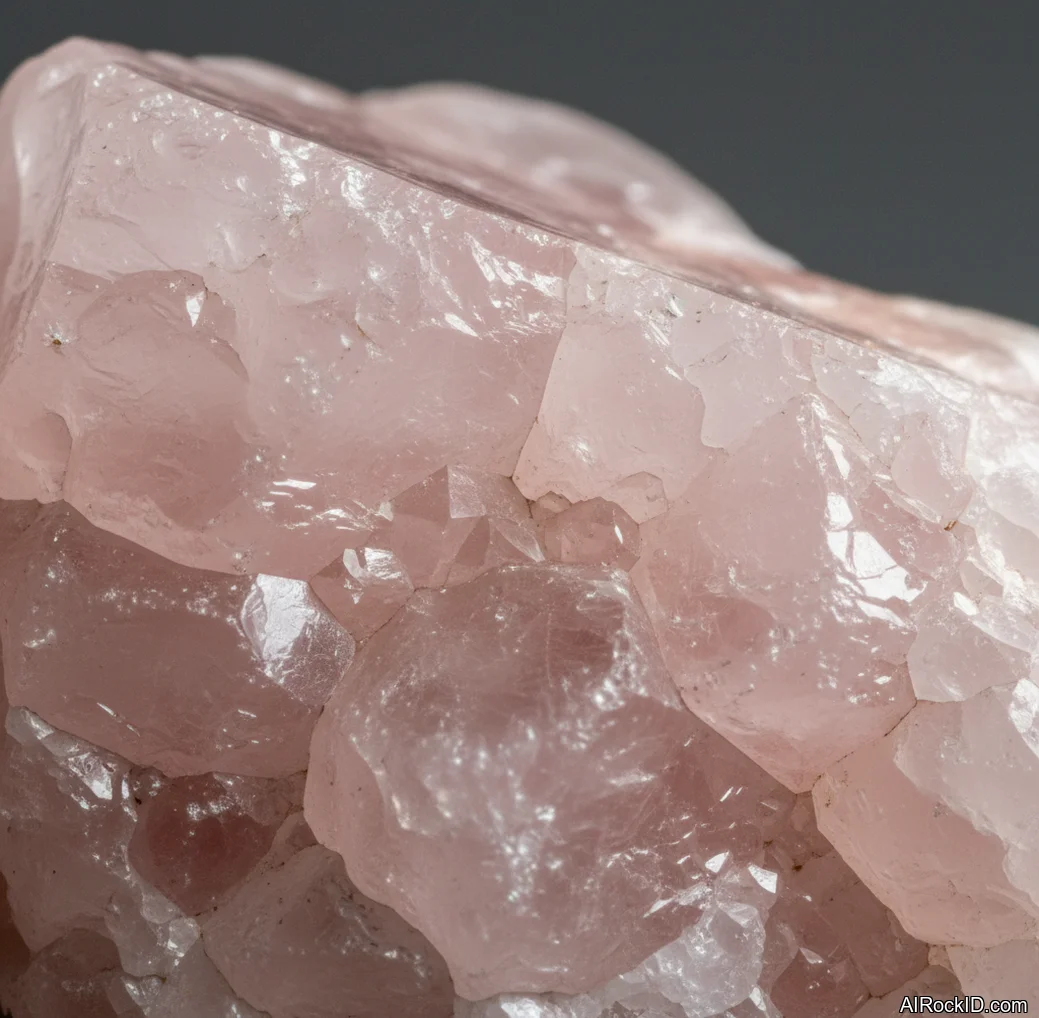
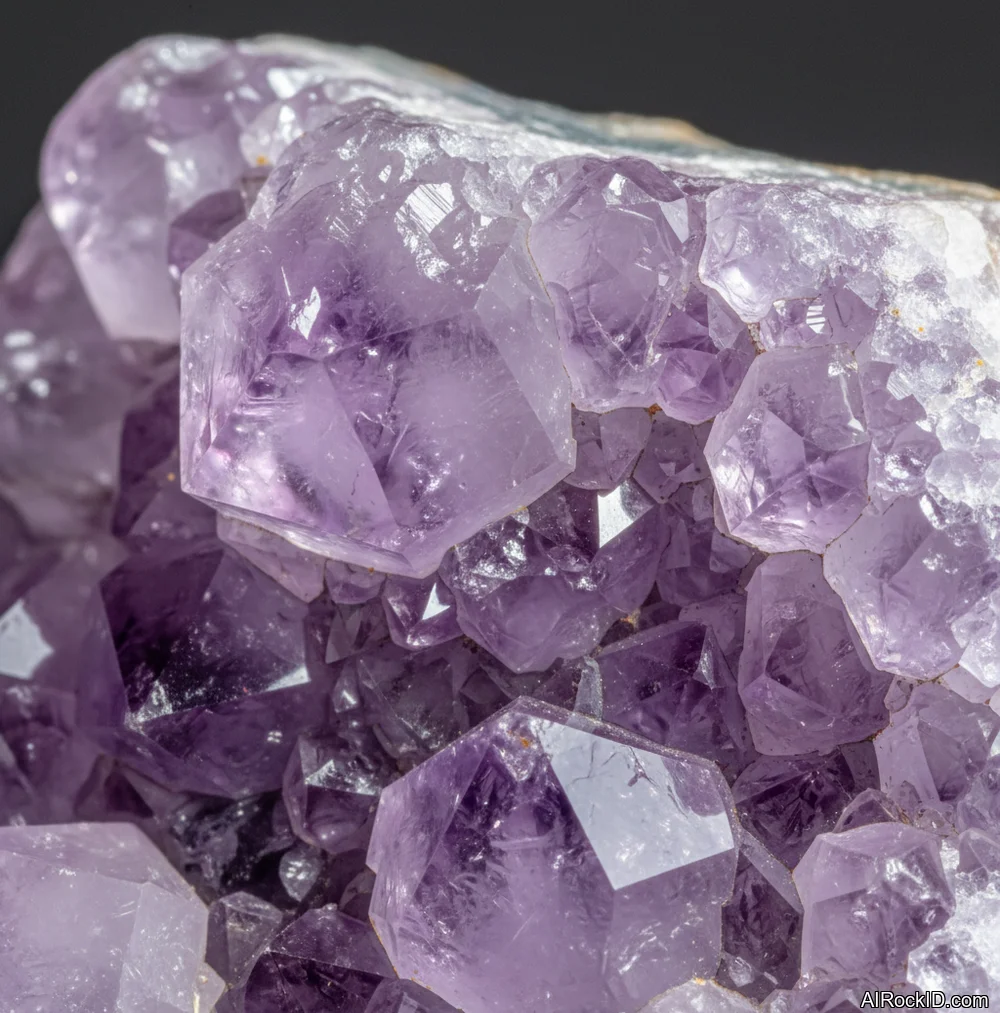
Blue Glass is associated with Aquarius and Pisces, the planets Neptune and Venus, and the Water element. It can be cleansed under moonlight or with clear quartz, and it pairs well with clear quartz, rose quartz, and amethyst. For care, clean it with mild soap and water, avoid harsh chemicals and abrasives, and store it cool, dry, and away from direct sunlight.
Identify Blue Glass from a photo
Compare Blue Glass traits, care tips, value clues, and common lookalikes with a clear photo.
Common mistakes
- Assuming every blue transparent stone is aquamarine or topaz.
- Using color alone as proof of identity.
- Overlooking bubbles because they are small or near drilled holes.
- Paying natural gemstone prices for material disclosed only as “blue crystal.”
- Testing hardness on a finished jewelry surface where scratches can cause permanent damage.
- Relying on a single photo taken under saturated or colored lighting.