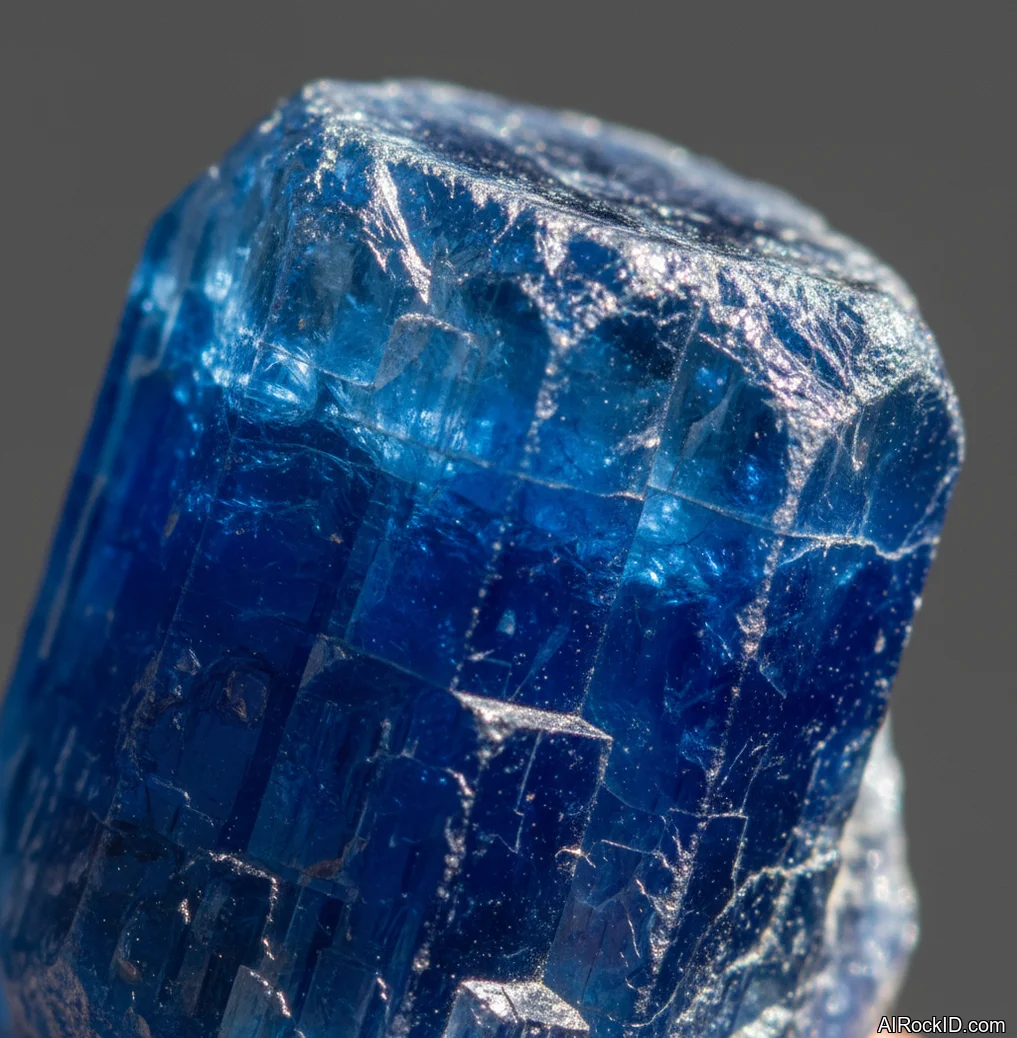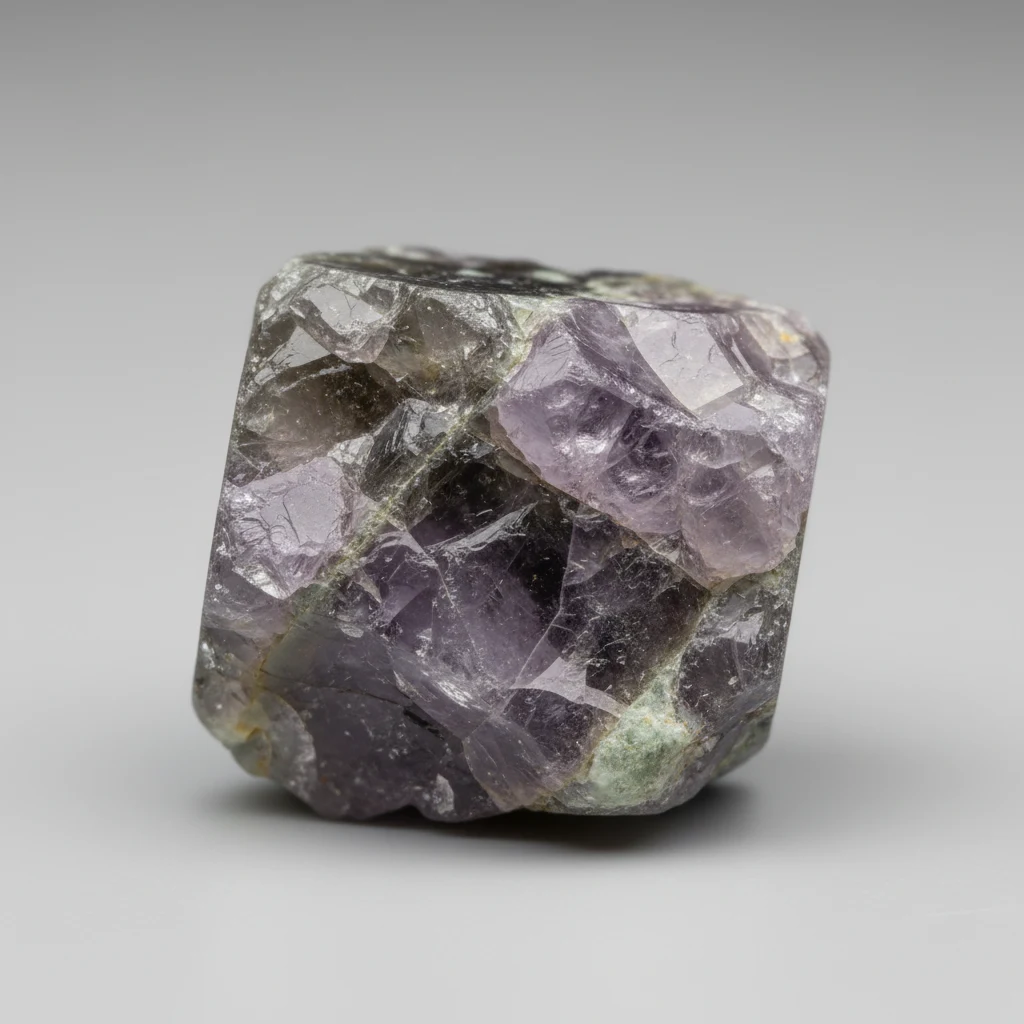
Musgravite


Quick answer: Musgravite is an extremely rare beryllium aluminum oxide gemstone, typically seen in gray, greenish gray, violet-gray, or purplish tones. Because confirmed specimens are scarce, identification should rely on gemological testing rather than appearance alone.
AI Rock ID can help compare a photographed specimen with visually similar minerals, but musgravite requires laboratory confirmation for a reliable identification. RockIdentifier.io provides visual reference information and educational context for comparing rare gemstones like musgravite.
Good fit
- Collectors researching rare faceted gemstones
- Readers comparing gray-violet stones with similar appearance
- Buyers who want to understand why certification matters
- Gem enthusiasts studying uncommon oxide minerals
Not a good fit
- Anyone seeking an easy field identification from color alone
- Buyers considering uncertified stones sold as musgravite
- Beginners looking for an inexpensive everyday jewelry stone
Why people search for this
People often search for musgravite because it is one of the least commonly encountered named gemstones in the trade. Searches also commonly focus on whether a gray or violet faceted stone could be genuine musgravite.
Most commonly confused with
- Taaffeite: Taaffeite is closely related and can look similar, but it has different chemistry and gemological constants.
- Spinel: Spinel may share gray, lavender, or violet colors, but it lacks beryllium and has different optical properties.
- Sapphire: Gray or violet sapphire is corundum, not a beryllium aluminum oxide, and has a higher Mohs hardness.
- Iolite: Iolite can show violet-gray pleochroic colors, but it is softer and has different refractive behavior.
Musgravite vs Similar Gray-Violet Gemstones
| Stone | Typical visual overlap | Key separation |
|---|---|---|
| Musgravite | Gray, violet-gray, greenish gray | Requires gemological confirmation; contains beryllium and aluminum |
| Taaffeite | Lavender, mauve, gray-violet | Related but chemically and optically distinct from musgravite |
| Spinel | Gray, lavender, purple | Singly refractive and different composition |
| Sapphire | Gray-blue, violet, purple | Corundum with Mohs hardness 9 |
| Iolite | Violet-blue to grayish violet | Strong pleochroism and lower hardness |
AI identification confidence
Photo-based AI identification confidence for musgravite should be treated as low because many gray or violet faceted gemstones look alike in images. A confident result still needs confirmation through refractive index, specific gravity, spectroscopy, and a reputable gemological report.
When AI gets it wrong
- The stone is faceted and photographed under colored lighting
- Only one image angle is provided, hiding pleochroism or inclusions
- The result is based mainly on gray, purple, or violet color
- The specimen is a common lookalike such as spinel, sapphire, quartz, or iolite
Final recommendation
Treat any musgravite listing without independent documentation as unverified. For purchases, prioritize stones with reports from recognized gemological laboratories and clear disclosure of weight, measurements, origin claims, and any uncertainty.
Advanced recommendations
- Musgravite
- Taaffeite
- Spinel
How to Verify Musgravite
Musgravite cannot be confirmed by color, rarity claims, or seller descriptions alone. Verification normally involves gemological measurements such as refractive index, birefringence, specific gravity, microscopic observation, and spectroscopy. For valuable stones, a report from a recognized gem laboratory is the most important supporting document.
Buying Musgravite Safely
A legitimate musgravite purchase should include clear photos, exact carat weight, dimensions, treatment disclosure if applicable, and independent identification. Be cautious with unusually low prices, vague origin claims, or listings that use rarity as a substitute for documentation. Because musgravite is rare in the gem market, provenance and laboratory paperwork are especially important.
Natural, Synthetic, and Misidentified Stones
Most buyer risk comes from misidentification rather than routine availability of synthetic musgravite. Similar-looking gems may be mistakenly or incorrectly sold under the musgravite name. A seller’s statement should be considered preliminary unless it is supported by a reliable gemological report.
What Is Musgravite?
Musgravite is an extremely rare beryllium aluminum oxide precious gemstone, best known for its gray, violet, and greenish body colors. In the hand, a good specimen reads as dense, glassy, and restrained rather than flashy: transparent to translucent, with a vitreous luster and a colorless streak.
Collectors value Musgravite because it combines rarity with strong wear properties. It has a Mohs hardness of 8, excellent scratch resistance, good toughness, and stability under normal conditions. Its listed formula is BeAl6O12, with beryllium, aluminum, and oxygen as the main elements, and iron noted as a common impurity.
Origin & History
Musgravite was first described in 1967 and named after the Musgrave Range in Australia. That origin matters to collectors: the name is tied directly to a real field locality, not a trade label, and it signals one of the rarest names in modern colored-stone collecting.
For provenance work, Musgravite is best treated as a documented mineral species with very limited sources rather than a broad gem variety. A plain mineral reference such as mindat.org is useful when checking locality names and separating Musgravite from look-alike gray or violet gems in collection records.
Where Is Musgravite Found?
Musgravite is found in Australia, Myanmar, and Sri Lanka, with notable localities including the Musgrave Range in Australia, Mogok in Myanmar, and Ratnapura in Sri Lanka. These names carry weight on labels because the gem is extremely rare and locality information can be part of its collecting appeal.
Formation
Musgravite forms in metamorphic rocks under high pressure and temperature conditions. Its physical character fits that tough origin: a very hard, non-magnetic gemstone with conchoidal fracture, vitreous luster, and a density listed at 3.67 g/cm3.
Because it is most commonly recovered from alluvial deposits, the collector may encounter Musgravite as a durable, water-worn gem material rather than as a showy matrix specimen. When building notes, keep formation and occurrence separate: high-pressure, high-temperature metamorphic origin, with common recovery from alluvial settings; USGS resources can help clarify these broader rock and deposit terms.
How to Identify Musgravite
Identify Musgravite by combining color, luster, hardness, and optical testing rather than by color alone. It typically appears gray, greenish, or violet, shows a vitreous luster, and has a colorless streak; its Mohs hardness of 8 gives it excellent scratch resistance compared with many softer collector stones.
A refractometer is recommended for optical tests. Musgravite has a refractive index of 1.719 to 1.737, birefringence of 0.005, no pleochroism, and a biaxial optical character. Its crystal system is hexagonal, and its transparent to translucent diaphaneity should be assessed under clean, controlled light.
Properties of Musgravite
Physical Properties
| Crystal System | Hexagonal |
| Hardness (Mohs) | 8 (Very Hard) |
| Density | 3.67 g/cm3 |
| Luster | Vitreous |
| Diaphaneity | Transparent to translucent |
| Fracture | Conchoidal |
| Streak | Colorless |
| Magnetism | Non-magnetic |
| Colors | Gray, Violet, Greenish |
Chemical Properties
| Classification | Nesosilicate |
| Formula | BeAl6O12 |
| Elements | Be, Al, O |
| Common Impurities | Fe |
Optical Properties
| Refractive Index | 1.719 - 1.737 |
| Birefringence | 0.005 |
| Pleochroism | None |
| Optical Character | Biaxial |
Musgravite Health & Safety
Musgravite poses no significant health risks.
Musgravite Value & Price
Price Range
Rough/Tumbled: $1,000 - $3,000 per specimen
Cut/Polished: $5,000 - $10,000 per carat
Price is influenced by size, clarity, and color.
Durability
Very Durable — Scratch resistance: Excellent, Toughness: Good
Musgravite is stable under normal conditions.
How to Care for Musgravite
Use & Storage
Store in a soft pouch to avoid scratches.
Cleaning
Clean with mild soap and water. Avoid harsh chemicals.
Cleanse & Charge
Place in sunlight for a few hours to recharge.
Placement
Keep in a cool, dry place.
Caution
Avoid exposure to extreme temperatures.
Works Well With
Musgravite Meaning & Healing Properties
In crystal-healing practice, Musgravite is believed to support clarity, emotional healing, strength, and protection. Its Crown chakra association gives it a quiet, contemplative character for meditation, focus, self-discovery, inner peace, and transformation, though these meanings are spiritual associations and not medical treatment.
For care during use, Musgravite is safe to handle and safe in water, with no significant health risks noted. Clean it with mild soap and water, avoid harsh chemicals and extreme temperatures, and store it in a soft pouch. It is commonly worked with quartz, amethyst, and sapphire.
Identify Musgravite from a photo
Compare Musgravite traits, care tips, value clues, and common lookalikes with a clear photo.
Common mistakes
- Identifying musgravite from gray or violet color alone
- Assuming every rare-looking purple gemstone is musgravite
- Accepting a seller certificate in place of an independent laboratory report
- Ignoring measurements such as refractive index and specific gravity
- Confusing musgravite with taaffeite because the two are related
- Buying a faceted stone labeled musgravite without return terms or documentation