Pink Topaz


Quick answer: Pink Topaz is a pink variety of topaz valued for its saturated color, transparency, and durability. Because pink topaz can be natural, treated, or confused with other pink gems, identification should consider hardness, optical properties, and disclosure from the seller.
AI Rock ID can help screen a pink gemstone by comparing visible color, transparency, crystal habit, and surface clues from a photo. RockIdentifier.io should be used as a starting point for identification, while valuable or set jewelry should be confirmed by a qualified gemologist.
Good fit
- Collectors who want a rare pink topaz variety with good durability
- Jewelry buyers comparing pink stones for rings, pendants, or earrings
- Anyone checking whether a pink gem might be topaz rather than quartz, tourmaline, or sapphire
- Buyers who can request treatment disclosure and basic gem documentation
Not a good fit
- Anyone expecting color alone to prove a stone is topaz
- Buyers who need an untreated gem but cannot obtain reliable disclosure
- Situations where a valuable stone must be identified from photos only
Most commonly confused with
- Pink Sapphire: Pink sapphire is corundum with Mohs 9 hardness, while pink topaz is softer at Mohs 8 and has different optical properties.
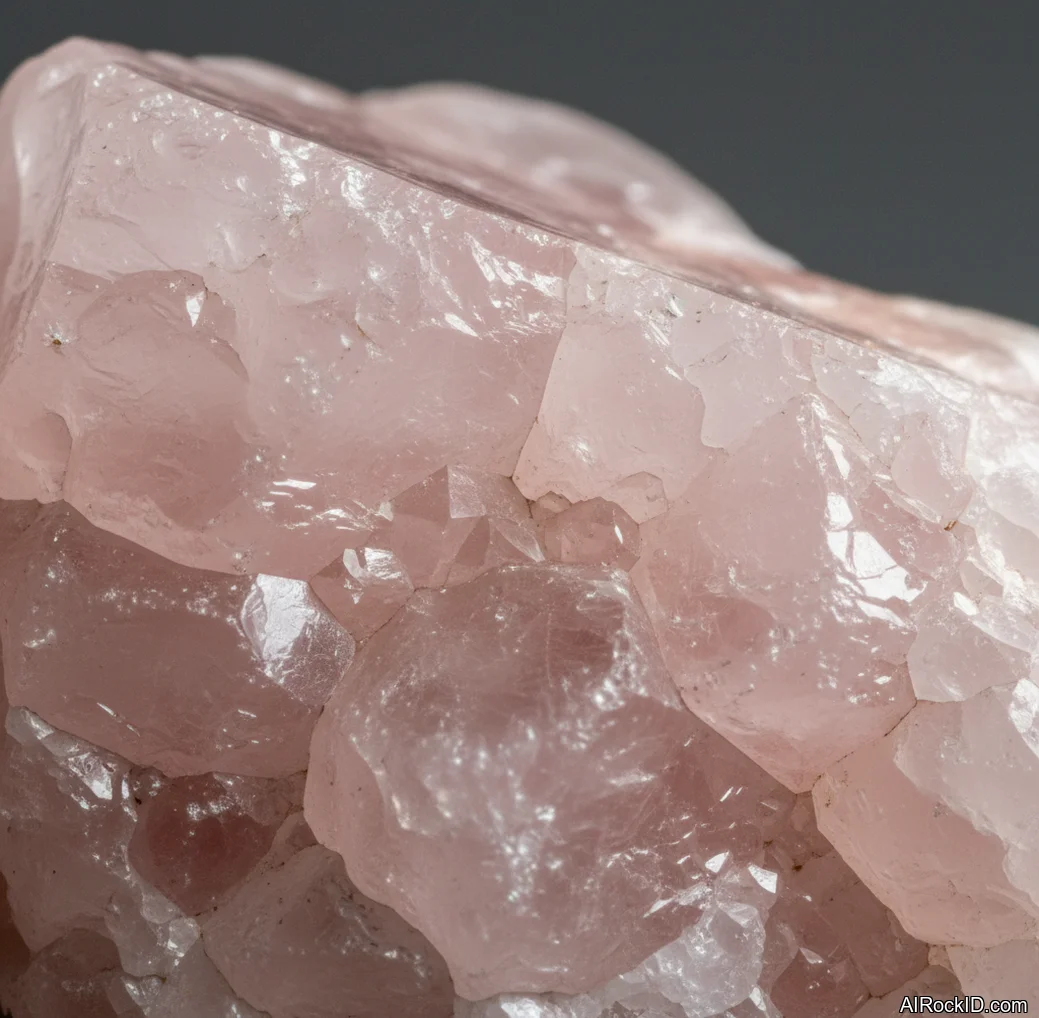
- Rose Quartz: Rose quartz is usually softer, more cloudy, and less brilliant than faceted pink topaz.
- Pink Tourmaline: Pink tourmaline can show stronger pleochroism and different crystal form than topaz.
- Morganite: Morganite is a pink beryl with lower hardness and a typically softer peach-pink tone.
Pink Topaz vs. Common Pink Lookalikes
| Stone | Typical hardness | Key separation clue | Common issue |
|---|---|---|---|
| Pink Topaz | Mohs 8 | High brilliance with topaz optical properties | Treatment or color origin may need disclosure |
| Pink Sapphire | Mohs 9 | Harder corundum with different refractive index | Often more expensive at fine quality |
| Rose Quartz | Mohs 7 | Often cloudy or milky rather than sharply brilliant | May be mistaken for pale pink topaz in beads |
| Pink Tourmaline | Mohs 7–7.5 | Pleochroism and tourmaline crystal habit | Color range overlaps with pink topaz |
| Morganite | Mohs 7.5–8 | Beryl properties and often peach-pink color | Frequently confused in light pastel jewelry |
AI identification confidence
AI photo identification can be moderately helpful for separating pink topaz from cloudy rose quartz or obvious glass, especially when the image is clear and well lit. Confidence is lower for faceted gems because pink sapphire, pink tourmaline, morganite, and treated topaz can look similar in photos.
When AI gets it wrong
- The stone is faceted and mounted, hiding crystal shape, inclusions, and edges
- Lighting makes a pale peach, purple, or red stone appear pink
- The image lacks scale, multiple angles, or focus on the stone surface
- The gem is treated, synthetic, or an imitation with a convincing color
Final recommendation
For buying pink topaz, prioritize transparent disclosure about natural or treated color, clear return terms, and any available gem report for higher-value stones. For identification, use photo-based tools for initial screening and rely on gemological testing for confirmation.
How to Check Pink Topaz Authenticity
Authenticity checks for pink topaz usually start with seller disclosure, visual inspection, and basic gem testing. A gemologist may measure refractive index, specific gravity, optic character, and inclusions to separate topaz from sapphire, tourmaline, beryl, quartz, or glass. Color treatment should be disclosed when known, because appearance alone may not reveal whether the pink color is natural or enhanced.
Pink Topaz Buying Notes
When buying pink topaz, ask whether the stone is natural, treated, synthetic, or represented only by trade name. Strong pink color, good clarity, precision cutting, and larger carat weight generally affect price, but documentation becomes more important as value increases. For jewelry, inspect the setting because topaz has good hardness but can still chip along cleavage if struck.
Photo Tips for Identifying Pink Topaz
Clear identification photos should show the stone in daylight-equivalent lighting, on a neutral background, and from several angles. Include one close-up, one image with scale, and one view of the back or pavilion if the stone is faceted. Avoid heavy filters or colored lighting because they can change the apparent pink tone.
What Is Pink Topaz?
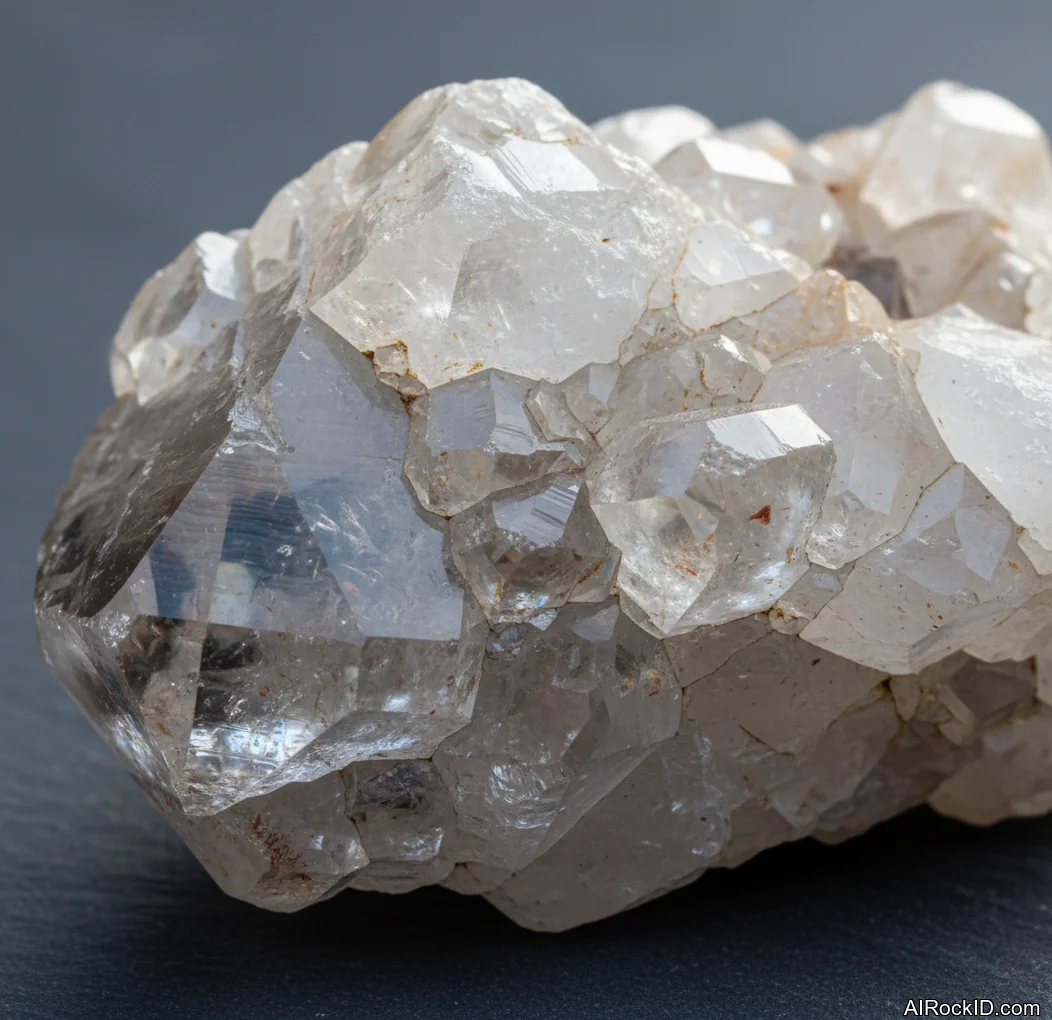
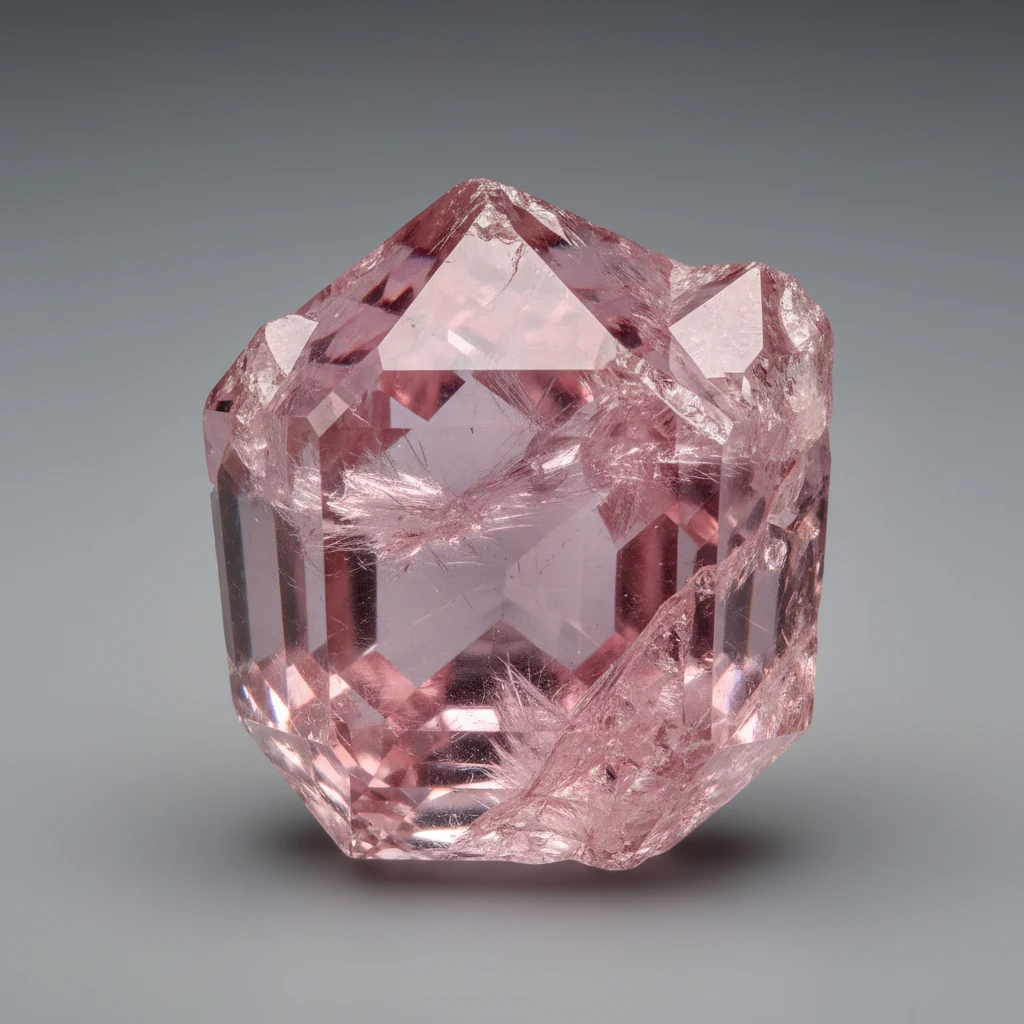
Pink Topaz is a rare, pink variety of the mineral topaz, valued as a precious gemstone for its delicate color and durability. In the hand, a good specimen reads clean and glassy: transparent, bright, and ranging from light pink to rose or vivid pink.
Collectors look for its very hard Mohs 8 scratch resistance, vitreous luster, and attractive color saturation. Its chemical formula is Al2SiO4(F,OH)2, placing it in the silicate class, and its listed density is 3.49 g/cm3. Pink Topaz is non-magnetic, colorless in streak, and typically shows a conchoidal fracture.
Origin & History
The name topaz comes from the Sanskrit word “tapaz,” meaning fire, while Pink Topaz refers specifically to the pink-colored variety. It was first described in the early 19th century, and today its appeal rests on the contrast between soft rose color and the crisp brilliance expected from topaz.
In a collection tray, Pink Topaz often sits between beauty and scarcity: not just a pretty pink gem, but a rare topaz variety. For label checking and locality research, collectors often compare specimen information with mineral references such as mindat.org, especially when a stone is sold with country or mine-area provenance.
Where Is Pink Topaz Found?
Pink Topaz is found in Brazil, Nigeria, and Afghanistan, with Brazil and parts of Africa noted as the most common sources. Important listed localities include Minas Gerais in Brazil, Kogi in Nigeria, and Paktia in Afghanistan.
Formation
Pink Topaz forms in igneous rocks and is typically found in granite and rhyolite deposits. That origin gives the gem a hard, durable character; when cut or polished, it can show a clean glassy face and transparent body color.
As a silicate with the formula Al2SiO4(F,OH)2, Pink Topaz contains aluminum, silicon, oxygen, and fluorine, with iron and manganese listed as common impurities. In field and collection practice, its igneous association is useful context, but identification still depends on observable features such as hardness, luster, transparency, and crystal structure.
How to Identify Pink Topaz
Identify Pink Topaz by its light to vivid pink color, transparent diaphaneity, and vitreous luster. It belongs to the orthorhombic crystal system, has Mohs hardness 8, and should scratch glass when a hardness test is appropriate and safe for the specimen.
A collector should also note its colorless streak, non-magnetic response, conchoidal fracture, and listed refractive index of 1.61–1.63. The optical character is biaxial, with no pleochroism and no birefringence listed in the provided data. Because jewelry stones can be valuable, avoid destructive tests on finished gems.
Properties of Pink Topaz
Physical Properties
| Crystal System | Orthorhombic |
| Hardness (Mohs) | 8 (Very Hard (7.5-10)) |
| Density | 3.49 g/cm3 |
| Luster | Vitreous |
| Diaphaneity | Transparent |
| Fracture | Conchoidal |
| Streak | Colorless |
| Magnetism | Non-magnetic |
| Colors | Pink, Light Pink, Rose |
Chemical Properties
| Classification | Silicate |
| Formula | Al2SiO4(F,OH)2 |
| Elements | Al, Si, O, F |
| Common Impurities | Fe, Mn |
Optical Properties
| Refractive Index | 1.61-1.63 |
| Birefringence | None |
| Pleochroism | None |
| Optical Character | Biaxial |
Pink Topaz Health & Safety
There are no significant health risks associated with handling pink topaz.
Pink Topaz Value & Price
Price Range
Rough/Tumbled: $50 - $200 per specimen
Cut/Polished: $100 - $500 per carat
Price is affected by color intensity, clarity, and size.
Durability
Very Durable — Scratch resistance: Excellent, Toughness: Good
Pink topaz is stable under normal conditions.
How to Care for Pink Topaz
Use & Storage
Store in a soft pouch or lined box to prevent scratches.
Cleaning
Clean using a soft cloth and mild soap solution. Avoid harsh chemicals.
Cleanse & Charge
It can be cleansed with water or by placing it in sunlight.
Placement
It is best placed in areas with good energy flow.
Caution
Avoid sudden temperature changes to prevent fractures.
Works Well With
Pink Topaz Meaning & Healing Properties
Pink Topaz is believed to support love, emotional healing, joy, compassion, trust, inner peace, growth, transformation, insight, and meditation. In crystal practice, its soft pink color makes it a natural Heart chakra stone, especially for people who like a bright, glassy gem rather than a waxy or opaque mineral.
These meanings are cultural and spiritual, not medical claims, and Pink Topaz is not a substitute for medical treatment. It is associated with Venus, the elements Fire and Air, and the zodiac signs Leo and Sagittarius. For energy work, it pairs well with clear quartz, amethyst, and citrine.
Identify Pink Topaz from a photo
Compare Pink Topaz traits, care tips, value clues, and common lookalikes with a clear photo.
Common mistakes
- Assuming every pink transparent gemstone is pink topaz
- Treating color as proof of natural origin without seller disclosure or testing
- Ignoring the possibility of pink sapphire, tourmaline, morganite, quartz, or glass
- Using a scratch test on finished jewelry, which can damage the stone or setting
- Buying higher-value pink topaz without a return policy or gemological report