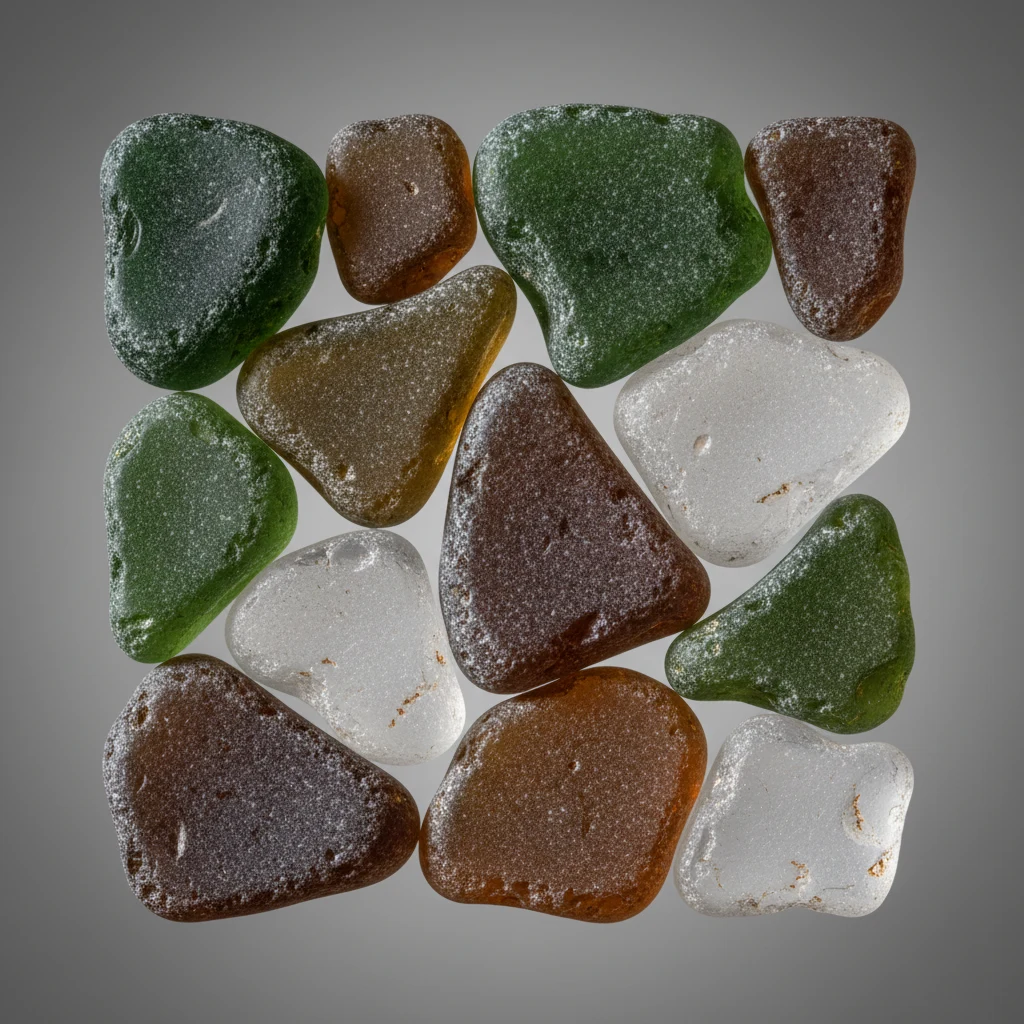
Sea Glass


Quick answer: Sea glass is weathered glass shaped by water, sand, and shoreline movement rather than a naturally formed mineral crystal. It is commonly identified by its frosted surface, rounded edges, curved or bottle-like shapes, and hardness around Mohs 5-6.
AI Rock ID can help compare sea glass with similar shoreline finds by analyzing shape, luster, color, and surface texture from a clear photo. RockIdentifier.io provides sea glass identification context alongside natural stones, slag glass, and other glassy materials that are often confused with it.
Good fit
- Collectors who enjoy beachcombing and shoreline finds
- Jewelry makers looking for naturally rounded, frosted glass pieces
- Beginners learning to separate man-made glass from natural minerals
- People interested in color rarity, bottle history, and coastal collecting
Not a good fit
- Anyone seeking a natural crystal or mineral specimen
- Collectors who need gem-grade transparency or faceted material
- Projects that require sharp, flat, or freshly cut glass edges
- Buyers who cannot verify whether pieces are naturally weathered or artificially tumbled
Most commonly confused with
- Obsidian: Obsidian is natural volcanic glass and usually has sharper conchoidal breaks, while sea glass is man-made glass rounded by shoreline abrasion.
- Quartz: Quartz is harder at Mohs 7 and typically shows a natural glassy luster, while sea glass is softer and commonly has a frosted, etched surface.
- Fluorite: Fluorite often shows crystal cleavage and lower hardness near Mohs 4, while sea glass lacks crystal structure and is usually rounded.
- Slag Glass: Slag glass is industrial byproduct glass that may show bubbles and swirls, while sea glass is identified mainly by shoreline-worn texture and edges.
Sea Glass vs Similar Shoreline Finds
| Material | Key Clue | Main Difference |
|---|---|---|
| Sea glass | Frosted surface with rounded edges | Weathered man-made glass |
| Obsidian | Glossy black or dark volcanic glass | Natural volcanic origin, often sharper breaks |
| Quartz pebble | Waxy to glassy mineral luster | Harder and crystalline, not etched glass |
| Slag glass | Bubbles, swirls, or industrial colors | May be tumbled but not necessarily beach-weathered |
| Plastic fragment | Very light weight and softer feel | Scratches and flexes more easily than glass |
AI identification confidence
AI identification is often reasonably confident when sea glass has a clear frosted surface, rounded edges, and bottle-like curvature visible in the photo. Confidence is lower for very small pieces, wet pieces that look glossy, unusually colored glass, or objects photographed without scale.
When AI gets it wrong
- Wet sea glass may appear too shiny and be mistaken for obsidian, slag glass, or polished glass.
- Small white or clear pieces can resemble quartz, chalcedony, or worn shell fragments.
- Artificially tumbled glass can look similar to beach-worn sea glass in photos.
- Dark brown, black, or olive pieces may be hard to separate from natural volcanic glass without close texture and edge views.
Final recommendation
For identification, use dry photos in natural light and include close-ups of the surface, edge rounding, and any curvature or bubbles. For buying, favor sellers who disclose whether pieces are naturally beach-found, river-found, or machine-tumbled.
How to Tell Natural Sea Glass from Tumbled Glass
Naturally weathered sea glass usually has uneven frosting, softened edges, and tiny surface pits from sand and wave action. Machine-tumbled glass may look uniformly matte, have overly even edges, or appear in large batches of similar size and color. Seller descriptions such as “tumbled,” “recycled glass,” or “craft glass” usually indicate it was processed rather than naturally beach-worn.
Photo Tips for Sea Glass Identification
Photograph sea glass dry rather than wet because water can hide the frosted surface that helps separate it from glossy glass or minerals. Place the piece beside a coin or ruler for scale, and take one close-up of the edge and one image against a plain background. Natural daylight helps show subtle colors such as pale aqua, seafoam green, amber, and lavender.
Buying Sea Glass Online
Authentic sea glass listings should state the source type, such as beach-found, river-found, lake-found, or tumbled recycled glass. Color rarity affects price, with common clear, brown, and green pieces usually valued less than cobalt blue, red, orange, yellow, or purple pieces. Be cautious with large lots of identical shapes or colors, because they may be craft glass rather than naturally weathered finds.
What Is Sea Glass?
Sea Glass is weathered glass found along coastlines, recognized by its smooth edges and frosted, cloudy surface. In the hand, a good piece feels softened rather than sharp, with the ocean-worn skin collectors look for: matte to frosted, rounded, and often translucent to opaque. Common colors include green, brown, and clear, though individual pieces vary in tone and surface texture.
In this guide, Sea Glass is treated as an amorphous silicate material with a listed formula of SiO2, Mohs hardness of 5-6, and density of 2.4-2.6 g/cm3. It has vitreous luster as glass, but weathering usually gives beach-found pieces a frosted or matte look. It is non-magnetic, colorless in streak, isotropic, and can show conchoidal fracture if broken.
Origin & History
Sea Glass gets its name from its discovery on shores, and the term has been in use since the early 20th century. The name is practical and collector-made: it describes glass that has spent enough time in ocean water and sand to lose its sharpness and gain a soft, frosted surface. A beachcomber often identifies it first by touch, because true shoreline-worn pieces feel rounded instead of freshly broken.
Historically, Sea Glass is valued less like a formal gemstone and more like a coastal collectible with aesthetic and cultural appeal. Its popularity is high because pieces are accessible, tactile, and visually varied. For cataloging language around amorphous silicate materials, collectors may compare general mineral and material terminology with mindat.org, while still noting Sea Glass as weathered glass rather than a crystalline mineral specimen.
Where Is Sea Glass Found?
Sea Glass is most commonly found on beaches worldwide, especially along coastlines where glass has been tumbled by ocean water and sand. Reported countries include the United States, Canada, and the United Kingdom. Notable localities include Glass Beach, California, USA; Seaham Beach, England; and Hawaii, USA.
Formation
Sea Glass forms through the weathering of glass in the ocean over time. Ocean water and sand gradually soften sharp broken edges and create the frosted or matte surface collectors recognize. The result is still glass, but its surface has been changed by coastal wear into a rounded, cloudy specimen suitable for display, study, or hand collection.
This formation process also explains its identification traits: smooth edges, a cloudy surface, and sometimes visible bubbles that can point to its glass origin. Sea Glass is amorphous rather than crystalline, with no birefringence or pleochroism and an optical character described as isotropic. Its listed refractive index is 1.5, and its durability is moderate: stable in normal handling, but able to chip or break under stress.
How to Identify Sea Glass
Identify Sea Glass by its rounded edges, frosted or matte luster, and cloudy surface. Common pieces are green, brown, or clear, and they may be translucent to opaque. When you roll a piece between your fingers, it should feel worn and softened rather than sharp; that tactile smoothness is one of the clearest field signs.
For confirmation, note that Sea Glass is amorphous, non-magnetic, and has a colorless streak. It has Mohs hardness of 5-6, fair scratch resistance, and good toughness, though it can chip or break under stress. Bubbles within a piece can indicate its origin as glass, while conchoidal fracture may be visible on damaged or broken edges.
Properties of Sea Glass
Physical Properties
| Crystal System | Amorphous |
| Hardness (Mohs) | 5-6 (Medium (4-6)) |
| Density | 2.4-2.6 g/cm3 |
| Luster | Vitreous |
| Diaphaneity | Translucent to Opaque |
| Fracture | Conchoidal |
| Streak | Colorless |
| Magnetism | Non-magnetic |
| Colors | Green, Brown, Clear |
Chemical Properties
| Classification | Silicate |
| Formula | SiO2 |
| Elements | Si, O |
| Common Impurities | Fe, Ca |
Optical Properties
| Refractive Index | 1.5 |
| Birefringence | None |
| Pleochroism | None |
| Optical Character | Isotropic |
Sea Glass Health & Safety
There are no significant health risks associated with handling sea glass.
Sea Glass Value & Price
Price Range
Rough/Tumbled: $1 - $10 per specimen
Cut/Polished:
Price can vary based on color, size, and smoothness.
Durability
Moderate — Scratch resistance: Fair, Toughness: Good
Sea glass is relatively stable but can chip or break under stress.
How to Care for Sea Glass
Use & Storage
Store in a soft pouch or box to prevent scratches.
Cleaning
Wash with mild soap and water. Rinse thoroughly and dry with a soft cloth.
Cleanse & Charge
Place in sunlight or moonlight for cleansing.
Placement
Display in a safe location away from heavy objects.
Caution
Avoid exposing sea glass to harsh chemicals.
Works Well With
Sea Glass Meaning & Healing Properties
Sea Glass is traditionally associated with calmness, emotional healing, grounding, and inner peace. In crystal practice, it is linked with the Heart chakra, the Water element, the Moon, and the zodiac signs Cancer and Pisces. Its appeal comes from the feel of something once sharp made smooth, which makes it a natural symbol for emotional softening and recovery.
Use Sea Glass as a pocket piece, meditation object, or gentle display stone, while remembering that it is not a substitute for medical treatment. It is safe to handle and safe in water, with no significant health risks listed. For care, wash with mild soap and water, rinse thoroughly, dry with a soft cloth, and store in a soft pouch or box away from harsh chemicals and heavy objects.
Identify Sea Glass from a photo
Compare Sea Glass traits, care tips, value clues, and common lookalikes with a clear photo.
Common mistakes
- Assuming every frosted glass piece found near water is old; some may be recent bottle glass or tumbled craft glass.
- Judging authenticity from color alone instead of checking edge rounding, surface texture, and shape.
- Photographing pieces while wet, which can hide frosting and reduce identification accuracy.
- Confusing natural rarity with high value; size, color, condition, provenance, and demand all matter.
- Calling sea glass a crystal; it is amorphous glass, not a crystalline mineral.