Sterling Silver


Quick answer: Sterling silver is a silver alloy made of 92.5% silver and 7.5% other metals, usually copper. It is often identified by a 925, .925, or STERLING stamp, but stamps should be checked alongside weight, color, magnetism, and wear patterns.
AI Rock ID can help visually compare sterling silver with similar-looking metals, plated items, and tarnished silver-colored materials. RockIdentifier.io provides reference information for identification, care, and comparison, but hallmark verification or metal testing may still be needed for valuable pieces.
Good fit
- People identifying jewelry, flatware, coins, or small decorative objects marked 925
- Collectors comparing sterling silver with silver plate, stainless steel, or white metal alloys
- Buyers checking basic authenticity clues before purchasing secondhand silver
- Users who want a quick visual comparison of tarnish, luster, and stamped marks
Not a good fit
- Confirming precious metal content for resale without professional testing
- Identifying unmarked objects by appearance alone
- Assuming all silver-colored jewelry is sterling silver
- Using silver objects for health or medical purposes
Most commonly confused with
- Silver Plate: Silver plate has a thin silver coating over a base metal and may show copper, brass, or nickel-colored metal where the surface is worn.
- Fine Silver: Fine silver is typically 99.9% silver and is softer than sterling silver, which is alloyed for added durability.
- Stainless Steel: Stainless steel is usually harder, less prone to black tarnish, and often feels lighter or more rigid in jewelry forms.
- Nickel Silver: Nickel silver contains no silver; it is a copper-nickel-zinc alloy that can resemble silver but lacks precious silver content.
Sterling Silver vs Similar Silver-Colored Materials
| Material | Typical Mark | Key Difference | Common Clue |
|---|---|---|---|
| Sterling silver | 925, .925, STERLING | 92.5% silver alloy | Develops dark silver sulfide tarnish |
| Silver plate | EPNS, Silverplate, Plate | Thin silver layer over base metal | Base metal may show through worn areas |
| Fine silver | 999, .999, Fine | Higher silver content than sterling | Softer and more easily bent or scratched |
| Stainless steel | Steel, Stainless, 316L | Iron-based alloy, not precious silver | Usually resists tarnish and scratches better |
| Nickel silver | Nickel Silver, Alpaca | Contains no actual silver | May look gray-white but lacks a 925 mark |
AI identification confidence
AI identification is more reliable when a sterling silver item has clear hallmarks, visible tarnish, and multiple photos showing color, edges, and worn areas. Confidence is lower for polished, unmarked, plated, or rhodium-coated items because many silver-colored metals look similar in photos.
When AI gets it wrong
- A silver-plated object has a bright surface that resembles solid sterling silver
- A 925 stamp is fake, worn, or added to a non-sterling item
- Rhodium-plated sterling looks similar to white gold or stainless steel
- Lighting, reflections, or heavy tarnish obscure the true color and surface texture
Final recommendation
Use visible marks, surface wear, magnet response, and item weight together when evaluating sterling silver. For valuable jewelry, antiques, or resale items, confirm identity with a jeweler, hallmark reference, or metal test.
How to Check Sterling Silver Authenticity
Start by looking for marks such as 925, .925, STER, STERLING, or a recognized maker’s mark. A strong attraction to a magnet is a warning sign because sterling silver is not strongly magnetic, although clasps, springs, or added components may contain other metals. Check worn edges and high-contact areas for exposed yellow, coppery, or gray base metal, which can indicate plating.
Common Sterling Silver Stamps and Marks
The most common sterling silver mark is 925, meaning 925 parts silver per 1,000 parts alloy. Older or regional items may use STERLING, STER, lion passant symbols, assay marks, or maker’s marks instead of a simple number. A stamp alone is not absolute proof, because counterfeit marks can appear on plated or base-metal items.
Buying Sterling Silver Secondhand
When buying secondhand sterling silver, ask for clear photos of hallmarks, clasps, backs, solder joints, and any worn areas. Compare the seller’s description with the stamp, item weight, and visible condition. Be cautious with vague terms such as silver tone, German silver, alpaca, or plated, because these usually do not mean solid sterling silver.
What Is Sterling Silver?
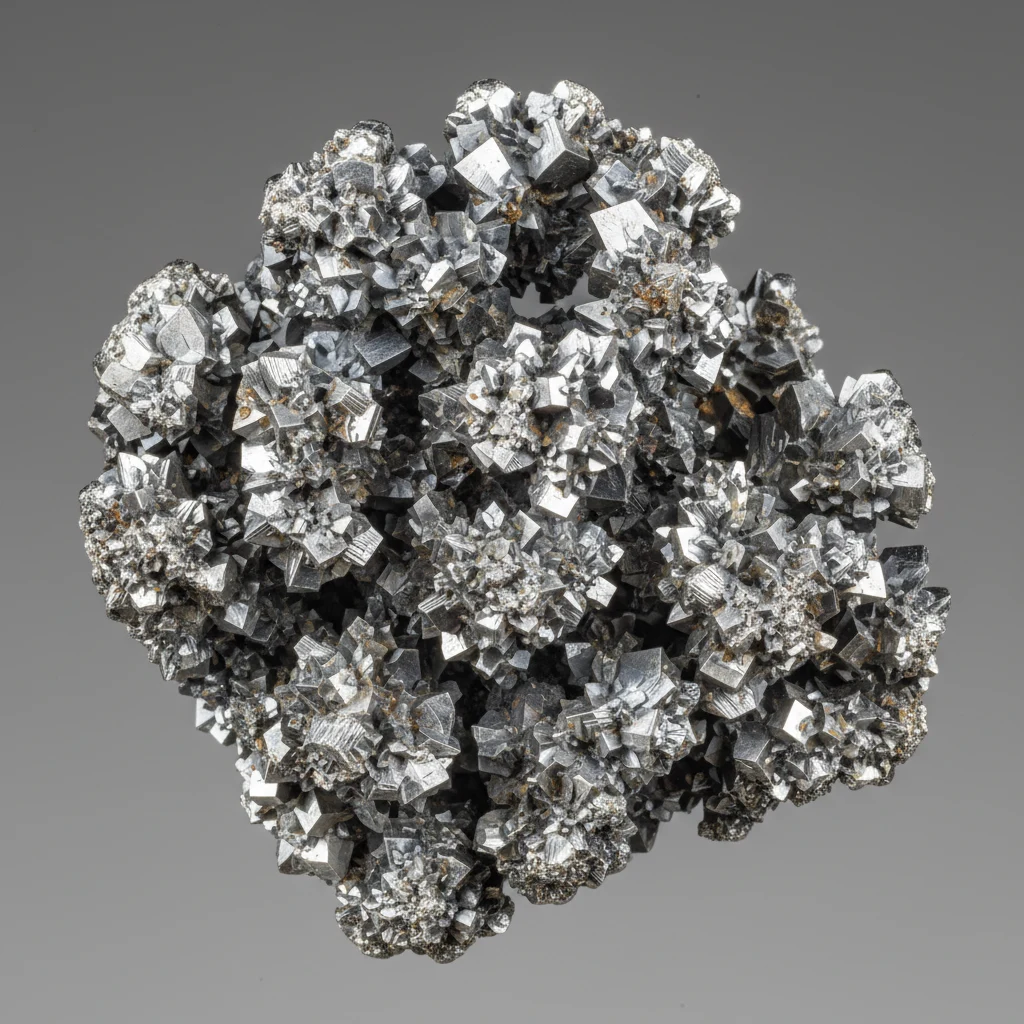
Sterling Silver is a silver alloy made of 92.5% silver and 7.5% other metals, usually copper. In the hand it feels dense, smooth, and cool, with a bright metallic silver color and a shiny luster that collectors immediately recognize from jewelry and decorative pieces.
With a Mohs hardness of 2.5-3, sterling silver is very soft compared with many gemstones, so it can take surface wear and fine marks during use. It is opaque, non-magnetic, metallic in luster, and valued as a practical, beautiful silver alloy rather than a rare mineral specimen.
Origin & History
The name Sterling Silver comes from the long-used term “sterling,” which likely traces to the Old English “steorling,” meaning little star. The material has been used since the 12th century, and its lasting appeal comes from that balance of bright silver appearance with improved durability from alloying.
For mineral context, mindat.org is a useful reference point for silver as a mineral, while sterling silver itself is made by combining silver with other metals. In collector language, the important distinction is simple: pure silver is the base metal, and sterling silver is the worked alloy marked by its 92.5% silver content.
Where Is Sterling Silver Found?
Sterling Silver is found most commonly in finished jewelry and decorative items worldwide. Notable places associated with sterling silver work include Taxco in Guerrero, Mexico; Florence in Tuscany, Italy; and Los Angeles, California, USA.
Formation
Sterling Silver forms by alloying pure silver with other metals to improve durability. The standard composition is 92.5% silver and 7.5% other metals, usually copper, with possible common impurities listed as zinc and nickel.
This alloying is what gives sterling silver its practical character: it keeps the bright metallic silver appearance while making the material better suited for wear and crafted use. Its chemical formula is given as Ag + Cu, and its chemical classification is metal alloy.
How to Identify Sterling Silver
Identify Sterling Silver first by its bright metallic silver color, shiny metallic luster, and the presence of a “925” stamp. That mark indicates the 92.5% silver standard and is one of the most practical field checks on jewelry and small decorative pieces.
Sterling silver is non-magnetic, so a magnet should not attract it; this helps separate it from some base-metal lookalikes. Its streak is silver, its fracture is hackly, its diaphaneity is opaque, and its listed crystal system is cubic, with isotropic optical character and no refractive index, birefringence, or pleochroism.
Properties of Sterling Silver
Physical Properties
| Crystal System | Cubic |
| Hardness (Mohs) | 2.5-3 (Very Soft (1-2)) |
| Density | 10.49 g/cm3 |
| Luster | Metallic |
| Diaphaneity | Opaque |
| Fracture | Hackly |
| Streak | silver |
| Magnetism | Non-magnetic |
| Colors | Silver |
Chemical Properties
| Classification | Metal alloy |
| Formula | Ag + Cu |
| Elements | Ag, Cu |
| Common Impurities | Zn, Ni |
Optical Properties
| Refractive Index | None |
| Birefringence | None |
| Pleochroism | None |
| Optical Character | Isotropic |
Sterling Silver Health & Safety
There are no significant health risks associated with handling sterling silver.
Sterling Silver Value & Price
Price Range
Rough/Tumbled: $20 - $50 per ounce
Cut/Polished:
Price is affected by silver market value and craftsmanship.
Durability
Moderate — Scratch resistance: Fair, Toughness: Good
It can tarnish over time but is generally stable.
How to Care for Sterling Silver
Use & Storage
Store in a dry place, preferably in a cloth pouch.
Cleaning
Clean with a soft cloth and silver polish. Avoid abrasive cleaners.
Cleanse & Charge
You can cleanse it with water and charge it under the moonlight.
Placement
Keep away from harsh chemicals and extreme humidity.
Caution
Be cautious of exposure to sulfur, which can cause tarnishing.
Works Well With
Sterling Silver Meaning & Healing Properties
In traditional crystal and metal symbolism, Sterling Silver is believed to support emotional balance, clarity, and protection. Practitioners often use it as a calm, reflective companion for grounding and mental focus, especially because its associations include the Root and Crown chakras.
Sterling silver is linked with Taurus and Libra, the Moon, and the Earth and Water elements. It is safe to handle and safe in water, though it can tarnish over time; for care, clean it with a soft cloth and silver polish, avoid abrasive cleaners, and keep it away from sulfur, harsh chemicals, and extreme humidity.
Identify Sterling Silver from a photo
Compare Sterling Silver traits, care tips, value clues, and common lookalikes with a clear photo.
Common mistakes
- Assuming any 925 stamp guarantees authenticity without checking the rest of the item
- Confusing silver plate with solid sterling silver when the surface is still shiny
- Using magnet response as the only test for silver content
- Over-polishing antique silver and reducing patina or collectible value
- Mistaking nickel silver, alpaca, or German silver for real silver
- Ignoring clasps, chains, or replacement parts that may be made from different metals