Turquoise


Quick answer: Turquoise can be difficult to identify from photos because many blue-green stones, dyed materials, and composites look similar. Key clues include its opaque body, blue-to-green color, waxy to dull luster, and possible brown, black, or tan matrix veining.
AI Rock ID can help compare turquoise-like stones by analyzing color, opacity, luster, and visible matrix patterns in a photo. RockIdentifier.io provides crystal identification support, but treated, dyed, and imitation turquoise may still require hands-on testing or seller documentation.
Good fit
- Collectors who want an opaque blue-to-green gemstone with visible natural variation
- Jewelry buyers who prefer cabochons, beads, or inlay over faceted stones
- People comparing natural turquoise with stabilized, dyed, or composite material
- Beginners learning to recognize matrix veining and waxy luster in minerals
Not a good fit
- Anyone needing a highly scratch-resistant everyday ring stone
- Buyers who want a transparent or sparkling faceted gemstone
- Situations where exposure to perfumes, oils, water, or chemicals is frequent
- Shoppers who cannot verify whether a piece is natural, stabilized, dyed, or imitation
Most commonly confused with
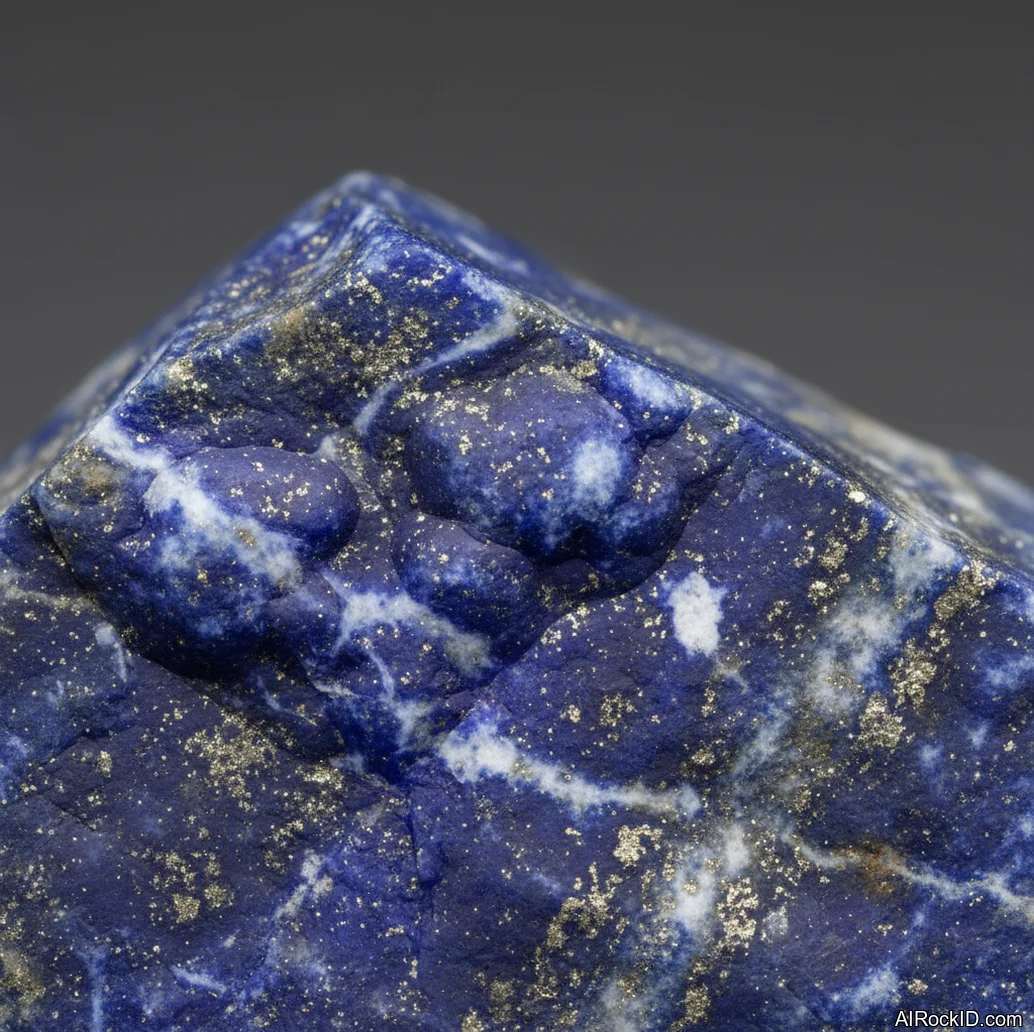
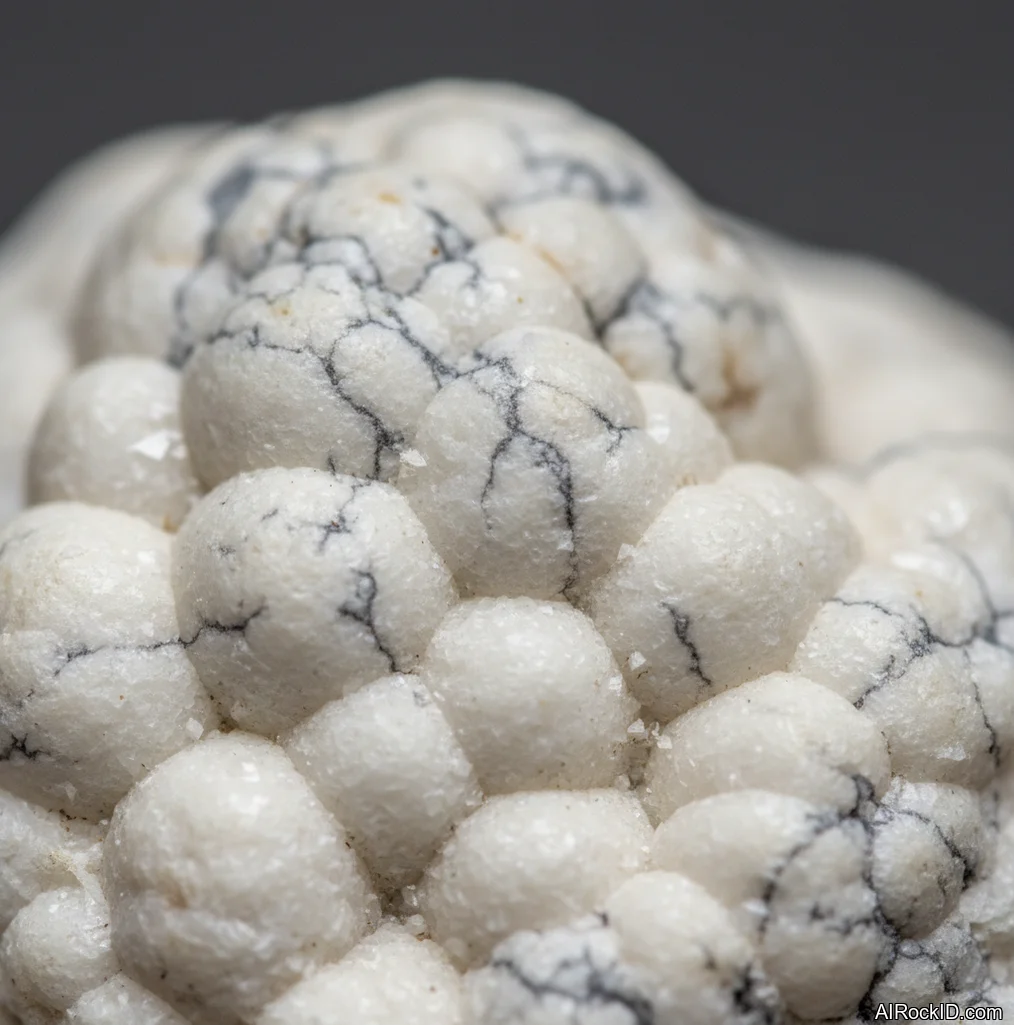
- Howlite: Naturally white or gray with veining and commonly dyed blue to imitate turquoise.
- Magnesite: Often porous and easily dyed; blue-dyed magnesite may look similar but is usually not true turquoise.
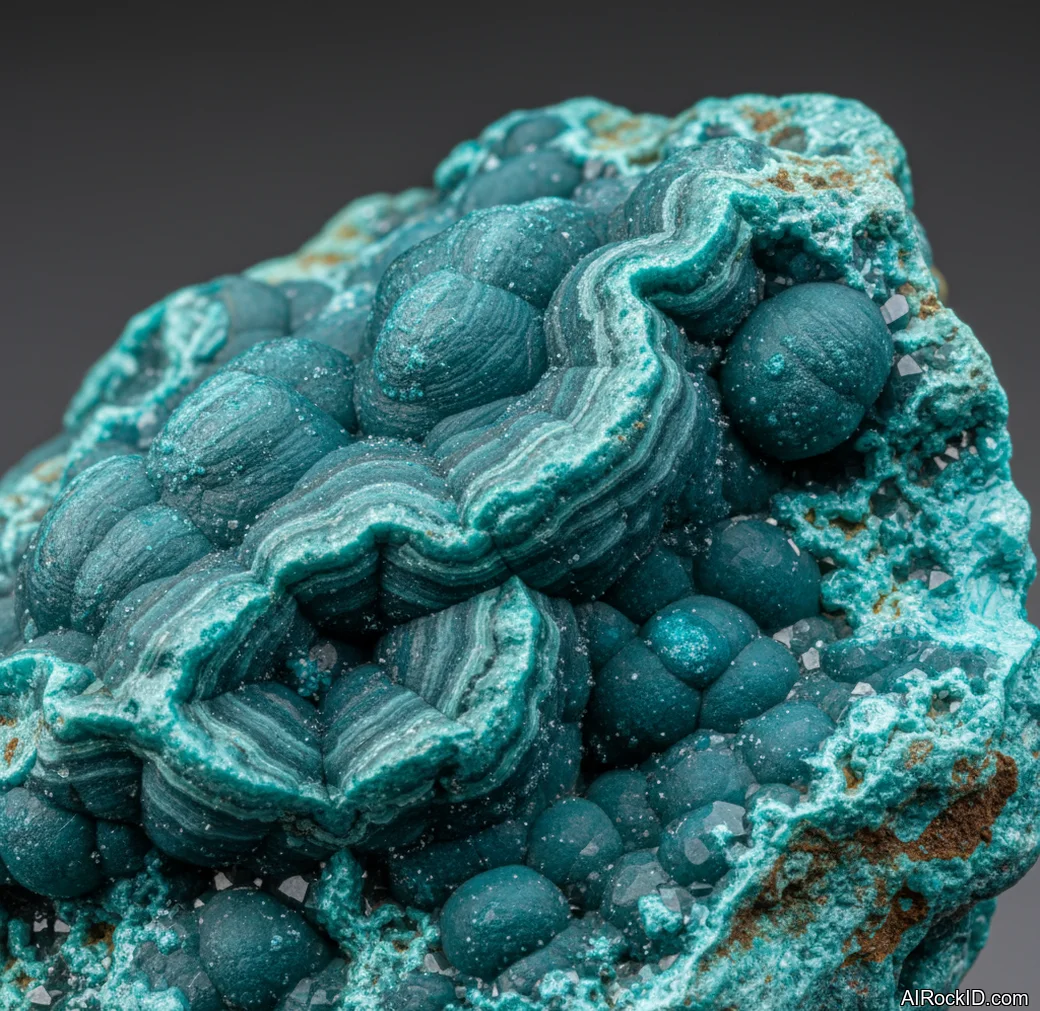
- Chrysocolla: Can be blue-green like turquoise, but often has softer, more irregular color patches and may occur with quartz or copper minerals.
- Variscite: Usually greener and lacks copper-blue tones, though some specimens with matrix can resemble green turquoise.
Turquoise vs Common Lookalikes
| Material | Typical Clue | Common Issue |
|---|---|---|
| Turquoise | Opaque blue to green, waxy luster, possible natural matrix | May be stabilized or treated |
| Dyed howlite | Strong dark veining on a white mineral dyed bright blue | Color may concentrate in cracks |
| Dyed magnesite | Porous texture and often very even blue-green dye | Frequently sold under vague trade names |
| Chrysocolla | Blue-green copper mineral with softer-looking patches | Can be mixed with quartz or other minerals |
| Variscite | Green to yellow-green phosphate with matrix | May be mislabeled as green turquoise |
AI identification confidence
AI identification confidence for turquoise is usually moderate from a clear photo, especially when color, opacity, luster, and matrix are visible. Confidence drops when the stone is polished, dyed, stabilized, compressed, or photographed under strong color-correcting light.
When AI gets it wrong
- Dyed howlite or magnesite is photographed as a polished bead or cabochon without scale or untreated surfaces.
- Lighting makes green turquoise appear bluer or pale blue material appear more saturated.
- Composite or reconstituted turquoise has natural-looking matrix patterns that are hard to separate visually.
- A close-up image hides weight, texture, backing material, drill holes, or seller treatment details.
Final recommendation
For the most reliable purchase, ask whether the turquoise is natural, stabilized, dyed, reconstituted, or imitation and request clear photos in natural light. Natural untreated turquoise is less common than treated material, so transparency about treatment is often more important than color alone.
Natural, Stabilized, and Imitation Turquoise
Natural turquoise is turquoise that has not been dyed or impregnated to improve durability or color. Stabilized turquoise has been treated with resin or similar material to make porous stones harder and more suitable for jewelry. Reconstituted turquoise is made from turquoise fragments or powder bound together, while imitation turquoise may be dyed howlite, magnesite, plastic, glass, or another material.
How to Check Turquoise Authenticity When Buying
Request the exact treatment description rather than accepting broad terms such as genuine or natural-looking. Check whether the color appears unusually uniform, whether dye collects in cracks or drill holes, and whether the price matches the claimed rarity. Reputable sellers should clearly state origin, treatment, and whether the material is solid turquoise, backed, stabilized, or composite.
Photo Tips for Identifying Turquoise
Use natural daylight and photograph the stone on a neutral background to reduce color distortion. Include close-up views of the surface, matrix, edges, drill holes, and any unpolished areas. A scale reference and multiple angles can help distinguish turquoise from dyed porous minerals and composite material.
What Is Turquoise?
Turquoise is an opaque, hydrated copper-aluminum phosphate mineral. It forms as a secondary mineral in arid-zone weathering environments.
Hold a good cab in your hand and you notice it right away. It doesn’t feel icy like quartz. It’s more warm-ish, and there’s this slight grippy drag to it, especially when it’s got that classic waxy polish that almost feels like it’s been buffed with something softer than a hard wheel.
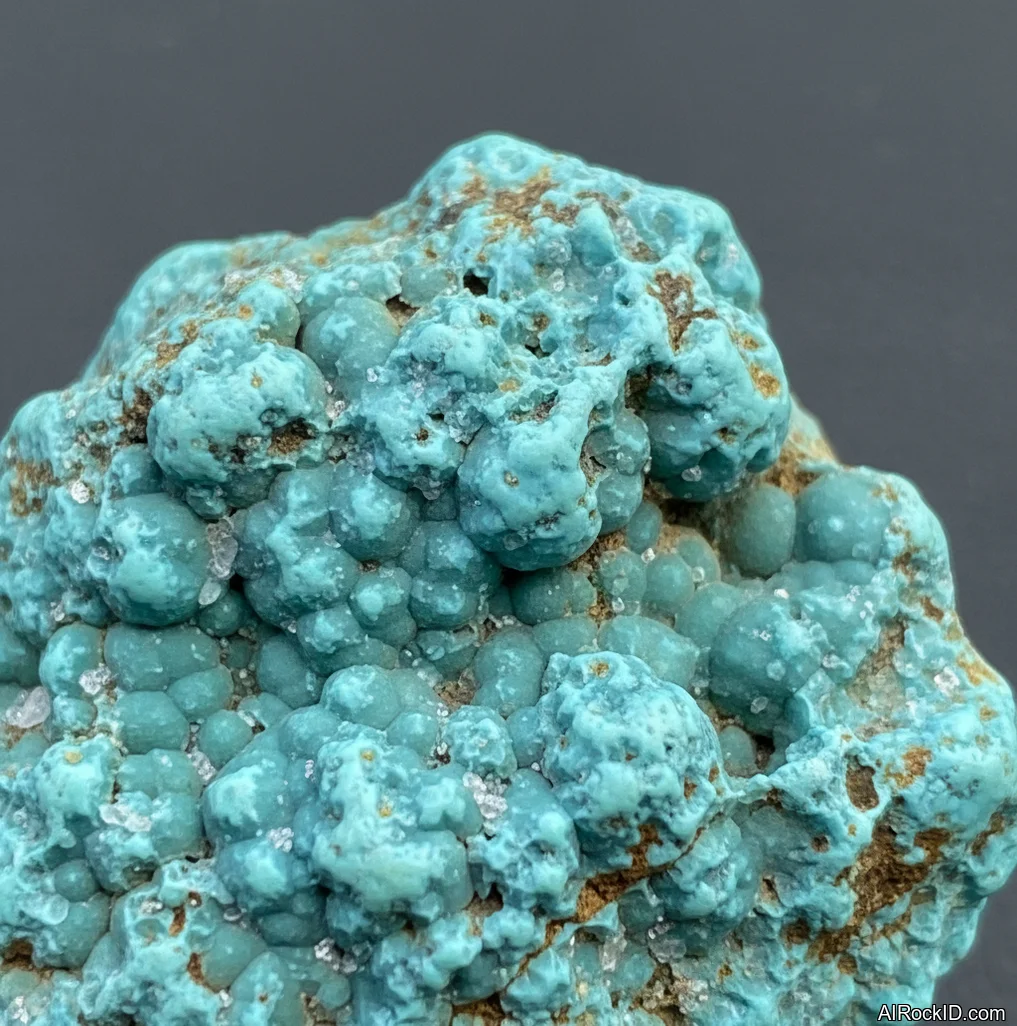
The color? It can run dead-sky blue, greenish blue, or straight green. And the look changes a lot depending on the matrix. Some stones have these thin, inky lines that remind me of pen scratches under a clear coat. Others come with big chocolate-brown blotches. Then you’ll see clean material that’s nearly one solid color, which always looks weirdly “simple” in a good way.
At a gem show table, turquoise is one of those stones I can pick out from ten feet away. But up close it can still trick you, because the market’s packed with treated material. Natural, untreated turquoise with tight, even color and no chalkiness is harder to find than most folks expect. And yeah, the price jump between “pretty” and “wow” is very real.
Origin & History
Turquoise gets its name from the French *pierre turquoise*, basically “Turkish stone.” That’s because a lot of it made its way into Europe through Turkish trade routes, even when the stuff was dug up somewhere else. And people were already cutting it, drilling it for beads, and trading it around for thousands of years, long before anyone sat down and gave it a neat scientific write-up.
As an official mineral species, turquoise was formally described in 1816 by A.G. Werner. But in the collector scene, you’ll still run into older trade names like “callais,” especially in old jewelry write-ups or dusty texts that tossed a bunch of similar blue-green materials into the same bucket.
Where Is Turquoise Found?
Most turquoise comes from arid to semi-arid regions where copper-rich rocks weather and fluids can move through fractures. In the US, Arizona and Nevada are the names you’ll hear the most at shows.
Formation
Thing is, you find turquoise where copper deposits have had enough time to rot and get reworked up near the surface. It’s mostly groundwater and oxygen doing slow, stubborn chemistry down in fractures, breccias, or whatever porous host rock is sitting there, letting the fluids sneak through.
Copper’s what gives you the blue. But aluminum and phosphate have to be around too, and you need the right pH plus the right kind of evaporation conditions so the mineral actually drops out and precipitates instead of just getting rinsed away and disappearing down the drain.
And no, you usually don’t get tidy “crystals” like you do with quartz. Most of what we handle is massive, microcrystalline material that’s packed into seams, nodules, and those little pockets that only show up once you’re cutting or grinding and the slurry’s turning that pale blue-green on the wheel.
So the matrix patterns collectors argue about? That’s basically the host rock and iron oxides that were hanging around when the turquoise formed, and then they get cut and polished right along with the turquoise. That’s it.
How to Identify Turquoise
Color: Turquoise ranges from sky blue to blue-green and green; iron tends to push it greener, and strong copper content leans it bluer. Many pieces show brown, black, or tan matrix veining from the host rock.
Luster: Waxy to dull in most specimens, with a soft polish in cabochons rather than a glassy shine.
Pick up an unbacked cab and run a fingernail across the back: chalky turquoise feels dry and can leave a little powder, while tighter material feels smoother and denser. The real test is heat and dye behavior, and I’ve seen plenty of “too perfect” spiderweb patterns that are dyed howlite or magnesite. Cheap versions can also feel oddly plastic-warm, and the color sometimes sits in pits and cracks in a way natural color doesn’t.
Common Look-Alikes
Turquoise is sometimes confused with these materials:
- Howlite (often dyed sky blue to mimic turquoise)
- Magnesite (dyed to copy the color and matrix)
- Chalk Turquoise (reconstituted fragments, stabilized and dyed)
- Glass imitations (usually too perfect and heavier)
- Variscite (sometimes sold as greenish turquoise, but softer)
- Plastic fakes (lightweight, usually warm to touch)
Market Cautions & Treatments
When AI Can Get This Wrong
AI photo ID stumbles on turquoise versus dyed howlite and magnesite, especially when the matrix is sparse or the polish is high-gloss. Photos can't show the subtle drag your finger gets on real turquoise or the way dye pools in cracks. The real test is scratching an inconspicuous spot (real turquoise is harder than howlite), or checking for that warm, waxy feel versus the slickness of glass.
Properties of Turquoise
Physical Properties
| Crystal System | Triclinic |
| Hardness (Mohs) | 5-6 (Medium (4-6)) |
| Density | 2.60-2.90 g/cm3 |
| Luster | Waxy |
| Diaphaneity | Opaque |
| Fracture | Uneven |
| Streak | Bluish white |
| Magnetism | Non-magnetic |
| Colors | Sky blue, Blue, Blue-green, Green, Greenish gray |
Chemical Properties
| Classification | Phosphates |
| Formula | CuAl6(PO4)4(OH)8·4H2O |
| Elements | Cu, Al, P, O, H |
| Common Impurities | Fe, Zn, Ca |
Optical Properties
| Refractive Index | 1.61-1.65 |
| Birefringence | 0.040 |
| Pleochroism | Weak |
| Optical Character | Biaxial |
Turquoise Health & Safety
Turquoise is safe to handle in normal everyday use. The real headaches come from treatments and basic jewelry care, not toxicity.
Safety Tips
Skip harsh cleaners or solvents. And if you’re grinding or sanding turquoise (or that matrix stuck to it), don’t breathe in the dust, ok?
Turquoise Value & Price
Price Range
Rough/Tumbled: $5 - $300 per piece
Cut/Polished: $1 - $50 per carat
Price mostly comes down to color (that clean, sky-blue stuff always costs more), plus hardness and how “tight” the stone feels in hand. And then there’s treatment: if it’s untreated, you’ll usually pay up. Mine names and solid, proven provenance can move the number a lot, especially with older US material.
Durability
Moderate — Scratch resistance: Fair, Toughness: Fair
Turquoise can dehydrate or discolor with heat, sunlight, skin oils, and chemicals, and softer chalky material can wear down fast in rings.
How to Care for Turquoise
Use & Storage
Store it away from harder gems and from direct sun, ideally in a soft pouch or a lined box. If it’s a sentimental piece, don’t leave it on a bathroom counter where hairspray and perfume live.
Cleaning
1) Wipe with a soft, dry cloth after wear. 2) If needed, use lukewarm water with a tiny drop of mild soap and a soft cloth. 3) Rinse quickly and dry fully; do not soak and do not use ultrasonic or steam cleaners.
Cleanse & Charge
For a gentle reset, use smoke, sound, or a dry resting spot overnight rather than saltwater. If you’re into pairing, set it near clear quartz for a short sit and keep it out of strong sun.
Placement
I keep turquoise where it won’t get oily or knocked around, like on a shelf or in a tray, not loose in a pocket with keys. In jewelry, pendants and earrings hold up better than rings.
Caution
Thing is, a lot of turquoise you’ll see is stabilized or dyed, and that surface can be touchy. Solvents, perfume, or even those little alcohol wipes can mess it up, scuff the finish, or make the color drift. And heat? Don’t leave it by a window or on a hot dashboard. Long sun exposure can fade it or slowly change how it looks over time.
Works Well With
Turquoise Meaning & Healing Properties
Turquoise looks like “calm blue” right out of the gate, and honestly, that’s exactly how most people end up using it. I’ve carried it on long travel days because it’s easy to tuck in a pocket and forget about, not like you’re hauling around a brick. And when you’ve got a cool little cabochon sitting in your palm, it’s got that steady, matte feel, the kind you notice in your skin (especially if your hands are a bit warm).
A lot of the metaphysical stuff people say about turquoise comes back to communication, protection, plus keeping your nerves from running the whole show. What I actually notice, day to day, is simpler: it works like a reminder. You feel it, you rub your thumb over that slightly chalky surface, you pause for half a second, you take a breath, and you finally say the thing you’ve been dodging. Is that medical care? Nope. It won’t treat anxiety by itself. But as a cue for a better habit, it lands for a lot of people.
But look, there’s a part collectors don’t always say out loud. A lot of turquoise is stabilized, backed, or treated, and some people feel kind of strange assigning “energy” to a stone that’s basically been reinforced with resin. If that matters to you, buy from someone who’ll just tell you straight what was done (no dancing around it). And if you’re the type who wants to cleanse a stone aggressively, turquoise isn’t the one. It’s softer. It’s porous. It does best with gentle handling.
Common mistakes
- Assuming every bright blue stone with dark veining is natural turquoise.
- Using color alone to separate turquoise from dyed howlite, dyed magnesite, or composite material.
- Ignoring treatment terms such as stabilized, enhanced, reconstituted, or block turquoise.
- Believing all matrix patterns prove authenticity; some imitations are made to show artificial veining.
- Buying turquoise jewelry without checking whether thin turquoise is backed by another material.
- Cleaning turquoise with soaking, ultrasonic cleaners, or chemicals that may affect porous or treated stones.
Identify Turquoise from a photo
Compare Turquoise traits, care tips, value clues, and common lookalikes with a clear photo.