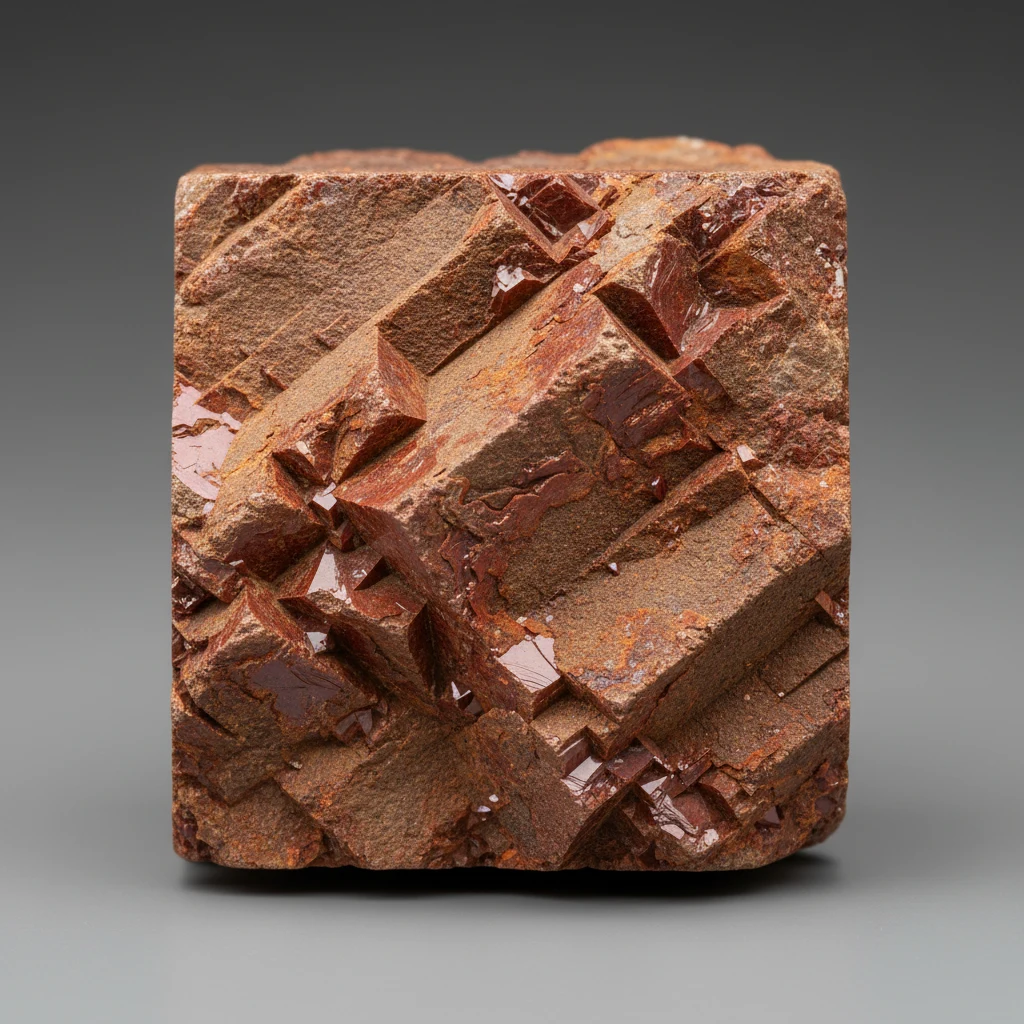
Terracotta


Quick answer: Terracotta is a fired clay ceramic, not a natural mineral crystal. Its reddish to orange-brown color usually comes from iron-rich clay, and its porous texture helps distinguish it from dense stones and glassy ceramics.
AI Rock ID can help screen a photo of terracotta by checking visible clues such as earthen color, matte surface, pores, and molded or wheel-thrown form. RockIdentifier.io lists terracotta as a crystal-wiki entry because it is often confused with natural reddish stones, pigments, and clay-based collectibles.
Good fit
- Identifying pottery shards, garden pots, roof tiles, and clay figurines
- Comparing reddish-brown clay materials with natural stones
- Learning the difference between fired ceramic and mineral specimens
- Checking porous, matte, iron-rich surfaces before buying decorative pieces
Not a good fit
- Collectors seeking a natural crystal or single-mineral specimen
- Jewelry use where hardness and polish durability are important
- Wet environments unless the terracotta is sealed or glazed
- Situations requiring precise archaeological dating without expert testing
Most commonly confused with
- Red Jasper: Red jasper is a dense microcrystalline quartz that is much harder and usually takes a smoother polish.
- Carnelian: Carnelian is translucent chalcedony, while terracotta is opaque, porous, and ceramic.
- Hematite: Hematite is metallic to submetallic, much denser, and commonly leaves a red-brown streak.
- Brick: Brick is also fired clay but is usually made for construction and often has a more uniform industrial shape.
Terracotta vs. Common Lookalikes
| Material | Key Clue | Typical Difference |
|---|---|---|
| Terracotta | Matte, porous fired clay | Soft ceramic feel; often reddish orange to brown |
| Red Jasper | Dense, waxy to polished stone | Harder and not absorbent like clay |
| Carnelian | Orange to red translucency | Lets light pass through thin edges |
| Hematite | Metallic or heavy feel | Much denser and may show a red-brown streak |
| Unglazed Porcelain | Fine, compact ceramic body | Less porous and typically paler or more refined |
AI identification confidence
AI identification of terracotta is usually moderate when the image clearly shows an unglazed, porous, reddish clay surface. Confidence drops when the object is painted, glazed, heavily weathered, or photographed without scale and texture detail.
When AI gets it wrong
- A polished red jasper or carnelian is photographed in flat lighting and appears matte.
- A terracotta object is sealed, glazed, painted, or stained, hiding its natural clay body.
- A brick, roof tile, or archaeological shard is shown without edges, pores, or context.
- The photo lacks scale, making a ceramic fragment look like a natural rock specimen.
Final recommendation
Treat terracotta as a fired clay ceramic rather than a crystal when evaluating hardness, durability, and authenticity. For identification, look for porosity, earthy color, low hardness, and signs of shaping or firing.
How to Tell If Terracotta Is Real
Real terracotta usually has a matte, slightly gritty surface and may absorb a small drop of water if unsealed. Broken edges often reveal a consistent clay body rather than a coating over another material. Mold seams, wheel marks, fingerprints, or tool marks can support a ceramic origin but do not prove age.
Buying Terracotta Objects
When buying terracotta, ask whether the item is modern, vintage, restored, or archaeological in origin. Surface wear, mineral deposits, and chips can be natural signs of age, but they can also be artificially produced. For culturally significant or claimed ancient pieces, request provenance and avoid objects with unclear legal history.
Simple At-Home Checks
An unglazed terracotta surface is usually softer than quartz and may scratch more easily than common stones. It often feels warmer and less dense in the hand than hematite, jasper, or other red minerals. Avoid destructive tests on collectible, antique, or archaeological pieces.
What Is Terracotta?
Terracotta is a clay-based ceramic material, not a crystalline gemstone, and it is best recognized by its warm red, brown, or orange body and porous feel. In the hand, a typical piece has an earthy, matte surface rather than a glassy shine, with a soft Mohs hardness of 2-3 and an opaque appearance. Its mineral variety is clay, its gemstone type is listed as rock, and its structure is amorphous rather than a defined crystal system.
Collectors value terracotta less for rarity and more for form, age, workmanship, and cultural presence. It is common and widely available, with rough specimens generally ranging from $1 to $20, but craftsmanship and historical significance can influence price. Its toughness is poor, so even though it feels substantial, it can chip or crack if dropped.
Origin & History
Terracotta means “baked earth,” from the Italian words behind the name, and that description still fits the material exactly: clay shaped, fired, and left with a warm earthen body. It has been used since ancient times, especially for pottery and sculpture, where its porous texture and reddish-brown color make it immediately recognizable. A handled piece often feels dry, slightly grainy, and grounded compared with polished stone.
In a collection, terracotta sits at the boundary between geology, craft, and archaeology. Its base material is clay, chemically classified here as a silicate with the formula Al2Si2O5(OH)4, and iron impurities help account for the familiar red-brown tone. For mineral reference and clay terminology, collectors commonly cross-check entries at mindat.org.
Where Is Terracotta Found?
Terracotta is found wherever suitable clay deposits are abundant, and important listed regions include Italy, China, and Mexico. Notable localities associated with terracotta and clay ceramic traditions include Impruneta in Tuscany, Italy; Jingdezhen in Jiangxi, China; and Talavera in Puebla, Mexico. In the field or market, locality often matters less as a mineral rarity marker and more as a clue to craftsmanship, firing tradition, and cultural context. Because terracotta is common, a collector should look closely at surface condition, shape, age, and any historical significance rather than expecting scarcity alone to drive value.
Formation
Terracotta begins with the weathering of rocks, which produces clay deposits that can be shaped and then fired. That firing step is what turns soft clay into the ceramic material collectors recognize: porous, opaque, earthy, and usually red to brown because of iron oxide content. The result is not a faceted crystal but a fired clay body with an amorphous structure and uneven fracture.
Its physical character reflects that origin. Terracotta has a density of about 1.8-2.3 g/cm3, is non-magnetic, and shows an earthy luster rather than a reflective mineral shine. Calcium and iron may occur as common impurities. Because the material can be fragile, well-preserved edges, clean surfaces, and intact sculptural or pottery details are important when judging a specimen.
How to Identify Terracotta
Identify terracotta first by its color, texture, and surface response: it is typically reddish-brown, brown, orange, or red, with a dull earthy luster and a porous feel. It is opaque, amorphous, and soft enough at Mohs 2-3 that it should be handled carefully. A light brown streak and the ability to leave a streak on unglazed surfaces are useful practical clues.
Under simple observation, terracotta will not show the optical behavior expected from many transparent crystals: its refractive index, birefringence, and pleochroism are listed as none, and its optical character is isotropic. Broken areas tend to show uneven fracture. If the object feels earthy, matte, porous, non-magnetic, and fragile rather than glassy or crystalline, terracotta is a strong identification.
Properties of Terracotta
Physical Properties
| Crystal System | Amorphous |
| Hardness (Mohs) | 2-3 (Very Soft (1-2)) |
| Density | 1.8-2.3 g/cm3 |
| Luster | Earthy |
| Diaphaneity | Opaque |
| Fracture | Uneven |
| Streak | Light brown |
| Magnetism | Non-magnetic |
| Colors | Red, Brown, Orange |
Chemical Properties
| Classification | Silicate |
| Formula | Al2Si2O5(OH)4 |
| Elements | Al, Si, O |
| Common Impurities | Fe, Ca |
Optical Properties
| Refractive Index | None |
| Birefringence | None |
| Pleochroism | None |
| Optical Character | Isotropic |
Terracotta Health & Safety
Handling terracotta is generally safe.
Terracotta Value & Price
Price Range
Rough/Tumbled: $1 - $20 per specimen
Cut/Polished:
Price is influenced by craftsmanship and historical significance.
Durability
Moderate — Scratch resistance: Fair, Toughness: Poor
Terracotta can be fragile and may chip or crack if dropped.
How to Care for Terracotta
Use & Storage
Store in a cool, dry place away from direct sunlight.
Cleaning
Clean with a damp cloth and mild soap. Avoid harsh chemicals.
Cleanse & Charge
Place under moonlight to cleanse.
Placement
Can be displayed indoors or outdoors, but protect from harsh weather.
Caution
Handle with care to avoid damage.
Works Well With
Terracotta Meaning & Healing Properties
Terracotta is traditionally associated with grounding, stability, and creativity, especially through its Earth element and Root chakra connection. Many practitioners like it because it feels literally earth-made: warm in color, porous to the touch, and visually calming rather than flashy. It is also linked with Taurus and Virgo, with Earth listed as its planetary association.
For spiritual care, terracotta may be placed under moonlight to cleanse. It is generally safe to handle and safe in water, but practical care still matters: clean it with a damp cloth and mild soap, avoid harsh chemicals, and store it in a cool, dry place away from direct sunlight. These traditional uses are not a substitute for medical treatment.
Identify Terracotta from a photo
Compare Terracotta traits, care tips, value clues, and common lookalikes with a clear photo.
Common mistakes
- Assuming terracotta is a natural crystal because it appears on a crystal or rock identification page
- Judging authenticity only by reddish-brown color, which can be painted, stained, or artificially aged
- Mistaking sealed or glazed terracotta for stone because the surface no longer absorbs water
- Using harsh acid, bleach, or abrasion on old terracotta, which can damage the ceramic body
- Believing every weathered terracotta fragment is ancient without provenance or expert review