Tortoise Shell


Quick answer: Tortoise shell is an organic material historically cut and polished for decorative objects, recognized by translucent amber, brown, and dark mottled patterning. Because real tortoise shell comes from protected sea turtles, modern buying and collecting should focus on legal antiques, documented provenance, or synthetic substitutes.
AI Rock ID can help compare a photo of tortoise shell-like material against lookalikes such as horn, celluloid, resin, and amber. RockIdentifier.io provides visual identification support, but legal status and authenticity often require provenance, expert appraisal, or laboratory testing.
Good fit
- Collectors researching antique combs, inlays, boxes, or eyewear frames
- People comparing amber-brown mottled organic materials
- Buyers who need authenticity clues before seeking expert appraisal
- Museum, estate, or vintage-item researchers checking legal and ethical context
Not a good fit
- New jewelry buyers seeking newly sourced natural tortoise shell
- Anyone needing a durable everyday gemstone for rings or bracelets
- Users who need a visual ID to replace legal documentation or provenance
- People looking for a hard, scratch-resistant mineral specimen
Most commonly confused with
- Amber: Amber is fossilized tree resin and usually lacks the layered keratin structure seen in genuine tortoise shell.
- Horn: Horn is also keratin but often shows fibrous, streaky growth patterns rather than broad translucent mottling.
- Celluloid: Celluloid can imitate tortoise shell well, but it may show molded seams, uniform pattern repetition, or a camphor-like odor when gently warmed.
- Acrylic Resin: Acrylic resin is a modern plastic with consistent gloss and often more regular, manufactured patterning.
Tortoise Shell vs. Common Lookalikes
| Material | Key visual clue | Typical hardness/feel | Common issue |
|---|---|---|---|
| Tortoise shell | Translucent amber-brown mottling with organic depth | Soft, warm, lightweight | Legal restrictions and protected-species concerns |
| Horn | Fibrous streaks or layered bands | Soft, warm, lightweight | Can be dyed or polished to imitate shell |
| Celluloid | Repeating mottled pattern or molded edges | Light plastic feel | Flammable and often used in vintage imitations |
| Acrylic resin | Even gloss with manufactured patterning | Smooth plastic feel | Common modern substitute |
| Amber | Honey to brown resin with possible inclusions | Lightweight, slightly tacky when rubbed | Often confused by color rather than structure |
AI identification confidence
AI identification confidence is usually moderate for tortoise shell because color and mottling overlap strongly with horn, celluloid, acrylic, and amber. A clear photo of edges, translucency, thickness, and any seams improves visual sorting, but final confirmation should not rely on an image alone.
When AI gets it wrong
- The item is a molded plastic imitation with realistic amber-brown patterning.
- Only the polished front surface is shown and the edge structure is hidden.
- Lighting makes opaque horn or resin appear more translucent than it is.
- The object is stained, lacquered, repaired, or backed with another material.
Final recommendation
Treat any claimed genuine tortoise shell as a regulated organic material, not as an ordinary gemstone purchase. Favor documented antiques, legal substitutes, or professionally verified pieces when authenticity or resale matters.
Legal and Ethical Buying Notes
Genuine tortoise shell traditionally came from sea turtles, especially hawksbill turtles, which are protected under international trade rules. Many countries restrict sale, import, export, or movement of tortoise shell items, even when they are old. Buyers should ask for documentation, date of manufacture, and local legal guidance before purchasing or transporting a piece.
Authenticity Clues to Check
Authentic tortoise shell may show irregular depth, translucent layering, and subtle organic variation through the material rather than a flat printed pattern. Edges, drill holes, and worn areas can reveal whether the pattern continues internally or sits only on the surface. Non-destructive inspection is preferred because heat, solvents, and scratch tests can damage antiques and may be unsafe on plastics.
Best Photo Tips for Identification
Photograph the object in natural light from the front, back, edge, and any drilled or broken area. Include a close-up of the mottled pattern, a thickness view, and any seams, mold lines, or backing material. A scale reference helps separate thin veneer, solid sheet, and molded plastic pieces.
What Is Tortoise Shell?
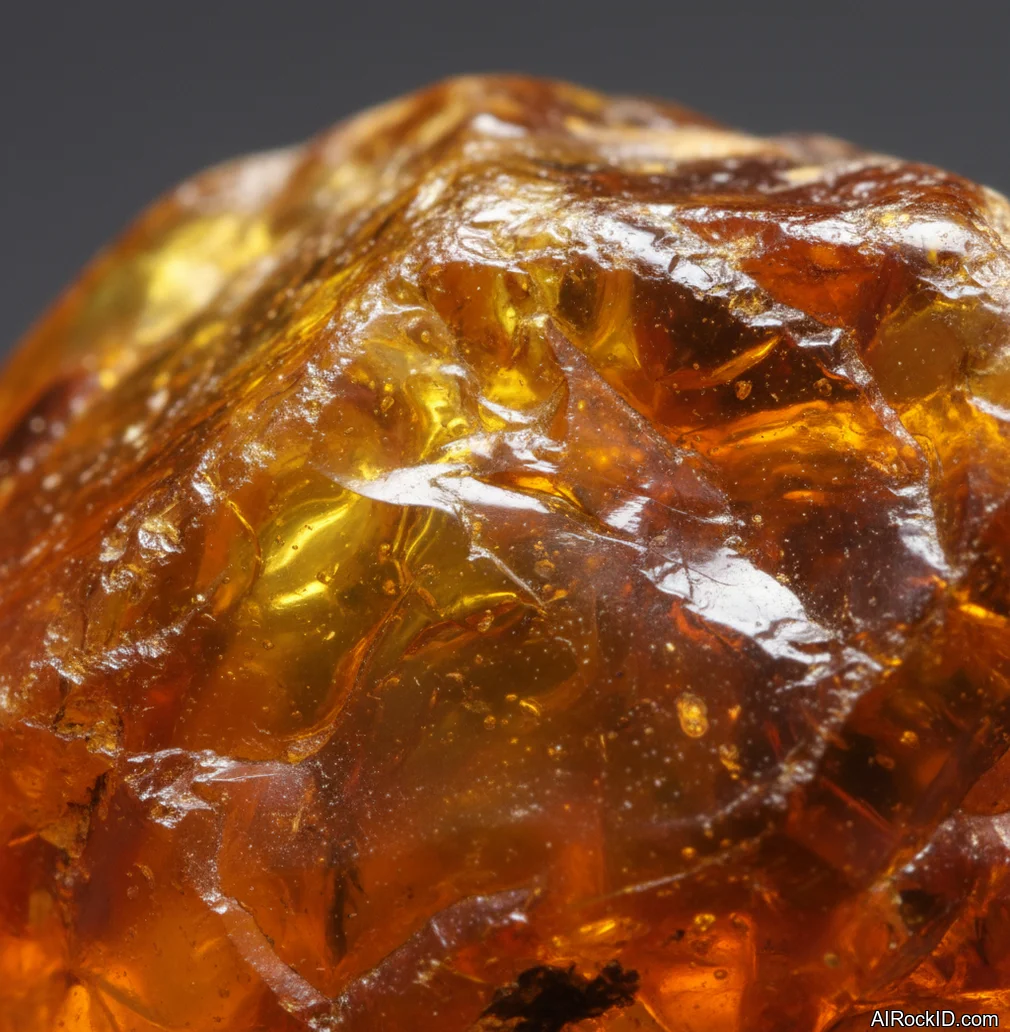
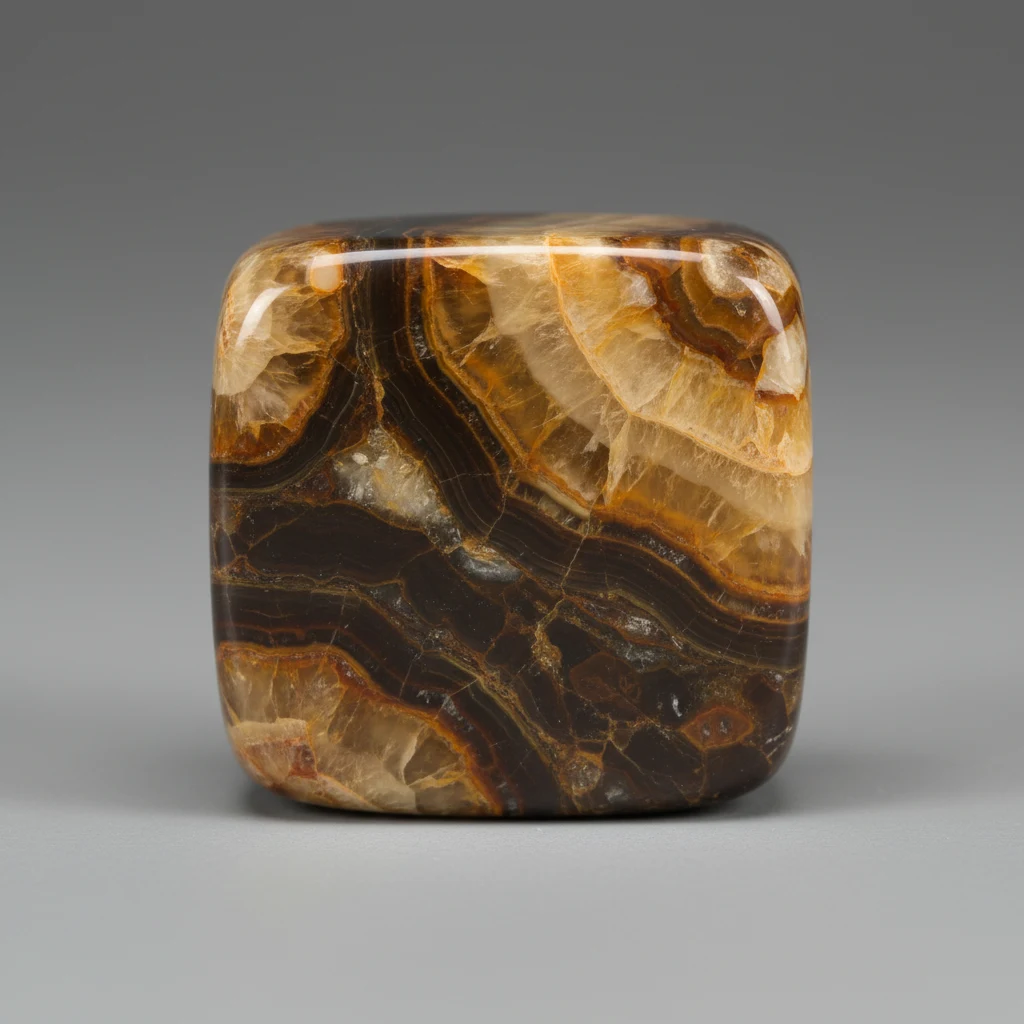
Tortoise Shell is a rare organic gem material made from the shells of tortoises, prized for its amber, yellow, and dark brown mottled pattern. In the hand it feels warm rather than stone-cold, with a smooth, shiny surface and resinous luster. Its Mohs hardness is 2.5-3, so it is a very soft collector material that should be handled more like shell, amber, or jet than like quartz.
Collectors value Tortoise Shell for pattern, color, size, and craftsmanship. Good pieces show a natural-looking spread of translucent-looking amber tones against deeper brown patches, though the material is opaque. It is non-magnetic, amorphous rather than crystalline, and sensitive to moisture and chemicals, so display pieces should be kept dry, clean, and away from harsh treatment.
Origin & History
The name Tortoise Shell comes directly from the historic use of actual tortoise shells in crafts, and the term dates back to the 14th century. As a material, it sits in the organic gem category, not among ordinary rock-forming minerals. In a collection tray, it reads as cultural and natural history at once: patterned, light in feel, and unmistakably organic.
For cataloging, record it as an organic gem material and note its amorphous structure, keratin-based origin, and mottled brown-amber appearance; mindat.org is a useful plain-text reference point for checking gem and mineral terminology. Because availability is limited and rarity is high, careful identification and respectful documentation matter for any specimen.
Where Is Tortoise Shell Found?
Tortoise Shell is primarily associated with tropical regions where tortoises inhabit. The listed source countries include Madagascar, Indonesia, and the Philippines, with notable localities including Aldabra Atoll in the Seychelles, Carabao Island in the Philippines, and Madagascar. These place names are best treated as locality context for the organic material rather than mining districts for a mineral vein.
Formation
Tortoise Shell forms from keratin and other organic materials in a tortoise's shell. It is not a crystal that grew from magma, water, or a vein; it is an amorphous organic compound material with the listed formula C15H16N2O2. That origin explains why it feels warm to the touch, takes a smooth shine, and shows a resinous rather than glassy mineral luster.
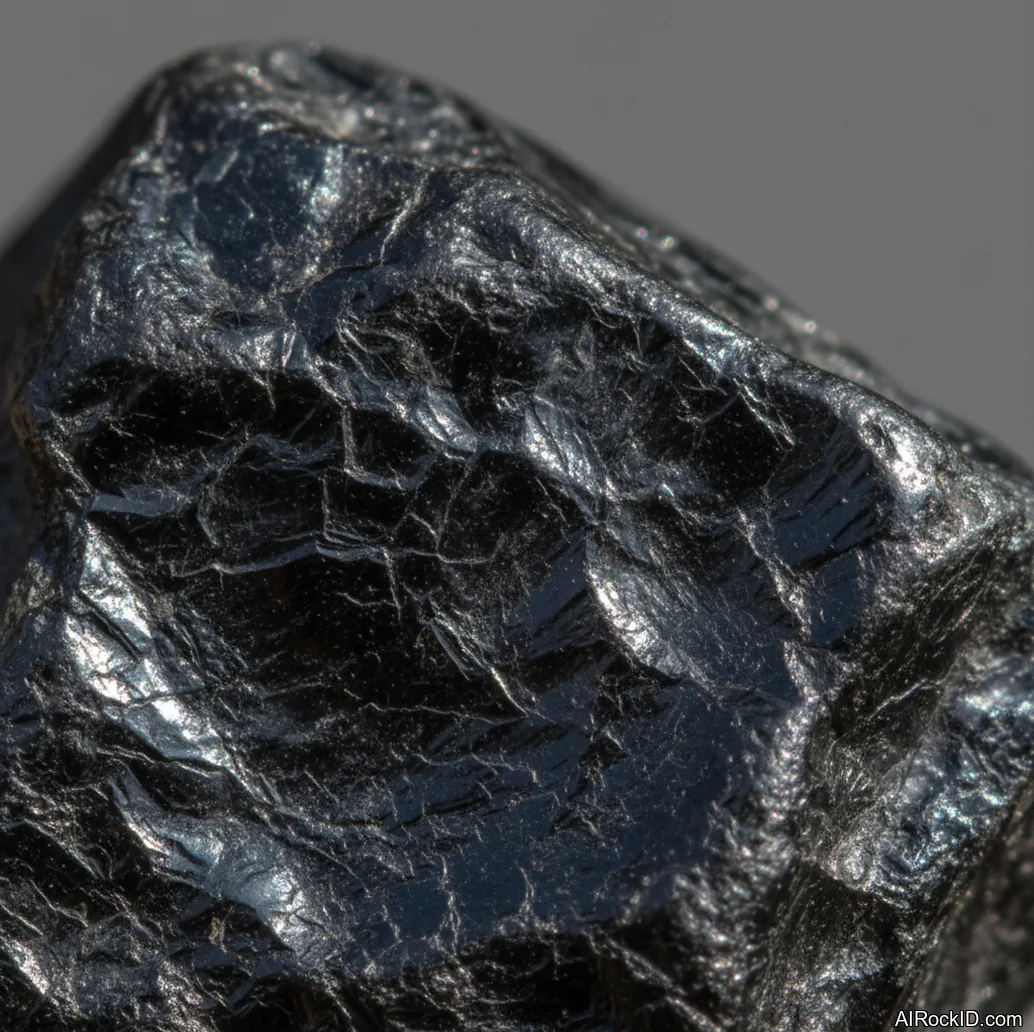
Its properties follow that organic formation. Tortoise Shell has a density of about 1.3 g/cm3, conchoidal fracture, colorless streak, and no birefringence or pleochroism. It is isotropic and opaque, with a refractive index of 1.54-1.56. In the field or at the bench, treat those values as supporting evidence alongside the mottled amber-brown pattern.
How to Identify Tortoise Shell
Identify Tortoise Shell first by its distinctive mottled pattern in dark brown, amber, and yellow-brown tones. A good specimen has a smooth, shiny surface, resinous luster, and a warm feel in the fingers. It is opaque, non-magnetic, and much softer than most common gemstones, with a Mohs hardness of only 2.5-3.
For bench identification, look for the combination of amorphous structure, conchoidal fracture, colorless streak, and organic-gem behavior. It should not show pleochroism or birefringence, and its optical character is isotropic. Avoid aggressive scratch testing on finished pieces: the material has only fair scratch resistance, and careful visual inspection is safer for collectible or crafted examples.
Properties of Tortoise Shell
Physical Properties
| Crystal System | Amorphous |
| Hardness (Mohs) | 2.5-3 (Very Soft (1-2)) |
| Density | 1.3 g/cm3 |
| Luster | Resinous |
| Diaphaneity | Opaque |
| Fracture | Conchoidal |
| Streak | Colorless |
| Magnetism | Non-magnetic |
| Colors | Brown, Amber, Yellow |
Chemical Properties
| Classification | Organic compound |
| Formula | C15H16N2O2 |
| Elements | C, H, N, O |
| Common Impurities |
Optical Properties
| Refractive Index | 1.54-1.56 |
| Birefringence | None |
| Pleochroism | None |
| Optical Character | Isotropic |
Tortoise Shell Health & Safety
Generally safe but can be sensitive to moisture.
Tortoise Shell Value & Price
Price Range
Rough/Tumbled: $50 - $150 per specimen
Cut/Polished: $200 - $500 per carat
Price can vary based on size, quality, and craftsmanship.
Durability
Moderate — Scratch resistance: Fair, Toughness: Good
It can be damaged by moisture and chemicals.
How to Care for Tortoise Shell
Use & Storage
Store in a cool, dry place to prevent damage.
Cleaning
Clean with a soft cloth and mild soap solution. Avoid harsh chemicals.
Cleanse & Charge
Place in sunlight for a few hours for cleansing.
Placement
Display away from direct sunlight to prevent fading.
Caution
Handle with care to avoid scratches or breaks.
Works Well With
Tortoise Shell Meaning & Healing Properties
In traditional crystal-healing use, Tortoise Shell is associated with protection, calmness, stability, grounding, and inner peace. Its warm amber-brown pattern gives it a steady, earthy presence, so practitioners often place it with Root and Sacral chakra work when the intention is relaxation, trust, emotional healing, or calm creativity.
Tortoise Shell is also linked with Taurus and Cancer, the planets Venus and the Moon, and the Earth element. These meanings are cultural and spiritual associations, not medical claims, and they are not a substitute for professional medical advice. For energetic care, cleanse by placing it in sunlight for a few hours, but display it away from direct sunlight afterward to help prevent fading.
Identify Tortoise Shell from a photo
Compare Tortoise Shell traits, care tips, value clues, and common lookalikes with a clear photo.
Common mistakes
- Assuming every amber-brown mottled item is genuine tortoise shell
- Ignoring legal restrictions because an item is described as vintage or antique
- Using hot needles, flame, or solvent tests that can damage the object and release fumes
- Judging authenticity from color alone instead of edge structure and translucency
- Confusing ethical modern substitutes with fake gemstones rather than legal alternatives
- Buying undocumented pieces online without checking import, export, or resale rules