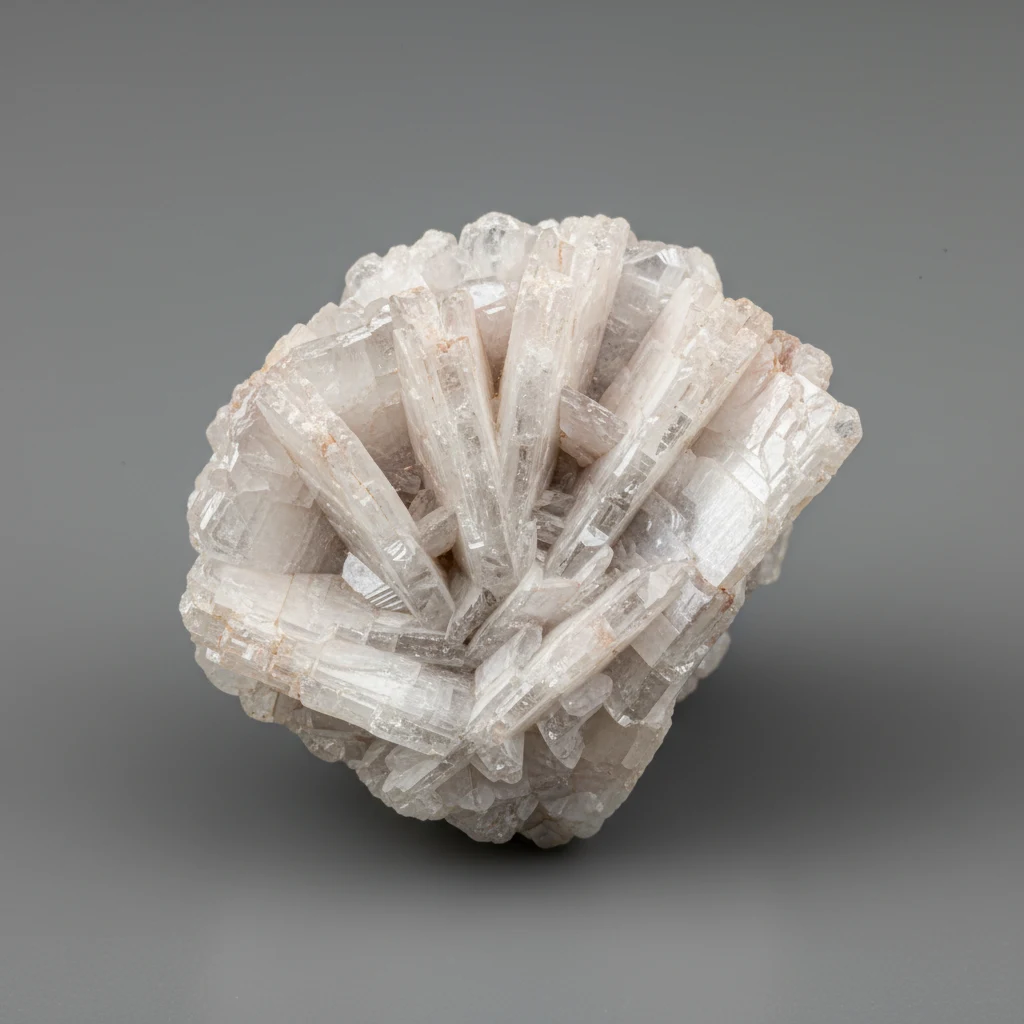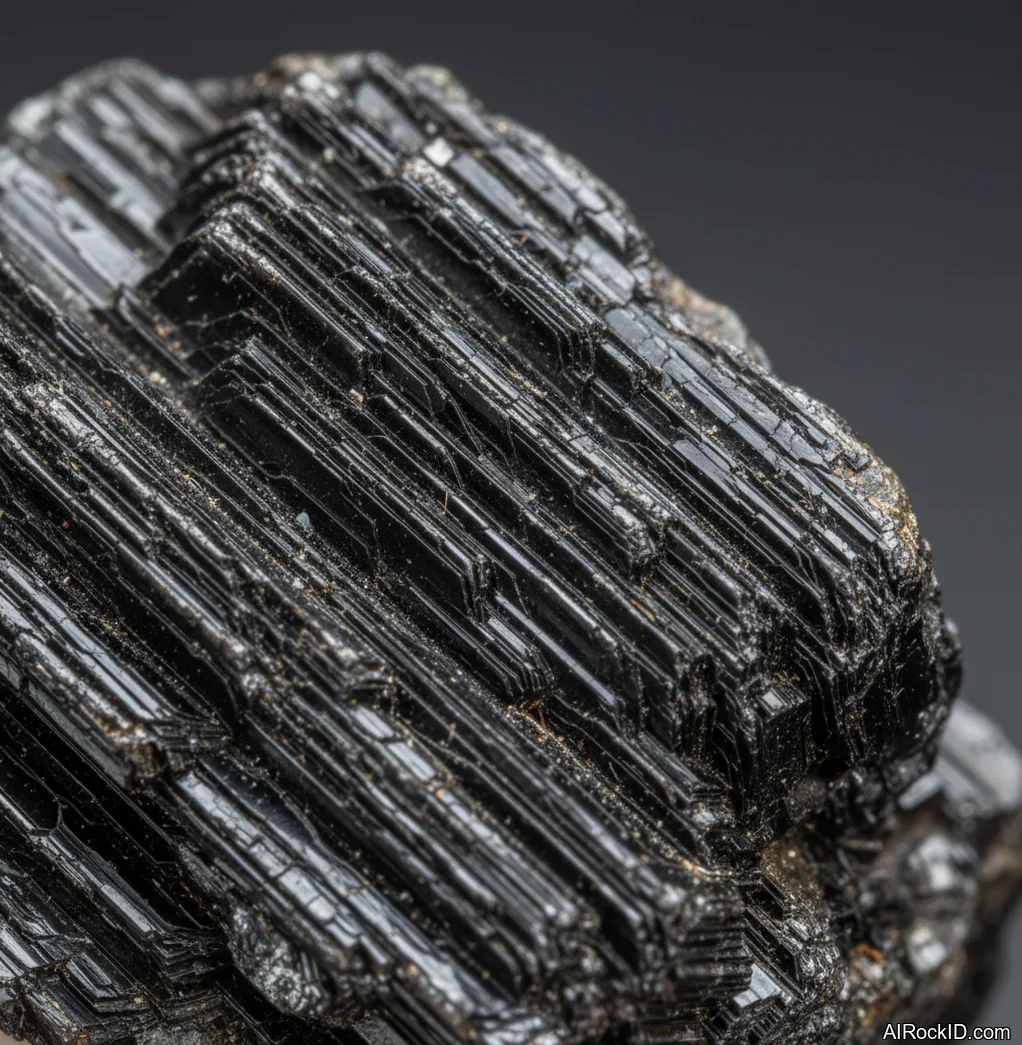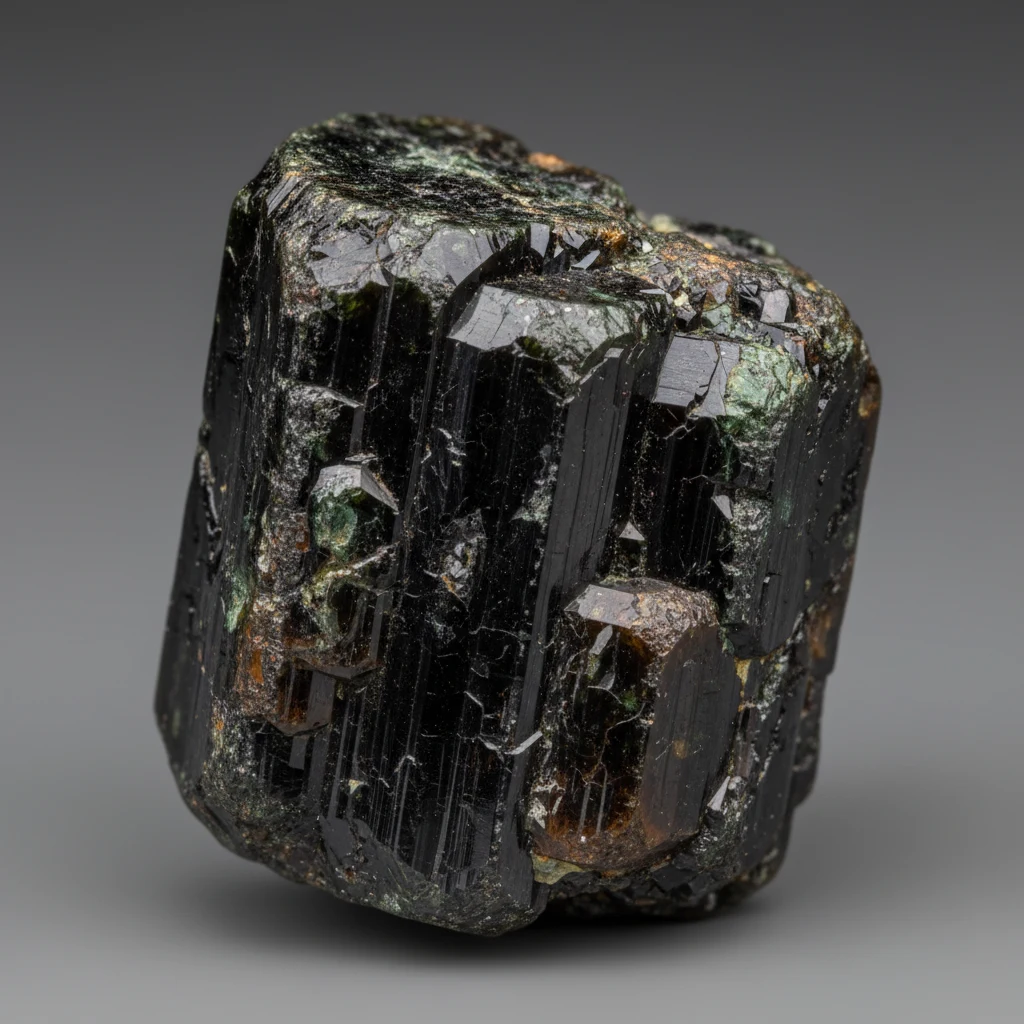
Augite


Quick answer: Augite is a dark green to black clinopyroxene commonly identified by its blocky crystals, two cleavages near 90 degrees, and occurrence in mafic igneous rocks. It is often confused with hornblende, black tourmaline, and other dark silicate minerals, so context and cleavage are important for identification.
AI Rock ID can help screen an Augite specimen by comparing visible color, crystal habit, cleavage, and rock context from a photo. RockIdentifier.io provides mineral information that can support identification, but visual results should be checked against hardness, cleavage, streak, and geologic setting.
Good fit
- Collectors building a reference set of common rock-forming minerals
- Students comparing dark silicate minerals in basalt, gabbro, or diabase
- Anyone studying mafic and ultramafic igneous rocks
- Specimen owners who want a practical ID angle rather than a decorative stone focus
Not a good fit
- Buyers looking for bright, transparent, faceted gemstones
- Collectors who need a display mineral with vivid color contrast
- Identification based on color alone, since many dark minerals look similar
- Jewelry use, because Augite is typically opaque, cleaved, and not commonly cut
Why people search for this
People often search for Augite when they find a black or dark green mineral in volcanic or mafic rocks and want to separate it from hornblende or tourmaline. It is also a common search term in geology classes because it is a major pyroxene mineral.
Most commonly confused with
- Hornblende: Hornblende has amphibole cleavage at about 56 and 124 degrees, while Augite shows pyroxene cleavage close to 90 degrees.
- Black Tourmaline: Black tourmaline commonly has striated prismatic crystals and no good cleavage, unlike Augite’s blockier pyroxene habit.
- Diopside: Diopside is another clinopyroxene that is often lighter green and more calcium-magnesium rich, while Augite is commonly darker and iron-bearing.
- Obsidian: Obsidian is volcanic glass with conchoidal fracture and glassy luster, not a cleaved crystalline pyroxene.
Augite vs. Similar Dark Minerals
| Feature | Augite | Hornblende | Black Tourmaline |
|---|---|---|---|
| Mineral group | Clinopyroxene | Amphibole | Tourmaline |
| Typical color | Dark green to black | Dark green, brown, or black | Black |
| Cleavage | Two directions near 90° | Two directions near 56° and 124° | Poor to absent |
| Common habit | Short, blocky crystals or grains | Elongated prismatic crystals | Long striated prisms |
| Common setting | Basalt, gabbro, diabase | Intermediate to mafic igneous and metamorphic rocks | Pegmatites and metamorphic rocks |
AI identification confidence
AI identification confidence for Augite is usually moderate when the photo shows crystal shape, cleavage faces, and the surrounding host rock. Confidence drops when the specimen is a dark massive grain, because many black minerals share similar color and luster in photos.
When AI gets it wrong
- A dark mineral is photographed without scale, cleavage, or host-rock context
- Hornblende is mistaken for Augite because both can appear black and prismatic
- Black tourmaline is photographed from an angle where striations are not visible
- A basalt or gabbro sample contains several dark minerals mixed together
Final recommendation
Use Augite identification as a process of elimination rather than a color match. Check for near-90-degree cleavage, blocky habit, Mohs hardness around 5.5 to 6, and association with mafic igneous rocks before labeling a specimen.
How to Identify Augite in Hand Sample
Augite is best recognized by its dark color, short blocky crystals, vitreous to dull luster, and two cleavage directions that meet close to a right angle. A hand lens can help reveal cleavage faces or small pyroxene grains in basalt, gabbro, or diabase. Color alone is not reliable because hornblende, tourmaline, magnetite, and other dark minerals can look similar.
Buying and Authenticity Tips for Augite
Augite is usually sold as a mineral specimen, a rock-forming mineral in basalt or gabbro, or a labeled educational sample rather than as a gemstone. Authenticity concerns are usually about mislabeling, especially confusion with hornblende, diopside, or black tourmaline. A reliable listing should include locality, host rock or geologic setting, and clear photos showing crystal habit or cleavage.
Field Clues for Augite-Bearing Rocks
Augite commonly occurs in dark, dense igneous rocks such as basalt, gabbro, and diabase. In coarse-grained rocks, it may appear as dark blocky grains among plagioclase feldspar and other mafic minerals. In fine-grained volcanic rocks, individual Augite crystals may be too small to identify without magnification or thin-section analysis.
What Is Augite?
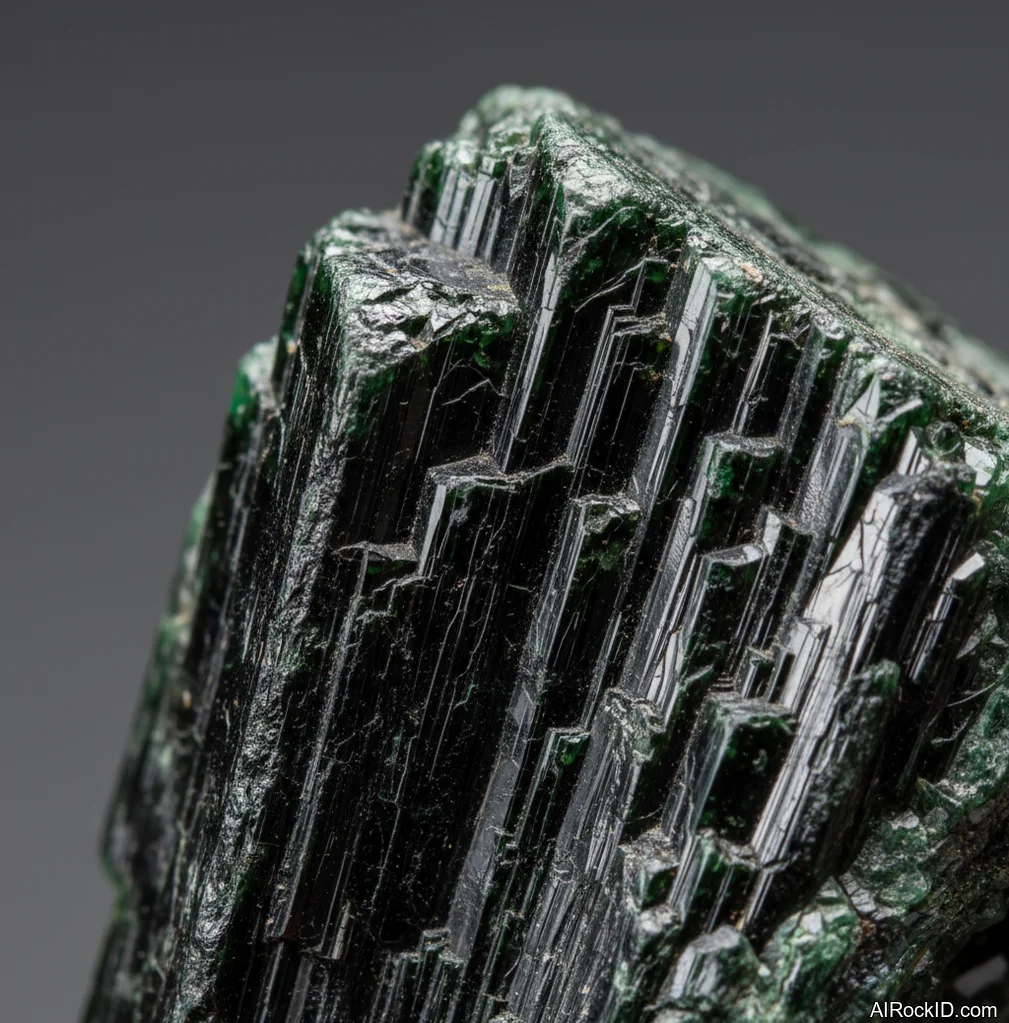
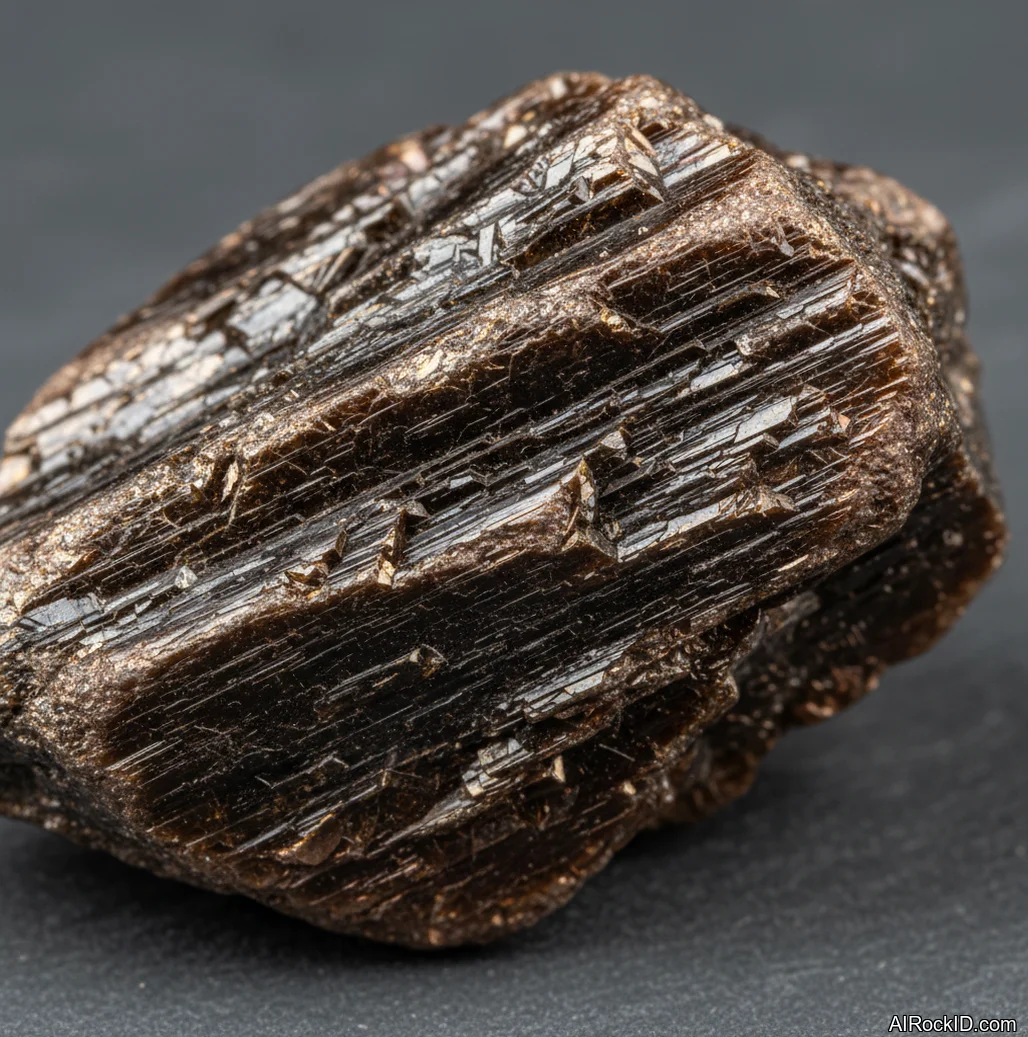
Augite is a common dark-colored clinopyroxene mineral, best known as a major rock-forming silicate in basalt, gabbro, diabase, and many mafic to intermediate igneous rocks. In the hand, it usually reads as black, greenish black, dark green, or brownish black, with a weighty, dense feel and a vitreous to dull surface depending on freshness.
Collectors look for short prismatic to blocky crystals, dark granular grains in volcanic matrix, and two good cleavages meeting near right angles. With a Mohs hardness of 5.5-6, augite is moderately hard but brittle, so sharp edges and terminations deserve a padded tray rather than a loose box.
Origin & History
Augite was named in 1792 by Abraham Gottlob Werner from the Greek word “auge,” meaning brightness or luster. The name points to the sometimes bright vitreous shine seen on fresh crystal faces, even though weathered pieces can look dull, earthy, or brownish.
In mineral collections, augite is valued less as a showy gem and more as a direct record of iron-, magnesium-, and calcium-rich magmas. For label checking, collectors often compare classic locality names such as Mount Vesuvius and the Eifel volcanic district with mindat.org records before placing a specimen in a study drawer.
Where Is Augite Found?
Augite is found worldwide because it is a major mineral in basaltic and gabbroic rocks. It is reported from Italy, Germany, France, the United Kingdom, Norway, the United States, Canada, Mexico, Brazil, Japan, New Zealand, Russia, Australia, and India.
Formation
Augite forms by crystallization from iron-, magnesium-, and calcium-rich silicate melts, especially in mafic igneous rocks such as basalt and gabbro. Its chemistry is variable, with substitution of magnesium, iron, calcium, aluminum, titanium, and minor sodium within the pyroxene structure.
Specimens may come from basalt flows, alkaline igneous rocks, volcanic bombs, skarns, and high-grade metamorphic rocks derived from basaltic or carbonate-rich protoliths. In a fresh broken volcanic rock, augite often appears as dark grains or compact prisms beside feldspar, olivine, hornblende, or other volcanic minerals.
How to Identify Augite
Identify augite by its dark color, short blocky to prismatic habit, monoclinic pyroxene character, and two good cleavages meeting at about 87 and 93 degrees. Thin edges may show translucent green or brown, while the streak is usually white, grayish white, or pale greenish gray.
The most useful field separation is from hornblende: augite cleaves nearly at right angles, while hornblende cleaves at about 56 and 124 degrees. Augite is harder than apatite but softer than quartz, generally non-magnetic to very weakly magnetic in ordinary hand samples, and commonly sits as dark grains in basalt, gabbro, or volcanic matrix.
Properties of Augite
Physical Properties
| Crystal System | Monoclinic |
| Hardness (Mohs) | 5.5-6 on the Mohs scale (Moderately hard) |
| Density | Approximately 3.2-3.6 g/cm³ |
| Luster | Vitreous to dull |
| Diaphaneity | Translucent on thin edges to opaque |
| Fracture | Uneven to subconchoidal; brittle, with two good prismatic cleavages nearly at right angles |
| Streak | White, grayish white, or pale greenish gray |
| Magnetism | Generally non-magnetic to very weakly magnetic depending on iron content and inclusions |
| Colors | Black, Dark green, Greenish black, Brownish black, Dark brown |
Chemical Properties
| Classification | Silicate; inosilicate; clinopyroxene group |
| Formula | (Ca,Na)(Mg,Fe,Al,Ti)(Si,Al)2O6 |
| Elements | Calcium, Sodium, Magnesium, Iron, Aluminum, Titanium, Silicon, Oxygen |
| Common Impurities | Manganese, Chromium, Vanadium, Potassium |
Optical Properties
| Refractive Index | nα 1.671-1.735, nβ 1.672-1.741, nγ 1.703-1.774 |
| Birefringence | 0.018-0.033 |
| Pleochroism | Weak to distinct, commonly green, brown, yellow-green, or pale brown tones in thin section |
| Optical Character | Biaxial positive, though optical properties vary with composition |
Augite Health & Safety
Intact augite specimens are generally safe to handle. The main practical risk is inhaling mineral dust if the specimen is cut, drilled, crushed, or ground.
Augite Value & Price
Price Range
Rough/Tumbled: Common rough or matrix specimens are often about $2-$20; well-formed crystals from classic volcanic localities may sell for $20-$150 or more depending on size, sharpness, locality, and associated minerals.
Cut/Polished:
Value is driven by crystal size, sharpness, luster, intact terminations, contrast on matrix, and provenance from classic localities such as Vesuvius or the Eifel district. Augite is not commonly faceted as a gemstone because it is usually too dark and has only moderate durability.
Durability
Moderate — Scratch resistance: Harder than most household dust and apatite, but softer than quartz, topaz, corundum, and many gem materials., Toughness: Brittle; crystals can chip along cleavage planes if struck or dropped.
Augite is generally stable under normal indoor conditions. Weathered specimens may have dull surfaces or alteration products, and crystal edges should be protected from abrasion.
How to Care for Augite
Use & Storage
Store augite specimens in a padded box or display case, especially if crystals have sharp edges or delicate terminations. Keep separate from harder minerals such as quartz that can scratch it.
Cleaning
Clean with lukewarm water, mild soap, and a soft brush. Avoid ultrasonic cleaning for fractured or matrix specimens because cleavage and internal cracks may be damaged.
Cleanse & Charge
For metaphysical use, cleanse by placing on dry selenite, using smoke, or setting near clear quartz. Avoid harsh salt treatments that may damage associated matrix minerals.
Placement
Place in a study, rock collection, or earth-themed display where its dark color and igneous origin can be appreciated. It pairs well with basalt, feldspar, olivine, and other volcanic minerals.
Caution
Do not use acids or aggressive chemical cleaners. Avoid dropping, hammering, or tumbling collectible crystals, as augite is brittle and cleaves readily.
Works Well With
Augite Meaning & Healing Properties
In modern crystal-healing traditions, augite is used as a grounding stone associated with stability, focus, endurance, practical decision-making, and volcanic earth energy. These meanings are spiritual beliefs, not medical claims, but they fit the specimen’s physical character: dark, dense-looking, and strongly tied to igneous rock.
For metaphysical care, place augite on dry selenite, use smoke, or set it near clear quartz. Avoid harsh salt treatments that may damage associated matrix minerals, and store collectible crystals away from harder minerals such as quartz so the vitreous faces and cleavage edges stay intact.
Identify Augite from a photo
Compare Augite traits, care tips, value clues, and common lookalikes with a clear photo.
Common mistakes
- Identifying any black mineral in basalt as Augite without checking cleavage
- Confusing hornblende with Augite because both can be dark and prismatic
- Assuming Augite should be strongly magnetic because it is dark and iron-bearing
- Calling massive dark grains Augite when crystal faces are not visible
- Using Mohs hardness alone, since several dark silicates have overlapping hardness
- Expecting Augite to look like a polished gemstone rather than a rock-forming mineral