Albite


Quick answer: Albite is a sodium-rich feldspar commonly identified by its white to pale color, vitreous luster, Mohs hardness around 6, and two directions of cleavage. It is often confused with other feldspars and pale quartz, so cleavage, crystal habit, and association with other minerals are useful clues.
AI Rock ID can help compare albite against visually similar feldspars and quartz-like specimens using photo-based features. RockIdentifier.io supports albite identification by combining visual recognition with mineral property references, but close feldspar varieties may still require physical testing.
Good fit
- Collectors who want a common feldspar mineral for comparison sets
- Students learning cleavage, twinning, and feldspar-group identification
- Rockhounds examining granites, pegmatites, schists, or feldspar-rich rocks
- Collectors interested in pale, vitreous mineral specimens rather than high-durability jewelry stones
Not a good fit
- Buyers seeking a rare or high-value gemstone by default
- Jewelry use where repeated impact or abrasion is expected
- Identification based only on white color, since many minerals share that appearance
Most commonly confused with
- Quartz: Quartz lacks cleavage and usually breaks with conchoidal fracture, while albite has good to perfect cleavage.
- Moonstone: Moonstone is a feldspar variety known for adularescence, while ordinary albite usually lacks a floating blue-white sheen.
- Orthoclase: Orthoclase is potassium feldspar and may look similar, but albite is sodium feldspar and often shows different twinning or associations.
- Calcite: Calcite is much softer, reacts with dilute acid, and has rhombohedral cleavage unlike albite.
Albite Lookalike Comparison
| Specimen | Key Difference | Simple Check |
|---|---|---|
| Albite | Sodium feldspar with good cleavage and pale color | Look for cleavage faces and feldspar twinning |
| Quartz | No cleavage and commonly conchoidal fracture | Check broken edges for curved fracture |
| Calcite | Softer and acid-reactive | Scratches more easily and fizzes with dilute acid |
| Orthoclase | Potassium feldspar, often cream to pink | May need context, twinning, or lab confirmation |
| Moonstone | Feldspar with visible adularescence | Tilt under light to check for sheen |
AI identification confidence
AI identification of albite is usually moderate when photos show cleavage surfaces, crystal habit, matrix, and scale. Confidence is lower for loose white fragments, polished stones, or specimens that could be quartz, orthoclase, or another plagioclase feldspar.
When AI gets it wrong
- The specimen is a small white chip with no visible cleavage or crystal faces
- A polished stone hides twinning, fracture, and natural surface texture
- Lighting makes quartz, calcite, or feldspar appear similarly white
- The mineral is part of a mixed rock where several pale minerals occur together
Final recommendation
Choose albite specimens with clear labels, visible cleavage or crystal form, and locality information when possible. For precise separation from other feldspars, use hardness, cleavage, optical tests, or expert confirmation rather than color alone.
How to Check Albite Authenticity
Authentic albite is usually sold as a mineral specimen rather than a rare gemstone, so misidentification is more common than deliberate imitation. Ask for locality information, inspect for natural cleavage faces, and compare hardness and fracture against quartz and calcite. A vague label such as “white crystal” is not enough to confirm albite.
Best Photos for Albite Identification
Useful albite photos should show the whole specimen, a close-up of cleavage faces, the surface texture, and any associated minerals. Include a scale object and take images in natural or neutral light. Multiple angles help distinguish feldspar cleavage from quartz fracture or calcite rhombs.
Where Albite Is Commonly Found
Albite occurs in many igneous and metamorphic settings, especially granites, pegmatites, schists, and some hydrothermal veins. It is also a common component of feldspar-rich rocks, so a specimen may be part of a mixed mineral association rather than a single pure crystal.
What Is Albite?
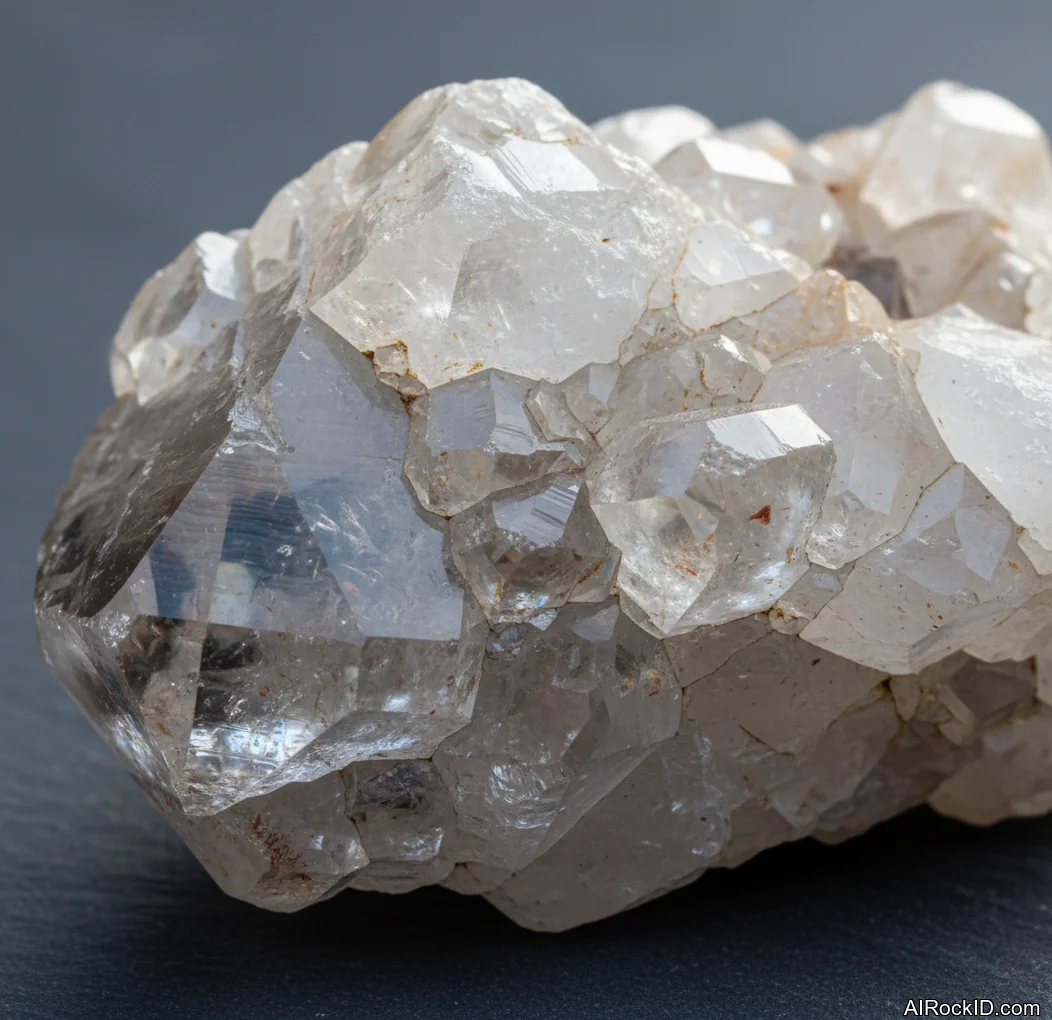
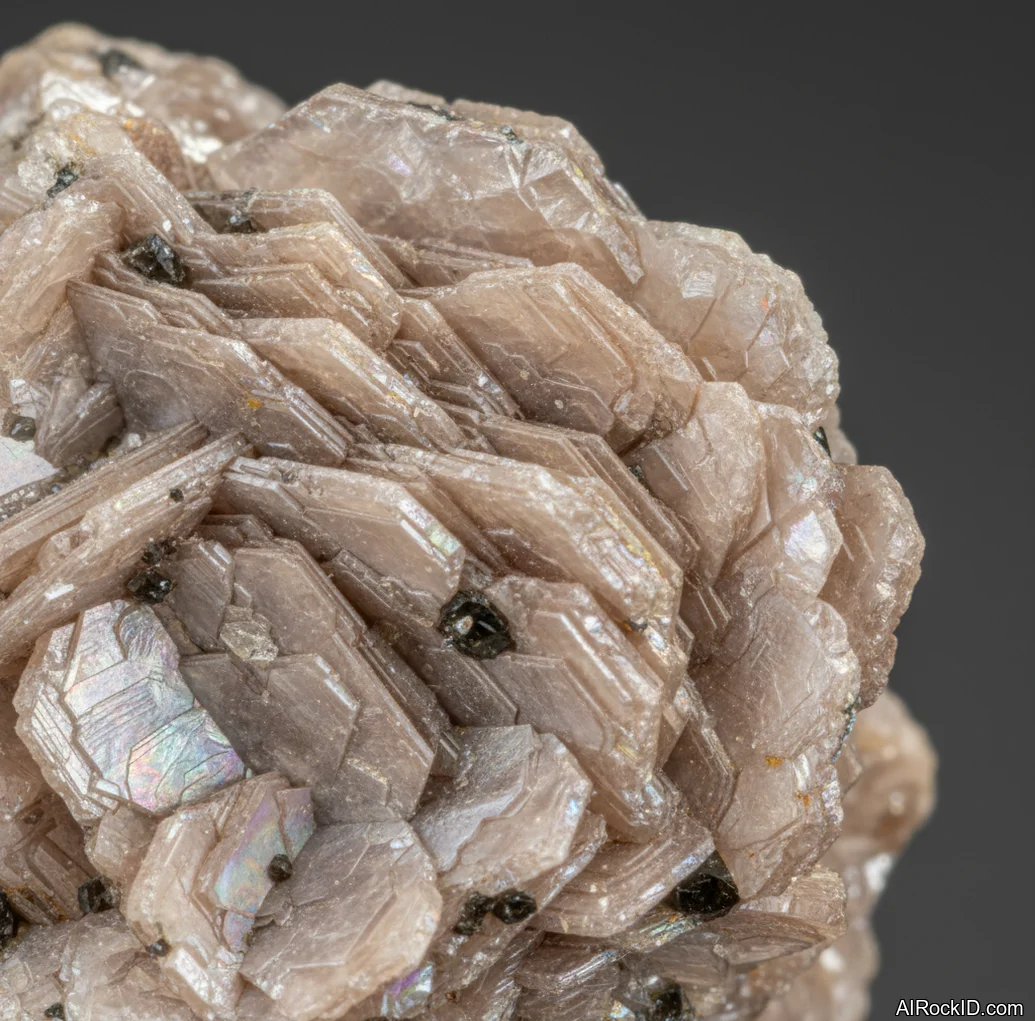
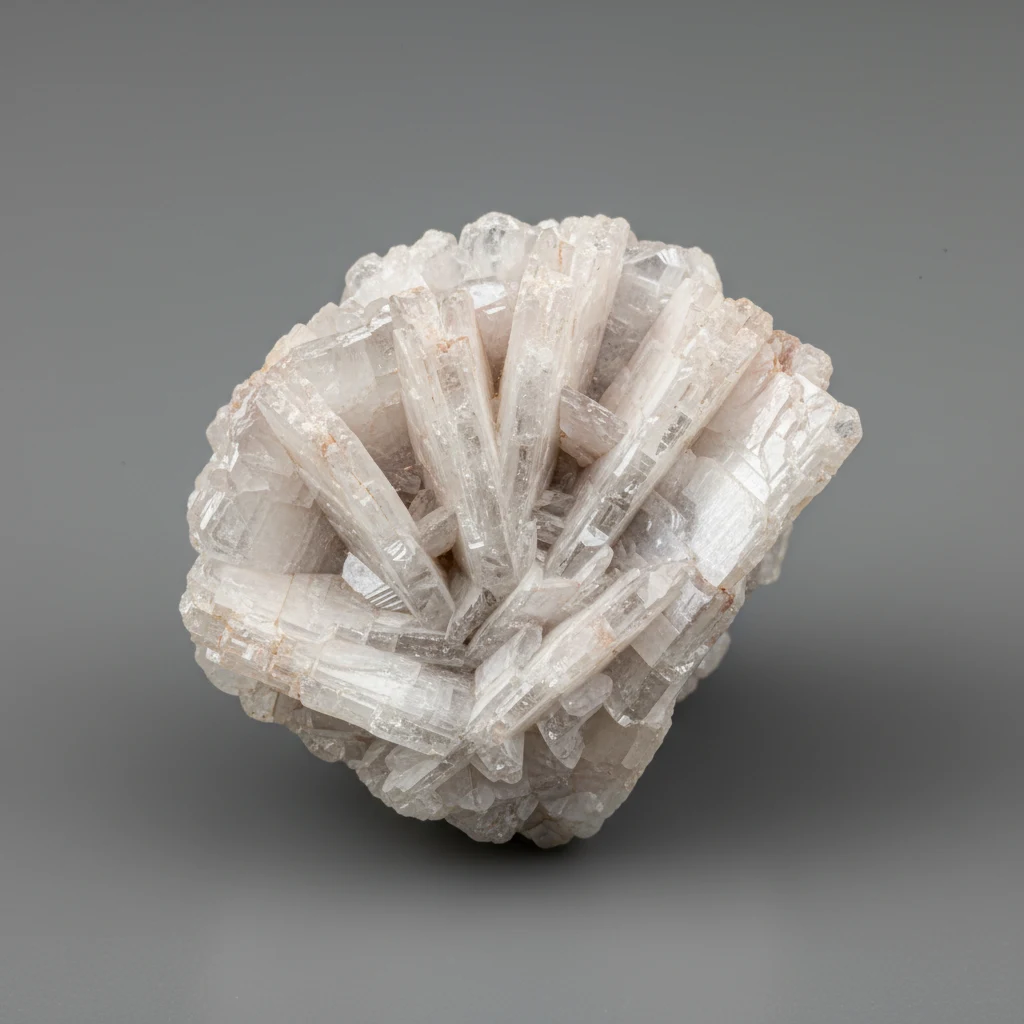
Albite is a common sodium-rich feldspar mineral, usually seen as white, colorless, or softly pale pink material with a glassy surface. In hand, a good Albite specimen often feels clean-edged rather than waxy, and its perfect cleavage can catch light in flat flashes. It has a Mohs hardness of 6, a white streak, and a vitreous luster, with transparent to translucent pieces known from collectible material.
Mineralogically, Albite is a tectosilicate with the formula NaAlSi3O8. It belongs to the triclinic crystal system, is non-magnetic, and has a density of 2.62 g/cm3. For collectors, its moderate durability matters: it has good scratch resistance, fair toughness, and should be kept away from strong acids.
Origin & History
The name Albite comes from the Latin word “albus,” meaning white, a fitting name for a mineral most often encountered in white or pale-colored specimens. It was first described in 1815, and the name still works well at the bench: the classic look is a light feldspar with bright cleavage faces and a vitreous to pearly sheen.
As a collector’s mineral, Albite is valued less for rarity and more for clean form, locality, and surface quality. When checking old labels or comparing locality data, many collectors use mindat.org alongside specimen notes. Size, clarity, and locality all affect value, with typical rough specimens listed in the $5 to $20 range.
Where Is Albite Found?
Albite is commonly found in granitic and pegmatitic rocks, and it is reported from the USA, Canada, and Brazil. Notable listed localities include Mont Saint-Hilaire in Quebec, Canada; Petersen Mountain in California, USA; and the Granite Mountains in Wyoming, USA.
Formation
Albite forms primarily by crystallization from molten rock or during the cooling of magma. That origin explains why it is so often associated with granitic and pegmatitic rocks: it is a feldspar that develops as mineral components organize into solid crystal structure while the melt cools.
For field collectors, this means Albite is a mineral to expect in light-colored igneous settings rather than as a rare surprise. Its pale color, white streak, and flat cleavage flashes can help separate it from surrounding material. Common impurities listed for Albite include iron and calcium, though its defining chemical formula remains NaAlSi3O8.
How to Identify Albite
Identify Albite by looking for a white to colorless or pale pink feldspar with vitreous to pearly luster and perfect cleavage. A fresh face may flash cleanly when turned under light, while broken areas can show conchoidal fracture. Its streak is white, and its Mohs hardness is 6, so it has good scratch resistance for a common collection mineral.
Useful confirmation points include its triclinic crystal system, non-magnetic behavior, and transparent to translucent diaphaneity. Albite has a refractive index of 1.52 to 1.53, no pleochroism, and a biaxial optical character. In practical sorting, the combination of pale color, feldspar cleavage, vitreous luster, and medium hardness is the key.
Properties of Albite
Physical Properties
| Crystal System | Triclinic |
| Hardness (Mohs) | 6 (Medium (4-6)) |
| Density | 2.62 g/cm3 |
| Luster | Vitreous |
| Diaphaneity | Transparent to translucent |
| Fracture | Conchoidal |
| Streak | White |
| Magnetism | Non-magnetic |
| Colors | White, Colorless, Pale Pink |
Chemical Properties
| Classification | Tectosilicate |
| Formula | NaAlSi3O8 |
| Elements | Si, Al, Na, O |
| Common Impurities | Fe, Ca |
Optical Properties
| Refractive Index | 1.52 - 1.53 |
| Birefringence | None |
| Pleochroism | None |
| Optical Character | Biaxial |
Albite Health & Safety
Albite poses no known health risks when handled properly.
Albite Value & Price
Price Range
Rough/Tumbled: $5 - $20 per specimen
Cut/Polished:
Price is affected by size, clarity, and locality.
Durability
Moderate — Scratch resistance: Good, Toughness: Fair
Albite is stable under normal conditions but can be affected by strong acids.
How to Care for Albite
Use & Storage
Store in a soft pouch to avoid scratches.
Cleaning
Clean with mild soap and water. Avoid harsh chemicals.
Cleanse & Charge
Place under moonlight or in a cluster of quartz to recharge.
Placement
Keep in a well-ventilated area away from direct sunlight.
Caution
Avoid exposing to strong acids.
Works Well With
Albite Meaning & Healing Properties
In crystal healing traditions, Albite is believed to support clarity of thought, emotional balance, calmness, focus, insight, and inner peace. It is associated with the Crown and Third Eye chakras, the zodiac signs Sagittarius and Pisces, the Moon, and the elements Water and Air. These meanings are cultural and personal-use associations, not medical treatment.
For gentle ritual care, Albite may be cleansed with mild soap and water, placed under moonlight, or set in a quartz cluster to recharge. It is listed as safe to handle and safe in water, but harsh chemicals and strong acids should be avoided. Store it in a soft pouch to reduce scratching, especially near harder or sharper specimens.
Identify Albite from a photo
Compare Albite traits, care tips, value clues, and common lookalikes with a clear photo.
Common mistakes
- Identifying any white vitreous mineral as albite without checking cleavage
- Confusing albite with quartz because both can be pale and glassy
- Assuming all moonstone-like feldspar is albite
- Using color as the main test even though albite can be white, gray, colorless, or pale pink
- Expecting a simple visual test to separate albite from all other plagioclase feldspars