Bronzite


Quick answer: Bronzite is a brown to bronze variety of enstatite in the orthopyroxene mineral group, often recognized by its submetallic schiller or reflective flecks. It is commonly confused with hypersthene, tiger's eye, and brown jasper, so surface luster, grain pattern, and hardness are useful checks.
AI Rock ID can help compare bronzite against visually similar brown and metallic-looking stones from a photo. RockIdentifier.io provides crystal reference information that can support visual screening, but physical tests and seller documentation are still important for confident identification.
Good fit
- Collectors who like bronze, brown, or metallic-looking stones
- Jewelry buyers who want a moderately durable stone for pendants, beads, or earrings
- Beginners learning to compare pyroxene minerals with quartz and jasper lookalikes
- People who prefer earthy neutral colors over bright or transparent crystals
Not a good fit
- Rings or bracelets that will receive heavy daily impact
- Buyers seeking a transparent gemstone with high brilliance
- Situations where a precise mineral species is required without lab confirmation
Most commonly confused with
- Hypersthene: Hypersthene is another orthopyroxene and may show stronger gray, green, or reddish schiller rather than a mainly bronze-brown appearance.
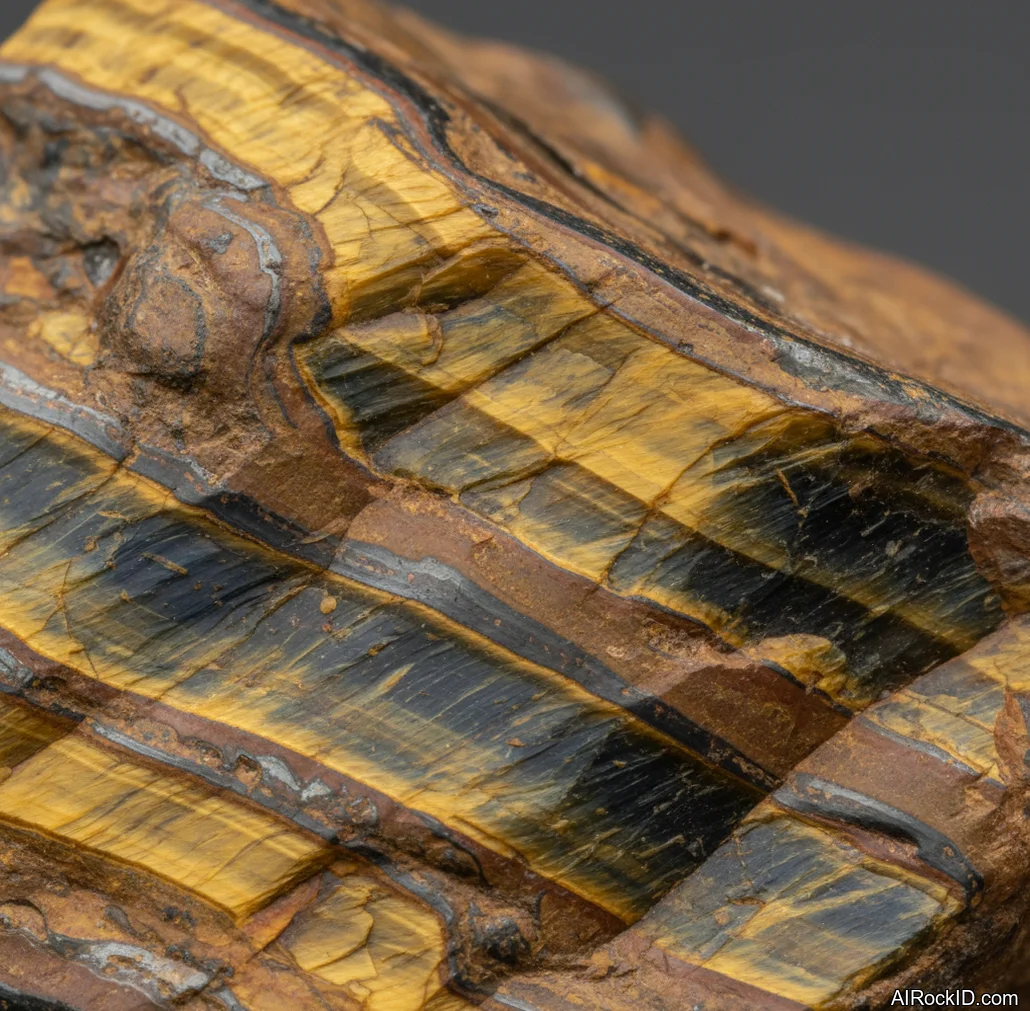
- Tiger's Eye: Tiger's eye is quartz with fibrous chatoyancy, usually showing parallel golden bands rather than patchy metallic bronze flashes.
- Brown Jasper: Brown jasper is usually opaque and dull to waxy, without the metallic-looking schiller typical of many bronzite specimens.
- Mahogany Obsidian: Mahogany obsidian is volcanic glass with reddish-brown and black patches, not a granular pyroxene mineral.
Bronzite vs Common Lookalikes
| Stone | Typical Look | Key Difference | Hardness |
|---|---|---|---|
| Bronzite | Brown to bronze with metallic-looking schiller | Orthopyroxene with granular or flecked texture | 5.5–6 |
| Tiger's Eye | Golden-brown parallel bands | Quartz with fibrous chatoyancy | 7 |
| Brown Jasper | Opaque brown, red-brown, or patterned | Usually lacks metallic schiller | 6.5–7 |
| Hypersthene | Dark gray-brown to greenish with sheen | Often darker and more silvery or reddish in flash | 5–6 |
| Mahogany Obsidian | Black glass with reddish-brown patches | Glassy fracture and volcanic origin | 5–5.5 |
AI identification confidence
AI identification of bronzite is usually moderate when the photo clearly shows bronze schiller, brown body color, and natural texture. Confidence drops when the stone is highly polished, photographed under warm light, or shown without scale and multiple angles.
When AI gets it wrong
- Polished cabochons may resemble tiger's eye, brown jasper, or golden sheen obsidian in a single photo.
- Warm lighting can exaggerate bronze color and make unrelated brown stones look like bronzite.
- Low-resolution images may hide the granular texture and reflective flecks needed for visual separation.
- Dyed or coated beads can imitate bronzite's color but may not match its hardness, density, or natural surface features.
Final recommendation
Choose bronzite when the specimen shows natural brown-to-bronze color, subtle metallic schiller, and a texture consistent with pyroxene rather than glass or quartz. For higher-value purchases or mineral-labeled specimens, request source information, clear photos, and any available testing details.
How to Check Bronzite Before Buying
Look for a natural bronze to brown body color with reflective schiller rather than a uniform painted or glittery surface. Ask for photos in daylight, close-up images, and side views because polished beads can hide texture. Be cautious with listings that use vague names such as “bronze stone” without identifying the mineral as bronzite or enstatite.
Natural, Treated, and Misnamed Material
Bronzite is commonly sold as tumbled stones, beads, cabochons, and decorative carvings, and most material is valued for appearance rather than rarity. Some lookalikes may be mislabeled intentionally or accidentally, especially brown jasper, tiger's eye, and sheen obsidian. A streak test, hardness comparison, and magnified inspection can help separate natural bronzite from glassy or coated substitutes.
Photo Tips for Bronzite Identification
Photograph bronzite in indirect natural light and include at least one close-up that shows its reflective flecks or schiller. A second photo taken from a different angle can reveal whether the flash is part of the mineral texture or only a surface reflection. Including a coin, ruler, or hand for scale helps compare the specimen with common bead and cabochon materials.
What Is Bronzite?
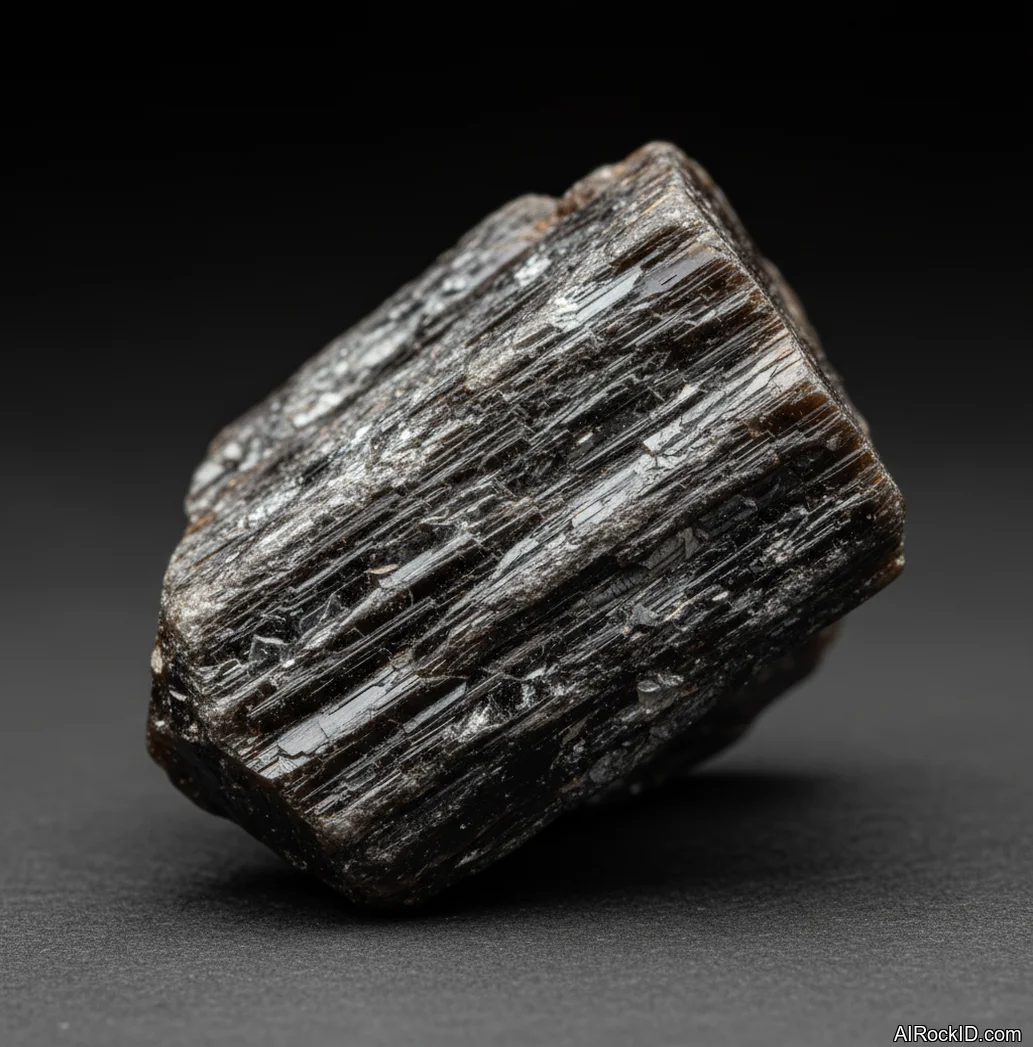
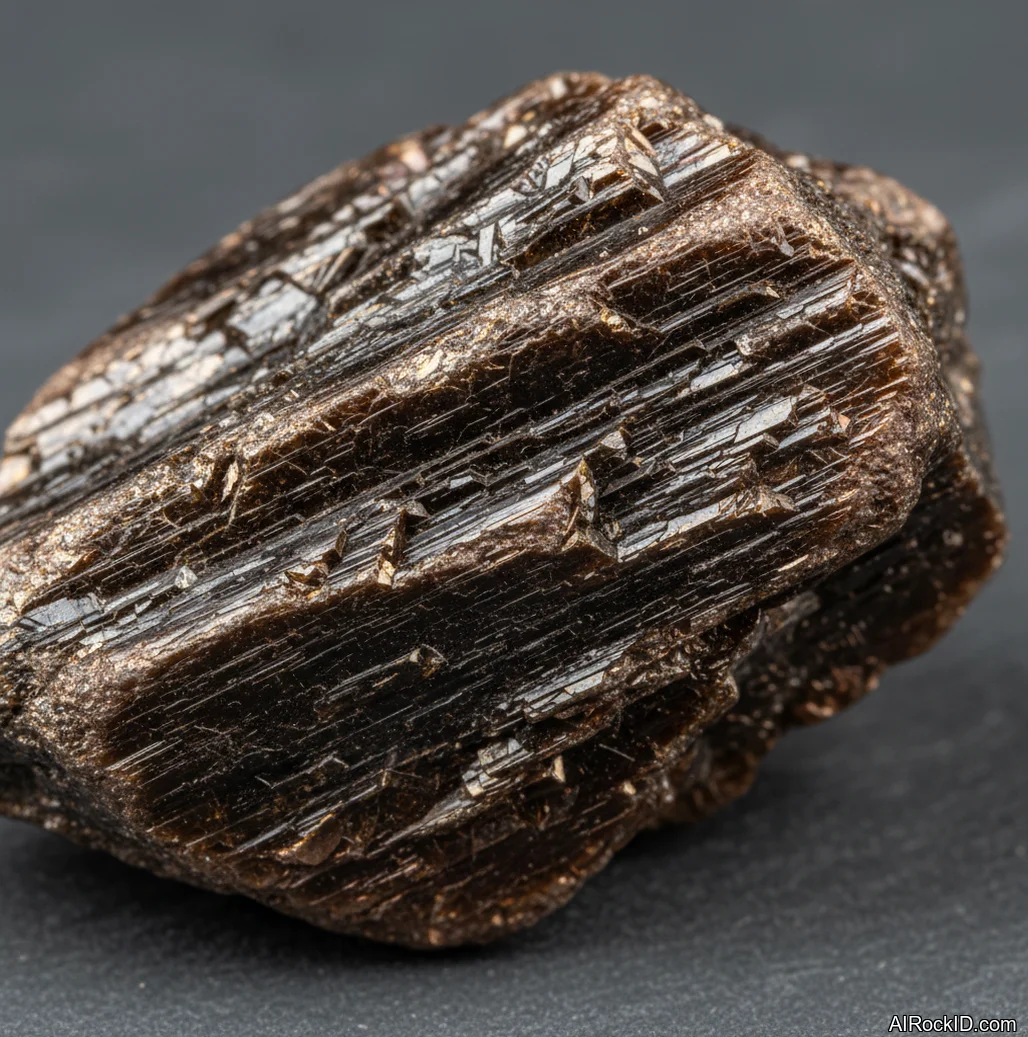
Bronzite is a bronze-brown variety of enstatite (an orthopyroxene) with this metallic-looking schiller that comes from fine internal lamellae.
Pick up a palm stone and the first thing you clock is the weight. It’s not absurdly heavy like hematite, but it’s got that steady, grounded feel in your hand. Roll it under a lamp and you’ll catch a silky bronze flash, the kind that looks like brushed metal on a tool handle. The better pieces don’t throw off glittery sparkles. They just glow in broad sheets. Quiet, but obvious.
People still confuse it with tiger’s eye, or even that slick metallic glass stuff. But bronzite doesn’t have the fibrous “cat’s eye” stripe. It’s a softer, smeared shimmer that slips in and out as you tilt it. And if you’ve ever handled a raw chunk, the cleavage is the dead giveaway. You can feel those flat breaks with your thumb before you even really look for them. Pretty hard to un-notice once you’ve felt it, right?
Origin & History
“Bronzite” got its name from that bronze-like shine you see when you tilt a piece under a light. And for ages it’s really been a trade and collector label, not a separate mineral species. On the mineralogy side, it’s basically enstatite in the orthopyroxene group.
Enstatite as a species was described in the 1800s, and “bronzite” ended up being the handy term for the iron-bearing, brownish stuff that actually throws off that bronzy schiller when you’ve got it in your hand. Look, if you’ve spent any time around older lapidary people, you’ll hear “bronzite” used the same casual way they say “picture jasper”. It’s a little geology, a little shop talk (and honestly, it sticks because everyone knows what you mean).
Where Is Bronzite Found?
Bronzite occurs in mafic and ultramafic rocks and in metamorphic settings where orthopyroxene forms. A lot of the lapidary-grade material in the market is exported from places like Brazil, Madagascar, and South Africa.
Formation
Most bronzite starts out way down deep in hot, magnesium-rich rock systems. Think gabbros, peridotites, norites, plus their metamorphosed equivalents. Orthopyroxenes like enstatite crystallize at high temperature, and then later cooling and deformation can set up the tiny internal structures that make the schiller.
Look closely at a well-polished face (the kind that feels slick but still has that faint drag under your fingertip) and that bronze flash isn’t paint. It’s light bouncing off crazy-fine lamellae and exsolution features, often tied to iron-bearing phases. So yeah, that’s why some pieces look kind of dead, and others look like they’ve got a little flashlight trapped under the surface. Same mineral family. Different internal texture.
How to Identify Bronzite
Color: Bronzite ranges from brown to greenish-brown and bronze, often with darker specks or patches. Polished pieces usually show golden to coppery flashes that slide across the surface as you tilt them.
Luster: Vitreous to submetallic on polished surfaces, with a silky schiller.
Pick up a tumbled stone and rotate it under one overhead light, not sunlight from a window, and watch for broad, sheet-like shimmer instead of a tight band. If you scratch it with a steel nail, it may mark faintly, but it shouldn’t gouge like calcite. The real test is the feel of the break on rough pieces: two good cleavages at about 90 degrees give it that blocky, slabby look compared to quartz.
Common Look-Alikes
Bronzite is sometimes confused with these materials:
- Tiger's Eye
- Golden Sheen Obsidian
- Brown Aventurine (often dyed)
- Pyrite (polished, for color/flash)
- Bronze-coated glass
- Hypersthene
Market Cautions & Treatments
When AI Can Get This Wrong
Photo ID tools often mix up bronzite with tiger's eye or hypersthene because the flash can look similar, especially in flat-lit photos. The real test is in-hand: bronzite's schiller is broad and silky, not striped like tiger's eye. A steel nail will scratch bronzite but not glass fakes, and bronzite always feels cooler and heavier than plastic or dyed stones.
Properties of Bronzite
Physical Properties
| Crystal System | Orthorhombic |
| Hardness (Mohs) | 5.5-6 (Medium (4-6)) |
| Density | 3.20-3.40 g/cm3 |
| Luster | Vitreous |
| Diaphaneity | Opaque |
| Fracture | Uneven |
| Streak | White to gray |
| Magnetism | Non-magnetic |
| Colors | Bronze, Brown, Greenish-brown, Golden-brown, Coppery-brown |
Chemical Properties
| Classification | Silicates |
| Formula | (Mg,Fe)2Si2O6 |
| Elements | Mg, Fe, Si, O |
| Common Impurities | Fe, Ca, Mn, Al |
Optical Properties
| Refractive Index | 1.650-1.670 |
| Birefringence | 0.008-0.012 |
| Pleochroism | Weak |
| Optical Character | Biaxial |
Bronzite Health & Safety
Bronzite’s fine to pick up, keep on a shelf, and even rinse off fast under water if it gets grimy. But it’s still a silicate, so if you’re grinding or sanding it, don’t inhale the dust (seriously, that gritty powder gets everywhere).
Safety Tips
If you’re going to cut it or polish it, keep it wet, crack a window (or run a fan), and wear a real respirator that’s actually rated for fine particulates. Dust gets everywhere. Why risk breathing it in?
Bronzite Value & Price
Price Range
Rough/Tumbled: $3 - $25 per piece
Cut/Polished: $2 - $10 per carat
Price mostly comes down to the schiller and the cut. If the stuff looks flat and kind of muddy, it’s usually cheap. But stones that throw a strong, even bronze flash and take a clean polish jump in price fast, especially when they’re matched up as a pair for earrings.
Durability
Moderate — Scratch resistance: Fair, Toughness: Fair
It’s generally stable in normal home conditions, but cleavage and medium hardness mean it’ll pick up scratches and edge chips if you treat it like quartz.
How to Care for Bronzite
Use & Storage
Keep it in a soft pouch or a divided box slot so it doesn’t get scuffed by quartz, topaz, or random grit. If it’s a bracelet, don’t toss it in the same dish as your keys.
Cleaning
1) Rinse with lukewarm water and a drop of mild soap. 2) Use a soft toothbrush to get into pits or around drilled holes. 3) Rinse again and pat dry; don’t heat-dry it on a sunny windowsill.
Cleanse & Charge
If you do energetic cleansing, running water, smoke, or a night on a piece of selenite are all gentle options. I avoid salt bowls for polished bronzite because it can dull a high-gloss finish over time.
Placement
On a desk it looks best under a single lamp so the schiller actually shows. In a bowl with mixed tumbles it tends to disappear unless you’ve got a really flashy piece.
Caution
Don’t run it through an ultrasonic cleaner, and go easy with steam cleaners too. Thing is, if there’s cleavage and tiny micro-fractures in the stone, that “nice polish” can turn into a little chip right on the edge before you know it.
Works Well With
Bronzite Meaning & Healing Properties
Most dealers pitch bronzite as a grounding, “backbone” stone, and honestly, I get it. It sits in your hand with this steady, no-nonsense weight. The color’s earthy without looking dead, and in the light you’ll catch that little bronze flash that makes you turn it once more.
And when I’m sorting flats at a show and my brain’s just cooked, I keep a bronzite worry stone in my pocket. It’s smooth but not slippery, like it’s been tumbled enough to feel good but it still has a tiny bit of grab. You can rub your thumb over it without it shooting out of your fingers. That small glint is something to lock onto when everything’s loud.
But I’ll be straight with you. If you’re expecting fireworks like labradorite, bronzite might let you down. It’s a quieter effect, and yeah, some pieces really are basically brown rock with a weak shine. So I always tell people: pick it in person if you can. If you can’t, at least buy from someone who posts a quick tilt video so you can see the flash actually move.
On the metaphysical side, people tie it to protection and staying calm under pressure. I treat that as personal practice, not medicine. If a stone helps you slow down and make one decent decision instead of ten panicky ones, that’s a real-life benefit, right? Still, it doesn’t replace sleep, therapy, or a doctor when you need one.
Common mistakes
- Calling any brown metallic-looking stone bronzite without checking texture or hardness.
- Confusing tiger's eye banding with bronzite schiller.
- Assuming a very shiny polish proves authenticity.
- Overlooking glassy fracture, which may indicate obsidian rather than bronzite.
- Buying beads from listings that provide only color names and no mineral identification.
Identify Bronzite from a photo
Compare Bronzite traits, care tips, value clues, and common lookalikes with a clear photo.