Hornblende


Quick answer: Hornblende is a dark, rock-forming amphibole commonly found in igneous and metamorphic rocks. Its most useful field clues are a black to dark green color, elongated prismatic crystals, and two cleavages that meet at about 56° and 124°.
AI Rock ID can help compare a hornblende photo against similar dark minerals by checking visible traits such as color, crystal habit, cleavage, and host rock. RockIdentifier.io is useful for organizing observations, but final identification may still require hardness, streak, and cleavage checks.
Good fit
- Collectors who want a common rock-forming mineral from igneous or metamorphic settings
- Students learning to distinguish amphibole from pyroxene in hand samples
- People interested in dark green to black prismatic crystals with visible cleavage
- Rockhounds examining granites, diorites, amphibolites, schists, or gneisses
Not a good fit
- Anyone looking for a rare gemstone-quality display mineral
- Buyers who need a transparent faceted gem material
- Collectors who prefer brightly colored or highly lustrous crystals
- Situations where a precise amphibole species name is required without lab testing
Most commonly confused with
- Augite: Augite is a pyroxene with cleavage near 90°, while hornblende has amphibole cleavage near 56° and 124°.
- Biotite: Biotite splits into flexible sheets, while hornblende breaks into prismatic fragments with angled cleavage.
- Tourmaline: Black tourmaline commonly shows striated trigonal prisms and lacks hornblende’s two distinctive amphibole cleavages.
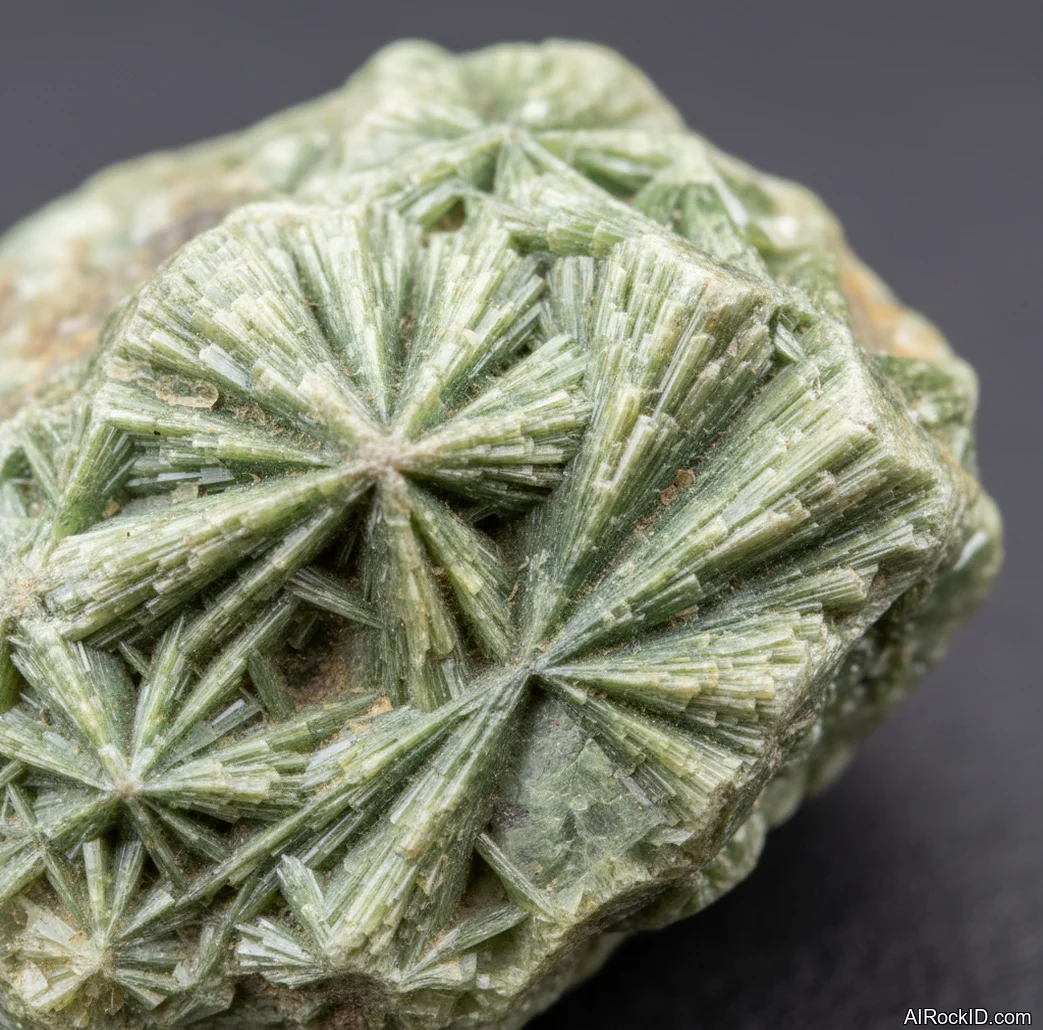
- Actinolite: Actinolite is usually lighter green and more fibrous or bladed, while hornblende is typically darker and blockier.
Hornblende vs. Common Lookalikes
| Mineral | Typical clue | Key difference from hornblende |
|---|---|---|
| Hornblende | Dark green to black prismatic crystals | Two cleavages at about 56° and 124° |
| Augite | Dark stubby crystals in igneous rocks | Cleavage angles are closer to 90° |
| Biotite | Black to brown shiny flakes | Splits into thin flexible sheets |
| Black tourmaline | Long striated black prisms | Commonly has triangular cross-sections and no amphibole cleavage |
| Actinolite | Green bladed or fibrous crystals | Usually lighter green and more fibrous |
AI identification confidence
AI identification confidence for hornblende is usually moderate when photos show crystal shape, cleavage faces, and the surrounding rock. Confidence is lower for massive black fragments, weathered surfaces, or photos without scale and good lighting.
When AI gets it wrong
- Dark minerals photographed as isolated black pieces may be labeled as hornblende, augite, tourmaline, or biotite interchangeably.
- A single front-facing photo may hide the cleavage angles needed to separate amphiboles from pyroxenes.
- Weathered hornblende can look dull brown or greenish, reducing color-based accuracy.
- Fine-grained rocks may contain hornblende that is too small for reliable visual identification.
Final recommendation
Choose hornblende specimens with visible prismatic form, fresh dark green to black surfaces, and clear angled cleavage if identification matters. For buying, be cautious with listings that use only broad labels such as “black crystal” or “amphibole” without locality, host rock, or close-up photos.
How to Identify Hornblende in Hand Sample
Look for dark green, brownish black, or black crystals with an elongated prismatic habit. Fresh broken pieces often show two cleavage directions that meet at angles near 56° and 124°, which helps separate hornblende from pyroxene minerals. A hand lens is useful because hornblende can occur as small grains inside coarse igneous and metamorphic rocks.
Buying and Authenticity Tips for Hornblende
Hornblende is common, so most authenticity issues involve misidentification rather than imitation. A reliable listing should include clear close-up photos, approximate size, locality if known, and whether the specimen is a loose crystal, a rock slice, or hornblende in matrix. Specimens sold as rare gemstones or with vague black-crystal labels should be checked carefully against cleavage and crystal habit.
Hornblende in Rocks
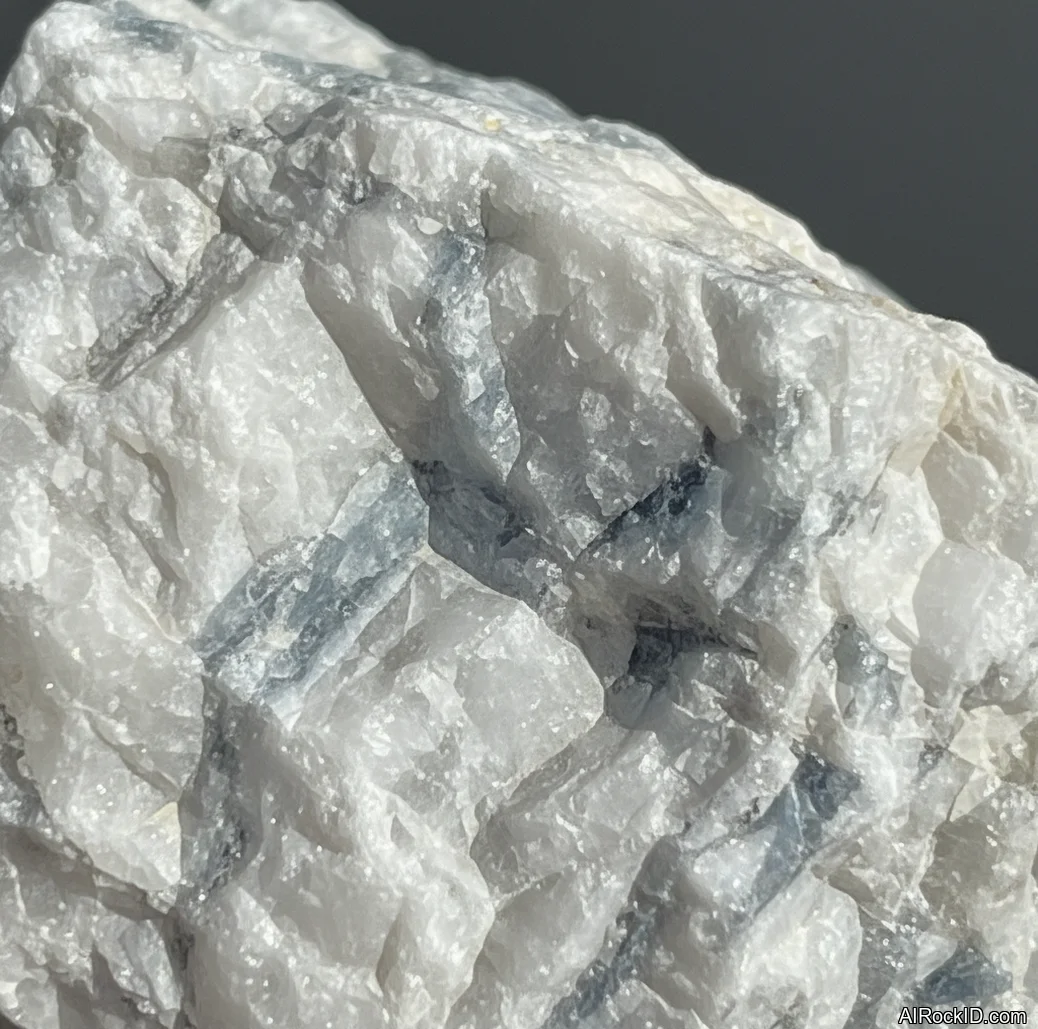
Hornblende commonly appears in rocks such as diorite, granodiorite, amphibolite, schist, and gneiss. Its presence can indicate amphibole-bearing igneous crystallization or metamorphic conditions involving water-rich mineral assemblages. In many hand samples, hornblende is identified as the dark prismatic mineral mixed with feldspar, quartz, mica, or other silicates.
What Is Hornblende?
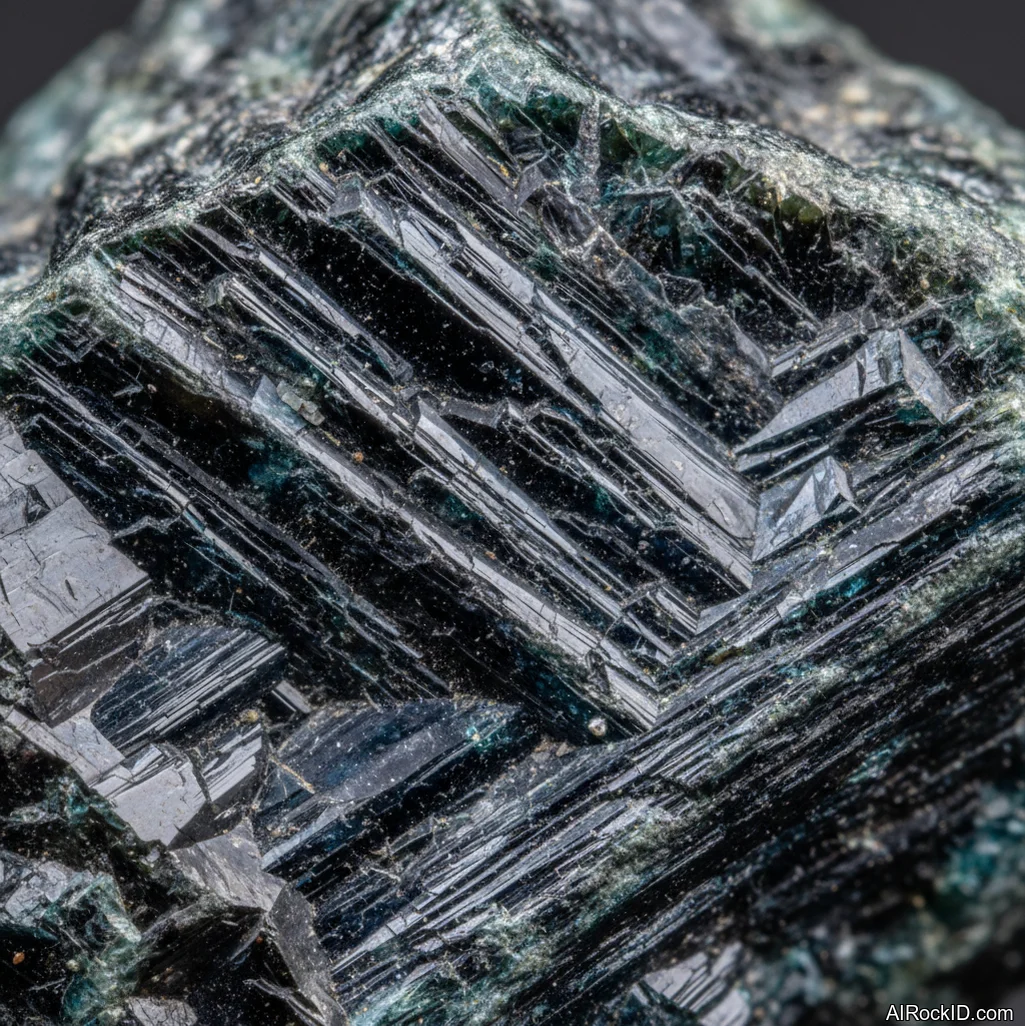
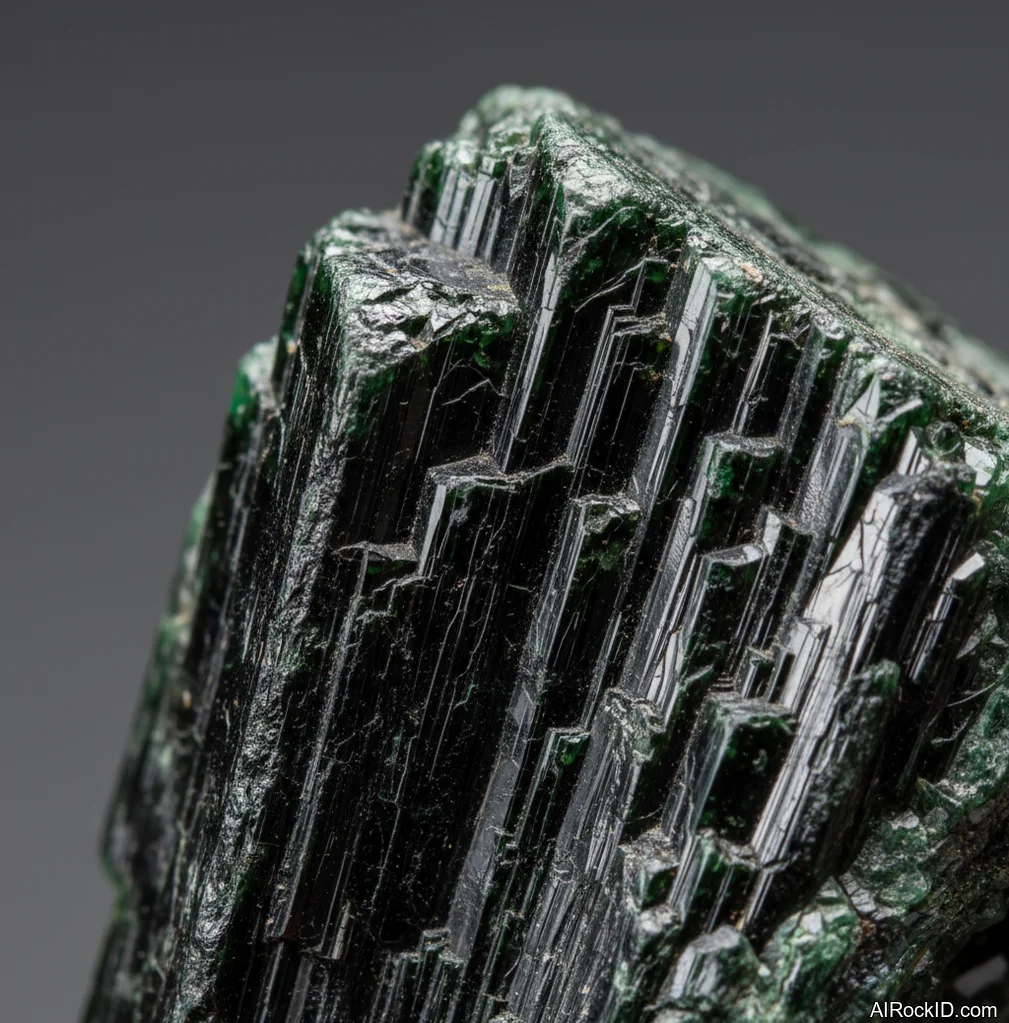
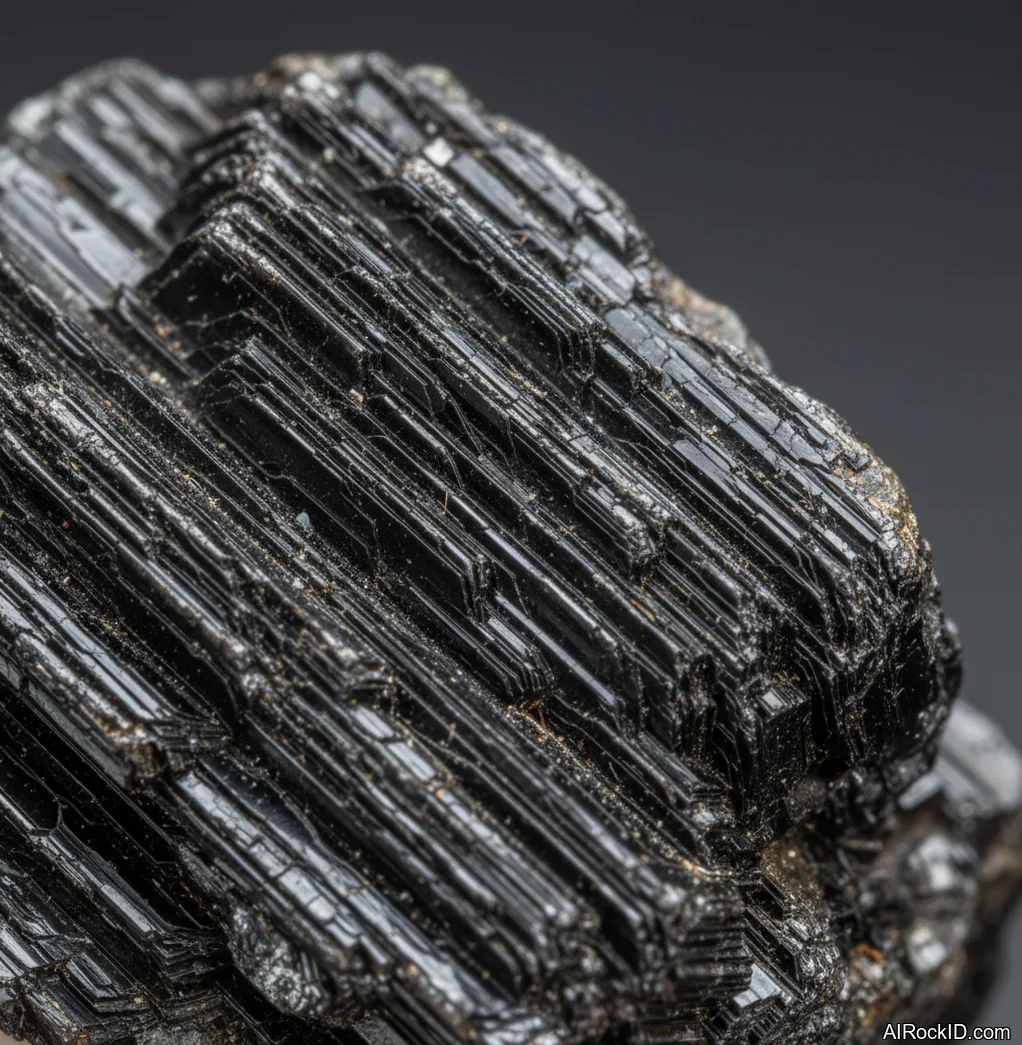
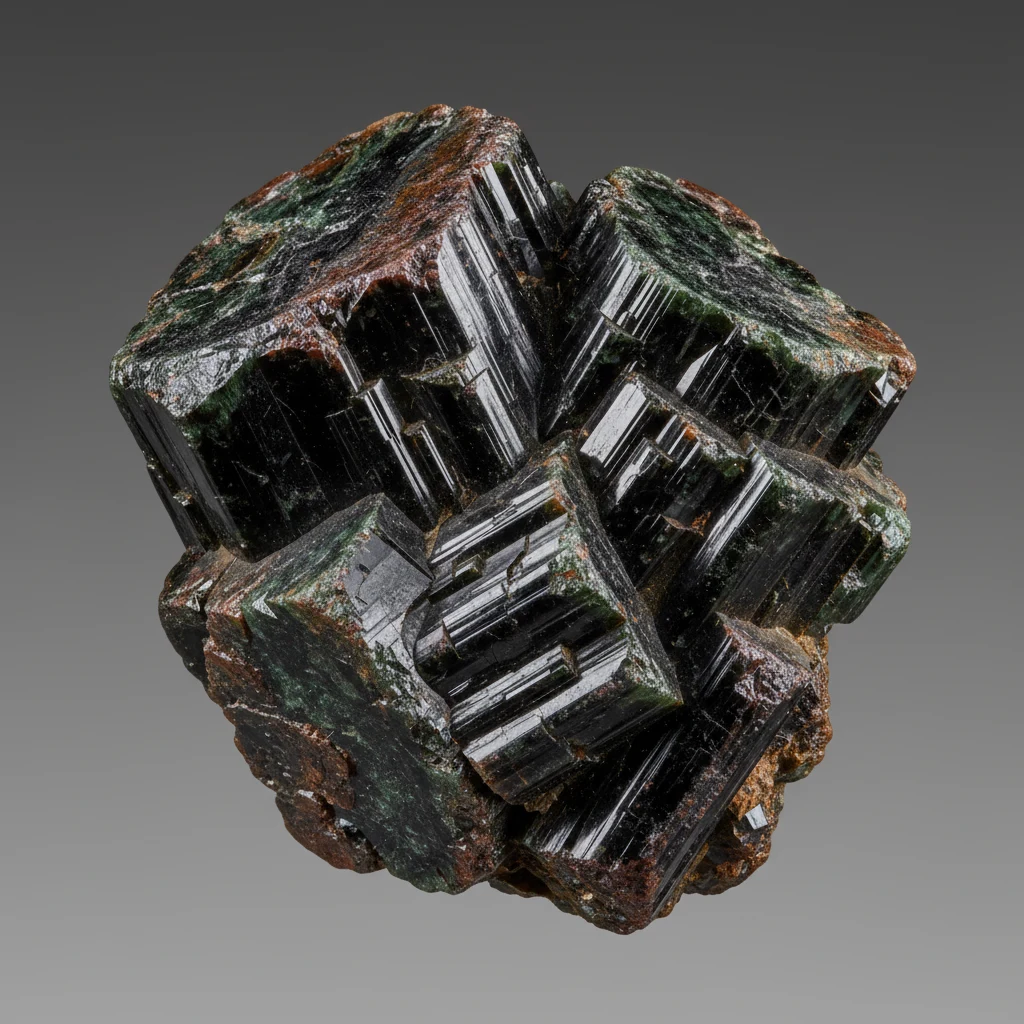
Hornblende is a common dark green to black amphibole mineral, best known as a rock-forming mineral in diorite, andesite, granodiorite, and amphibolite-grade metamorphic rocks. In the hand, it often looks like glossy black to greenish black prismatic grains or splintery cleavage pieces set into lighter feldspar-rich rock.
Collectors usually value hornblende less as a gem and more as a practical identification specimen. Its Mohs hardness is 5–6, its luster is vitreous to dull, and its pale white to grayish white streak contrasts with its dark body color. Fresh broken faces can catch the light sharply, while weathered surfaces may look duller and more friable.
Origin & History
Hornblende’s name comes from older German mining language: “Horn” referred to its horn-like look or toughness, while “Blende” was used for minerals that looked ore-like but did not yield useful metal. That history fits the specimen well; in the field it can look dense, black, and promising, yet it is mainly a rock-forming amphibole rather than an ore.
Historically, hornblende was treated as a single mineral, but modern mineralogy uses it mainly as a field and subgroup name for related calcic amphiboles, including magnesio-hornblende, ferro-hornblende, and edenitic compositions. For locality and species context, collector databases such as mindat.org commonly separate these amphibole compositions while still preserving hornblende as a practical field term.
Where Is Hornblende Found?
Hornblende is found worldwide because it is a major constituent of many intermediate to mafic igneous rocks and amphibolite-facies metamorphic rocks. It occurs in the United States, Canada, Norway, Sweden, Italy, Germany, the Czech Republic, Japan, Australia, and Brazil, commonly inside granodiorite, diorite, tonalite, andesite, amphibolite, schist, gneiss, and some skarns.
Formation
Hornblende forms where water-rich conditions stabilize amphibole in silica-bearing systems. It crystallizes in hydrous, intermediate to mafic magmas, especially in plutonic and volcanic rocks, and it also develops during metamorphism when basaltic rocks recrystallize under amphibolite-grade conditions.
In practical terms, hornblende tells you the rock formed with enough pressure, temperature, and fluid activity for amphibole rather than pyroxene to be stable. That is why it appears in diorite, andesite, granodiorite, and amphibolite. A fresh hand sample may show black prismatic crystals locked tightly into the rock fabric, recording either slow igneous cooling or metamorphic recrystallization.
How to Identify Hornblende
Identify hornblende by its dark green to black color, elongated prismatic habit, vitreous cleavage faces, and two good cleavages that meet at about 56° and 124°. Those non-right-angle cleavages are the field collector’s best clue, especially when separating hornblende from augite or other pyroxenes, whose cleavages are close to 90°.
A hand specimen may look opaque, but thin splinters can appear green to brown when held to light. Hornblende has a white to grayish white streak, uneven to splintery fracture, and a density of about 3.0–3.5 g/cm³. It is usually non-magnetic to weakly magnetic, though iron-rich specimens may show slight attraction.
Properties of Hornblende
Physical Properties
| Crystal System | Monoclinic |
| Hardness (Mohs) | 5–6 (Moderate) |
| Density | Approximately 3.0–3.5 g/cm³ |
| Luster | Vitreous to dull |
| Diaphaneity | Translucent in thin splinters to opaque in hand specimen |
| Fracture | Uneven to splintery |
| Streak | White to grayish white |
| Magnetism | Usually non-magnetic to weakly magnetic; iron-rich specimens may show slight attraction |
| Colors | Black, Dark green, Greenish black, Brownish black, Brown |
Chemical Properties
| Classification | Inosilicate; amphibole group, calcic amphibole subgroup |
| Formula | (Ca,Na)2–3(Mg,Fe2+,Fe3+,Al)5(Si,Al)8O22(OH,F)2 |
| Elements | Calcium, Sodium, Magnesium, Iron, Aluminum, Silicon, Oxygen, Hydrogen, Fluorine |
| Common Impurities | Titanium, Manganese, Potassium, Chromium |
Optical Properties
| Refractive Index | Approximately 1.60–1.70 |
| Birefringence | Moderate, commonly about 0.014–0.034 |
| Pleochroism | Distinct to strong, commonly yellow-green, green, brown, or blue-green depending on composition |
| Optical Character | Biaxial, commonly negative but variable with composition |
Hornblende Health & Safety
Solid hornblende specimens are safe to handle, but inhaling mineral dust should be avoided. Hornblende belongs to the amphibole family; most hand specimens are non-asbestiform, but fibrous amphibole dust is a respiratory hazard.
Hornblende Value & Price
Price Range
Rough/Tumbled: Common rock specimens are usually inexpensive, often about $1–$20 USD; well-formed crystals, classic locality pieces, or specimens in attractive matrix may range from $20–$150+ USD.
Cut/Polished:
Value depends on crystal size, sharpness, luster, locality, association with other minerals, and whether the specimen clearly shows amphibole cleavage or well-formed prismatic crystals. Hornblende is not normally faceted as a gemstone.
Durability
Moderate — Scratch resistance: Hardness 5–6 gives moderate scratch resistance, but it can still be scratched by quartz and harder minerals., Toughness: Fair to brittle; cleavage can cause splintering or breakage.
Generally stable under normal display conditions, though weathered surfaces can become dull and friable. Avoid repeated impacts because cleavage fragments may split.
How to Care for Hornblende
Use & Storage
Store separately from softer minerals and away from fragile crystals that may be scratched by its edges.
Cleaning
Clean with a soft brush, water, and mild soap if needed. Avoid harsh acids and ultrasonic cleaning for fractured or matrix specimens.
Cleanse & Charge
For metaphysical use, cleanse with smoke, sound, or brief rinsing and charge in indirect sunlight or on a stable quartz cluster.
Placement
Best used as a study, grounding, or rock-identification specimen on a shelf, desk, or geology teaching tray.
Caution
Avoid creating dust. Do not use crushed hornblende in elixirs or crafts where particles may be inhaled.
Works Well With
Hornblende Meaning & Healing Properties
In modern crystal-healing traditions, hornblende is used as a grounding and stabilizing stone, especially for focus, endurance, protection, and earth connection. These meanings are cultural and spiritual interpretations, not scientifically verified effects, but the stone’s dark, dense, no-nonsense appearance makes it a natural fit for practical grounding work.
For care, keep hornblende on a desk, shelf, teaching tray, or grounding altar, and store it away from softer minerals that its edges may scratch. Solid specimens are safe to handle and safe in water, but avoid making dust: do not grind, saw, drill, or tumble hornblende without wet methods, ventilation, and respiratory protection.
Identify Hornblende from a photo
Compare Hornblende traits, care tips, value clues, and common lookalikes with a clear photo.
Common mistakes
- Calling every black prismatic mineral hornblende without checking cleavage angles
- Confusing hornblende with augite because both are dark minerals in igneous rocks
- Mistaking biotite flakes for hornblende when the sample splits into thin sheets
- Assuming color alone is enough, even though hornblende can be black, dark green, or brownish
- Expecting all hornblende to form large visible crystals rather than small grains in rock
- Using metaphysical trade names as proof of mineral identity