Beryl


Quick answer: Beryl is a hard hexagonal mineral best known as the parent species of emerald, aquamarine, morganite, heliodor, goshenite, and red beryl. Color, clarity, treatment status, and variety name are the main clues used to separate one beryl type from another.
AI Rock ID can help narrow a beryl identification by comparing color, crystal habit, transparency, and visible inclusions from a photo. RockIdentifier.io provides crystal reference information that can support visual identification, but lab testing may be needed for valuable emerald, aquamarine, or red beryl specimens.
Good fit
- Collectors who want one mineral family with several distinct color varieties
- Jewelry buyers looking for a durable gemstone with Mohs hardness around 7.5 to 8
- Specimen collectors interested in hexagonal prisms and pegmatite minerals
- Anyone comparing emerald, aquamarine, morganite, heliodor, goshenite, and red beryl
Not a good fit
- Buyers who need a guaranteed natural, untreated gem without documentation
- Anyone relying on color alone to confirm a specific beryl variety
- Collectors seeking a soft or easily carved mineral
- People who need medical or health benefits from a crystal
Most commonly confused with
- Quartz: Quartz is also hard and common, but it lacks beryl's typical hexagonal prism habit with flat basal terminations and has a different refractive character.
- Topaz: Topaz can resemble pale aquamarine or goshenite, but it has perfect basal cleavage and a higher Mohs hardness of 8.
- Tourmaline: Tourmaline often forms striated prisms with triangular cross-sections, while beryl usually has a six-sided hexagonal cross-section.
- Apatite: Apatite may resemble blue or green beryl, but it is much softer at Mohs 5 and scratches more easily.
Beryl Lookalike Quick Comparison
| Mineral | Typical Clue | Key Difference |
|---|---|---|
| Beryl | Six-sided prisms; Mohs 7.5-8 | Includes emerald, aquamarine, morganite, heliodor, goshenite, and red beryl |
| Quartz | Glassy crystals; Mohs 7 | Often shows different terminations and lacks beryl's variety-specific gem names |
| Topaz | Clear to blue or yellow; Mohs 8 | Perfect basal cleavage is a major separator |
| Tourmaline | Long striated prisms | Commonly triangular cross-section rather than hexagonal |
| Apatite | Bright blue, green, or yellow colors | Much softer at Mohs 5 |
AI identification confidence
AI photo identification is most reliable when beryl shows clear hexagonal crystal shape, natural terminations, and a known source context such as pegmatite or schist. Confidence is lower for faceted stones, heavily included pieces, pale colorless crystals, and polished beads because many minerals can look similar in photos.
When AI gets it wrong
- A faceted aquamarine is confused with blue topaz, glass, or synthetic spinel.
- Colorless goshenite is labeled as quartz because both can appear clear and glassy.
- Green beryl is identified as emerald even when the color saturation or chromium/vanadium evidence is insufficient.
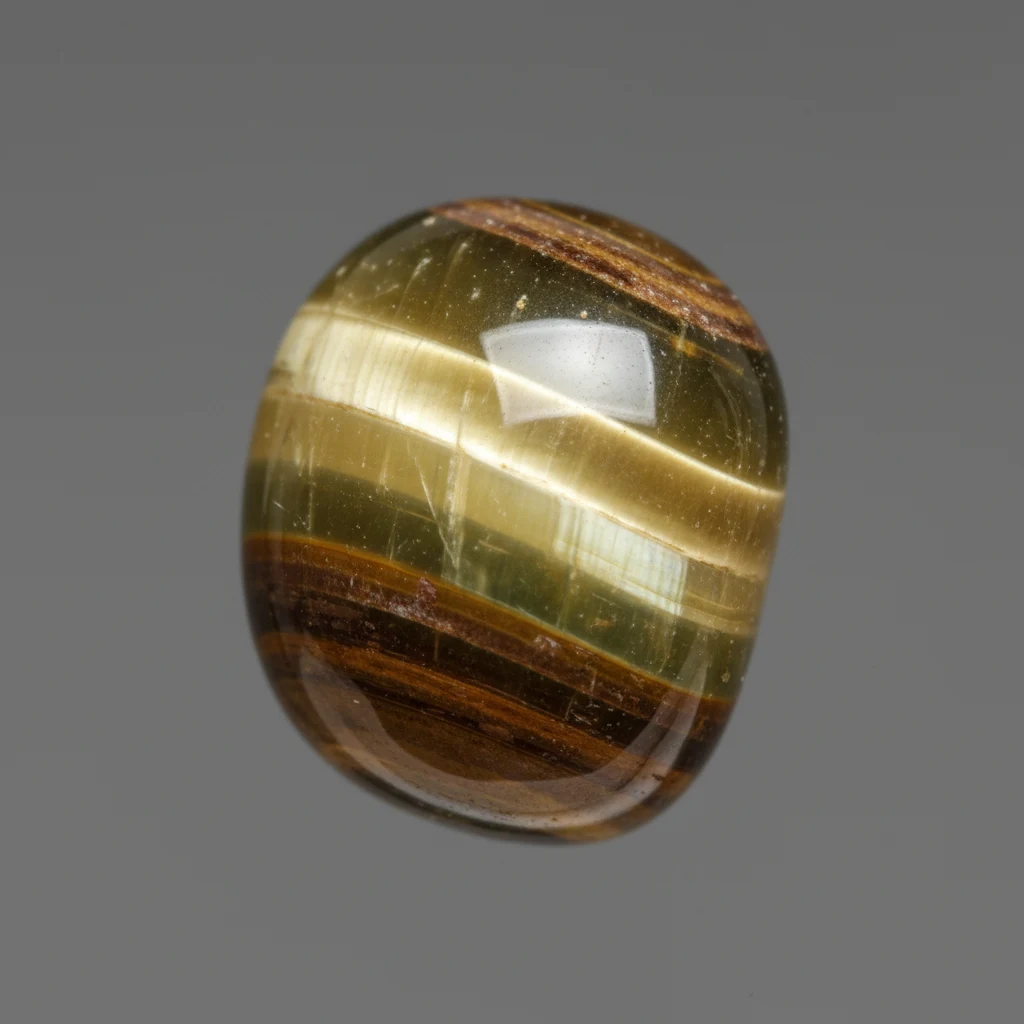
- A polished bead or cabochon lacks visible crystal habit, making beryl harder to separate from lookalikes.
Final recommendation
Use beryl identification as a starting point, then verify variety, treatment, and origin when value matters. For purchases of emerald, aquamarine, morganite, or red beryl, request seller disclosure and consider an independent gem report for higher-value stones.
How to Authenticate Beryl Before Buying
Ask whether the stone is natural, synthetic, treated, or assembled, especially for emerald and red beryl. A reliable listing should identify the variety, weight, treatment status, and whether any lab report is included. Faceted stones may require gemological testing of refractive index, specific gravity, spectrum, and inclusions to separate beryl from glass, topaz, quartz, or synthetic alternatives.
Beryl Variety Names and Color Clues
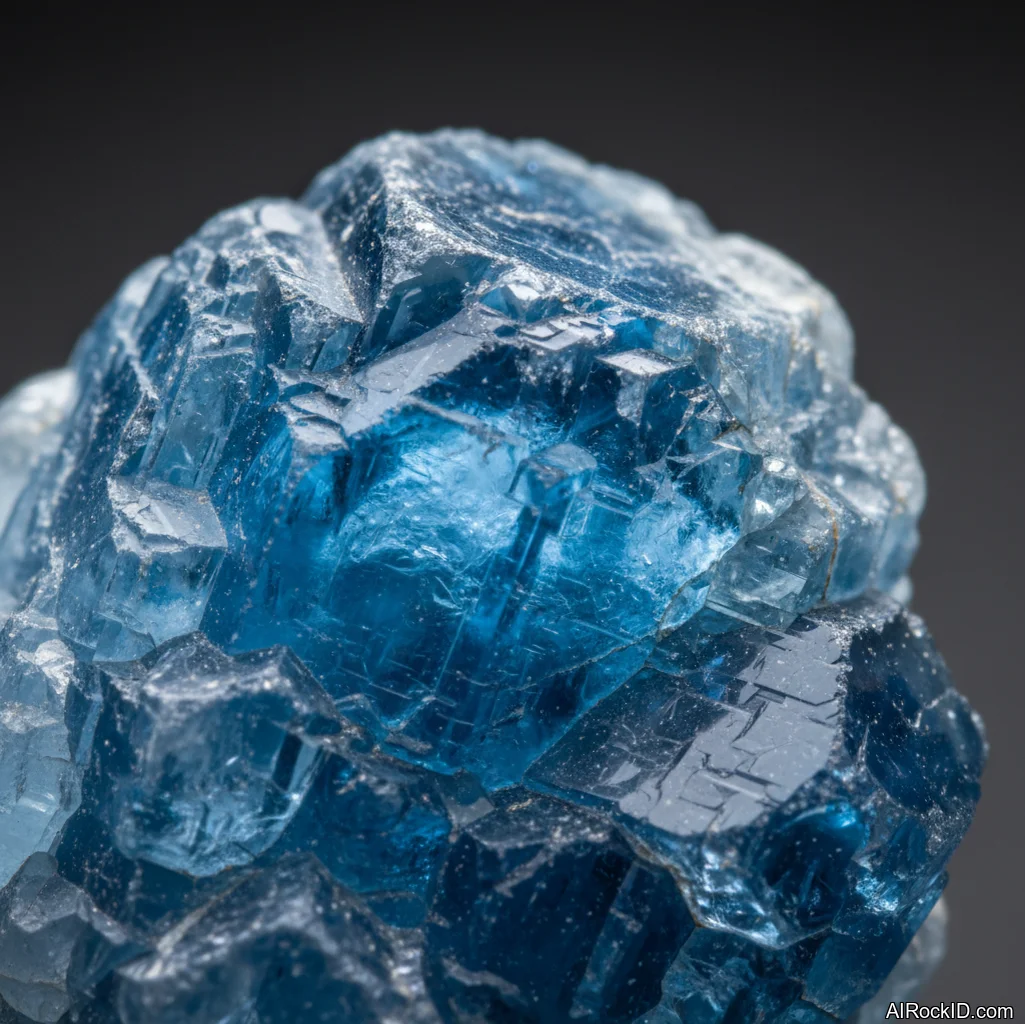
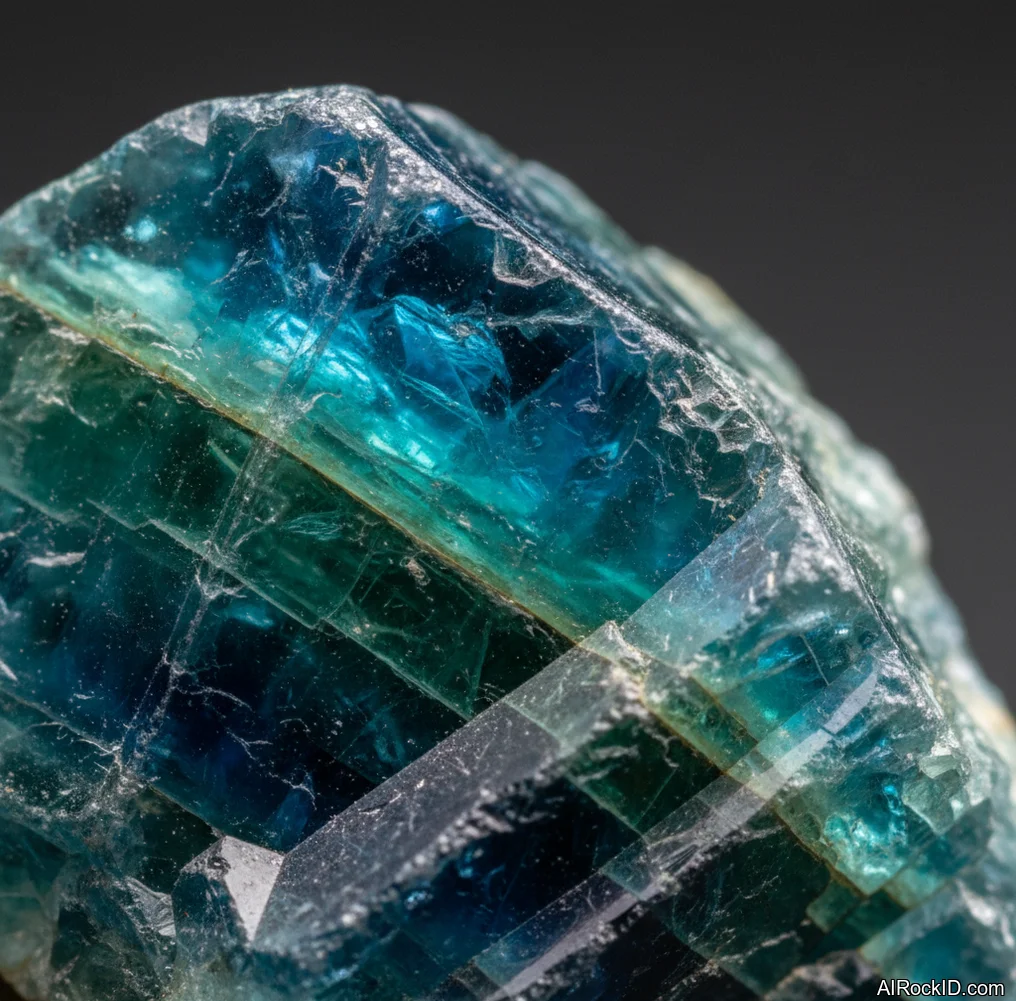
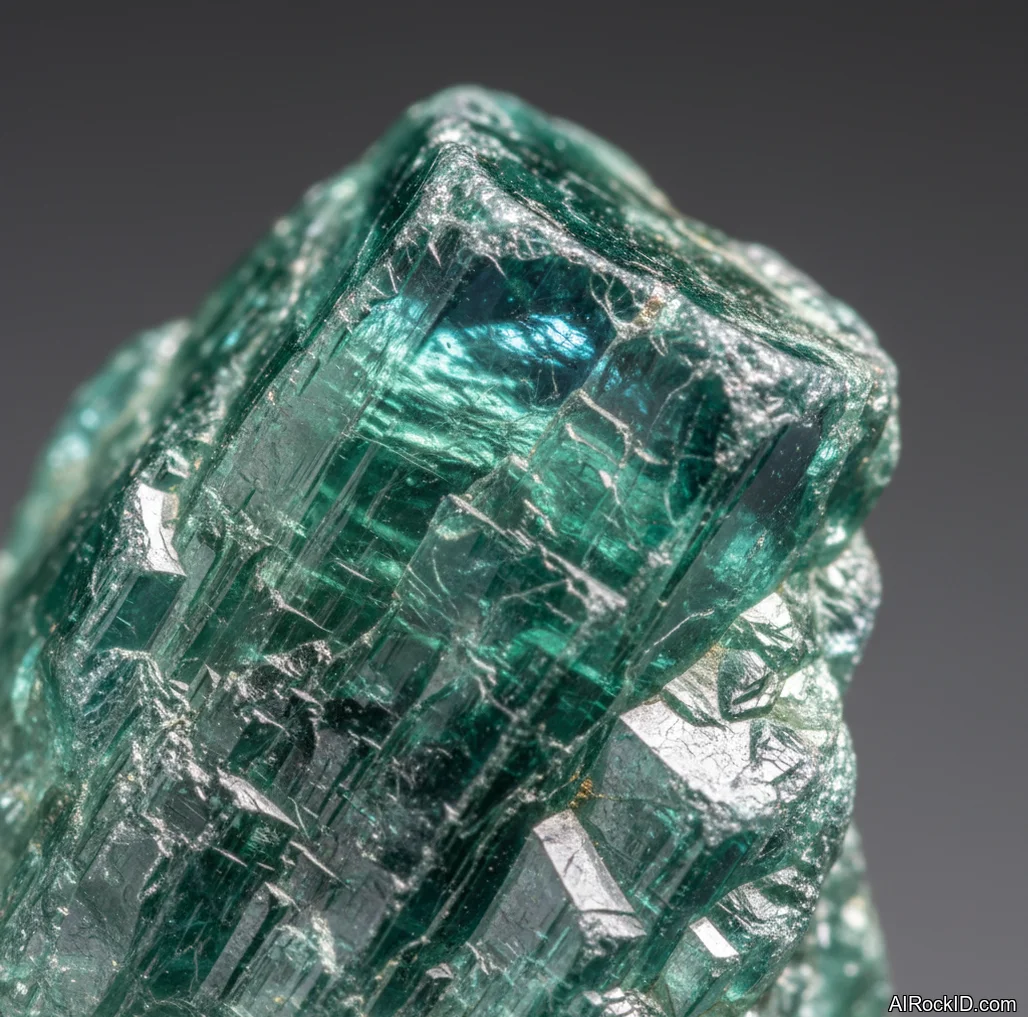
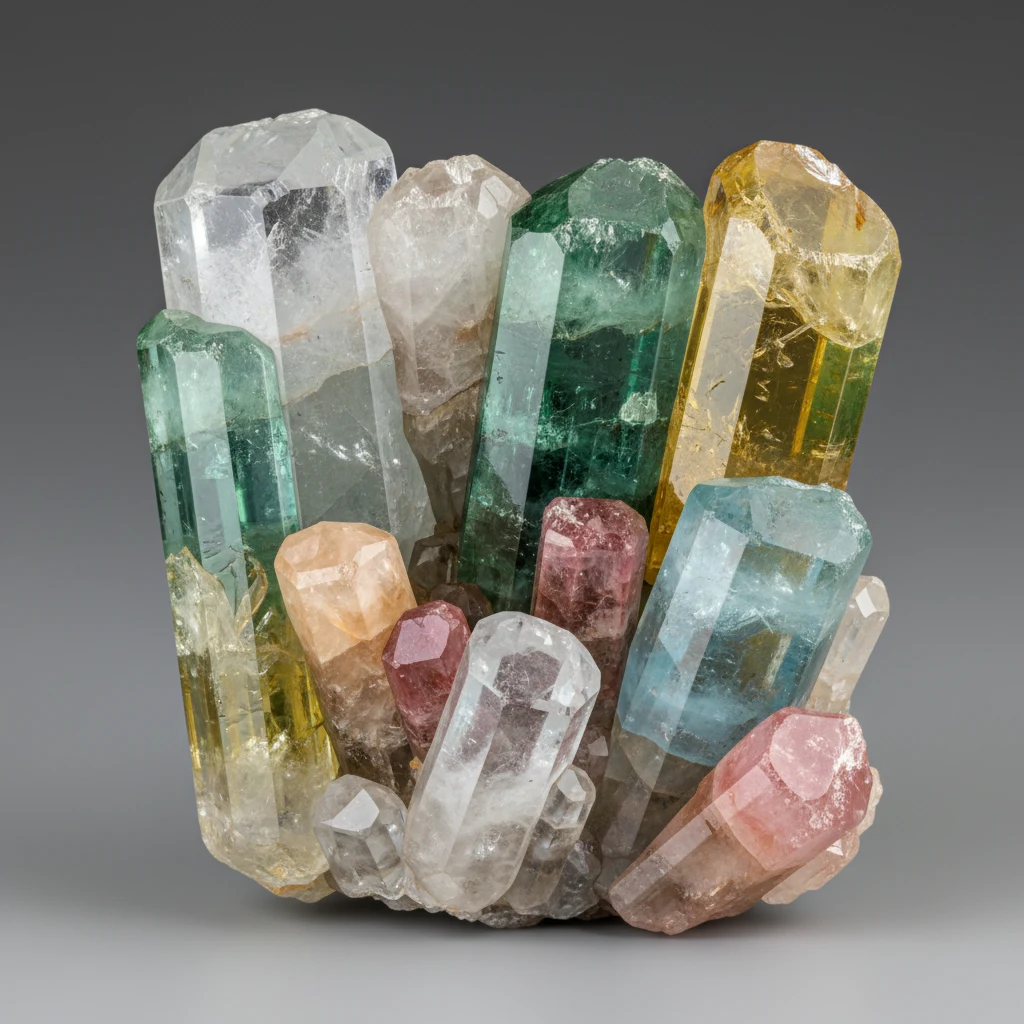
Beryl variety names are based mainly on color and trace elements. Emerald is green, aquamarine is blue to blue-green, morganite is pink to peach, heliodor is yellow to golden, goshenite is colorless, and red beryl is red to raspberry. Color alone is not proof of variety or value because treatments, lighting, and photography can change appearance.
Photo Tips for Beryl Identification
Use daylight or neutral lighting and photograph the stone from several angles, including any crystal termination, side faces, and inclusions. Place the specimen next to a scale and avoid heavy filters or saturated lighting. For rough crystals, a clear image of the six-sided cross-section can be more useful than a close-up of color alone.
What Is Beryl?
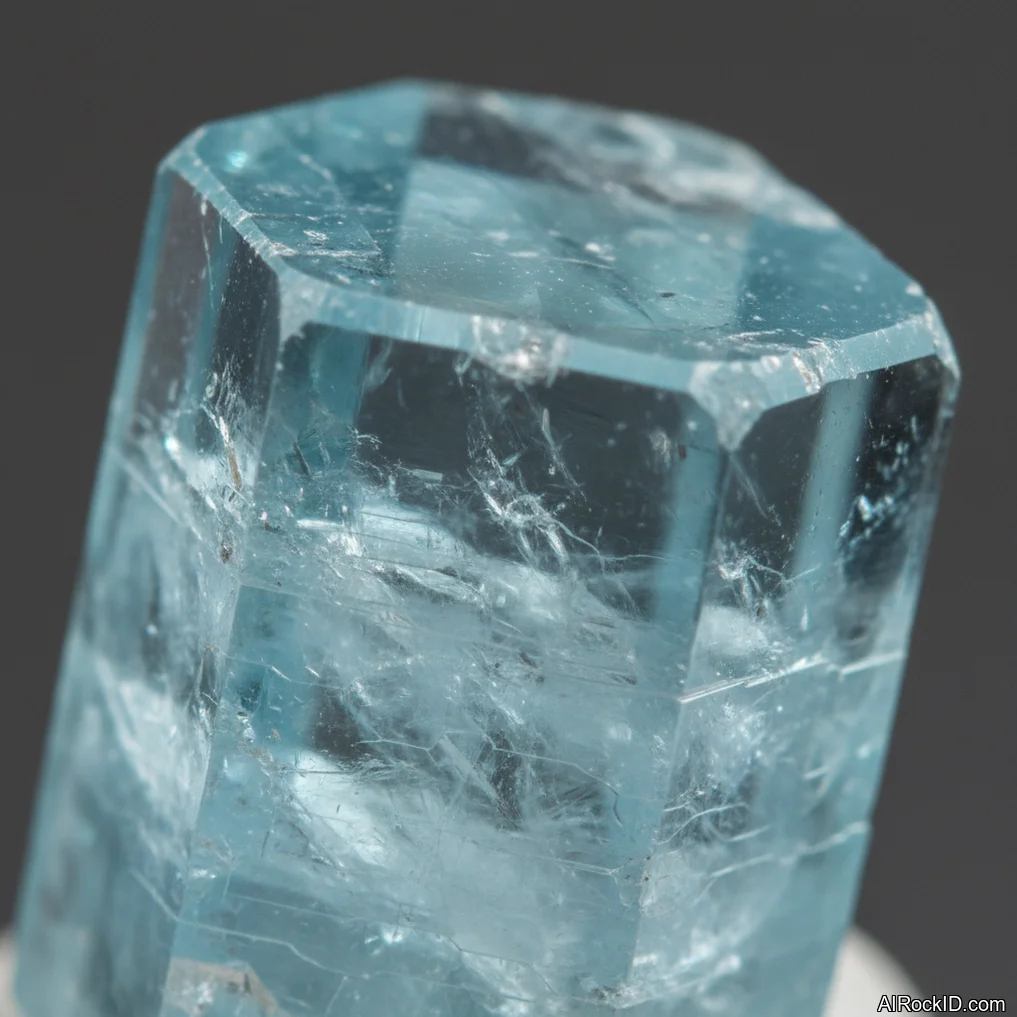
Beryl is a hard hexagonal cyclosilicate mineral, Be3Al2Si6O18, best known as the parent species of emerald, aquamarine, morganite, heliodor, goshenite, and red beryl. In hand, good beryl feels clean-edged and glassy, with prismatic crystal faces, a white streak, and a vitreous to slightly resinous luster. Its colors can be colorless, white, green, blue, yellow, golden yellow, pink, peach, or red.
For collectors, beryl is one of the most rewarding pegmatite minerals because the same mineral structure can produce very different gem appearances. A pale green or colorless crystal may be a modest cabinet piece, while deep emerald green, fine aquamarine blue, peach-pink morganite, golden heliodor, or intense red beryl can move into serious gem territory. Its Mohs hardness of 7.5 to 8 gives it strong scratch resistance, but it remains brittle and can chip at edges or terminations.
Origin & History
The name beryl comes through Latin and Greek from ancient terms such as “beryllus” and “beryllos,” historically used for blue-green gemstones. Beryl has been valued since antiquity: emerald was prized in ancient Egypt and Colombia, while aquamarine has long been linked with the sea. In mineralogy, it matters because it is one of the main naturally occurring beryllium minerals.
A labeled beryl specimen often carries both mineral and gem history at once. A Colombian emerald crystal, a Brazilian aquamarine, or a Utah red beryl may all be the same mineral species, but their color, inclusions, crystal form, and origin tell very different stories. For locality checking and mineral references, collectors commonly compare labels with mindat.org when documenting beryl specimens.
Where Is Beryl Found?
Beryl is found worldwide, especially in granitic pegmatites and related rocks. Important countries include Brazil, Colombia, Madagascar, the United States, Russia, Pakistan, Afghanistan, Mozambique, Zambia, India, and Namibia. In a collection tray, the locality can matter as much as the color because beryl varieties are strongly associated with certain gem-producing districts.
Formation
Beryl most commonly forms in beryllium-rich granitic pegmatites, where slow cooling and volatile-rich fluids allow large hexagonal crystals to grow. This is why many specimens show long prismatic habits, flat basal terminations, and well-developed faces that feel sharply geometric in the hand. It can also occur in greisen, hydrothermal veins, mica schists, and contact-metamorphic environments.
Color records the chemistry of the growth environment. Emerald forms when beryl grows with chromium and/or vanadium, often where beryllium-bearing fluids interact with chromium- or vanadium-bearing mafic or ultramafic rocks. Other beryl colors reflect trace elements such as iron and manganese, while common impurities may include chromium, vanadium, iron, manganese, cesium, sodium, lithium, and water.
How to Identify Beryl
Identify beryl by looking for a hard, hexagonal prismatic crystal with a white streak, vitreous to resinous luster, and no strong cleavage. It has Mohs hardness 7.5 to 8, so it is slightly harder than quartz and can scratch quartz, but it is scratched by corundum. Its fracture is conchoidal to uneven, and it is brittle despite its good hardness.
Color alone is not enough, because beryl ranges from colorless goshenite to blue aquamarine, deep green emerald, pink to peach morganite, yellow to golden heliodor, and intense red beryl. Useful separation features include its relatively low density for a hard gem mineral, transparent to translucent appearance, hexagonal crystal system, and uniaxial negative optical character. These traits help distinguish it from topaz, apatite, tourmaline, and chrysoberyl.
Properties of Beryl
Physical Properties
| Crystal System | Hexagonal |
| Hardness (Mohs) | 7.5-8 (Hard) |
| Density | 2.63-2.80 g/cm3, commonly about 2.66-2.76; may be higher in alkali-rich beryl |
| Luster | Vitreous to resinous |
| Diaphaneity | Transparent to translucent, rarely opaque in massive or included material |
| Fracture | Conchoidal to uneven; brittle |
| Streak | White |
| Magnetism | Generally non-magnetic |
| Colors | Colorless, White, Green, Blue, Yellow, Golden yellow, Pink, Peach, Red |
Chemical Properties
| Classification | Cyclosilicate |
| Formula | Be3Al2Si6O18 |
| Elements | Beryllium, Aluminium, Silicon, Oxygen |
| Common Impurities | Chromium, Vanadium, Iron, Manganese, Cesium, Sodium, Lithium, Water |
Optical Properties
| Refractive Index | nω 1.568-1.602, nε 1.564-1.595 |
| Birefringence | 0.004-0.010, commonly low |
| Pleochroism | None to distinct depending on color variety; emerald, aquamarine, and morganite commonly show weak to distinct dichroism |
| Optical Character | Uniaxial negative |
Beryl Health & Safety
Safe to collect and handle as a solid mineral specimen; the main practical risk is inhaling dust during lapidary work or specimen trimming.
Beryl Value & Price
Price Range
Rough/Tumbled: Common opaque or pale beryl rough may sell for a few dollars to tens of dollars per piece. Well-formed pegmatite crystals, large specimens, and attractive aquamarine, morganite, heliodor, emerald, or red beryl crystals can range from tens to thousands of dollars or far more for exceptional gem-quality material.
Cut/Polished:
Value depends strongly on variety, color saturation, transparency, crystal form, size, damage, inclusions, origin, and whether the specimen is a common pale beryl crystal or a fine gem variety such as emerald, aquamarine, morganite, heliodor, or red beryl.
Durability
Good — Scratch resistance: High; Mohs 7.5-8 makes beryl resistant to scratching in normal handling and jewelry use., Toughness: Fair to good; beryl is brittle and can chip or fracture, especially if included or heavily flawed.
Beryl is generally stable in light and normal household conditions. Avoid hard impacts, sudden temperature changes, ultrasonic cleaners for included stones, and strong chemicals that could affect fracture fillings, oils, or treatments in some gem beryls.
How to Care for Beryl
Use & Storage
Store beryl separately from softer stones because it can scratch them. Wrap fine crystals and gem pieces to prevent chipping of edges and terminations.
Cleaning
Clean most untreated beryl with lukewarm water, mild soap, and a soft brush. Avoid harsh chemicals, steam, and ultrasonic cleaning for included, fractured, oiled, or filled stones, especially emerald.
Cleanse & Charge
If used in metaphysical practice, cleanse gently with smoke, sound, or brief rinsing in clean water. Avoid prolonged soaking for specimens attached to matrix or pieces with treatments.
Placement
Display away from edges where hard falls could chip crystals. Beryl is generally light-stable, but prolonged intense sunlight may be avoided for delicate colored or treated specimens.
Caution
Do not grind, drill, or sand beryl without dust controls. Treat emeralds and other included beryls more gently than their hardness suggests because internal fractures can reduce toughness.
Works Well With
Beryl Meaning & Healing Properties
In modern crystal-healing traditions, beryl is used as a stone of clarity, calm, confidence, communication, renewal, and focused intention. These meanings are cultural and spiritual beliefs, not scientifically verified medical effects. Practitioners often choose the color variety that matches the mood of the work: blue aquamarine for calm communication, green emerald for heart-centered symbolism, or golden heliodor for confident focus.
Beryl is associated with the Heart, Throat, and Solar Plexus chakras, and with Gemini, Scorpio, Pisces, and Taurus in zodiac-based practice. It is also linked with Mercury, the Moon, Venus, and the elements Water and Air. For care in ritual use, cleanse gently with smoke, sound, or a brief rinse in clean water, while avoiding prolonged soaking for matrix pieces or treated stones.
Identify Beryl from a photo
Compare Beryl traits, care tips, value clues, and common lookalikes with a clear photo.
Common mistakes
- Calling every green beryl emerald without considering color intensity, composition, and gemological standards.
- Assuming all blue beryl is untreated aquamarine; heat treatment is common in the gem trade.
- Using a scratch test on a finished gem or valuable specimen, which can damage the surface.
- Identifying colorless beryl as quartz without checking crystal habit, refractive properties, or source context.
- Treating seller photos as proof of color because lighting and editing can make pale beryl look more saturated.