Cat's Eye Chrysoberyl


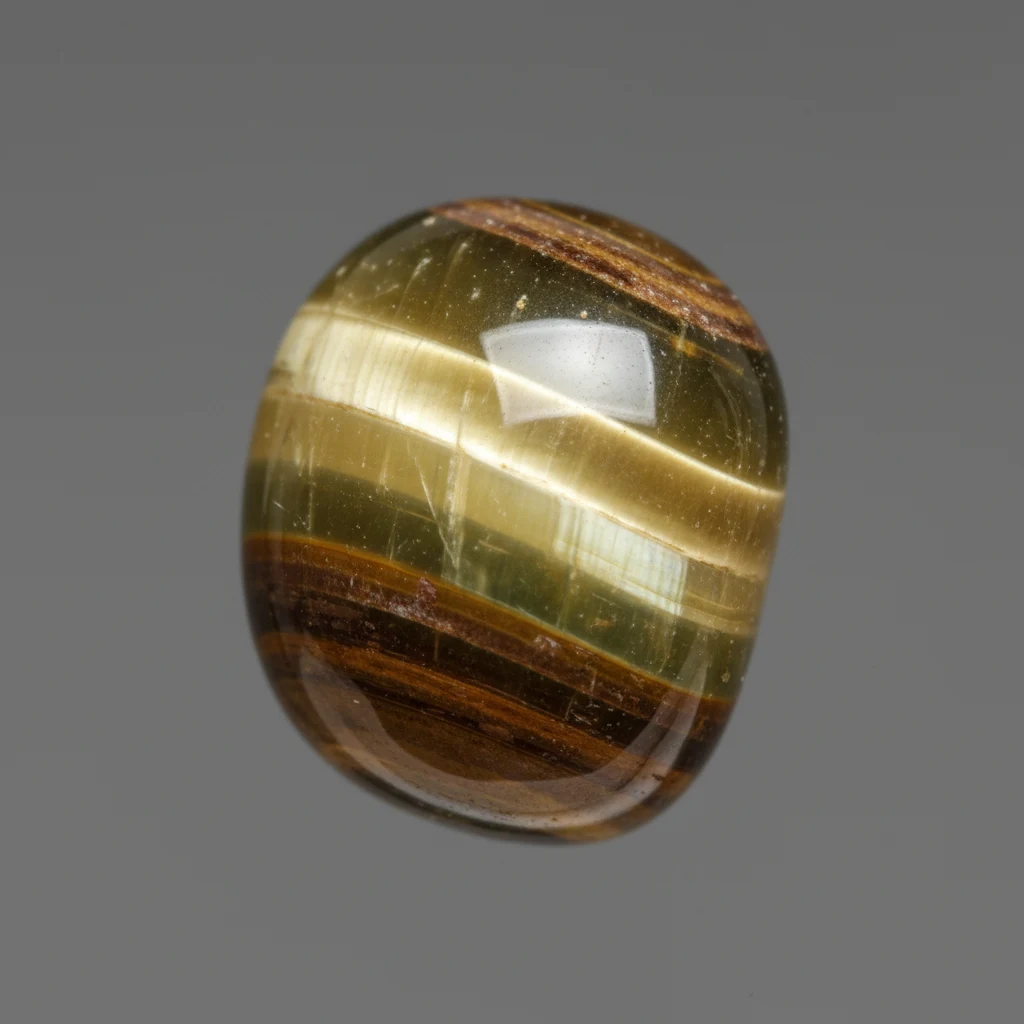
Quick answer: Cat's eye chrysoberyl is a hard gemstone variety of chrysoberyl known for a sharp, moving line of light called chatoyancy. The most important identification clues are its single bright eye, honey to greenish body color, high hardness, and the way the band glides across a domed cabochon under a direct light source.
AI Rock ID can help screen a suspected cat's eye chrysoberyl from photos by checking the visible eye, body color, transparency, and cut style. RockIdentifier.io should be treated as an identification aid, while high-value stones should still be confirmed by a qualified gemologist or lab report.
Good fit
- Collectors who want a durable chatoyant gemstone with Mohs hardness around 8.5
- Buyers comparing cat's eye chrysoberyl with quartz, tourmaline, or glass imitations
- Jewelry wearers who prefer cabochon-cut gems with a distinct optical effect
- Anyone researching how to recognize a sharp, centered cat's eye band
Not a good fit
- Buyers who need a low-cost cat's eye effect, where cat's eye quartz is usually more affordable
- People who prefer faceted sparkle rather than a cabochon optical band
- Anyone unwilling to request testing or documentation for expensive stones
Most commonly confused with
- Cat's Eye Quartz: Usually softer, less dense, and often shows a softer, less sharply defined eye than chrysoberyl.
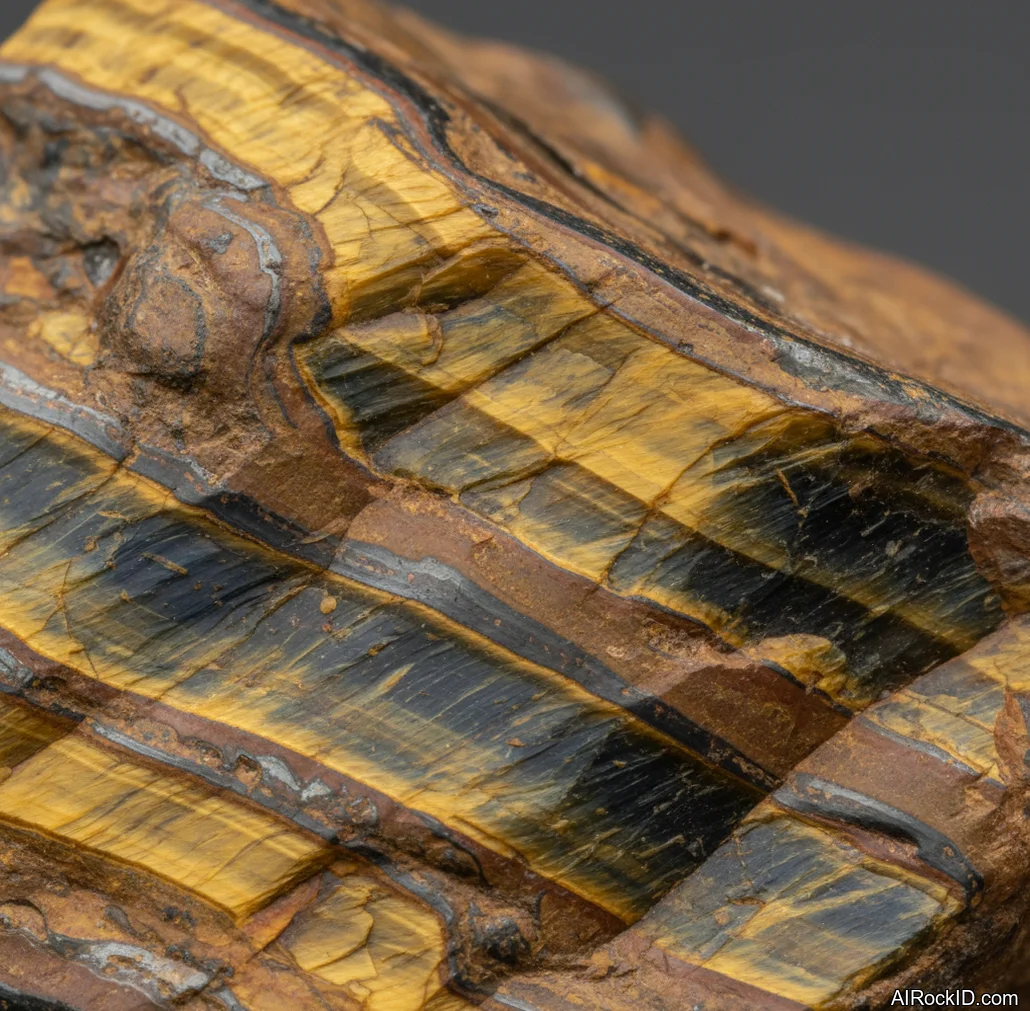
- Tiger's Eye: Shows silky bands and golden-brown striping, but not the crisp single eye typical of fine chrysoberyl.
- Cat's Eye Tourmaline: Can be strongly chatoyant, but has different refractive index, density, and color range.
- Apatite: May show a cat's eye effect, but is much softer and less suitable for daily ring wear.
Cat's Eye Chrysoberyl vs Common Lookalikes
| Material | Typical eye | Key distinction | Mohs hardness |
|---|---|---|---|
| Cat's eye chrysoberyl | Sharp, bright, mobile band | High density, high hardness, fine honey to greenish colors | 8.5 |
| Cat's eye quartz | Softer, often broader band | Lower hardness and usually lower price | 7 |
| Tiger's eye | Silky shifting bands | Fibrous brown-gold pattern rather than a single centered eye | 6.5–7 |
| Cat's eye tourmaline | Distinct but often color-dependent | Different gemological readings and strong color variety | 7–7.5 |
| Glass imitation | May appear fixed or artificial | Possible bubbles, molded look, and inconsistent gem tests | About 5–6 |
AI identification confidence
Photo-based identification confidence is moderate when a stone shows a clear cabochon shape, a sharp moving eye, and natural-looking body color. Confidence is lower for loose gems photographed under diffuse light, heavily included stones, or any item where scale, density, refractive index, and lab testing are unavailable.
When AI gets it wrong
- A strong light reflection is mistaken for true chatoyancy.
- Cat's eye quartz or tourmaline is photographed without enough scale or testing data.
- A glass or synthetic imitation has a convincing surface-level eye in photos.
- The stone is shown under soft lighting that hides whether the band actually moves.
Final recommendation
For an expensive cat's eye chrysoberyl, prioritize a centered, sharp eye that opens and closes under a single direct light source. Request a reputable gem report when value, origin, or natural status affects the purchase decision.
How to Check the Cat's Eye Effect
Place the cabochon under a single narrow light source, such as a penlight, and rotate the stone slowly. A true cat's eye chrysoberyl should show a bright line that moves across the dome, often appearing to open and close as the gem turns. Diffuse room lighting can make the effect look weaker or can hide important differences between natural chatoyancy and a simple surface reflection.
Buying and Authenticity Checks
For higher-priced stones, ask whether the gem is natural chrysoberyl and whether any treatment, origin claim, or synthetic status is documented. A laboratory report is useful because many chatoyant gems look similar in photos, and visual inspection alone cannot reliably confirm species or value. Be cautious with listings that use only the phrase "cat's eye" without naming chrysoberyl.
Photo Tips for Identification
Photograph cat's eye chrysoberyl as a cabochon under one direct light, then take a second image after rotating the stone slightly. Include a ruler, coin, or other scale reference, and capture the back or side if the stone is loose. Clear photos of the eye movement, color, inclusions, and polish help separate chrysoberyl from quartz, tourmaline, apatite, and glass.
What Is Cat's Eye Chrysoberyl?
Cat's Eye Chrysoberyl is the chatoyant variety of chrysoberyl, valued for the sharp band of light that appears to glide across its surface. In the hand, a good specimen reads as greenish-yellow to brown, translucent, and bright, with vitreous to silky luster. Its identity is tied to that moving “eye,” not just its color.
Mineralogically, it is an oxide with the formula BeAl2O4, an orthorhombic crystal system, white streak, conchoidal fracture, and a Mohs hardness of 8.5. That hardness gives it excellent scratch resistance and makes it a very durable gemstone under normal conditions, though it should still be protected from harsh chemicals and extreme temperature changes.
Origin & History
The name chrysoberyl comes from Greek words meaning “gold” and “beryl,” a fitting root for material that often shows yellow, greenish-yellow, or brown tones. Cat's Eye Chrysoberyl was first described in 1800, and its collector appeal has remained centered on chatoyancy: the crisp, narrow band of light that moves when the stone is turned.
For a buyer or field collector, origin history matters because locality names can affect how a specimen is described and compared. Brazil, Sri Lanka, and India are the listed producing countries, with Minas Gerais, Ratnapura, and Madhya Pradesh noted as localities; collectors commonly verify mineral and locality records through mindat.org.
Where Is Cat's Eye Chrysoberyl Found?
Cat's Eye Chrysoberyl is found in Brazil, Sri Lanka, and India, and it is most commonly associated with Brazil and Sri Lanka. Notable listed localities include Minas Gerais in Brazil, Ratnapura in Sri Lanka, and Madhya Pradesh in India. When labeling a specimen, those locality names should be kept separate from the gem variety name.
Formation
Cat's Eye Chrysoberyl forms in metamorphic rocks and pegmatites, often in granite formations. Its chatoyancy is the feature collectors look for after the mineral is cut or viewed under a direct light source: the surface shows a concentrated band that shifts as the angle changes.
The mineral is chemically an oxide, BeAl2O4, with beryllium, aluminum, and oxygen as listed elements, and iron and titanium noted as common impurities. Its density of 3.7–3.8 g/cm3 gives the material a substantial feel for its size, while its non-magnetic response, white streak, and conchoidal fracture help place it within a careful identification workflow.
How to Identify Cat's Eye Chrysoberyl
Identify Cat's Eye Chrysoberyl first by its chatoyant band: a distinct streak of light that moves across the surface as the specimen is turned. Typical colors range from greenish-yellow to brown, and the luster can appear vitreous to silky. The effect should be active in light, not just a static pale stripe.
Confirming the material means checking its supporting properties. Cat's Eye Chrysoberyl is very hard at Mohs 8.5, translucent, non-magnetic, and has a white streak. It belongs to the orthorhombic crystal system, has refractive index values of 1.74–1.75, no listed pleochroism, no listed birefringence, and biaxial optical character.
Properties of Cat's Eye Chrysoberyl
Physical Properties
| Crystal System | Orthorhombic |
| Hardness (Mohs) | 8.5 (Very Hard (7.5-10)) |
| Density | 3.7-3.8 g/cm3 |
| Luster | Vitreous |
| Diaphaneity | Translucent |
| Fracture | Conchoidal |
| Streak | white |
| Magnetism | Non-magnetic |
| Colors | green, yellow, brown |
Chemical Properties
| Classification | Oxide |
| Formula | BeAl2O4 |
| Elements | Be, Al, O |
| Common Impurities | Fe, Ti |
Optical Properties
| Refractive Index | 1.74-1.75 |
| Birefringence | None |
| Pleochroism | None |
| Optical Character | Biaxial |
Cat's Eye Chrysoberyl Health & Safety
There are no significant health risks associated with handling this mineral.
Cat's Eye Chrysoberyl Value & Price
Price Range
Rough/Tumbled: $50 - $200 per specimen
Cut/Polished: $200 - $600 per carat
Price is influenced by color, clarity, and the intensity of the cat's eye effect.
Durability
Very Durable — Scratch resistance: Excellent, Toughness: Good
It is stable under normal conditions and resistant to scratches.
How to Care for Cat's Eye Chrysoberyl
Use & Storage
Store in a soft pouch to prevent scratching.
Cleaning
Clean with mild soap and water, avoiding harsh chemicals. Rinse thoroughly.
Cleanse & Charge
It can be charged under moonlight or with sage smoke.
Placement
Place in a location that receives natural light for optimal energy.
Caution
Avoid exposing to extreme temperature changes.
Works Well With
Cat's Eye Chrysoberyl Meaning & Healing Properties
In crystal healing traditions, Cat's Eye Chrysoberyl is associated with focus, clarity, protection, intuition, grounding, emotional healing, stress relief, transformation, self-discovery, and insight. It is most often linked with the Third Eye and Crown chakras, where practitioners use it as a symbolic aid for mental clarity and focused attention.
These meanings are traditional and spiritual, not medical claims, and Cat's Eye Chrysoberyl is not a substitute for medical treatment. It is safe to handle, safe in water, and has no significant handling risks listed. For care, clean it with mild soap and water, rinse thoroughly, avoid harsh chemicals, store it in a soft pouch, and keep it away from extreme temperature changes.
Identify Cat's Eye Chrysoberyl from a photo
Compare Cat's Eye Chrysoberyl traits, care tips, value clues, and common lookalikes with a clear photo.
Common mistakes
- Assuming every stone sold as "cat's eye" is chrysoberyl.
- Judging value from color alone while ignoring the sharpness and centering of the eye.
- Using diffuse lighting, which can make a real eye look weak or make reflections misleading.
- Buying an expensive stone without a gemological report or clear species identification.
- Confusing tiger's eye banding with the single bright eye of chrysoberyl.
- Assuming a flawless appearance proves authenticity, since imitations may look very clean.