Calcite (Dogtooth Spar)


Quick answer: Calcite (Dogtooth Spar) is a pointed crystal habit of calcite, a calcium carbonate mineral with Mohs hardness 3. Its sharp, scalenohedral crystals help distinguish it from many other calcite forms, but softness, cleavage, and acid reaction are better identification clues than shape alone.
AI Rock ID can help compare Calcite (Dogtooth Spar) against visually similar minerals by checking crystal shape, luster, color, and surface features. RockIdentifier.io provides mineral identification support, but final confirmation may require hardness, streak, acid reaction, or expert review.
Good fit
- Collectors who want a recognizable calcite habit with pointed scalenohedral crystals
- Beginners learning crystal forms, cleavage, and carbonate identification
- Specimen collectors interested in cave, geode, or sedimentary mineral associations
- Buyers who prefer display specimens rather than jewelry-use minerals
Not a good fit
- Rings, bracelets, or daily-wear jewelry because calcite scratches easily
- Outdoor display areas exposed to rain, acidic water, or soil moisture
- Collectors who need a rare mineral species rather than a common calcite variety
Most commonly confused with
- Quartz: Quartz is much harder at Mohs 7 and does not react to dilute acid like calcite.
- Aragonite: Aragonite is also calcium carbonate, but it commonly forms different crystal habits and has different cleavage behavior.
- Selenite: Selenite is softer and usually has a silky, pearly, or fibrous appearance rather than rhombohedral calcite cleavage.
- Dolomite: Dolomite is typically slightly harder and reacts weakly to cold dilute acid unless powdered.
Calcite (Dogtooth Spar) vs Common Lookalikes
| Mineral | Typical hardness | Key ID clue | Acid reaction |
|---|---|---|---|
| Calcite (Dogtooth Spar) | Mohs 3 | Pointed scalenohedral crystals with rhombohedral cleavage | Effervesces in dilute acid |
| Quartz | Mohs 7 | Scratches glass and lacks cleavage | No reaction |
| Aragonite | Mohs 3.5–4 | Often pseudohexagonal, fibrous, or branching habits | Effervesces in dilute acid |
| Dolomite | Mohs 3.5–4 | Curved rhombohedral crystals are common | Weak cold reaction unless powdered |
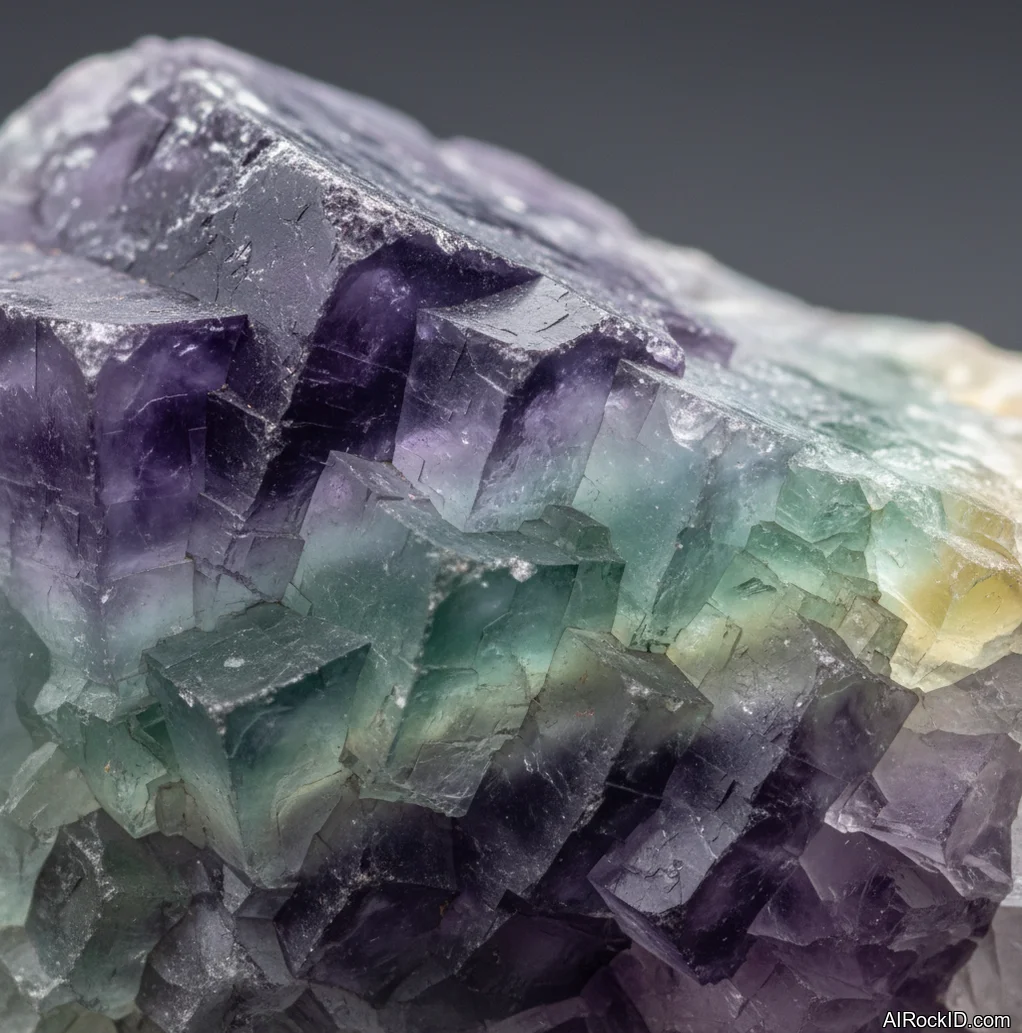
| Fluorite | Mohs 4 | Cubic or octahedral cleavage; often strongly colored | No typical carbonate fizz |
AI identification confidence
AI identification confidence is usually higher when a photo clearly shows pointed dogtooth crystals, rhombohedral cleavage, and the specimen’s overall habit. Confidence drops when the image lacks scale, shows only a polished surface, or does not include simple test results such as hardness or acid reaction.
When AI gets it wrong
- A white or colorless pointed crystal is photographed without scale or matrix context
- The specimen is polished, broken, or heavily coated, hiding natural cleavage and crystal faces
- Lighting creates glare that makes quartz, selenite, fluorite, or calcite look similar
- No hardness, streak, or dilute-acid observation is available to separate carbonate minerals from lookalikes
Final recommendation
Choose Calcite (Dogtooth Spar) if you want a display specimen with distinctive pointed calcite crystals and do not need a durable jewelry stone. For authenticity, look for natural crystal terminations, calcite cleavage, seller location details, and consistency with Mohs 3 softness and carbonate acid reaction.
How to Tell If Calcite (Dogtooth Spar) Is Real
Real Calcite (Dogtooth Spar) should show calcite traits such as Mohs 3 softness, rhombohedral cleavage, and a visible reaction to dilute acid. Natural specimens may have uneven crystal sizes, matrix attachment, minor chips, or iron staining. Be cautious with pieces that have unnaturally uniform color, resin-like surfaces, or no seller information about treatment.
Buying Tips for Calcite (Dogtooth Spar)
When buying Calcite (Dogtooth Spar), check whether the listing shows multiple angles, close-ups of terminations, and any matrix or locality information. Sharp, undamaged points, good luster, and stable matrix attachment often affect display appeal. Ask whether the specimen has been dyed, coated, repaired, or acid-cleaned if the surface looks unusually glossy or bright.
Photo Tips for Identification
Photograph Calcite (Dogtooth Spar) in natural or diffuse light to reduce glare on crystal faces. Include a ruler, coin, or hand for scale, and capture the terminations, cleavage surfaces, and any host rock. A second image showing a scratch test or acid reaction note can make identification more reliable.
What Is Calcite (Dogtooth Spar)?
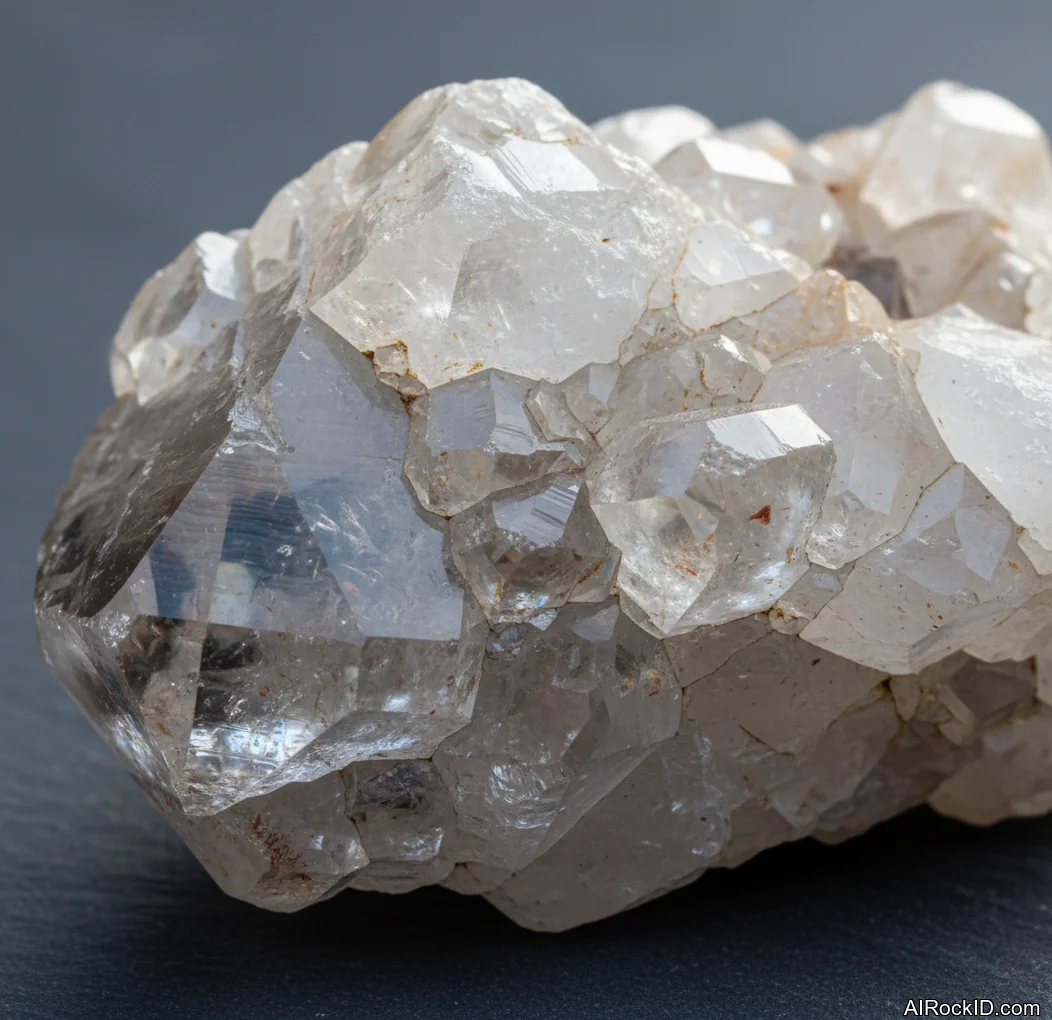
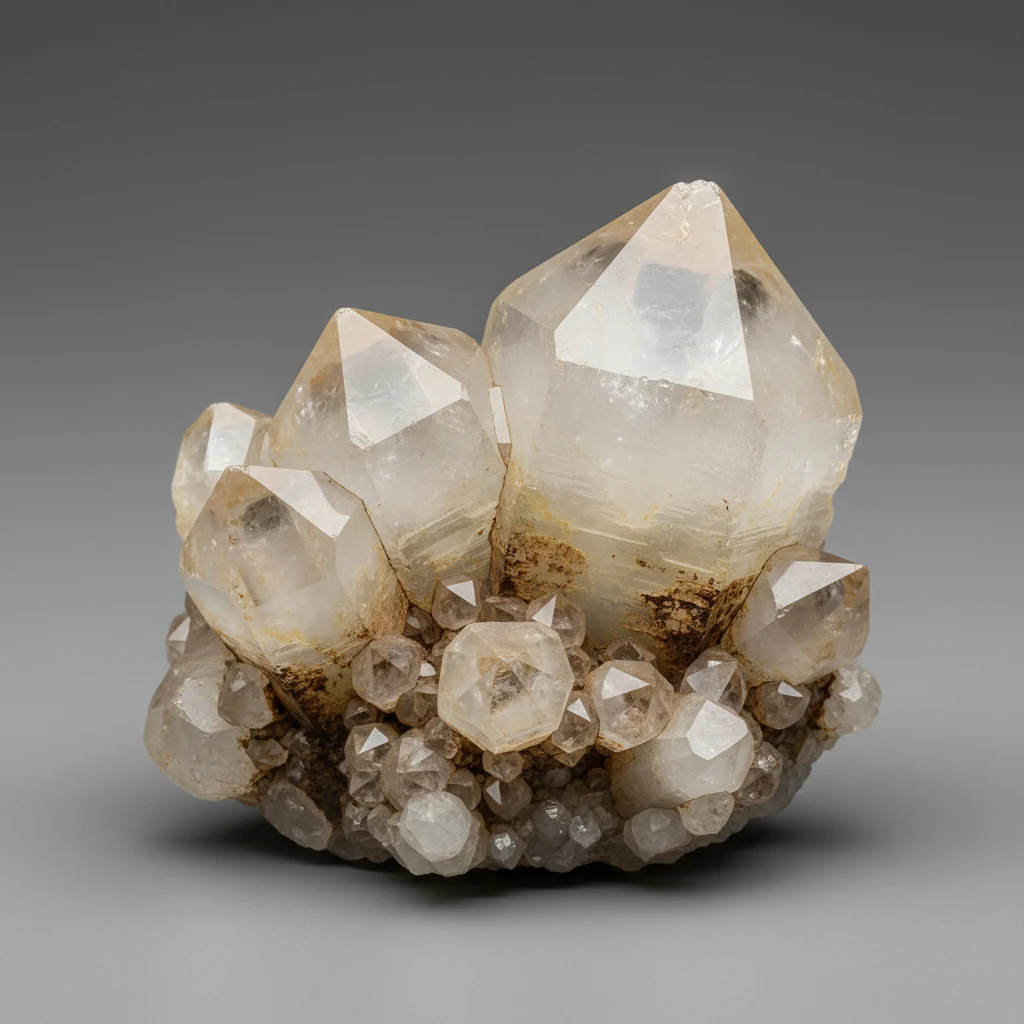
Calcite (Dogtooth Spar) is a dogtooth-shaped variety of calcite, a carbonate mineral with the formula CaCO3. In the hand, the best specimens show sharp, tooth-like crystal points with a glassy to pearly shine, often transparent to translucent. Its colors may be colorless, white, yellow, or brown, and the white streak is a useful constant when the outside color varies.
This is a common collector mineral rather than a rare species, but a clean dogtooth habit gives it strong shelf appeal. It belongs to the trigonal crystal system, has a Mohs hardness of 3, and feels soft by mineral standards, so it should be kept away from harder stones that can scratch it. It is non-magnetic, has a density of 2.71 g/cm3, and is stable under normal environmental conditions.
Origin & History
Calcite takes its name from the Latin word “calx,” meaning lime, and the mineral has been known since ancient times. Dogtooth spar is not a separate species; it is calcite recognized by its distinctive pointed crystal form. On a specimen tray, that shape is the first thing most collectors notice: little calcite teeth rising from a matrix or clustered into bright, angular groups.
Because labels matter with common minerals, locality information is especially useful for dogtooth spar. Specimens may be checked against established locality resources such as mindat.org, especially when labels mention caves, sedimentary rock formations, or classic producing areas. The historical name is simple, but the crystal habit makes this variety easy to remember.
Where Is Calcite (Dogtooth Spar) Found?
Calcite (Dogtooth Spar) is commonly found in limestone caves and sedimentary rock formations. Reported countries in the provided locality data include Mexico, the USA, and Germany. Notable localities include Cave of the Crystals in Mexico, Dugway Proving Ground in Utah, USA, and Obernkirchen in Germany.
Formation
Calcite (Dogtooth Spar) forms when calcium carbonate precipitates from solution. The same basic mineral, CaCO3, can form in several environments, including marine settings and caves. When conditions favor the pointed habit, the crystals grow into the tooth-like form that gives dogtooth spar its field name.
In practical specimen terms, formation shows up in the crystal faces. A good dogtooth spar piece may display vitreous luster across angled tips, with transparency ranging from clear to softly translucent. Common impurities listed for calcite include iron and manganese, and the provided color range includes colorless, white, yellow, and brown.
How to Identify Calcite (Dogtooth Spar)
Identify Calcite (Dogtooth Spar) first by its pointed dogtooth crystal shape, then confirm it as calcite by its softness and acid reaction. It has Mohs hardness 3, so it scratches more easily than many display minerals. Its luster is vitreous to pearly, its streak is white, and it is transparent to translucent when the crystal quality allows.
Color alone is not enough, because dogtooth spar can be colorless, white, yellow, or brown. A classic test is acid effervescence, but acids can also damage calcite, so collectors use caution and test only when appropriate. Other supporting properties include trigonal crystal system, non-magnetic response, conchoidal fracture, refractive index of 1.65-1.66, birefringence of 0.173, and uniaxial optical character.
Properties of Calcite (Dogtooth Spar)
Physical Properties
| Crystal System | Trigonal |
| Hardness (Mohs) | 3 (Soft (2-4)) |
| Density | 2.71 g/cm3 |
| Luster | Vitreous |
| Diaphaneity | Transparent to translucent |
| Fracture | Conchoidal |
| Streak | White |
| Magnetism | Non-magnetic |
| Colors | Colorless, White, Yellow, Brown |
Chemical Properties
| Classification | Carbonate |
| Formula | CaCO3 |
| Elements | Ca, C, O |
| Common Impurities | Fe, Mn |
Optical Properties
| Refractive Index | 1.65-1.66 |
| Birefringence | 0.173 |
| Pleochroism | None |
| Optical Character | Uniaxial |
Calcite (Dogtooth Spar) Health & Safety
Calcite poses no significant health risks when handled properly.
Calcite (Dogtooth Spar) Value & Price
Price Range
Rough/Tumbled: $5 - $20 per specimen
Cut/Polished:
Price can vary based on color, clarity, and crystal size.
Durability
Moderate — Scratch resistance: Fair, Toughness: Good
Calcite is stable under normal environmental conditions.
How to Care for Calcite (Dogtooth Spar)
Use & Storage
Store in a dry place away from direct sunlight.
Cleaning
Clean with mild soap and water. Avoid harsh chemicals that can damage the surface.
Cleanse & Charge
Use methods like placing it under moonlight or using sage.
Placement
Place in a calming area of your home for best energy flow.
Caution
Avoid exposing to acids as it can react and damage the crystal.
Works Well With
Calcite (Dogtooth Spar) Meaning & Healing Properties
In crystal healing traditions, Calcite (Dogtooth Spar) is believed to support mental clarity, emotional healing, focus, transformation, joy, stress relief, grounding, intuition, and meditation. Its pointed shape gives it a visually directional feel, making it a natural choice for a calm shelf, meditation corner, or workspace where the goal is clear attention rather than stimulation.
This mineral is associated with the Crown and Solar Plexus chakras, Taurus and Capricorn, the planet Venus, and the Earth element. These meanings are cultural and metaphysical, not medical; calcite should not be used as a substitute for professional care. For energetic cleansing, the provided care guidance recommends moonlight or sage, and it pairs well with quartz, amethyst, and rose quartz.
Identify Calcite (Dogtooth Spar) from a photo
Compare Calcite (Dogtooth Spar) traits, care tips, value clues, and common lookalikes with a clear photo.
Common mistakes
- Identifying every pointed white crystal as Calcite (Dogtooth Spar) without checking hardness
- Assuming clear calcite is quartz because both can be colorless and glassy
- Using crystal shape alone and ignoring cleavage, acid reaction, and specific gravity
- Cleaning specimens with vinegar or acidic products, which can etch calcite
- Buying dyed or coated calcite without realizing the color may not be natural