Cobalt Blue Glass


Quick answer: Cobalt blue glass is an amorphous, man-made glass colored by cobalt compounds, not a naturally crystallized mineral. Its vivid blue color, vitreous luster, and conchoidal fracture can make it resemble some blue gemstones, but its lack of crystal structure is the key distinction.
AI Rock ID can help compare cobalt blue glass with visually similar blue materials by checking color, luster, transparency, and surface features from a photo. RockIdentifier.io provides crystal and rock references that can support visual identification, but glass versus natural mineral confirmation may require hands-on testing.
Good fit
- Collectors who want a bright blue display material with a glassy appearance
- Beginners learning to distinguish amorphous glass from natural crystals
- Jewelry or decor buyers who prefer color consistency over natural mineral formation
- People comparing blue lookalikes such as blue obsidian, sapphire, or dyed quartz
Not a good fit
- Buyers seeking a naturally formed crystal or mineral specimen
- Collections that require verified geological origin
- Situations where high scratch resistance or gemstone durability is required
- Anyone relying only on color to identify a blue material
Most commonly confused with
- Blue Obsidian: Both can look glassy and blue, but obsidian is volcanic glass while many vivid cobalt-blue pieces are manufactured glass.
- Sapphire: Sapphire is a much harder crystalline corundum, while cobalt blue glass is softer and amorphous.
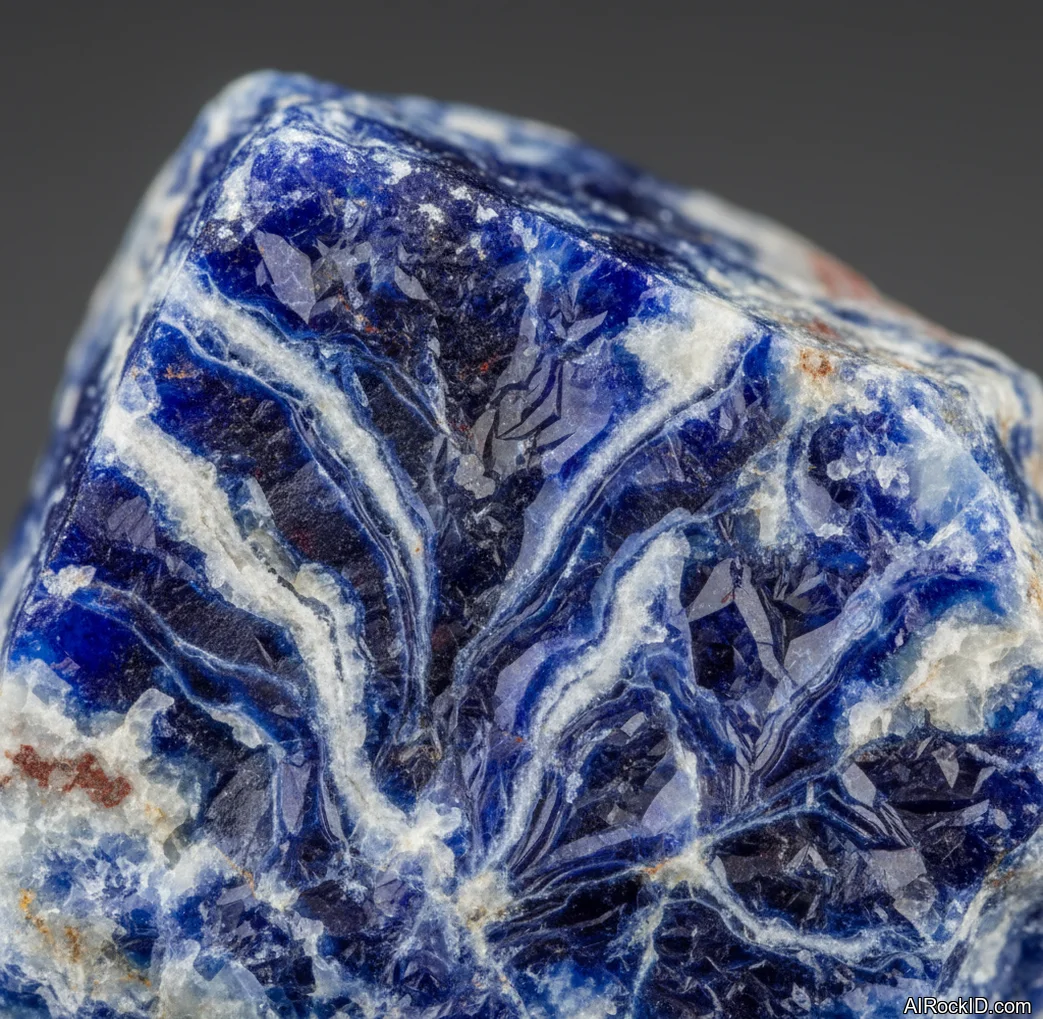
- Blue Quartz: Blue quartz has a crystalline silica structure, while cobalt blue glass lacks crystal faces and internal mineral grain.
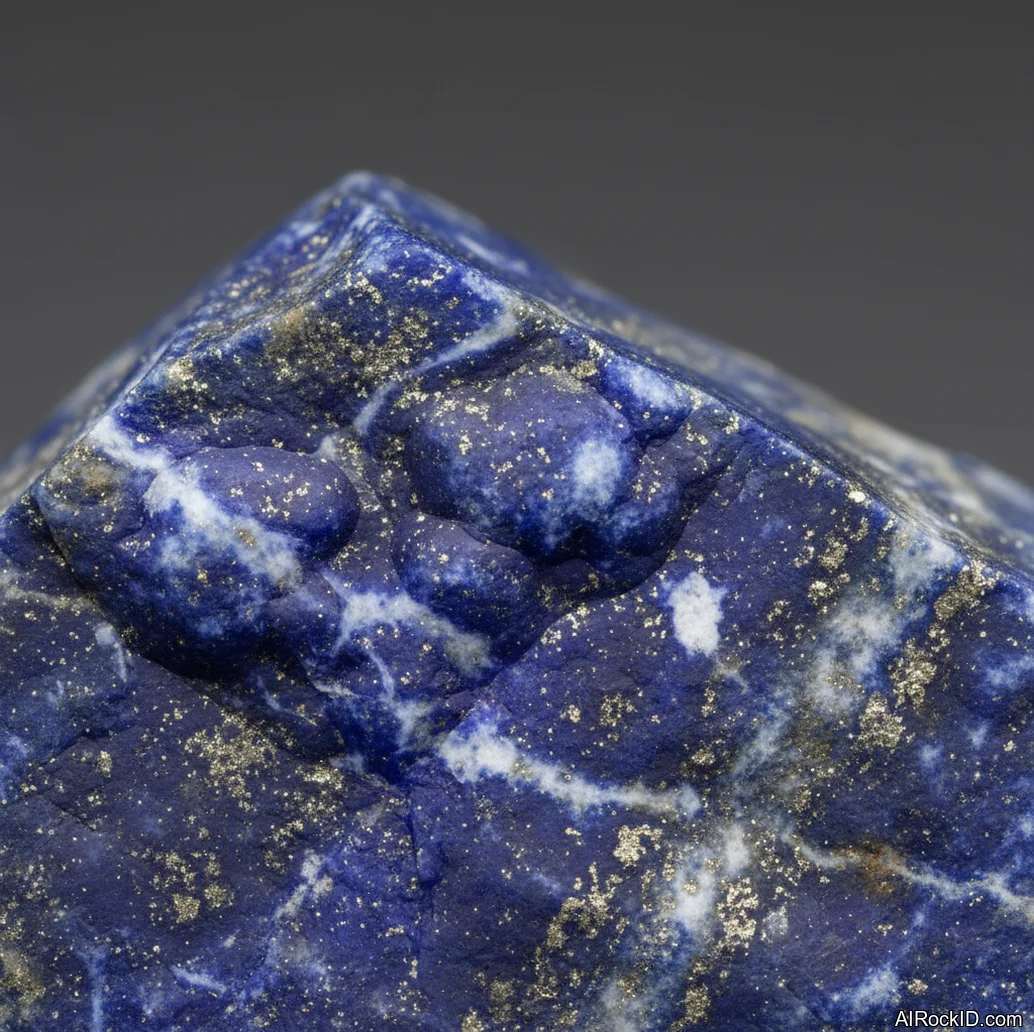
- Lapis Lazuli: Lapis lazuli is usually opaque with mineral flecks or mottling, while cobalt blue glass is commonly more uniformly blue and vitreous.
Cobalt Blue Glass vs. Common Blue Lookalikes
| Material | Key Difference | Typical Hardness | Structure |
|---|---|---|---|
| Cobalt Blue Glass | Uniform vivid blue, glassy fracture | Mohs 5-6 | Amorphous glass |
| Sapphire | Crystalline gemstone, much harder | Mohs 9 | Crystalline corundum |
| Blue Obsidian | Natural volcanic glass when authentic | Mohs 5-5.5 | Amorphous volcanic glass |
| Blue Quartz | Silica mineral with crystalline structure | Mohs 7 | Crystalline quartz |
| Lapis Lazuli | Opaque rock with mottled mineral mix | Mohs 5-6 | Rock composed of minerals |
AI identification confidence
AI identification confidence is usually moderate for cobalt blue glass when the photo clearly shows uniform color, vitreous luster, bubbles, and conchoidal breaks. Confidence drops when the piece is polished, faceted, dyed, backlit, or photographed under strongly colored lighting.
When AI gets it wrong
- A faceted glass piece may be mistaken for sapphire if hardness and refractive data are not available.
- Polished cobalt blue glass may be confused with blue obsidian because both are amorphous and glassy.
- Dyed quartz or resin can appear similarly saturated in photos.
- Small bubbles, mold marks, or flow lines may be hidden by poor focus or glare.
Final recommendation
Choose cobalt blue glass when the goal is a vivid blue, glassy decorative material rather than a natural crystal specimen. For higher-value purchases, ask for clear labeling and avoid listings that describe ordinary cobalt-colored glass as rare natural sapphire, quartz, or obsidian without evidence.
How to Tell If Cobalt Blue Glass Is Man-Made
Cobalt blue glass often shows signs such as small trapped bubbles, curved flow lines, mold seams, or very uniform color distribution. Natural crystals more often show crystal habits, inclusions, zoning, cleavage, or mineral-associated matrix. A hardness test, specific gravity measurement, or refractive index reading can help separate glass from true gemstones.
Buying Tips for Cobalt Blue Glass
Accurate listings should describe the material as glass, cobalt glass, slag glass, or art glass rather than as a natural crystal. Be cautious with vague terms such as “blue gemstone,” “natural cobalt crystal,” or “rare blue obsidian” unless supporting evidence is provided. For jewelry, check for chips along facet edges because glass is more vulnerable to edge wear than harder gemstones.
Authenticity Clues in Photos
Look for even cobalt-blue color, strong vitreous shine, rounded edges, conchoidal chips, and possible bubbles under magnification. Photos taken against a white background and in neutral lighting are more useful than heavily saturated or backlit images. If a seller claims the piece is a natural mineral, request close-up photos and basic test information such as hardness or refractive index.
What Is Cobalt Blue Glass?
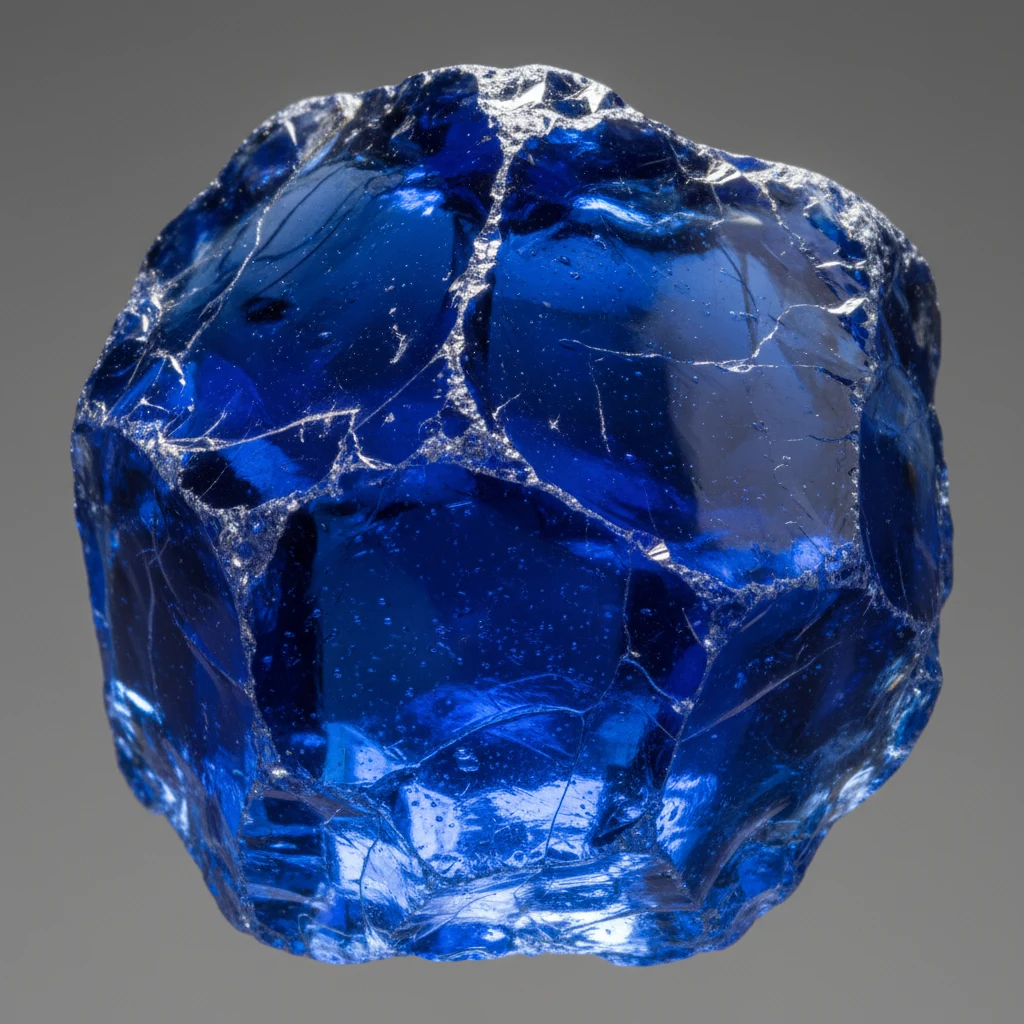
Cobalt Blue Glass is a vibrant blue glass colored with cobalt compounds. It is recognized for its deep, vivid blue color, transparent body, and clean vitreous luster, giving even a small specimen a strong display presence.
For collectors, this is an amorphous silicate material rather than a crystal with a crystal system. Its listed formula is SiO2 with CoO, its hardness is 5-6 on the Mohs scale, and its density is 2.5 g/cm3. It has colorless streak, conchoidal fracture, no birefringence, no pleochroism, and an isotropic optical character with a refractive index of 1.52.
Origin & History
The name Cobalt Blue Glass comes directly from the use of cobalt in its creation. It was first described in the 19th century, and its identity is tied to that strong blue color produced by cobalt compounds.
In a tray or cabinet, it reads less like a patterned stone and more like a clear, saturated blue glass object with deliberate color control. For general mineral-reference context, mindat.org is a useful place to compare mineral and material terminology; this page identifies Cobalt Blue Glass from the supplied facts as amorphous glass.
Where Is Cobalt Blue Glass Found?
Cobalt Blue Glass is most commonly found in glass manufacturing regions. Listed countries include the USA, Germany, and France, with notable localities including Pennsylvania, USA; Bavaria, Germany; and Sèvres, France.
Formation
Cobalt Blue Glass forms when silica is melted with cobalt oxide in high-temperature furnaces. The cobalt oxide is the key color contributor, producing the deep blue appearance that defines the material.
Its amorphous structure is important for identification: it does not show a crystal system, and it breaks with conchoidal fracture. In practical terms, that means broken edges can look curved or shell-like, while intact polished or natural surfaces show the glossy, vitreous look expected from glass.
How to Identify Cobalt Blue Glass
Identify Cobalt Blue Glass by its uniform deep blue color, transparent diaphaneity, and vitreous luster. It should show colorless streak, non-magnetic behavior, and a hardness of 5-6, so it does not scratch easily under ordinary handling.
A hand specimen should be checked for clarity and color intensity first, because those qualities also influence value. Look closely at edges and corners for chips, since the material has only fair toughness and can break or chip if dropped. Its optical traits are also consistent with glass: isotropic character, no birefringence, and no pleochroism.
Properties of Cobalt Blue Glass
Physical Properties
| Crystal System | Amorphous |
| Hardness (Mohs) | 5-6 (Medium (4-6)) |
| Density | 2.5 g/cm3 |
| Luster | Vitreous |
| Diaphaneity | Transparent |
| Fracture | Conchoidal |
| Streak | Colorless |
| Magnetism | Non-magnetic |
| Colors | Blue |
Chemical Properties
| Classification | Silicate |
| Formula | SiO2 with CoO |
| Elements | Si, O, Co |
| Common Impurities |
Optical Properties
| Refractive Index | 1.52 |
| Birefringence | None |
| Pleochroism | None |
| Optical Character | Isotropic |
Cobalt Blue Glass Health & Safety
There are no significant health risks associated with handling.
Cobalt Blue Glass Value & Price
Price Range
Rough/Tumbled: $10 - $50 per specimen
Cut/Polished:
Price is influenced by clarity and color intensity.
Durability
Moderate — Scratch resistance: Fair, Toughness: Fair
It can break or chip if dropped.
How to Care for Cobalt Blue Glass
Use & Storage
Store in a soft pouch or box to avoid scratches.
Cleaning
Clean with a damp cloth and mild soap. Avoid abrasive materials.
Cleanse & Charge
Place in sunlight for a few hours to cleanse.
Placement
Display in a location away from direct sunlight to prevent fading.
Caution
Handle with care to prevent breakage.
Works Well With
Cobalt Blue Glass Meaning & Healing Properties
In crystal-healing use, Cobalt Blue Glass is said to promote calmness and communication. Its cultural associations include calm, communication, creativity, insight, emotional healing, meditation, trust, focus, transformation, and inner peace, but it is not a substitute for medical treatment.
It is associated with the Throat chakra, the zodiac signs Aquarius and Pisces, the planet Mercury, and the Water element. For care, clean it with a damp cloth and mild soap, avoid abrasive materials, and store it in a soft pouch or box. It is safe to handle and safe in water, but handle it carefully because it can chip or break if dropped.
Identify Cobalt Blue Glass from a photo
Compare Cobalt Blue Glass traits, care tips, value clues, and common lookalikes with a clear photo.
Common mistakes
- Assuming every vivid blue glassy piece is a natural blue crystal
- Calling cobalt blue glass sapphire based only on color
- Confusing manufactured blue glass with authentic volcanic blue obsidian
- Ignoring bubbles, mold seams, or curved fracture marks during identification
- Using metaphysical or trade names as proof of geological identity
- Buying high-priced specimens without a clear material description