Coconut Shell


Quick answer: Coconut shell is an organic material from the hard outer shell of coconuts, commonly cut, polished, carved, or drilled for jewelry and decorative objects. It is valued for its dark brown color, fibrous grain, lightweight feel, and natural, craft-oriented appearance rather than rarity.
AI Rock ID can help separate coconut shell from similar dark organic materials by checking texture, luster, color pattern, and visible grain. RockIdentifier.io lists coconut shell as an organic gem material and provides reference details for identification, care, and comparison.
Good fit
- Lightweight beads, pendants, buttons, and craft components
- Natural-looking jewelry with brown, black, or woodlike tones
- Low-cost decorative material for casual wear
- Pieces where visible grain and organic texture are preferred
- Users interested in plant-based gem materials
Not a good fit
- Rings or bracelets that need high scratch resistance
- High-moisture use, soaking, or shower jewelry
- Collectors seeking mineral crystals or faceted gemstones
- Pieces exposed to strong heat, solvents, or heavy abrasion
Most commonly confused with
- Jet: Jet is fossilized wood-like organic material and is usually smoother, lighter than many stones, and more uniform black than coconut shell.
- Obsidian: Obsidian is volcanic glass with a glassy luster and conchoidal fracture, while coconut shell shows fibrous or woody grain.
- Black Onyx: Black onyx is a microcrystalline quartz variety that feels denser and colder than coconut shell.
- Wood: Wood may show growth rings or porous grain, while coconut shell often has a tighter, curved, mottled, or fibrous pattern.
Coconut Shell vs Similar Dark Materials
| Material | Typical Look | Key Difference |
|---|---|---|
| Coconut shell | Dark brown to black-brown with fibrous grain | Lightweight organic shell with natural texture |
| Jet | Deep black, smooth, low weight | Fossil organic material, usually more uniform in color |
| Obsidian | Black glassy surface | Volcanic glass, colder and more brittle |
| Black onyx | Uniform black polish | Quartz-based, heavier and more scratch resistant |
| Plastic | Uniform color or molded pattern | May show seams, bubbles, or repeated artificial texture |
AI identification confidence
AI identification of coconut shell is usually moderate when the image clearly shows fibrous grain, carved edges, or a drilled bead surface. Confidence is lower for highly polished, dyed, or blackened pieces because they can resemble jet, plastic, obsidian, or black onyx in photos.
When AI gets it wrong
- The item is photographed under low light, making brown grain appear solid black.
- A polished coconut shell bead has no visible pores, fibers, or cut edge.
- Dyed wood, resin, or plastic has a natural-looking brown pattern.
- The image lacks scale, weight clues, or surface close-ups.
Final recommendation
Choose coconut shell when a lightweight, natural, dark organic material is suitable for the design. For jewelry that needs higher durability, water resistance, or a glossy black mineral look, black onyx, obsidian, or another harder material may be more appropriate.
How to Identify Coconut Shell in Jewelry
Look for a lightweight feel, dark brown to black-brown color, and a fine fibrous or mottled grain. Drilled beads may show a brown cross-section or slightly rough inner hole rather than a glassy or stone-like interior. A warm feel in the hand can also help separate coconut shell from denser minerals.
Buying and Authenticity Tips
Authentic coconut shell pieces are usually inexpensive, so high prices should be supported by workmanship, design, or provenance rather than the raw material alone. Check for natural variation between beads, clean drilling, smooth finishing, and no obvious molded seams. Dyed or coated pieces should be disclosed because color treatments can affect appearance and care.
Best Uses for Coconut Shell Material
Coconut shell works well for beads, pendants, buttons, inlay, small carvings, and lightweight accessories. It is less suitable for thin exposed edges, prong-set rings, or objects that will be frequently soaked. Designs with rounded shapes and protected surfaces tend to last longer.
What Is Coconut Shell?
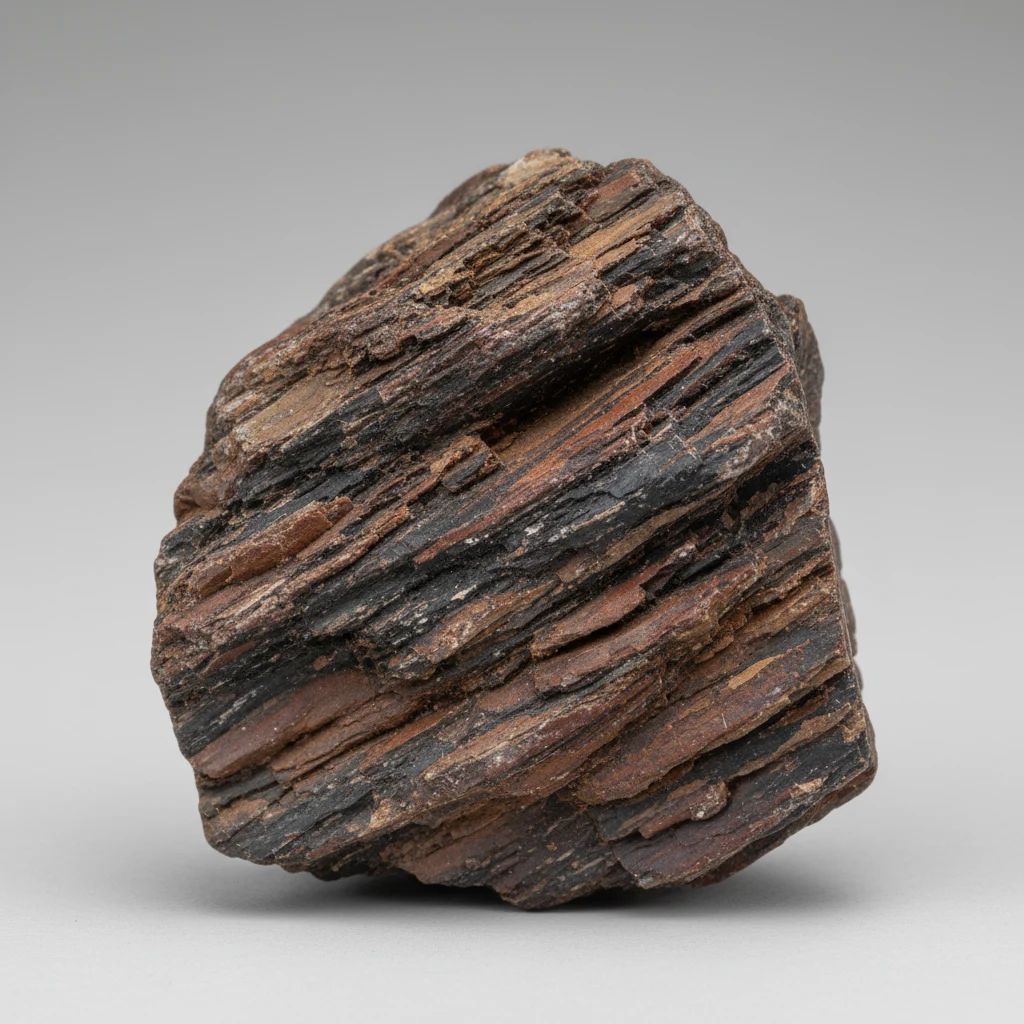
Coconut Shell is the hard outer shell of the coconut fruit, treated here as a common organic gem rather than a mineral crystal. In the hand, it feels light for its size, with a dark brown to black body color, an opaque look, and a fibrous surface that immediately separates it from stone. Its luster is usually dull, sometimes slightly glossy where it has been worn or worked.
Collectors value Coconut Shell for texture, cultural familiarity, and craft use more than rarity. It has a Mohs hardness of 3-4, a density of 0.5-0.9 g/cm3, and good toughness, though it can break under significant impact or pressure. Typical specimens are inexpensive, especially when simple, with value rising through size, condition, and craftsmanship.
Origin & History
The name Coconut Shell comes through coconut, from the Spanish word “coco,” meaning “head” or “skull,” a name first used in the 16th century. That origin makes sense when you handle an intact shell: dark, rounded, hard, and marked by natural surface character. It is not a faceted mineral in the classic sense, but an organic material shaped by the coconut fruit itself.
For readers used to mineral references such as mindat.org, Coconut Shell is best understood as an organic gem material with an amorphous structure. Its chemical formula is listed as C6H10O5, with carbon, hydrogen, and oxygen as the listed elements. In collections, it often sits beside crystals as a grounding, earthy, tactile object.
Where Is Coconut Shell Found?
Coconut Shell is most commonly found in tropical regions where coconuts grow. The listed countries for this material are India, Indonesia, and the Philippines, with notable localities including Kerala in India, Bali in Indonesia, and Mindanao in the Philippines. Its availability is tied directly to coconut-growing areas rather than to mineral veins or mine workings.
Formation
Coconut Shell forms naturally as the coconut fruit matures and dries. Unlike crystalline gems, it does not grow in a crystal system with faces or terminations; its structure is amorphous. The finished shell is hard, opaque, and uneven when fractured, with a brown streak and a surface that can range from dull to slightly glossy.
This formation gives Coconut Shell its practical durability and distinctive feel. The material is non-magnetic, isotropic, and shows no birefringence or pleochroism. In a tray of stones, it stands out through its organic origin: light density, fibrous texture, dark color, and the unmistakable sense of a natural protective shell.
How to Identify Coconut Shell
Identify Coconut Shell by its dark brown to black color, fibrous texture, and relatively light weight. It is opaque, with a dull luster that may become slightly glossy on smoother or handled areas. A broken edge is uneven rather than glassy or crystalline, and the streak is brown. The tactile clue is important: it feels like a hard, dried organic shell, not a dense mineral.
On basic tests, Coconut Shell is non-magnetic and has Mohs hardness of 3-4, so it is moderately scratch resistant but not a hard gemstone. Its density of 0.5-0.9 g/cm3 also helps separate it from many heavier stones. Look for honest surface texture, stable condition, and the natural brown-to-black palette.
Properties of Coconut Shell
Physical Properties
| Crystal System | Amorphous |
| Hardness (Mohs) | 3-4 (Medium (4-6)) |
| Density | 0.5-0.9 g/cm3 |
| Luster | Dull |
| Diaphaneity | Opaque |
| Fracture | Uneven |
| Streak | Brown |
| Magnetism | Non-magnetic |
| Colors | Brown, Black, Dark Brown |
Chemical Properties
| Classification | Organic material |
| Formula | C6H10O5 |
| Elements | C, H, O |
| Common Impurities |
Optical Properties
| Refractive Index | N/A |
| Birefringence | None |
| Pleochroism | None |
| Optical Character | Isotropic |
Coconut Shell Health & Safety
No significant health risks are associated with coconut shell.
Coconut Shell Value & Price
Price Range
Rough/Tumbled: $1 - $5 per specimen
Cut/Polished:
Price is affected by size, craftsmanship, and condition.
Durability
Moderate — Scratch resistance: Fair, Toughness: Good
It can break under significant impact or pressure.
How to Care for Coconut Shell
Use & Storage
Store in a cool, dry place away from direct sunlight.
Cleaning
Wipe with a damp cloth to remove dirt. Avoid soaking in water.
Cleanse & Charge
Place in sunlight for a few hours to cleanse.
Placement
Display in a stable area to avoid damage.
Caution
Avoid exposing to extreme humidity or prolonged water immersion.
Works Well With
Coconut Shell Meaning & Healing Properties
In metaphysical use, Coconut Shell is believed to support grounding, protection, and nurturing energy. Practitioners often associate it with emotional healing, calming, soothing, trust, compassion, and inner peace. Its earthy, protective feel makes it a natural object for meditation or quiet placement, especially when a softer, less glittering material is desired.
Coconut Shell is associated with the Root and Heart chakras, the zodiac signs Cancer and Pisces, the Moon, and the elements Earth and Water. It is not a substitute for medical treatment. For care, keep it in a cool, dry place away from direct sunlight, wipe with a damp cloth when needed, avoid soaking, and display it where it will not be knocked or crushed.
Identify Coconut Shell from a photo
Compare Coconut Shell traits, care tips, value clues, and common lookalikes with a clear photo.
Common mistakes
- Assuming every black lightweight bead is jet or onyx without checking for fibrous grain.
- Soaking coconut shell jewelry in water, which can dull finishes or weaken stringing materials.
- Using harsh cleaners, alcohol, or solvents on dyed or coated pieces.
- Judging authenticity from color alone instead of checking texture, weight, and drilled edges.
- Expecting coconut shell to resist scratches like mineral gemstones.