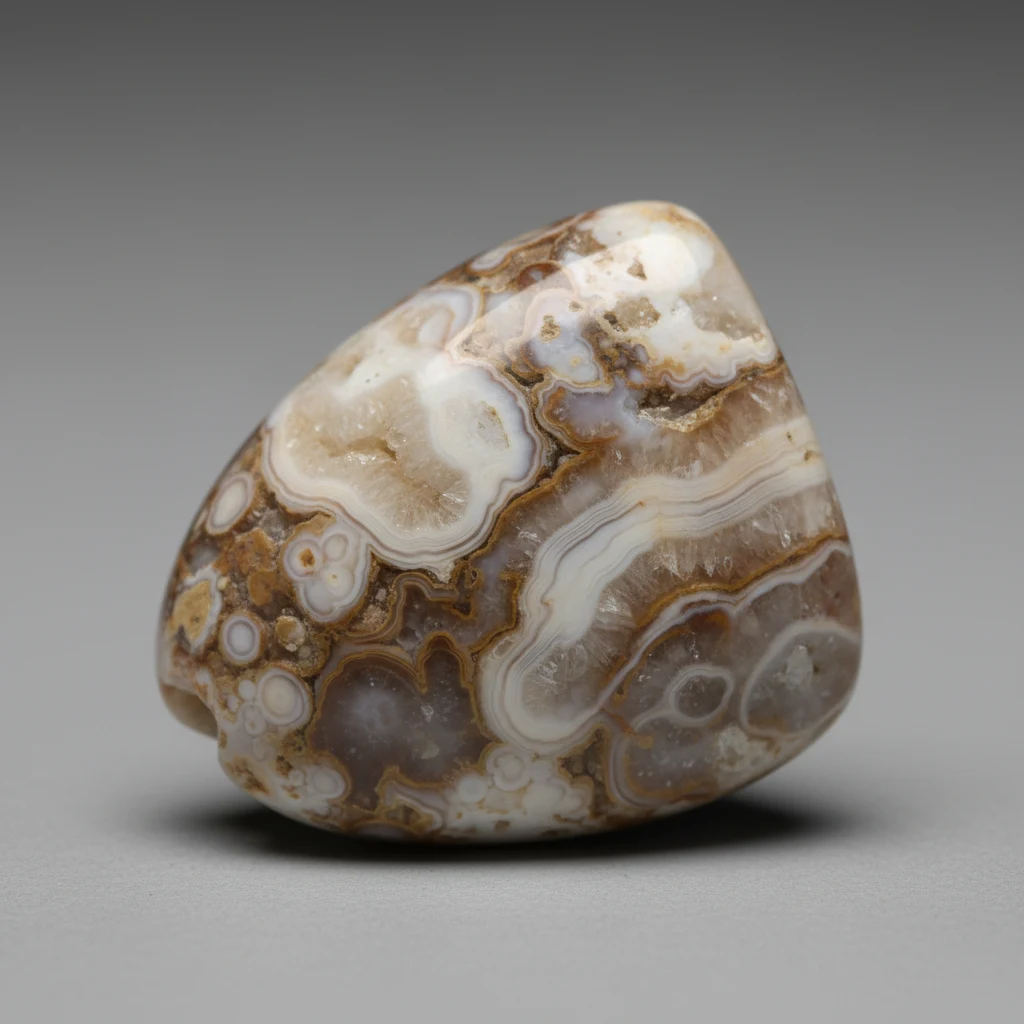
Cowrie Shell


Quick answer: Cowrie shell is an organic calcium carbonate mollusk shell, not a mineral crystal, with a glossy oval shape and a narrow slit-like opening. It is commonly collected, worn in jewelry, and used symbolically in traditions associated with protection, prosperity, and exchange.
AI Rock ID can help distinguish cowrie shell from similar polished shells, carved beads, or imitation resin pieces by checking shape, aperture, surface gloss, and visible growth features. RockIdentifier.io lists Cowrie Shell as an organic CaCO3 material rather than a true crystalline mineral.
Good fit
- Collectors who want an easy-to-recognize organic material with cultural history
- Jewelry makers seeking lightweight natural beads or shell accents
- Beginners learning the difference between minerals, rocks, fossils, and organic gems
- Buyers who prefer affordable natural specimens with visible biological structure
Not a good fit
- Anyone needing a durable stone for high-impact rings or daily-wear bracelets
- Collectors seeking a rare mineral species with a defined crystal system
- Use in acidic environments, ultrasonic cleaners, or harsh chemical cleaning
Most commonly confused with
- Conch Shell: Conch shell is usually larger and spiral-shaped, while cowrie shell is compact, oval, and has a slit-like underside.
- Mother of Pearl: Mother of pearl is nacre from the inner shell layer, often iridescent and flat-cut, while cowrie is a whole shell form.
- Coral: Coral has a porous or branching skeletal structure, while cowrie shell has a smooth domed back and toothed aperture.
- Resin Imitation: Resin copies may show mold seams, uniform color, trapped bubbles, or a plastic feel instead of natural shell growth features.
Cowrie Shell vs. Common Lookalikes
| Material | Key ID Feature | Typical Difference |
|---|---|---|
| Cowrie shell | Glossy oval dome with narrow toothed slit | Natural shell, lightweight, Mohs about 3–4 |
| Conch shell | Large spiral body and flared lip | Usually much larger and less bead-like |
| Mother of pearl | Iridescent nacre layer | Usually cut as flat inlay or cabochon, not a whole oval shell |
| Coral | Porous, branching, or pitted surface | Skeletal texture differs from smooth cowrie enamel |
| Plastic or resin copy | Mold lines, bubbles, or overly uniform finish | Warmer plastic feel and lower density than natural shell |
AI identification confidence
AI identification is usually moderate to high for intact cowrie shells because the oval shape, glossy back, and slit-like underside are visually distinctive. Confidence drops when the shell is drilled, dyed, heavily worn, broken, or photographed from only one side.
When AI gets it wrong
- A polished resin bead is shaped and colored to mimic a natural cowrie.
- The photo shows only the glossy back and not the toothed underside.
- The specimen is a fragment, carving, or inlay rather than a whole shell.
- Lighting glare hides growth lines, aperture teeth, or surface texture.
Final recommendation
Choose cowrie shell if you want an affordable organic shell material with an easily recognized form and long cultural use. For jewelry, confirm whether the piece is natural shell, dyed shell, or imitation resin before buying.
How to Tell Real Cowrie Shell from Imitation
Real cowrie shells usually show small natural variations in size, color, pattern, and aperture teeth. Imitation pieces may have identical shapes, mold seams, air bubbles, or a plastic sound when tapped lightly. A natural shell often feels cool at first contact and may show subtle growth features under magnification.
Buying Cowrie Shell Jewelry
Cowrie shell jewelry is commonly sold as natural, bleached, dyed, carved, or resin-filled material. Check whether holes are cleanly drilled and whether thin edges around the slit are cracked or chipped. Sellers should clearly state if color has been enhanced, because bright white, gold, or unusual colors may be treated or coated.
Ethical and Cultural Context
Cowrie shells have been used as adornment, currency, ritual objects, and symbols in many African, Asian, Oceanic, and Indigenous traditions. Modern decorative use is best approached with awareness of cultural context, especially for ceremonial designs or items presented as tradition-specific. Sourcing from legal shell trade and avoiding protected or restricted marine species supports responsible collecting.
What Is Cowrie Shell?
Cowrie Shell is a hard, glossy shell from a marine mollusk, valued as an organic gem rather than a mineral crystal. In the hand it feels smooth, compact, and slightly porcelain-like, with a distinctive oval body and a polished surface that can be white, cream, brown, or multicolored.
Collectors recognize cowrie shells by their vitreous luster, opaque body, and characteristic ridge pattern. Their composition is calcium carbonate, CaCO3, with a Mohs hardness of 3-4, fair scratch resistance, and good toughness, though a dropped shell can still chip along an edge.
Origin & History
The word “cowrie” comes from the Hindi word “kauri,” and these shells have been used since ancient times. Some cowrie species were described more than 300 years ago, giving them a long record in collecting, ornament, and cultural use.
In a practical collection, Cowrie Shell sits between natural history specimen and organic gem material. For comparison with mineral references such as mindat.org, it is best understood as a calcium carbonate shell with amorphous structure, not a faceted mineral crystal.
Where Is Cowrie Shell Found?
Cowrie shells are commonly found in tropical and subtropical marine environments. Reported countries include India, Indonesia, and the Philippines, with notable localities including the Malabar Coast of India, Bali in Indonesia, and the Coral Sea of Australia.
Formation
Cowrie Shell forms as the protective exoskeleton of a marine mollusk. The shell material is calcium carbonate, CaCO3, and its listed structure is amorphous, which is why it should be described differently from a crystalline mineral specimen.
The finished shell is dense for its size, with a listed density of 2.5-2.7 g/cm3, a white streak, and conchoidal fracture. Its glossy, smooth luster is part of its natural appeal, but that polish does not make it immune to chipping if handled roughly.
How to Identify Cowrie Shell
Identify Cowrie Shell by its oval outline, glossy smooth surface, and distinctive ridge pattern along the back or opening area. Most specimens are white, cream, brown, or patterned, and the best examples feel clean and rounded rather than rough or chalky.
Its physical clues are straightforward: Mohs hardness 3-4, opaque diaphaneity, vitreous luster, white streak, non-magnetic response, and conchoidal fracture if broken. Unlike many gemstones, it has no birefringence or pleochroism listed, and its optical character is isotropic.
Properties of Cowrie Shell
Physical Properties
| Crystal System | Amorphous |
| Hardness (Mohs) | 3-4 (Medium (4-6)) |
| Density | 2.5-2.7 g/cm3 |
| Luster | Vitreous |
| Diaphaneity | Opaque |
| Fracture | Conchoidal |
| Streak | White |
| Magnetism | Non-magnetic |
| Colors | White, Brown, Cream |
Chemical Properties
| Classification | Inorganic compound |
| Formula | CaCO3 |
| Elements | Ca, C, O |
| Common Impurities |
Optical Properties
| Refractive Index | 1.65 |
| Birefringence | None |
| Pleochroism | None |
| Optical Character | Isotropic |
Cowrie Shell Health & Safety
Cowrie shells pose no significant health risks.
Cowrie Shell Value & Price
Price Range
Rough/Tumbled: $1 - $10 per specimen
Cut/Polished:
Price depends on size, color, and condition of the shell.
Durability
Moderate — Scratch resistance: Fair, Toughness: Good
Cowrie shells are generally stable but can chip if dropped.
How to Care for Cowrie Shell
Use & Storage
Store in a dry place to avoid moisture damage.
Cleaning
Rinse gently with water and mild soap. Avoid harsh chemicals.
Cleanse & Charge
Place in sunlight for a few hours to cleanse.
Placement
Display in a shell collection or as home decor.
Caution
Avoid dropping to prevent chipping.
Works Well With
Cowrie Shell Meaning & Healing Properties
In crystal and ritual traditions, Cowrie Shell is associated with protection, abundance, wealth, and prosperity. Practitioners often use it as a talisman, especially where ocean symbolism, nurturing energy, calming focus, trust, growth, and intuition are part of the work.
Cowrie Shell is linked with the Root and Sacral chakras, the zodiac signs Cancer and Pisces, the planet Venus, and the Water element. It pairs naturally with shell-crystal, ocean-blue, and sea-glass in a display, charm bundle, or meditation setting.
Identify Cowrie Shell from a photo
Compare Cowrie Shell traits, care tips, value clues, and common lookalikes with a clear photo.
Common mistakes
- Calling cowrie shell a crystal even though it is an organic shell material, not a mineral crystal.
- Assuming every glossy white cowrie is untreated; many shells are bleached, polished, or coated.
- Using vinegar or acidic cleaners, which can etch calcium carbonate shell.
- Relying on color alone for identification instead of checking the oval shape and toothed aperture.
- Buying perfectly identical beads without considering that they may be molded resin copies.
Cowrie Shell FAQ
Related Crystals
Related pages: Black and White Cowrie Shell