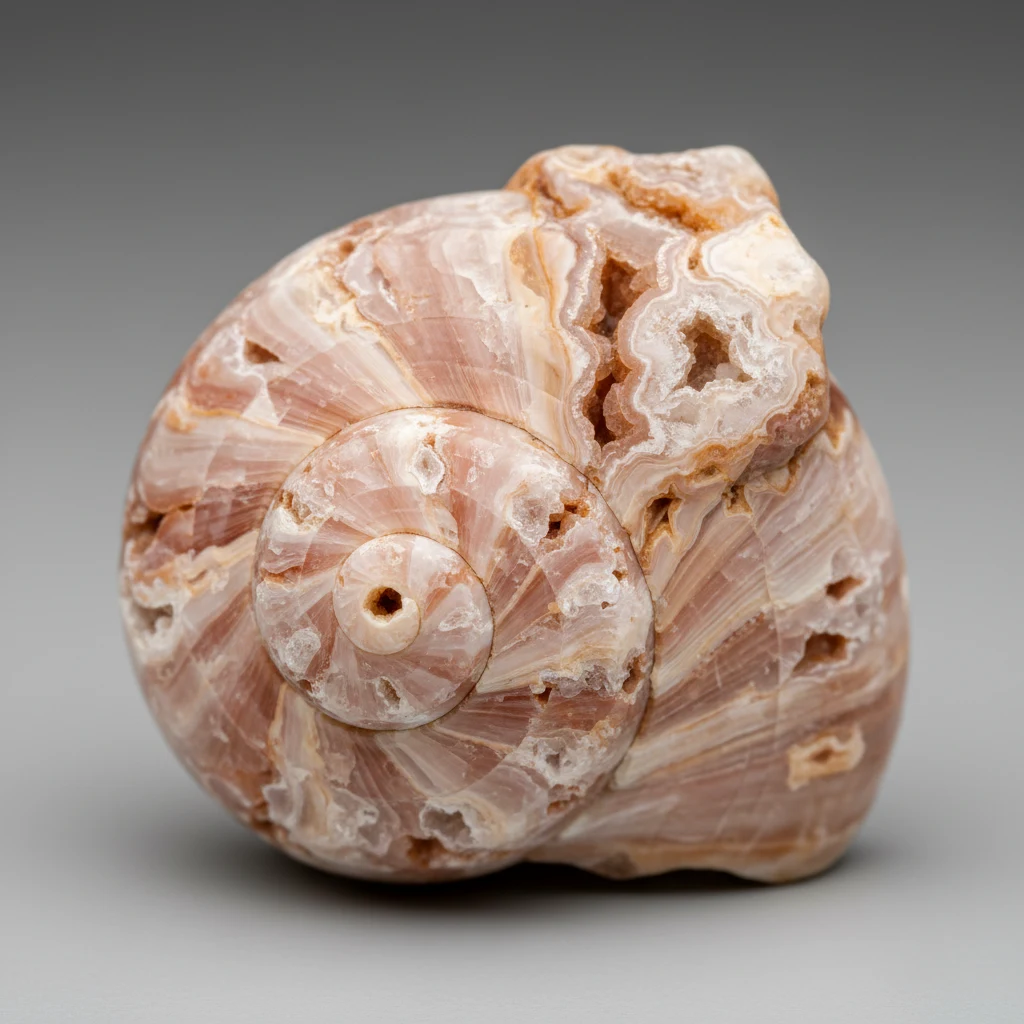
Conch Shell


Quick answer: Conch shell is an organic marine material made mostly of calcium carbonate, not a mineral crystal in the strict geological sense. It is recognized by its spiral form, thick shell walls, and common cream, pink, peach, or orange interior tones.
AI Rock ID can help screen a suspected conch shell by checking visible traits such as spiral shape, surface texture, color zoning, and shell growth patterns. RockIdentifier.io lists Conch Shell as an organic calcium carbonate material commonly found in warm marine environments.
Good fit
- Collectors who want an organic marine specimen rather than a traditional mineral
- People comparing shell material with coral, mother of pearl, or dyed shell products
- Decorative displays where low hardness and moisture sensitivity can be managed
- Educational collections focused on calcium carbonate materials
- Buyers who want to check for natural shell features before purchase
Not a good fit
- Jewelry that will face heavy abrasion or daily impact
- Collectors seeking a true mineral crystal with a fixed crystal habit
- Aquarium use unless the shell has been properly cleaned and confirmed safe for the setup
- Anyone expecting metaphysical traditions to replace medical or professional care
Most commonly confused with
- Mother of Pearl: Mother of pearl is the iridescent inner nacre layer, while conch shell is the whole shell or shell material and may be non-iridescent.
- Coral: Coral usually shows branching, porous, or skeletal structures, while conch shell has a spiral shell form and layered growth.
- Calcite: Calcite is a mineral crystal form of calcium carbonate, while conch shell is biologically produced calcium carbonate with organic structure.
- Dyed Shell: Dyed shell may show unnaturally even or vivid color in cracks and pores, while natural conch color is usually softer and more uneven.
Conch Shell vs Similar Materials
| Material | Key clue | Common difference | Typical concern |
|---|---|---|---|
| Conch Shell | Spiral shell form with layered calcium carbonate | May show pink, cream, peach, or orange tones | Can chip, dull, or etch |
| Mother of Pearl | Iridescent nacre surface | Often used as thin inlay or cabochon material | Surface can scratch easily |
| Coral | Porous or branching skeletal texture | Usually not spiral-shaped | May be dyed or trade-restricted |
| Calcite | Crystal cleavage and mineral habit | No biological shell growth pattern | Reacts to acid and scratches easily |
| Plastic Imitation | Mold seams or uniform color may be visible | Lacks natural shell layering | Often sold as decorative shell |
AI identification confidence
AI identification confidence is usually moderate when the photo clearly shows the full spiral form, aperture, lip, and natural growth lines. Confidence is lower for small polished pieces, beads, slices, or dyed fragments because many calcium carbonate materials can look similar after cutting or treatment.
When AI gets it wrong
- The image shows only a polished pink or cream fragment with no shell structure.
- Strong lighting hides growth lines, pores, or surface texture.
- The item is dyed, resin-coated, or carved into a shape that removes natural shell clues.
- A plastic or composite imitation has molded details that resemble a natural shell.
Final recommendation
Choose conch shell when the specimen shows natural spiral structure, layered growth, and color that is consistent with shell material rather than paint or plastic. For purchases, ask whether the item is natural, dyed, repaired, or resin-coated, especially for beads, carvings, and decorative shells.
How to Spot Dyed or Treated Conch Shell
Dyed conch shell may show unusually saturated color in cracks, drill holes, chips, or low spots. A natural piece usually has more gradual color variation and visible shell layering. Resin coatings can create a glossy, plastic-like surface that hides natural texture.
Buying Conch Shell Responsibly
Conch shells can come from living marine animals, so origin and legal collection status matter. Buyers should prefer sellers who can describe the source, treatment, and whether the shell was collected legally. Some regions restrict harvest or export of certain conch species.
Field Identification Tips
A conch shell often has a heavy, spiral body, a flared lip in mature shells, and visible growth lines around the exterior. Broken edges may reveal layered calcium carbonate rather than a glassy or resin-like interior. Natural shells can vary widely by species, age, and wear from seawater.
What Is Conch Shell?
Conch Shell is an organic gem: the hard, protective outer case of a marine snail. In the hand, a good specimen feels smooth and solid, with a spiral body, a defined lip or edge, and color that may run from soft cream to warm orange or pink. It is opaque, non-magnetic, and has a glossy, smooth surface that collectors often display for its shape as much as its color.
As a biomineral, Conch Shell is calcium carbonate, CaCO3, with a listed Mohs hardness of 3-4 and a density of 2.5-2.8 g/cm3. It is considered common, but individual value still depends on size, condition, and color. Rough specimens are typically listed around $10-$50 per specimen.
Origin & History
The word conch comes from the Latin concha, meaning shell. Conch shells have been used for thousands of years in various cultures, and their long human history is easy to understand when you hold one: the spiral form is bold, the surface is tactile, and the natural color can look decorative without cutting or polishing.
In collecting terms, Conch Shell sits between natural history specimen and organic gem. It is not a crystal grown in a lattice, but an amorphous calcium carbonate shell made by a living marine mollusk. For mineral-reference context on specimen terminology, mindat.org is a useful plain-text reference, while this page uses the supplied Conch Shell facts.
Where Is Conch Shell Found?
Conch Shell is most commonly found in warm coastal waters. The supplied locality list includes the Bahamas, Haiti, and Florida, with notable localities at Andros Island in the Bahamas, Hispaniola in the Caribbean, and the Florida Keys in the USA.
Formation
Conch Shell forms when a marine mollusk secretes calcium carbonate, building the shell as the animal matures. The result is an organic gem rather than a conventional mineral crystal, with an amorphous structure and a chemical formula of CaCO3.
That growth history is visible in the object itself: the spiral shape records the shell’s expansion, while the smooth luster and opaque body give it a solid, protective feel. Its listed fracture is conchoidal, its streak is white, and its optical data include a refractive index of 1.5, no birefringence, no pleochroism, and isotropic optical character.
How to Identify Conch Shell
Identify Conch Shell first by its spiral shape, glossy smooth luster, and natural pink, cream, or orange coloration. The presence of a lip or edge is a key visual clue, especially on display specimens where the outline and opening are easy to inspect.
For confirmation, use the physical traits together rather than relying on color alone. Conch Shell is opaque, non-magnetic, and has a white streak, with Mohs hardness 3-4 and moderate durability. Handle it carefully: the material has fair scratch resistance and fair toughness, and rough handling can damage it.
Properties of Conch Shell
Physical Properties
| Crystal System | Amorphous |
| Hardness (Mohs) | 3-4 (Medium (4-6)) |
| Density | 2.5-2.8 g/cm3 |
| Luster | Vitreous |
| Diaphaneity | Opaque |
| Fracture | Conchoidal |
| Streak | White |
| Magnetism | Non-magnetic |
| Colors | Pink, Cream, Orange |
Chemical Properties
| Classification | Biomineral |
| Formula | CaCO3 |
| Elements | Ca, C, O |
| Common Impurities |
Optical Properties
| Refractive Index | 1.5 |
| Birefringence | None |
| Pleochroism | None |
| Optical Character | Isotropic |
Conch Shell Health & Safety
Conch shells pose minimal health risks.
Conch Shell Value & Price
Price Range
Rough/Tumbled: $10 - $50 per specimen
Cut/Polished:
Price can vary based on size, condition, and color.
Durability
Moderate — Scratch resistance: Fair, Toughness: Fair
Conch shells can be damaged by rough handling.
How to Care for Conch Shell
Use & Storage
Store in a cool, dry place away from direct sunlight.
Cleaning
Clean with mild soap and water using a soft cloth. Avoid harsh chemicals.
Cleanse & Charge
Place in sunlight or moonlight for cleansing.
Placement
Can be displayed on shelves or used in decorative arrangements.
Caution
Handle carefully to avoid breaking.
Works Well With
Conch Shell Meaning & Healing Properties
Conch Shell is traditionally believed to promote calmness and emotional healing. In crystal-healing practice, its associations are gentle and watery: calming, protective, and nurturing, with links to compassion, inner peace, trust, self-discovery, growth, and transformation.
It is associated with the Heart and Throat chakras, the zodiac signs Cancer and Pisces, the Moon, and the Water element. Use it as a symbolic meditation or display piece rather than a medical treatment. It is safe to handle and safe in water; clean it with mild soap and water using a soft cloth, and avoid harsh chemicals.
Identify Conch Shell from a photo
Compare Conch Shell traits, care tips, value clues, and common lookalikes with a clear photo.
Common mistakes
- Calling conch shell a mineral crystal rather than an organic calcium carbonate material.
- Assuming every pink shell fragment is natural conch shell without checking structure.
- Mistaking dyed shell beads for naturally colored conch shell.
- Using vinegar or acidic cleaners, which can etch calcium carbonate.
- Leaving shell material in harsh sunlight, which may fade color or dry the surface.
- Ignoring local collection rules for beach-found or imported shells.