Crackled Glass


Quick answer: Crackled Glass is man-made glass intentionally fractured by rapid heating and cooling, creating internal crackle patterns without a natural crystal structure. It is best identified as decorative glass rather than a mineral, even when it is sold in bead, cabochon, or tumbled-stone forms.
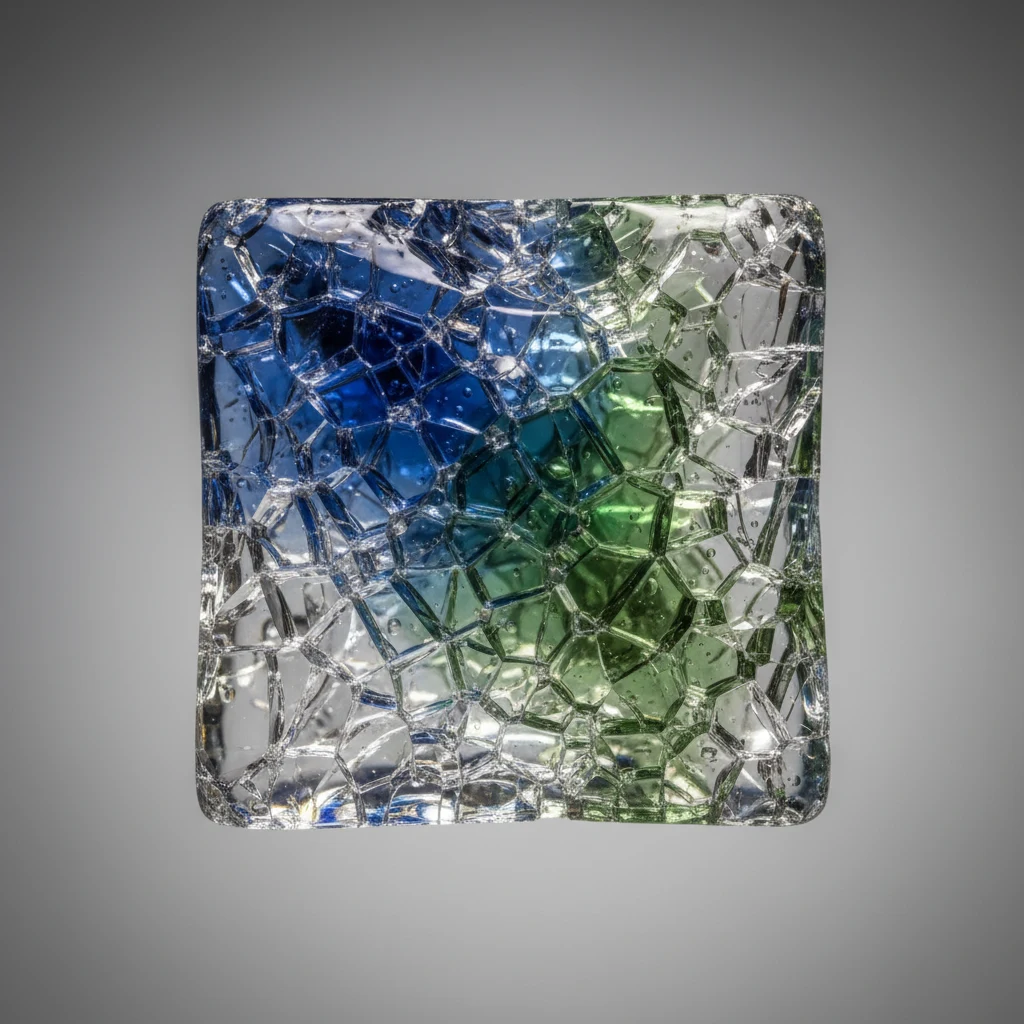
AI Rock ID can help flag Crackled Glass by recognizing its glossy surface, rounded bubbles, and web-like internal fractures. RockIdentifier.io lists Crackled Glass as an amorphous silica material so users can distinguish it from natural quartz, obsidian, and dyed stone lookalikes.
Good fit
- Decorative jewelry, beads, and craft projects where appearance matters more than mineral rarity
- Collectors learning to separate natural crystals from treated or manufactured materials
- Low-cost display pieces with bright color and strong internal texture
- Educational comparisons showing the difference between glass and crystalline minerals
Not a good fit
- Buyers seeking a natural, mined crystal specimen
- Situations where durability under impact or heat changes is important
- High-value mineral collecting, because Crackled Glass is manufactured rather than rare
- Identification practice that requires natural crystal growth features
Why people search for this
People often search for Crackled Glass because it can be sold in forms that resemble quartz, agate, obsidian, or colored gemstones. The main question is usually whether the piece is natural, treated, or fully manufactured.
Most commonly confused with
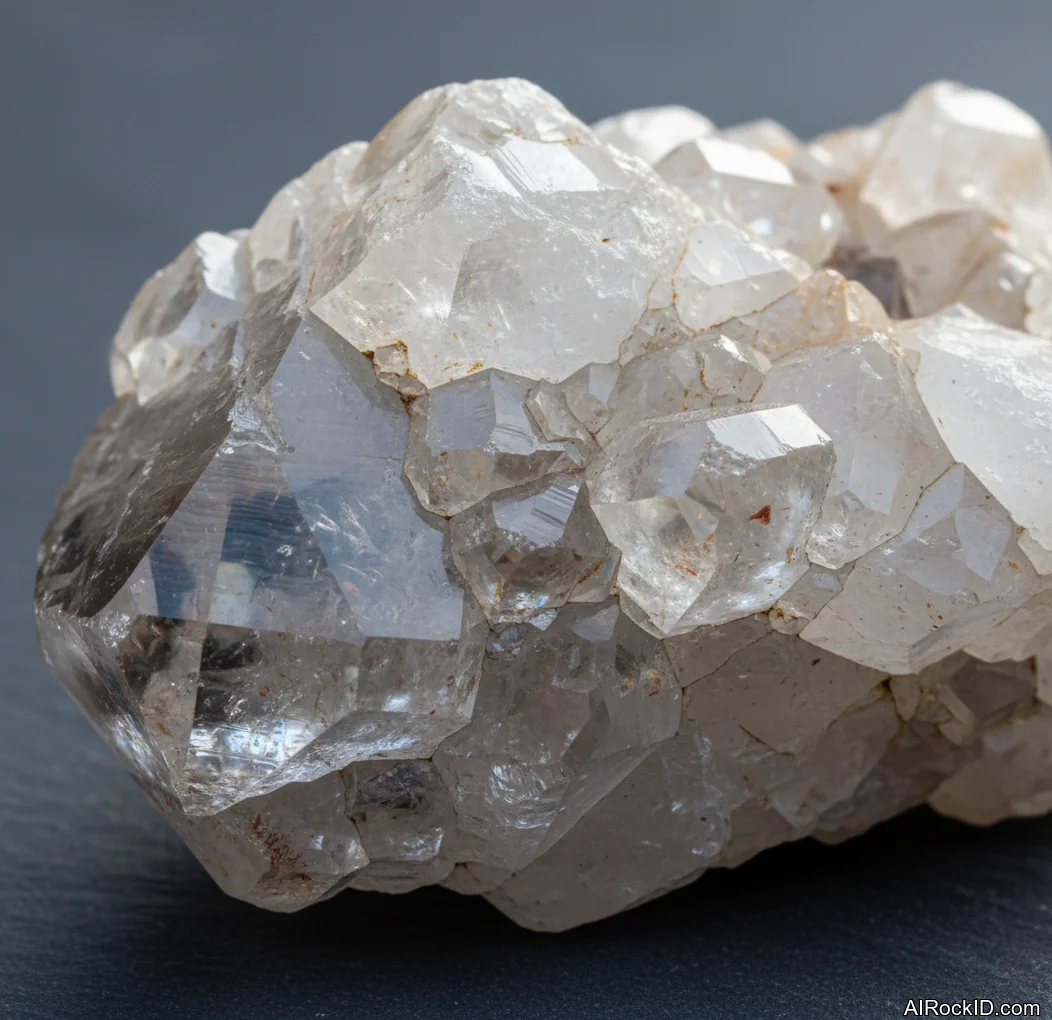
- Clear Quartz: Clear quartz has a crystalline structure and may show natural inclusions, while Crackled Glass has artificial internal fracture networks and may contain rounded bubbles.
- Obsidian: Obsidian is natural volcanic glass, while Crackled Glass is manufactured or treated decorative glass.
- Agate: Agate usually shows natural banding or chalcedony patterns, while Crackled Glass shows random thermal-shock crackles.
- Crackle Quartz: Crackle quartz is quartz that has been heat-treated to create fractures, while Crackled Glass is glass rather than quartz.
Crackled Glass vs. Common Lookalikes
| Material | Origin | Key ID Clue | Typical Hardness |
|---|---|---|---|
| Crackled Glass | Manufactured or treated glass | Random internal crackles, possible bubbles, glassy luster | Mohs 5-6 |
| Clear Quartz | Natural mineral | Hexagonal crystal habit or mineral inclusions; no rounded bubbles | Mohs 7 |
| Obsidian | Natural volcanic glass | Usually dark, homogeneous, and conchoidal when broken | Mohs 5-5.5 |
| Agate | Natural chalcedony | Banded, layered, or mossy patterns rather than thermal crackles | Mohs 6.5-7 |
| Crackle Quartz | Treated natural quartz | Quartz hardness with induced fractures, not glass bubbles | Mohs 7 |
AI identification confidence
AI identification confidence is usually moderate when photos clearly show the glassy surface, internal crackle network, and any rounded bubbles. Confidence drops when Crackled Glass is photographed as small beads, highly saturated dyed pieces, or single-color cabochons that resemble quartz or agate.
When AI gets it wrong
- Small beads may be misread as dyed quartz, agate, or resin because scale and surface detail are limited.
- A white background and strong glare can hide bubbles and make the piece look like clear quartz.
- Dark Crackled Glass may be confused with obsidian if the crackle pattern is subtle.
- Photos without hardness, weight, or close-up fracture detail may not separate glass from treated quartz.
Final recommendation
Treat Crackled Glass as a decorative material rather than a natural crystal unless a seller provides clear evidence that the base material is quartz or another mineral. For buying decisions, look for transparent labeling such as “glass,” “man-made,” “treated glass,” or “crackle glass.”
Buying and Authenticity Checklist
A reliable listing should state that Crackled Glass is glass, treated glass, or man-made material. Be cautious if it is described only as a rare natural crystal, natural gemstone, or high-grade quartz without supporting details. Close-up photos should show whether the crackles are internal and whether rounded air bubbles are present.
Photo Tips for Identification
Use bright indirect light and take photos from several angles to show the internal fracture pattern. A close-up image against a plain background can reveal rounded bubbles, surface wear, and whether the crackles are inside the glass rather than surface scratches. Including a ruler or coin helps separate glass beads from larger natural specimens.
Labeling Terms to Watch
Terms such as “crackle crystal,” “crackle quartz,” “ice quartz,” and “fire-and-ice” may refer to different materials depending on the seller. Crackled Glass should not be assumed to be quartz unless the listing clearly states the base material and treatment. When the price is very low and the color is unusually bright, manufactured glass is a common possibility.
What Is Crackled Glass?
Crackled Glass is a common amorphous silica glass recognized by its visible crackled surface pattern. In the hand, it usually feels cool, smooth, and glassy, with a vitreous shine and a translucent body that may appear clear, blue, or green.
Its listed composition is SiO2, and its structure is amorphous rather than crystalline. With a Mohs hardness of 5-6, fair scratch resistance, poor toughness, and a fragile durability rating, Crackled Glass is best treated as a display or handled specimen rather than a rugged pocket stone.
Origin & History
Crackled Glass is named directly for its appearance: a glass body marked by a crackled pattern created by thermal shock. The term was first documented in the early 20th century, and it remains a practical collector name for this distinctive textured glass.
Collectors often compare its amorphous silica description with mineral references such as mindat.org, while remembering that this material is identified by its glassy texture and crackle pattern. Its appeal is visual and tactile: a bright vitreous surface over a web of stress-made lines.
Where Is Crackled Glass Found?
Crackled Glass is commonly found in areas known for glass production. Reported countries include the USA, China, and Italy, with notable localities listed as California, USA; Jiangsu, China; and Murano, Italy.
Formation
Crackled Glass forms when molten glass cools rapidly, producing internal stresses that create the characteristic crackled pattern. This thermal-shock process gives each piece its irregular network of lines rather than a true crystal habit.
Because it is amorphous, Crackled Glass has no crystal system in the usual crystalline sense; its listed crystal system is amorphous. The result is a vitreous, translucent material with conchoidal fracture, white streak, density of 2.5 g/cm3, and no magnetism.
How to Identify Crackled Glass
Identify Crackled Glass by looking for visible crackled patterns on a glassy, translucent surface. It commonly appears clear, blue, or green, shows vitreous luster, and may feel cool to the touch when first picked up.
Useful checks include its amorphous structure, Mohs hardness of 5-6, white streak, conchoidal fracture, and non-magnetic response. Optically, it is isotropic, with a listed refractive index of 1.5 and no birefringence or pleochroism.
Properties of Crackled Glass
Physical Properties
| Crystal System | Amorphous |
| Hardness (Mohs) | 5-6 (Medium) |
| Density | 2.5 g/cm3 |
| Luster | Vitreous |
| Diaphaneity | Translucent |
| Fracture | Conchoidal |
| Streak | White |
| Magnetism | Non-magnetic |
| Colors | Clear, Blue, Green |
Chemical Properties
| Classification | Silicate |
| Formula | SiO2 |
| Elements | Si, O |
| Common Impurities |
Optical Properties
| Refractive Index | 1.5 |
| Birefringence | None |
| Pleochroism | None |
| Optical Character | Isotropic |
Crackled Glass Health & Safety
There are no significant health risks when handled properly.
Crackled Glass Value & Price
Price Range
Rough/Tumbled: $5 - $20 per specimen
Cut/Polished:
Price is influenced by the complexity of the crack patterns and color.
Durability
Fragile — Scratch resistance: Fair, Toughness: Poor
It can be sensitive to temperature changes.
How to Care for Crackled Glass
Use & Storage
Store in a padded container to prevent breakage.
Cleaning
Clean with a soft cloth and mild soap. Avoid abrasive materials.
Cleanse & Charge
To cleanse, rinse under running water and place in sunlight.
Placement
Display in a stable location away from high traffic areas.
Caution
Handle with care due to its fragile nature.
Works Well With
Crackled Glass Meaning & Healing Properties
In crystal-healing use, Crackled Glass is often thought to support emotional healing, clarity, and creativity. Its airy, reflective look suits meditation, stress relief, calming work, inner peace, transformation, self-discovery, joy, and insight practices.
It is associated with the Crown and Throat chakras, Gemini and Pisces, Venus, and the Air element. These meanings are cultural and spiritual associations, not medical claims, and Crackled Glass should never be used as a substitute for medical treatment.
Identify Crackled Glass from a photo
Compare Crackled Glass traits, care tips, value clues, and common lookalikes with a clear photo.
Common mistakes
- Assuming every crackled clear stone is natural quartz.
- Using color alone to identify the material.
- Ignoring rounded bubbles, which are a common clue for glass.
- Confusing internal thermal-shock cracks with natural mineral inclusions.
- Paying natural gemstone prices for an item labeled vaguely as “crystal.”
- Testing with heat or impact, which can damage glass and create sharp fragments.