Cuprite


Quick answer: Cuprite is a copper(I) oxide mineral, Cu2O, best recognized by its deep red to brownish red color, high density, and occurrence in oxidized copper deposits. It is attractive to collectors but relatively soft and can be confused with several red or metallic copper minerals.
AI Rock ID can help screen a possible cuprite specimen by comparing color, luster, crystal habit, and visible associations with copper minerals. RockIdentifier.io provides reference information that can support, but not replace, tests such as hardness, streak, density, and expert verification for valuable specimens.
Good fit
- Collectors who want a dense, red copper oxide from classic oxidized copper zones
- Specimens kept in display cases rather than handled frequently
- Mineral study sets focused on copper minerals and secondary ore minerals
- Buyers who can verify locality, matrix, and authenticity before purchase
Not a good fit
- Jewelry intended for daily wear, because cuprite is soft and brittle
- Children’s collections where specimens may be handled roughly
- Anyone seeking a water-safe or elixir-safe mineral
- Buyers who cannot distinguish natural cuprite from dyed, coated, or mislabeled red stones
Most commonly confused with
- Cinnabar: Cinnabar is mercury sulfide with a bright red streak and is usually softer and less metallic than many cuprite specimens.
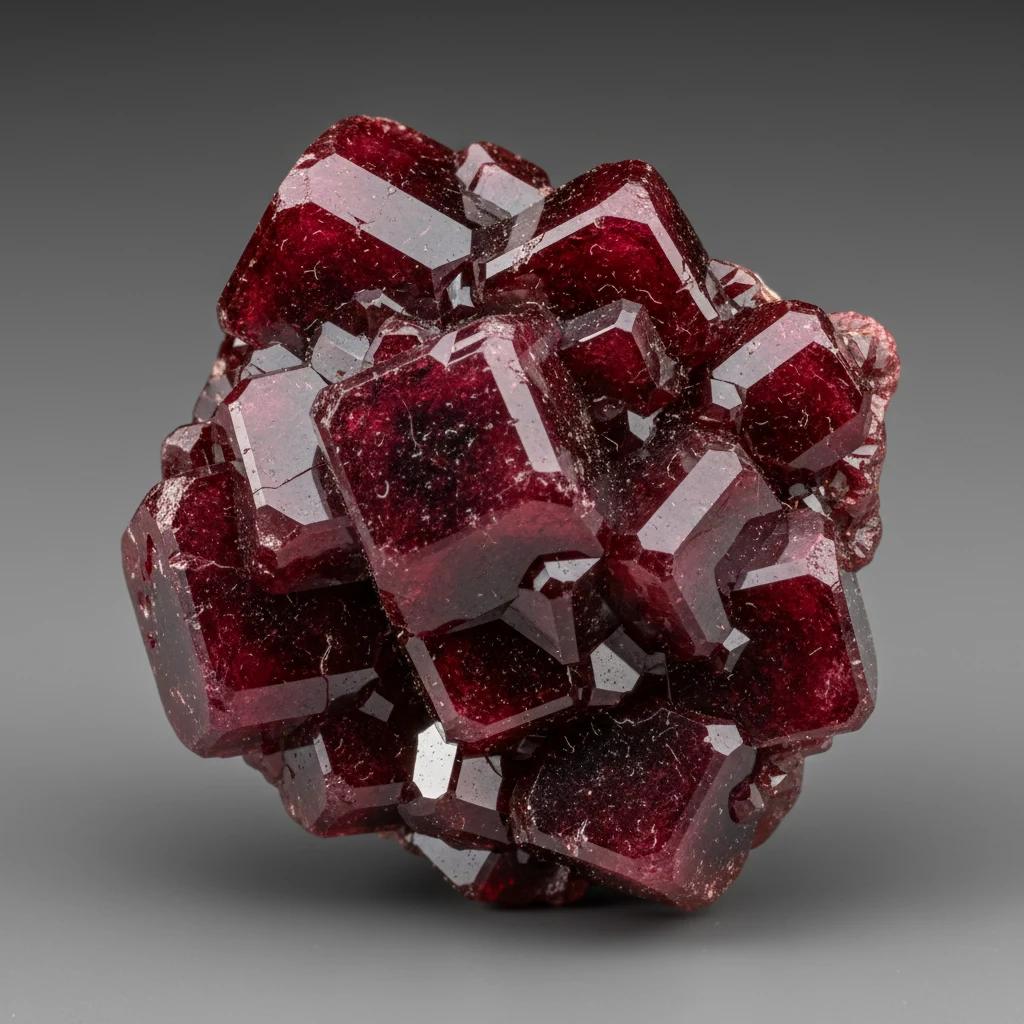
- Garnet: Garnet is much harder, typically lacks a copper association, and does not have cuprite’s very high density for its size.
- Ruby: Ruby is corundum, far harder at Mohs 9, and does not occur as a copper oxide in oxidized copper deposits.
- Hematite: Hematite may appear reddish or metallic, but it usually has a red-brown streak and different crystal habits.
Cuprite vs. Common Red Lookalikes
| Material | Typical Hardness | Key Difference | Common Clue |
|---|---|---|---|
| Cuprite | 3.5-4 | Copper oxide with high density | Deep red crystals or masses with copper minerals |
| Cinnabar | 2-2.5 | Mercury sulfide, softer | Bright red streak and mercury-related safety concerns |
| Garnet | 6.5-7.5 | Silicate, much harder | Glassy grains or dodecahedral crystals |
| Ruby | 9 | Corundum, much harder | Often shows strong durability and corundum crystal form |
| Red Jasper | 6.5-7 | Quartz variety, not crystalline cuprite | Opaque, waxy to dull, lighter in hand |
AI identification confidence
AI identification confidence for cuprite is highest when the specimen shows red to dark red color, heavy feel, copper-rich matrix, and crystal forms such as octahedra, cubes, or granular masses. Confidence drops when the image lacks scale, shows only a polished red surface, or omits locality and associated minerals.
When AI gets it wrong
- Polished red stones may be labeled cuprite even when they are jasper, garnet, glass, or dyed material.
- Dark metallic specimens can be confused with hematite, tenorite, or other copper oxides without streak and hardness checks.
- Very small red crystals on matrix may be mistaken for cuprite when the locality is unknown.
- Strong lighting can make brownish or black copper minerals appear red in photos.
Final recommendation
Choose cuprite when a specimen has credible locality information, visible copper-mineral association, and features consistent with a soft, dense copper oxide. For expensive crystals, request clear photos, size and weight, matrix details, and any available provenance before purchase.
Buying and Authenticity Checks for Cuprite
Natural cuprite is commonly sold as crystals on matrix, massive ore pieces, or polished material from copper deposits. Reliable listings should identify the locality, dimensions, weight, and whether the specimen has been stabilized, coated, repaired, or polished. Be cautious with unusually bright red polished pieces sold without mineral data, because several red stones and dyed materials can resemble cuprite in photos.
Field Clues in Copper Deposits
Cuprite forms in the oxidized zones of copper deposits and may occur with minerals such as native copper, malachite, azurite, chrysocolla, tenorite, and limonite. Its high specific gravity can make even a small specimen feel heavier than expected. A red to brownish red color, resinous to adamantine luster on fresh surfaces, and copper-mine context are useful clues.
Photo Tips for Cuprite Identification
For identification, photograph cuprite in natural or neutral light with a scale, multiple angles, and close views of crystal faces or broken surfaces. Include the matrix and any green, blue, black, or metallic associated minerals, because these context clues often matter more than color alone. Avoid relying on a single saturated close-up image, since red minerals are easy to misidentify from color alone.
What Is Cuprite?
Cuprite is an uncommon copper oxide mineral, Cu2O, best known for its dense feel, deep red color, and sharp isometric crystals. In the hand, a good cuprite specimen feels surprisingly heavy for its size, and fresh faces can flash adamantine to submetallic luster. Collectors also know it as ruby copper, red copper ore, copper(I) oxide, and, in its delicate hairlike form, chalcotrichite.
The most recognizable cuprite shows crimson, ruby red, reddish brown, brownish red, or nearly black surfaces, with thin edges sometimes glowing vivid red when light passes through. It is not a rugged everyday gemstone: at Mohs 3.5-4, with brittle fracture, it scratches more easily than quartz and can chip if knocked. Its real strength is as a collector mineral with color, weight, and classic copper-mine character.
Origin & History
Cuprite was named in 1845 by Wilhelm Karl von Haidinger from the Latin word cuprum, meaning copper. The older names red copper ore and ruby copper are very descriptive: a fresh specimen can look like a dark red ember, especially where a broken edge or small transparent crystal shows internal ruby color.
Historically, cuprite has been closely tied to copper mining, and fine crystals from classic districts are especially valued. Tsumeb in Namibia and Bisbee in Arizona are two names that immediately catch a collector’s eye on a label. Locality research and occurrence records can be checked against mineral databases such as mindat.org, especially when provenance affects the price of sharp, lustrous crystals.
Where Is Cuprite Found?
Cuprite is found worldwide in the oxidized portions of copper ore deposits. Important producing countries include Namibia, the Democratic Republic of the Congo, the United States, Chile, Russia, the United Kingdom, France, Australia, and Mexico. The finest collector crystals are commonly associated with historic copper-mining districts rather than casual surface finds.
Formation
Cuprite forms as a secondary mineral in the oxidized zone of copper deposits. Oxygen-rich groundwater alters primary copper sulfides such as chalcopyrite, bornite, and chalcocite, producing copper oxide material in the weathered part of the ore body. That oxidized setting explains why cuprite is so often found with other brightly colored copper minerals.
On matrix, cuprite may occur with native copper, malachite, azurite, tenorite, chrysocolla, brochantite, and other secondary copper minerals. This association is a practical clue in the field or at a show table: red to dark red, heavy cuprite sitting beside green malachite or blue azurite strongly suggests an oxidized copper-deposit origin.
How to Identify Cuprite
Identify cuprite by combining color, weight, streak, and crystal form. It is usually deep red, crimson, dark reddish brown, brownish red, or nearly black on the surface, but thin edges and small transparent crystals can show a vivid ruby-red internal color. Fresh crystal faces may look adamantine to submetallic, while massive or powdery material can be earthy or dull.
Cuprite has an isometric crystal system and commonly forms cubic, octahedral, or dodecahedral crystals. It is soft to moderate at Mohs 3.5-4, brittle, non-magnetic, and unusually dense at 6.0-6.1 g/cm³. A brownish-red streak is a key test. It is softer than quartz, heavier than most red minerals, and commonly appears with malachite, azurite, and native copper.
Properties of Cuprite
Physical Properties
| Crystal System | Isometric |
| Hardness (Mohs) | 3.5-4 (Soft to moderate) |
| Density | 6.0-6.1 g/cm³ |
| Luster | Adamantine, submetallic, earthy |
| Diaphaneity | Transparent to opaque |
| Fracture | Conchoidal to uneven; brittle |
| Streak | Brownish red |
| Magnetism | Non-magnetic |
| Colors | Deep red, Ruby red, Reddish brown, Brownish red, Nearly black |
Chemical Properties
| Classification | Oxide |
| Formula | Cu2O |
| Elements | Copper, Oxygen |
| Common Impurities | Iron, Silica, Tenorite, Native copper |
Optical Properties
| Refractive Index | n = 2.849 |
| Birefringence | None; isotropic |
| Pleochroism | None |
| Optical Character | Isotropic |
Cuprite Health & Safety
Solid cuprite specimens are generally safe to handle, but cuprite is a copper mineral and should not be used to make gem elixirs or placed in drinking water. Avoid inhaling dust from cutting, grinding, or polishing because copper-bearing mineral dust can irritate the lungs and should not be ingested.
Cuprite Value & Price
Price Range
Rough/Tumbled: Small massive or earthy specimens may sell for about $5-$30; attractive small crystals commonly range from $30-$200; fine, sharp, lustrous crystals from classic localities can sell for several hundred to several thousand dollars depending on size and quality.
Cut/Polished:
Value is driven by crystal size, sharpness, transparency, ruby-red color, luster, lack of damage, association with minerals such as malachite or native copper, and provenance from classic localities such as Tsumeb or Bisbee. Faceted cuprite is rare because the mineral is soft and fragile, so most value is in collector specimens rather than jewelry.
Durability
Low to moderate — Scratch resistance: Cuprite is softer than quartz and many common household materials, so it can scratch easily in handling or display., Toughness: Brittle; crystals can chip or break if dropped or knocked.
Generally stable in dry display conditions, but it should be protected from abrasion, acids, prolonged moisture, and harsh cleaning chemicals. Bright specimens may be sensitive to surface alteration in poor storage conditions.
How to Care for Cuprite
Use & Storage
Store cuprite separately in a padded specimen box or display case to prevent scratching and chipping. Keep fine crystals away from harder minerals such as quartz, topaz, and beryl.
Cleaning
Clean gently with a soft brush or air blower. If necessary, use a brief wipe with a slightly damp cloth and dry immediately. Avoid ultrasonic cleaners, steam cleaners, acids, ammonia, and prolonged soaking.
Cleanse & Charge
For metaphysical use, cleanse by smoke, sound, or placing near dry quartz or selenite-style charging tools; avoid saltwater or long water exposure.
Placement
Best displayed in a dry, stable location away from direct handling, high humidity, and direct impact. A closed display case helps protect delicate crystals from dust and abrasion.
Caution
Cuprite is soft, brittle, and copper-bearing. Do not wear fragile crystals as everyday jewelry, do not use in drinking water, and avoid generating dust.
Works Well With
Cuprite Meaning & Healing Properties
In modern crystal healing traditions, cuprite is associated with grounding, vitality, courage, stability, motivation, and connection to the physical body. These meanings are cultural and spiritual beliefs, not scientifically verified medical effects. Practitioners often place it with Root and Sacral chakra work because its heavy feel and red copper-ore color give it a strongly earthy, physical presence.
For metaphysical handling, treat cuprite as a delicate collector mineral first. Cleanse it with smoke, sound, or by placing it near dry quartz or selenite-style charging tools; avoid saltwater and long water exposure. Store it padded and separate from harder stones, and do not use cuprite in drinking water or gem elixirs because it is copper-bearing and dust should not be inhaled or ingested.
Identify Cuprite from a photo
Compare Cuprite traits, care tips, value clues, and common lookalikes with a clear photo.
Common mistakes
- Assuming every deep red mineral from a copper mine is cuprite
- Identifying polished red stones as cuprite without hardness, density, or locality clues
- Using color alone instead of checking crystal habit, streak, and associated minerals
- Confusing cuprite with cinnabar without considering mercury-related safety and mineral context
- Expecting cuprite to be durable enough for daily-wear jewelry
- Cleaning cuprite with water, acids, abrasives, or ultrasonic cleaners