Cinnabar


Quick answer: Cinnabar is a distinctive red mercury sulfide mineral that is best handled as a display or reference specimen rather than a touchstone or wearable crystal. Because it can resemble several red minerals and pigments, visual identification should be paired with caution and, when needed, expert confirmation.
AI Rock ID can help compare a cinnabar specimen’s color, luster, crystal habit, and matrix against similar red minerals from a photo. RockIdentifier.io provides visual identification support, but suspected cinnabar should still be handled carefully because it contains mercury.
Good fit
- Collectors who want a historically important mercury ore specimen
- Educational displays about ore minerals, mining, or mineral toxicity
- Specimens kept sealed, labeled, and away from children or pets
- People who prefer visual appreciation over frequent handling
Not a good fit
- Jewelry, pocket stones, elixirs, or any use involving prolonged skin contact
- Children’s collections or classrooms without supervised handling rules
- Carving, grinding, polishing, or tumbling projects
- Anyone seeking a low-maintenance crystal for daily handling
Most commonly confused with
- Realgar: Realgar is usually orange-red arsenic sulfide, while cinnabar is mercury sulfide and often shows a heavier feel.
- Red Jasper: Red jasper is opaque quartz-family material with earthy red tones and much greater hardness than cinnabar.
- Hematite: Hematite may look red in streak or earthy masses, but it is iron oxide and commonly appears metallic gray to black.
- Crocoite: Crocoite is a lead chromate mineral with bright orange-red prismatic crystals, not the heavier red mercury sulfide composition of cinnabar.
Cinnabar Lookalike Comparison
| Material | Typical Clue | Key Difference |
|---|---|---|
| Cinnabar | Bright red to brownish red, high density, soft | Mercury sulfide; toxic if mishandled |
| Realgar | Orange-red resinous crystals | Arsenic sulfide; sensitive to light |
| Red Jasper | Earthy red opaque stone | Harder quartz-family material |
| Hematite | Metallic gray or red-brown earthy masses | Iron oxide with red-brown streak |
| Crocoite | Orange-red elongated crystals | Lead chromate mineral, usually more brittle and prismatic |
AI identification confidence
AI photo identification of cinnabar can be moderately helpful when the specimen has strong red color, visible crystal habit, and a known matrix. Confidence is lower for polished pieces, powders, carved items, dyed stones, or photos with poor lighting because several red minerals and pigments can appear similar.
When AI gets it wrong
- A red mineral is photographed under warm light that exaggerates its color.
- The specimen is polished, carved, or coated, hiding natural crystal texture.
- A dyed or stained stone is labeled as cinnabar without mineral evidence.
- The image shows red pigment, powder, or lacquer rather than a natural mineral specimen.
Final recommendation
Choose cinnabar only if it is clearly labeled, securely stored, and appropriate for display rather than routine handling. If the specimen’s identity or safety is uncertain, ask a mineral dealer, museum, university lab, or qualified gemologist for confirmation.
How to Check Cinnabar Authenticity
Authentic cinnabar is usually sold as a mineral specimen, often on matrix, with a clear label identifying it as mercury sulfide. Be cautious with very cheap bright red carvings, beads, powders, or lacquered objects described as cinnabar, because some are dyed substitutes or manufactured materials. Avoid scratch testing, heating, or grinding because those methods can damage the specimen and create safety risks.
Buying Cinnabar Specimens
Buy cinnabar from sellers who provide locality information, handling notes, and clear photos of the specimen from multiple angles. A responsible listing should not promote cinnabar for elixirs, skin contact, or children’s use. For higher-value specimens, documentation from a reputable mineral dealer or lab can help confirm identity.
Cinnabar in Collections and Displays
Cinnabar is best displayed in a closed case, labeled with its composition and handling precautions. Keep it separate from soft or powdery specimens that may shed particles, and avoid placing it where it may be touched frequently. A sealed display box can reduce accidental contact while preserving the specimen’s visual and educational value.
What Is Cinnabar?
Cinnabar is mercury sulfide (HgS), and it’s the main ore people mine for mercury.
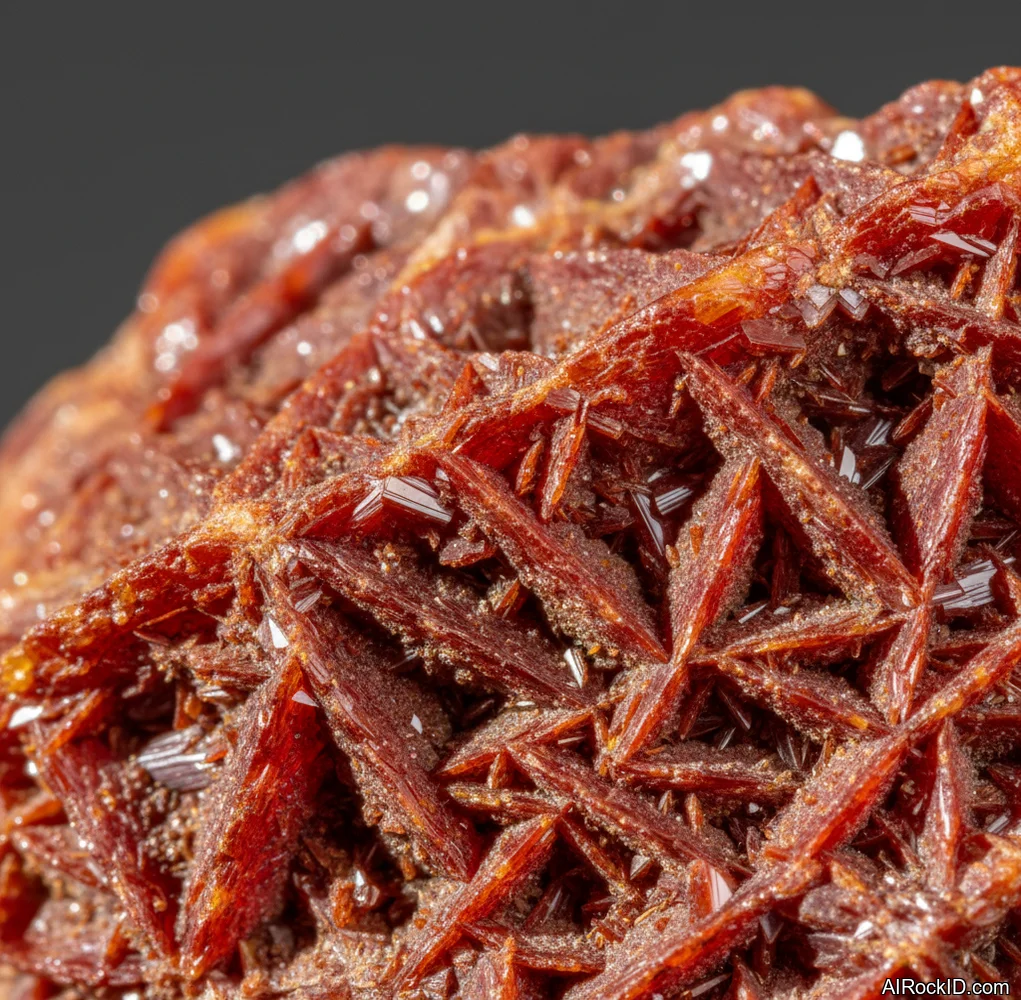
Grab a chunky piece and the first thing that hits you is the heft. It feels weirdly heavy for something that size, like it’s got a little lead weight hidden inside, and under bright show lights that red can look almost fake, like someone packed powdered pigment into a crack and let it set.
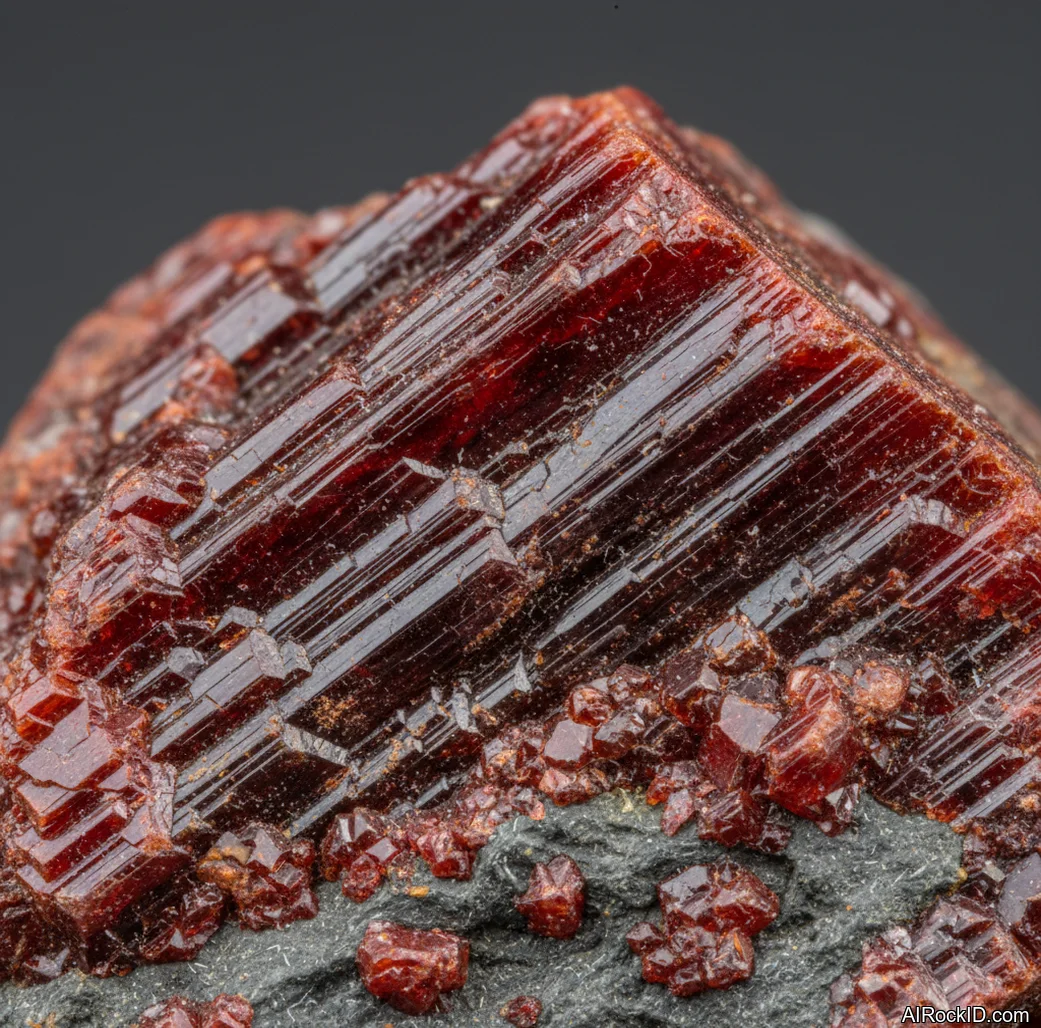
People see the color and assume it’ll be tough, maybe like garnet. But it won’t. It’s soft, it scuffs and bruises fast, and a lot of the pieces you actually handle aren’t big standalone crystals anyway. More often it’s a red crystal crust smeared across pale limestone or that dull gray silica, so your fingers end up on the matrix while you try not to rub the cinnabar off (who wants a red streak on their thumb?).
Origin & History
Pliny the Elder was already talking about cinnabar back in Roman times, mostly as the go to source for red pigment and for mercury. But the modern, formal mineral description didn’t show up until later, when mineralogy got more organized. The name “cinnabar” itself goes back through Latin and Greek words for that same red material people were grinding up and using as pigment.
And you’ll still see the older word “vermilion” pop up, especially on museum labels or at antique shops where the little paper tags have gone a bit yellow at the edges. That’s basically cinnabar pigment. It’s a nice reality check, honestly: the stuff that looks so crisp and harmless sitting under glass comes with real chemistry attached.
Where Is Cinnabar Found?
Cinnabar shows up in mercury districts worldwide, especially in hydrothermal vein systems and hot-spring style deposits. China and Spain are the big historic names, with classic localities also in Slovenia and the western USA.
Formation
Most cinnabar shows up from low-temperature hydrothermal fluids, the kind that snake through fractures and faults and start dropping minerals once they cool off. You’ll run into it filling tight veins, painting the walls of breccia, or tucked into porous limestone where the fluid could actually move around.
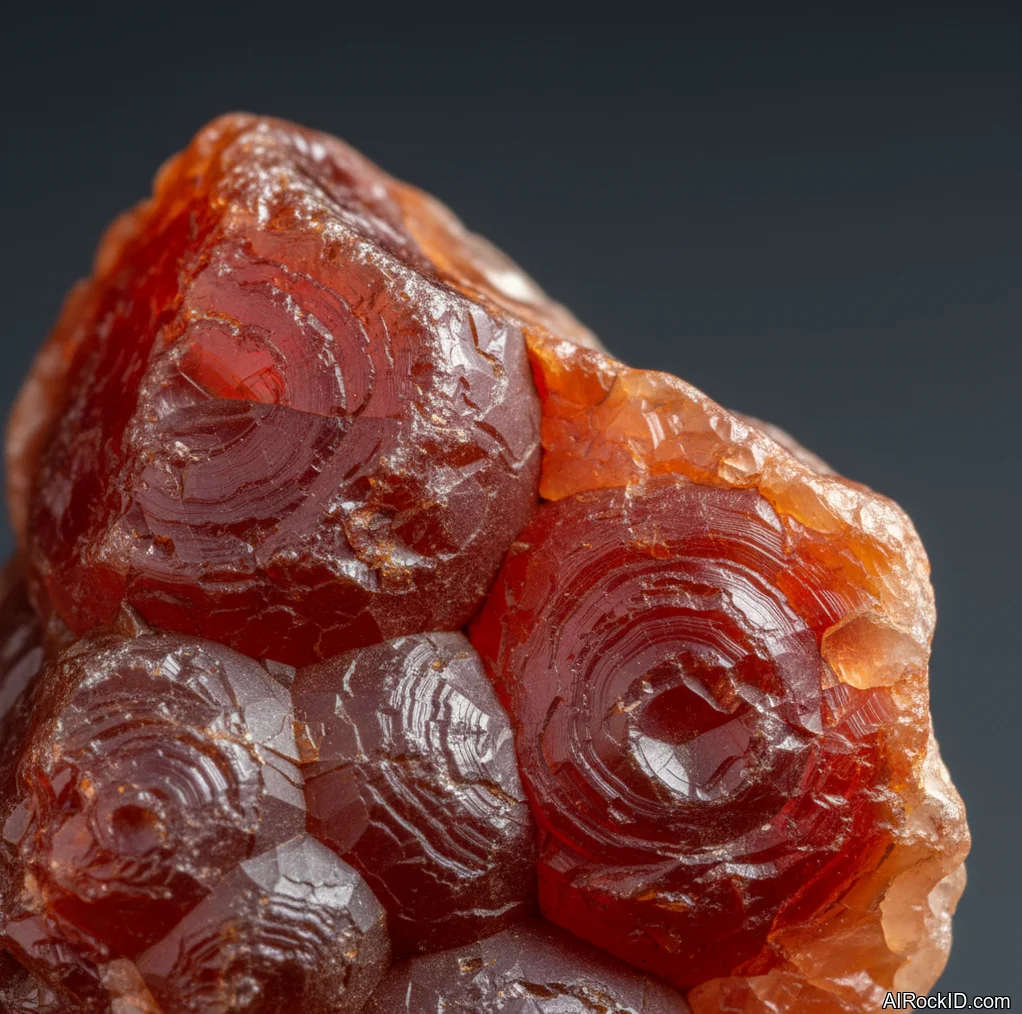
But if you’ve handled pieces from hot-spring settings, you know the surface can look crusty and drusy, almost like the red built up in skinny layers you can feel with a fingernail. Out in the field, cinnabar is usually hanging out with silica, calcite, dolomite, and sometimes dark sulfides, and it sticks to the same fault zones those fluids used like highways.
How to Identify Cinnabar
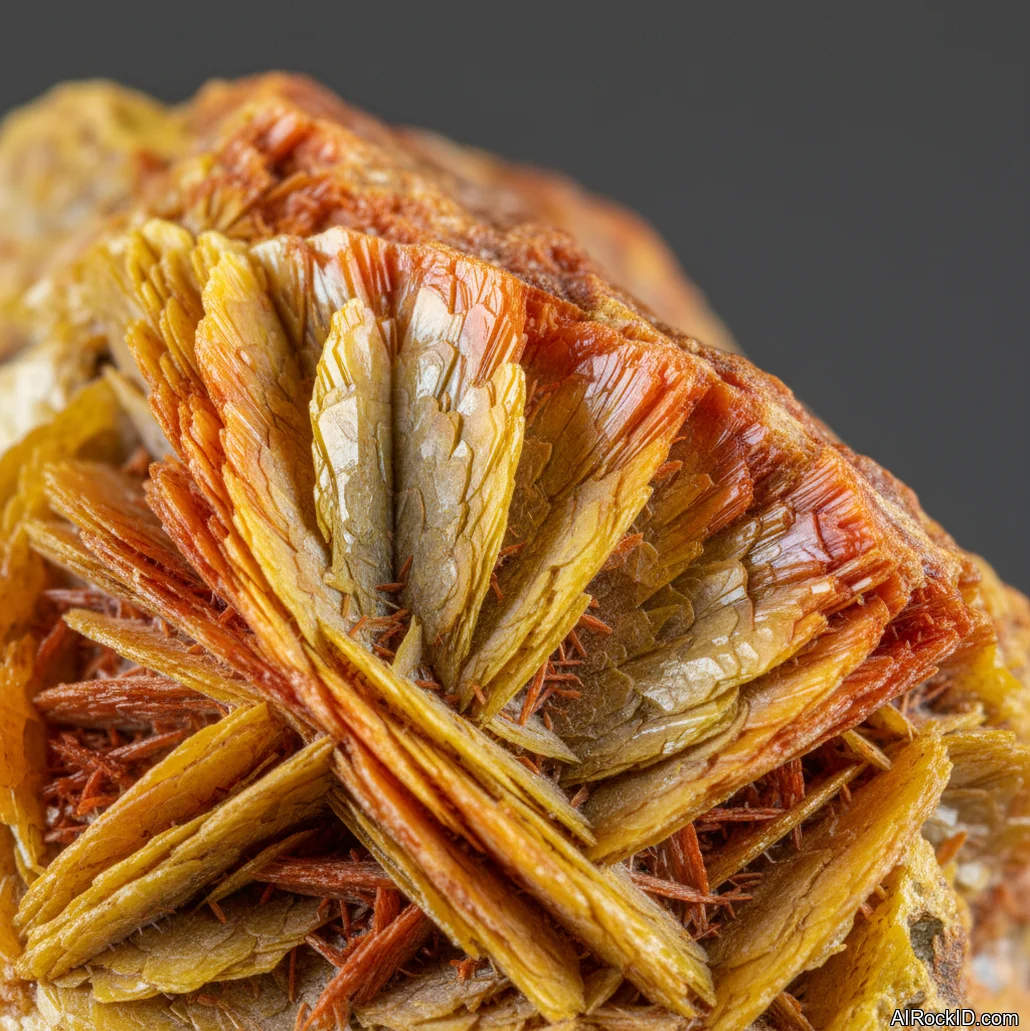
Color: Color runs from scarlet to deep brick red, sometimes with a slightly purplish cast in shadow. On matrix, the contrast can make it look even redder than it really is.
Luster: Luster ranges from adamantine to metallic on crystal faces, and duller on massive or earthy material.
If you scratch it with a copper coin, it can mark more easily than people expect because it’s soft. The real test is the heft plus that red streak, but don’t do a streak test on a nice piece since it’ll leave a permanent scar. And don’t sniff it or rub it into dust, because the hazard is the fine particles, not just touching a solid chunk.
Common Look-Alikes
Cinnabar is sometimes confused with these materials:
- Realgar
- Dyed red quartz
- Red glass (especially leaded)
- Hematoid quartz
- Crocoite
- Orpiment-Realgar mixes
Market Cautions & Treatments
When AI Can Get This Wrong
Photo ID trips up between cinnabar and realgar, especially in rough form. Dyed quartz can look close in polished cabochons. The real test is weight—cinnabar feels unexpectedly dense, and a steel needle will scratch it easily.
Properties of Cinnabar
Physical Properties
| Crystal System | Trigonal |
| Hardness (Mohs) | 2.0-2.5 (Soft (2-4)) |
| Density | 8.0-8.2 g/cm3 |
| Luster | Adamantine |
| Diaphaneity | Opaque |
| Fracture | Uneven |
| Streak | Scarlet red |
| Magnetism | Non-magnetic |
| Colors | scarlet red, brick red, brownish red, grayish red |
Chemical Properties
| Classification | Sulfides |
| Formula | HgS |
| Elements | Hg, S |
| Common Impurities | Se, Fe, Zn |
Optical Properties
| Refractive Index | 2.90-3.20 |
| Birefringence | 0.35 |
| Pleochroism | Strong |
| Optical Character | Uniaxial |
Cinnabar Health & Safety
Handle it gently, and try not to kick up any dust, especially if the material is crumbly or has that dry, earthy feel that wants to flake off in your fingers. And don’t heat cinnabar or use it in elixirs or in water that’s going to be consumed.
Safety Tips
Wash your hands after you handle it. Keep it out of reach of kids and pets. If it drops powder or little flakes (you’ll see a dusty bit on your fingertips), store it sealed up, or stick it in a display case. Need to clean it? Do the absolute minimum, touch it as little as you can, and don’t use abrasives or an ultrasonic cleaner. Why risk scuffing it up?
Cinnabar Value & Price
Price Range
Rough/Tumbled: $20 - $600 per specimen
Price can jump all over the place depending on crystal quality and where it came from. Those bright red, razor-sharp crystals sitting on a clean matrix (the kind you can hold up and not see a bunch of gritty junk flaking off on your fingers) cost a lot more than crumbly massive material. And yeah, big pieces that aren’t busted or chipped? Hard to find.
Durability
Fragile — Scratch resistance: Poor, Toughness: Poor
Cinnabar is soft and can powder or chip from handling, and it should be kept away from heat and any situation that could create dust.
How to Care for Cinnabar
Use & Storage
Keep cinnabar in a closed display case or a labeled box so it doesn’t get handled like a worry stone. I wrap mine so it can’t rattle, because even a short car ride can turn a delicate crust into red grit.
Cleaning
1) Put on gloves and work over a tray so any crumbs are contained. 2) Use a soft, dry brush or canned air held at a distance to remove dust from the matrix. 3) If you must use moisture, wipe the surrounding matrix lightly with a barely damp cloth and keep water off the cinnabar itself, then dry immediately.
Cleanse & Charge
For non-contact cleansing, use smoke, sound, or placing it near a dry bed of quartz without rubbing. Avoid salt water, running water, and any method that involves grinding or abrasion.
Placement
A shelf display is the move, not a pocket stone. Keep it out of direct sun and away from vents or heaters where temperature swings can stress a fragile piece.
Caution
Don’t ingest cinnabar. Don’t use it to make “crystal water.” And don’t heat it up or burn anything anywhere near it. If you’ve got a piece that’s crumbly and leaves that dusty red stuff on your fingers, don’t handle it with bare hands (seriously, why risk it?). And never sand it, saw it, or try to polish it at home.
Works Well With
Cinnabar Meaning & Healing Properties
Compared to a lot of red stones, cinnabar doesn’t come off like some hypey “energy boost” thing. It feels more like a “keep it together” mineral. When I’ve had a piece sitting on my desk, it reads focused and kind of intense, like it’s nudging you to do one thing, then actually finish it before you bounce to the next.
But look, I’ve gotta put the safety card on the table. Any metaphysical use needs to stay strictly non-contact. No rubbing it on your skin, no sleeping with it under your pillow, no water rituals. And if you’re someone who fidgets with stones (you know, turning them over in your fingers without thinking), cinnabar is just the wrong pick.
In traditional symbolism, cinnabar gets linked with wealth, drive, and transformation. Probably because it’s literally the ore of mercury, and mercury keeps popping up in old craft and alchemy stories. So if you want that “red spark” vibe without the baggage, I usually point people toward carnelian or red jasper, and tell them to keep cinnabar as a cabinet specimen instead.
Common mistakes
- Assuming every bright red stone is cinnabar.
- Buying cinnabar beads or carvings for daily wear without considering mercury content.
- Using scratch, heat, or flame tests on a suspected cinnabar specimen.
- Handling dusty or damaged cinnabar and then touching the face or food.
- Confusing natural cinnabar with vermilion pigment, lacquer, or dyed stone.
- Relying only on color instead of checking density, texture, matrix, and seller documentation.
Identify Cinnabar from a photo
Compare Cinnabar traits, care tips, value clues, and common lookalikes with a clear photo.