Ruby


Quick answer: Ruby is a red variety of corundum, the same mineral family as sapphire. Its color, hardness, and high refractive index make it important in jewelry, but visual identification alone can be difficult because several red stones and synthetic materials can look similar.
AI Rock ID can help compare a ruby photo against likely lookalikes such as garnet, spinel, glass, and red sapphire. RockIdentifier.io provides visual identification support, but lab testing is recommended for confirming natural origin, treatments, or high-value purchases.
Good fit
- People comparing red gemstones that may be ruby, garnet, spinel, or glass
- Jewelry buyers who want a durable red gemstone and need authenticity checks
- Collectors learning the difference between natural, synthetic, and treated corundum
- Anyone documenting a red crystal specimen with photos and basic observations
Not a good fit
- Confirming natural versus lab-grown ruby without gemological testing
- Determining heat treatment, fracture filling, or origin from appearance alone
- Identifying a mounted stone when the setting hides key features
Why people search for this
People often search for ruby to check whether a red stone is genuine, synthetic, treated, or a lookalike. Ruby is also frequently researched because it appears in jewelry, mineral collections, birthstone lists, and traditional symbolism.
Most commonly confused with
- Garnet: Garnet is usually singly refractive and often shows deeper red to brownish tones, while ruby is corundum and doubly refractive.
- Spinel: Red spinel can closely resemble ruby but has different optical properties and is singly refractive.
- Red Sapphire: Ruby and sapphire are both corundum; the distinction depends on whether the red color is strong enough to be classified as ruby.
- Glass: Red glass may imitate ruby but is softer, less dense, and may contain bubbles or swirl marks.
Ruby vs Common Red Lookalikes
| Feature | Ruby | Common Lookalike |
|---|---|---|
| Mineral family | Corundum | Garnet, spinel, glass, or synthetic corundum |
| Hardness | Mohs 9 | Usually lower, except synthetic ruby |
| Optical behavior | Doubly refractive | Garnet, spinel, and glass are typically singly refractive |
| Typical clue | Strong red color with corundum durability | May show different density, inclusions, bubbles, or refractive index |
| Best confirmation | Gemological testing | Gemological testing or basic screening tools |
AI identification confidence
AI identification can be moderately useful for ruby when the stone is unmounted, well lit, and photographed from several angles. Confidence drops when the stone is faceted, heavily included, dyed, fracture-filled, or visually similar to red spinel, garnet, glass, or synthetic ruby.
When AI gets it wrong
- A red stone is photographed under warm or saturated lighting that distorts color.
- A faceted gemstone is mounted in jewelry and only the crown is visible.
- Synthetic ruby, treated ruby, and natural ruby look visually similar in ordinary photos.
- Glass or composite material has a convincing red color but lacks visible diagnostic clues.
Final recommendation
For casual identification, compare ruby with red garnet, spinel, glass, and synthetic ruby before drawing a conclusion. For buying, resale, insurance, or inheritance decisions, request a report from a recognized gemological laboratory.
How to Check Ruby Authenticity
Ruby authenticity is usually evaluated with a combination of refractive index, magnification, fluorescence, specific gravity, and inclusion study. A natural ruby may be untreated, heat-treated, fracture-filled, or otherwise enhanced, and these differences can strongly affect value. A seller’s description should clearly state whether the stone is natural or synthetic and whether treatments are known.
Natural Ruby vs Synthetic Ruby
Natural ruby forms geologically, while synthetic ruby is grown in a laboratory with essentially the same aluminum oxide chemistry and chromium-related red color. Synthetic ruby is not fake in composition, but it is not natural and should be disclosed when sold. Some synthetic rubies show curved growth lines, gas bubbles, or other features that trained gemologists can detect under magnification.
Buying Notes for Ruby
When buying ruby, ask for the stone’s weight, treatment disclosure, country-of-origin claim if provided, and any independent lab report. Be cautious of vague terms such as “created,” “genuine,” or “natural-looking” unless the seller defines them clearly. Very clean, intensely red rubies at unusually low prices may be synthetic, glass-filled, or misrepresented.
What Is Ruby?
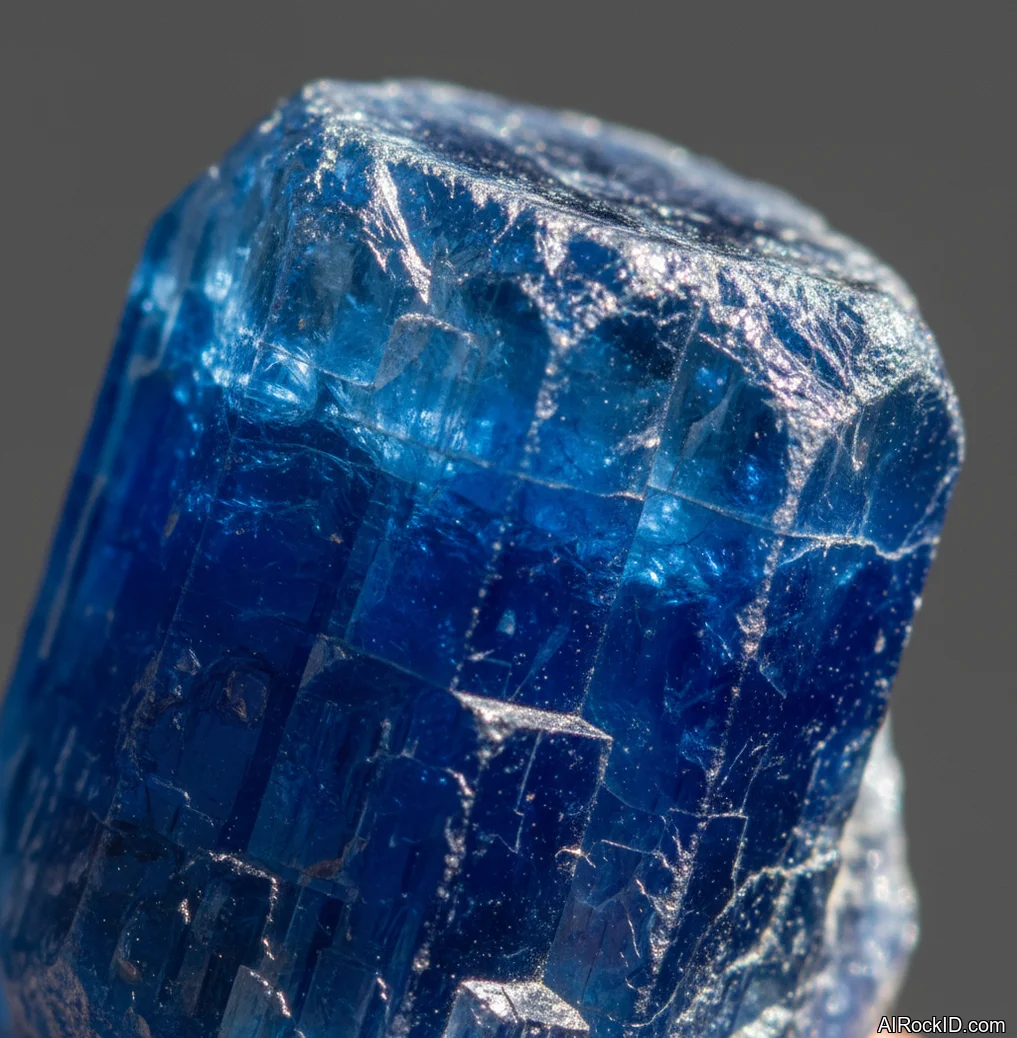
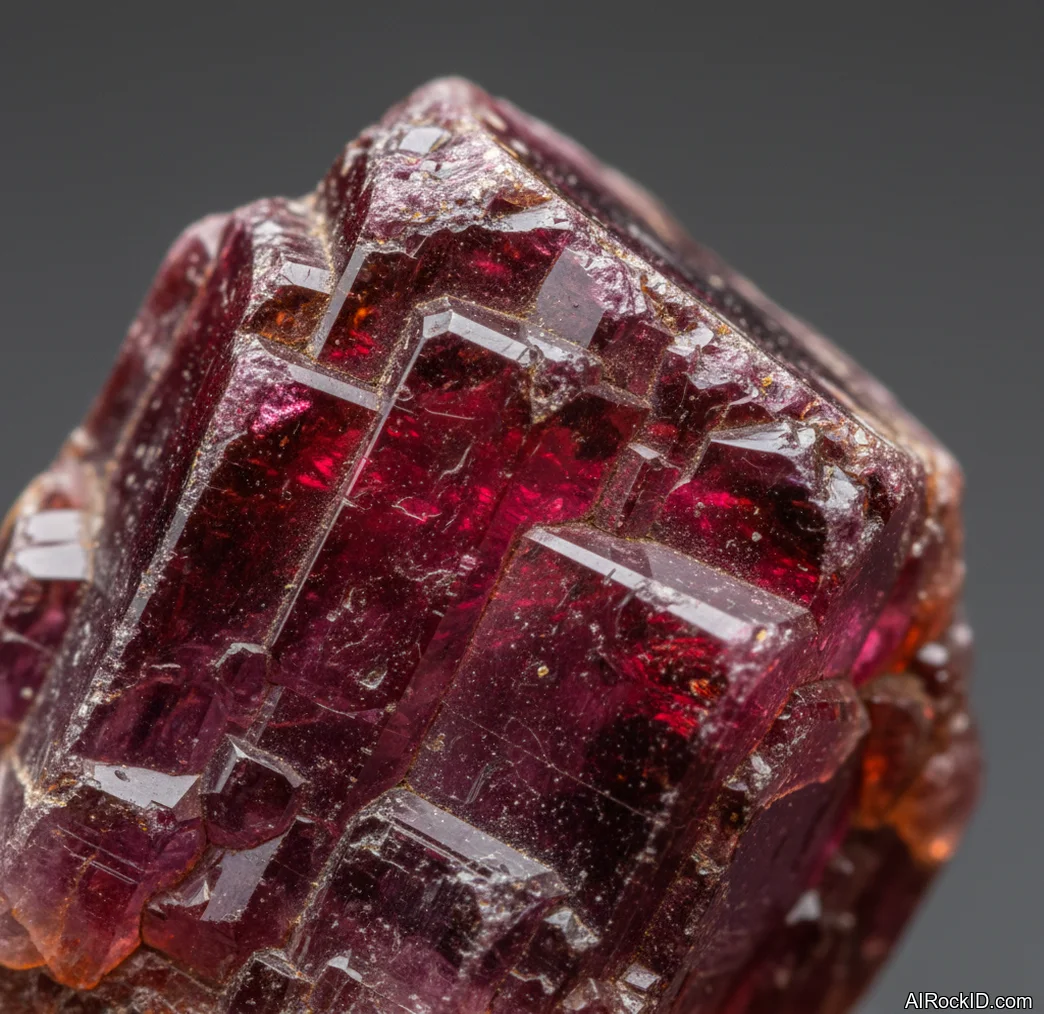
Ruby is the red kind of corundum (aluminum oxide, Al2O3), and most of that color comes from chromium. And when you actually hold a good ruby, it’s got this odd split personality: part “gemmy,” part straight-up “rock.” A lot of natural pieces are included, fractured, or still stuck in matrix, not that perfectly clean jewelry look people have in their heads.
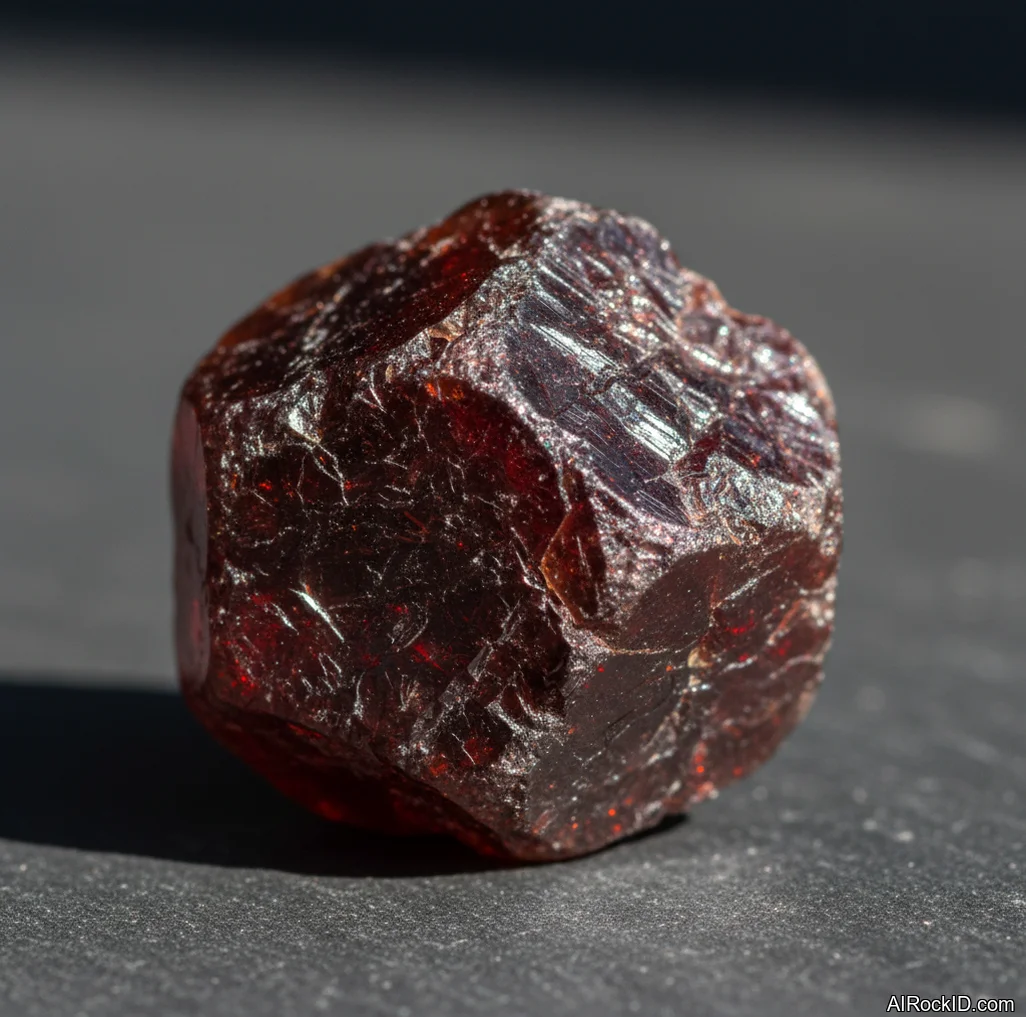
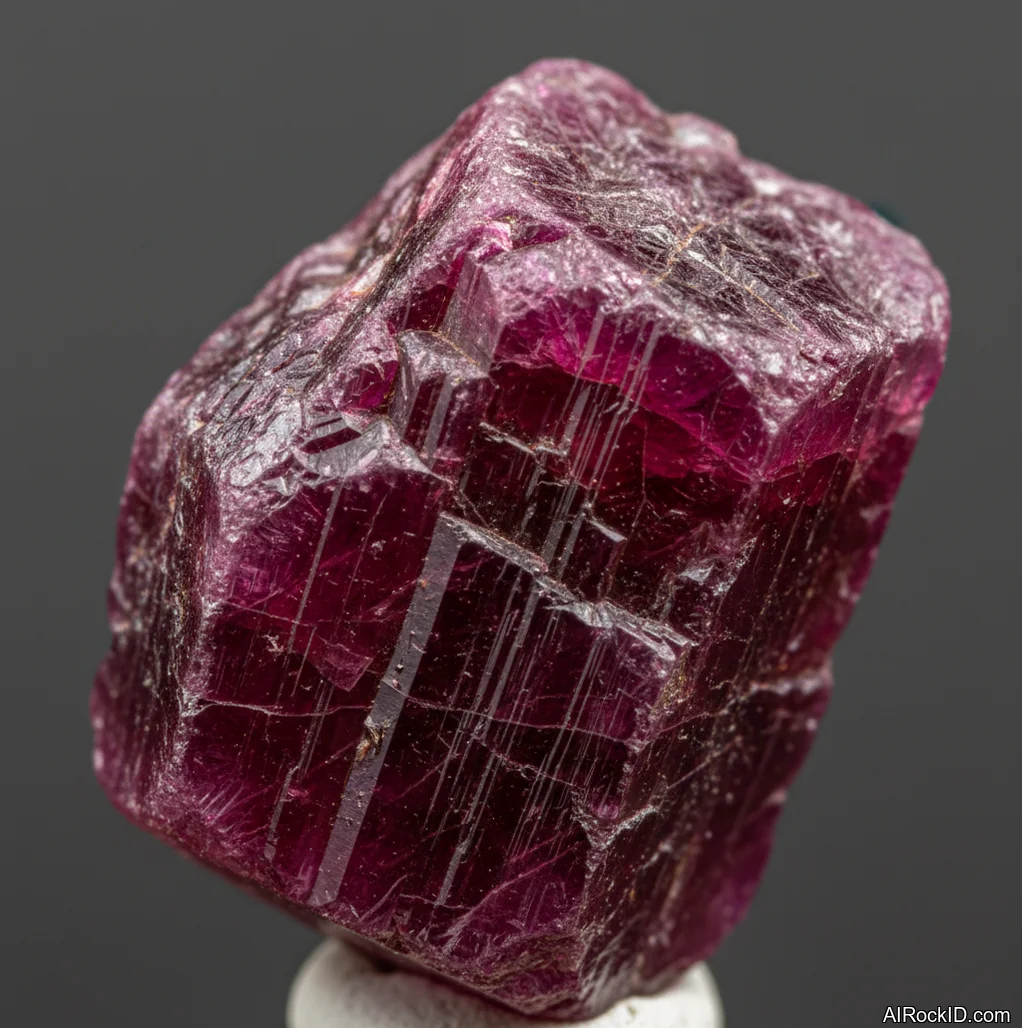
Grab a decent crystal and the first thing that hits you is the heft. It feels heavy for its size, like it’s cheating a little. The faces can be glassy, but not slick in that quartz way. Some pieces show the classic corundum shape, those chunky hexagonal barrel crystals, sometimes with flat basal faces, and sometimes they’re just beat up (like they’ve been dragged around underground for a few million years). Rough edges. Dings. That kind of thing.
People expect this pure cherry-red right away. But real ruby color is all over the place: pinkish red, purplish red, brownish red, even orangey red. Thing is, the market’s messy. Tons of ruby gets heat-treated, and a lot of those “super red” stones are glass-filled composite material that photographs beautifully, but it doesn’t behave like one solid crystal when you’re dealing with it in real life.
Origin & History
“Ruby” traces back to the Latin *ruber*, which just means “red.” And for ages, red spinel and ruby got thrown into the same bucket in the gem trade because, honestly, they can look nearly identical in a ring under warm light, and nobody in the 1600s was pulling out a refractometer at the counter.
Corundum didn’t get formally pinned down as a mineral species until modern mineralogy got rolling, and the name “corundum” is generally credited to work that was popularized in the late 18th century (often linked to European mineralogists like Abraham Gottlob Werner). So once hardness testing, optics, and chemistry finally caught up, “ruby” as “red corundum” became a crisp definition. That’s when a bunch of famous “rubies” sitting in old collections quietly got re-labeled as spinel.
Where Is Ruby Found?
Ruby shows up in metamorphic rocks (marble, gneiss) and in basalt-related deposits where crystals weather out and concentrate in gravels.
Formation
Most rubies form when aluminum-rich rocks get heated up and squeezed hard during metamorphism, and a bit of chromium slips into the corundum crystal structure, nudging the color over into red. Marble-hosted ruby is the classic situation. You’ve got the chemistry lined up, lots of heat and pressure, fluids pushing through tiny cracks, and corundum grows in spots where silica is scarce (you’ll often see it right along those white calcite bands).
But there’s the basalt route too. In that case, volcanic activity hauls rubies up, and later they end up as rounded, waterworn pebbles in secondary deposits, the kind that feel smooth in your hand and look slightly frosted when they’re dry. And that contrast is the fun part, honestly. Marble rubies can have that soft, glowing red with “silk,” but basalt-related material often comes out darker and, in rough, it’s more chunky and opaque.
How to Identify Ruby
Color: Ruby ranges from pinkish red to deep purplish red, with the red primarily caused by chromium. Many rough pieces show zoning, like bands or patches where the red turns pink, purple, or brown.
Luster: Vitreous luster on clean faces, sometimes leaning slightly silky if there’s rutile “silk” inside.
If you scratch it with a steel knife, nothing happens, and it’ll laugh at glass too since it’s Mohs 9. Look closely at the crystal shape in rough pieces, corundum often shows stubby hexagonal barrels or flat basal faces rather than pointy quartz-style terminations. The real test is a refractive index reading around 1.76 to 1.77, because red garnet and spinel can fool you by color alone.
Common Look-Alikes
Ruby is sometimes confused with these materials:
- Red spinel (natural or lab-grown, often sold as “ruby” in older jewelry)
- Red garnet (pyrope/almandine, especially dark “wine red” stones)
- Red glass or leaded glass imitations (sometimes with bubbles and a too-warm feel)
- Flame-fusion synthetic ruby (Verneuil) and other lab-grown ruby sold without clear disclosure
- Composite “ruby” (glass-filled ruby or ruby-in-glass, sometimes called lead-glass-filled ruby)
- Dyed corundum or dyed crackle quartz marketed as “ruby” beads/cabochons (watch for dye in fractures)
Market Cautions & Treatments
When AI Can Get This Wrong
At first glance, phone photos mix ruby up with red spinel and red garnet all the time, especially under warm indoor lighting that pushes everything toward cherry red. The real test is hardness and inclusions: ruby (corundum) should shrug off a steel blade and scratch quartz, and a loupe often shows rutile “silk” or angular growth zoning instead of the round bubbles you see in red glass.
Properties of Ruby
Physical Properties
| Crystal System | Trigonal |
| Hardness (Mohs) | 9 (Very Hard (7.5-10)) |
| Density | 3.97-4.05 g/cm3 |
| Luster | Vitreous |
| Diaphaneity | Transparent to translucent |
| Fracture | Conchoidal |
| Streak | White |
| Magnetism | Non-magnetic |
| Colors | Red, Pinkish red, Purplish red, Brownish red, Orangey red |
Chemical Properties
| Classification | Oxides |
| Formula | Al2O3 |
| Elements | Al, O |
| Common Impurities | Cr, Fe, Ti, V |
Optical Properties
| Refractive Index | 1.762-1.770 |
| Birefringence | 0.008 |
| Pleochroism | Strong |
| Optical Character | Uniaxial |
Ruby Health & Safety
Ruby is usually fine to handle, and it won’t react in water under normal conditions. Thing is, the real hazard is just the physical stuff: rough crystals can have surprisingly sharp edges (the kind that’ll catch your skin when you rub a thumb along a jagged face), and a hard knock can chip it and send little fragments flying.
Safety Tips
If you’re cutting or grinding corundum, handle the dust like any other fine mineral dust. Use good ventilation (you want that gritty powder moving away from your face, not hanging in the air), and wear a respirator.
Ruby Value & Price
Price Range
Rough/Tumbled: $10 - $5,000+ per piece
Cut/Polished: $50 - $100,000+ per carat
Price mostly comes down to color (a real, true red versus that brownish or purplish look), clarity, whether it’s been treated, and whatever origin it’s being sold as. But the moment you’re looking at a clean, unheated stone that’s got a strong red and some real size to it, that’s when pricing just goes completely off the rails.
Durability
Very Durable — Scratch resistance: Excellent, Toughness: Good
Ruby is very stable for daily wear, but it can chip if it takes a sharp hit, especially along fracture planes or in heavily included material.
How to Care for Ruby
Use & Storage
Store ruby so it can’t rub against softer stones, because it’ll leave scratches. I keep mine in a small box with individual wraps or gem jars, especially if there’s a faceted piece.
Cleaning
1) Rinse with lukewarm water and a drop of mild soap. 2) Gently scrub with a soft toothbrush around crevices or matrix. 3) Rinse well and pat dry; avoid leaving it wet in a closed container.
Cleanse & Charge
If you do the metaphysical side, a simple rinse and a few minutes in sunlight is common, but don’t bake it on a hot windowsill for hours. Heat is used in treatment, and while casual sun won’t “ruin” ruby, I’ve seen display stones get dull-looking from grime and constant handling more than anything mystical.
Placement
On a desk, ruby reads best under a focused light where you can catch internal silk or zoning. In a pocket, go with a cab or a well-polished piece, because rough crystals can chew up your keys.
Caution
Don’t use an ultrasonic cleaner on rubies that are badly fractured or glass-filled. Those vibrations can open up the cracks you can already see under a bright light (that little spiderweb look) and they can even chip away at the fillings. And before you assume you’ve got one solid crystal, ask what treatments it’s had. Why guess?
Works Well With
Ruby Meaning & Healing Properties
Ruby tends to get pegged to drive, stamina, and that plain old “get up and do it” energy. That’s the straight collector shop take. People grab it when they’re wiped out, or when they want something that feels bold without getting all floaty.
Look, if you’ve ever held a ruby cab right under a bright desk lamp and tilted it back and forth, you’ll sometimes catch rutile silk flashing a soft sheen, like there’s a thin piece of fabric trapped under the surface. It’s subtle. Easy to miss. And that little visual trick is a big reason people talk about ruby as “heart plus backbone.” Warm meaning, sure, but still sharp around the edges, and yeah, Mohs 9 is no joke.
But I’m going to be real about the buying side. If you’re chasing ruby for metaphysical reasons, the market is packed with treated stones, and some of it is composite. If it’s glass-filled, it can still look great, but it doesn’t feel the same in your fingers as a solid chunk of corundum (there’s a different heft and temperature to it), and it won’t wear the same over time either. This isn’t medical advice. It’s just the kind of thing collectors and crystal folks say after they’ve handled a lot of ruby, the real stuff and the not-so-real stuff.
Common mistakes
- Assuming every transparent red gemstone is ruby.
- Treating synthetic ruby as the same market category as natural ruby.
- Judging ruby value by color alone without considering treatment, clarity, size, and documentation.
- Relying on a scratch test, which can damage jewelry and is not a reliable buying method.
- Ignoring glass-filled or fracture-filled ruby disclosures.
- Assuming a mounted stone can be fully identified from a single photo.
Identify Ruby from a photo
Compare Ruby traits, care tips, value clues, and common lookalikes with a clear photo.