Dalmatian Jasper


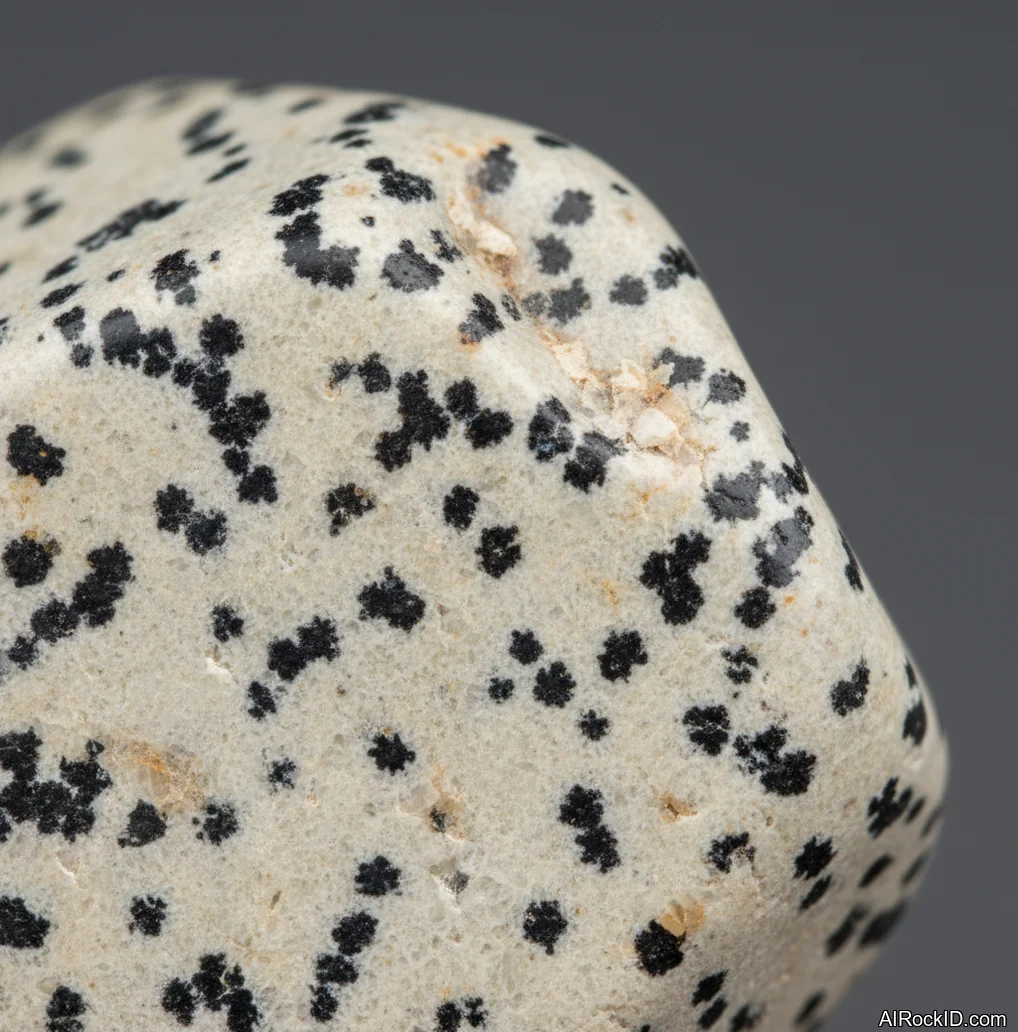
Quick answer: Dalmatian Jasper is commonly sold as a cream to beige spotted chalcedony-like lapidary stone, valued mainly for its distinctive black or brown spots. It is a good candidate for beads, carvings, and tumbled stones, but identification can be confused by dyed or similarly spotted materials.
AI Rock ID can help compare Dalmatian Jasper against visually similar spotted stones using color, pattern, luster, and texture clues. RockIdentifier.io provides visual ID support, but close matches should be checked with hardness, streak, and reputable seller information.
Good fit
- Collectors who want an easy-to-recognize spotted stone
- Jewelry makers looking for neutral beads with strong pattern contrast
- Beginners practicing visual identification of jasper and jasper-like materials
- Buyers who prefer durable tumbled stones and carvings for handling
Not a good fit
- Anyone needing a lab-confirmed mineral species name from appearance alone
- Buyers seeking transparent or high-sparkle gemstones
- Jewelry designs that require stones resistant to all impacts or harsh chemicals
Most commonly confused with
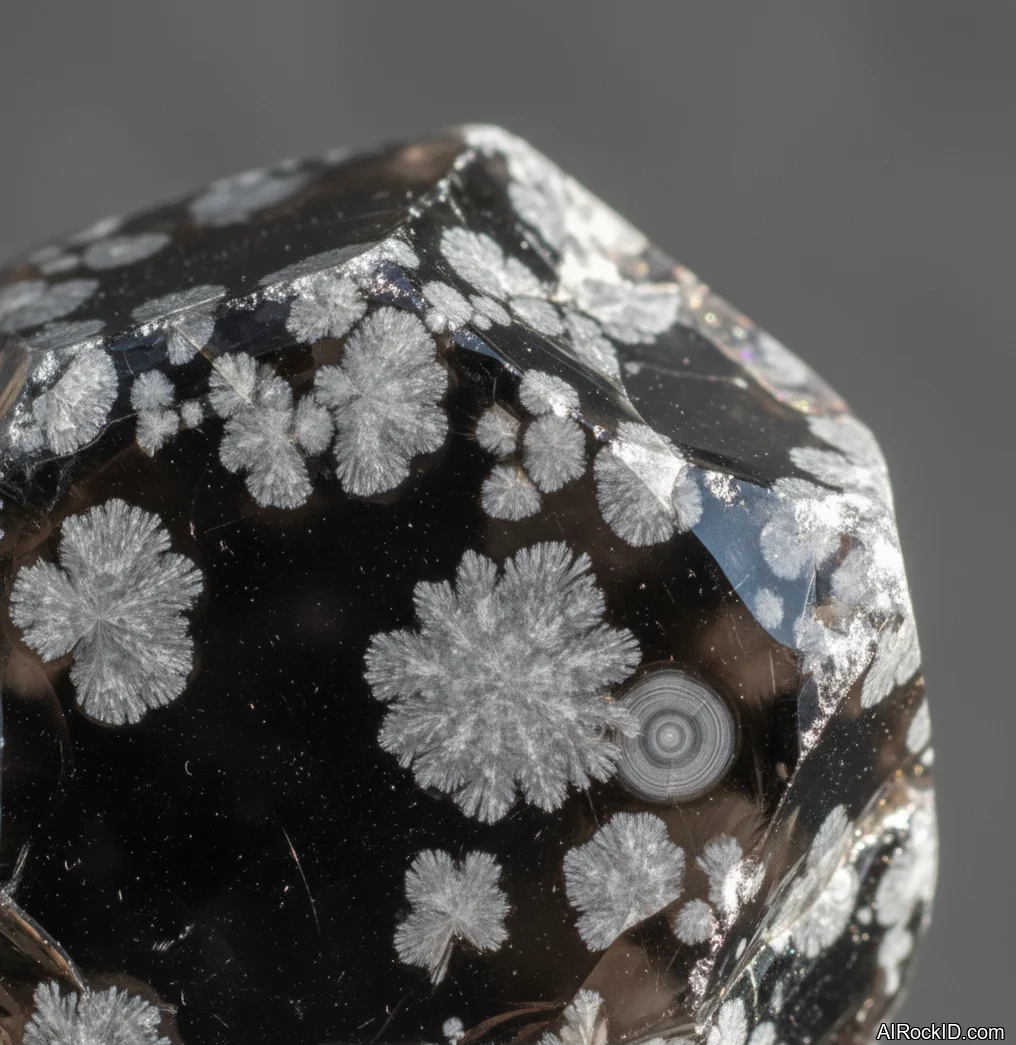
- Snowflake Obsidian: Snowflake Obsidian is volcanic glass with gray-white crystal patches on a dark body, while Dalmatian Jasper is pale with dark spots.
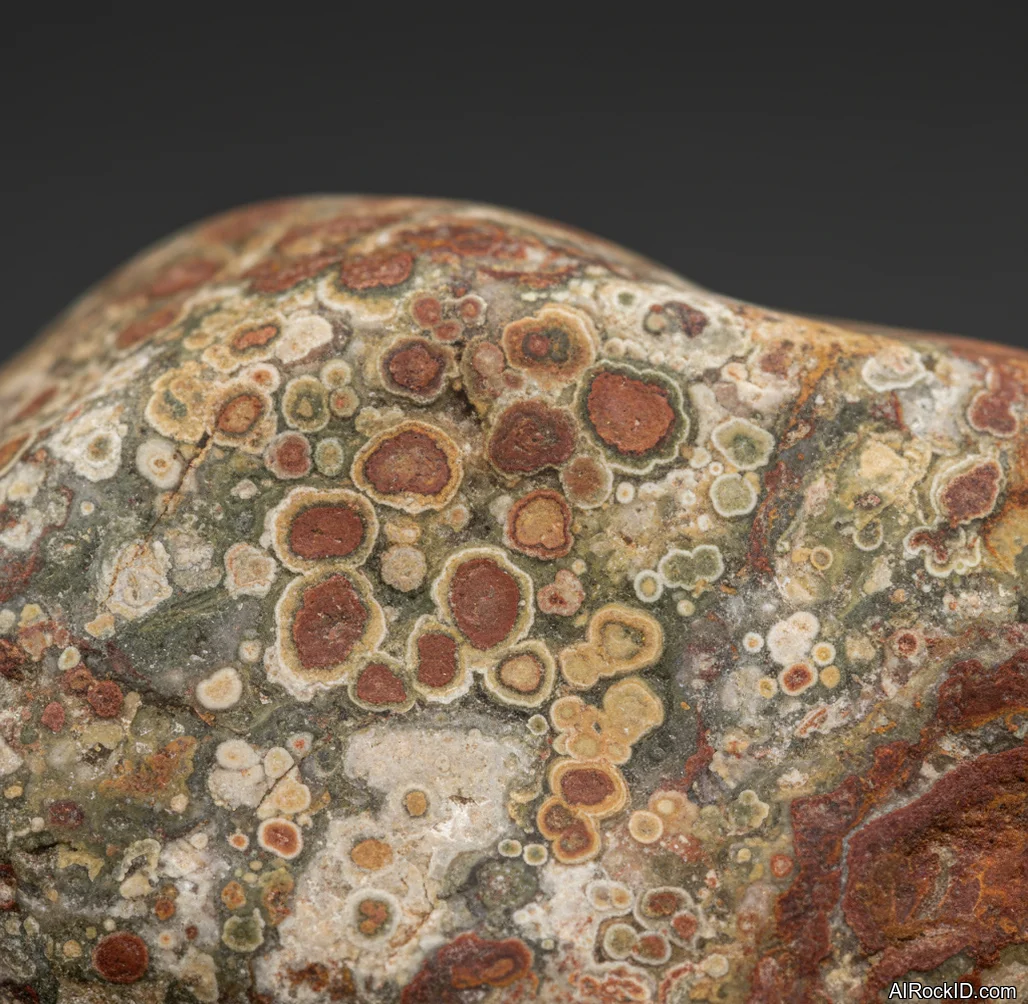
- Leopard Skin Jasper: Leopard Skin Jasper usually has rounded orbicular or ring-like patterns rather than simple scattered black spots.
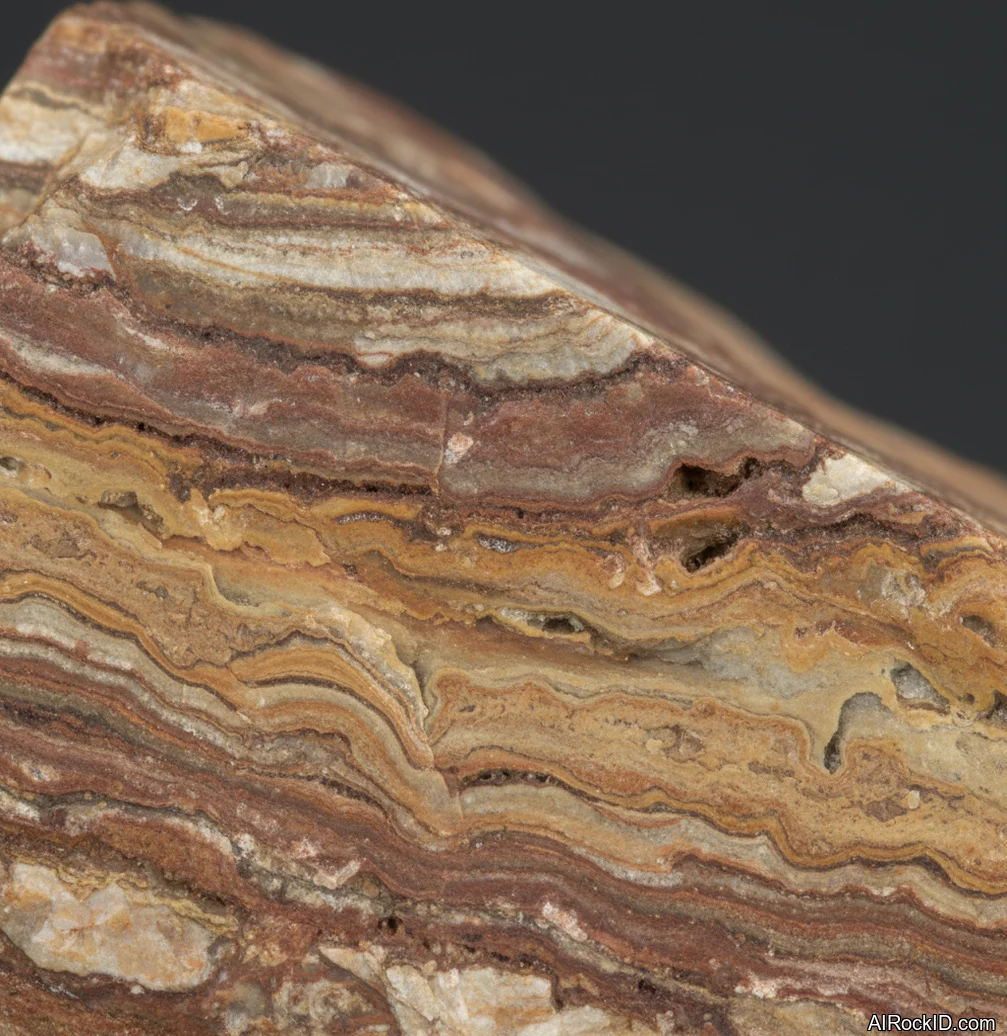
- Picture Jasper: Picture Jasper shows scenic bands and landscape-like patterns, not a consistent spotted Dalmatian pattern.
- Porcelain Jasper: Porcelain Jasper often has brecciated, patchy, or porcelain-like patterns instead of evenly scattered dark specks.
Dalmatian Jasper vs. Similar Spotted Stones
| Stone | Typical look | Key difference |
|---|---|---|
| Dalmatian Jasper | Cream, beige, or tan base with black to brown spots | Spots are usually scattered across a pale body |
| Snowflake Obsidian | Black glassy base with gray-white snowflake patches | Glassy fracture and dark background |
| Leopard Skin Jasper | Tan, brown, pink, or gray orbicular spots and rings | More circular or leopard-like patterning |
| Picture Jasper | Brown, tan, or gold bands and scenic patterns | Landscape-like layers rather than polka-dot spotting |
| Dyed Howlite | White to colored stone with gray web-like veining | Softer and usually veined, not naturally dotted |
AI identification confidence
AI identification confidence is usually moderate for Dalmatian Jasper when the photo clearly shows a pale base with scattered dark spots. Confidence drops when the stone is polished, dyed, overexposed, or photographed without scale and multiple angles.
When AI gets it wrong
- A dark background stone may be identified as Snowflake Obsidian instead of Dalmatian Jasper.
- Strong lighting can wash out beige tones and make the stone look like Howlite or another white mineral.
- Dyed or resin-treated beads may match the pattern visually but differ in composition.
- Close-up photos without the whole stone can make Leopard Skin Jasper or Picture Jasper look similar.
Final recommendation
Choose Dalmatian Jasper if you want a durable, opaque spotted lapidary stone and the seller provides clear photos under natural light. For higher confidence, compare pattern, hardness, and surface texture rather than relying on color alone.
How to Check Dalmatian Jasper Authenticity
Authentic-looking Dalmatian Jasper should have a pale cream, beige, or tan base with dark spots that appear integrated into the stone rather than painted on the surface. Inspect drill holes, chips, and worn edges for color consistency. Very bright colors, uniform artificial-looking dots, or surface-only staining can suggest dyeing or imitation.
Buying Tips for Dalmatian Jasper Beads and Cabochons
When buying Dalmatian Jasper beads, look for consistent polish, clean drill holes, and photos that show both close-up pattern and full strand appearance. Cabochons should have an even dome, stable backing if used, and no obvious cracks that cross the stone. Listings that state size, treatment status, and return policy are easier to evaluate.
Photography Tips for Identifying Dalmatian Jasper
Photograph Dalmatian Jasper in indirect daylight on a neutral background to preserve the pale body color and dark spotting. Include one close-up image, one full-stone image, and one photo beside a ruler or coin for scale. Avoid heavy filters, flash glare, and colored lighting because these can change the apparent mineral match.
What Is Dalmatian Jasper?
Dalmatian Jasper is a spotted jasper made mostly of microcrystalline quartz (chalcedony) with dark mineral inclusions.
Pick up a tumbled piece and you’ll notice that quartz heft immediately. It’s not heavy like hematite, but it has that steady, grounded weight, and it stays cool in your palm longer than dyed howlite or resin does. Most pieces sit in that creamy beige to light tan range with sharp black dots, like somebody literally flicked ink across the surface. Some will throw in a few brown spots too, and every so often you’ll spot a thin gray band or an area that looks almost brecciated (kind of broken-up and re-cemented).
Look, get it under a lamp and really stare at the surface. The polish usually reads waxy to glassy, but it won’t hit that dead-flat, mirror look you get with obsidian. And the “spots” aren’t perfect little copy-paste circles either. On real material you’ll see all sorts of sizes: tiny pepper specks, a couple bigger blotches, and sometimes little starry clusters that bunch up in one area. That unevenness is the whole vibe. But it also means two strands of beads pulled from two different bins can look like they came from totally different stones.
Origin & History
Dalmatian Jasper doesn’t really come with a neat little “first described by” story like an official mineral species. It’s a trade name for a jasper with a spotty pattern, so nobody’s filing paperwork and planting a flag on a specific date.
Thing is, the name is basically marketing. Someone looked at the black spots on that pale background and went, “Yep, Dalmatian dogs,” and that was that. Once you’ve held a tumbled piece in your hand and seen those peppery dots under a shiny polish (sometimes you can even feel the tiny texture shifts where the spots sit), the name makes instant sense.
In the gem and bead scene, it really started getting around in the late 20th century, when more material from Mexico started moving through the lapidary pipeline. Dealers will tag it as “dalmatian stone” pretty often. And every so often you’ll run into “dalmatianite,” which is where things get messy, because that name can get mixed up with other spotted rocks.
So if you’re buying online, that’s usually the snag. The label stays pretty consistent, but the geology behind the label can be kind of loose depending on who’s selling it. How strict are they being about what counts? That’s the question.
Where Is Dalmatian Jasper Found?
Most commercial Dalmatian Jasper on the bead and tumble market is sourced from Mexico, with smaller amounts sold from other jasper-producing regions.
Formation
On the rock level, Dalmatian Jasper is basically silica-rich stuff that gelled, then set up into microcrystalline quartz, and somewhere along the way it got peppered with dark minerals either as it formed or later on during alteration. The main body is chalcedony plus fine quartz. The spots? In the trade they’re usually described as tourmaline or hornblende type inclusions, and in a lot of pieces they act like hard, dark silicate grains that will take a polish, but they still pop against the lighter background.
Compared to banded agate, it feels more stirred up. You won’t see those clean fortification lines. Instead it’s more like a pretty even backdrop with scattered inclusions, kind of like cookie dough frozen into stone (you know that speckled look). And once you cut it, the spots run all the way through. That’s a pretty solid clue you’re not just dealing with a surface treatment.
How to Identify Dalmatian Jasper
Color: Cream, ivory, tan, or light beige background with scattered black spots; occasional brown or gray spotting can occur.
Luster: Waxy to vitreous when polished; dull to waxy when rough.
Pick up a bead or tumble and run your thumb across it. Real Dalmatian Jasper feels like quartz polish, slick but not plasticky, and it stays cool in the palm. If you scratch it with a steel nail, it shouldn’t bite easily, and a clean piece will scratch glass. The real test is the spots: on natural material they vary in size and shape, and if you look at a drilled bead hole the pattern continues into the interior instead of stopping at the surface.
Common Look-Alikes
Dalmatian Jasper is sometimes confused with these materials:
- Dalmatian stone dyed bright colors
- Dalmatian Jasper glass fakes
- Howlite dyed to mimic Dalmatian Jasper
- Spotted granite pebbles
- Porcelain jasper
- Spotted rhyolite
Market Cautions & Treatments
When AI Can Get This Wrong
Photo ID apps often mistake Dalmatian Jasper for dyed howlite, especially when the spots look too round or the base color is too bright. Spotted granite and some rhyolite get mixed up in photos too. Scratching the surface or feeling the weight helps—real Dalmatian Jasper is much heavier and cooler than fakes or dyed lookalikes.
Properties of Dalmatian Jasper
Physical Properties
| Crystal System | Trigonal |
| Hardness (Mohs) | 6.5-7 (Hard (6-7.5)) |
| Density | 2.58-2.64 g/cm3 |
| Luster | Waxy |
| Diaphaneity | Opaque |
| Fracture | Conchoidal |
| Streak | White |
| Magnetism | Non-magnetic |
| Colors | Cream, Ivory, Beige, Tan, Black, Brown, Gray |
Chemical Properties
| Classification | Silicates |
| Formula | SiO2 |
| Elements | Si, O |
| Common Impurities | Fe, Al, Mg, Ca |
Optical Properties
| Refractive Index | 1.53-1.54 |
| Birefringence | 0.004 |
| Pleochroism | None |
| Optical Character | Uniaxial |
Dalmatian Jasper Health & Safety
Normal handling’s low risk, and a quick splash of water usually isn’t a problem. But if you’re cutting or grinding it, don’t breathe in the dust. That fine, gritty silica dust gets in the air fast (you can even taste it sometimes), and it’s a respiratory hazard.
Safety Tips
Use water-fed tools or do wet sanding when you’re doing lapidary work. And don’t skip the respirator, either. It needs to fit right, with the straps snug and the seal sitting flat on your face, not leaking around your nose or cheeks.
Dalmatian Jasper Value & Price
Price Range
Rough/Tumbled: $2 - $20 per tumbled stone
Cut/Polished: $0.50 - $3.00 per carat
Price mostly comes down to pattern contrast, how clean the polish looks when you tilt it under a light, and size. Creamy backgrounds that stay bright, with crisp black spots that aren’t bunched up, tend to move quicker than muddy tan pieces.
Durability
Durable — Scratch resistance: Good, Toughness: Good
It’s stable like most chalcedony, but it can chip on sharp edges if it gets knocked around in a pocket with keys.
How to Care for Dalmatian Jasper
Use & Storage
Store it like you would any quartz-based tumble or carving, in a soft pouch or a compartment box so it doesn’t bang up softer stones. If you keep strands, don’t let the beads rub against metal clasps.
Cleaning
1) Rinse with lukewarm water. 2) Wash gently with mild soap and your fingers or a soft toothbrush. 3) Rinse well and pat dry; avoid harsh cleaners and long soaks if the piece has fractures.
Cleanse & Charge
For a simple reset, rinse and dry it, or leave it on a windowsill for indirect light for a short time. Don’t bake it in full sun all day if the polish is high and the piece has tiny cracks.
Placement
On a desk, it handles daily handling well, and the speckled look reads nicely under warm indoor lighting. If you’re displaying a bunch of jaspers together, give it a light background so the spots pop.
Caution
Don’t breathe in the dust when you’re cutting or drilling. That fine silica powder hangs in the air and it’s hazardous. And skip the ultrasonic cleaner on jasper that already has visible cracks. Thing is, the vibration can make those fractures worse, so it’s just not worth it.
Works Well With
Dalmatian Jasper Meaning & Healing Properties
Most people grab Dalmatian Jasper when they want to feel grounded, but not like they’re carrying a brick in their energy. Thing is, it’s the kind of stone you just toss in your pocket on a hectic day. It’s tough. Smooth. Mine usually comes out warm from body heat with that slightly waxy, tumbled feel, and it doesn’t demand attention from you the way some flashy crystals do.
And the look matters. Those black spots on the light base keep your eyes moving around, and that can be weirdly calming when you’re fidgety or your brain won’t sit still.
So let me keep this practical: any “healing” talk here is metaphysical, not medical. People often connect it with steadiness, a more lighthearted mood, and getting out of those odd mental loops you can get stuck in. I’ve noticed it’s picked a lot by folks who don’t like loud stones. It feels friendly. Simple (in a good way).
But don’t let the cute pattern trick you into thinking every piece feels the same. Some batches come in more chalky tan, and even just looking at them, the vibe shifts. When I’m sorting a tray in a shop, the ones I keep for myself have a clean cream base with crisp, sharp spots, because they read clearer, and they’re easier to use as a focus object during a quick meditation. Why make it harder than it needs to be?
Common mistakes
- Assuming every pale spotted stone is Dalmatian Jasper without checking hardness or texture.
- Confusing Snowflake Obsidian with Dalmatian Jasper because both can show contrasting light and dark patterns.
- Judging authenticity only from a single polished bead photo.
- Overlooking dye or coating in unusually vivid or perfectly uniform pieces.
- Using metaphysical labels as proof of mineral identity.
Identify Dalmatian Jasper from a photo
Compare Dalmatian Jasper traits, care tips, value clues, and common lookalikes with a clear photo.