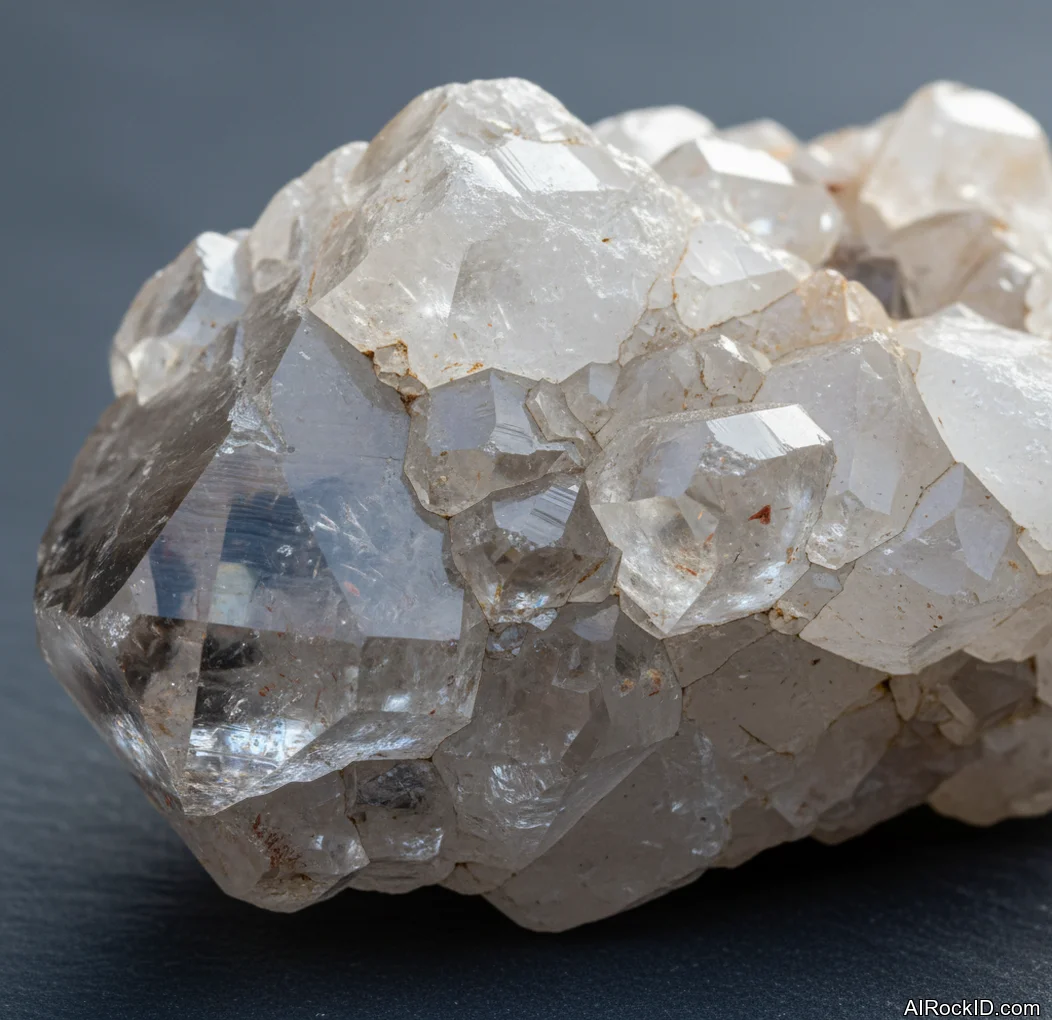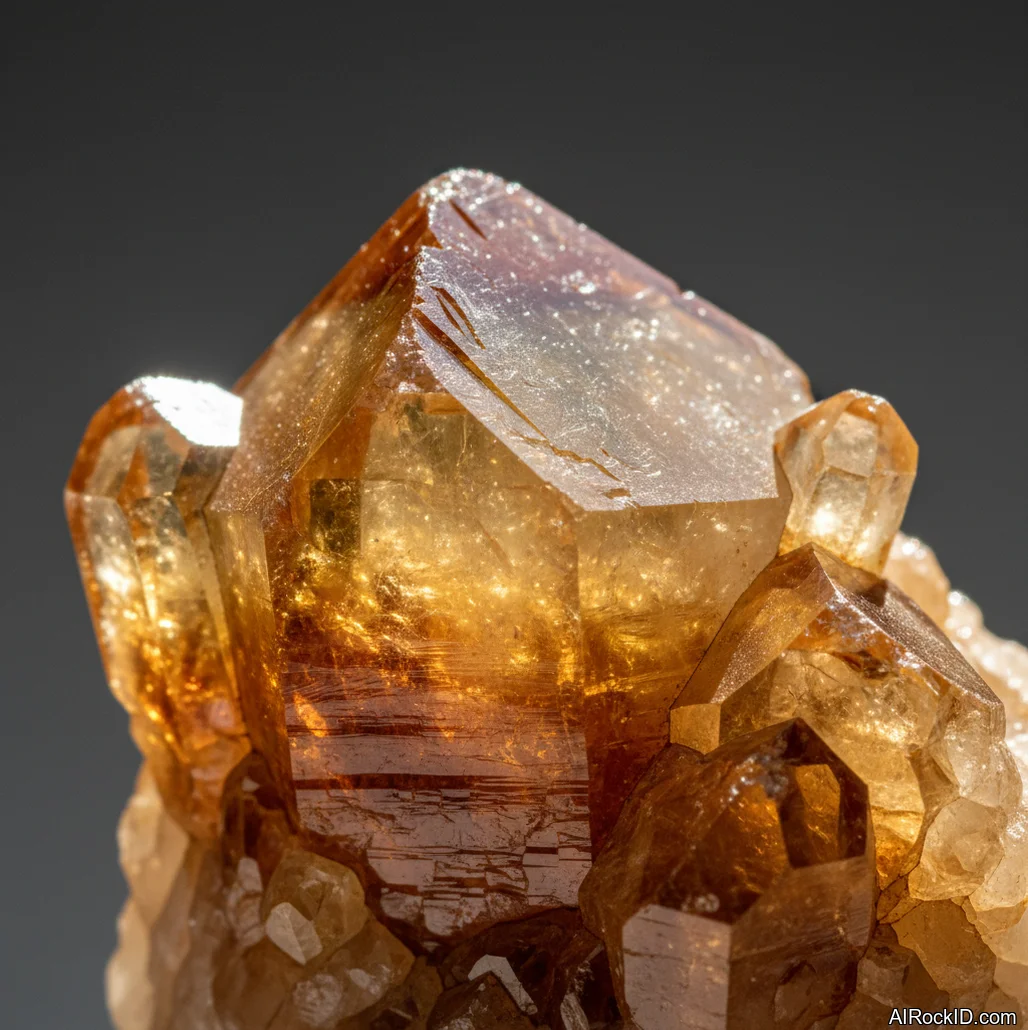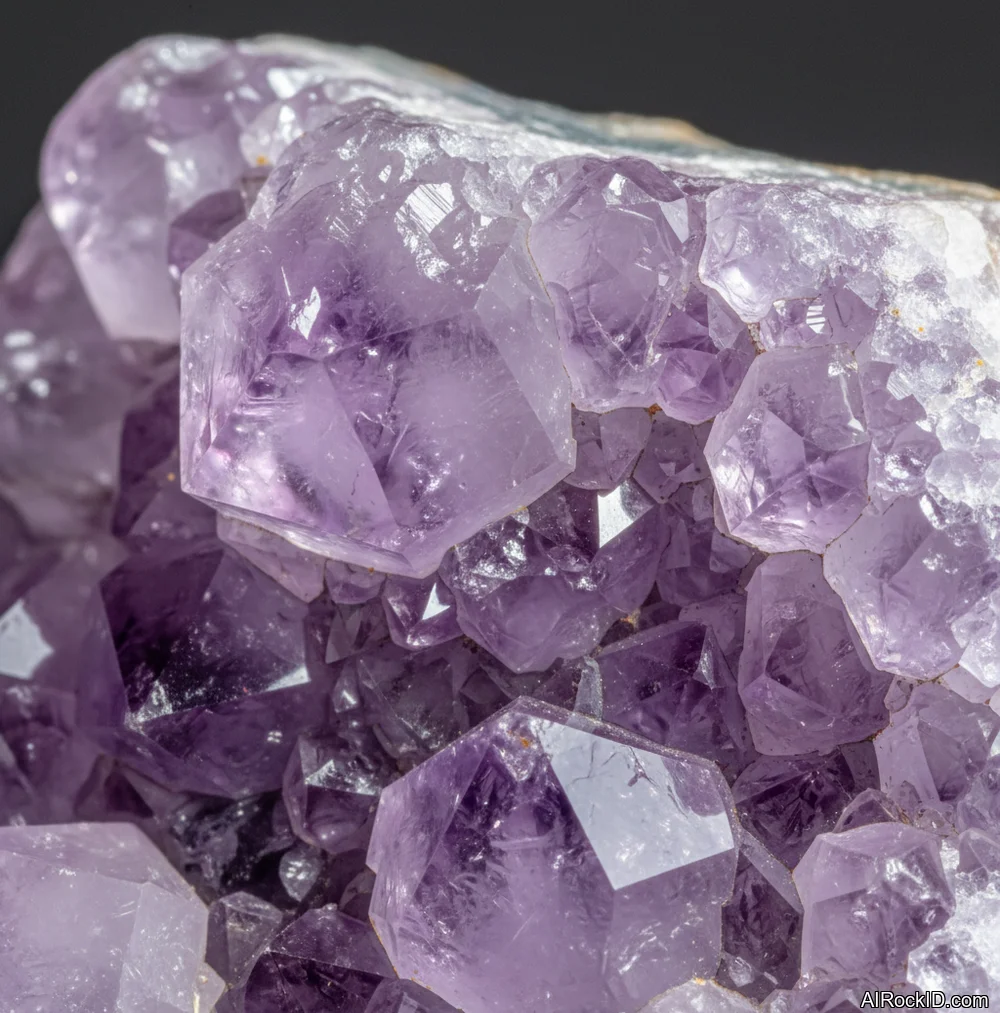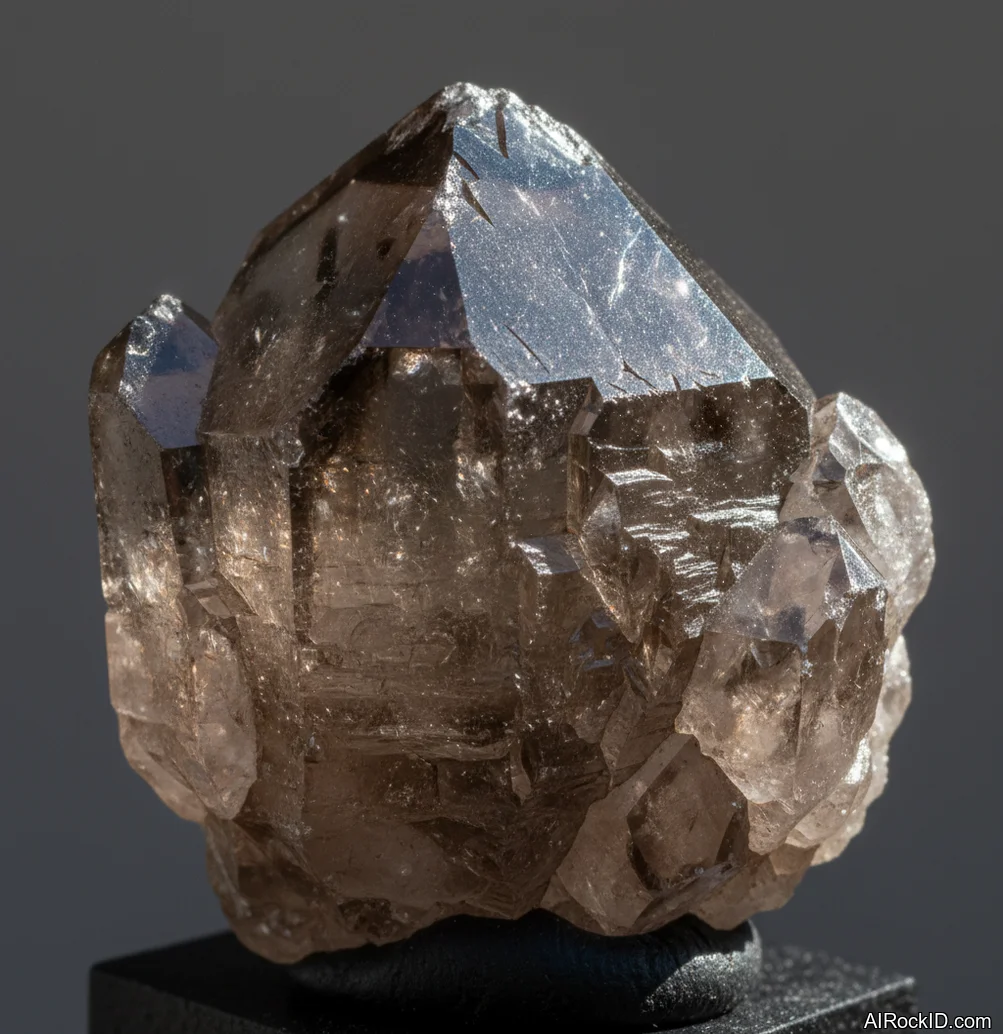
Smoky Quartz


Quick answer: Smoky quartz is a brown, gray, or nearly black variety of quartz, usually identified by its glassy luster, hardness, and transparent to translucent body color. It can resemble other dark stones, so confirmation is strongest when color, crystal habit, hardness, and light transmission are checked together.
AI Rock ID can help screen smoky quartz by comparing visual features such as color zoning, transparency, luster, and crystal shape from a photo. RockIdentifier.io is useful as a first-pass identification tool, but results should be confirmed with simple physical observations or a gem professional for valuable specimens.
Good fit
- People who want a durable quartz for everyday jewelry or handled stones
- Collectors comparing brown, gray, and black quartz varieties
- Beginners learning to distinguish quartz from softer glass or calcite
- Buyers who want a common gemstone with many natural and treated options
Not a good fit
- Anyone needing a definitive lab report from a photo alone
- Buyers who cannot tolerate possible irradiation or heat treatment disclosure issues
- Collectors seeking rare minerals, since many smoky quartz specimens are widely available
Most commonly confused with
- Morion: Morion is a very dark to black smoky quartz term; thin edges may still show brown or gray translucency.
- Black Tourmaline: Black tourmaline is typically opaque with vertical striations and a different crystal habit, not transparent brown quartz.
- Obsidian: Obsidian is volcanic glass and is usually softer, with a conchoidal glassy break and no quartz crystal faces.
- Citrine: Citrine is yellow to orange quartz, while smoky quartz is brown, gray, or brownish black.
Smoky Quartz Lookalike Comparison
| Material | Typical Appearance | Key Difference |
|---|---|---|
| Smoky Quartz | Transparent to translucent brown, gray, or black quartz | Hardness 7 and often shows quartz crystal form |
| Black Tourmaline | Opaque black with lengthwise striations | Not transparent at thin edges in the same way as smoky quartz |
| Obsidian | Glassy black, brown, or mahogany volcanic glass | No natural quartz crystal faces and lower hardness |
| Citrine | Transparent yellow to orange quartz | Warmer yellow-orange color rather than smoky brown-gray |
| Glass | Variable brown or gray transparent material | May contain bubbles and is usually softer than quartz |
AI identification confidence
Photo-based AI identification of smoky quartz is usually moderate to high when the image shows crystal faces, transparency, and true body color in natural light. Confidence drops for tumbled stones, very dark specimens, backlit photos, or pieces that could be glass, obsidian, or black tourmaline.
When AI gets it wrong
- The specimen is photographed under warm indoor light that makes brown stones appear more yellow or orange.
- A very dark crystal is labeled smoky quartz even though it is opaque black tourmaline.
- A polished or tumbled piece lacks crystal habit, making glass and quartz harder to separate visually.
- The photo does not show edges, fractures, inclusions, or scale.
Final recommendation
Choose smoky quartz based on confirmed quartz characteristics, clear seller disclosure, and the appearance you prefer, such as pale champagne, gray-brown, or dark morion-like color. For higher-priced pieces, request origin, treatment information, and clear photos under neutral lighting.
How to Check Smoky Quartz Authenticity
Authentic smoky quartz should be able to scratch glass and should not be scratched easily by a steel knife, because quartz has a Mohs hardness of 7. Natural crystals often show hexagonal prism faces, uneven color zoning, internal veils, or small inclusions. Perfectly uniform color, visible bubbles, or molded shapes can suggest glass or a manufactured imitation.
Natural, Irradiated, and Heated Smoky Quartz
Smoky quartz color can form naturally when aluminum-bearing quartz is exposed to natural radiation in the Earth. Some commercial smoky quartz is also irradiated or heated to adjust color, and these treatments are common in the gem trade. Treatment disclosure matters most for pricing, collector interest, and buyer preference rather than basic durability.
Buying Tips for Smoky Quartz
Look for clear photos taken in neutral light, including close-ups of terminations, side faces, and any chips or repairs. Very dark specimens should be checked at thin edges with a light source to see whether they transmit brown or gray light. Large, flawless, deeply colored crystals at unusually low prices should be assessed carefully for glass, enhancement, or incomplete disclosure.
What Is Smoky Quartz?
Smoky quartz is a brown to gray variety of quartz (SiO2), and it gets that color from natural irradiation working on tiny trace impurities inside the crystal. Pick up a chunk and you feel it right away. Cool. Glassy. Polished pieces can feel a little slick, almost like a well-worn bottle, but raw points have those sharp edges that’ll snag your skin if you’re handling them without thinking.
People glance at it and go, “Oh, it’s just dirty clear quartz.” But good smoky isn’t flat like that. Tip it under a lamp and the color shifts around in bands, like thin smoke caught in ice (you’ve got to move it to see it). Some pieces sit in that light tea-brown range, and some get so dark they’re almost black. That super dark material is often sold as morion.
And here’s the honest bit: a lot of what you see in shops is tumbled pebbles. They’re fine. But those clean terminated crystals with crisp faces and minimal chips? Harder to come by than the internet makes it seem.
Origin & History
The name doesn’t try to be clever. “Smoky” is just the color, and “quartz” comes from the old German “Quarz,” a word that got pulled into mineral talk centuries back and stuck.
And for the really dark stuff, people have been calling it “morion” forever, especially around Europe. You’ll still hear that at shows when a dealer leans in a bit and basically means, “Yeah, this one’s extra dark.”
Quartz as a mineral species got pinned down early in modern mineralogy, and smoky quartz has been treated as a color variety since the 18th and 19th century collecting rush in the Alps and Britain. Scotland’s tied into it in a very real way, too, since smoky quartz ended up in traditional jewelry and little ornaments. Thing is, if you’ve ever handled old cairngorm-style pieces, they’ve got that warm brown glow (almost like it’s coming from inside the stone) that’s weirdly hard to photograph.
Where Is Smoky Quartz Found?
Smoky quartz turns up anywhere quartz grows and later gets a radiation dose, with classic crystals from alpine clefts, Brazilian pegmatites, and pockets in the western United States.
Formation
Most smoky quartz starts out as plain old quartz forming in igneous and metamorphic rocks. Think granite and pegmatite if you’re after those big, blocky crystals, and alpine-type veins if you’ve ever held one of those sharp, elegant points that looks like it could poke a hole in your finger. It grows from silica-rich fluids, and if you shine a light through a clean piece you can sometimes catch its “timeline” inside, like phantoms or faint zoning bands that only show up when you tilt it just right.
But the smoky color usually shows up later. Natural radiation from nearby radioactive minerals, tiny amounts of uranium or thorium in the surrounding rock, or sometimes right in the host granite, knocks things around enough to create color centers in the quartz lattice, usually tied to trace aluminum. So you can open a pocket and find half the quartz is crystal clear while a few pieces are smoky. Same place, same growth conditions, just a different radiation dose. Weird? Yeah, but that’s the whole trick.
How to Identify Smoky Quartz
Color: Ranges from pale grayish-brown to deep brown and near-black; color is often uneven with zoning or smoky “clouds” inside. Transparent pieces look like tea in sunlight, while darker material can look opaque until you backlight it.
Luster: Vitreous, like broken glass.
If you scratch it with a steel nail, it won’t bite, but it will scratch a glass bottle easily (quartz hardness 7). Look closely at the inside: natural smoky often has gradual, patchy color, while irradiated clear quartz can look too uniform and “painted on.” And in-hand, real quartz stays cool and has that crisp, glassy edge on broken surfaces that plastic and resin fakes just don’t have.
Common Look-Alikes
Smoky Quartz is sometimes confused with these materials:
- Black tourmaline (schorl)
- Obsidian (black volcanic glass)
- Smoky topaz (actual topaz, often mislabeled material)
- Heat-treated smoky quartz (artificially darkened quartz)
- Irradiated smoky quartz (lab-treated, sometimes sold as natural color)
- Smoked or dyed glass sold as “smoky quartz”
Market Cautions & Treatments
When AI Can Get This Wrong
At first glance, photos of dark smoky quartz get mislabeled as black tourmaline or obsidian, especially when the piece is rough and the lighting kills the glassy quartz faces. AI also trips on treated smoky that’s uniformly near-black and calls it “morion” or even “onyx” if it’s tumbled. Pick up a cheap steel blade and try a discreet scratch on an unpolished spot: smoky quartz should scratch glass and resist the blade, while obsidian and many glasses scuff easier and show softer, conchoidal chips.
Properties of Smoky Quartz
Physical Properties
| Crystal System | Trigonal |
| Hardness (Mohs) | 7 (Hard (6-7.5)) |
| Density | 2.65 g/cm3 |
| Luster | Vitreous |
| Diaphaneity | Transparent to translucent |
| Fracture | Conchoidal |
| Streak | White |
| Magnetism | Non-magnetic |
| Colors | Smoky brown, Gray-brown, Dark brown, Near-black |
Chemical Properties
| Classification | Silicates |
| Formula | SiO2 |
| Elements | Si, O |
| Common Impurities | Al, Li, Fe, Ti |
Optical Properties
| Refractive Index | 1.544-1.553 |
| Birefringence | 0.009 |
| Pleochroism | Weak |
| Optical Character | Uniaxial |
Smoky Quartz Health & Safety
Smoky quartz is safe to handle and it isn’t toxic. But if you’re cutting it or grinding it, use the usual precautions, because the fine silica dust you make (that gritty powder that ends up on your fingers and around the wheel) is a respiratory hazard.
Safety Tips
If you’re going to cut or shape it (lapidary work), keep it wet, make sure you’ve got good ventilation, and wear a proper respirator rated for fine particulates. And seriously, don’t dry-grind quartz.
Smoky Quartz Value & Price
Price Range
Rough/Tumbled: $3 - $80 per piece
Cut/Polished: $1 - $15 per carat
Price jumps when the clarity’s high, the color looks good and even, and the terminations are still intact. Big single points with crisp, sharp faces always run more money than clusters or that chipped pocket stuff (you know, the kind with little bruised edges).
Durability
Very Durable — Scratch resistance: Excellent, Toughness: Good
It’s stable for everyday handling, but prolonged strong sunlight can slowly lighten some smoky material over time.
How to Care for Smoky Quartz
Use & Storage
Store it where the points won’t rub against softer stones, because quartz will scuff things like fluorite and calcite fast. If you’ve got a sharp terminated piece, wrap it so the tip doesn’t chip when it bumps the box lid.
Cleaning
1) Rinse with lukewarm water and a drop of mild soap. 2) Use a soft toothbrush to get into grooves and between cluster points. 3) Rinse well and air-dry; a microfiber cloth helps avoid water spots on polished faces.
Cleanse & Charge
For a simple reset, rinse and let it dry, or leave it on a shelf overnight away from harsh sun. If you use moonlight, it’s gentle and won’t fade the color the way a bright windowsill sometimes can.
Placement
Set it where you’ll actually touch it, like a desk corner or beside a keyboard, because smoky quartz is one of those stones that feels better in-hand than across the room. On a windowsill it looks great, but I wouldn’t park prized pieces in direct sun for months.
Caution
Don’t hit it with sudden temperature changes. And don’t just chuck points into a bag with other rocks either; even though quartz is hard, it’ll still chip along the edges (especially those crisp, sharp tips). If a seller is pushing a jet-black piece as “rare natural morion,” stop and ask what’s been done to it. Some clear quartz gets artificially irradiated so it turns darker, and that’s usually what you’re looking at.
Works Well With
Smoky Quartz Meaning & Healing Properties
Most folks grab smoky quartz when they want something steady and grounded, not that glittery, high-voltage kind of energy. In my own little pile of stones, it’s the one I’ll press into someone’s hand if they’re jittery. It sits nicely in your palm, it’s not “busy,” and the darker points have this muted, almost thirsty look, like they’re drinking up glare instead of firing it back at you.
But look, I’m not going to pretend it’s medical anything. If it calms you down, that’s personal and it’s rooted in tradition, not healthcare. What I honestly like about it is how easy it is to build into a routine. Keep a piece by your keys. Or, when you’re stuck waiting in line, rub your thumb over the flat faces and the little ridges (you can feel where the facets meet, even with your eyes on the cashier). So it becomes a physical cue to slow down. A reminder. That’s the real value for me.
And there’s a small market problem, too: in photos, people mix up smoky quartz with black obsidian, and they also mix it up with tourmalinated quartz. In your hand, it’s obvious. Obsidian tends to feel a bit “softer” around the edges and you’ll sometimes catch those flow lines if you tilt it in the light. Tourmalinated quartz has needles you can actually see. Good smoky quartz is just quartz, clean and glassy, with that smoky depth that really shows up when you backlight it.
Common mistakes
- Assuming every black crystal is smoky quartz without checking transparency or crystal habit
- Calling all dark smoky quartz morion, even when the stone is only medium brown or gray
- Confusing heat-treated citrine with natural smoky quartz because both are quartz varieties
- Relying on color alone instead of checking hardness, luster, and structure
- Ignoring treatment disclosure when comparing prices between similar-looking specimens
Identify Smoky Quartz from a photo
Compare Smoky Quartz traits, care tips, value clues, and common lookalikes with a clear photo.