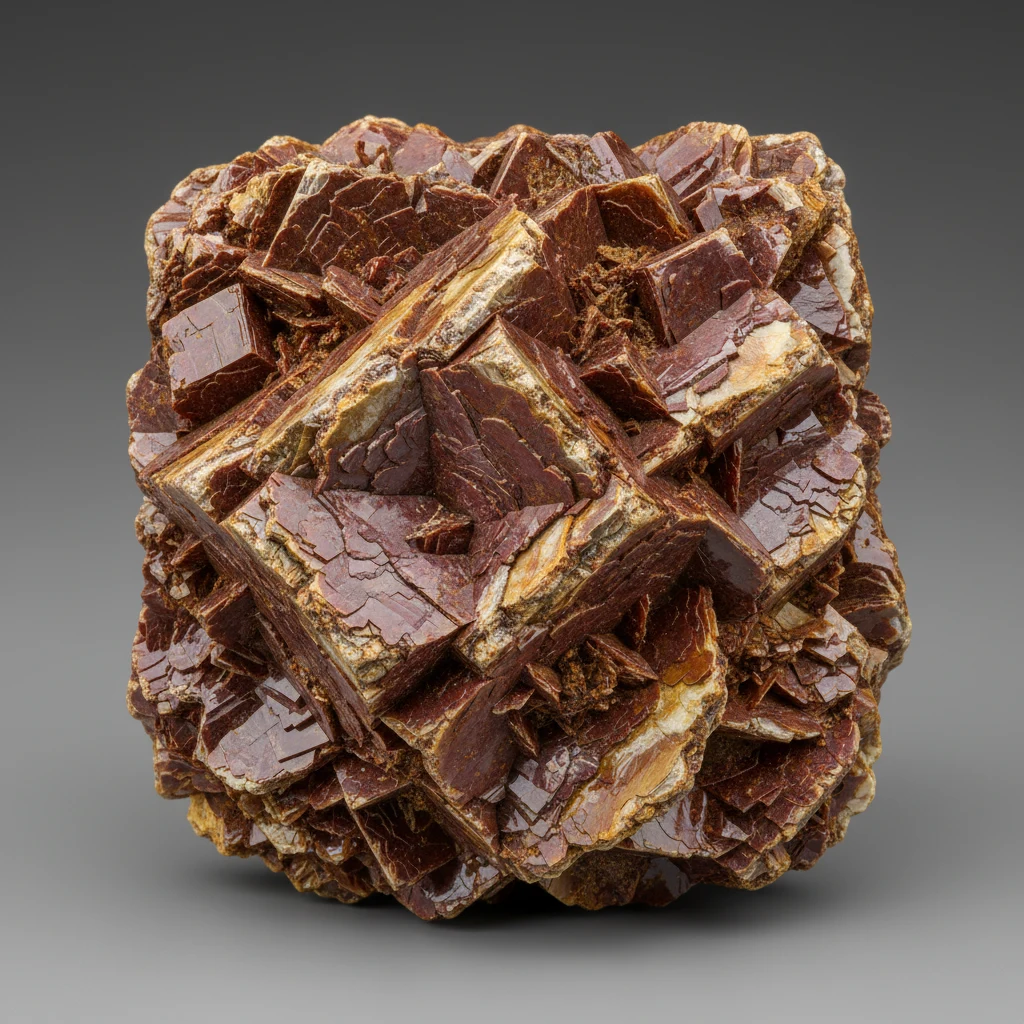
Iron-rich Clay


Quick answer: Iron-rich Clay is usually identified by its soft, earthy texture, reddish-brown to ocher color, and tendency to leave a powdery streak. It can resemble jasper, hematite-rich rocks, or laterite, but it is much softer and typically feels dull rather than glassy or metallic.
AI Rock ID can help compare Iron-rich Clay against visually similar reddish-brown rocks using color, texture, luster, and hardness clues. RockIdentifier.io provides reference information to support visual identification, but soft clay-rich materials may still require hands-on tests for confirmation.
Good fit
- Learners comparing soft clay-rich rocks with harder red stones
- Collectors interested in earthy, iron-oxide-stained specimens
- Field observers documenting reddish-brown sedimentary materials
- Educational displays about weathering, soils, and iron oxides
Not a good fit
- Jewelry that needs durability or polish retention
- Wet handling, soaking, or outdoor display in exposed conditions
- Buyers looking for a rare mineral specimen with high resale value
- Use in food, cosmetics, or health practices without verified safety testing
Most commonly confused with
- Red Jasper: Red jasper is much harder, usually takes a polish, and has a waxy to vitreous luster rather than an earthy feel.
- Hematite: Hematite is denser, harder, and may show metallic or submetallic luster, while Iron-rich Clay is soft and dull.
- Limonite: Limonite can be yellow-brown to rusty and iron-rich, but it often forms harder crusts, masses, or gossan material rather than plastic clay.
- Laterite: Laterite is an iron- and aluminum-rich weathering material that can be hardened and nodular, whereas Iron-rich Clay is typically softer and more clay-dominant.
Iron-rich Clay vs. Similar Red-Brown Materials
| Material | Typical Hardness | Key Difference | Common Clue |
|---|---|---|---|
| Iron-rich Clay | Mohs 1-2 | Soft clay with iron oxide coloring | Earthy, powdery, may crumble |
| Red Jasper | Mohs 6.5-7 | Silica-rich and much harder | Smooth polish, waxy luster |
| Hematite | Mohs 5-6.5 | Iron oxide mineral, often dense | Red-brown streak, heavy feel |
| Limonite | Mohs 4-5.5 variable | Hydrated iron oxide mixture | Rusty crusts or yellow-brown masses |
| Laterite | Variable | Weathered iron-rich soil or rock | Nodular, porous, or hardened texture |
AI identification confidence
AI identification of Iron-rich Clay is usually moderate when photos clearly show earthy texture, crumbly edges, and reddish-brown color. Confidence drops when the specimen is wet, polished, compacted, or photographed without a hardness or streak clue.
When AI gets it wrong
- A polished red stone may be mislabeled as Iron-rich Clay even if it is actually jasper or another hard silicate.
- Wet clay can appear darker and smoother, making it look like hematite-rich rock.
- Fine red dust on a harder rock surface can mimic a clay body in photos.
- Artificial terracotta fragments may look natural unless shape, firing marks, or context are visible.
Final recommendation
For identification, pair visual clues with a simple scratch test and note whether the material powders, crumbles, or takes a polish. For buying, favor clearly labeled specimens with locality information and avoid claims that imply rare gem quality without evidence.
How to Check Iron-rich Clay Authenticity
Authentic Iron-rich Clay should feel soft, dull, and earthy rather than glassy, metallic, or resin-coated. A fingernail or copper coin may mark it easily, and a small unglazed streak test may show reddish-brown to ocher powder. If a piece is shaped, uniformly colored, or very hard, it may be fired clay, dyed material, or a different iron-rich rock.
Buying Tips for Iron-rich Clay Specimens
Iron-rich Clay is common, so price is usually based on specimen size, locality, display quality, or educational labeling rather than rarity. Ask whether the piece has been stabilized, sealed, fired, or treated, since those changes affect texture and care. Avoid soaking or washing a new specimen before confirming that it will not soften or shed pigment.
Simple Field Tests for Iron-rich Clay
A hardness check is one of the fastest ways to separate Iron-rich Clay from red jasper or hematite. Dry clay-rich material often rubs off as powder, while harder red stones resist scratching and keep sharper edges. Testing should be done on a small inconspicuous area because soft clay specimens can be damaged easily.
What Is Iron-rich Clay?
Iron-rich Clay is a common clay-mineral rock recognized by its significant iron oxide content and reddish-brown, brown, red, or yellow color. In the hand, it feels soft and earthy rather than glassy or crystalline, with an opaque body and a dull, soil-like luster.
Collectors value it more for texture, origin, and natural color than for durability. With a Mohs hardness of 1-2, it is very soft, has poor scratch resistance, and should be treated as a nondurable specimen rather than a wearable gem.
Origin & History
The name Iron-rich Clay is a direct descriptive name: it refers to clay containing a significant amount of iron oxide. That iron content is what gives many specimens their warm reddish-brown look, like compacted earth held together in a quiet, matte surface.
Iron-rich clay has been used in various cultures for centuries, and its identity remains practical rather than ornamental. For mineral reference context, collectors may compare clay-mineral terminology through mindat.org while identifying this material by its stated iron-rich, earthy character.
Where Is Iron-rich Clay Found?
Iron-rich Clay is commonly found in sedimentary environments. Reported countries include the USA, China, and Brazil, with notable localities including Georgia in the USA, Sichuan in China, and Minas Gerais in Brazil.
Formation
Iron-rich Clay forms through the weathering of rocks that contain iron minerals. As the original rock breaks down, clay minerals develop with iron oxide present, producing the reddish-brown, brown, red, or yellow tones associated with the material.
This formation story matches its field feel: it is amorphous, opaque, earthy, and uneven in fracture rather than sharply crystalline. Its chemical classification is phyllosilicate, and the formula varies, commonly involving Si, Al, Fe, and O, with manganese listed as a common impurity.
How to Identify Iron-rich Clay
Identify Iron-rich Clay by its soft, earthy texture and reddish-brown color range. It is opaque, has an earthy luster, is non-magnetic, and gives a brown streak; a simple streak test is one of the listed confirmation tips.
Its Mohs hardness is only 1-2, so it should feel very soft compared with most display minerals. The material is amorphous, isotropic, has no birefringence or pleochroism, and its refractive index is not applicable, which fits its clay-like rather than gem-like nature.
Properties of Iron-rich Clay
Physical Properties
| Crystal System | Amorphous |
| Hardness (Mohs) | 1-2 (Very Soft) |
| Density | 1.5-2.5 g/cm3 |
| Luster | Earthy |
| Diaphaneity | Opaque |
| Fracture | Uneven |
| Streak | Brown |
| Magnetism | Non-magnetic |
| Colors | Red, Brown, Yellow |
Chemical Properties
| Classification | Phyllosilicate |
| Formula | varies, commonly (Si, Al, Fe, O) |
| Elements | Si, O, Fe |
| Common Impurities | Mn |
Optical Properties
| Refractive Index | Not applicable |
| Birefringence | None |
| Pleochroism | None |
| Optical Character | Isotropic |
Iron-rich Clay Health & Safety
There are no significant health risks associated with handling iron-rich clay.
Iron-rich Clay Value & Price
Price Range
Rough/Tumbled: $5 - $15 per specimen
Cut/Polished:
Price is affected by purity and location of origin.
Durability
Nondurable — Scratch resistance: Poor, Toughness: Fair
It can degrade when exposed to water over time.
How to Care for Iron-rich Clay
Use & Storage
Store in a dry place away from direct sunlight.
Cleaning
Gently wipe with a damp cloth. Avoid using harsh chemicals.
Cleanse & Charge
Place in sunlight or moonlight for a few hours.
Placement
Keep in a stable environment to prevent degradation.
Caution
Avoid prolonged exposure to water.
Works Well With
Iron-rich Clay Meaning & Healing Properties
In traditional crystal practice, Iron-rich Clay is associated with grounding, stability, and nurturing energy. It is linked with the Root chakra, the Earth element, and the planet Earth, so practitioners often read it as a steadying material rather than a flashy amplifier.
Its cultural associations include Taurus and Virgo, along with themes such as emotional healing, meditation, trust, relaxation, inner peace, and clarity. These meanings are traditional beliefs only; Iron-rich Clay is not a substitute for medical treatment.
Identify Iron-rich Clay from a photo
Compare Iron-rich Clay traits, care tips, value clues, and common lookalikes with a clear photo.
Common mistakes
- Assuming every red-brown stone is Iron-rich Clay without checking hardness
- Mistaking polished red jasper for clay because of similar color
- Using water to clean a soft clay specimen before testing stability
- Overvaluing common clay material because it is labeled as a rare crystal
- Ignoring whether a red clay-like object has been fired into ceramic
- Relying only on color instead of texture, streak, density, and context