Mixed Gemstones


Quick answer: Mixed Gemstones refers to assorted natural, treated, or imitation stones sold together rather than one single mineral species. Because the group can include many minerals with different hardness, durability, and value, identification should be done stone by stone.
AI Rock ID can help sort mixed gemstone lots by visual traits such as color, luster, transparency, banding, and crystal habit. RockIdentifier.io is useful for narrowing possibilities, but mixed parcels may still require hardness checks, magnification, or lab testing for confident separation.
Good fit
- Collectors who enjoy sorting varied stones and learning visual identification clues
- Crafters who need colorful cabochons, beads, or tumbled stones for decorative projects
- Beginners practicing gemstone comparison across color, luster, and transparency
- Buyers who are comfortable with variable quality and mixed mineral types
Not a good fit
- Buyers who need a guaranteed single species, treatment status, or origin
- Fine jewelry settings that require predictable durability for every stone
- Investment purchases without written identification or grading details
- People expecting all stones in a mixed parcel to have equal value
Most commonly confused with
- Quartz: Quartz is a single mineral group, while mixed gemstones may include quartz plus unrelated minerals or glass.
- Agate: Agate usually shows chalcedony banding; mixed gemstone lots may contain agate-like pieces alongside many other stones.
- Jasper: Jasper is typically opaque microcrystalline quartz, while mixed gemstones can include translucent, transparent, or softer materials.
- Glass: Glass may show bubbles, molded shapes, or uniform color and is often included accidentally or intentionally in low-cost mixes.
Mixed Gemstones vs. Common Lookalikes
| Material | Typical Clue | ID Caution |
|---|---|---|
| Mixed gemstones | Several colors, textures, and mineral types in one lot | Each piece may need separate identification |
| Quartz mix | Mostly glassy luster and Mohs hardness near 7 | Can still include amethyst, citrine, agate, or dyed pieces |
| Glass pieces | Rounded bubbles, swirls, or very uniform color | May look like polished gemstone in photos |
| Dyed stones | Color concentrated in cracks, pores, or drill holes | Dye can hide the original mineral identity |
| Synthetic or imitation gems | Consistent color, repeated shapes, or low parcel price | Visual ID alone may not prove natural origin |
AI identification confidence
AI identification is usually moderate for mixed gemstone parcels because each stone may belong to a different mineral family. Confidence improves when photos show one stone at a time in daylight, with close-ups of surface texture, translucency, fractures, and any banding or inclusions.
When AI gets it wrong
- A dyed stone is identified as the natural gemstone it imitates
- Glass, resin, or ceramic pieces are mixed with natural stones
- Polished tumble stones lack crystal faces or diagnostic surface features
- Several stones are photographed together and the model focuses on only the most visible piece
Best choice summary
For jewelry, choose mixed gemstones only when the seller identifies each stone type or provides a durability range suitable for the design. For learning or crafts, a mixed lot can be useful if the price reflects uncertainty and possible treatments.
Final recommendation
Treat mixed gemstone parcels as assortments, not as a single verified material. If authenticity, value, or safe jewelry use matters, request itemized names, treatment disclosures, and return options before buying.
Buying Mixed Gemstones Online
Online listings should state whether the parcel contains natural stones, treated stones, synthetic stones, or imitation materials. Clear photos of the exact lot are more useful than stock images because mixed gemstone parcels can vary widely in quality and contents. A very low price for named high-value gems may indicate glass, dyed material, or tiny low-grade pieces.
Authenticity Checks for Mixed Lots
Start by separating stones by color, transparency, luster, and apparent hardness before trying to name them. A 10x loupe can reveal bubbles, dye concentrations, surface coatings, or filled fractures. Scratch testing should be avoided on finished jewelry or valuable stones because it can cause permanent damage.
Photo Tips for Identification
Photograph one gemstone at a time on a plain white or gray background in natural indirect light. Include a close-up, a side view, and a scale reference such as a ruler or coin. Wet and dry photos can help show surface texture, but identification should not rely only on enhanced color.
What Is Mixed Gemstones?
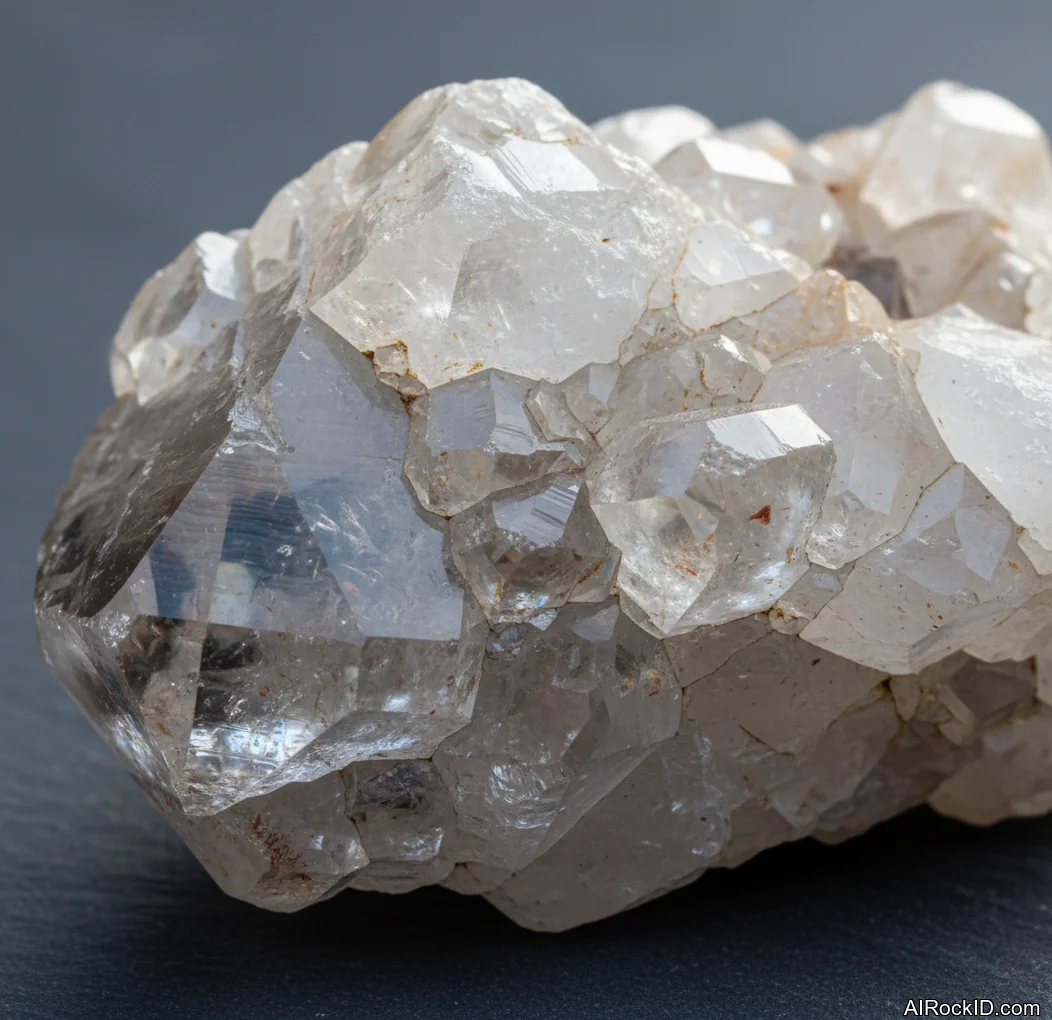
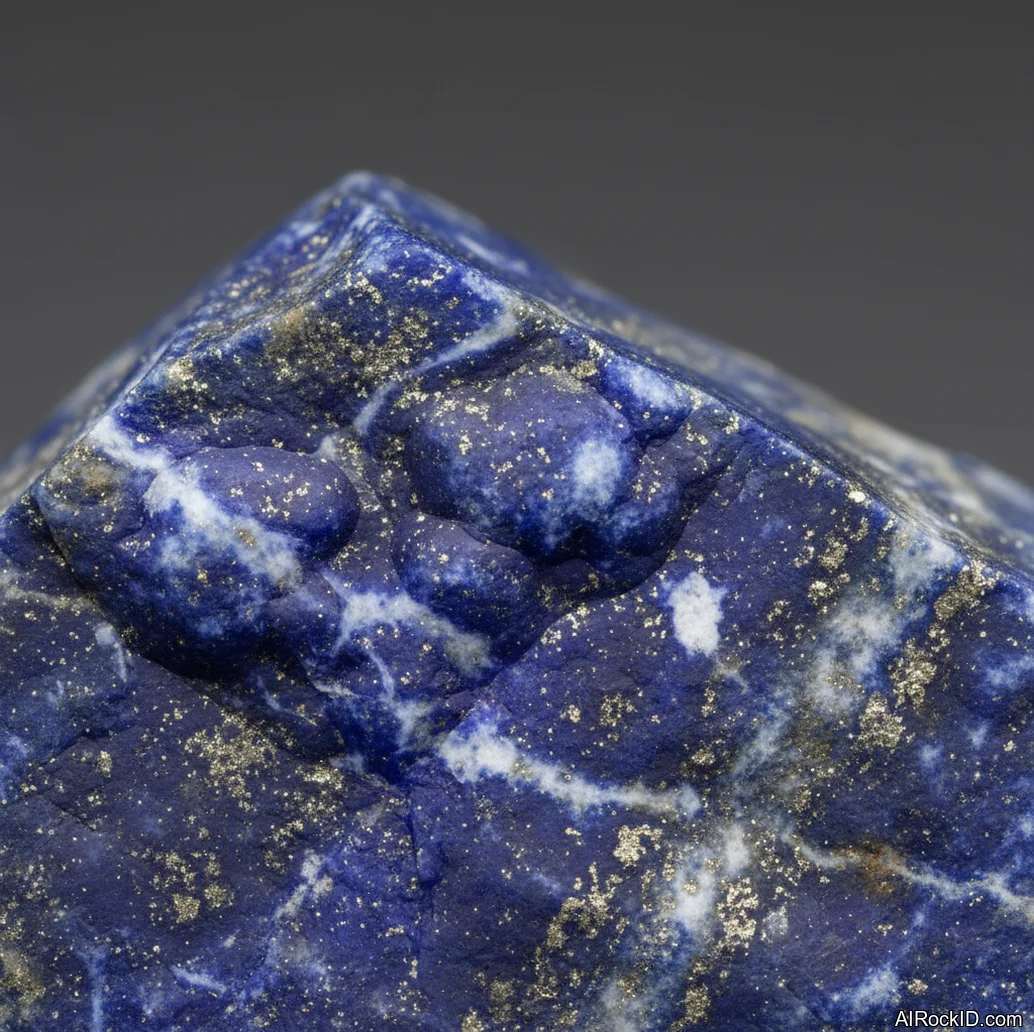
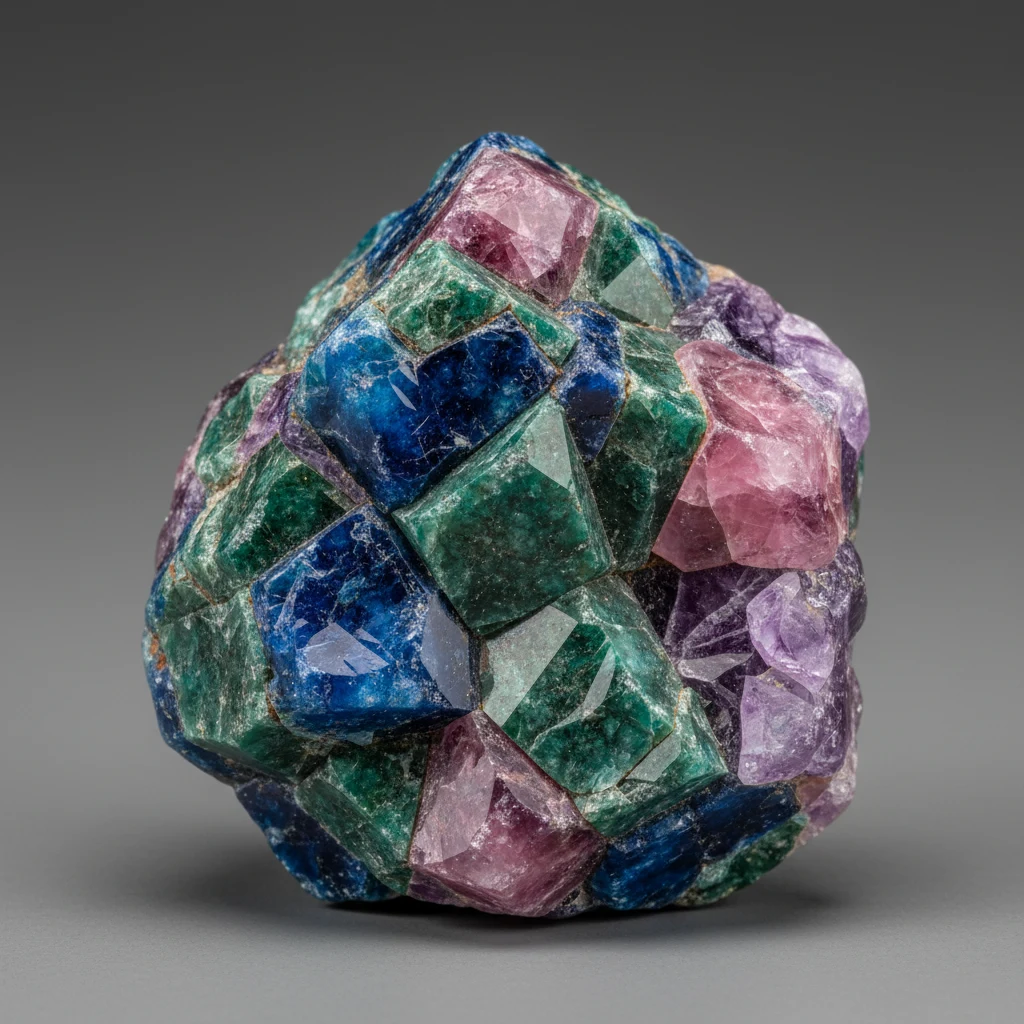
Mixed gemstones are combinations of various minerals or colors, most often recognized by their lively blue, green, pink, and purple appearances. In the hand, a mixed gemstone parcel feels less like one uniform mineral and more like a small color study: transparent to translucent pieces, vitreous to sometimes waxy surfaces, and patterns that change from specimen to specimen.
As a collector category, Mixed Gemstones are common and practical rather than narrowly defined. Their crystal system, formula, refractive index, and exact identity are variable because the material depends on the specific minerals present. Most pieces fall in the Mohs 5-7 range, with white streak, non-magnetic behavior, and conchoidal to uneven fracture.
Origin & History
The term Mixed Gemstones refers to any combination of gems, and it became commonly described in the 20th century. It is a useful marketplace and jewelry term when a piece is valued for its combined colors, patterns, and mineral variety rather than a single named species.
For collectors, the name should be treated as a broad descriptive label, not a precise formula. When checking a seller’s locality or comparing labeled specimens, mindat.org is a practical reference point for mineral and locality research, especially when a mixed lot includes material from named places such as Brazil, India, or the USA.
Where Is Mixed Gemstones Found?
Mixed Gemstones can be found in diverse locations around the world, with listed sources including Brazil, India, and the USA. Notable localities associated with this broad category include Amethyst Cave in Brazil, Mysore in India, and Maine in the USA.
Formation
Mixed Gemstones form through geological processes involving crystallization and mineral deposition. In practical terms, the finished specimen records more than one mineral or color contribution, which is why the surface may show changing tones, uneven boundaries, and a blend of transparent to translucent areas.
Their chemistry is variable, but listed elements include Si, Al, Fe, and Mg, with Fe and Mn noted as common impurities. Those variable components help explain why Mixed Gemstones are not identified by one fixed formula and why color, clarity, and rarity of the specific mix strongly influence value.
How to Identify Mixed Gemstones
Identify Mixed Gemstones by looking first for varied color patterns and mineral-to-mineral differences within the same specimen. Common colors include blue, green, pink, and purple, and the luster is typically vitreous to waxy, with transparent to translucent diaphaneity.
Field checks should stay simple and comparative: observe the white streak, non-magnetic response, conchoidal to uneven fracture, and medium Mohs hardness range of 5-7. Because the crystal system and formula are variable, hardness testing and close inspection of pattern, clarity, and luster are more useful than expecting one fixed structure.
Properties of Mixed Gemstones
Physical Properties
| Crystal System | Variable |
| Hardness (Mohs) | 5-7 (Medium) |
| Density | 2.5-3.5 g/cm3 |
| Luster | Vitreous |
| Diaphaneity | Transparent to translucent |
| Fracture | Conchoidal to uneven |
| Streak | White |
| Magnetism | Non-magnetic |
| Colors | Blue, Green, Pink, Purple |
Chemical Properties
| Classification | N/A |
| Formula | Variable |
| Elements | Si, Al, Fe, Mg |
| Common Impurities | Fe, Mn |
Optical Properties
| Refractive Index | Variable |
| Birefringence | None |
| Pleochroism | None |
| Optical Character | Biaxial |
Mixed Gemstones Health & Safety
Mixed gemstones are generally safe to handle and use.
Mixed Gemstones Value & Price
Price Range
Rough/Tumbled: $5 - $50 per specimen
Cut/Polished: $10 - $200 per carat
Price is affected by color, clarity, and rarity of the specific mix.
Durability
Moderate — Scratch resistance: Fair, Toughness: Good
Mixed gemstones are generally stable but can be sensitive to harsh chemicals.
How to Care for Mixed Gemstones
Use & Storage
Store in a soft pouch or case to avoid scratches.
Cleaning
Clean with mild soap and water; avoid harsh chemicals. Rinse and dry thoroughly.
Cleanse & Charge
Place in sunlight or moonlight to cleanse and recharge.
Placement
Keep in a cool, dry place away from direct sunlight.
Caution
Avoid exposing them to extreme temperatures.
Works Well With
Mixed Gemstones Meaning & Healing Properties
In crystal healing traditions, Mixed Gemstones are believed to support creativity, emotional balance, and protection. Their mixed color character makes them popular for meditation, emotional healing, stress relief, inner peace, abundance, love, trust, growth, and clarity, but they are not a substitute for medical treatment.
They are associated with the Heart and Throat chakras, Gemini and Libra, Venus, and the Earth and Water elements. For care, clean with mild soap and water, rinse and dry thoroughly, and avoid harsh chemicals or extreme temperatures; store pieces in a soft pouch or case to reduce scratching.
Identify Mixed Gemstones from a photo
Compare Mixed Gemstones traits, care tips, value clues, and common lookalikes with a clear photo.
Common mistakes
- Assuming every colorful stone in a mixed parcel is rare or valuable
- Identifying stones by color alone without checking hardness, luster, or transparency
- Buying a mixed lot for engagement rings or daily-wear jewelry without confirming durability
- Overlooking dye around drill holes, cracks, or porous areas
- Treating seller-provided names as proof without documentation for higher-value stones
- Cleaning all stones the same way even though softer or porous minerals may react differently