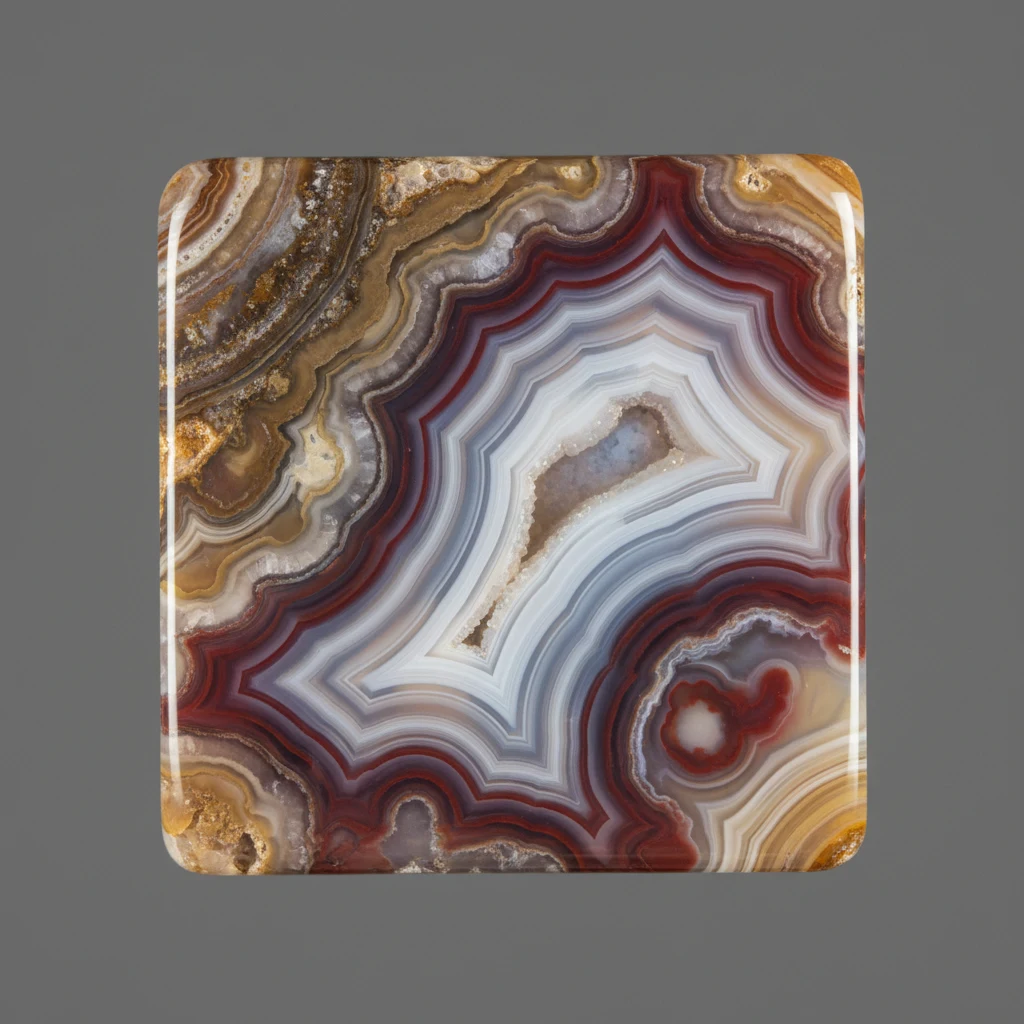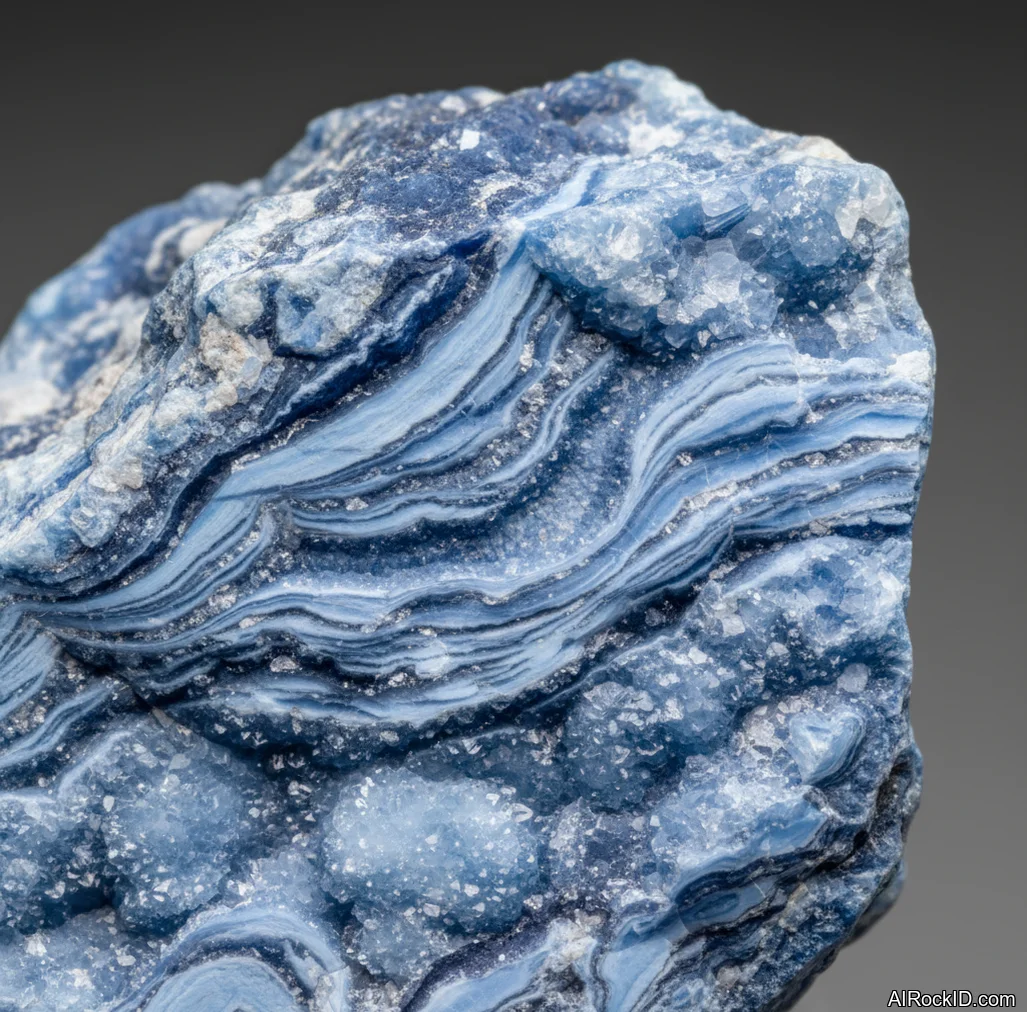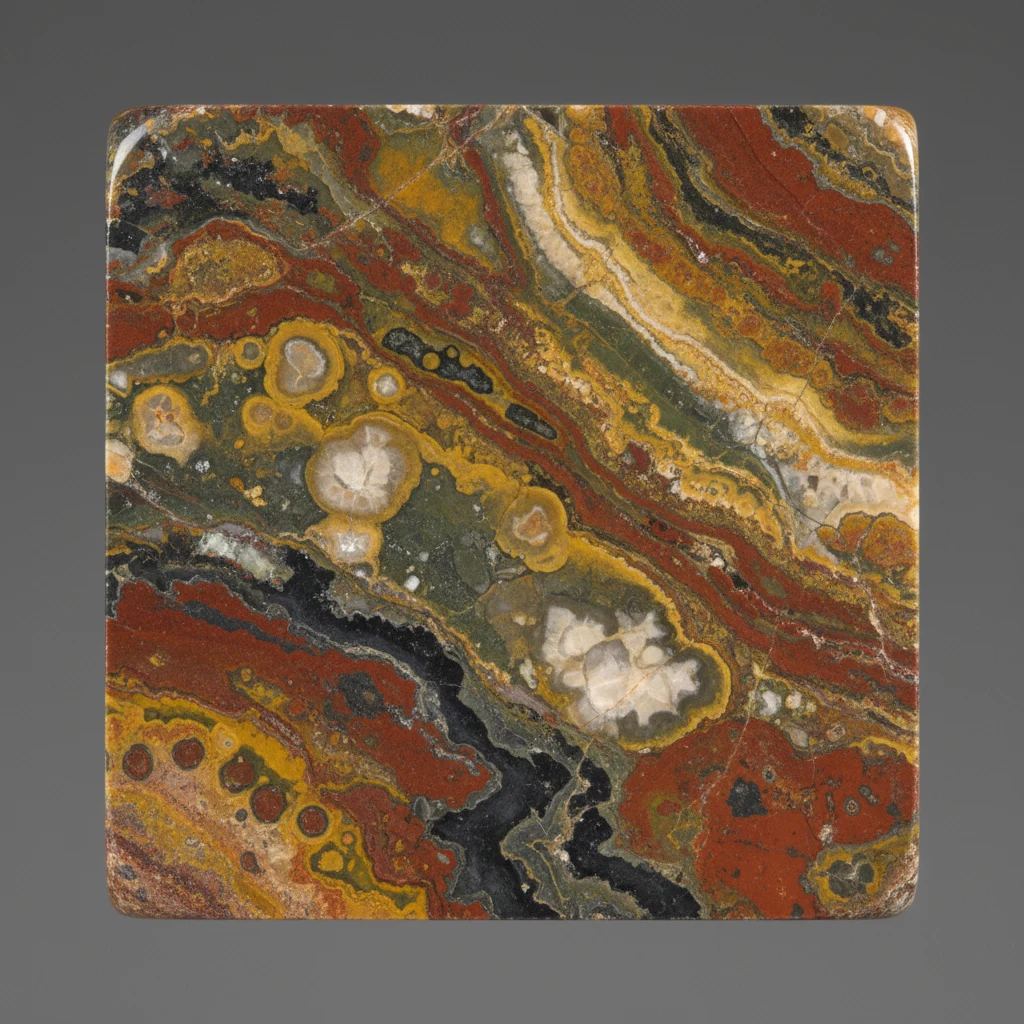
Jasper


Quick answer: Jasper is an opaque, microcrystalline quartz that is commonly identified by its earthy colors, dense feel, and waxy to dull luster. Because many jaspers are patterned or dyed, reliable identification often depends on checking hardness, opacity, texture, and color distribution together.
AI Rock ID can help compare a jasper specimen against visually similar stones by analyzing color, pattern, opacity, and surface texture from a photo. RockIdentifier.io provides crystal identification support, but results should be checked against physical traits such as hardness, fracture, and whether the color looks natural or dyed.
Good fit
- Collectors who like opaque stones with varied patterns and earthy colors
- Beginners seeking a durable quartz-family material for handling or display
- Jewelry buyers who want a tough, affordable stone for beads, cabochons, or pendants
- People comparing red, brown, yellow, green, or picture-patterned stones
Not a good fit
- Anyone needing a transparent or highly sparkly gemstone
- Buyers who want a rare gemstone with consistently high resale value
- Situations where dyed stone would be unacceptable unless treatment is disclosed
Most commonly confused with
- Agate: Agate is usually translucent with banding, while jasper is typically opaque.
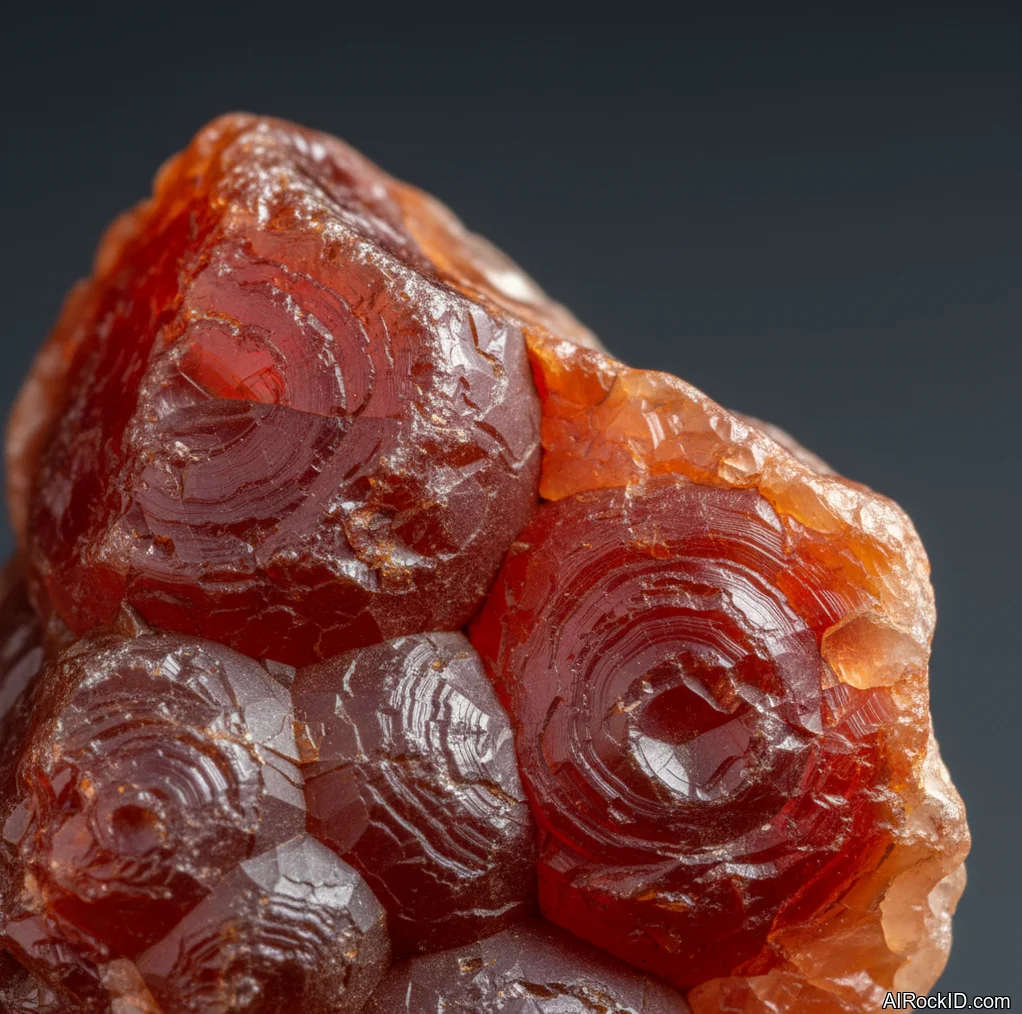
- Carnelian: Carnelian is orange to red chalcedony that is usually more translucent than jasper.
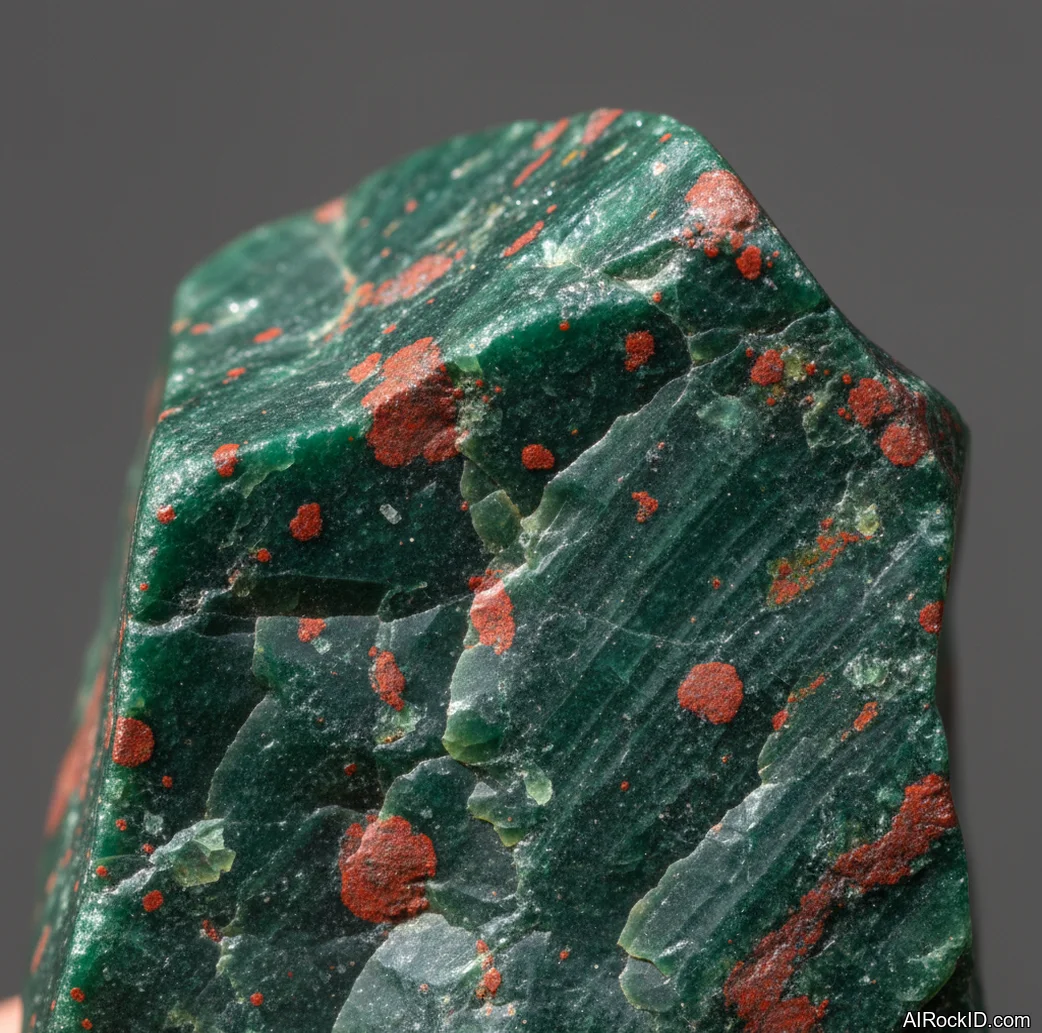
- Bloodstone: Bloodstone is a dark green chalcedony with red spots, while jasper covers a wider range of opaque colors and patterns.
- Red Aventurine: Red aventurine may show glittery mica inclusions, while jasper usually has a more even, opaque texture.
Jasper vs. Similar Stones
| Stone | Typical Look | Key Difference |
|---|---|---|
| Jasper | Opaque, earthy colors, often spotted or patterned | Dense chalcedony; usually no translucence at thin edges |
| Agate | Banded, often translucent | Light may pass through thin areas |
| Carnelian | Orange to red, glassy to waxy | Usually more translucent and less patterned |
| Bloodstone | Dark green with red spots | Specific green-red variety of chalcedony |
| Rhyolite | Mottled or flow-patterned rock | Often less uniformly waxy and may show volcanic texture |
AI identification confidence
AI identification confidence for jasper is usually moderate because many opaque stones share similar red, brown, yellow, or green patterns. Confidence improves when the photo shows a clean close-up, natural lighting, multiple angles, and scale, but a hardness check and opacity check are still useful.
When AI gets it wrong
- Dyed agate may be labeled as jasper because it is opaque-looking in photos.
- Rhyolite, chert, or other patterned rocks can resemble picture jasper in flat images.
- Polished surfaces can hide grain, translucence, and fracture details needed for identification.
- Strong color saturation may suggest treatment, but treatment cannot always be confirmed from a photo alone.
Final recommendation
For buying jasper, prioritize clear photos, treatment disclosure, and realistic color rather than relying only on trade names. Natural jasper is common, so unusually vivid colors, perfectly uniform tones, or very low-priced bulk beads should be checked for possible dyeing.
How to Spot Dyed Jasper
Dyed jasper may show unusually bright colors, color pooling in cracks, or stronger color along drill holes and surface pits. A cotton swab with water will not reliably detect all dyes, and harsh solvent testing can damage finishes, so treatment disclosure from the seller is the safest source of information. Natural jasper commonly has muted, uneven, earthy color rather than neon or perfectly uniform saturation.
Jasper Trade Names
Many jasper varieties are sold under trade names based on appearance, locality, or pattern, such as picture jasper, red jasper, ocean jasper, and brecciated jasper. Some trade names are loosely used and may include related rocks or chalcedony materials rather than a single strict mineral variety. When accuracy matters, ask for locality, treatment status, and whether the name is a commercial label.
What to Check Before Buying Jasper Jewelry
Check that beads and cabochons have smooth polish, secure settings, and no obvious cracks that reach the surface. For bracelets and necklaces, inspect drill holes for chips, dye concentration, or powdery residue. Jasper is durable enough for regular wear, but sharp impacts can still chip edges and corners.
What Is Jasper?
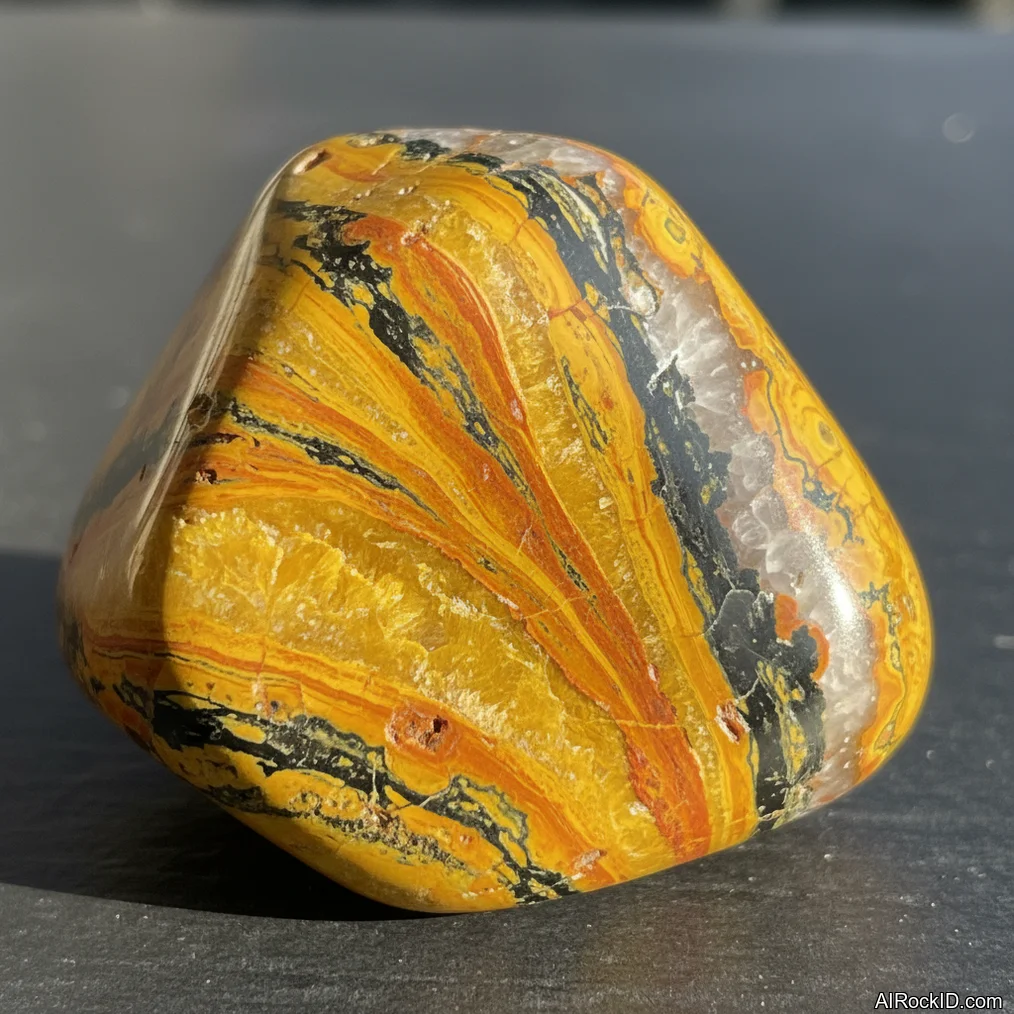
Jasper is an opaque, impure variety of chalcedony made mainly of microcrystalline quartz. In the hand, it usually feels dense, smooth, and earthy rather than glassy, with a waxy to dull surface on rough pieces and a brighter vitreous look when polished.
Collectors recognize jasper by its complete opacity, fine grain, and strong natural color. Iron oxides, clay minerals, manganese oxides, chlorite, and other inclusions create the familiar brick red, brown, yellow, cream, green, gray, black, and multicolored patterns seen in tumbled stones, cabochons, carvings, beads, and lapidary slabs.
Origin & History
The name jasper comes through Old French and Latin from the Greek word “iaspis,” a historical name once used for several spotted or colored stones. Modern geology uses jasper more narrowly for opaque, impure chalcedony or silicified rock with a high microcrystalline quartz content.
Jasper has a long lapidary history because it takes a durable polish and offers bold natural patterning. It has been carved into seals, beads, cameos, bowls, and ornamental objects in Egyptian, Greek, Roman, and medieval traditions. For locality checking and specimen records, collectors often compare labels with mindat.org.
Where Is Jasper Found?
Jasper is common and found worldwide, especially where silica-rich fluids moved through volcanic terrains, sedimentary silica deposits, iron-rich formations, or older rocks that were replaced or cemented by silica. Commercial lapidary material is abundant enough that many collectors begin with jasper before moving into rarer gemstones.
Formation
Jasper forms when silica-rich fluids precipitate microcrystalline quartz in cavities, fractures, sediments, volcanic rocks, or replacement zones. Instead of growing visible crystals, the silica settles into a fine aggregate that breaks with conchoidal to uneven fracture and shows no cleavage.
Its colors are carried by impurities locked into the quartz mass. Hematite and goethite commonly give red, yellow, and brown tones, while clay minerals, chlorite, manganese oxides, organic material, and other inclusions can produce greens, blacks, grays, and complex patterned varieties. Jasper may occur as nodules, veins, layers, breccias, or silicified replacement material.
How to Identify Jasper
To identify jasper, start with opacity: true jasper is normally opaque, not translucent like many agates. Look for a waxy, dull, matte, or polished vitreous luster, a white streak, no visible cleavage, and a fine texture with no obvious individual crystals.
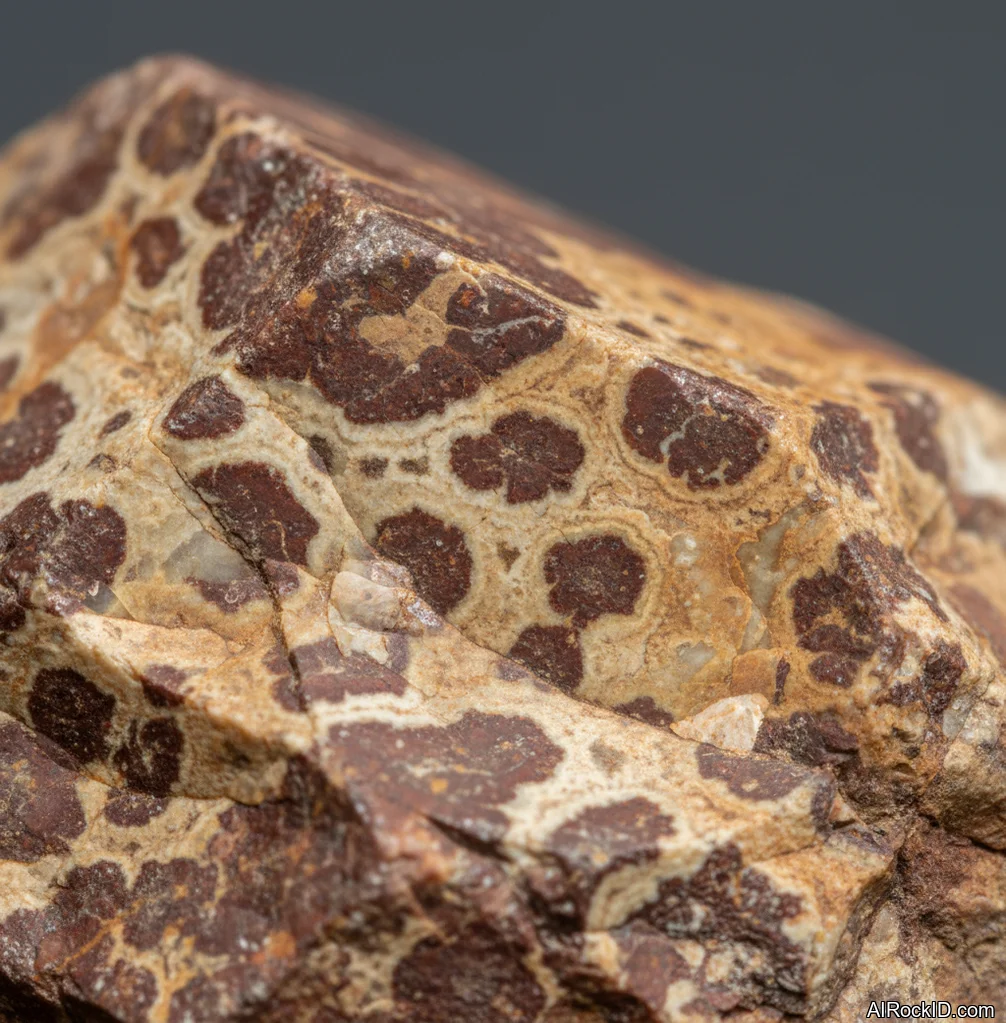
Jasper has Mohs hardness of 6.5-7, so it is hard enough to scratch glass and durable for beads, cabochons, carvings, and tumbled stones. It may be spotted, banded, orbicular, brecciated, or picture-like. It can resemble chert, flint, or agate, but agate is typically more translucent and distinctly banded, while jasper stays opaque because of mineral impurities.
Properties of Jasper
Physical Properties
| Crystal System | Trigonal; cryptocrystalline quartz aggregate |
| Hardness (Mohs) | 6.5-7 (Hard) |
| Density | 2.58-2.91 g/cm³, typically about 2.6-2.7 g/cm³ |
| Luster | Waxy, dull, vitreous when polished |
| Diaphaneity | Opaque |
| Fracture | Conchoidal to uneven; no cleavage |
| Streak | White |
| Magnetism | Usually non-magnetic; some iron-rich pieces may show weak attraction |
| Colors | Red, Brown, Yellow, Green, Gray, Black, Cream, Multicolored |
Chemical Properties
| Classification | Silicate; tectosilicate quartz group, chalcedony variety |
| Formula | SiO2 |
| Elements | Silicon, Oxygen |
| Common Impurities | Iron oxides, Clay minerals, Manganese oxides, Chlorite, Organic material |
Optical Properties
| Refractive Index | Approximately 1.530-1.540 |
| Birefringence | Approximately 0.004; often difficult to observe in cryptocrystalline aggregates |
| Pleochroism | None |
| Optical Character | Uniaxial positive for quartz; aggregate behavior in chalcedony |
Jasper Health & Safety
Jasper is safe to handle as a polished or rough specimen, but cutting, grinding, drilling, or sanding can create respirable crystalline silica dust, which is a serious inhalation hazard.
Jasper Value & Price
Price Range
Rough/Tumbled: Common rough jasper is often inexpensive, about $1-$10 per lb for bulk material; attractive named or patterned rough may range from about $5-$50+ per lb depending on quality and locality.
Cut/Polished:
Value depends on pattern, color contrast, polish quality, size, rarity of the named variety, lack of cracks, and locality. Picture jasper, orbicular jasper, fine red jasper, and distinctive landscape or brecciated patterns are usually more desirable to lapidary collectors.
Durability
Good — Scratch resistance: Good for beads, cabochons, carvings, and tumbled stones because its hardness is near quartz., Toughness: Generally good, but natural fractures, vugs, or brecciated zones can make some pieces weaker.
Stable under normal display and jewelry conditions. Prolonged harsh chemicals, strong acids used in cleaning, high heat, or sudden temperature changes should be avoided, especially for dyed, stabilized, or fracture-filled material.
How to Care for Jasper
Use & Storage
Store jasper separately from softer stones to prevent scratching them, and keep polished pieces in a pouch or lined box to protect the surface finish.
Cleaning
Clean with lukewarm water, mild soap, and a soft brush or cloth. Rinse well and dry completely. Avoid harsh acids, bleach, and abrasive cleaners.
Cleanse & Charge
If used in spiritual practice, jasper is commonly cleansed with smoke, sound, moonlight, or brief rinsing in clean water. Avoid prolonged soaking for stones with fractures, dyes, or metal settings.
Placement
Jasper is suitable for display, desk stones, tumbled collections, carvings, and durable jewelry. Keep dyed or treated pieces out of prolonged direct sunlight to reduce risk of fading.
Caution
Do not assume every patterned stone sold as jasper is natural or untreated; dyed chalcedony, resin-stabilized material, and trade-name stones are common. Avoid breathing dust during lapidary work.
Works Well With
Jasper Meaning & Healing Properties
In crystal-healing traditions, jasper is treated as a grounding and steadying stone. Practitioners often use it for symbolic support with endurance, patience, protection, nurturing, stability, confidence, and connection to the earth; these meanings are cultural and spiritual beliefs rather than scientifically proven effects.
Jasper is commonly associated with the Root and Sacral chakras, the zodiac signs Aries, Scorpio, and Virgo, the planets Mars and Earth, and the elements Earth and Fire. It pairs well with agate, carnelian, hematite, and clear quartz in spiritual layouts, while physically it remains a practical, hard, stable stone for everyday handling and display.
Identify Jasper from a photo
Compare Jasper traits, care tips, value clues, and common lookalikes with a clear photo.
Common mistakes
- Assuming every red opaque stone is red jasper
- Calling all banded chalcedony jasper when translucent areas may indicate agate
- Treating trade names as scientific mineral names
- Overlooking dye in very bright blue, purple, pink, or neon-colored material
- Identifying polished jasper from color alone without checking opacity and hardness