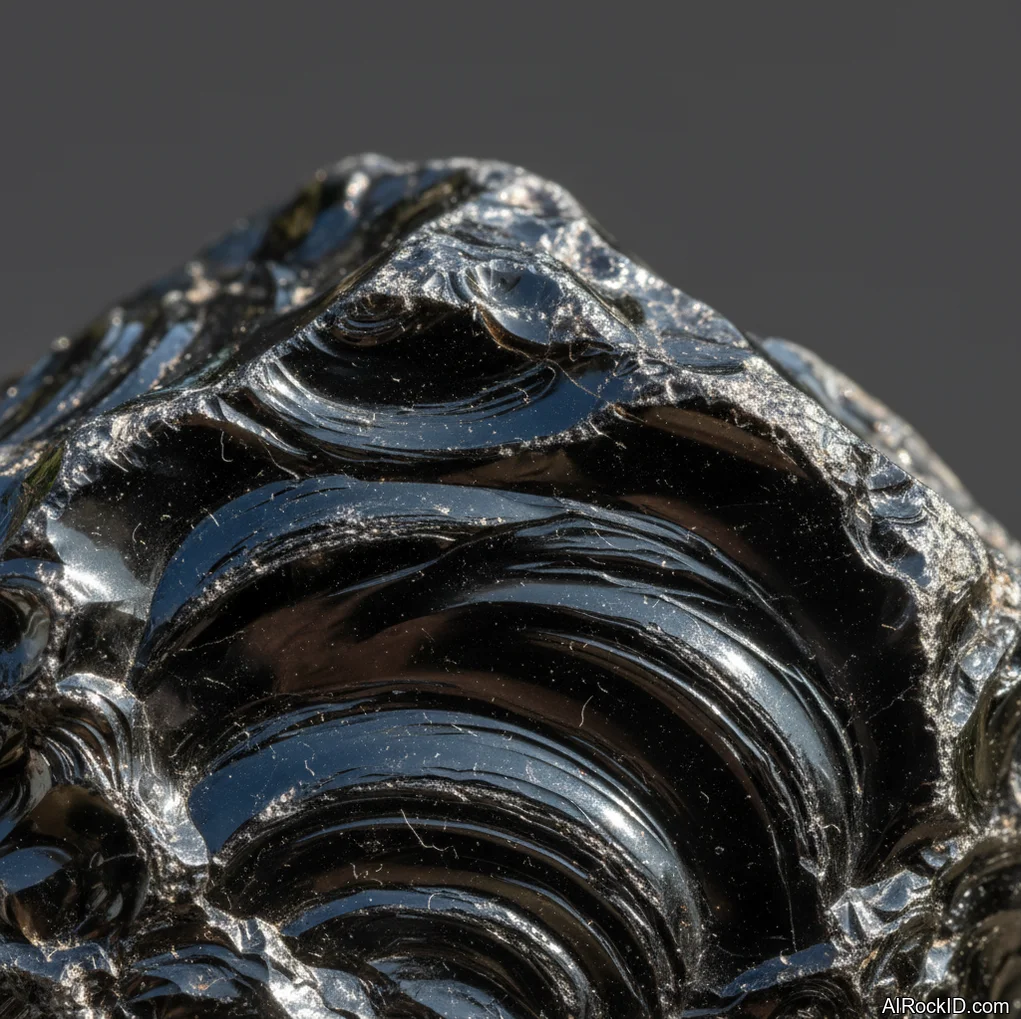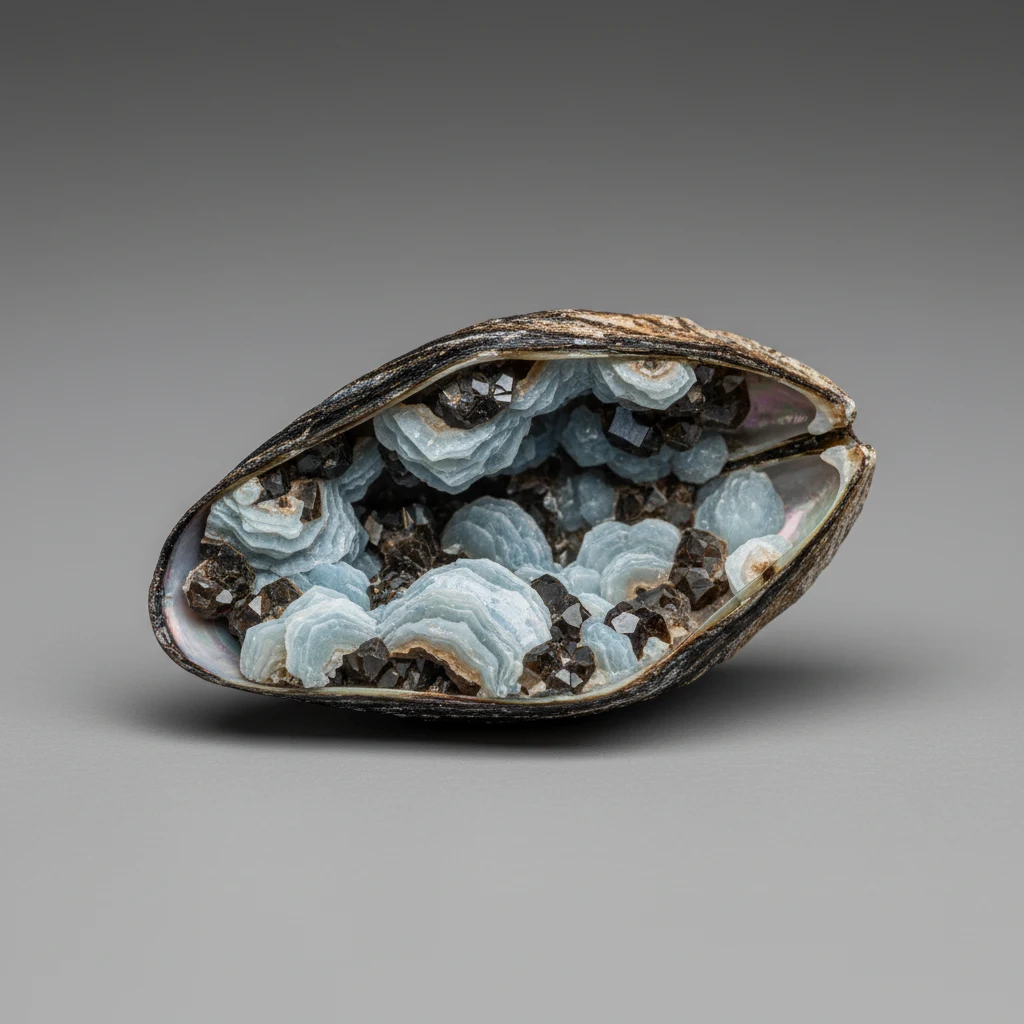
Mussel Shell


Quick answer: Mussel shell is an organic gem material made from the layered calcium carbonate shell of mussels, often showing pearly, iridescent, blue, purple, brown, or cream colors. It is relatively soft at about Mohs 3-4, so it is best identified by its layered structure, nacre-like luster, and shell origin rather than by hardness alone.
AI Rock ID can help screen a mussel shell specimen by comparing visible traits such as pearly luster, growth layers, color zoning, and surface texture. RockIdentifier.io provides crystal and organic gem references that can support visual identification, but close inspection is still important for dyed, coated, or imitation shell items.
Good fit
- Collectors who want an organic gem material with visible natural layering
- Jewelry buyers choosing earrings, pendants, inlay, or low-wear decorative pieces
- Beginners learning to distinguish shell, nacre, mother-of-pearl, and imitation materials
- Crafters looking for lightweight material with pearly or iridescent color
Not a good fit
- Rings or bracelets that receive frequent abrasion or impact
- People who need a water-resistant or chemical-resistant gem material
- Buyers seeking a rare mineral specimen rather than an organic shell material
- Collections stored in very dry, hot, or acidic conditions
Why people search for this
People often search for mussel shell to confirm whether a pearly blue, purple, or cream material is natural shell, dyed shell, mother-of-pearl, or plastic imitation. It is also commonly researched before buying inlay, beads, cabochons, or coastal souvenir jewelry.
Most commonly confused with
- Mother of Pearl: Mother of pearl is nacre from the inner shell layer of certain mollusks; mussel shell may include nacre plus thicker outer shell layers.
- Abalone Shell: Abalone usually has stronger rainbow iridescence and a more curved shell structure than typical mussel shell.
- Pearl: Pearl forms as a rounded nacre object inside a mollusk, while mussel shell is cut from the shell itself.
- Plastic Imitation: Plastic is usually lighter, warmer to the touch, and lacks natural layered shell structure under magnification.
Mussel Shell vs Similar Materials
| Material | Typical Look | Key Difference | Care Note |
|---|---|---|---|
| Mussel shell | Pearly, layered, blue-purple, brown, cream, or gray | Natural shell layers from mussels | Avoid acids, soaking, and abrasion |
| Mother of pearl | Smooth white, cream, gray, or iridescent nacre | Specifically the nacreous inner shell layer | Wipe gently with a soft cloth |
| Abalone shell | Strong rainbow iridescence with greens, blues, and pinks | Usually more colorful and highly iridescent | Protect from scratches and heat |
| Pearl | Rounded bead-like form with soft orient | Grown as a pearl rather than cut from shell | Keep away from perfume and chemicals |
| Plastic imitation | Uniform pearly or printed pattern | No natural shell layering under magnification | May melt, smell, or deform with heat |
AI identification confidence
AI identification is usually moderate for mussel shell when a clear close-up shows pearly luster, layered edges, and natural color variation. Confidence drops when the item is polished, dyed, set in jewelry, photographed under glare, or shown without edges or back surfaces.
When AI gets it wrong
- A polished cabochon hides the layered shell edge and resembles plastic or resin.
- Dyed shell appears brighter or more uniform than natural mussel shell.
- Mother-of-pearl, abalone, and mussel shell share nacre-like luster in photos.
- Strong reflections can make shell look like glass, ceramic, or metal-coated material.
Final recommendation
Choose mussel shell for decorative use, low-wear jewelry, inlay, and specimens where pearly organic layering is the main appeal. For frequent-wear jewelry, select protected settings and inspect for dye, coatings, cracks, and plastic substitutes before purchase.
How to Check Mussel Shell Authenticity
Authentic mussel shell usually shows fine layered structure along broken, drilled, or cut edges. Under magnification, natural shell has subtle growth lines and color variation rather than a perfectly printed or uniform pattern. A plastic imitation may feel warmer, look more uniform, and lack layered calcium carbonate structure.
Buying Tips for Mussel Shell Jewelry
Look for smooth polish, secure settings, and no obvious peeling, flaking, or cloudy coating. Ask whether the color is natural, dyed, stabilized, or coated, especially for bright blue, purple, green, or black pieces. For beads and inlay, inspect drill holes and edges because dye concentration or chipped layers are often visible there.
Ethical and Legal Sourcing Notes
Mussel shell can come from food-industry byproducts, freshwater mussels, or marine shell sources, and sourcing rules vary by region. Some freshwater mussel species are protected, so sellers should be able to describe the material source for newly harvested shells. Vintage, reclaimed, or byproduct shell can be a practical option when provenance is unclear.
What Is Mussel Shell?
Mussel Shell is a very common organic gem: the hard, protective outer layer made by a mussel. In the hand it feels smooth, curved, and dense for its size, with a pearly inner surface that catches light softly rather than flashing like a faceted stone.
Collectors value Mussel Shell for its natural water-worn shape, blue, black, and brown colors, and nacreous interior. Its composition is biogenic calcite, CaCO3, with a Mohs hardness of 3-4, so it is moderately durable but can chip if knocked against harder specimens.
Origin & History
The name Mussel Shell comes from the animal itself; the word “mussel” traces to the Latin “musculus,” referring to the shape. Humans have used mussel shells for thousands of years, and their appeal is easy to understand: they are protective, glossy, and naturally shaped by living water environments.
In collection terms, Mussel Shell sits between natural history specimen and organic gem. For reference context on mineral and gem materials, mindat.org is a useful plain-text source to consult, while the shell itself is best read through its nacre, curved outline, and calcium carbonate structure.
Where Is Mussel Shell Found?
Mussel Shell is commonly found in freshwater and marine environments. Reported countries include the USA, Canada, and Australia, with notable collecting references including the Great Lakes in the USA, the Bay of Fundy in Canada, and Southeast Australia.
Formation
Mussel Shell forms biologically as mussels secrete layers of calcium carbonate. Those layers build a hard outer covering around the animal, producing the protective shell that later becomes a collectible organic gem material.
The resulting material is classified as biogenic calcite with the formula CaCO3. Its structure is listed as amorphous, and its pearly luster comes through most clearly on the internal nacreous layer, where the surface looks smooth, soft, and luminous rather than glassy.
How to Identify Mussel Shell
Identify Mussel Shell by its smooth curved shape, opaque body, and pearly luster. Common colors include blue, black, and brown, and the most useful visual clue is the internal nacreous layer, which looks glossy and softly reflective.
Its physical properties support the identification: Mohs hardness 3-4, white streak, conchoidal fracture, density of 2.5-2.7 g/cm3, and non-magnetic behavior. Handle it gently during testing because Mussel Shell has fair scratch resistance and may chip easily.
Properties of Mussel Shell
Physical Properties
| Crystal System | Amorphous |
| Hardness (Mohs) | 3-4 (Medium (4-6)) |
| Density | 2.5-2.7 g/cm3 |
| Luster | Pearly |
| Diaphaneity | Opaque |
| Fracture | Conchoidal |
| Streak | White |
| Magnetism | Non-magnetic |
| Colors | Blue, Brown, Black |
Chemical Properties
| Classification | Biogenic calcite |
| Formula | CaCO3 |
| Elements | Ca, C, O |
| Common Impurities |
Optical Properties
| Refractive Index | 1.65-1.70 |
| Birefringence | None |
| Pleochroism | None |
| Optical Character | Isotropic |
Mussel Shell Health & Safety
Mussel shells are generally safe to handle and use.
Mussel Shell Value & Price
Price Range
Rough/Tumbled: $1 - $5 per specimen
Cut/Polished:
Price is influenced by size, quality, and rarity.
Durability
Moderate — Scratch resistance: Fair, Toughness: Good
Mussel shells can be fragile and may chip easily.
How to Care for Mussel Shell
Use & Storage
Store in a dry place away from direct sunlight.
Cleaning
Clean with a damp cloth and mild soap. Avoid abrasive materials.
Cleanse & Charge
You can cleanse mussel shells with water or by placing them in sunlight.
Placement
Place in areas associated with water or natural environments.
Caution
Handle carefully to avoid breakage.
Works Well With
Mussel Shell Meaning & Healing Properties
In crystal-healing use, Mussel Shell is believed to support emotional healing, calm, protection, and balance. It is often chosen for water-themed spaces, meditation settings, and gentle reflective work, especially when the pearly interior feels soothing to hold.
Mussel Shell is associated with the Heart and Throat chakras, the zodiac signs Cancer and Pisces, the Moon, and the Water element. These meanings are cultural and spiritual associations, not medical treatment, so use the shell as a symbolic companion rather than a substitute for care.
Identify Mussel Shell from a photo
Compare Mussel Shell traits, care tips, value clues, and common lookalikes with a clear photo.
Common mistakes
- Assuming every pearly shell material is mother-of-pearl.
- Using vinegar, lemon juice, or acidic cleaners on calcium carbonate shell.
- Wearing mussel shell rings during dishwashing, swimming, or heavy work.
- Judging authenticity only by color, since natural and dyed shell can both be colorful.
- Ignoring edges and drill holes, where layers, dye, and coatings are easiest to spot.