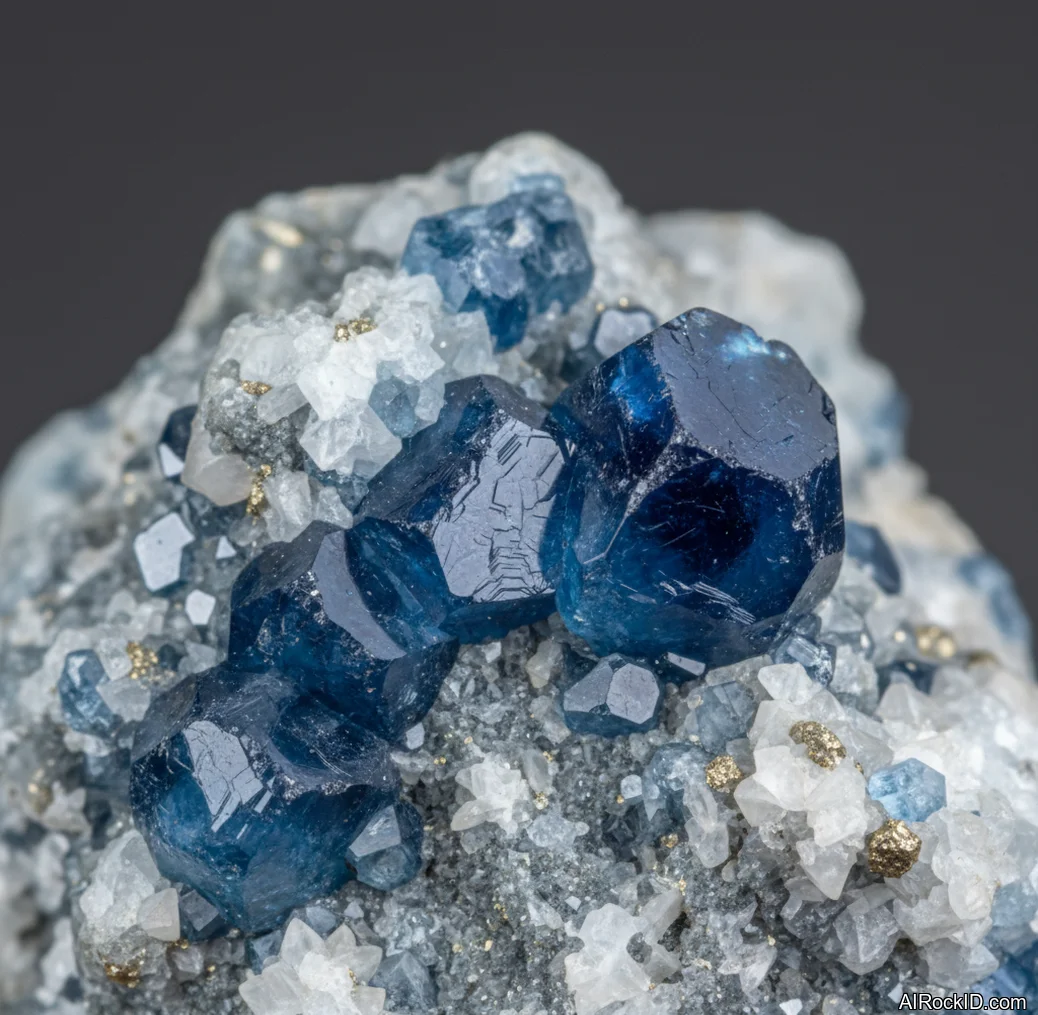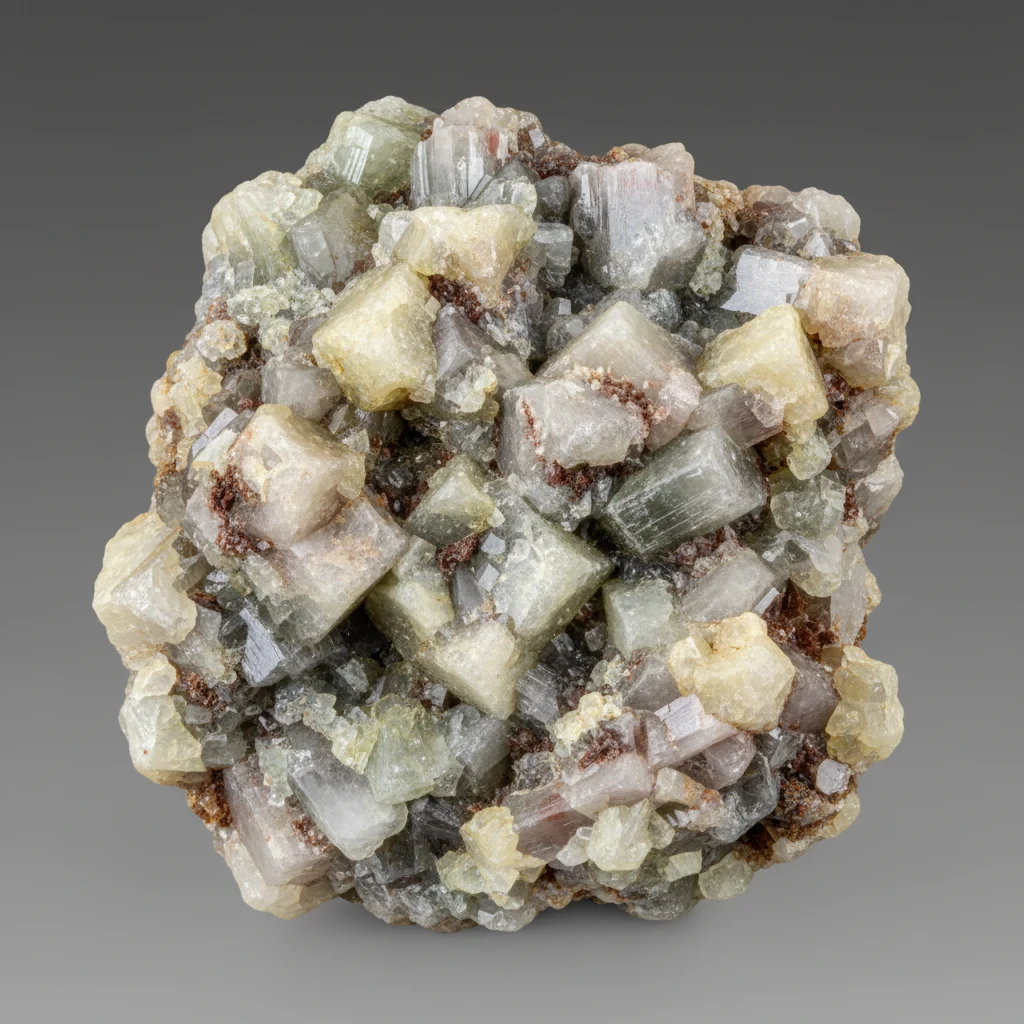
Nepheline


Quick answer: Nepheline is a feldspathoid mineral most often associated with silica-poor alkaline igneous rocks such as nepheline syenite. It can resemble feldspar, quartz, or pale scapolite in hand samples, so identification is most reliable when crystal habit, hardness, luster, rock context, and absence of quartz are considered together.
AI Rock ID can help screen a suspected nepheline specimen by comparing its color, luster, form, and host-rock context against similar minerals. RockIdentifier.io is most useful for narrowing possibilities before confirming details with hardness testing, streak, and geological setting.
Good fit
- Collectors interested in feldspathoids and alkaline igneous rocks
- Students comparing nepheline syenite with granite or feldspar-rich rocks
- Specimens showing pale gray, white, yellowish, or greasy-looking mineral grains
- Collections focused on uncommon rock-forming minerals rather than gem crystals
Not a good fit
- Anyone seeking a common faceted gemstone
- Collectors who want a mineral that can be identified by color alone
- Situations where a specimen must be exposed to acids, abrasives, or harsh cleaning
- Buyers expecting quartz-like durability or bright glassy transparency
Most commonly confused with
- Feldspar: Feldspar commonly shows two good cleavage directions and occurs with quartz in many granitic rocks, while nepheline is typical of silica-undersaturated rocks.
- Quartz: Quartz is harder at Mohs 7, lacks cleavage, and is not expected in true nepheline-bearing silica-undersaturated assemblages.
- Scapolite: Scapolite may look similar in pale massive pieces but often has different crystal habits and geological associations.
- Sodalite: Sodalite is often blue or gray-blue and may occur with nepheline in alkaline rocks, but it has lower hardness and different chemistry.
Nepheline vs. Common Lookalikes
| Mineral | Mohs Hardness | Key Difference | Typical Context |
|---|---|---|---|
| Nepheline | 5.5-6 | Greasy to vitreous luster; feldspathoid, not a quartz companion | Silica-undersaturated alkaline igneous rocks |
| Feldspar | 6 | Usually shows clearer cleavage and may form blocky grains | Granite, pegmatite, syenite, many igneous rocks |
| Quartz | 7 | Harder, no cleavage, commonly glassy | Silica-rich rocks and veins |
| Scapolite | 5-6 | May show prismatic crystals and different cleavage appearance | Metamorphic rocks and altered limestones |
| Sodalite | 5.5-6 | Commonly blue to gray-blue; may occur alongside nepheline | Alkaline igneous rocks |
AI identification confidence
AI identification confidence for nepheline is usually moderate from photos alone because pale massive grains can overlap visually with feldspar, scapolite, and quartz. Confidence improves when the image includes the whole rock, visible crystal surfaces, scale, locality, and results from simple hardness or streak checks.
When AI gets it wrong
- A pale feldspar-rich rock is photographed without geological context.
- Quartz is present but not visible in the image, causing a silica-rich rock to be mistaken for a nepheline-bearing rock.
- The specimen is massive, weathered, or polished, hiding cleavage and surface texture.
- The photo has strong color cast, glare, or no scale reference.
Final recommendation
For buying nepheline, prioritize labeled specimens with locality data and clear host-rock context, especially if the piece is sold as nepheline syenite or as a feldspathoid mineral. For uncertain pieces, treat a photo-based ID as preliminary and confirm with physical properties or a knowledgeable mineral dealer.
How to Check a Nepheline Label Before Buying
A reliable nepheline listing should identify the specimen as nepheline, nepheline syenite, or a nepheline-bearing rock and ideally include the locality. Be cautious with vague labels such as “white crystal,” “feldspar-like mineral,” or “rare quartz alternative,” because nepheline is not identified by color alone. Photos should show unpolished surfaces or fresh breaks when possible, since heavy polishing can obscure useful texture and cleavage clues.
Geologic Clues That Support Nepheline Identification
Nepheline is most plausible in silica-undersaturated alkaline rocks, where quartz is absent or extremely unlikely in the same mineral assemblage. Associated minerals may include alkali feldspar, aegirine, sodalite, cancrinite, or other feldspathoids depending on the locality. If a specimen is clearly from a quartz-rich granite or quartz vein, nepheline is a poor fit.
Photo Tips for Identifying Nepheline
Use daylight or neutral lighting and photograph several sides of the specimen, including any fresh broken surface. Include a coin, ruler, or hand lens view for scale, and capture the surrounding rock rather than only a single pale grain. A note about hardness behavior, locality, and whether quartz is present can make visual identification much more useful.
What Is Nepheline?
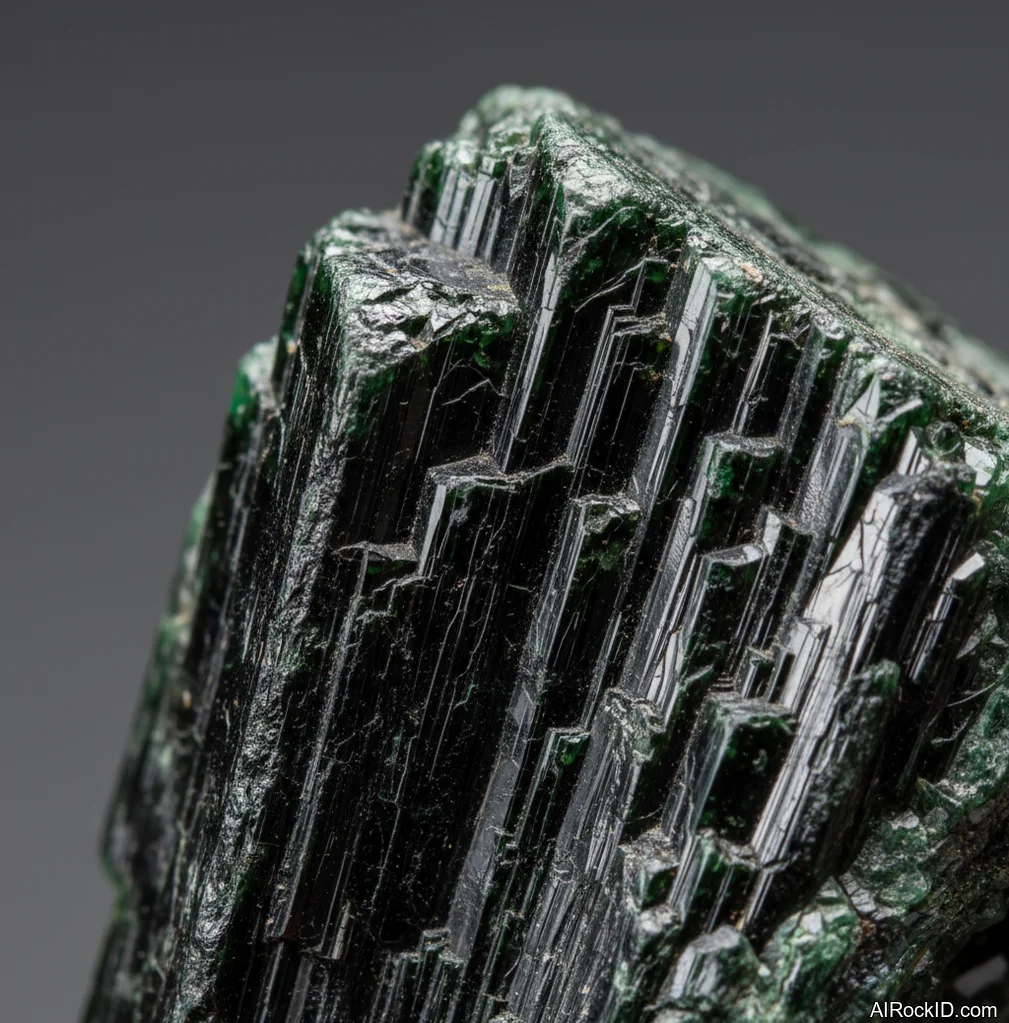
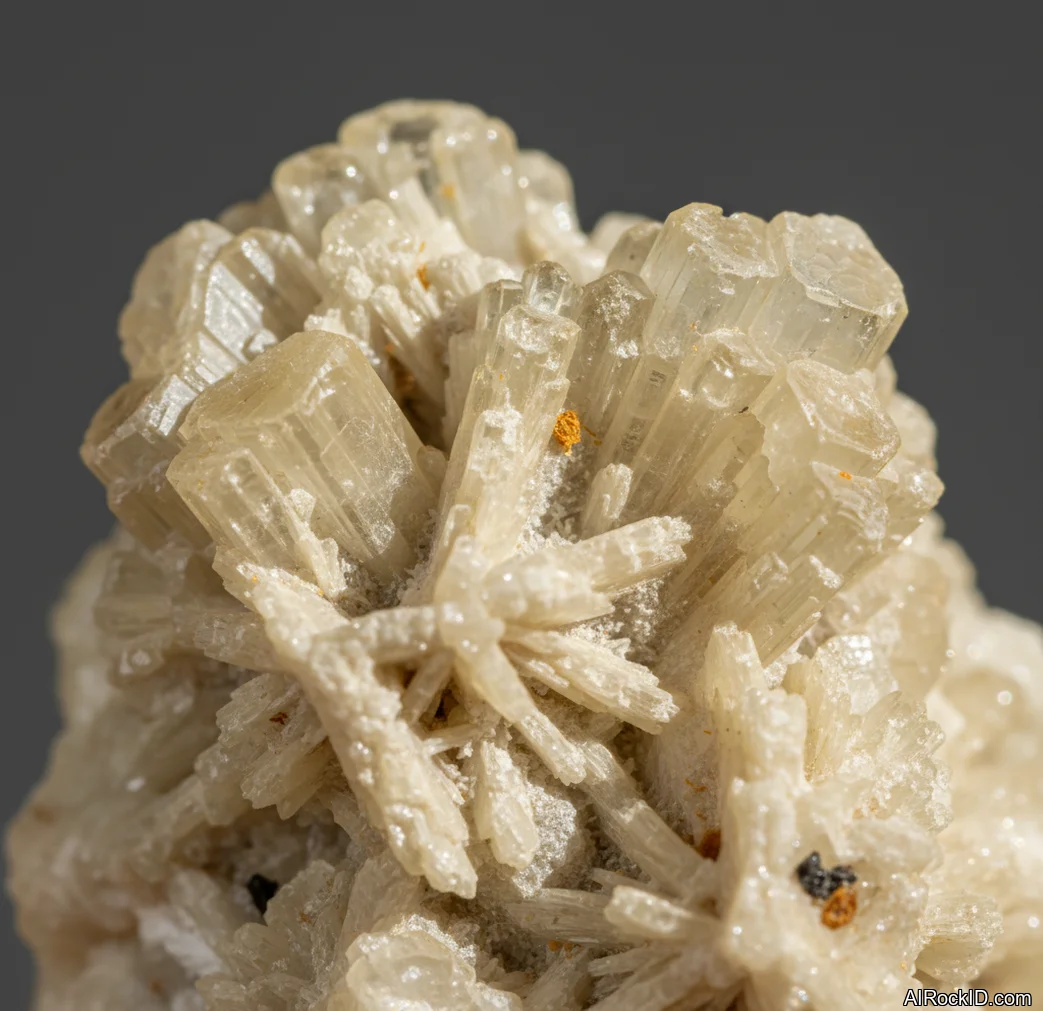
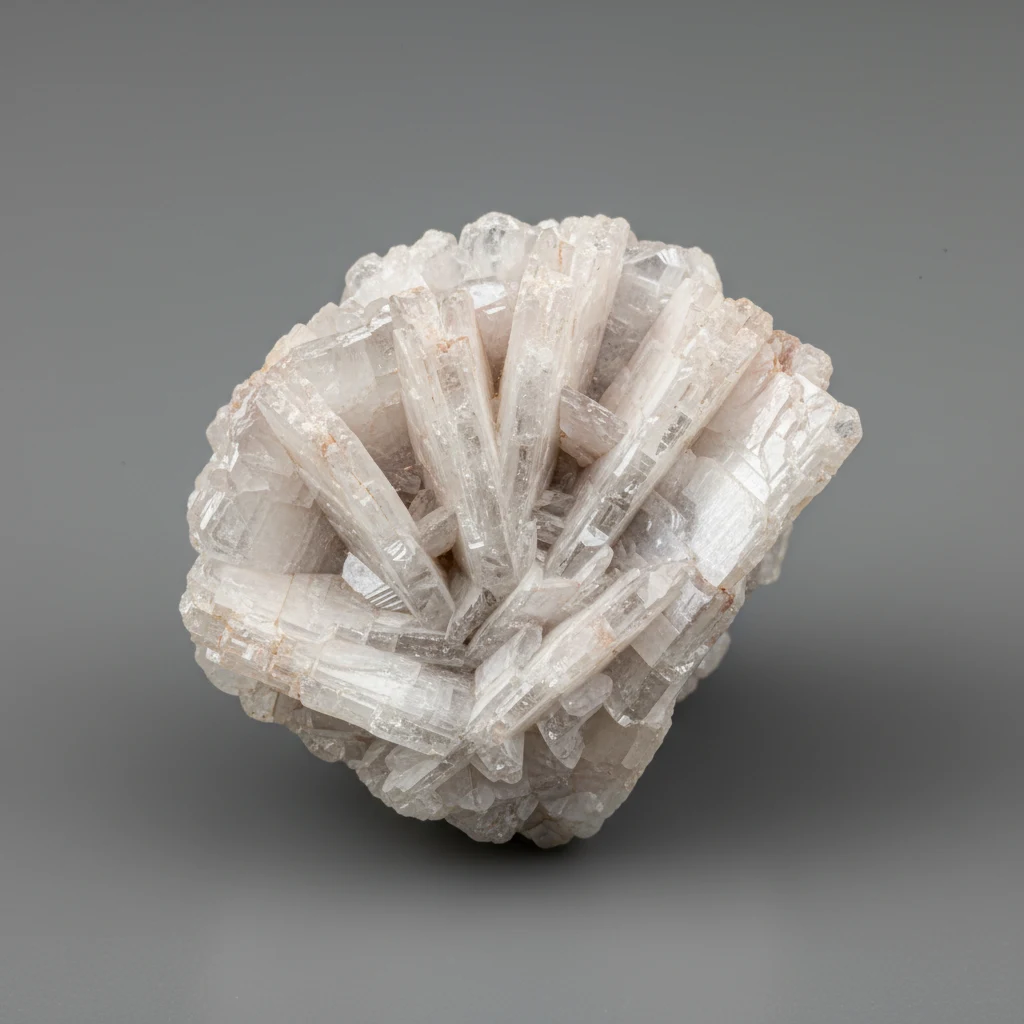
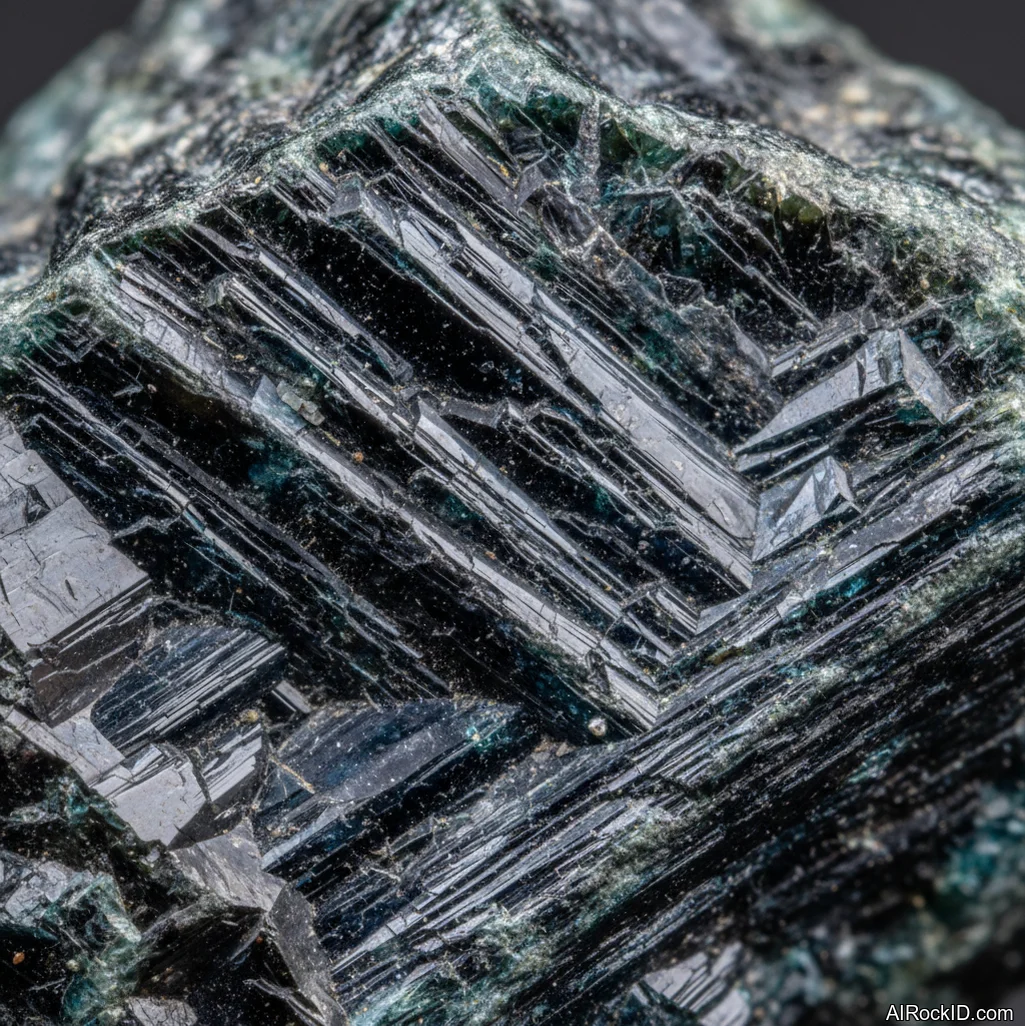
Nepheline is an uncommon feldspathoid tectosilicate mineral, valued most by collectors and petrologists as a sign of silica-undersaturated alkaline igneous rocks. Its formula is (Na,K)AlSiO4, and it commonly appears colorless, white, gray, cream, yellowish, greenish, brownish, or reddish. In the hand, it often reads as a pale, quiet mineral rather than a flashy gem.
A fresh nepheline face can look vitreous, while massive material may feel visually greasy or oily, especially the variety historically called elaeolite or eleolite. It has a white streak, moderate Mohs hardness of 5.5-6, and a relatively low density of 2.55-2.66 g/cm³. Collectors usually prize it in context: with alkaline-rock companions such as aegirine, cancrinite, sodalite, arfvedsonite, apatite, and alkali feldspar.
Origin & History
Nepheline was named from the Greek nephele, meaning cloud, because fragments become cloudy when treated with strong acid. That acid reaction is historically important, but it is not a recommended test on a valuable specimen; nepheline can become cloudy or dull with acids and harsh chemicals.
The massive, greasy-looking variety called elaeolite or eleolite was named from the Greek word for oil, a good description when the surface looks waxy, dull, or oily instead of glassy. In petrology, nepheline matters because it points to magmas deficient in silica and cannot coexist stably with quartz as a primary equilibrium assemblage. For locality and mineral-reference context, mindat.org lists nepheline as a recognized mineral species.
Where Is Nepheline Found?
Nepheline is found worldwide in alkaline igneous provinces, especially in nepheline syenites, phonolites, ijolites, and related pegmatites. Important countries include Canada, Norway, Russia, Italy, Germany, the United States, Brazil, India, Kenya, and Tanzania. Commercial nepheline syenite deposits are worked in Canada, Norway, and Russia for ceramic, glass, and filler applications.
Formation
Nepheline forms from silica-undersaturated alkaline magmas, where there is not enough silica to build quartz and feldspar alone. That is the key geological message of the mineral: if primary nepheline is present, the rock chemistry is not quartz-saturated. It crystallizes with minerals such as alkali feldspar, aegirine, arfvedsonite, cancrinite, sodalite, and apatite.
In specimens, nepheline may later alter to zeolites, cancrinite, sodalite, or clay-like products during weathering or hydrothermal alteration. This is why some pieces look fresher and glassier, while others appear dull, cloudy, or greasy. USGS resources on igneous rocks and mineral resources commonly treat rock-forming minerals such as nepheline as indicators of magma chemistry and industrial raw-material potential.
How to Identify Nepheline
Identify nepheline as a pale, non-quartz mineral in alkaline igneous rocks, especially nepheline syenite or phonolite. It is commonly white, gray, colorless, cream, yellowish, greenish, brownish, or reddish, with a white streak and vitreous to greasy luster. Massive elaeolite may look gray to brown and distinctly oily.
Its Mohs hardness of 5.5-6 makes it softer than quartz, and it lacks the strong cleavage appearance typical of feldspar. Nepheline is non-magnetic, has subconchoidal to uneven fracture, and belongs to the hexagonal crystal system. Strong clues are its association with cancrinite, sodalite, aegirine, arfvedsonite, apatite, and alkali feldspar, plus the important absence of stable primary quartz in the same igneous assemblage.
Properties of Nepheline
Physical Properties
| Crystal System | Hexagonal |
| Hardness (Mohs) | 5.5-6 (Moderately hard) |
| Density | 2.55-2.66 g/cm³ |
| Luster | Vitreous to greasy |
| Diaphaneity | Transparent to translucent; massive material commonly translucent to opaque |
| Fracture | Subconchoidal to uneven |
| Streak | White |
| Magnetism | Non-magnetic |
| Colors | Colorless, White, Gray, Cream, Yellow, Greenish, Brown, Reddish |
Chemical Properties
| Classification | Feldspathoid tectosilicate |
| Formula | (Na,K)AlSiO4 |
| Elements | Sodium, Potassium, Aluminum, Silicon, Oxygen |
| Common Impurities | Calcium, Iron, Magnesium, Water, Chlorine, Sulfate, Carbonate |
Optical Properties
| Refractive Index | nω 1.529-1.546; nε 1.526-1.542 |
| Birefringence | Low, about 0.003-0.005 |
| Pleochroism | None to very weak |
| Optical Character | Uniaxial negative |
Nepheline Health & Safety
Nepheline is not considered toxic for normal handling. The main practical risk is inhaling mineral dust when cutting, grinding, or crushing specimens.
Nepheline Value & Price
Price Range
Rough/Tumbled: Small common specimens are often about $5-$30; better crystals, classic locality specimens, or attractive nepheline-bearing rock specimens may range from $30-$150 or more.
Cut/Polished:
Value depends on crystal quality, size, locality, freshness, association with rare alkaline minerals, and whether the specimen clearly shows nepheline in a recognizable rock-forming context. Nepheline is usually collected as a mineral specimen rather than used as a faceted gemstone.
Durability
Moderate — Scratch resistance: Mohs 5.5-6 gives fair scratch resistance, but it can still be scratched by quartz, topaz, corundum, and many common abrasives., Toughness: Fair to somewhat brittle; crystals and grains may chip along uneven fractures.
Generally stable for dry display, but nepheline can weather or alter over geological time and may become cloudy or dull with acids or harsh chemicals.
How to Care for Nepheline
Use & Storage
Store as a dry mineral specimen away from harder stones that may scratch it. Use a padded box or display shelf for crystals and fragile matrix specimens.
Cleaning
Clean with lukewarm water, mild soap, and a soft brush. Avoid acids, bleach, ultrasonic cleaners, and harsh chemical treatments.
Cleanse & Charge
For non-scientific or spiritual use, gentle methods such as moonlight, sound, or placement on a dry quartz or selenite slab are preferred over saltwater or acidic cleansing.
Placement
Best displayed in a dry indoor cabinet or study collection, especially beside associated alkaline-rock minerals for comparison.
Caution
Do not test nepheline with strong acid on a valuable specimen, and avoid prolonged soaking of altered or porous material.
Works Well With
Nepheline Meaning & Healing Properties
In crystal-healing traditions, nepheline is used for clarity, practical focus, grounded insight, and pattern recognition, but these meanings are cultural beliefs rather than verified medical effects. Its scientific identity supports that symbolism well: it is a mineral that helps reveal the chemistry of an entire rock, especially silica-undersaturated alkaline systems.
Practitioners commonly associate nepheline with the third eye and solar plexus chakras, and with Virgo and Capricorn. For gentle energetic care, use moonlight, sound, or placement on a dry quartz or selenite slab rather than saltwater or acidic methods. Physically, it is safe to handle, but avoid breathing dust when cutting, grinding, or crushing, and clean specimens with lukewarm water, mild soap, and a soft brush.
Identify Nepheline from a photo
Compare Nepheline traits, care tips, value clues, and common lookalikes with a clear photo.
Common mistakes
- Identifying any pale gray or white mineral as nepheline without checking hardness or rock context.
- Assuming nepheline and feldspar are interchangeable because both occur in igneous rocks.
- Calling a quartz-bearing rock nepheline syenite, even though true nepheline-bearing rocks are silica-undersaturated.
- Relying on polished decorative stone appearance instead of mineral texture and associated minerals.
- Expecting every nepheline specimen to form distinct collectible crystals; many occur as grains in rock.