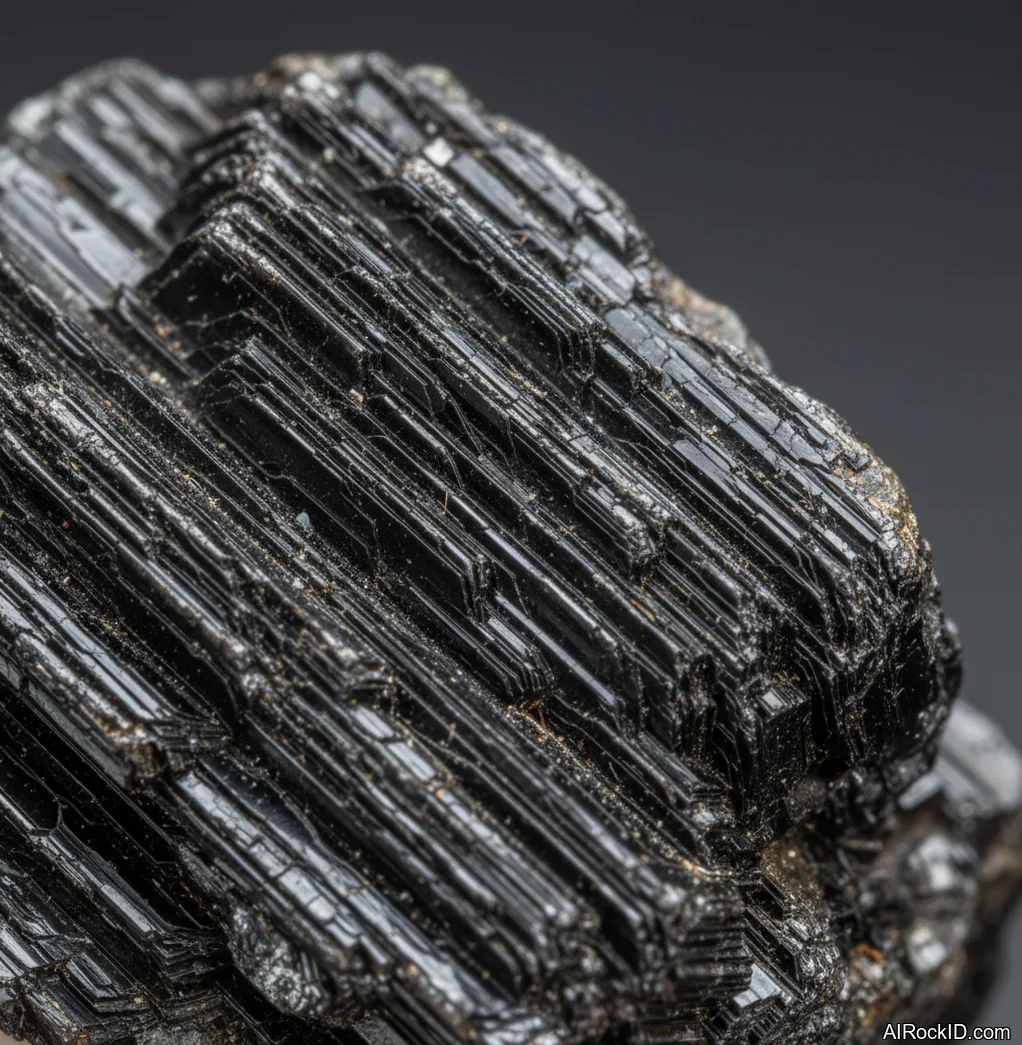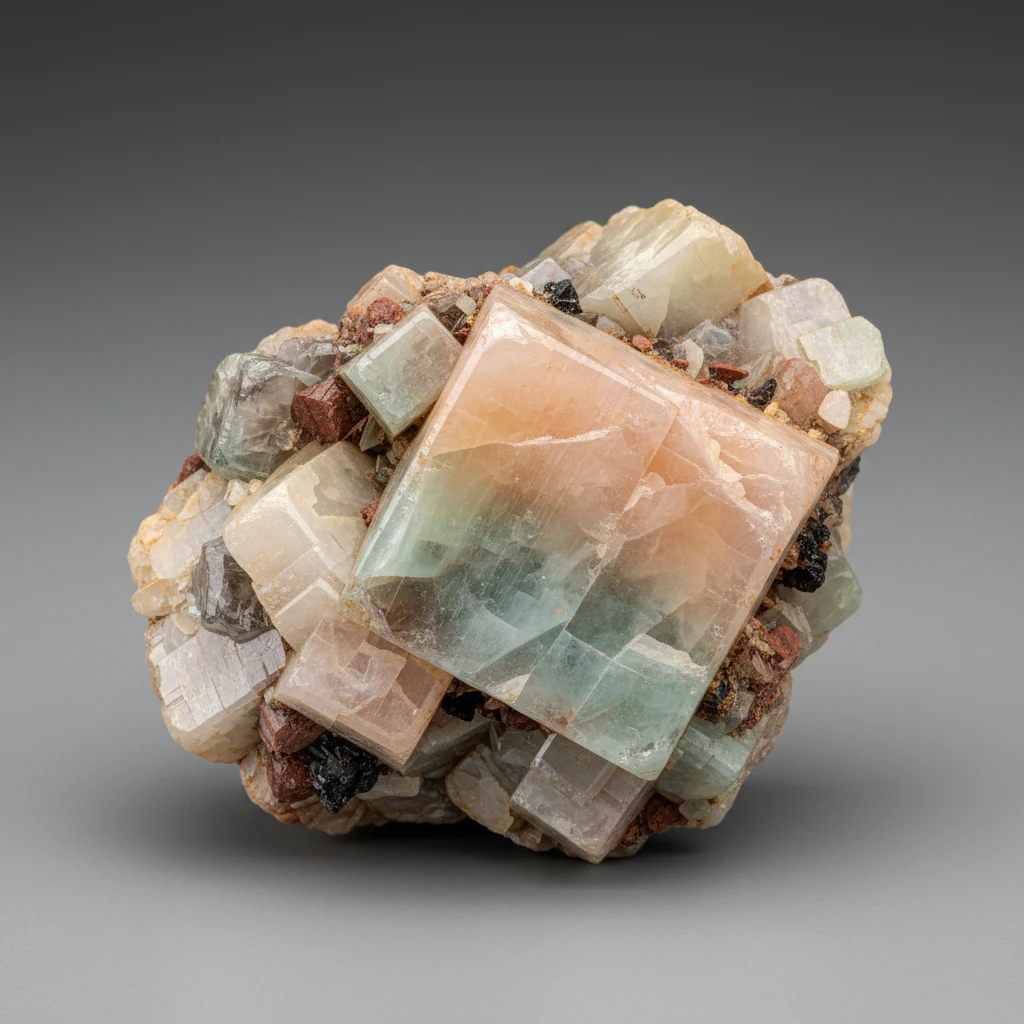
Feldspar


Quick answer: Feldspar is a major rock-forming mineral group that includes varieties such as orthoclase, microcline, albite, labradorite, and moonstone. It is usually identified by its hardness near 6, two cleavage directions, pearly to glassy luster, and common occurrence in igneous and metamorphic rocks.
AI Rock ID can help narrow feldspar possibilities by comparing visible traits such as color, luster, cleavage, and associated rock texture. RockIdentifier.io provides feldspar identification support for common varieties, but final confirmation may require hardness testing, streak, or professional gemological testing for polished stones.
Good fit
- Collectors learning to identify common rock-forming minerals
- Students comparing minerals in granite, pegmatite, gneiss, or syenite
- Buyers checking whether a feldspar variety is likely moonstone, labradorite, or amazonite
- People who want a durable mineral sample for display or teaching
- Rockhounds sorting pale, pink, white, gray, or greenish minerals from quartz and calcite
Not a good fit
- Anyone needing a single-species identification without additional tests
- Jewelry wearers who need a scratch-resistant stone for heavy daily use
- Buyers seeking rare gemstone pricing without verifying the specific feldspar variety
- Collectors expecting all feldspar specimens to show optical effects such as labradorescence or adularescence
Most commonly confused with
- Quartz: Quartz has no cleavage and often breaks with curved, conchoidal fracture, while feldspar commonly shows two cleavage directions.
- Calcite: Calcite is softer, reacts with dilute acid, and has rhombohedral cleavage rather than feldspar’s two near-right-angle cleavages.
- Moonstone: Moonstone is a feldspar variety known for adularescence, while ordinary feldspar may have no visible glow.
- Labradorite: Labradorite is a feldspar variety with labradorescence, usually showing blue, green, gold, or multicolor flashes.
Feldspar vs Common Lookalikes
| Feature | Feldspar | Common Lookalike |
|---|---|---|
| Cleavage | Two directions, often near 90° | Quartz: no cleavage |
| Hardness | Mohs 6–6.5 | Calcite: Mohs 3 |
| Breakage | Blocky or stepped surfaces are common | Quartz: curved conchoidal fracture |
| Acid reaction | No reaction to dilute acid | Calcite: fizzes with dilute acid |
| Optical effect | Only some varieties show sheen or flash | Glass or opalite may show artificial uniform glow |
AI identification confidence
AI identification is often moderate for feldspar because many varieties share similar colors with quartz, calcite, and glass. Confidence improves when the photo shows cleavage faces, fresh broken surfaces, crystal habit, and the surrounding rock matrix.
When AI gets it wrong
- Polished feldspar may hide cleavage, making it look like quartz, opalite, or glass.
- White or pale feldspar in granite can be difficult to separate from quartz without a hardness or cleavage check.
- Moonstone, labradorite, and amazonite may be mislabeled when color or optical effect is weak in the photo.
- Weathered feldspar can look chalky or clay-like, which may lead to confusion with kaolinite or altered rock.
Final recommendation
For basic identification, compare cleavage, hardness, luster, and the rock setting before assigning a feldspar variety name. For purchases, verify the variety, treatment status, and whether any optical effect is natural, enhanced by backing, or imitation.
Beginner recommendations
Advanced recommendations
How to Check Feldspar Authenticity Before Buying
A genuine feldspar listing should identify the variety when possible, such as labradorite, moonstone, amazonite, orthoclase, or albite. Clear photos should show the stone from multiple angles, especially if the value depends on optical effects like labradorescence or adularescence. Be cautious with vague labels such as “rainbow stone” or “opal moonstone,” which may refer to glass, opalite, or misnamed material.
Feldspar in Rocks and Specimens
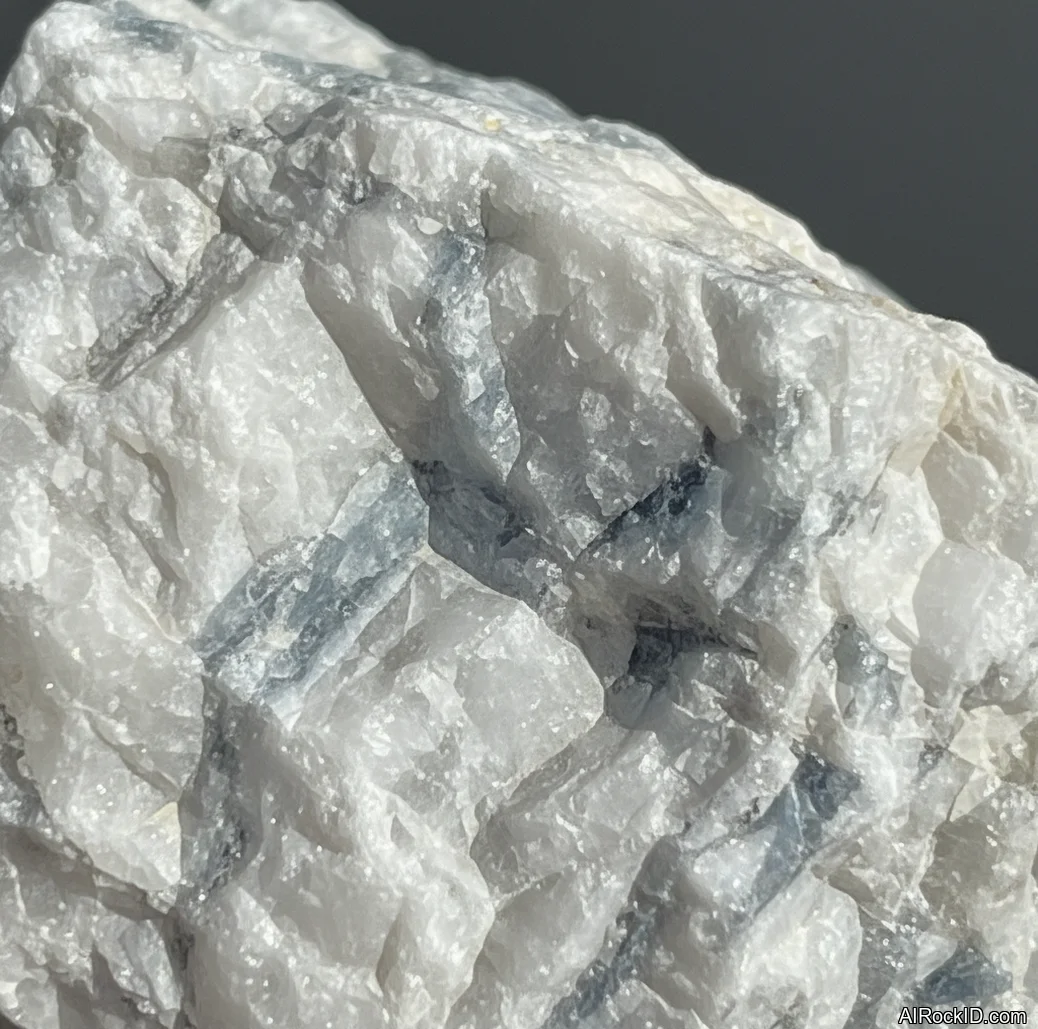
Feldspar commonly appears in granite, pegmatite, syenite, diorite, gneiss, and many volcanic rocks. In hand specimens, it may form blocky crystals or grains with flat cleavage faces. Pink feldspar is common in many granites, while white plagioclase feldspar is common in darker igneous rocks.
Natural, Treated, and Imitation Feldspar
Many feldspar specimens are natural and untreated, but some gem materials may be dyed, coated, filled, or assembled to improve color or flash. Labradorite and moonstone can be backed or cut in ways that strengthen visible optical effects. Glass, opalite, and resin imitations may look smooth and colorful but lack feldspar’s natural cleavage and mineral structure.
What Is Feldspar?
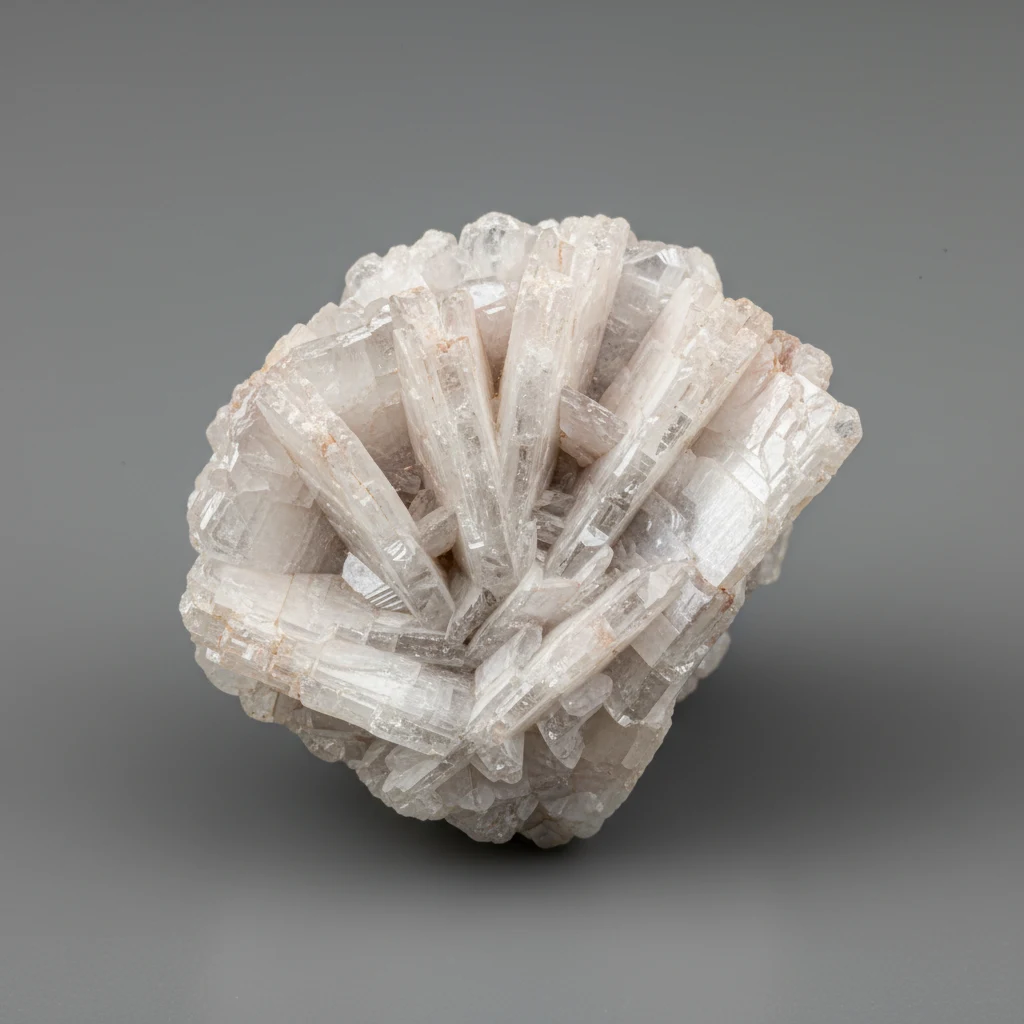
Feldspar is a major group of aluminum silicate minerals, not one single mineral. In the hand, it often feels like the “framework” of common rocks: blocky, pale, and hard, with flat cleavage faces that flash vitreous to pearly when freshly broken. Its chemistry contains potassium, sodium, or calcium, with common end-members represented by KAlSi3O8, NaAlSi3O8, and CaAl2Si2O8.
Collectors meet feldspar constantly because it is the most abundant mineral group in Earth’s crust. It is a key constituent of granites, syenites, pegmatites, gneisses, schists, many volcanic rocks, and feldspar-rich sedimentary sands. Important feldspar species and varieties include orthoclase, microcline, sanidine, albite, oligoclase, labradorite, and anorthite.
Origin & History
The name feldspar comes from the German words “Feld,” meaning field, and “Spath,” meaning a cleavable, non-metallic mineral. Early miners and naturalists used the term for pale, cleavable minerals that turned up in rocks and soils of cultivated fields. That older field term still fits the specimen tray: feldspar commonly breaks into clean, light-colored pieces with obvious cleavage.
Modern mineralogy treats feldspar as a group divided mainly into alkali feldspars and plagioclase feldspars. Alkali feldspar includes potassium- and sodium-rich members such as orthoclase, microcline, and sanidine, while plagioclase forms a sodium-calcium series from albite to anorthite. For locality and species records, mindat.org is a useful reference alongside direct specimen labels.
Where Is Feldspar Found?
Feldspar is found worldwide because it crystallizes in many common igneous and metamorphic rocks. Noted countries include the United States, Canada, Norway, Sweden, Finland, Germany, Italy, Russia, Brazil, Madagascar, India, China, and Australia. In a field kit, it is one of the minerals you expect to see in granitic and pegmatitic material before you expect something rare.
Formation
Feldspar forms mainly by crystallization from silicate magma, and it is one of the first and most abundant minerals to appear in many igneous systems. Alkali feldspars are common in granites, syenites, rhyolites, and pegmatites. Plagioclase feldspars are abundant in basalt, gabbro, diorite, and anorthosite, where they may be major visible grains in the rock.
Feldspar can also form and recrystallize during metamorphism, so it is common in gneiss and schist as well as igneous rocks. It may survive as detrital grains in sedimentary rocks, though over geologic time it gradually weathers to clay minerals such as kaolinite. For industrial and geologic context, USGS feldspar summaries at usgs.gov are a practical reference.
How to Identify Feldspar
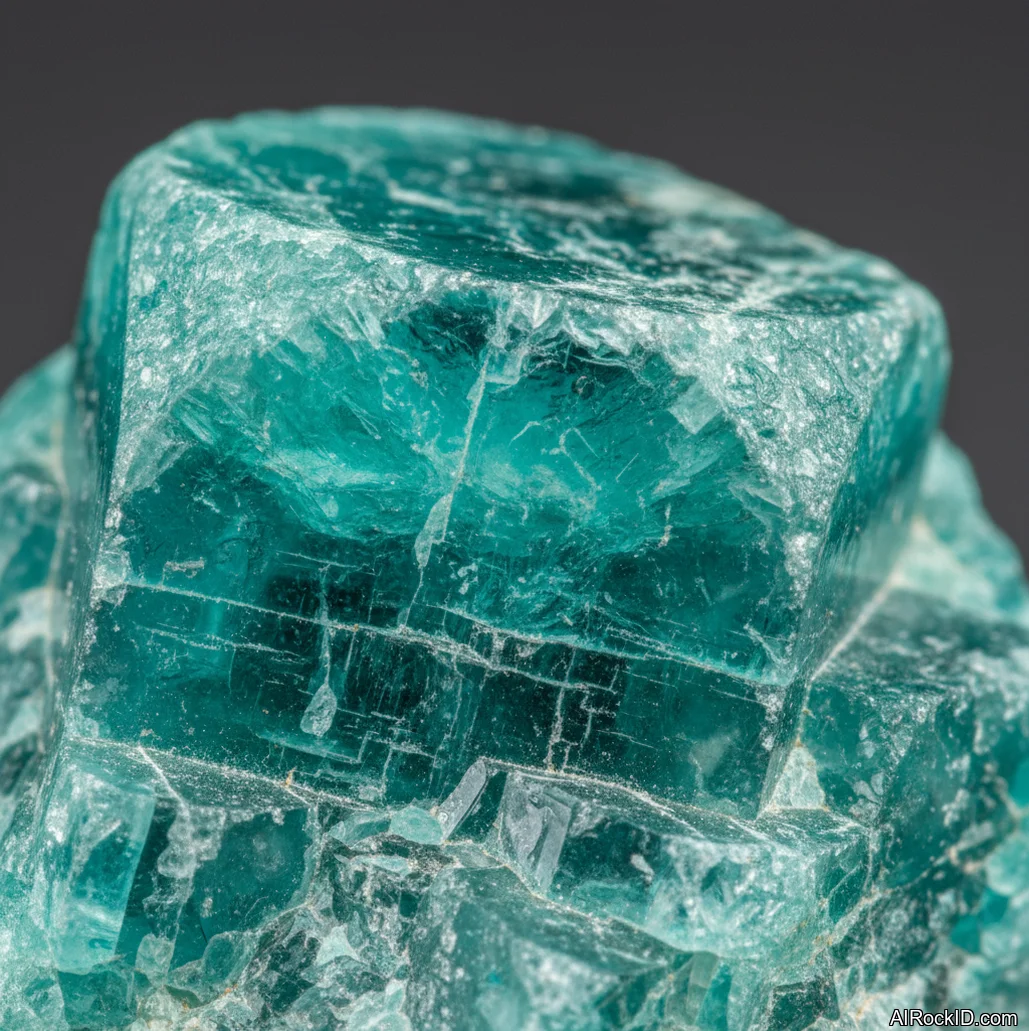
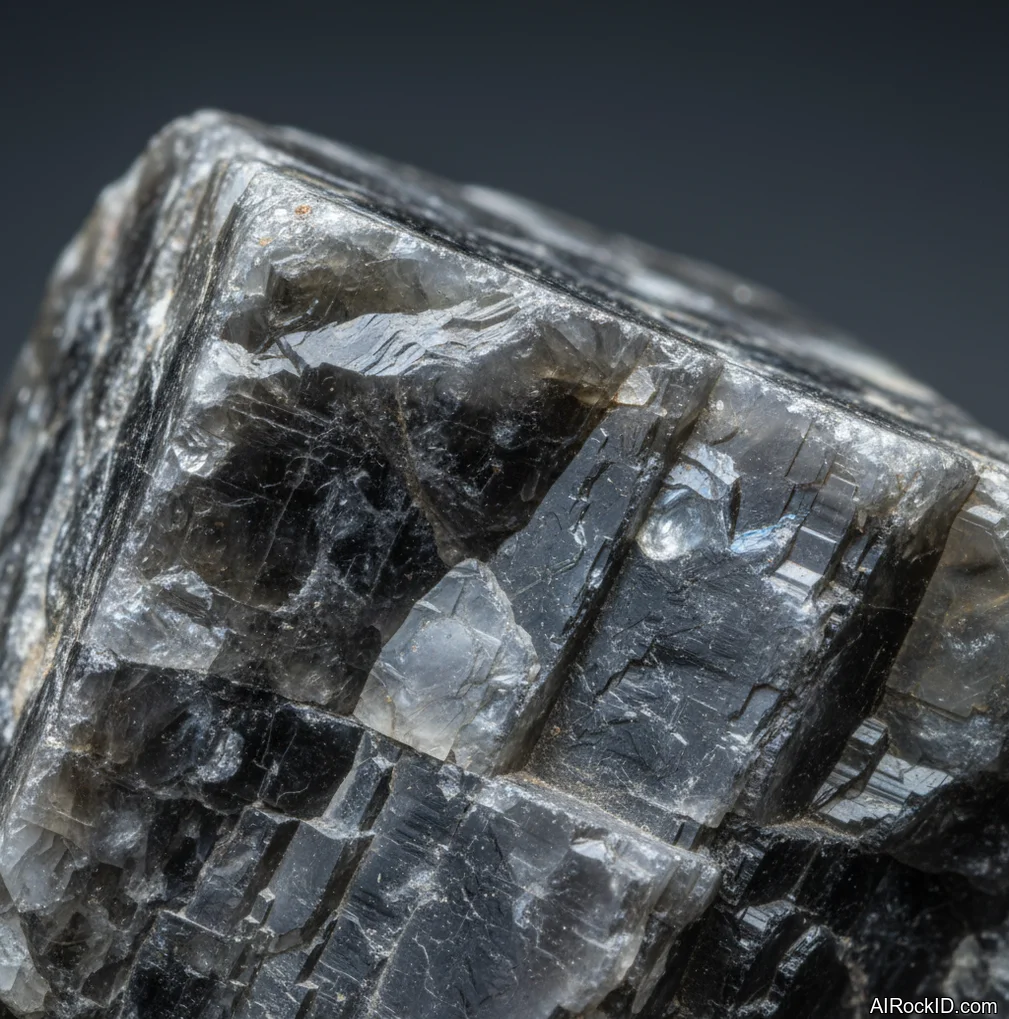
Identify feldspar by looking for Mohs hardness around 6–6.5, a white streak, and two good cleavages meeting at nearly right angles. Fresh pieces are usually vitreous on broken surfaces and pearly on cleavage faces; weathered pieces may look dull, chalky, or clay-like. The common palette is white, cream, gray, pink, peach, tan, or colorless, with some varieties green, blue-green, black, or iridescent.
Against quartz, feldspar usually looks less glassy and breaks less conchoidally; quartz lacks the two strong cleavage directions and is slightly harder. Against calcite, feldspar is harder and does not fizz in dilute acid. Plagioclase may show fine parallel striations on cleavage faces, while potassium feldspar commonly appears pink, salmon, cream, or green in the case of amazonite.
Properties of Feldspar
Physical Properties
| Crystal System | Monoclinic or triclinic, depending on feldspar species |
| Hardness (Mohs) | 6–6.5 (Hard) |
| Density | About 2.55–2.76 g/cm³ for most common feldspars; calcium-rich plagioclase may be slightly higher |
| Luster | Vitreous to pearly |
| Diaphaneity | Transparent to translucent; commonly opaque in massive rock-forming grains |
| Fracture | Uneven to subconchoidal; cleavage fragments are common |
| Streak | White |
| Magnetism | Non-magnetic |
| Colors | white, colorless, gray, cream, pink, peach, tan, brown, green, blue-green, black |
Chemical Properties
| Classification | Tectosilicate, feldspar group |
| Formula | (K,Na,Ca)(Al,Si)4O8; common end-members include KAlSi3O8, NaAlSi3O8, and CaAl2Si2O8 |
| Elements | potassium, sodium, calcium, aluminum, silicon, oxygen |
| Common Impurities | iron, barium, rubidium, strontium, lead, water in alteration products |
Optical Properties
| Refractive Index | Approximately 1.518–1.588, varying by species and composition |
| Birefringence | Low, commonly about 0.005–0.013 |
| Pleochroism | Usually none to very weak; some colored varieties may show weak pleochroism |
| Optical Character | Biaxial, positive or negative depending on species and composition |
Feldspar Health & Safety
Solid feldspar is generally safe to handle and is not considered toxic. The main hazard is inhaling fine mineral dust during cutting, grinding, drilling, or polishing, especially because natural feldspar materials may contain quartz or other respirable silicate particles.
Feldspar Value & Price
Price Range
Rough/Tumbled: Common rough feldspar is inexpensive, often under $1–$5 per pound in bulk. Well-formed collector crystals, pegmatite specimens, amazonite, moonstone, labradorite, and other attractive feldspar varieties can range from a few dollars to hundreds of dollars depending on size, color, transparency, locality, and optical effects.
Cut/Polished:
Value is driven by species, crystal form, freshness, color, size, locality, and optical phenomena such as adularescence, labradorescence, or aventurescence. Ordinary rock-forming feldspar has low specimen value, while fine amazonite, moonstone, sunstone, and labradorite can be prized as gemstones or display minerals.
Durability
Moderate to good — Scratch resistance: With Mohs hardness around 6–6.5, feldspar resists light scratching better than calcite or fluorite but can be scratched by quartz, topaz, corundum, and harder materials., Toughness: Generally fair; feldspar has good cleavage in two directions, so it can chip or split if struck.
Stable under normal indoor conditions, but feldspar may weather over geologic time to clay minerals. Avoid strong acids, harsh chemicals, and impact along cleavage planes.
How to Care for Feldspar
Use & Storage
Store feldspar specimens separately from harder minerals such as quartz, topaz, and corundum to prevent scratches. Wrap cleavage-rich crystals or gemmy specimens in soft cloth or padded boxes.
Cleaning
Clean with lukewarm water, mild soap, and a soft brush. Rinse well and dry gently. Avoid ultrasonic cleaners for fractured, cleaved, or gem varieties with optical sheen.
Cleanse & Charge
For metaphysical use, feldspar is commonly cleansed with smoke, sound, moonlight, or a brief rinse if the specimen is stable and not friable.
Placement
Display feldspar where its cleavage faces, color, or optical effects catch indirect light. Avoid high-impact locations where specimens may fall or chip.
Caution
Avoid strong acids, harsh household chemicals, and impacts along cleavage planes. Weathered feldspar can be crumbly and should be handled gently.
Works Well With
Feldspar Meaning & Healing Properties
In modern crystal-healing traditions, feldspar is associated with grounded learning, practical creativity, emotional balance, adaptability, clarity, and seeing patterns in everyday life. These meanings are cultural and spiritual interpretations, not scientifically verified effects. Its feel supports that symbolism: a common rock-forming mineral with firm cleavage and quiet colors, more steady than showy unless it is a moonstone, labradorite, amazonite, or another optical variety.
Feldspar is commonly linked with the Root, Sacral, and Third Eye chakras, the zodiac signs Aquarius, Cancer, and Libra, the Moon and Earth, and the Earth element. For metaphysical care, many users cleanse it with smoke, sound, moonlight, or a brief rinse if the specimen is stable and not friable. Physically, handle cleavage-rich pieces gently and keep feldspar away from harder stones that may scratch it.
Identify Feldspar from a photo
Compare Feldspar traits, care tips, value clues, and common lookalikes with a clear photo.
Common mistakes
- Assuming every feldspar with a glow is moonstone rather than checking for labradorite, sunstone, or other feldspar varieties.
- Calling all pink feldspar orthoclase without considering microcline or other potassium feldspar possibilities.
- Identifying polished feldspar by color alone instead of checking luster, cleavage, hardness, and optical effects.
- Mistaking quartz for feldspar because both can be pale, glassy, and common in granite.
- Expecting feldspar to react with acid; a fizzing reaction is more consistent with carbonate minerals such as calcite.
- Using the name “feldspar” as if it were a single mineral rather than a group of related minerals.