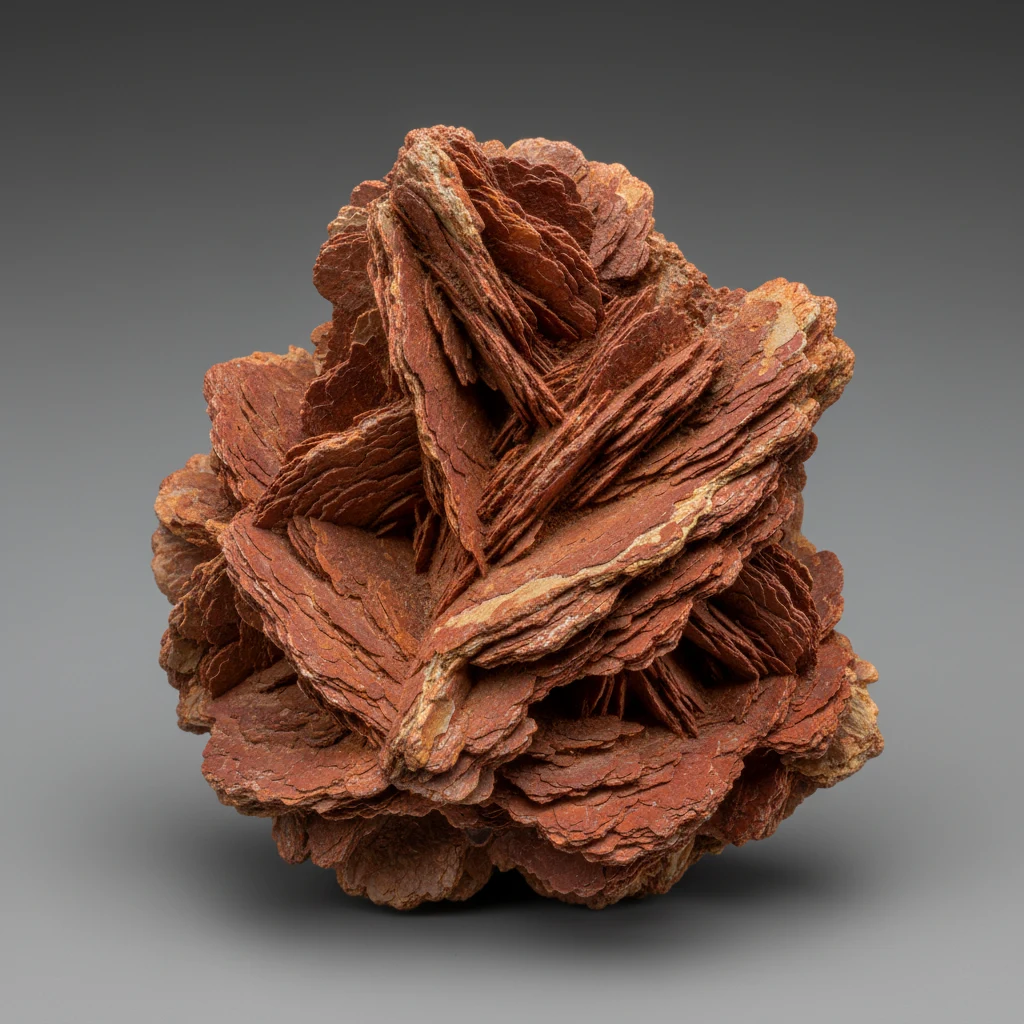
Red Clay


Quick answer: Red clay is an iron oxide-rich clay material recognized by its reddish to orange-brown color, fine texture, and earthy feel. It is usually softer and less sparkly than many minerals, so identification often depends on texture, staining behavior, and geological context.
AI Rock ID can help compare red clay against visually similar earthy materials such as ocher, laterite, bauxite, and hematite-rich soil. RockIdentifier.io provides visual identification support, but hands-on checks such as hardness, streak, and water response are useful for confirming clay-rich samples.
Good fit
- Collectors documenting local soils, clays, or sedimentary materials
- People comparing natural clay, ocher, laterite, and iron-stained earth materials
- Pottery or ceramic learners studying raw clay appearances
- Rockhounds who want to identify soft, earthy red-brown material found in the field
Not a good fit
- Collectors seeking a durable display crystal with sharp crystal faces
- Jewelry use, because raw clay is soft, porous, and easily damaged
- Specimens requiring water-safe storage or frequent rinsing
- Situations where chemical purity is required without lab testing
Most commonly confused with
- Hematite: Hematite is typically harder, denser, and may show metallic to submetallic luster, while red clay is soft, earthy, and powdery when dry.
- Bauxite: Bauxite can be earthy and reddish but often has pisolitic texture and is aluminum-rich rather than simply clay-rich.
- Ocher: Ocher is an iron oxide pigment material and may overlap with red clay, but it is often described by pigment use rather than clay mineral content.
- Laterite: Laterite is an iron- and aluminum-rich weathering product that may harden into crusts, while red clay is usually finer and more plastic when moist.
Red Clay vs. Common Lookalikes
| Material | Typical Feel | Key Difference | Simple Check |
|---|---|---|---|
| Red clay | Fine, earthy, may become plastic when wet | Soft clay-rich material with iron oxide color | Can smear or stain when rubbed damp |
| Hematite | Dense, hard, sometimes metallic | Iron oxide mineral rather than clay | Red-brown streak but much harder than clay |
| Bauxite | Earthy to nodular | Often aluminum-rich with pisolitic texture | Look for small rounded grains or nodules |
| Laterite | Earthy to crusty | Weathered iron-rich soil or rock layer | May be more compact or hardened in place |
| Red jasper | Smooth, hard, takes polish | Silica-rich microcrystalline quartz | Will not soften or smear in water |
AI identification confidence
AI identification confidence for red clay is usually moderate because many red-brown earthy materials look similar in photos. Clear images showing texture, dryness or wetness, scale, and whether the sample smears or breaks apart can improve results.
When AI gets it wrong
- Photos show only color without texture, scale, or broken surfaces
- The material is wet, polished, or artificially shaped, hiding its natural earthy texture
- Iron-stained quartz, jasper, or sandstone is mistaken for clay because of red coloration
- The sample comes from a mixed soil or construction material rather than a natural clay deposit
Final recommendation
Treat red clay as a soft earthy material rather than a durable crystal specimen. For confident identification, combine visual comparison with simple observations such as hardness, staining, plasticity when wet, and the sample’s geological setting.
How to Tell if Red Clay Is Natural
Natural red clay usually has an uneven earthy texture, fine particles, and color variation from red to orange-brown. Processed clay may be uniformly colored, powdered, pelletized, or mixed with additives. A natural field sample often includes small grains, roots, sand, or weathered rock fragments unless it has been cleaned or refined.
Buying Red Clay Specimens
When buying red clay, check whether the seller is offering a raw geological specimen, a pottery-grade clay, a pigment material, or a cosmetic clay, because these categories have different standards. Reliable listings should state the source, form, and intended use. Avoid assuming that red color alone confirms mineral composition or suitability for ceramics, pigments, or skin contact.
Field Clues for Red Clay
Red clay is commonly found in weathered soils, sedimentary deposits, road cuts, stream banks, and areas with iron-rich parent rock. It may feel sticky or moldable when moist and powdery or crumbly when dry. The red color commonly comes from iron oxides such as hematite or goethite dispersed through the clay.
What Is Red Clay?
Red Clay is a common fine-grained clay-rich rock colored by iron oxide, usually showing red, brown, or orange tones. In the hand, it feels earthy rather than glassy, with a dull surface and a fine texture that can hold shape when wet. Its Mohs hardness is only 1-2, so it is very soft and should be treated more like a soil specimen than a durable gemstone.
Collectors value Red Clay for its tactile, cultural, and practical character rather than sparkle. It is opaque, amorphous, non-magnetic, and commonly used in pottery and ceramics. A typical specimen is inexpensive, often listed around $5-$15, with price influenced by purity and origin.
Origin & History
Red Clay has a long human history because clay has been used for thousands of years, especially where people shaped earth into pottery and ceramics. The word “clay” comes from the Old English “claeg,” meaning “sticky soil,” a name that still fits the material when damp clay presses into a thumbprint and keeps its form.
As a collector’s material, Red Clay sits at the edge of mineral, rock, and cultural object: it is a rock made of clay minerals, classified here as a phyllosilicate material with the formula Al2Si2O5(OH)4. For mineral reference context, collectors can compare clay-mineral terminology with mindat.org while confirming specimen data from the seller or locality label.
Where Is Red Clay Found?
Red Clay is commonly found in many regions worldwide, especially in the USA, China, and India. Notable listed localities include Georgia in the USA, Yixing in China, and Rajasthan in India. Its common status means many specimens are collected, used, and sold as practical earth material rather than rare display minerals.
Formation
Red Clay forms through the weathering of rocks in warm, humid climates over time. The red to reddish-brown color comes from iron oxide, while the fine-grained clay body reflects the breakdown and alteration of source rocks into clay minerals. In the hand, that history shows as a soft, earthy mass rather than a crystal face.
This formation gives Red Clay its practical behavior: it can be shaped when wet, yet it may crumble when dry. Its density is listed at 1.5-2.5 g/cm3, and its fracture is uneven, so broken pieces tend to look irregular rather than clean or conchoidal. The specimen is best stored cool and dry, away from moisture that could change its shape.
How to Identify Red Clay
Identify Red Clay by its reddish-brown color, fine texture, earthy luster, and ability to hold shape when wet. It is opaque, usually dull rather than shiny, and leaves a red streak. The color range may include red, brown, and orange, all tied to its iron oxide-rich appearance.
A quick handling check is often enough: Red Clay feels very soft, with Mohs hardness 1-2, and it is non-magnetic. It is amorphous rather than visibly crystalline, with uneven fracture and no applicable refractive index, birefringence, or pleochroism. Avoid harsh chemicals when cleaning; a water rinse can remove dirt, but prolonged water exposure may cause it to lose shape.
Properties of Red Clay
Physical Properties
| Crystal System | Amorphous |
| Hardness (Mohs) | 1-2 (Very Soft (1-2)) |
| Density | 1.5-2.5 g/cm3 |
| Luster | Earthy |
| Diaphaneity | Opaque |
| Fracture | Uneven |
| Streak | Red |
| Magnetism | Non-magnetic |
| Colors | Red, Brown, Orange |
Chemical Properties
| Classification | Phyllosilicate |
| Formula | Al2Si2O5(OH)4 |
| Elements | Si, O, Al |
| Common Impurities | Fe, Ti |
Optical Properties
| Refractive Index | Not applicable |
| Birefringence | None |
| Pleochroism | None |
| Optical Character | Isotropic |
Red Clay Health & Safety
Red clay is generally safe to handle.
Red Clay Value & Price
Price Range
Rough/Tumbled: $5 - $15 per specimen
Cut/Polished:
Price varies based on purity and origin.
Durability
Nondurable — Scratch resistance: Poor, Toughness: Fair
It can easily crumble when dry.
How to Care for Red Clay
Use & Storage
Store in a cool, dry place away from moisture.
Cleaning
Rinse with water to remove dirt. Avoid harsh chemicals.
Cleanse & Charge
Can be cleansed by placing it in sunlight or moonlight.
Placement
Keep it in a place that feels grounding to you.
Caution
Avoid prolonged exposure to water as it may lose shape.
Works Well With
Red Clay Meaning & Healing Properties
In crystal-healing practice, Red Clay is used for grounding, nurturing, and connecting with the earth. Its Root chakra association fits its heavy, earthy feel and its red-brown color, making it a simple meditation object for stability, inner peace, and self-discovery. These uses are spiritual or symbolic and are not a substitute for medical treatment.
Red Clay is linked with Taurus and Virgo, the Earth element, and the planet Earth. Practitioners may place it somewhere that feels grounding, or cleanse and charge it in sunlight or moonlight. It pairs well with quartz, amethyst, and lapis lazuli when building an earth-centered or calming layout.
Identify Red Clay from a photo
Compare Red Clay traits, care tips, value clues, and common lookalikes with a clear photo.
Common mistakes
- Identifying any red-brown dirt as red clay without checking whether it becomes plastic when wet
- Confusing red clay with red jasper because both can be brick-red in color
- Assuming red clay is safe for pottery, pigment, or cosmetic use without testing for impurities
- Washing a fragile clay specimen under running water and causing it to break down
- Calling red clay hematite solely because it leaves a reddish streak
- Ignoring local context, such as construction fill or dyed material, when evaluating a sample