Wollastonite


Quick answer: Wollastonite is a calcium silicate mineral most often found in contact-metamorphosed limestone, marble, and skarn. It is usually white to gray, may show a silky or fibrous look, and can be confused with several pale minerals that occur in similar rocks.
AI Rock ID can help narrow a possible wollastonite identification by comparing color, luster, habit, and visible texture from a clear photo. RockIdentifier.io provides additional reference information so users can compare likely matches before relying on a label or seller description.
Good fit
- Collectors who like white, gray, or pale fibrous minerals from marble and skarn environments
- Students learning to identify calcium silicate minerals in metamorphic rocks
- People comparing pale minerals by habit, luster, hardness, and reaction to acid
- Buyers checking whether a specimen labeled wollastonite looks consistent with known forms
Not a good fit
- Anyone seeking a highly durable gemstone for daily-wear jewelry
- Collectors who want vivid color as the main identifying feature
- Situations where fibrous dust could be produced without proper handling precautions
- Buyers who need a visual ID alone to confirm industrial-grade material
Most commonly confused with
- Tremolite: Tremolite can also be white and fibrous, but it is an amphibole and may show different cleavage angles and asbestos-form habits.
- Calcite: Calcite is softer, reacts readily with dilute acid, and has rhombohedral cleavage rather than wollastonite’s splintery to bladed habit.
- Quartz: Quartz is harder, lacks cleavage, and usually breaks with a glassy conchoidal fracture instead of a splintery texture.
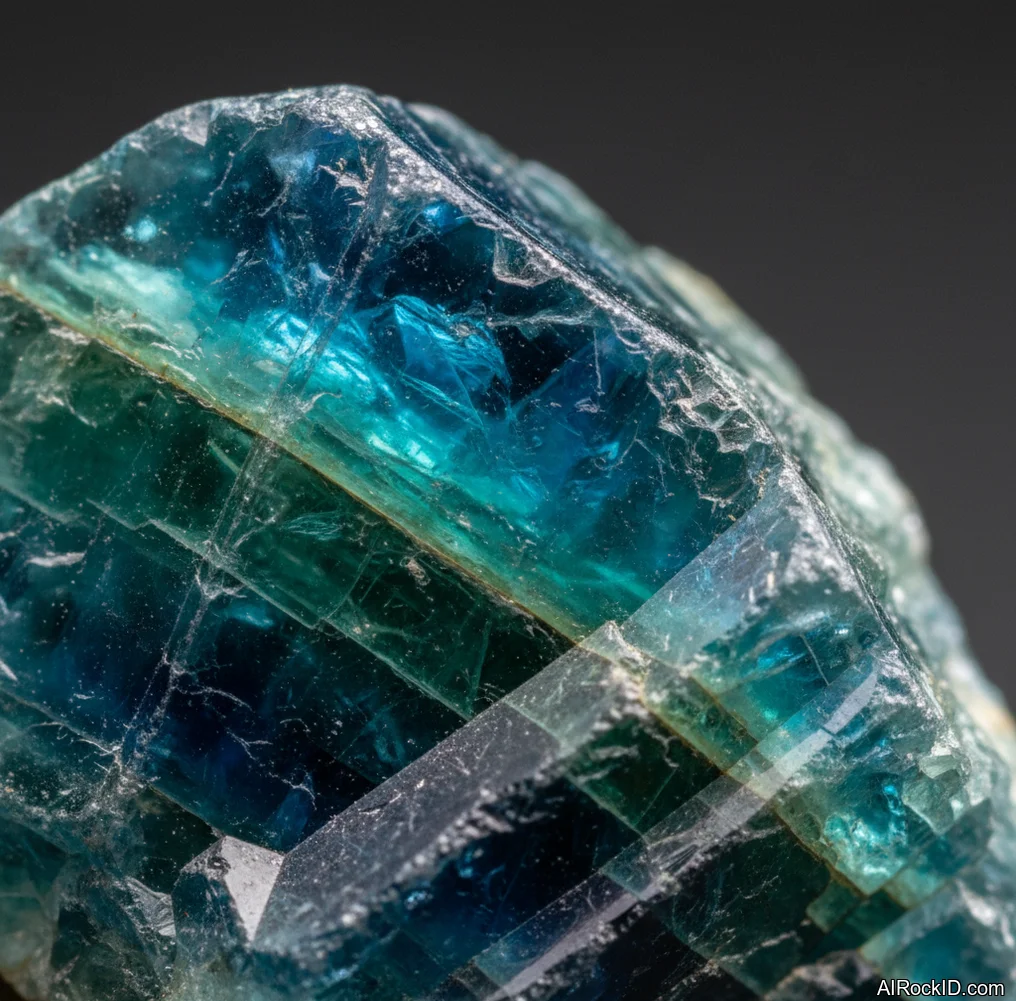
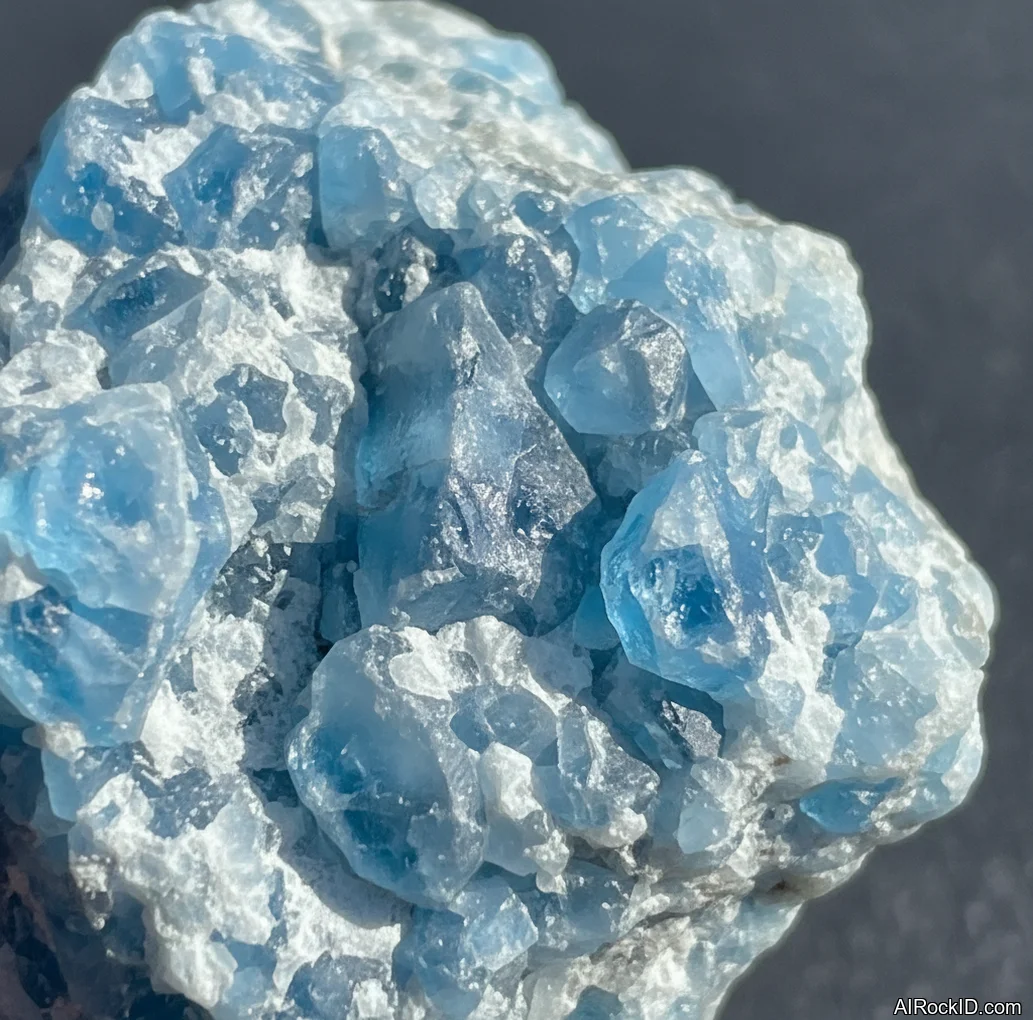
- Pectolite: Pectolite can appear white and fibrous, but it contains sodium and may show radiating sprays or, in rare blue varieties, the trade name larimar.
Wollastonite vs. Similar Pale Minerals
| Mineral | Key ID clue | Typical difference from wollastonite |
|---|---|---|
| Wollastonite | White to gray, bladed, fibrous, or splintery | CaSiO3; common in marble and skarn |
| Calcite | Effervesces in dilute acid | Softer and has rhombohedral cleavage |
| Quartz | Hard, glassy, no cleavage | Scratches glass more easily and is not splintery |
| Tremolite | Amphibole cleavage and possible fibrous habit | Different mineral group and potential asbestos concern |
| Gypsum | Very soft; scratched by fingernail | Much lower hardness |
AI identification confidence
AI identification of wollastonite is usually moderate when the photo shows its fibrous, bladed, or splintery habit in a marble or skarn matrix. Confidence is lower for massive white pieces because calcite, quartz, tremolite, gypsum, and pectolite can look similar in photos.
When AI gets it wrong
- The specimen is a plain white or gray massive piece with no visible crystal habit.
- Lighting makes silky fibers look glassy, chalky, or translucent.
- The photo does not show scale, matrix, cleavage, or fracture surfaces.
- A polished or tumbled piece hides the splintery texture used for identification.
Final recommendation
For identification, combine visual comparison with simple observations such as hardness, acid reaction, cleavage, and geologic setting. For buying, prefer specimens with locality information and clear photos showing habit, matrix, and any fibrous texture.
How to Check a Wollastonite Label
A reliable wollastonite label is more convincing when it includes a locality, a mineral association, and photos that show the actual texture of the specimen. Wollastonite is commonly associated with calc-silicate rocks, marble, skarn minerals, garnet, diopside, vesuvianite, and calcite. A label based only on a white color should be treated as tentative.
Buying Wollastonite Specimens
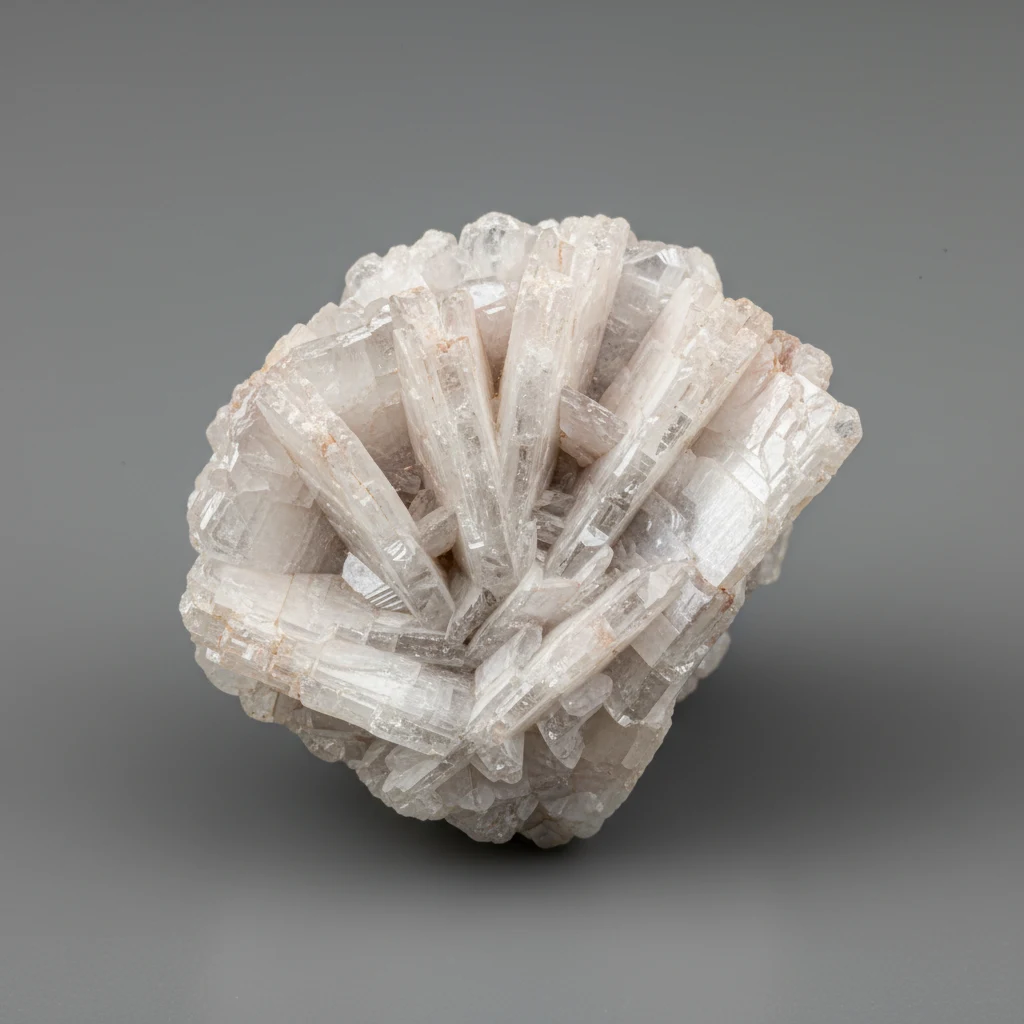
Wollastonite is usually purchased as a mineral specimen rather than a gemstone. Look for intact bladed, radiating, or fibrous aggregates with minimal powdering or breakage. If the piece is described as rare, gemmy, or unusually colored, ask for locality details and compare it with known material from that region.
Field Clues for Wollastonite
Wollastonite is most likely in rocks formed where silica-rich fluids or rocks interacted with limestone during metamorphism. In hand sample, it may appear as pale blades, needles, or splintery masses within calcite-rich or skarn-like material. A non-diagnostic white color should not be used as the only field clue.
What Is Wollastonite?
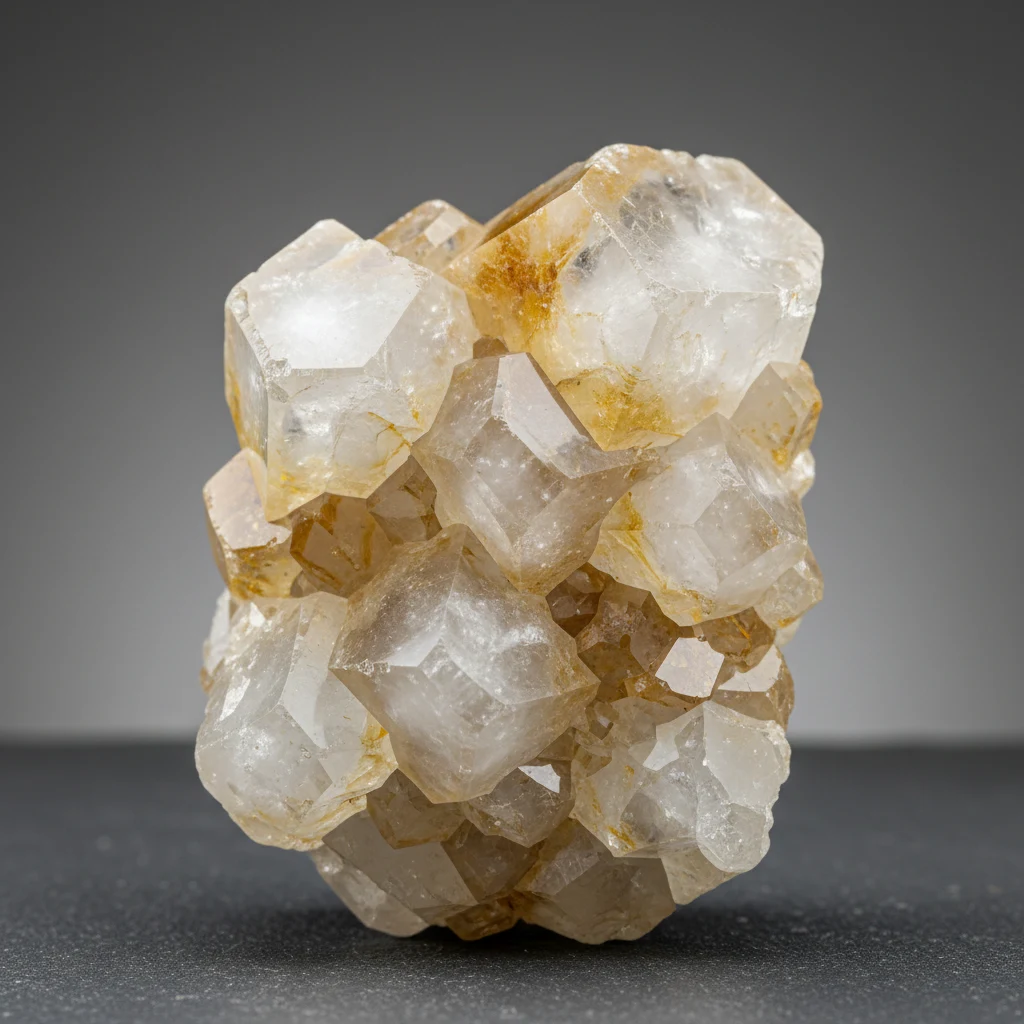
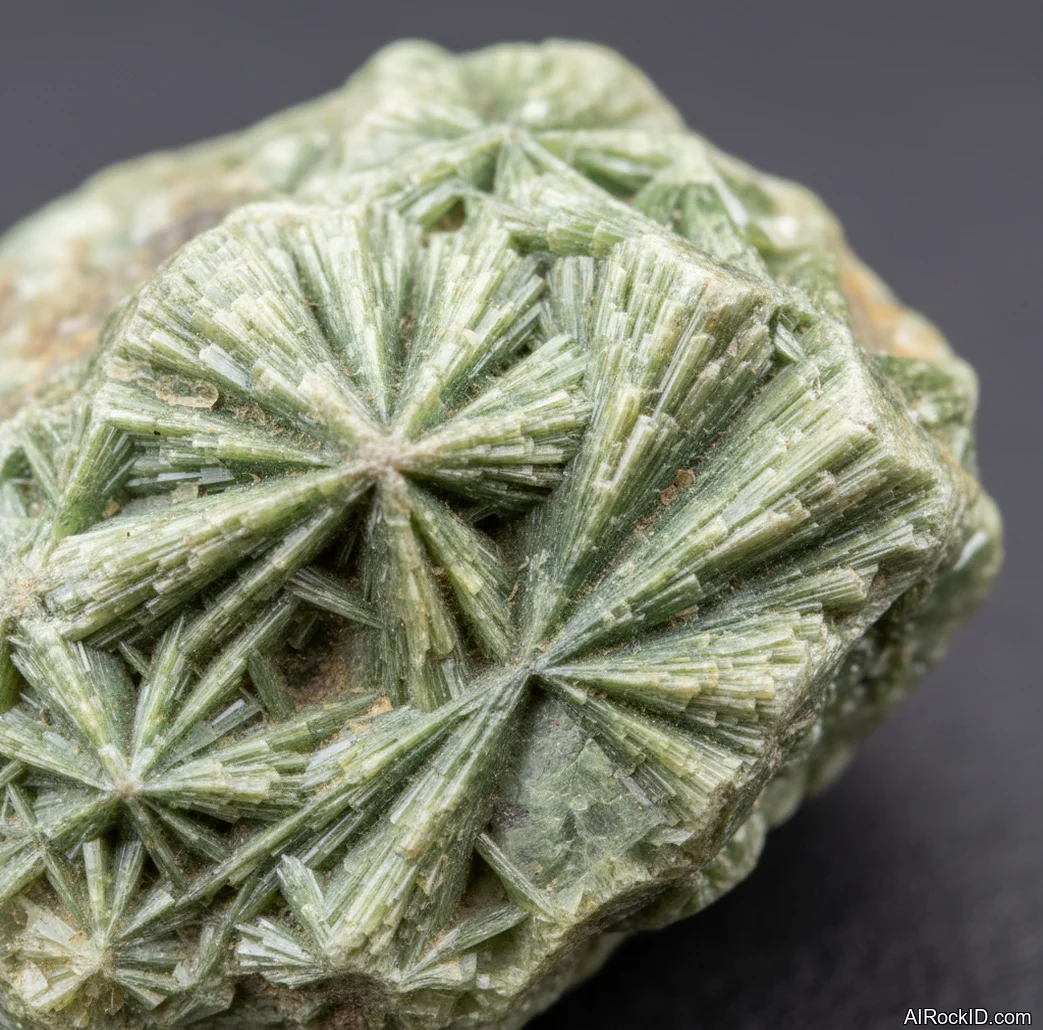
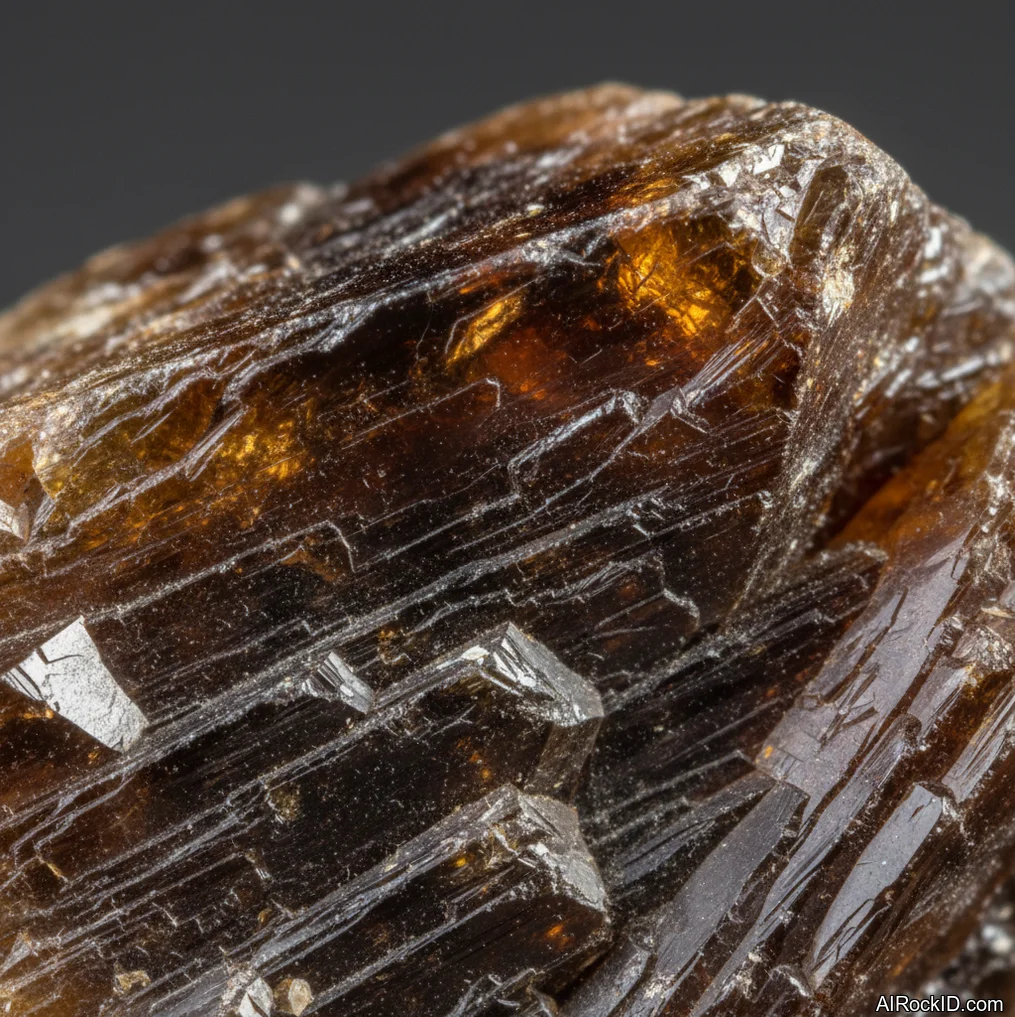
Wollastonite is a common calcium inosilicate mineral, also known as tabular spar or calcium metasilicate. In hand specimen it is usually white, colorless, gray, cream, or pale brown, with a clean white streak and a vitreous shine on fresh faces. Broken pieces often feel splintery rather than blocky, and fibrous masses can show a pearly to silky sheen.
Collectors usually meet wollastonite in marble, contact-metamorphic limestone, and calc-silicate skarn. Its formula is CaSiO3, and its Mohs hardness is 4.5 to 5, so it is harder than calcite but softer than quartz. It is valued more as an industrial and collector mineral than as a faceted gemstone, especially when it shows radiating blades or attractive associations with calcite, diopside, garnet, vesuvianite, or quartz.
Origin & History
Wollastonite was named in 1818 for William Hyde Wollaston, the English chemist and mineralogist. It was recognized as a distinct calcium silicate from altered limestones and marbles, the kind of rock where pale bladed crystals can sit beside calcite and other calc-silicate minerals.
Today, wollastonite has a double identity: a field collector’s mineral and an important industrial material. Its acicular crystal habit and low volatile content make it useful in ceramics, plastics, paint, friction products, and filler applications. For locality checking and specimen context, mindat.org is a standard reference used by mineral collectors.
Where Is Wollastonite Found?
Wollastonite is found in many countries, including China, India, Mexico, the United States, Canada, Finland, Spain, Namibia, South Africa, and Russia. Economically significant deposits are mainly tied to places where silica-bearing fluids or igneous intrusions altered limestone or dolostone.
Formation
Wollastonite forms chiefly by contact metamorphism or metasomatism of limestone and other calcium-rich carbonate rocks. A common reaction is calcite plus quartz producing wollastonite plus carbon dioxide at elevated temperature, which is why the mineral is so closely linked to marble and skarn settings.
In the field, that origin shows in the company wollastonite keeps. Look for it in calc-silicate rock near intrusive igneous bodies, where pale blades or fibrous aggregates may sit with calcite, diopside, garnet, vesuvianite, and quartz. Its occurrence records and skarn associations are commonly documented in mineral databases such as mindat.org.
How to Identify Wollastonite
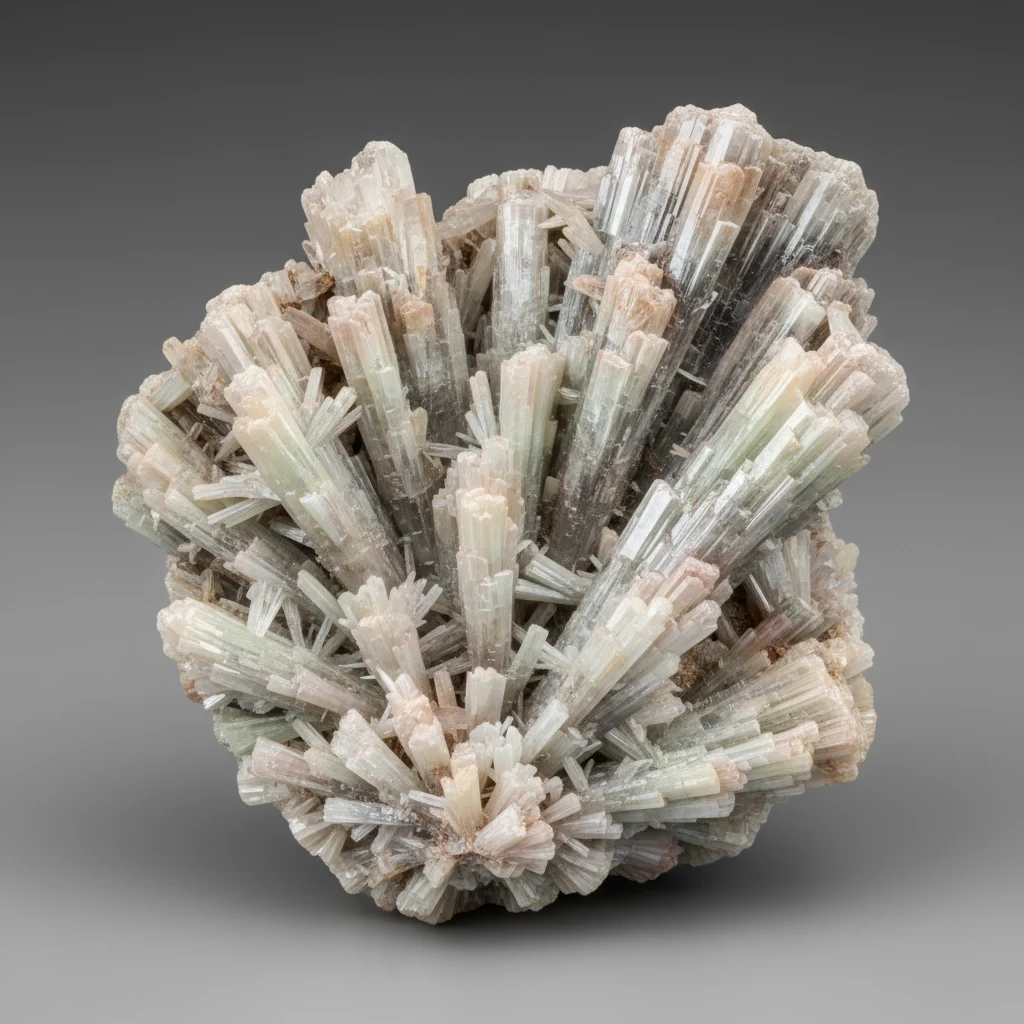
Identify wollastonite by its pale color, white streak, nonmetallic luster, and splintery to bladed habit. Fresh faces can look vitreous, while cleavage surfaces and fibrous masses may appear pearly or silky. It is commonly transparent to opaque and occurs as bladed, columnar, radiating, or fibrous aggregates in marble or skarn.
A practical field test is comparison: wollastonite is harder than calcite, with Mohs hardness around 4.5 to 5, but it is softer than quartz. Pure wollastonite does not effervesce in cold dilute hydrochloric acid like calcite, though carbonate-rich matrix may fizz. Separate it from tremolite or actinolite by paler color, different cleavage angles, and lower toughness; optical testing may be needed against pectolite.
Properties of Wollastonite
Physical Properties
| Crystal System | Triclinic |
| Hardness (Mohs) | 4.5-5 (Moderate) |
| Density | 2.86-3.09 g/cm³ |
| Luster | Vitreous, pearly, silky |
| Diaphaneity | Transparent to opaque |
| Fracture | Uneven to splintery |
| Streak | White |
| Magnetism | Nonmagnetic |
| Colors | white, colorless, gray, cream, pale brown, pink, greenish |
Chemical Properties
| Classification | Inosilicate; calcium silicate |
| Formula | CaSiO3 |
| Elements | calcium, silicon, oxygen |
| Common Impurities | iron, manganese, magnesium, aluminum, sodium, potassium, titanium |
Optical Properties
| Refractive Index | nα 1.616-1.640, nβ 1.628-1.650, nγ 1.631-1.653 |
| Birefringence | 0.014-0.017 |
| Pleochroism | None to very weak |
| Optical Character | Biaxial negative |
Wollastonite Health & Safety
Solid wollastonite specimens are generally safe to handle. Fine mineral dust from cutting, grinding, or sanding can irritate the lungs and should not be inhaled.
Wollastonite Value & Price
Price Range
Rough/Tumbled: Small common rough pieces or industrial-grade material are usually inexpensive, often under $5-$20. Attractive mineral specimens with radiating blades, associated garnet, or good locality provenance commonly sell for about $20-$150+, with exceptional cabinet specimens higher.
Cut/Polished:
Value depends on crystal form, whiteness, silky fibrous habit, size, lack of damage, association with skarn minerals such as garnet or diopside, and documented locality. Wollastonite is primarily an industrial and collector mineral rather than a faceted gemstone.
Durability
Fair — Scratch resistance: Moderate; harder than calcite but softer than quartz, so it can be scratched by many common minerals and abrasives., Toughness: Generally brittle; fibrous masses may splinter.
Stable under normal indoor conditions. Avoid hard impacts, abrasive cleaning, and exposure to acids if the specimen contains calcite or other carbonate matrix.
How to Care for Wollastonite
Use & Storage
Store separately from harder minerals such as quartz, topaz, corundum, and beryl to prevent scratching. Wrap delicate fibrous or radiating specimens in tissue or foam.
Cleaning
Clean with lukewarm water, mild soap, and a soft brush. Avoid ultrasonic cleaners for fragile, fibrous, or matrix specimens.
Cleanse & Charge
For metaphysical use, cleanse gently with smoke, sound, moonlight, or a dry cloth rather than harsh salt or acid methods.
Placement
Display away from high-traffic edges where brittle blades can be chipped. Keep white specimens out of dusty, oily environments.
Caution
Avoid acids on matrix specimens because associated calcite or other carbonates may fizz and etch. Avoid inhaling dust from broken or fibrous material.
Works Well With
Wollastonite Meaning & Healing Properties
In modern crystal-healing traditions, wollastonite is associated with clarity, structure, calm focus, practicality, grounding, and steady growth. These meanings are cultural and spiritual beliefs, not medical claims. The stone’s pale, orderly look makes it a natural choice for people who like minerals that feel quiet, tidy, and task-focused.
Practitioners commonly connect wollastonite with the root and crown chakras, Virgo and Capricorn, Saturn, and the Earth element. For metaphysical care, cleanse it gently with smoke, sound, moonlight, or a dry cloth. Avoid harsh salt or acid methods, especially on matrix specimens, and protect brittle blades from knocks and abrasion.
Identify Wollastonite from a photo
Compare Wollastonite traits, care tips, value clues, and common lookalikes with a clear photo.
Common mistakes
- Identifying every white fibrous mineral as wollastonite without checking hardness or associated minerals
- Confusing calcite-rich marble with wollastonite-bearing calc-silicate rock
- Assuming a polished white stone can be reliably identified from color alone
- Ignoring possible amphibole lookalikes when a specimen has a fibrous habit
- Using an acid test on a mixed specimen without realizing calcite in the matrix may react
- Treating industrial wollastonite names and collector specimen labels as interchangeable