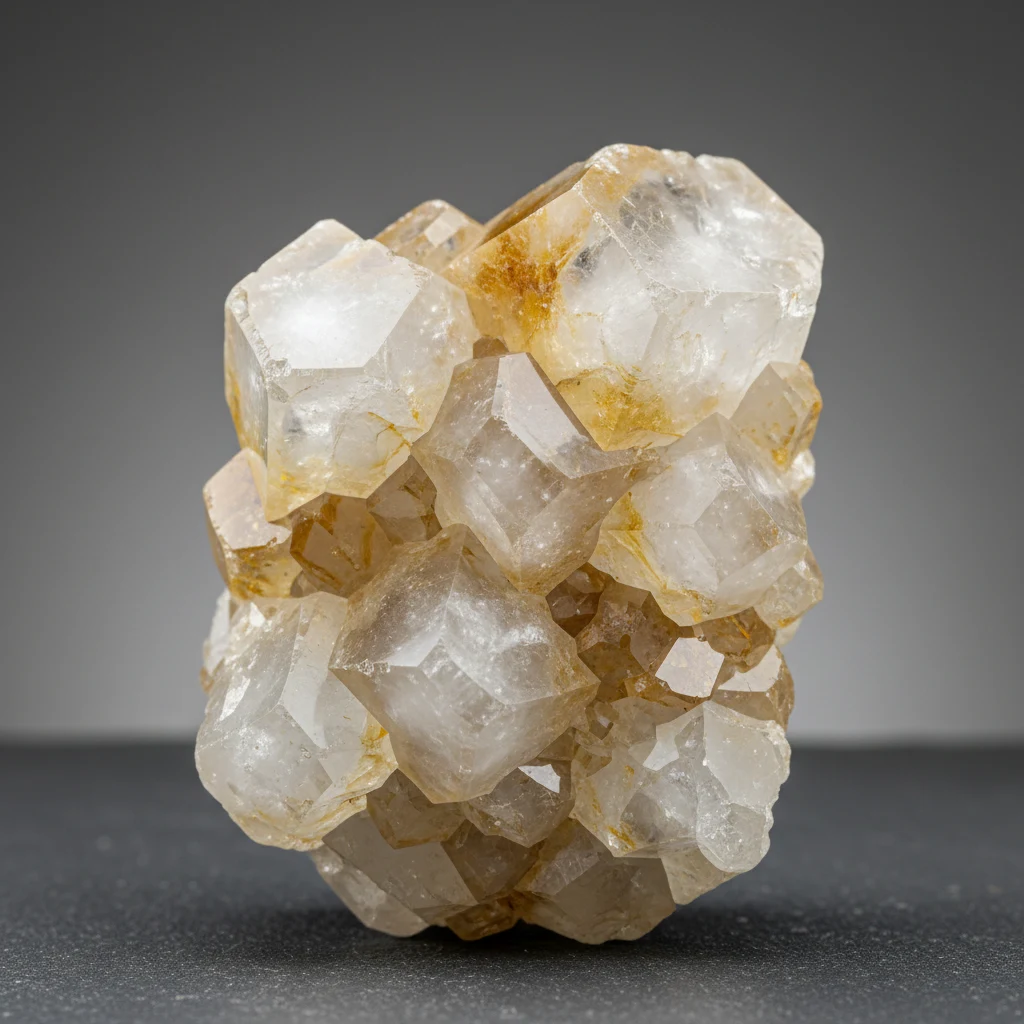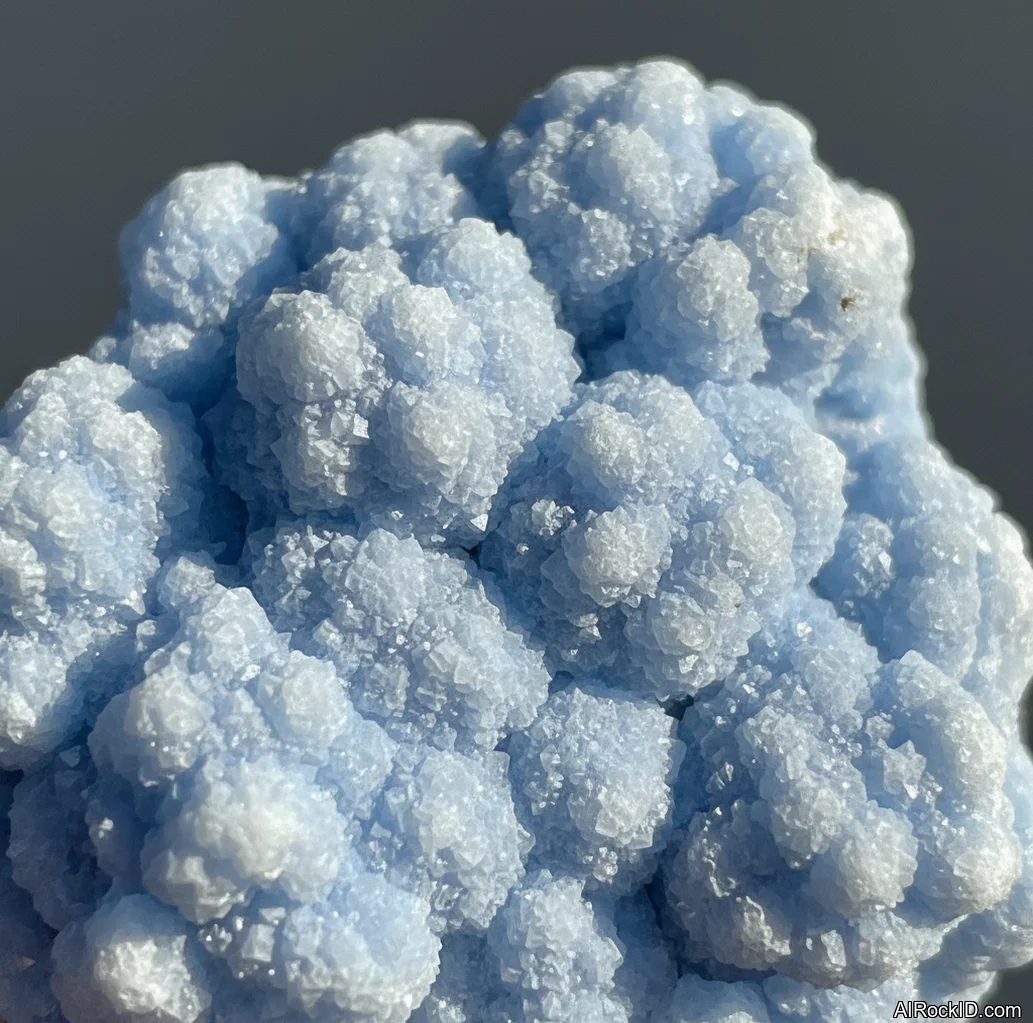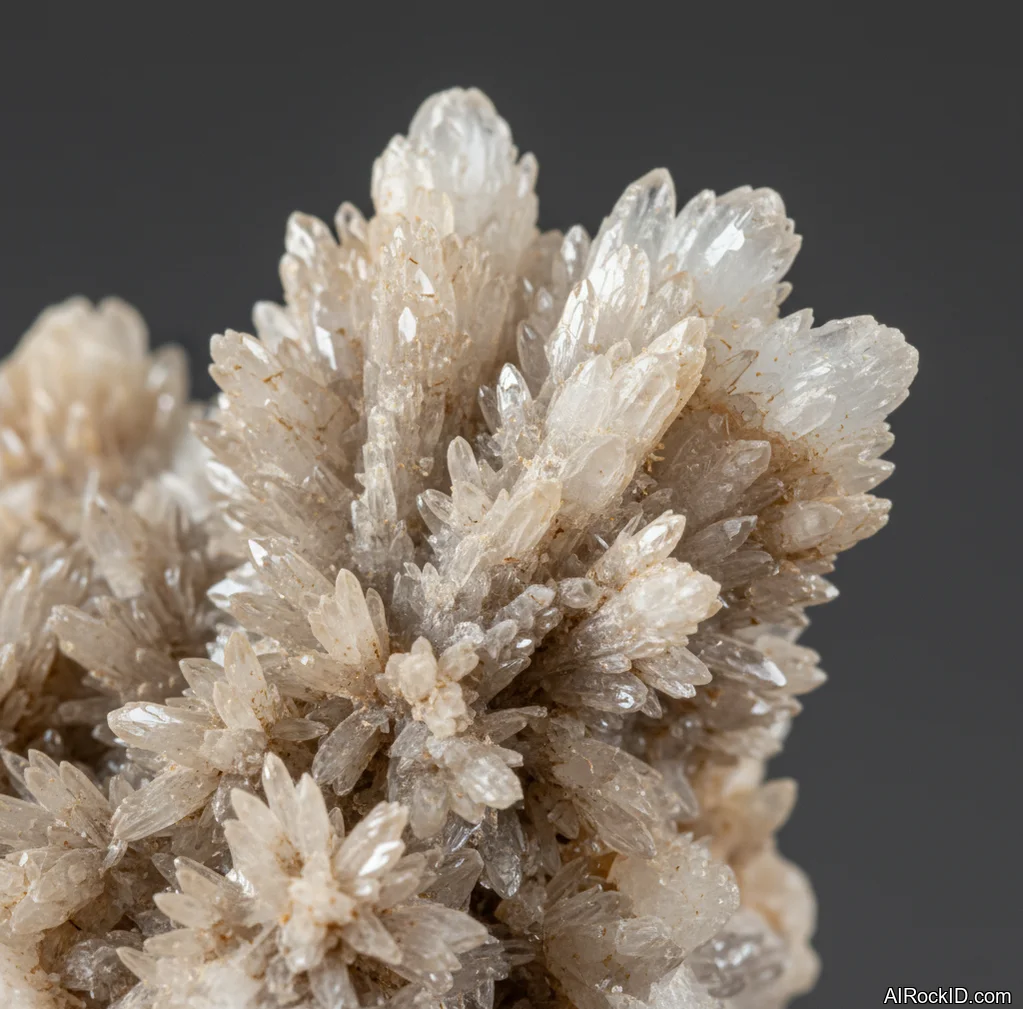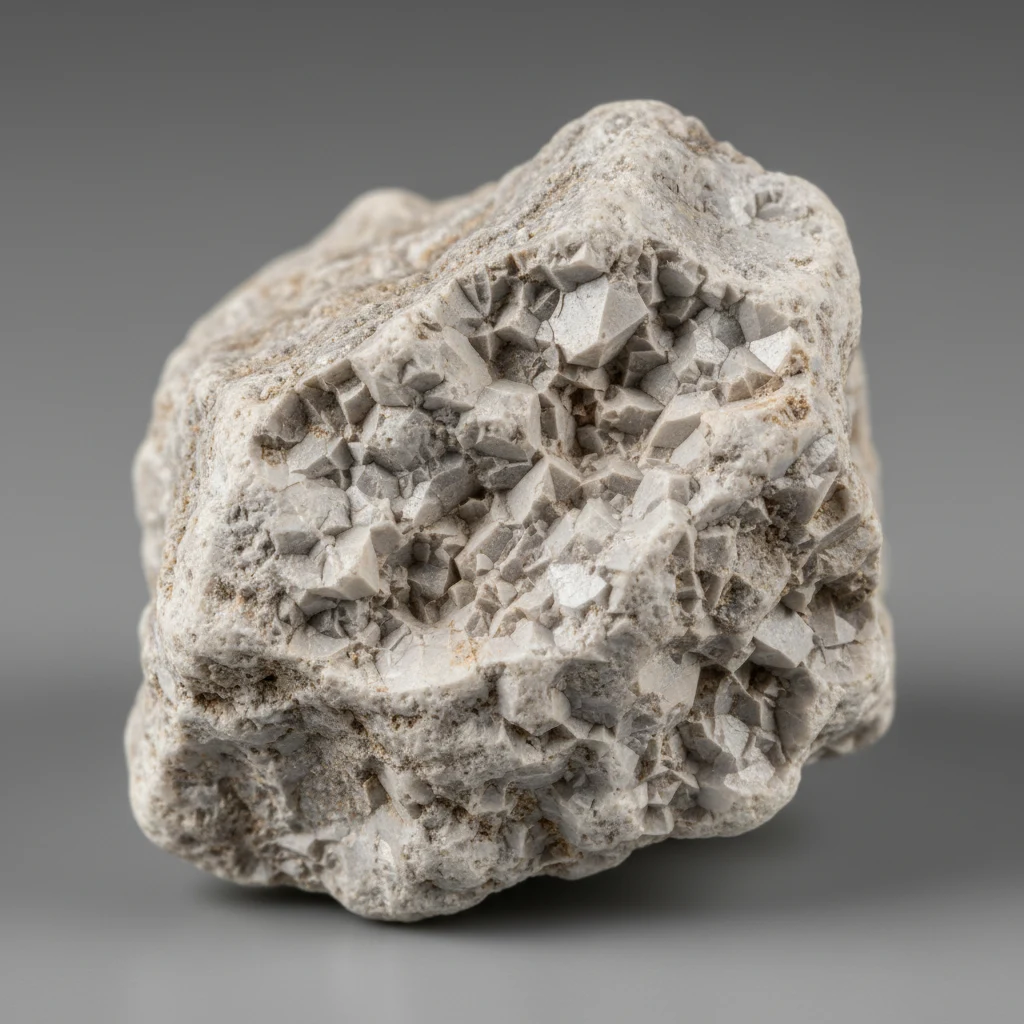
Marble


Quick answer: Marble is a metamorphic carbonate rock made mostly of recrystallized calcite, dolomite, or both. It is typically soft for a decorative stone, with a Mohs hardness around 3–4, and often shows a sugary, interlocking crystal texture.
AI Rock ID can help screen marble by checking visual traits such as grain texture, veining, color, and possible lookalikes. RockIdentifier.io provides identification support, but acid reaction, hardness, and professional testing may be needed for confident separation from similar white or veined stones.
Good fit
- Collectors who want a common metamorphic rock with many color and veining patterns
- Students learning to recognize carbonate rocks and recrystallized textures
- Decorative stone buyers comparing marble with quartzite, limestone, or alabaster
- Carvers and lapidary hobbyists seeking a relatively soft stone for practice
Not a good fit
- High-wear jewelry pieces that may scratch or etch easily
- Outdoor use in acidic rain or harsh freeze-thaw conditions without proper assessment
- Countertops where resistance to acidic foods and staining is the main priority
- Collectors seeking a single mineral specimen rather than a rock composed of mineral grains
Why people search for this
People often search for marble to identify whether a white, gray, or veined stone is true marble, limestone, quartzite, alabaster, or man-made material. Buyers also compare marble types because appearance alone does not always indicate durability or authenticity.
Most commonly confused with
- Limestone: Limestone is sedimentary and may show fossils or duller grains, while marble is metamorphic with recrystallized interlocking crystals.
- Quartzite: Quartzite is much harder, usually around Mohs 7, and will not fizz with dilute acid the way calcite-rich marble can.
- Alabaster: Alabaster is usually gypsum or calcite-based and is often softer, more translucent, and easier to scratch than marble.
- Onyx Marble: Commercial 'onyx marble' is commonly banded calcite or aragonite, not true silicate onyx, which is a variety of chalcedony.
Marble vs. Common Lookalikes
| Material | Key Test | Typical Difference | Acid Reaction |
|---|---|---|---|
| Marble | Scratch and grain check | Sugary recrystallized calcite or dolomite texture | Often fizzes if calcite-rich |
| Limestone | Look for fossils or sedimentary layers | Usually less crystalline and may be earthy or fossiliferous | Usually fizzes |
| Quartzite | Hardness test | Scratches glass more readily and has a harder, quartz-rich surface | No fizz |
| Alabaster | Scratch test | Generally softer and may look waxy or translucent | Variable, depending on composition |
| Resin or cultured marble | Heat, weight, and pattern inspection | May show repeated patterns, plastic feel, or molded backing | Usually no natural carbonate fizz on resin surface |
AI identification confidence
AI identification of marble is often moderate when the photo clearly shows crystalline texture, veining, and fresh broken surfaces. Confidence drops when the stone is polished, dyed, heavily weathered, or photographed without scale and lighting control.
When AI gets it wrong
- Polished quartzite can look like white or gray marble in photos but is much harder.
- Limestone may be labeled marble when recrystallization is not visible.
- Cultured marble and resin composites can mimic natural veining in countertop or tile photos.
- Banded calcite, travertine, and commercial 'onyx' may be confused with decorative marble.
Final recommendation
For identification, combine visual inspection with simple tests such as hardness, streak, and a cautious acid reaction test on an inconspicuous spot. For purchases, ask whether the material is natural marble, calcite marble, dolomitic marble, engineered stone, or a trade-name product.
How to Tell Natural Marble from Cultured Marble
Natural marble usually has irregular veining that continues through the stone rather than sitting only on the surface. Cultured marble is a man-made blend of resin, pigments, and crushed stone, and it may show a molded shape, gel-coated shine, repeated patterning, or a lighter plastic-like feel. A small inconspicuous scratch or acid test may help, but finished surfaces can be damaged by testing.
Buying Marble: Names, Grades, and Trade Terms
Marble names are often commercial terms based on quarry location, color, or pattern rather than strict mineral classification. A stone sold as marble may be true metamorphic marble, limestone, travertine, serpentine-rich decorative stone, or engineered material. Buyers should request the stone type, finish, thickness, origin when available, and care requirements before comparing prices.
Field Tests for Marble Identification
Calcite-rich marble can often be scratched by a steel knife and may fizz with dilute hydrochloric acid or a stronger household acid, while dolomitic marble reacts more weakly unless powdered. Marble normally does not scratch glass, unlike quartzite. Field tests should be done on an unimportant spot because acid and scratches can permanently mark polished stone.
What Is Marble?
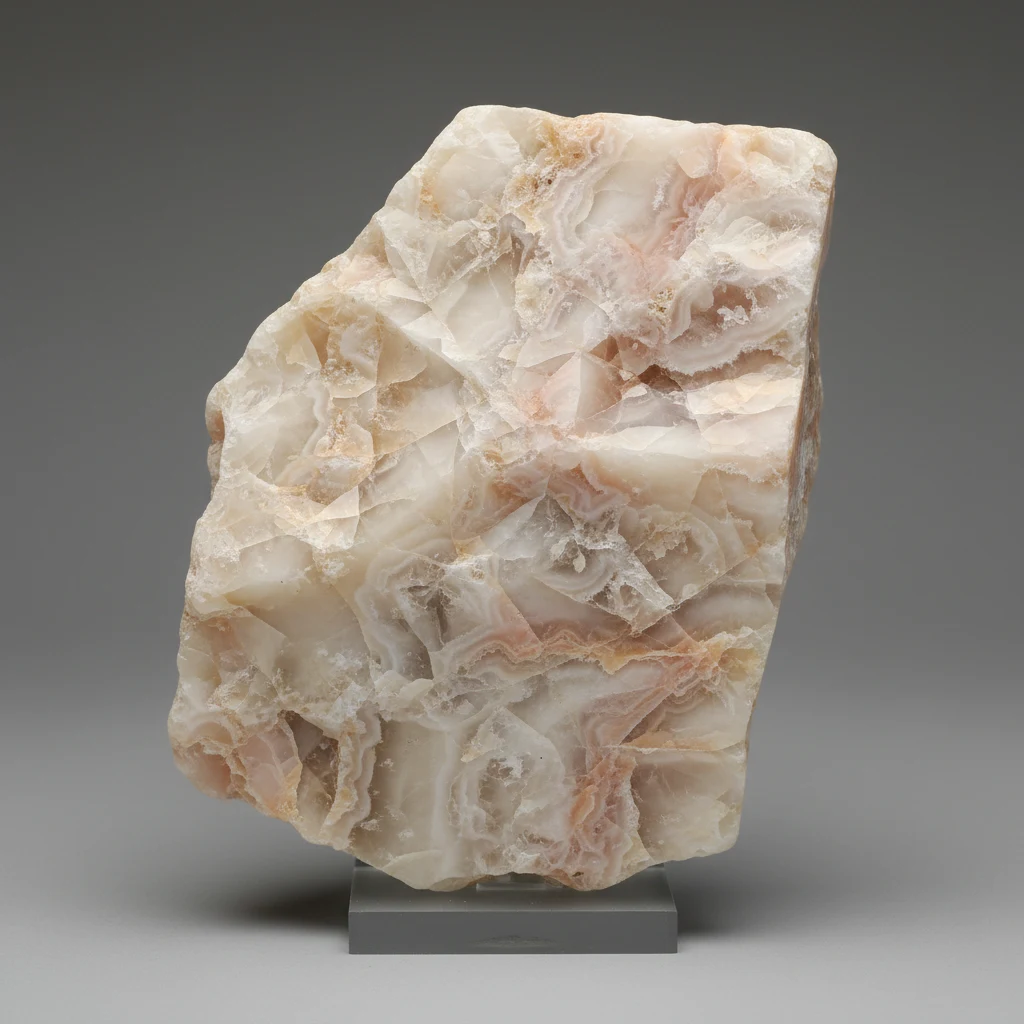
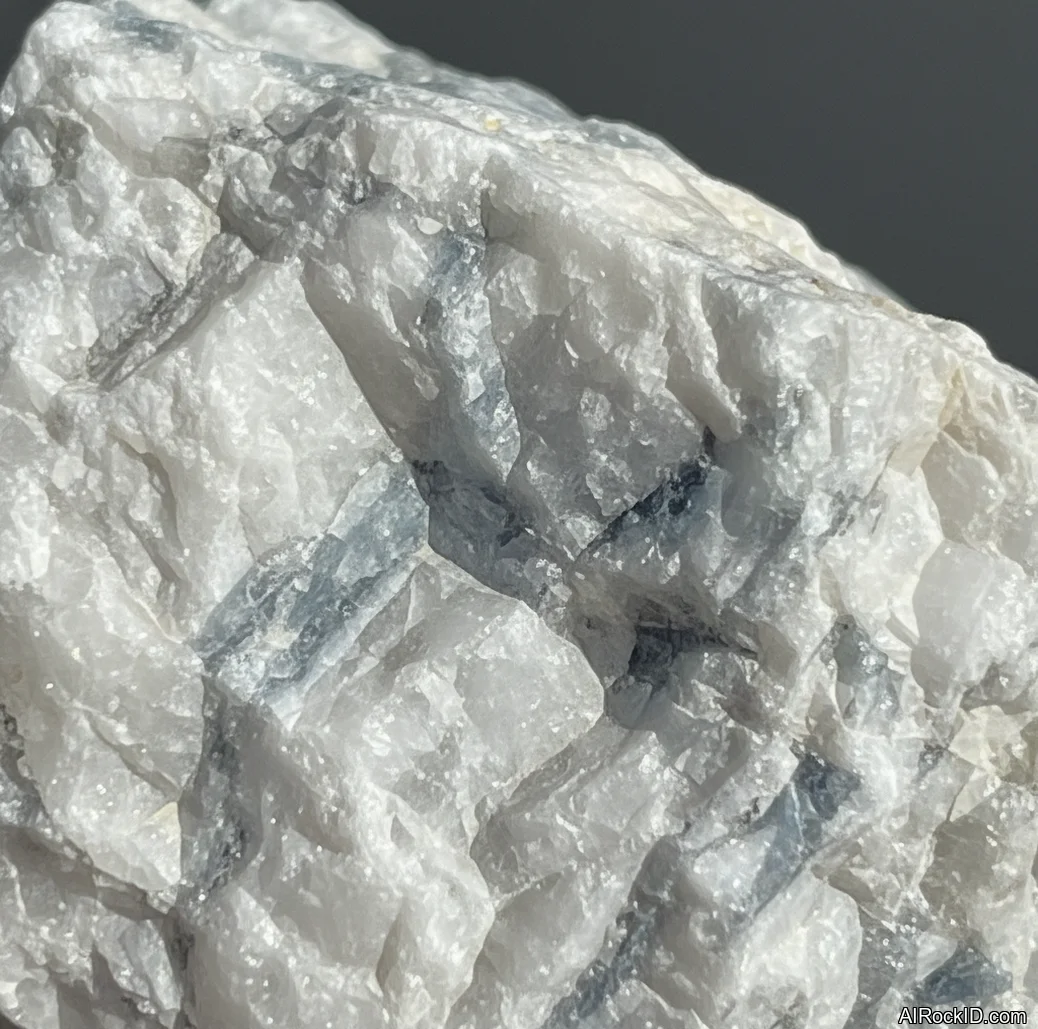
Marble is a non-foliated metamorphic carbonate rock, not a single mineral. In the hand it often feels cool, dense, and softly granular, with a sugary mosaic of interlocking calcite or dolomite crystals rather than visible sand grains. Most marble is calcitic marble dominated by CaCO3 or dolomitic marble dominated by CaMg(CO3)2.
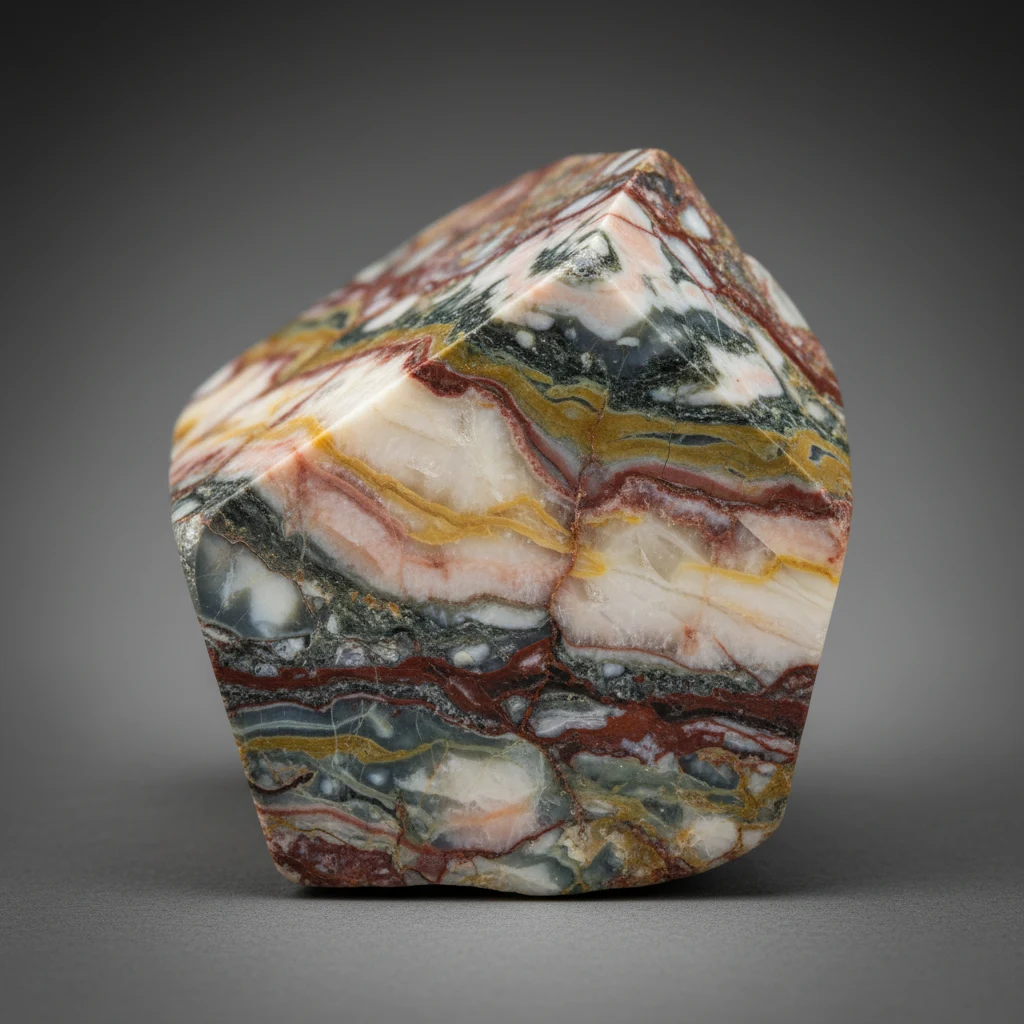
Collectors recognize marble by its soft Mohs hardness of about 3-4, its white to pale gray streak, and its vitreous to pearly sparkle on fresh broken surfaces. It can be white, cream, gray, black, pink, red, green, yellow, brown, or blue-gray, with veining caused by impurities such as graphite, iron oxides, mica, serpentine, clay minerals, quartz, or pyrite.
Origin & History
The name marble comes from the Greek word “marmaros,” meaning a shining stone. That old name still fits a fresh chip or polished slab: even a plain white piece can flash with tiny carbonate crystals, while a polished surface can become glossy enough for sculpture, tile, and architectural work.
Marble has been quarried since antiquity for sculpture, monuments, buildings, tiles, and decorative objects. Carrara marble from Italy, Pentelic marble from Greece, and Makrana marble from India are especially important in art and building history. For comparing locality names on old specimen labels, mindat.org is a useful reference point alongside quarry records.
Where Is Marble Found?
Marble is common and occurs worldwide wherever limestone or dolostone has been metamorphosed by heat, pressure, or contact with igneous intrusions. Major commercial deposits are known from the Mediterranean region, South Asia, the Middle East, China, North America, and other carbonate-rich belts.
Formation
Marble forms when limestone or dolostone is metamorphosed. Heat and pressure recrystallize the original carbonate sediment into interlocking calcite or dolomite crystals, commonly destroying fossils and bedding. That is why a broken marble surface looks sugary and crystalline instead of shelly, muddy, or layered like many unmetamorphosed limestones.
Contact metamorphism near igneous intrusions can produce coarse white marble, while regional metamorphism may create thick marble units within mountain belts. Color and veining come from impurities such as graphite, iron oxides, mica, serpentine, clay minerals, quartz, or pyrite, which are caught in the rock as the carbonate mass recrystallizes.
How to Identify Marble
Identify marble first by texture: look for a sugary, crystalline, interlocking carbonate fabric with no obvious sand-sized clastic grains. Fresh surfaces usually show a vitreous to pearly sparkle, and polished surfaces may be highly glossy. Most pieces are opaque, though thin edges or fine statuary grades may appear slightly translucent.
Calcitic marble fizzes readily in dilute hydrochloric acid and scratches easily with a copper coin or knife because calcite is Mohs 3. Dolomitic marble reacts more weakly unless powdered and is slightly harder. Marble is softer than quartzite and granite, lacks the slaty foliation of slate, and usually lacks the visible fossils typical of unmetamorphosed limestone.
Properties of Marble
Physical Properties
| Crystal System | Rock; main minerals calcite or dolomite are trigonal |
| Hardness (Mohs) | 3-4 on Mohs, depending on calcite, dolomite, and accessory minerals (Soft to moderately soft) |
| Density | Approximately 2.6-2.9 g/cm³ |
| Luster | Vitreous to pearly on fresh crystal faces; polished marble is glossy |
| Diaphaneity | Opaque to translucent in thin edges or fine statuary grades |
| Fracture | Uneven to granular; individual calcite grains show rhombohedral cleavage |
| Streak | White to pale gray for most marbles |
| Magnetism | Usually non-magnetic; may show weak response if iron-rich accessory minerals are present |
| Colors | white, cream, gray, black, pink, red, green, yellow, brown, blue-gray |
Chemical Properties
| Classification | Metamorphic carbonate rock |
| Formula | Dominantly CaCO3 in calcitic marble; CaMg(CO3)2 in dolomitic marble |
| Elements | calcium, carbon, oxygen, magnesium |
| Common Impurities | graphite, iron oxides, clay minerals, mica, quartz, serpentine, pyrite |
Optical Properties
| Refractive Index | Variable by mineral content; calcite nω about 1.658 and nε about 1.486, dolomite nω about 1.679 and nε about 1.500 |
| Birefringence | High for calcite and dolomite; not normally measured for the rock as a whole |
| Pleochroism | None for pure calcite or dolomite; colored accessory minerals may be pleochroic |
| Optical Character | Rock aggregate; calcite and dolomite are uniaxial negative |
Marble Health & Safety
Solid marble is generally safe to handle. The main concern is dust from cutting, grinding, drilling, or polishing, which can irritate lungs and may contain accessory silica or other minerals depending on the source.
Marble Value & Price
Price Range
Rough/Tumbled: Common rough marble pieces are often inexpensive, about $1-$10 per pound; decorative rough, bookends, carvings, or architectural stone vary widely from modest prices to hundreds or thousands of dollars for large slabs or historic-quality material.
Cut/Polished:
Value depends on color, veining, translucency, grain size, polish, block size, quarry source, structural soundness, and demand in architecture or sculpture. Pure white statuary marble, dramatic veined varieties, and material from famous quarries such as Carrara, Makrana, or Vermont can command higher prices.
Durability
Moderate for decorative use, poor for hard-wear jewelry — Scratch resistance: Low to moderate; calcitic marble scratches easily compared with quartz, feldspar, and most gemstones., Toughness: Fair as a building and carving stone, but it can chip along grain boundaries or veins.
Stable in normal indoor conditions, but carbonate minerals react with acids. Acidic cleaners, vinegar, lemon juice, acid rain, and some foods can etch or dull polished marble.
How to Care for Marble
Use & Storage
Store polished marble away from harder stones such as quartz, agate, and corundum to prevent scratches. Use padding for carvings, spheres, tiles, and specimens with thin edges.
Cleaning
Clean with a soft cloth, lukewarm water, and a pH-neutral stone cleaner or mild soap. Dry promptly. Avoid vinegar, lemon juice, bathroom descalers, bleach, and abrasive powders.
Cleanse & Charge
For metaphysical use, cleanse with smoke, sound, moonlight, or a dry cloth rather than saltwater or acidic liquids. If using water, keep contact brief and dry the stone well.
Placement
Marble is excellent for display, sculpture, interior decor, and specimen shelves. Outdoors it weathers in acidic rain and polluted urban air, so polished pieces last best indoors.
Caution
Marble is acid-sensitive and relatively soft. It can stain if porous or unsealed, and polished surfaces may etch from wine, citrus, vinegar, or harsh cleaners.
Works Well With
Marble Meaning & Healing Properties
In crystal-healing traditions, marble is used as a stone of calm, clarity, patience, and steady transformation. These meanings are cultural and spiritual rather than scientifically proven, but the feel of the stone supports the symbolism: cool, weighty, pale pieces often give a grounded, quiet impression in the hand or on a display altar.
Marble is commonly associated with the Root and Crown chakras, the Earth element, and the zodiac signs Capricorn and Taurus. For metaphysical care, cleanse it with smoke, sound, moonlight, or a dry cloth. Avoid saltwater and acidic liquids; if clean water is used briefly, dry the stone promptly to protect polished surfaces from dulling or etching.
Identify Marble from a photo
Compare Marble traits, care tips, value clues, and common lookalikes with a clear photo.
Common mistakes
- Assuming every white stone with gray veins is marble
- Calling cultured marble or resin composite natural marble without checking the material
- Using vinegar or acid on a polished surface and leaving an etched spot
- Confusing commercial stone names with strict geological names
- Identifying marble from color alone instead of texture, hardness, and acid reaction
- Assuming all marble has the same durability, even though calcite-rich and dolomitic varieties can behave differently